- What will the repair cost?
- What condition is the rest of the system in?
- How old is the equipment?
- Has it needed repeated repairs?
- Are appropriate replacement parts available?
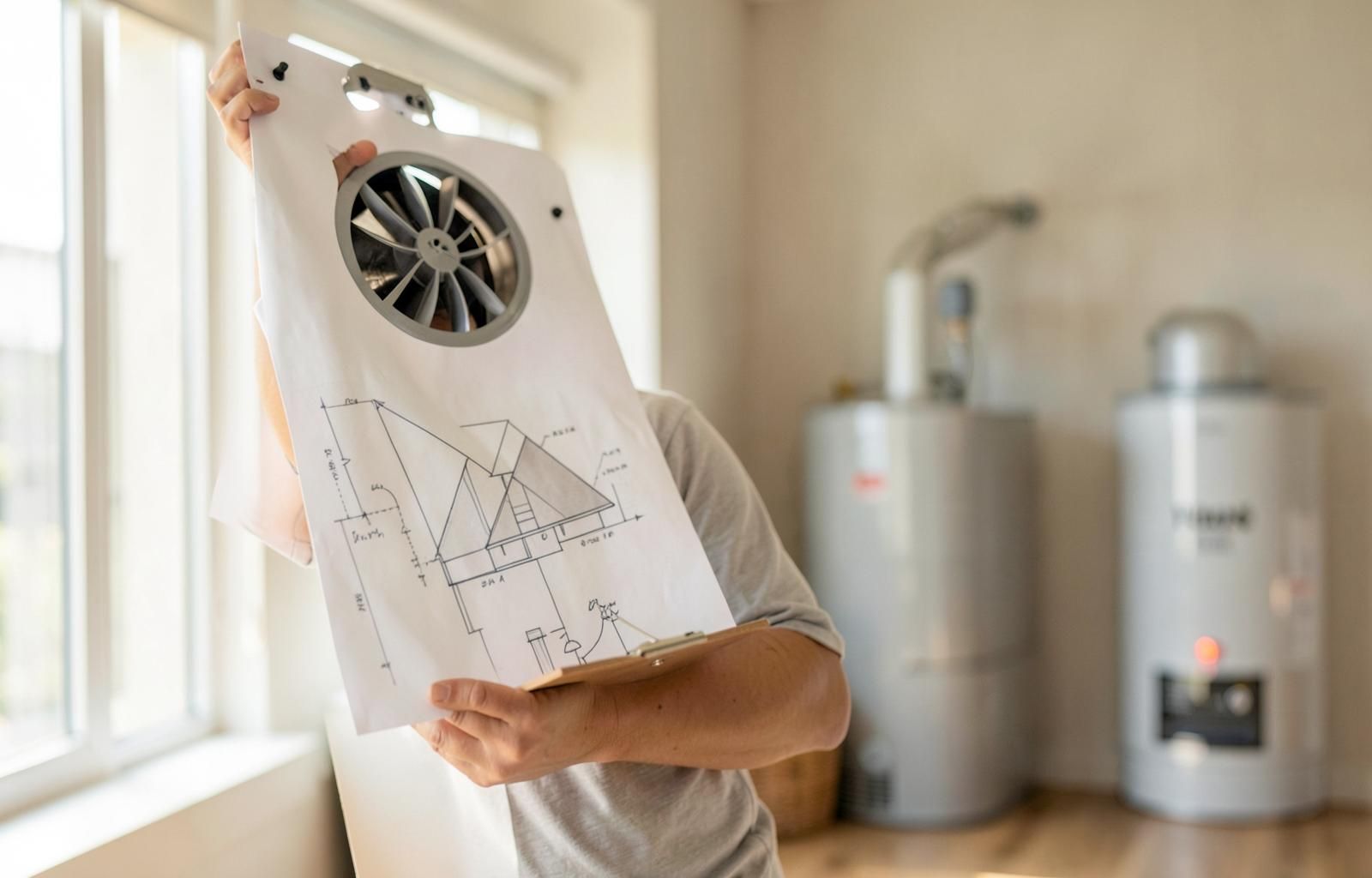
Plumbing · Water heater problem
| Project category | Plumbing |
|---|---|
| Problem type | Water heater problem |
| Trade required | Plumbing |
| Urgency | Urgent — within days |
| Safety risk | Moderate safety risk |
| DIY suitability | Pro recommended |
| Cost category | Moderate cost |
| Typical timeline | Diagnosis same day; replacement typically a half-day install |
| Contractor type | Licensed plumber |
Repair option
Element, thermostat, or thermocouple replacement on a tank still in good condition.
Replacement option
Full replacement once the tank leaks or passes roughly a decade of service.
Common causes
- Failed heating element or thermocouple
- Sediment buildup reducing capacity
- Tank corrosion at end of service life
Relevant tools:repair or replaceproject cost estimator
Published September 4, 2026Last updated September 4, 2026
Tools & materials you'll need
Affiliate linksNo materials required.
As an Amazon Associate FixlyGuide earns from qualifying purchases — at no extra cost to you. Prices and availability are accurate as of publication and subject to change.
Quick Answer
Houses don't come with a repair-or-replace dashboard. The right choice depends on age, condition, repair history, safety, remaining useful life, and whether the problem has actually been diagnosed. Before approving an expensive replacement, ask what failed, why it failed, whether the failure is isolated, and what repairing it actually accomplishes.
The Question Homeowners Ask Wrong
When something breaks, homeowners often ask:
"How much is a new one?"
Ask this first instead:
"What's wrong with the one I have?"
That changes the entire conversation. You can't intelligently compare repair and replacement until you know:
- What failed.
- Why it failed.
- Whether the failure is isolated.
- What repairing it actually accomplishes.
Diagnosis comes first.
1. HVAC System
This is one of the biggest.
The AC stops cooling during the hottest week of summer. Homeowner panics. Someone says, "The unit is old. Replace it."
Age absolutely matters. But age alone isn't a diagnosis.
An HVAC system can stop performing correctly for many reasons. Some may involve relatively limited repairs or maintenance. Others can involve major component failure or a system that no longer makes financial sense to keep repairing.
Before deciding, ask:
- What's actually wrong?
- What will the repair cost?
- What condition is the rest of the system in?
- How old is the equipment?
- Has it needed repeated repairs?
- Are appropriate replacement parts available?
- Is the system properly sized/configured for the house?
- What would replacement actually improve?
If you're being quoted a major replacement, understanding the diagnosis is reasonable.
Fixly Guide rule: Don't replace an HVAC system because it "isn't cooling." Replace it when you understand why it isn't cooling and why replacement makes more sense than repair.
2. Roof
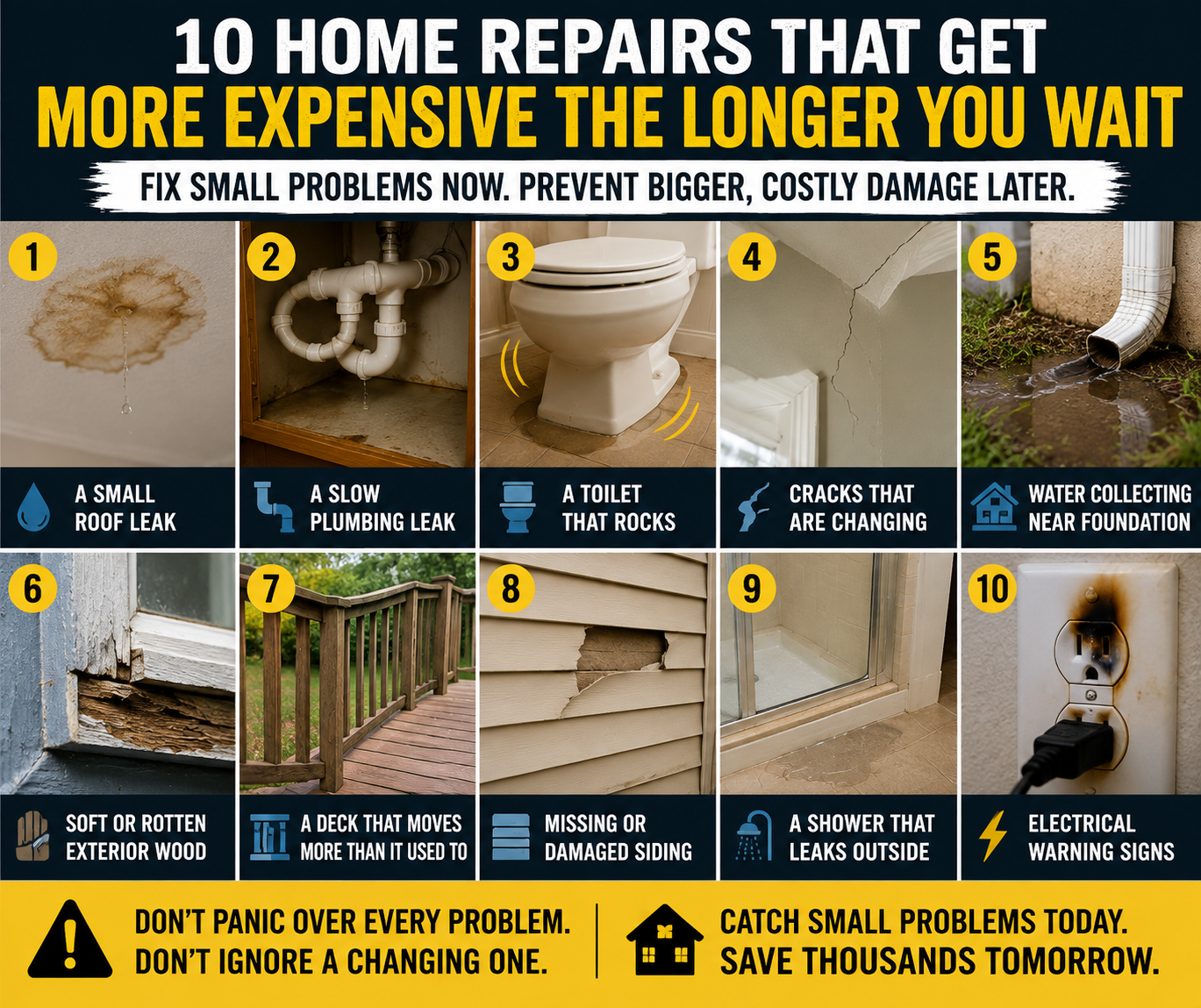
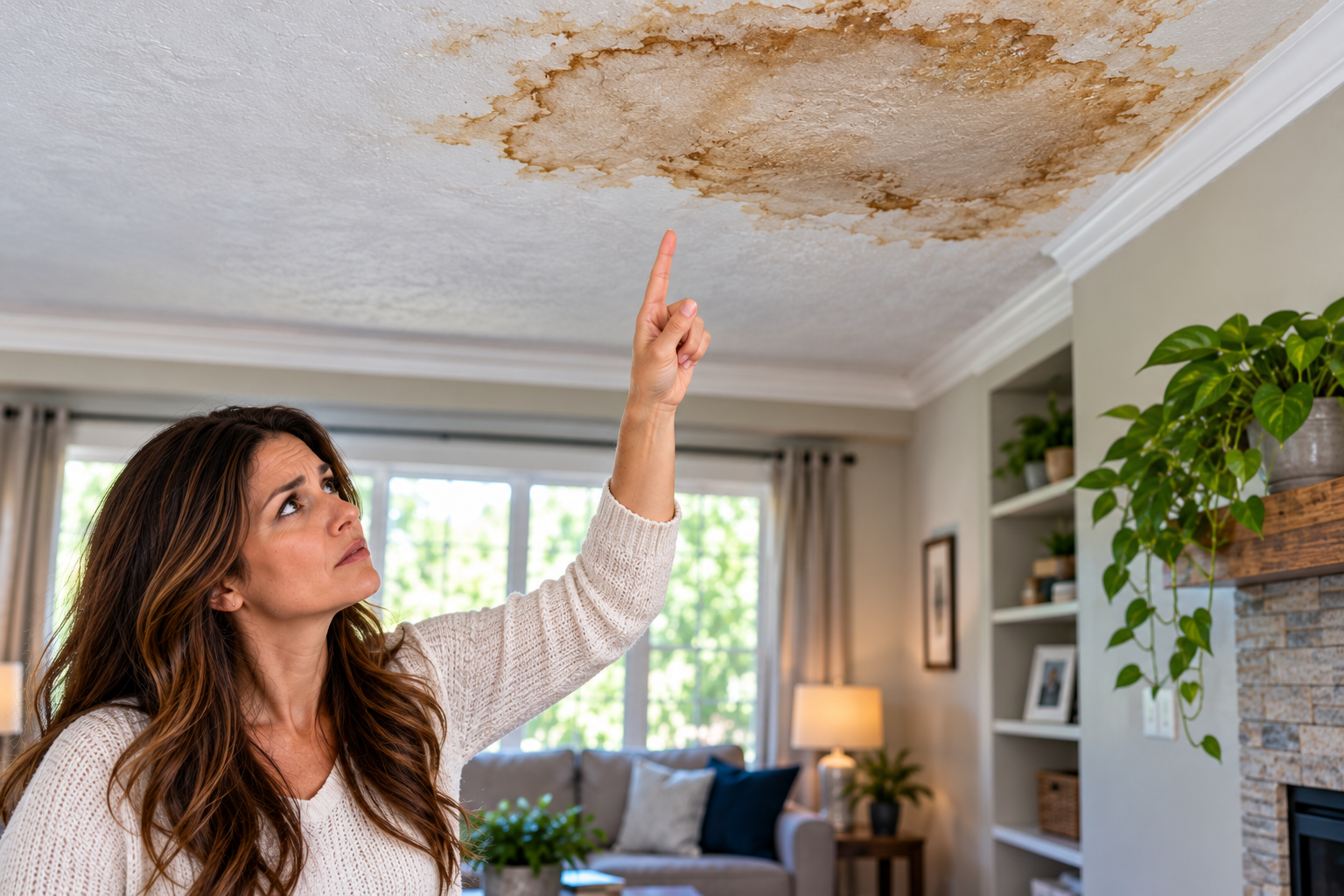
You see a ceiling stain. The immediate fear: NEW ROOF.
Maybe. Maybe not.
A roof can leak because of a localized issue. Depending on the roof and circumstances, possible problems could involve flashing, penetrations, individual damaged materials, storm damage, transitions, drainage, or broader roof deterioration.
The key question: Is the problem localized or systemic?
One repairable defect on an otherwise serviceable roof is very different from widespread deterioration across an aging roof. Ask the roofer to show you:
- Where is the failure?
- How widespread is it?
- Can it be repaired appropriately?
- What's the condition of the surrounding roof?
Don't make a five-figure decision based solely on, "Your roof is old." Age is important. Condition is important too.
3. Water Heater
No hot water. Time for a new water heater? Not necessarily.
The appropriate decision depends heavily on type, age, condition, cause of failure, corrosion, leakage, repair history, and availability of components.
If the tank itself is leaking because it has failed, that can be very different from a replaceable external component problem. And don't ignore obvious leakage — a water heater contains and handles a lot of water.
Diagnose the failure before choosing the solution.
4. Windows
This one can become extremely expensive.
A homeowner notices a draft, condensation, a window that's difficult to open, a failed glass seal, or damaged hardware. Then receives a quote: $25,000 FOR NEW WINDOWS.
Maybe replacement makes sense. But ask first: What's actually wrong with each window?
A house can have different problems across different windows. Some issues may involve hardware, weatherstripping, adjustment, caulking/sealing, glass units, water-management details, or actual frame deterioration.
A broken component on one window doesn't automatically mean every window in the house needs replacement. Evaluate the problem window by window.
5. Garage Door
Your garage door looks terrible after an accident. Do you need an entirely new system? Maybe.
But separate:
- Door
- Tracks
- Springs
- Opener
- Sensors
- Hardware
- Panels
They're related, but they're not all the same component. A damaged opener doesn't necessarily mean the door needs replacement. A damaged door doesn't automatically mean the opener has failed. Ask what component is actually defective.
Safety matters here too — garage-door springs and other components can store significant energy and aren't casual DIY repair projects.
6. Siding
One damaged section of siding can look terrible. But does that mean RE-SIDE THE ENTIRE HOUSE? Not automatically.
Consider:
- Extent of damage
- Water intrusion
- Condition of surrounding material
- Ability to match existing siding
- Age
- Installation condition
- Underlying damage
If one storm-damaged section can be properly repaired, whole-house replacement may not be necessary. But widespread deterioration is a different situation. Scope matters.
7. Exterior Wood Trim
Rotten trim around one window? Homeowners sometimes go to one of two extremes.
Extreme #1: Paint over it.
Extreme #2: Replace everything.
Neither is automatically correct.
First ask: Why did the wood deteriorate?
- Water repeatedly hitting it?
- Failed seal?
- Roof/gutter issue?
- Improper detailing?
- Long-term exposure?
If you replace rotten wood without fixing the moisture source, congratulations — you may have installed future rotten wood. Repair the cause, not only the evidence.
8. Toilet
Toilet runs constantly. Homeowner thinks, "It's old. I'll replace it." Maybe.
But toilets have multiple components. Depending on the problem, repair can sometimes be straightforward.
On the other hand, replacement may make sense when there is damage, persistent problems, cracking, poor performance, or other issues that make continued repair impractical.
One warning: a cracked toilet is different from a running toilet. Don't keep using a fixture that's physically damaged in a way that could fail.
9. Faucet
Leaking faucet? Before replacing the entire fixture, understand where the leak originates.
Possible repairability depends on fixture design, age, condition, corrosion, availability of parts, and location of leakage.
A high-quality fixture with a replaceable component may be worth repairing. A heavily deteriorated inexpensive fixture with unavailable parts? Different decision.
The question isn't "Can this technically be repaired?" It's "Does repairing it make sense?"
10. Dishwasher
Dishwasher stops working. Now we're entering appliance economics.
Ask:
- How old is it?
- What's wrong?
- How much is diagnosis/repair?
- What would a comparable replacement cost?
- Has it already been repaired several times?
- Are parts available?
- Is there active leakage?
A relatively small repair on an otherwise good machine can make sense. A major repair on an old appliance with several existing problems may not.
Don't spend $400 because you don't want to spend $700 — only to spend the $700 three months later. But don't spend $700 to avoid a simple repair either.
11. Flooring
One damaged area doesn't necessarily mean NEW FLOORS THROUGHOUT THE HOUSE.
Consider:
- Material
- Extent of damage
- Availability of matching material
- Cause of damage
- Whether moisture is involved
- Ability to repair/refinish
- Overall condition
With hardwood, for example, refinishing may sometimes dramatically change the appearance without replacement. Other flooring may be harder to patch invisibly.
But here's the most important part: If water damaged the floor, understand where the water came from BEFORE installing the new floor. Otherwise you're decorating the problem.
12. Deck
Your deck looks rough. Does it need replacement? Appearance alone doesn't answer that.
A weathered surface may be very different from:
- Rotten structural members
- Unsafe connections
- Significant movement
- Failed supports
- Severe deterioration
- Loose railings
Have the actual structure evaluated. A deck that looks ugly may be repairable. A deck that looks decent can still have serious structural concerns.
Safety beats appearance. Every time.
The 7-Question Repair-or-Replace Test
Before approving an expensive replacement, ask:
- What exactly failed? Not "It's old." What's broken?
- Can the failed component be repaired or replaced? Sometimes yes. Sometimes no. Find out.
- What will the repair cost? Get the actual number.
- What will replacement cost? Compare similar scopes. Don't compare a bare-minimum repair with a premium replacement package without understanding the difference.
- What condition is everything else in? A repair can make sense when the remaining system is healthy. It makes less sense when you're repairing one failure in something with five other serious problems.
- Has this happened before? One repair is different from fourth repair in 18 months. Repair history matters.
- What do I gain by replacing it? Maybe reliability, warranty, efficiency, safety, better performance, or reduced repair frequency. Or maybe... not much. Understand the benefit you're actually buying.
Beware of the "It's Old" Sales Pitch
Old isn't automatically bad. New isn't automatically good.
Age matters because materials and equipment have finite service lives. But saying, "It's 15 years old," isn't the same as saying, "Here's the failed component, here's why it failed, here's what repair would involve, and here's why replacement is the better financial choice."
Ask for the second explanation.
But Don't Become the Homeowner Who Repairs Forever
There's another extreme. Homeowner spends:
- $500
- Then $700
- Then $450
- Then $900
- Then $600
All because: "Replacing it costs $8,000!"
Eventually you have to ask: How much am I spending to avoid the replacement I may end up buying anyway?
Keep repair records. That makes the answer easier.
Start a Repair History for Major Home Systems
Create a simple note or spreadsheet.
HVAC
2024 — repair — $___
2025 — repair — $___
2026 — repair — $___
Roof
2025 — flashing repair — $___
Water Heater
2026 — service — $___
Now when another problem occurs, you aren't relying on memory. You can see what this system has actually cost you. That's powerful information.
When Replacement Becomes More Attractive
Replacement may become more reasonable when several factors stack together:
- Major failure
- Advanced age
- Poor overall condition
- Repeated repairs
- Difficult-to-find parts
- Safety concerns
- Extensive deterioration
- Poor performance
- Repair approaching a significant portion of replacement cost
- Replacement offers meaningful benefits
Notice: It's rarely just one factor. That's why blanket internet rules don't work very well.
When Repair Becomes More Attractive
Repair may make more sense when:
- Problem is isolated
- Rest of system is in good condition
- Repair cost is reasonable
- Failure isn't recurring
- Parts are readily available
- Repair provides a meaningful expected service period
- Replacement offers little immediate benefit
Again: context.
Get a Second Opinion When the Decision Is Expensive
If somebody tells you, "You need to spend $18,000," and it's not an immediate emergency, getting another qualified opinion can be reasonable.
Not because the first contractor is necessarily dishonest. Another professional may:
- Confirm the diagnosis
- Suggest another repair approach
- Find something different
- Provide another replacement option
- Or tell you the first contractor was exactly right
A second opinion can give you confidence before making a major financial decision.
Don't Ask Contractors to Compete on Price Alone
Suppose:
- Contractor A: $8,000
- Contractor B: $11,000
- Contractor C: $14,000
Which is best? You don't know yet.
Are they quoting the same equipment, same materials, same scope, same warranty, same permits where required, same disposal, same accessories, same preparation, same repairs, same labor, and same code-related work?
Price comparisons are meaningless when the scopes aren't comparable. Compare the job — not just the number.
Don't Let Urgency Make the Decision for You
HVAC fails when it's 100 degrees. Water heater fails before work. Roof leaks during a storm. That's when homeowners are most vulnerable to "JUST FIX IT!"
Sometimes urgent action truly is necessary. But when conditions allow, get enough information to understand the decision. Ask:
- What's wrong?
- What are my options?
- What happens if I repair it?
- What happens if I replace it?
- How urgent is this?
Those five questions can change the entire conversation.
The Fixly Guide Repair-or-Replace Rule
Here's the rule to remember:
Don't repair something just because repair is cheaper today. And don't replace something just because replacement is better long-term.
Instead ask: Which option gives me the best combination of safety, reliability, remaining life, and total cost?
That's the decision.
Final Thought
Homeowners lose money in two completely different ways.
They repair things that should have been replaced. And they replace things that could have been repaired.
The solution isn't becoming an expert in HVAC, roofing, plumbing, windows, and appliances. It's learning to ask better questions.
Before approving a major replacement, ask:
"What exactly failed?"
Then:
"Why is replacement better than repairing it?"
A good professional should be able to explain the answer in language you understand. If the explanation makes sense, great. If you're still uncertain and the decision involves thousands of dollars, get another qualified opinion.
Because sometimes the smartest home improvement isn't buying something new. It's getting a few more good years from what you already have. And sometimes the smartest repair is finally stopping the repair cycle and replacing it.
The key is knowing why.
Fixly Guide CTA
🏠 Repair or replace? Don't make a major home decision based on one scary sentence or one price quote.
Understand the diagnosis, compare your options, and bring in the right professional when you need expert guidance.
Follow Fixly Guide for practical homeowner advice, repair costs, contractor tips, and information that helps you make smarter decisions before spending money on your home.
👇 HOMEOWNERS: What's something in your house you're currently debating — repair it or replace it?
🔧 CONTRACTORS: What's one thing you see homeowners replacing too soon?
Repair or replace your water heater?
Plug in four numbers and see which choice holds up financially.
Free and instant. Educational guidance only — not a quote, inspection, or professional diagnosis.
Estimate your own project cost
National averages are a starting point. Enter your details for a range that fits your house.
Water heater replacement cost
- Unit$550 – $1,400
- Installation labor$350 – $900
- Removal & disposal$60 – $150
- Permit & inspection$50 – $200
These estimates reflect typical US installed costs. Get 2–3 written quotes before committing.
Educational estimate only — always confirm with written local bids.
What should this project cost?
Enter your project details for a realistic cost range before you call anyone.
Service calls and common repairs run $150–$900; full system replacement typically $6,000–$12,000.
- Regional adjustment
- National average
- Labor share (typical)
- ~$1,935
- Quotes to collect
- 3 written estimates
Educational estimate based on national averages — not a binding quote. Always confirm with written local estimates.
Fixly Project Decision Box
- DIY difficulty
- Professional Recommended
- Estimated time
- Inspection 1–2 hours · repairs 1–3 days
- Cost level
- High
Main tools / materials
- Binoculars for a ground-level look
- Flashlight for attic checks
- Moisture meter
- Roofing cement (temporary patch only)
When to stop and call a pro
- Active leak near lights, fans, or any wiring
- Sagging, bulging, or water-filled ceiling
- Steep, wet, or two-story roof — do not climb it
- Storm or hail damage you plan to claim on insurance
Need professional help?
Free roof assessment first — no phone calls until you ask for them.
Get Local Roofing HelpDecide what your roof needs
Two minutes of questions turns "something is wrong up there" into a clear next step.
- Repair or replace your roof?Answer 10 questions about age, leaks, and damage to get a clear next step.Open
- Compare contractor quotesScore up to four bids on price, warranty, licensing, and timeline.Open
- Get local estimatesSend one request and compare written estimates from vetted pros.Open
Free, no signup required. Estimates are educational guidance, not a quote or an inspection.
Recommended for DIYers & woodworkers
Sponsored
The Top 20 Tools for Workshops of Any Budget
No stationary machines or power tools required — plus 3 fundamental tools that can't be bought at any price.
Get the free guide
Ted's Woodworking — The #1 Woodworking Resource
Detailed instructions, dimensioned drawings, materials & cutting lists, and 3D schematics for every skill level.
See the plansSponsored: links above are affiliate links. FixlyGuide may earn a commission on qualifying purchases — at no extra cost to you.
Frequently asked questions
Is it better to repair or replace an old HVAC system?+
It depends on the diagnosis, equipment condition, age, repair history, repair cost, replacement cost and benefits of replacement. Age alone should not be the only factor.
Should I replace my entire roof because of one leak?+
Not necessarily. Some leaks can originate from localized defects, while widespread deterioration may make replacement more appropriate. Have the source and overall roof condition evaluated.
Is it worth repairing an old appliance?+
Compare the actual repair cost with replacement cost while considering age, condition, repair history and parts availability.
Should all windows be replaced at once?+
Not automatically. Determine what problems exist and whether they affect individual windows or the broader window system before deciding on whole-house replacement.
When should I get a second contractor opinion?+
A second qualified opinion can be particularly valuable when the proposed repair or replacement is expensive, the diagnosis is unclear, or multiple reasonable solutions may exist.
Discussion
Loading comments…