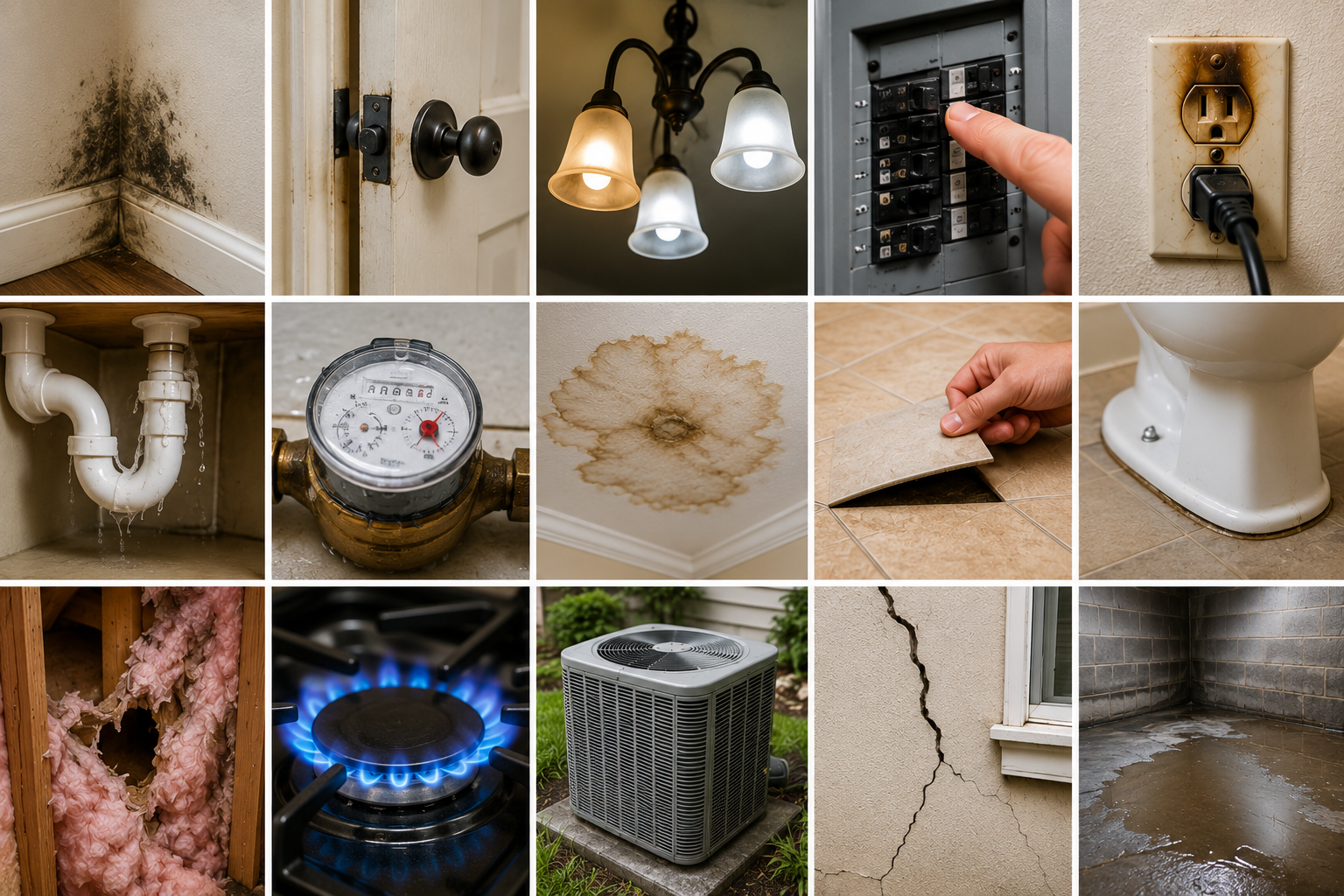
- A smell you've never noticed before
- A door that suddenly won't close
- A breaker that keeps tripping
- A floor that feels different under your feet
- A stain that appeared on the ceiling
Electrical · Outlet or lights not working
| Project category | Electrical |
|---|---|
| Problem type | Outlet or lights not working |
| Trade required | Electrical |
| Urgency | Soon — within weeks |
| Safety risk | Moderate safety risk |
| DIY suitability | DIY for experienced homeowners |
| Cost category | Low cost |
| Typical timeline | Often under an hour once the cause is found |
| Contractor type | Licensed electrician |
Repair option
Reset the upstream GFCI first, then replace the failed device.
Replacement option
Rewire the circuit when connections are failing in multiple boxes.
Common causes
- Tripped GFCI upstream on the same circuit
- Loose neutral in a daisy-chained run
- Failed switch or receptacle
Relevant tools:diy difficultydiy or hire a pro
Published August 26, 2026Last updated August 26, 2026
Tools & materials you'll need
Affiliate linksNo materials required.
As an Amazon Associate FixlyGuide earns from qualifying purchases — at no extra cost to you. Prices and availability are accurate as of publication and subject to change.
Quick Answer
Houses don't have dashboard warning lights — they communicate through smells, sounds, stains, cracks and doors that stop closing right. Most of those changes aren't disasters, but a new symptom is information worth investigating. The 15 signs below (musty odors, sticking doors, flickering lights, repeat breaker trips, warm outlets, unexplained water sounds, spiking water bills, growing ceiling stains, soft floors, rocking toilets, scratching in walls, rotten-egg odors, HVAC that never catches up, growing cracks and water where water shouldn't be) are the ones homeowners most often walk past.
Your Car Warns You. Your House Doesn't.
Low tire pressure? Light comes on. Engine problem? Check-engine light. Oil pressure? Warning.
Your house is different. Instead of a light on the dash, you get:
- A smell you've never noticed before
- A door that suddenly won't close
- A breaker that keeps tripping
- A floor that feels different under your feet
- A stain that appeared on the ceiling
- A strange sound inside a wall
And the usual homeowner response is "That's weird" — followed by walking away.
To be fair, most strange things around a house aren't automatically disasters. Homes expand. Materials contract. Wood moves. Plumbing makes noise. Buildings settle. Appliances cycle.
But sometimes a seemingly insignificant change is the first visible clue to a problem you can't see yet. Here are 15 worth paying attention to.
1. A Musty Smell That Suddenly Appears
You walk into a bedroom and notice it: damp, earthy, musty. You open a window. You spray air freshener. The smell comes back.
Don't just cover it. Ask the better question: why does this room suddenly smell different?
Potential sources can include moisture in or around:
- Carpet
- Drywall
- Cabinets
- HVAC components
- Plumbing
- Windows
- Exterior walls
A smell alone doesn't tell you the cause. But a new, persistent odor is information. Look for other clues nearby.
2. A Door That Suddenly Starts Sticking
Your bedroom door worked perfectly for years. Now it rubs the frame.
Foundation failure? Not necessarily. Doors stick because of humidity, loose hinges, paint buildup, wood movement, frame movement or installation issues.
Here's when I'd pay closer attention: the door changed recently and other things changed too — new cracks, multiple sticking doors, window problems, floor changes, visible movement.
One symptom gives you a question. Several related symptoms give you a pattern worth investigating.
3. Lights That Flicker for No Obvious Reason
One bulb flickers? Start with the obvious. The bulb may be failing or loose.
But repeated flickering involving multiple lights or circuits deserves more attention — especially alongside burning odors, buzzing, heat, discoloration, sparking or repeated breaker problems.
Electrical issues can involve serious hazards. Don't dismantle electrical systems if you aren't qualified to work on them. When electricity behaves strangely, treat safety as the priority.
4. A Breaker That Keeps Tripping
Breaker trips. Reset. Trips. Reset. Trips. Reset.
At some point the question shouldn't be "How do I keep this breaker on?" It should be "Why does it keep turning off?"
Breakers are protective devices. Repeated trips may indicate an overloaded circuit, an equipment problem, a wiring issue or another condition that needs diagnosis. Don't defeat or bypass electrical protection to make the inconvenience disappear.
5. One Outlet or Switch Feels Unusually Warm
Electrical devices can generate some warmth depending on the device and load, but unexpected or excessive heat deserves attention — especially combined with a burning smell, discoloration, crackling, buzzing, intermittent operation or scorching.
Stop using obviously damaged or overheating equipment and seek qualified help. Your wall switch shouldn't become something you learn to avoid touching.
6. You Hear Water When Nobody Is Using Water
You're lying in bed. Nobody's showering. The dishwasher is off. The washing machine isn't running. Yet you hear water.
There may be a perfectly normal explanation — HVAC drainage, an appliance cycle, plumbing pressure changes, or someone genuinely left something running.
But unexplained water sounds deserve investigation. Check accessible fixtures and appliances. Look for moisture. If you suspect a leak, don't wait for water to become visible through the ceiling before taking it seriously.
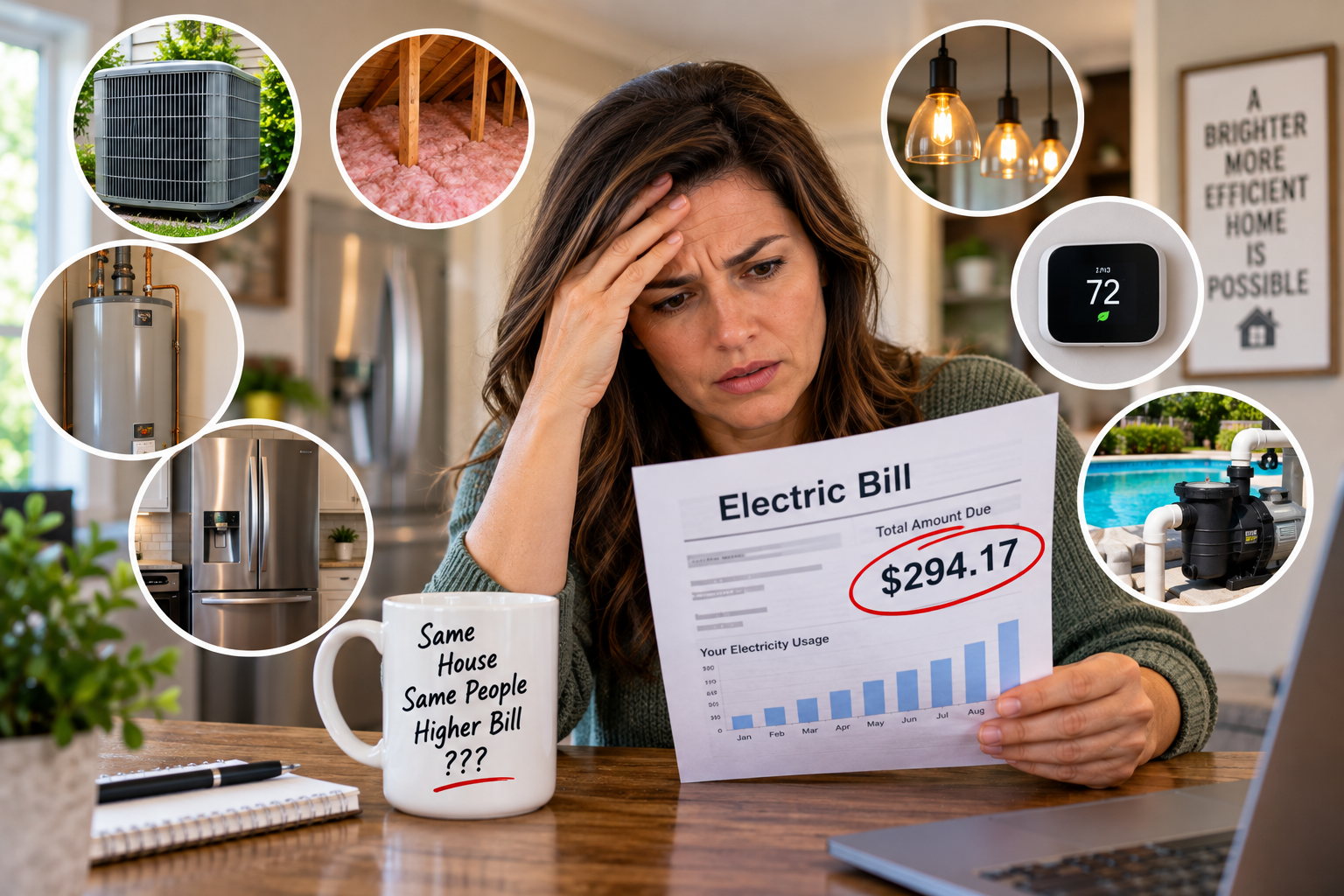
7. Your Water Bill Suddenly Jumps
Your household behavior hasn't changed, but the bill has. That's a clue.
Possible explanations include a running toilet, a leaking fixture, an irrigation issue, an appliance problem, a hidden plumbing leak, billing or rate changes, or increased usage you didn't notice.
Don't immediately assume a pipe is leaking under the foundation. Start with the simplest explanations — but don't ignore a significant unexplained change either.
8. A Ceiling Stain Gets Bigger After Rain
This is one of the clearest patterns a homeowner can observe. Dry weather: the stain looks the same. Heavy rain: the stain grows.
Now you've learned something. It doesn't prove exactly where water is entering — roof leaks can travel before becoming visible, and flashing, penetrations and other exterior components may be involved. But the connection to weather is valuable diagnostic information.
Photograph the stain. Photograph it again after the next rain. Don't paint over your evidence before identifying the source.
9. Your Floor Suddenly Feels Soft
You walk through the bathroom and one area feels different. Softer. More flexible. Maybe slightly spongy.
Causes vary with construction and location, but moisture damage or deterioration of underlying materials may be among them. This is particularly worth investigating around toilets, showers, tubs, dishwashers, sinks and exterior doors.
The flooring you see isn't necessarily the material that's actually failing.
10. Your Toilet Moves When You Sit Down
A toilet shouldn't rock like a chair with a short leg.
Sometimes the fix is straightforward. But movement can interfere with the toilet's connection or indicate problems with the mounting surface. If moisture is escaping beneath the fixture, you may not see the damage immediately.
That makes this a perfect example of a small annoyance that deserves investigation before it becomes something bigger.
11. You Hear Scratching Inside a Wall
At night: scratch. Pause. Scratch scratch.
Before deciding your house is haunted, consider more ordinary possibilities. Animals and pests can enter attics, walls, crawl spaces and other concealed areas.
Look for related clues: droppings, gnawing, entry points, disturbed insulation, odors, noises at particular times of day. The longer some pest problems continue, the more opportunity there is for contamination or property damage.
12. You Smell Something Like Rotten Eggs
This one deserves special treatment.
Certain fuel gases are odorized so leaks can be detected, often with a smell described as sulfur-like or rotten eggs.
If you suspect a gas leak, don't treat it like an ordinary maintenance issue. Avoid actions that could create ignition sources, leave the area as appropriate, and follow your gas utility's or emergency authorities' safety instructions.
Don't wander around trying to find the leak yourself. This isn't the time for YouTube DIY.
13. Your HVAC Runs and Runs — but the House Never Gets Comfortable
It's 95°F outside. Your air conditioner runs. And runs. And runs. And the house still isn't comfortable.
Possible reasons vary widely: filters, airflow, ductwork, thermostat issues, equipment problems, insulation, air leakage, system sizing, weather conditions.
The important thing is noticing change. If your HVAC handled similar weather reasonably well for years and suddenly can't, something may have changed.
14. A Crack Is Getting Bigger
Again: a crack does not automatically equal foundation failure. That's internet fear-mongering.
But a crack that changes deserves more attention than one that has looked identical for years.
Do something simple: photograph it, include a reference for scale, date the photo, check it later.
Pay more attention if changing cracks occur alongside sticking doors, window changes, uneven floors, other new cracks or visible structural movement.
You aren't diagnosing the house. You're collecting useful evidence.
15. Water Appears Where Water Should Never Be
This sounds obvious, yet homeowners normalize it:
- "Yeah, that corner of the basement gets wet."
- "Water always comes through that window when it rains hard."
- "We keep a towel by the shower because it leaks."
- "That spot under the sink is always damp."
Water repeatedly appearing somewhere it shouldn't isn't normal just because it's been happening a long time. Find out where it's coming from.
The Most Important Warning Sign Isn't on This List
It's this: something changed.
Your house has a baseline. You know how the floors feel, how doors close, how the HVAC sounds, how rooms smell, how long the shower takes to drain, where water goes when it rains, how often breakers trip — or don't.
So when something changes unexpectedly, pay attention. You live there. That gives you an advantage even a professional inspector doesn't have: you know what normal looks, sounds and feels like in your home.
Don't Make This Mistake
Homeowners often repair the evidence instead of the problem.
| Symptom | The shortcut | What it hides |
|---|---|---|
| Ceiling stain | Paint over it | Ongoing water intrusion |
| Wall crack | Patch and repaint | Movement that may continue |
| Musty smell | Air freshener | A moisture source |
| Wet floor | Keep a towel there | A leak with a location |
| Sticking door | Plane it down | Possible frame or structural movement |
Sometimes those actions are appropriate — but only after understanding why the symptom appeared. Otherwise you've made the warning sign disappear while leaving the cause untouched.
The "Three Clue" Rule
This isn't a technical diagnostic standard. It's a useful homeowner habit.
- One strange symptom? Notice it.
- Two related symptoms? Document them.
- Several related changes? Consider having the underlying cause evaluated.
One sticking door could be humidity. But multiple sticking doors + new wall cracks + noticeable floor changes creates a much more interesting pattern.
Don't diagnose it yourself. Don't ignore the pattern either.
Use Your Phone as a Home-Repair Tool
Your phone is one of the most useful maintenance tools you own. Photograph cracks, stains, exterior deterioration, water damage, roof areas visible safely from the ground, damaged siding and deck deterioration — then date them.
Three months later you can answer "Has this actually changed?" instead of "I think that crack looks bigger." That's valuable information for you and for any professional who evaluates the problem.
🚨 Warning Signs That Deserve Faster Attention
Some issues shouldn't go on your "I'll watch it" list. Potential safety issues involving:
- Gas odors
- Electrical burning or scorching
- Active significant leaks
- Structural instability
- Sewage
- Carbon monoxide alarms
- Significant sparking or electrical hazards
can require immediate action. When there's potential danger to occupants, protecting people comes before diagnosing the repair bill.
The $20 Fix vs. the $20,000 Problem
Here's where home-improvement content often becomes dishonest. Someone sees a water stain and says: "Fix this $20 problem now or it'll cost you $20,000!"
Maybe. Maybe not. Nobody can responsibly tell you that from one symptom.
But the principle behind the dramatic headline is legitimate: secondary damage can become much more expensive than the original defect. A small water source can affect multiple materials. A minor exterior opening can allow continued weather exposure. A drainage issue can repeatedly put water where you don't want it.
So don't obsess over predicting the repair cost. Find the cause early.
What Homeowners Should NOT Do
- ❌ Assume every crack is structural
- ❌ Assume every ceiling stain means a new roof
- ❌ Assume every strange smell means mold
- ❌ Assume every HVAC problem requires replacement
- ❌ Assume every contractor recommending further investigation is upselling you
And definitely don't let strangers on social media diagnose a major problem from one blurry photograph.
What Good Contractors Do Differently
A trustworthy professional shouldn't jump straight from symptom to most expensive possible solution. They should investigate.
Homeowner: "My ceiling has a water stain."
- Poor approach: "You need a new roof."
- Better approach: "Let's determine where the moisture is coming from first."
That's the difference between selling a product and solving a problem.
Contractors: What's the Warning Sign Homeowners Ignore Most?
This is where professionals can help:
- Roofers: what gets ignored?
- Plumbers: what do homeowners wait too long to address?
- Electricians: what warning sign worries you immediately?
- HVAC technicians: what symptom should homeowners stop dismissing?
- Foundation professionals: what should homeowners document before assuming the worst?
- Remodelers: what hidden damage do you repeatedly discover?
Those answers are exactly the kind of knowledge homeowners need.
The Fixly Guide "Something Changed" Checklist
Save this somewhere. Pay attention to:
- ☐ New smells
- ☐ New stains
- ☐ Changing cracks
- ☐ New floor movement
- ☐ Doors/windows behaving differently
- ☐ Unusual electrical behavior
- ☐ Repeated breaker trips
- ☐ Unexpected heat at electrical devices
- ☐ Unexplained water sounds
- ☐ Sudden utility-bill changes
- ☐ New pest noises
- ☐ HVAC performance changes
- ☐ Water appearing where it shouldn't
- ☐ Exterior materials deteriorating
- ☐ Anything noticeably getting worse
You don't need to panic. You need to investigate.
Final Thought
Your house probably isn't going to announce: "HEY! THERE'S WATER GETTING INTO THE WALL BEHIND YOUR SHOWER!"
Instead you get a smell. A stain. A soft spot. A strange noise. A tiny crack.
Being a good homeowner isn't about knowing how to repair everything yourself. It's about learning to notice when something isn't behaving the way it used to.
Don't panic. Don't assume the worst. Don't automatically spend thousands of dollars. Investigate first.
Catching a problem early doesn't just potentially save money — it gives you options. And options are much better than discovering the problem after your ceiling, floor, wall or electrical system has made the decision for you.
🏠 Your Turn
Walk through your house tonight. Don't look for something to be afraid of. Look for something that's changed.
Then tell us: what's the weirdest thing your house does that you've never figured out?
Follow Fixly Guide for more homeowner tips, repair warning signs, contractor advice, project costs and practical information that helps you understand your home before small problems become bigger ones.
What should this project cost?
Enter your project details for a realistic cost range before you call anyone.
Common repairs run $150–$650; repipes and water-heater replacements reach $1,500–$4,500.
- Regional adjustment
- National average
- Labor share (typical)
- ~$754
- Quotes to collect
- 3 written estimates
Educational estimate based on national averages — not a binding quote. Always confirm with written local estimates.
Fixly Project Decision Box
- DIY difficulty
- Moderate
- Estimated time
- 30 minutes – half a day
- Cost level
- Moderate
Main tools / materials
- Adjustable wrench
- Plunger or drain auger
- Bucket and towels
- Thread tape
When to stop and call a pro
- Water you cannot shut off at the fixture or main
- Sewage backing up into more than one fixture
- Water near electrical panels or outlets
- Gas water heater work beyond relighting a pilot
Need professional help?
Get a Licensed PlumberRecommended for DIYers & woodworkers
Sponsored
The Top 20 Tools for Workshops of Any Budget
No stationary machines or power tools required — plus 3 fundamental tools that can't be bought at any price.
Get the free guide
Ted's Woodworking — The #1 Woodworking Resource
Detailed instructions, dimensioned drawings, materials & cutting lists, and 3D schematics for every skill level.
See the plansSponsored: links above are affiliate links. FixlyGuide may earn a commission on qualifying purchases — at no extra cost to you.
Frequently asked questions
What are signs something may be wrong with my house?+
New water stains, unusual odors, changing cracks, repeated electrical issues, unexpected floor movement, unexplained water usage and other changes can justify further investigation. Individual symptoms can have many causes.
Should I worry about cracks in my walls?+
Not every wall crack indicates a serious problem. Monitor changes in size, location and frequency and look for accompanying symptoms. Significant or changing conditions may warrant professional evaluation.
Why does my house suddenly smell musty?+
A persistent musty odor can have multiple causes, including moisture-related conditions. Look for visible moisture or other changes and identify the source rather than simply masking the odor.
Why do my lights keep flickering?+
A loose or failing bulb may cause isolated flickering, while repeated or widespread electrical symptoms can have other causes. Electrical problems accompanied by burning odors, heat, sparking or repeated breaker trips deserve prompt professional attention.
What's the best way to monitor a home problem?+
Take clear dated photographs, note when the symptom occurs and document related conditions such as weather, appliance use or other changes.

Discussion
Loading comments…