
- Gather Your Gear — Grab binoculars and a notepad
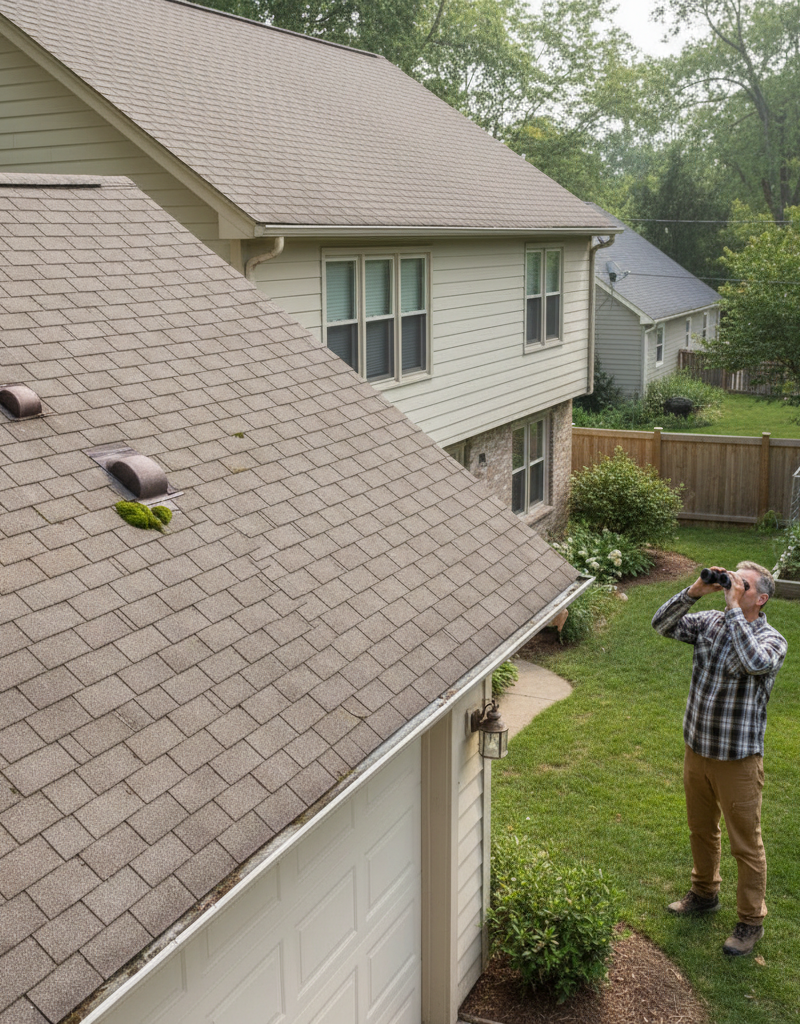
- Get yourself a decent pair of binoculars. 8x or 10x magnification is usually plenty. Don’t cheap out here; junk optics will just have you squinting and guessing. A solid pair makes a big difference, and I keep one in my truck all the time.
- Bring a pad and pen, or use your phone for notes and photos. You’re building a little damage report, not just poking around.
Roofing · Missing shingles
| Project category | Roofing |
|---|---|
| Problem type | Missing shingles |
| Trade required | Roofing |
| Urgency | Urgent — within days |
| Safety risk | High safety risk |
| DIY suitability | Pro recommended |
| Cost category | Low cost |
| Typical timeline | Typically a same-visit repair |
| Contractor type | Licensed roofing contractor |
Repair option
Replace the missing shingles and reseal surrounding courses before the next rain.
Replacement option
Replacement when matching is impossible or loss is widespread across slopes.
Common causes
- High wind lifting the sealant strip
- Improper nailing at install
- Brittle shingles past their service life
Relevant tools:repair or replace roofproject cost estimator
Published July 31, 2026Last updated August 17, 2026
Tools & materials you'll need
Affiliate linksNo materials required.
As an Amazon Associate FixlyGuide earns from qualifying purchases — at no extra cost to you. Prices and availability are accurate as of publication and subject to change.
Quick Answer
Skip the ladder for most routine roof checks. You can spot a lot of common problems, especially missing or damaged shingles, right from your yard with a decent pair of binoculars. I’ve seen homeowners save themselves thousands in water damage just by spending 15 minutes on a ground-level inspection after a hard storm. Look for anything that looks off: lifted shingles, granules in the gutters, or even faint discoloration that might be telling you there’s trouble brewing up top.
The Problem
Alright, let’s talk about missing shingles. That’s probably the most common roof call my crews get, and half the time the homeowner doesn’t know a thing about it until water starts coming through the ceiling. One missing shingle might not sound like much, but it leaves a hole in your defense and gives water, wind, and pests a way under the roof deck. That’s when the bill starts climbing—rotted sheathing, soaked insulation, damaged drywall, mold, the whole mess. And no, you don’t need a monster storm to lose one. Repeated wind uplift over time can do it, and so can a sloppy install from day one. I remember a call in Brookfield last year where a section of ridge cap shingles blew off in what the homeowner called “just a little gust,” and then a rainy Tuesday turned his upstairs hall ceiling into a waterfall. We ended up replacing a good chunk of sub-roofing because of that little surprise.
How It Works
Your roof isn’t just shingles stapled on top and called good. It’s a layered system built to move water off the house. Think of it like a giant umbrella with a few backup layers. The shingles are the first line, overlapped to shed water downward. Under that, you’ve usually got an underlayment—felt paper or synthetic stuff—which gives you a second barrier. Beneath that sits the sheathing, usually plywood or OSB, and that’s the structural deck.
When a shingle goes missing, that underlayment gets exposed. It’s not made for long stretches of sun and rain beating on it. Give it enough time and it breaks down, and once that happens, the roof’s ability to shed water drops fast. After that, water gets into the sheathing and rot starts its slow crawl. It doesn’t take much moisture to get the clock ticking. A small leak can turn into a rotten fascia board, weakened rafters, or attic insulation that’s basically trash. Good attic ventilation helps too—it cuts down on moisture buildup and slows wood rot. Ignore that part and you’re asking for trouble.
Step-by-Step Fix
Now, for this problem—a missing shingle you spotted from the ground—the “fix” at ground level is really about finding it and getting ready for repair. Replacing a shingle means getting on the roof, and for most homeowners, that means calling a pro. Still, catching it early? That’s half the job.
-
Gather Your Gear — Grab binoculars and a notepad
- Get yourself a decent pair of binoculars. 8x or 10x magnification is usually plenty. Don’t cheap out here; junk optics will just have you squinting and guessing. A solid pair makes a big difference, and I keep one in my truck all the time.
- Bring a pad and pen, or use your phone for notes and photos. You’re building a little damage report, not just poking around.
-
Pick Your Vantage Points — Walk around the house, looking for angles
- Start by circling the house and finding the best sight lines to each section of roof. Don’t camp out in one spot. Move to the front, back, both sides—sometimes even across the street if you can do it safely. High ground in the yard helps too, and if a neighbor’s porch gives you a clean angle and they’re cool with it, use it.
- Pay extra attention to the sides that take the prevailing wind or bake in the sun. Those areas usually get beat up first.
-
Scan the Shingle Field — Methodically check for anomalies
- With your binoculars, start at a bottom corner of one slope and scan upward, then across, like you’re reading a page. Watch for any break in the pattern. A missing shingle shows up as a darker, usually rectangular patch where the underlayment’s exposed. Once you know the look, it jumps out at you.
- Keep an eye out for curled or buckled shingles too. Those can be a warning sign before one actually lets go. And if you spot nails popping up, that’s another red flag.
-
Inspect Ridge Caps & Hips — These critical points take a beating
- Ridge caps—the shingles along the peak—and hip shingles, where two slopes meet, are usually the first to fail in high winds because they’re exposed from more than one side. Use the binoculars and really look at those spots for lifting, cracking, or missing pieces.
- I’ve seen whole runs of ridge cap disappear after a rough storm. Those spots are magnets for water intrusion.
-
Examine Flashing — Look for seals around vents and chimneys
- Flashing is the metal that seals around chimneys, vent pipes, skylights, and valleys where roof sections come together. Check for gaps, rust, or bent metal. If the flashing is pulling away from the chimney or vent, water’s getting in. If it looks like somebody slathered it in too much caulk, that usually means there was a repair before—and maybe it didn’t hold.
- Don’t forget the apron flashing at dormers or where the roof ties into a wall.
-
Check Gutters for Granules — A clear sign your shingles are aging
- Take a look inside the gutters. If you’ve got a heavy buildup of asphalt granules—they look like coarse sand—that’s a pretty solid sign the shingles are shedding their protective top layer. Some granule loss is normal, but too much means the roof’s getting tired. Not a panic button, but it does tell you where things stand.
- While you’re there, look for clogs too. Backed-up gutters can rot fascias and push water back under the shingles.
-
Identify Sagging or Low Spots — Could indicate structural issues
- Step back and look at the roof plane overall. Is it even? Or do you see dips, sags, or low spots? That’s harder to catch from the ground, sure, but a noticeable sag can point to trouble in the decking or even the trusses or rafters—maybe from water damage, maybe from too much snow or ice load. That one needs a professional eye.
-
Photograph and Document — Build your evidence
- Take clear photos of anything that looks suspicious. Zoom in with your phone, or better yet, snap a picture through the binoculars if you can hold steady enough. Those pictures are gold when you start calling contractors for quotes. They also help you track whether the issue’s getting worse. Make notes on location: “North side, third course up, above the living room window.”
Common Causes
- High Winds: This is the big one. Wind gets under the edge of a shingle, lifts it, and eventually tears it loose. Strong gusts, especially in open areas, do the job fast.
- Aging & Wear: Shingles don’t last forever. UV exposure, temperature swings, and plain old erosion make them brittle, knock off granules, and kill their flexibility.
- Poor Installation: Sometimes the shingles just weren’t nailed right—too few nails, nails in the wrong spot, or over-driven nails that cut through the shingle. That cuts wind resistance way down.
- Impact Damage: Hail, falling branches, even critters can crack or loosen shingles. After a hard hail storm, even if you don’t see missing shingles right away, you might still have enough damage to justify a professional inspection.
- Foot Traffic: If somebody’s been walking the roof wrong—or walking it when they didn’t need to, like during a satellite install—they can scrape off granules or crack shingles and weaken them for the next wind event.
Common Mistakes
- Assuming No Problem Because No Leak: Just because water isn’t dripping inside today doesn’t mean a missing shingle isn’t doing hidden damage. Water can travel a long way before it shows up. Don’t wait for a ceiling stain.
- Ignoring Granules in Gutters: A lot of homeowners clean the gutters and never connect the dots when they see a pile of shingle granules. That’s not just dirt—it’s the roof wearing down. Time to start budgeting.
- Only Checking One Side: Wind doesn’t hit every slope the same. The back side of the house, or a side you don’t see much, might’ve taken the worst of it. Walk the whole house.
- Using a Ladder for Ground Inspection: I’ve seen people prop a ladder against the house just to get a “better look” from a few feet up. That’s asking for trouble. If you’re climbing a ladder, you’re basically halfway into the repair, and that’s a different animal. Stick with binoculars from solid ground for inspection.
- Thinking "It's Just One Shingle": One missing shingle is easier to fix than twenty, sure, but it’s still a breach in the roof. Water will find a way in. Deal with it fast.
- Waiting for a Sunny Day: After a big storm is exactly when you should check for new damage. Don’t wait weeks. The sooner you catch it, the sooner you can stop secondary damage from setting in. I’ve had clients sit on a missing shingle for months thinking it was no big deal, then one heavy rain showed them just how wrong that was.
Cost & Time Breakdown
| Task | DIY Cost | Pro Cost | Time |
|---|---|---|---|
| Ground Inspection (Binoculars) | $0 (if owned) | N/A | 15–30 minutes |
| Buying Binoculars (if needed) | $20–$50 | N/A | N/A |
| Replacing 1-3 Shingles | $10–$30 (materials) | $150–$350 | 30 mins (DIY) / 1 hr (Pro) |
| Roof Inspection (Pro) | N/A | $150–$500 | 1–2 hours |
| Major Roof Repair/Replacement | $1,000–$10,000+ | $5,000–$25,000+ | Days to weeks |
Tips & Prevention
- Post-Storm Scan: Get in the habit of walking the house with binoculars after any decent wind storm, heavy rain, or hail. That’s the sweet spot for catching fresh damage.
- Keep Gutters Clear: Clogged gutters can force water back under the shingles and start rot or detachment. Clean them at least twice a year—more if you’ve got a lot of trees.
- Trim Overhanging Branches: Branches scraping the roof wear shingles down over time and knock off granules. And if a branch falls in a storm, well, that’s a whole other headache. Keep them trimmed at least 6 feet back.
- Annual Professional Check-up: Even if you’re doing ground inspections, it’s smart to have a licensed roofing contractor do a full inspection every 3-5 years, especially once the roof gets past 10 years old. They’ll catch the stuff you’ll miss.
- Know Your Roof's Age: Most asphalt shingle roofs are built to last 20-30 years. If you know the age, you can plan ahead instead of getting blindsided. A 15-year old roof in full sun is going to age faster than a north-facing slope.
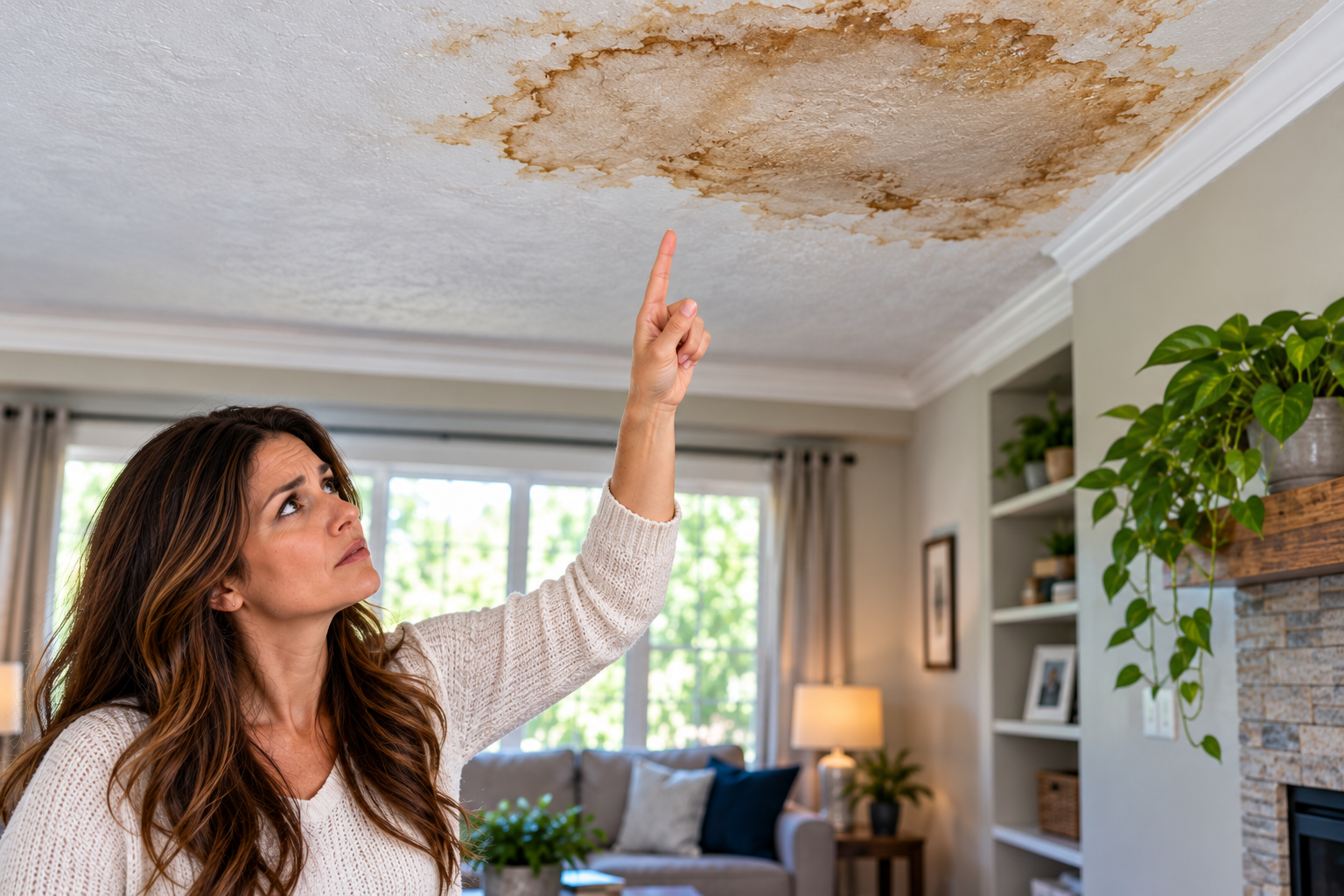
- Look for Water Stains Inside: Don’t just stare at the roof. Watch your ceilings and walls too, especially after heavy rain. New discoloration or bulging is a big red flag for a leak.
When to Call a Professional
This whole article is about spotting problems from the ground, but once you’ve found a missing shingle or some real damage, that’s usually where my DIY advice for fixing it stops for most homeowners. Unless you’ve got experience on roofs, you’re comfortable with heights, and you’ve got the right safety gear, you need to call a licensed roofing contractor. This isn’t a job to take lightly. Anything involving climbing onto a roof carries serious fall risk. And yes, a pro can judge the full scope of the damage, catch related issues you may have missed, and make the repair the right way so the roof system stays sound and the warranty doesn’t get shot. Don’t smear roofing tar over missing shingles and call it a day—that’s a temporary bandage at best, and it can make a proper repair harder later. If you find several missing shingles, a sagging roofline, or any sign of structural damage, you need a pro to stop the problem from getting bigger and more expensive. Get at least two quotes, and make sure they’re licensed and insured.
FAQ
-
Q: How often should I inspect my roof from the ground?
- I tell homeowners to do a quick ground inspection at least twice a year—spring and fall—and definitely after any major storm with high winds, heavy rain, or hail. It only takes 15-20 minutes, and it’s cheap insurance.
-
Q: What exactly am I looking for when I scan with binoculars?
- Focus on anything that breaks the normal shingle pattern. Missing shingles will look like dark, rectangular voids. Also watch for lifted, curled, or cracked shingles, rusty flashing around vents and chimneys, and too much shingle granule buildup in your gutters.
-
Q: Is it safe to use a drone for roof inspection?
- Yes, for spotting trouble, a drone can be a great tool if you know how to fly it safely. It gives you a better overhead view than binoculars. Just mind local drone rules and privacy laws, and stay clear of power lines.
-
Q: I found a missing shingle. Can I just replace it myself?
- Maybe, if you’re really handy, but it usually means getting on the roof, and that comes with real risk. You also have to lift surrounding shingles the right way, nail the new one properly, and seal it. For most homeowners, calling a pro is the safer play.
-
Q: What if I see a dark streak on my roof? Is that damage?
- Dark streaks are usually algae or mildew. That’s not an immediate shingle failure, but it can hold moisture and wear the granules down over time. It’s not a structural emergency, but I’d keep an eye on it.
-
Q: Why are flashing inspections so important?
- Flashing protects the weak spots where the roof meets chimneys, vents, and walls. Those are prime leak points if the flashing is bent, rusted, or sealed poorly. Damage there can turn into a leak fast.
-
Q: How can I tell if granules in my gutter are "excessive"?
- A little bit of granule loss is normal, especially on a newer roof as it “sheds” manufacturing residue. But if you’re pulling handfuls of sand-like material out every time you clean the gutters, or it’s showing up in a steady heavy amount, the shingles are breaking down faster than they should be.
-
Q: My neighbor suggested I just spray my roof with a hose to look for leaks. Is that a good idea?
- No, I wouldn’t do that. Spraying water at the roof can push it under shingles or into places it wouldn’t normally go, which can create new leaks or make existing ones worse. It also doesn’t mimic real rain very well. Better to wait for natural rain or have it checked professionally.
-
Q: What's the big deal about "popping" nails?
- When nails “pop” and lift up from the shingle, they leave a tiny hole for water and they loosen the shingle too, which makes wind uplift more likely. It usually points to poor installation, movement in the roof deck, or just age catching up.
-
Q: Should I worry if my roof looks wavy?
- A wavy or sagging roofline from the ground is a serious problem. It often means moisture damage in the roof deck, or even structural trouble with the rafters or trusses. This is a “call a pro immediately” situation. Don’t sit on a wavy roof.
Related Articles
Keep troubleshooting with these hand-picked guides from FixlyGuide:
- The 9 Sneaky Signs Your Roof Is Failing (And How to Spot Them From the Ground) — Learn to spot critical signs of roof damage from the safety of the ground, potentially saving thousands in repairs.
- The Tiny Gap That Wastes Energy: Why Your Baseboards Pull Away (And the Simple, Permanent Fix) — Baseboards separating from walls are a common issue, often indicating underlying problems with moisture or house settling, but are typicall…
- The 7 Critical Home Inspection Checks Most Homeowners Miss (And How to Spot Them) — Discover the crucial annual home inspection checks often overlooked by homeowners, and learn how to identify potential issues before they b…
- The 3 Critical Mistakes Homeowners Make Inspecting Their Roof (From the Ground) — Learn how to spot damaging roof problems safely from the ground, avoiding common pitfalls and knowing exactly what to look for.
- The 3 Hidden Reasons Your Roof Gets Ice Dams (and the Easy Fixes) — Ice dams are a common winter problem that can cause significant damage to your roof and home if not addressed safely and effectively.
- Missing Shingles? The Real Trouble Is Under Your Roof — After a storm, missing shingles seem like a simple fix. But the high winds that tore them off likely broke the seals on surrounding shingle…
Your seasonal maintenance checklist
The small jobs that prevent the expensive repairs. Tick them off — progress saves on this device.
Free, no signup. Skip anything that requires roof access or working near live electrical.
Estimate your own project cost
National averages are a starting point. Enter your details for a range that fits your house.
Roof replacement cost
- Per square (installed)$604 – $866
Add $500–$2,500 if decking is rotten and needs replacement. Storm damage may be covered by insurance.
Educational estimate only — always confirm with written local bids.
What should this project cost?
Enter your project details for a realistic cost range before you call anyone.
Spot repairs commonly run $400–$1,800; full replacement typically $9,000–$18,000 for an average home.
- Regional adjustment
- National average
- Labor share (typical)
- ~$2,948
- Quotes to collect
- 3 written estimates
Educational estimate based on national averages — not a binding quote. Always confirm with written local estimates.
Fixly Project Decision Box
- DIY difficulty
- Professional Recommended
- Estimated time
- Inspection 1–2 hours · repairs 1–3 days
- Cost level
- High
Main tools / materials
- Binoculars for a ground-level look
- Flashlight for attic checks
- Moisture meter
- Roofing cement (temporary patch only)
When to stop and call a pro
- Active leak near lights, fans, or any wiring
- Sagging, bulging, or water-filled ceiling
- Steep, wet, or two-story roof — do not climb it
- Storm or hail damage you plan to claim on insurance
Need professional help?
Free roof assessment first — no phone calls until you ask for them.
Get Local Roofing HelpDecide what your roof needs
Two minutes of questions turns "something is wrong up there" into a clear next step.
- Repair or replace your roof?Answer 10 questions about age, leaks, and damage to get a clear next step.Open
- Compare contractor quotesScore up to four bids on price, warranty, licensing, and timeline.Open
- Get local estimatesSend one request and compare written estimates from vetted pros.Open
Free, no signup required. Estimates are educational guidance, not a quote or an inspection.
Get the print-ready PDF of this guide
A clean, ad-free, printable version you can keep on your phone or pin to the workshop wall. Free with a FixlyGuide account.
- Print-optimized layout
- Tools, materials & every step included
- Saved to your account
Recommended for DIYers & woodworkers
Sponsored
The Top 20 Tools for Workshops of Any Budget
No stationary machines or power tools required — plus 3 fundamental tools that can't be bought at any price.
Get the free guide
Ted's Woodworking — The #1 Woodworking Resource
Detailed instructions, dimensioned drawings, materials & cutting lists, and 3D schematics for every skill level.
See the plansSponsored: links above are affiliate links. FixlyGuide may earn a commission on qualifying purchases — at no extra cost to you.
Frequently asked questions
How often should I inspect my roof from the ground?+
I tell homeowners to do a quick ground inspection at least twice a year—spring and fall—and definitely after any major storm with high winds, heavy rain, or hail. It only takes 15-20 minutes, and it's cheap insurance.
What exactly am I looking for when I scan with binoculars?+
Focus on anything that breaks the uniform pattern of your shingles. Missing shingles will look like dark, rectangular voids. Also look for lifted, curled, or cracked shingles, rusty flashing around vents and chimneys, and excessive shingle granules in your gutters.
Is it safe to use a drone for roof inspection?+
Yes, for identification, a drone can be a fantastic tool if you know how to fly one safely. It gives you an even better overhead view than binoculars. Just be mindful of local drone regulations and privacy laws, and check for power lines.
I found a missing shingle. Can I just replace it myself?+
While possible for the very handy, it generally requires getting onto the roof, which carries significant risks. You also need to properly lift surrounding shingles, nail new ones in correctly, and seal them. For most homeowners, calling a pro is the safer and more effective option.
What if I see a dark streak on my roof? Is that damage?+
Dark streaks are usually algae or mildew growth, which isn't immediately damaging to shingles but can retain moisture and degrade the granules over time. It's a sign your roof needs cleaning, not necessarily a structural issue, but worth noting.
Why are flashing inspections so important?+
Flashing protects the most vulnerable areas of your roof where it transitions around chimneys, vents, and walls. These are prime spots for water intrusion if the flashing is bent, rusted, or poorly sealed. Damage here almost guarantees a leak.
How can I tell if granules in my gutter are "excessive"?+
A small amount of granules is normal, especially on a newer roof as it "sheds" manufacturing residue. But if you're finding handfuls of sand-like material every time you clean your gutters, or if it's a consistent large amount, your shingles are definitely deteriorating faster than they should be, indicating significant wear.
My neighbor suggested I just spray my roof with a hose to look for leaks. Is that a good idea?+
No, I wouldn't recommend that. Spraying water onto the roof can actually push water *under* shingles or into areas it wouldn't normally go, potentially causing new leaks or making existing ones worse. It also doesn't simulate actual rain very well. It's better to wait for a natural rain event or rely on professional evaluation.
What's the big deal about "popping" nails?+
When nails "pop" (lift up from the shingle), they create a small hole for water *and* they allow the shingle to loosen, making it susceptible to wind uplift. They're a clear sign of either poor installation, roof deck movement, or general aging.
Should I worry if my roof looks wavy?+
A wavy or sagging roofline from the ground is a serious concern. It often indicates moisture damage to the underlying roof deck, or even structural issues with the rafters or trusses. This is definitely a "call a pro immediately" situation. Do not ignore a wavy roof.

Discussion
Loading comments…