- Appears near HVAC equipment
- Changes during cooling season
- Seems related to AC operation
- Or occurs below attic equipment...
Plumbing · Leak
| Project category | Plumbing |
|---|---|
| Problem type | Leak |
| Trade required | Plumbing |
| Urgency | Emergency — act now |
| Safety risk | High safety risk |
| DIY suitability | DIY for experienced homeowners |
| Cost category | Low cost |
| Typical timeline | Shut water off now; repair usually same or next day |
| Contractor type | Licensed plumber |
Repair option
Isolate at the shutoff, replace the failed component, and dry the cavity fully.
Replacement option
Repipe the run or the branch when corrosion is widespread.
Common causes
- Failed supply line or shutoff valve
- Worn washers, cartridges, or P-trap connections
- Pinhole corrosion in older copper
Relevant tools:emergency checklistdiy or hire a pro
Published September 8, 2026Last updated September 8, 2026
Tools & materials you'll need
Affiliate links- AmazonBuckets or containers for active drips
As an Amazon Associate FixlyGuide earns from qualifying purchases — at no extra cost to you. Prices and availability are accurate as of publication and subject to change.
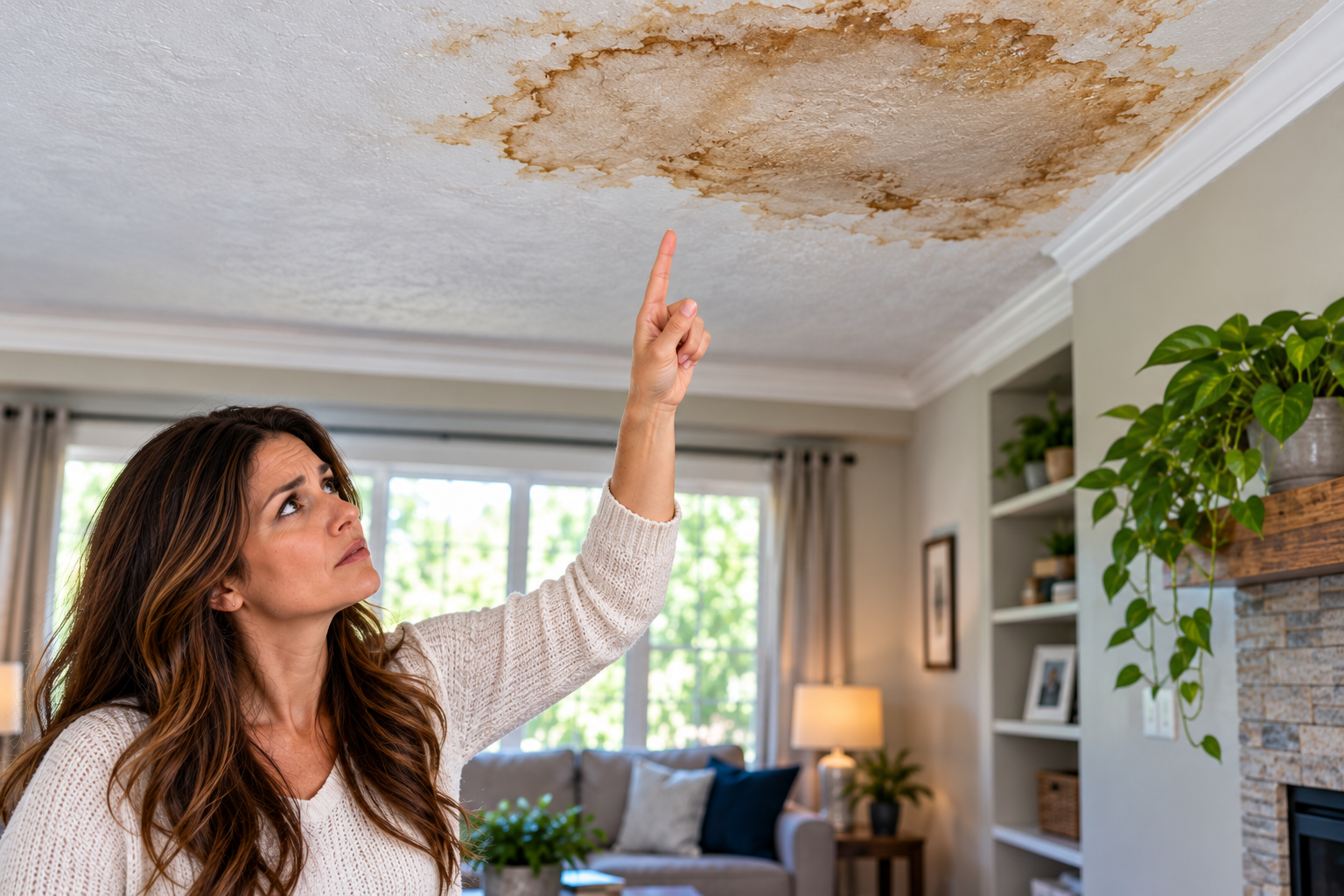
It starts small.
Maybe it's a faint yellow ring above the couch.
A brown spot in the corner of the bedroom.
A little discoloration beside the bathroom.
You look at it and think:
"I'll paint over that this weekend."
A month later, it's back.
Or worse:
It's bigger.
Here's the problem.
The stain isn't usually the problem you're trying to solve.
It's evidence of a problem.
Somewhere, water may be getting where it shouldn't.
And before you repaint the ceiling, replace drywall or start tearing things apart, there's a much more important question:
Where is the water coming from?
Because until you answer that question, you're mostly repairing the evidence.
First: Don't Assume Every Ceiling Stain Means You Need a New Roof
This is one of the easiest mistakes homeowners make.
You see water on the ceiling.
The roof is above the ceiling.
Therefore:
Roof leak.
Sometimes, yes.
But not always.
Depending on the location and construction of the house, moisture could potentially be related to:
- Roofing
- Flashing
- Plumbing
- Bathroom fixtures
- HVAC equipment or condensate
- Attic condensation
- Windows
- Exterior penetrations
- Drain or supply piping
- Other moisture sources
So don't call a roofer and say:
"I need a new roof."
Instead say:
"I have a water stain on my ceiling and need help identifying the source."
That's a much better starting point.
1. Is the Stain Actually Changing?
This is the first thing I'd determine.
Take a picture.
Not tomorrow.
Right now.
Photograph the entire area and then take a closer picture.
Record the date.
If practical, use a consistent reference point so you can compare the area later.
You're trying to determine:
- Is it getting larger?
- Darker?
- Wetter?
- Spreading?
- Changing after certain events?
A stain that's been unchanged for years after a documented previous repair is different from one that grew two inches after last night's storm.
Change matters.
2. When Does the Stain Appear or Get Worse?
This may be one of your best clues.
Don't diagnose yet.
Look for the pattern.
Does it change after rain? Roof/exterior water entry becomes a reasonable area to investigate.
Does it change after someone showers? Plumbing or bathroom-related moisture may deserve attention.
Does it happen when the upstairs toilet is used? That's useful information.
Does it appear primarily while the AC is running? HVAC-related moisture may need investigation.
Does it happen regardless of weather or fixture use? That tells you something too.
You're not trying to become a leak-detection specialist.
You're collecting evidence.
3. What's Directly Above the Stain?
Look upstairs if you have another floor.
What's above it?
Bathroom? Laundry room? Kitchen? HVAC equipment? Attic? Roof? Exterior wall?
Knowing what's above the affected area can help narrow the possibilities.
But be careful about assuming the source must be directly above the stain.
Water can travel.
It may follow:
- Framing
- Pipes
- Roof decking
- Drywall
- Other building materials
Then finally become visible somewhere else.
That's one reason leak diagnosis can be frustrating.
4. Look for Plumbing Fixtures Above or Nearby
If there's a bathroom above the stain, pay attention.
Possible sources can involve:
- Toilet
- Tub
- Shower
- Sink
- Supply connections
- Drain components
- Waterproofing
- Other plumbing
Here's where pattern matters again.
Suppose the ceiling stays dry for three days.
Then someone takes a long shower upstairs.
The stain becomes wet.
That's useful evidence.
It still doesn't tell you exactly what failed.
But you've narrowed the circumstances.
5. Check Under Nearby Sinks
This takes two minutes.
Open the cabinet.
Remove the mountain of cleaning supplies.
Use a flashlight.
Look for:
- Water droplets
- Staining
- Corrosion
- Swollen cabinet material
- Dampness
- Musty odors
- Visible deterioration
Run the faucet and observe accessible plumbing safely.
Don't start disassembling connections unless you know what you're doing.
You're checking for obvious evidence.
6. Look Around Toilets
A toilet can cause water problems without dramatically flooding the bathroom.
Pay attention to:
- Unexpected movement
- Moisture around the base
- Damaged flooring
- Discoloration
- Persistent odors
- Signs of previous leakage
If a toilet rocks, don't simply keep tightening it until something cracks.
Find out why it moves.
7. Check the Attic—But Only If It's Safe
If the stain is below an attic, the attic may provide useful clues.
But this deserves a warning.
Attics can contain:
- Exposed wiring
- Limited walking surfaces
- Extreme temperatures
- Nails
- Insulation hiding framing
- Low clearances
- Other hazards
If you can safely access and observe the area, you might notice:
- Wet materials
- Staining
- Damaged roof decking
- Water trails
- Condensation
- Deterioration
But don't walk across drywall ceilings or climb into an unsafe attic because an internet article told you to investigate.
Safety first.
When in doubt, use a professional.
8. Check the Roof From the Ground
You do not need to climb onto your roof.
In fact, most homeowners shouldn't.
From a safe ground location, look for obvious conditions such as:
- Missing or visibly damaged roofing material
- Debris
- Damaged flashing visible from below
- Gutter problems
- Tree damage
- Storm damage
But understand:
A roof can leak without the problem being obvious from your driveway.
And a roof that looks imperfect doesn't prove that it's causing your interior stain.
Professional evaluation may still be necessary.
9. Pay Attention to Flashing and Penetrations
Roof leaks don't always originate from the middle of a wide-open roof surface.
Water can enter around transitions and penetrations.
Depending on the home, that can include areas around:
- Vents
- Chimneys
- Skylights
- Roof-to-wall intersections
- Other penetrations
Again, don't climb up there yourself just to inspect it.
The useful homeowner observation is:
Where is the stain relative to roof features above it?
Share that information with the person evaluating the leak.
10. Don't Forget the HVAC System
Here's one homeowners sometimes overlook.
Air-conditioning systems manage moisture as part of normal operation.
Depending on the system and installation, problems involving condensate drainage, equipment or related components can sometimes create water where homeowners don't expect it.
If the stain:
- Appears near HVAC equipment
- Changes during cooling season
- Seems related to AC operation
- Or occurs below attic equipment...
tell the HVAC professional.
Don't assume:
"Water means plumbing."
Homes have several systems capable of producing or transporting moisture.
11. Look at Windows and Exterior Walls
Water stains near exterior walls can sometimes involve more than the roof.
Potential pathways can involve:
- Windows
- Exterior cladding
- Sealant joints
- Flashing
- Wall penetrations
- Other exterior details
Wind-driven rain can make these problems especially confusing.
You might notice:
Ordinary rain = no leak.
Heavy wind-driven rain = stain appears.
That's valuable information.
Write it down.
12. Watch the Gutters During Rain
From a safe location.
Do they overflow?
Does water pour behind them?
Are downspouts discharging appropriately?
Is water cascading onto exterior walls?
Are certain areas consistently overwhelmed?
A gutter problem doesn't automatically explain an interior ceiling stain.
But poor water management can contribute to problems around a home.
Learn where rainwater goes.
Every homeowner should.
Is the Leak Active Right Now?
This changes the situation.
Look for signs such as:
- Active dripping
- Wet drywall
- Rapidly expanding staining
- Sagging ceiling material
- Water near electrical components
- Standing water
- Sudden significant moisture
If the ceiling is bulging or sagging with water, don't stand underneath it.
Wet building materials can fail.
And water near electrical equipment or wiring can create additional hazards.
This isn't the time to worry about saving the paint.
Protect people first.
Then the property.
Water Near Electricity? Treat It Differently
Water and electricity are a dangerous combination.
If water is reaching:
- Light fixtures
- Outlets
- Electrical panels
- Wiring
- Other electrical equipment...
don't casually touch affected electrical components.
Depending on the severity, appropriate emergency response and qualified electrical help may be necessary.
If you're unsure whether conditions are safe:
Don't experiment.
What If the Ceiling Starts Dripping?
Your immediate priority is limiting additional damage without putting yourself in danger.
Depending on the situation, that may involve:
- Moving belongings away
- Using containers where safe
- Stopping an obvious water source if you can do so safely
- Calling the appropriate professional
- Contacting your insurer when appropriate
- Documenting damage
But don't climb into unsafe areas or start cutting into a ceiling containing unknown electrical or plumbing components.
Don't Immediately Cut a Hole in the Ceiling
You've probably seen videos:
Homeowner sees bulge.
Grabs screwdriver.
Pokes ceiling.
Water pours perfectly into bucket.
Internet celebrates.
Real houses aren't always that simple.
Behind that ceiling may be:
- Electrical wiring
- Pipes
- Mechanical components
- Insulation
- Other hazards
And water-damaged material may be unstable.
If significant water has accumulated, professional guidance can be safer than blindly stabbing holes into the ceiling.
The Biggest Leak-Detection Mistake
Here's one:
Repairing the first thing that looks suspicious without confirming it's actually the source.
Example:
Ceiling stain.
Roofer sees questionable shingles.
Roof gets repaired.
Next storm?
Stain returns.
Why?
Maybe that wasn't the leak source.
Or perhaps there were multiple problems.
Leak diagnosis can require:
- Observation
- Testing
- Pattern recognition
- Experience
- And sometimes patience
Ask the contractor:
"What makes you believe this is the source?"
That's a fair question.
The Second Biggest Mistake: Painting Too Soon
Let's say the leak is repaired.
Great.
You repaint the ceiling the next morning.
Not so fast.
Affected materials may need time to dry and be evaluated.
Depending on the extent of water exposure, some materials may require cleaning, drying, repair or replacement.
The proper response depends on:
- How much water
- Where it came from
- How long materials were wet
- What materials were affected
- Whether contamination is involved
Painting should come after the moisture problem has been properly addressed.
What About Mold?
This is where internet advice can become dramatic.
Water intrusion can create conditions that support microbial growth.
But:
A water stain doesn't automatically mean your house has a catastrophic mold problem.
Likewise:
Ignoring persistent moisture isn't smart either.
The priority is controlling the moisture source and properly addressing affected materials.
If you see significant suspected growth, have extensive water damage, have contaminated water, or aren't sure how to handle the affected area, appropriate professional evaluation may be warranted.
Clean Water vs. Contaminated Water Matters
Not every water loss should be handled the same way.
A small amount of water from one source may be very different from:
- Sewage
- Floodwater
- Drain backups
- Other potentially contaminated water
If contaminated water is involved:
Don't treat it like a simple roof drip.
Professional cleanup may be appropriate because sanitation and exposure risks change.
Should You Call a Roofer, Plumber, HVAC Contractor or Restoration Company?
Use the evidence.
Call a plumber when: The pattern appears connected to plumbing fixtures, supply/drain piping or other plumbing components.
Call a roofer when: The problem appears strongly associated with rain or roofing components.
Call an HVAC professional when: Moisture appears related to cooling equipment, condensate or HVAC operation.
Call a restoration/water-damage professional when: There's significant water intrusion, widespread wet materials or drying/cleanup beyond what you can reasonably handle.
Call an electrician when: Water has affected electrical components or there are electrical safety concerns.
Sometimes:
You may need more than one trade.
The person who stops the leak isn't necessarily the same person who repairs all the damage it caused.
Before the Contractor Arrives: Gather This Information
This can make diagnosis easier.
Take photos. Wide and close-up.
Record when you noticed it. Date matters.
Record weather. Did it rain? How heavily? Was it windy?
Note fixture use. Shower? Toilet? Laundry? Dishwasher?
Note HVAC operation. Was the AC running?
Document previous repairs. Has someone "fixed" this before?
Photograph progression. If safe, show how the stain changed.
Now you're giving the contractor a story instead of:
"There's water somewhere."
Questions to Ask the Contractor
Save these.
- What do you believe is causing the water?
- What evidence points to that source?
- Is the leak still active?
- What needs to be repaired to stop it?
- Are any surrounding materials damaged?
- Does anything need to be opened to confirm the problem?
- How will we know the repair worked?
- Does the area need professional drying?
- Is another trade needed?
- What should I watch for afterward?
Those questions can help homeowners understand the repair instead of simply approving:
"Fix leak — $1,800."
Should You Make an Insurance Claim?
Not every water problem belongs in an insurance claim.
Coverage depends on:
- Your policy
- Cause of loss
- Timing
- Exclusions
- Deductible
- Damage
- Other circumstances
Don't assume: "Water damage is covered."
And don't assume: "Water damage is never covered."
If damage may be significant, review your policy and contact your insurance professional or insurer for guidance appropriate to your situation.
Documenting the condition can also be helpful.
Hidden Water Damage Signs Homeowners Should Know
Sometimes there's no dramatic ceiling stain.
Watch for changes such as:
- Peeling paint
- Bubbling paint
- Soft drywall
- Swollen baseboards
- Warped flooring
- Persistent musty odor
- Cabinet swelling
- Unexpected discoloration
- Loose flooring
- Deteriorated trim
- Repeated condensation where it wasn't previously occurring
Again:
None of these individually proves a hidden leak.
They're clues.
The Fixly Guide Water-Stain Test
Found a stain?
Ask these seven questions:
- Is it new?
- Is it getting bigger?
- Is it wet right now?
- What is above or beside it?
- Does it change after rain?
- Does it change after plumbing or HVAC use?
- Is there any electrical or structural safety concern?
Those answers give you a much better starting point.
Why Small Leaks Can Become Expensive
The visible water itself may not be the biggest expense.
The problem is what persistent moisture can affect:
- Drywall
- Insulation
- Wood
- Cabinets
- Flooring
- Paint
- Trim
- Electrical components
- Other finishes and building materials
That's why a seemingly minor leak can become more complicated when ignored.
The homeowner who says "It's only a little water" may be looking at the amount they can see.
Not necessarily the area being affected.
Don't Let This Article Make You Paranoid
Important.
A tiny old stain doesn't mean:
- Your roof is failing
- Your plumbing is destroyed
- Your house is full of mold
- You need $20,000 worth of repairs
That's not the message.
The message is:
Don't confuse a symptom with a diagnosis.
Notice it.
Document it.
Look for patterns.
Determine whether it's active.
Get the appropriate professional involved when needed.
Then repair the cause.
The Correct Order Matters
Here's the order homeowners should remember:
- FIND THE SOURCE
- STOP THE WATER
- ASSESS THE DAMAGE
- DRY / ADDRESS AFFECTED MATERIALS
- REPAIR THE DAMAGE
- PAINT / FINISH
A lot of people start at:
6. PAINT.
Then wonder why the stain returns.
Final Thought
One of the most expensive phrases in homeownership might be:
"I'll keep an eye on it."
Sometimes monitoring is exactly the right thing to do.
But monitoring means:
- Taking a picture
- Recording the date
- Watching for change
- Understanding when it happens
- And following up if it continues
It doesn't mean:
Forgetting about it for two years.
If you find a water stain on your ceiling tomorrow, don't immediately assume you need a new roof.
And don't immediately grab a paint roller.
Ask:
"Where did this water come from?"
Find the source.
Stop the moisture.
Understand the damage.
Then repair the ceiling.
Because sometimes that ugly brown stain isn't the problem.
It's your house showing you where to start looking.
Found a mysterious stain on your ceiling or wall? Take our free Roof Leak Assessment or find a vetted DFW pro who can track down the source — before a small stain becomes a big repair.
More from Fixly Guide:
Should you do this yourself?
Answer five quick questions before you start. Safety outranks savings every time.
Your experience with work like this
How high do you have to work?
Does the job involve any of these?
Will it need a permit?
Specialty tools
Free and instant. Educational guidance only — not a quote, inspection, or professional diagnosis.
Questions to ask before you sign
Ask every contractor the same questions and the cheapest bid stops looking cheapest. Check them off as you go — your progress is saved on this device.
Free, no signup. Bring this to every walkthrough so you compare bids on the same terms.
What should this project cost?
Enter your project details for a realistic cost range before you call anyone.
Common repairs run $150–$650; repipes and water-heater replacements reach $1,500–$4,500.
- Regional adjustment
- National average
- Labor share (typical)
- ~$754
- Quotes to collect
- 3 written estimates
Educational estimate based on national averages — not a binding quote. Always confirm with written local estimates.
Fixly Project Decision Box
- DIY difficulty
- Professional Recommended
- Estimated time
- Inspection 1–2 hours · repairs 1–3 days
- Cost level
- High
Main tools / materials
- Binoculars for a ground-level look
- Flashlight for attic checks
- Moisture meter
- Roofing cement (temporary patch only)
When to stop and call a pro
- Active leak near lights, fans, or any wiring
- Sagging, bulging, or water-filled ceiling
- Steep, wet, or two-story roof — do not climb it
- Storm or hail damage you plan to claim on insurance
Need professional help?
Free roof assessment first — no phone calls until you ask for them.
Get Local Roofing HelpGet help with your roof now
Stay off the roof. These free tools help you protect the house and reach the right professional fast.
- Emergency repair checklistThe first steps that limit damage before a pro arrives.Open
- Repair or replace your roof?Answer 10 questions about age, leaks, and damage to get a clear next step.Open
- Get local estimatesSend one request and compare written estimates from vetted pros.Open
Free, no signup required. Estimates are educational guidance, not a quote or an inspection.
Recommended for DIYers & woodworkers
Sponsored
The Top 20 Tools for Workshops of Any Budget
No stationary machines or power tools required — plus 3 fundamental tools that can't be bought at any price.
Get the free guide
Ted's Woodworking — The #1 Woodworking Resource
Detailed instructions, dimensioned drawings, materials & cutting lists, and 3D schematics for every skill level.
See the plansSponsored: links above are affiliate links. FixlyGuide may earn a commission on qualifying purchases — at no extra cost to you.
Frequently asked questions
What causes a brown water stain on the ceiling?+
Possible causes include roof leaks, plumbing leaks, HVAC-related moisture, condensation or other water intrusion. The location and timing of the stain can help narrow down the source.
Does a ceiling water stain always mean the roof is leaking?+
No. Plumbing, HVAC and other moisture sources can also create ceiling stains.
Can I just paint over an old water stain?+
First determine whether the moisture source has been corrected and whether affected materials need additional attention. Cosmetic repairs should generally come after the underlying problem has been addressed.
How do I know if a ceiling leak is active?+
New moisture, active dripping, expanding discoloration or changes associated with rain or fixture use can indicate ongoing water intrusion. Professional evaluation may be necessary when the source isn't clear.
Who should I call for a ceiling leak?+
It depends on the likely source. A plumber, roofer, HVAC professional, restoration company or other qualified professional may be appropriate.
Is a sagging wet ceiling dangerous?+
Water-damaged ceiling materials can become unstable. Avoid standing beneath an obviously sagging or water-loaded ceiling and seek appropriate professional assistance.


Discussion
Loading comments…