- Evaluation — measurement, elevation survey, sometimes an engineer's report.
- Piers or underpinning — priced per pier, driven by depth and soil.
- Drainage correction — grading, gutters, French drains, downspout extensions.
- Access and restoration — landscaping, flatwork, and interior finishes.
General remodeling · Renovation planning
| Project category | General remodeling |
|---|---|
| Problem type | Renovation planning |
| Trade required | General contracting |
| Urgency | Planned project |
| Safety risk | Low safety risk |
| DIY suitability | Pro recommended |
| Cost category | Major investment |
| Typical timeline | Design and permitting often 2–4 months before work starts |
| Contractor type | General contractor |
Repair option
Phase the work and fix the building envelope first.
Replacement option
Full renovation with permits, design, and a general contractor.
Common causes
- Space no longer fits how the household lives
- Resale preparation
- Deferred maintenance stacking up
Relevant tools:project cost estimatorcompare quoteshome improvement material prices
Published September 5, 2026Last updated September 5, 2026
Tools & materials you'll need
Affiliate linksNo materials required.
As an Amazon Associate FixlyGuide earns from qualifying purchases — at no extra cost to you. Prices and availability are accurate as of publication and subject to change.
Quick Answer
Foundation quotes have the widest spread of any home repair category, because the diagnosis varies more than the labor. Before you accept a pier plan, get an independent structural opinion from someone who is not selling the repair.
What You Are Paying For
- Evaluation — measurement, elevation survey, sometimes an engineer's report.
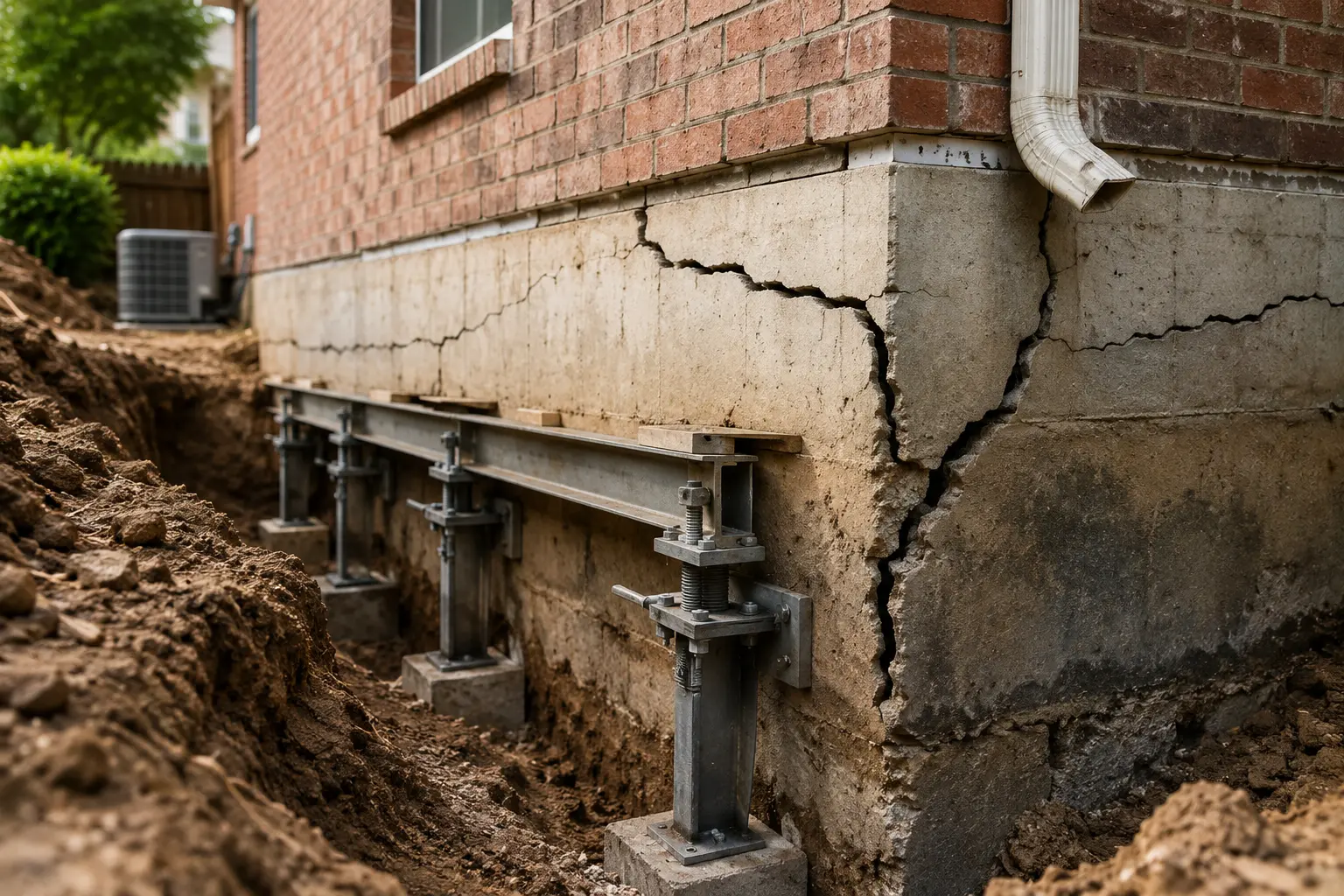
- Piers or underpinning — priced per pier, driven by depth and soil.
- Drainage correction — grading, gutters, French drains, downspout extensions.
- Access and restoration — landscaping, flatwork, and interior finishes.
- Engineering and permits.
How to Read a Cost Range
Every honest cost guide is a range, because price is set by five things you can actually check before you call anyone:
- Scope — what is genuinely being replaced versus repaired.
- Access — crawlspace, attic, second story, or tight side yards all add labor hours.
- Condition behind the surface — rot, corrosion, or code-era materials found on opening up.
- Materials chosen — builder-grade and premium can differ by multiples for the same job.
- Local labor and permits — the same job prices differently across metros and even suburbs.
When two estimates are far apart, the cause is almost always scope, not greed. Line up the line items before you compare the totals.
How to Compare Estimates Without Guessing
- Get the scope in writing, with quantities and materials named.
- Ask what is excluded — that is where surprise invoices come from.
- Confirm permits, inspections, and who pulls them.
- Ask what happens if hidden damage is found, and how that gets priced.
- Check the payment schedule against progress, not against the calendar.
Which Cracks Matter
| Observation | Typical meaning |
|---|---|
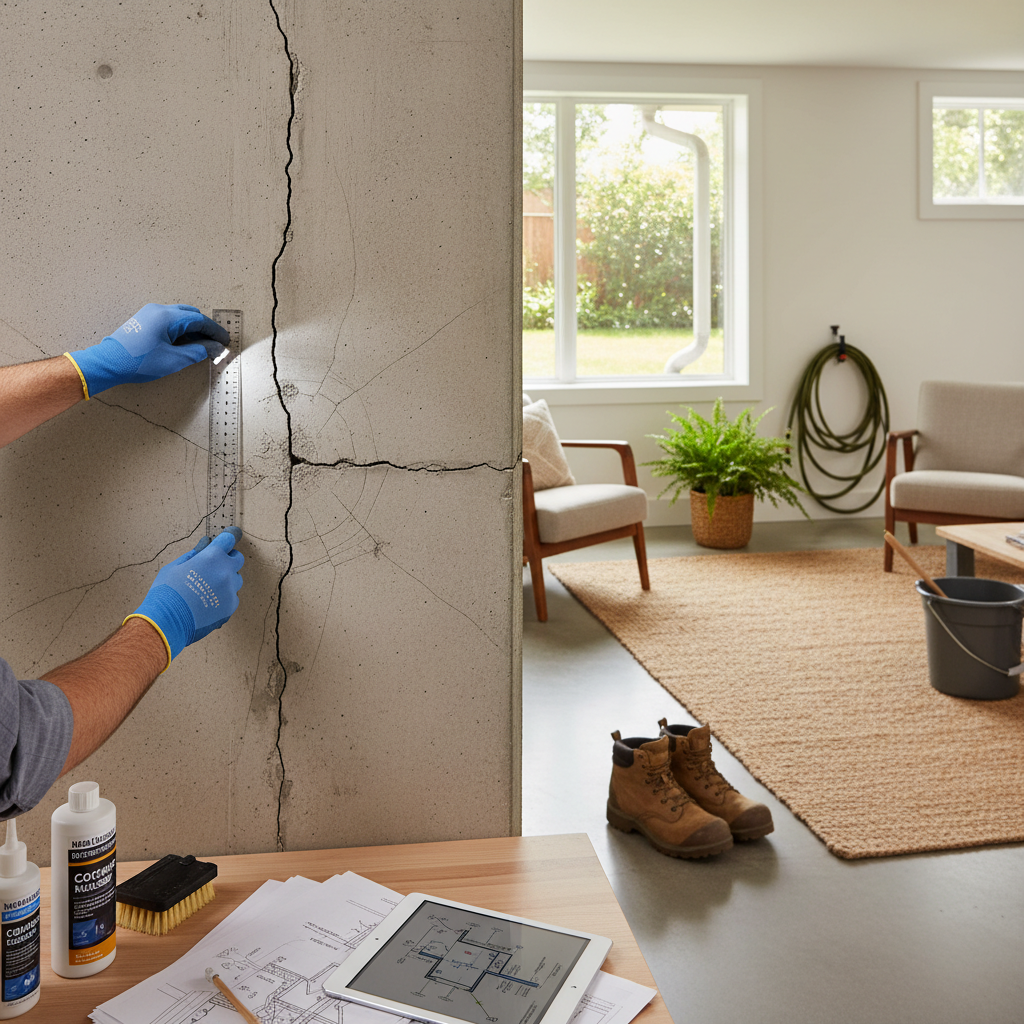
| Hairline vertical cracks in concrete | Common shrinkage, usually cosmetic |
| Stair-step cracks in brick or block | Differential movement, investigate |
| Horizontal crack in a basement wall | Lateral pressure, structural concern |
| Doors and windows sticking seasonally | Moisture-driven soil movement |
| Doors that never latch again, growing gaps | Progressive settlement |
| Sloping floors, separating trim | Movement worth an engineer visit |
Fix the Cause, Not Just the Symptom
Most residential movement is water-driven: poor grading, discharging downspouts, or seasonal soil moisture swings. Correcting drainage is cheaper than structural work and is frequently what stops progression. A contractor who ignores drainage in the plan is treating the symptom.
Getting a Real Second Opinion
Hire a structural engineer independently, and hand their report to bidders rather than asking each contractor for their own diagnosis. That is how you get comparable quotes on the same scope.
When to Stop and Call a Pro
Any crack that is growing, any horizontal basement wall crack, and any change you can measure over weeks. Track cracks by marking and dating the ends — that record is genuinely useful evidence.
Get a Real Number for Your Home
Published ranges are a sanity check, not a quote. The only number that matters is the one written against your house, your access, and your scope.
- Find a local pro — pick your trade and ZIP code to see contractors serving your area.
- Repair or replace? 12 expensive home decisions — how to judge a big-ticket recommendation.
- 20 questions to ask a contractor before hiring — the licensing, deposit, and change-order questions that protect you.
- DIY or hire a pro? — a two-minute check on which jobs are safe to handle yourself.
- Home problem guides — start with the symptom, get likely causes and safety guidance.
Fixly Guide provides educational cost guidance only. Nothing here is a quote, an inspection, or a professional diagnosis.
Estimate your own project cost
National averages are a starting point. Enter your details for a range that fits your house.
Concrete slab calculator
- Bagged mix (80 lb)$372 – $527
- Ready-mix delivery (1.5 cu yd)$210 – $300
Ready-mix is usually cheaper above ~1 cu yd. Most suppliers have a short-load fee under 3 yd.
Educational estimate only — always confirm with written local bids.
Questions to ask before you sign
Ask every contractor the same questions and the cheapest bid stops looking cheapest. Check them off as you go — your progress is saved on this device.
Free, no signup. Bring this to every walkthrough so you compare bids on the same terms.
What should this project cost?
Enter your project details for a realistic cost range before you call anyone.
Minor crack sealing $800–$2,500; pier and beam stabilization $10,000–$30,000+.
- Regional adjustment
- National average
- Labor share (typical)
- ~$4,961
- Quotes to collect
- 3 written estimates
Educational estimate based on national averages — not a binding quote. Always confirm with written local estimates.
Fixly Project Decision Box
- DIY difficulty
- Moderate
- Estimated time
- 30 minutes – half a day
- Cost level
- Moderate
Main tools / materials
- Adjustable wrench
- Plunger or drain auger
- Bucket and towels
- Thread tape
When to stop and call a pro
- Water you cannot shut off at the fixture or main
- Sewage backing up into more than one fixture
- Water near electrical panels or outlets
- Gas water heater work beyond relighting a pilot
Need professional help?
Get a Licensed PlumberCheck these numbers against your project
National averages are a starting point. These tools narrow it to your scope and ZIP.
Free, no signup required. Estimates are educational guidance, not a quote or an inspection.
Recommended for DIYers & woodworkers
Sponsored
The Top 20 Tools for Workshops of Any Budget
No stationary machines or power tools required — plus 3 fundamental tools that can't be bought at any price.
Get the free guide
Ted's Woodworking — The #1 Woodworking Resource
Detailed instructions, dimensioned drawings, materials & cutting lists, and 3D schematics for every skill level.
See the plansSponsored: links above are affiliate links. FixlyGuide may earn a commission on qualifying purchases — at no extra cost to you.
Frequently asked questions
Are foundation cracks always serious?+
No. Fine vertical shrinkage cracks in concrete are common. Stair-step cracks in masonry, horizontal basement cracks, and cracks that grow over time deserve professional evaluation.
Should I get an engineer or a foundation contractor first?+
An independent structural engineer first. They do not sell the repair, and their report gives every bidder the same scope to price.
Will fixing drainage stop foundation movement?+
Often it addresses the underlying cause, since most residential movement is water-driven. It is also far cheaper than structural work, which makes it the right first step in most plans.


Discussion
Loading comments…