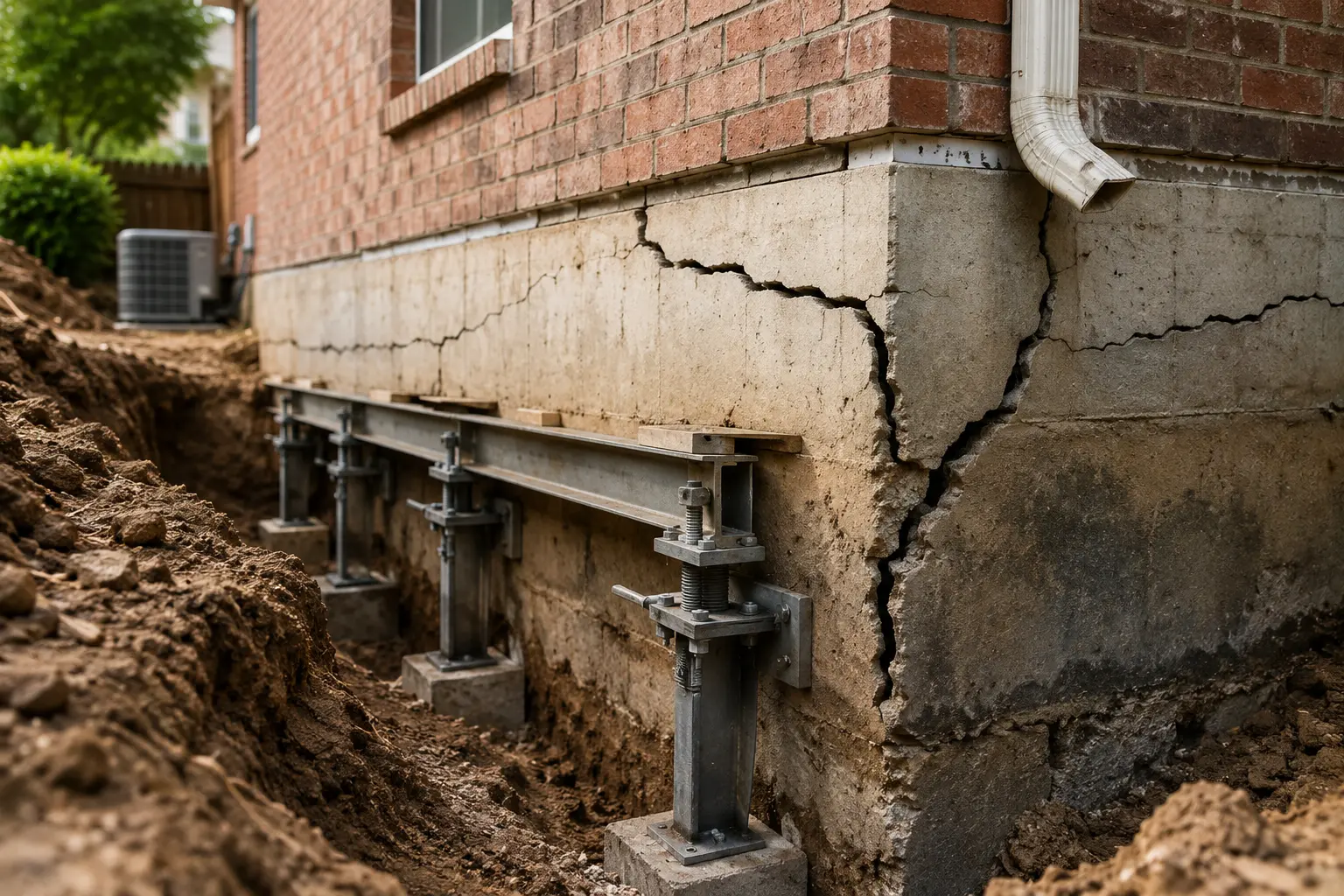
- Stair-step cracks in brick or masonry
- Doors that stick or won't latch
- Windows that are difficult to open
- Large cracks in the slab or stem wall
- Gaps opening around doors and windows
General remodeling · Renovation planning
| Project category | General remodeling |
|---|---|
| Problem type | Renovation planning |
| Trade required | General contracting |
| Urgency | Planned project |
| Safety risk | Low safety risk |
| DIY suitability | Pro recommended |
| Cost category | Major investment |
| Typical timeline | Design and permitting often 2–4 months before work starts |
| Contractor type | General contractor |
Repair option
Phase the work and fix the building envelope first.
Replacement option
Full renovation with permits, design, and a general contractor.
Common causes
- Space no longer fits how the household lives
- Resale preparation
- Deferred maintenance stacking up
Relevant tools:project cost estimatorcompare quoteshome improvement material prices
Published August 4, 2026Last updated August 17, 2026
Tools & materials you'll need
Affiliate links- AmazonSoaker hose for drought-season soil moisture
As an Amazon Associate FixlyGuide earns from qualifying purchases — at no extra cost to you. Prices and availability are accurate as of publication and subject to change.
Quick Answer
Most homeowners spend $2,500 to $9,000 on foundation repair in 2026. Minor crack repair can run as little as $700, while major structural work with multiple piers can exceed $25,000. Price depends on foundation type, damage severity, soil conditions, number of piers, and access.
What Foundation Repair Costs in 2026
Foundation problems are among the most serious — and expensive — issues a homeowner can face. The foundation carries the entire structure, so when it settles, cracks, or shifts, the damage spreads upward into walls, doors, windows, and plumbing.
| Repair | Typical cost (2026) |
|---|---|
| Minor crack repair | $700 – $1,500 |
| Epoxy crack injection | $500 – $1,200 |
| Concrete slab repair | $2,000 – $7,500 |
| Foundation pier installation | $1,200 – $3,500 per pier |
| House leveling | $3,500 – $12,000 |
| Pier & beam repair | $4,000 – $15,000 |
| Severe structural repair | $10,000 – $25,000+ |
The total depends on foundation type, damage severity, soil conditions, number of piers required, accessibility, local labor rates, and whether drainage has to be corrected at the same time.
Signs Your Home May Need Foundation Repair
Foundation issues rarely fix themselves — they get more expensive the longer they are ignored. Watch for:
- Cracks in drywall
- Stair-step cracks in brick or masonry
- Doors that stick or won't latch
- Windows that are difficult to open
- Uneven or sloping floors
- Large cracks in the slab or stem wall
- Gaps opening around doors and windows
- Cabinets separating from walls
- A chimney leaning away from the house
- Water pooling against the foundation after rain
If several of these show up together, schedule a professional inspection before the movement gets worse.
What Causes Foundation Problems
- Expansive clay soils that swell and shrink with moisture
- Poor drainage around the home
- Plumbing leaks beneath the slab
- Tree roots pulling moisture out of the soil
- Heavy rainfall followed by drought
- Poor soil compaction during construction
- Natural settling over time
- Erosion
In Texas and other regions with expansive clay, seasonal moisture swings are the single leading cause of foundation movement.
Cost by Foundation Type
Concrete Slab
Common across Texas and the South. $2,000 – $8,000 typical. Work includes slab leveling, pier installation, crack repair, soil stabilization, and void filling.
Pier and Beam
Easier to access from underneath, but more components to repair. $4,000 – $15,000 typical, covering beam replacement, new support piers, floor joist repair, and crawlspace improvements.
Basement Foundation
Often needs waterproofing plus structural reinforcement. $3,500 – $15,000+.
Cost by Severity
| Damage level | Typical cost |
|---|---|
| Hairline crack repair | $500 – $1,200 |
| Several foundation cracks | $1,500 – $3,000 |
| Moderate settlement | $3,000 – $8,000 |
| Major structural movement | $10,000 – $25,000+ |
The earlier the problem is addressed, the cheaper the fix.
Cost by Repair Method
| Method | Average cost | Best for |
|---|---|---|
| Steel piers | $1,500 – $3,500 per pier | Strongest long-term fix, deep bedrock |
| Helical piers | $1,400 – $3,000 per pier | Lighter structures, unstable soil |
| Concrete piers | $1,000 – $2,500 per pier | Traditional slab repair |
| Polyurethane foam injection | $1,500 – $5,000 | Lifting sinking slabs |
| Mudjacking | $800 – $2,500 | Raising settled concrete |
Other Cost Factors
Soil conditions. Expansive clay, loose fill dirt, erosion, and high moisture fluctuation all push costs up because extra stabilization is required.
Drainage problems. Poor drainage is one of the biggest contributors to foundation failure. Contractors commonly recommend French drains, regrading, downspout extensions, gutters, or a sump pump. Correcting drainage protects the repair you just paid for.
Accessibility. Landscaping, concrete driveways, patios, decks, interior flooring, and tight crawlspaces all add labor hours.
Labor rates. Generally $100 – $250 per hour. Most projects take one to five days depending on pier count.
Choosing the Right Foundation Repair Contractor
Foundation repair is one of the most specialized trades in home improvement. Look for contractors who:
- Are licensed (where required) and fully insured
- Have extensive experience with your foundation type
- Offer free inspections and detailed written estimates
- Use engineered repair methods
- Provide transferable warranties
- Have verifiable reviews and references
- Explain the cause of the problem, not just the repair
- Do not pressure you to sign the same day
Questions to Ask Before Hiring
- What is causing my foundation movement?
- Which repair method do you recommend, and why?
- How many piers will my home require?
- Is the repair backed by a lifetime or transferable warranty?
- Will permits be required?
- Will landscaping, sidewalks, or driveways be affected?
- How long will repairs take?
- Do I need drainage improvements too?
Comparing at least three estimates helps you buy the right repair, not the most expensive one.
Do Foundation Problems Get Worse?
Yes — almost always. Untreated movement leads to larger wall cracks, uneven floors, roof damage, slab plumbing leaks, brick separation, door and window misalignment, water intrusion, and eventually structural instability. Early repair is consistently cheaper.
Ways to Save Money on Foundation Repair
- Schedule repairs as soon as symptoms appear
- Get at least three written estimates
- Correct drainage before repairs begin
- Keep gutters clean and direct water away from the home
- Maintain consistent soil moisture during dry seasons
- Avoid planting large trees close to the house
- Ask about financing if the repair is large
Does Homeowners Insurance Cover Foundation Repair?
In most cases, no. Standard policies exclude damage from normal settling, expansive soil, poor drainage, tree roots, and natural soil movement. Coverage may apply when the damage results from a covered peril — a burst plumbing pipe, certain natural disasters, vehicle impact, or fire-related structural damage. Read your policy and confirm with your carrier.
Is Foundation Repair Worth It?
For most homeowners, yes. Repairing early prevents more expensive structural damage, protects resale value, improves safety, stops cracks from spreading, restores door and window operation, and heads off plumbing and drainage failures. Ignoring the problem reliably costs more later.
Expert Tips
- Inspect at the first warning sign, not the fifth
- Get three written estimates from established companies
- Confirm the warranty is transferable to a future buyer
- Fix drainage first — it is the cheapest prevention there is
- Water the foundation consistently during long droughts if your soil type calls for it
- Keep large trees away from the perimeter
- Extend downspouts several feet from the house
- Save every inspection report, invoice, and warranty document for resale
Related Guides
Estimate your own project cost
National averages are a starting point. Enter your details for a range that fits your house.
Concrete slab calculator
- Bagged mix (80 lb)$372 – $527
- Ready-mix delivery (1.5 cu yd)$210 – $300
Ready-mix is usually cheaper above ~1 cu yd. Most suppliers have a short-load fee under 3 yd.
Educational estimate only — always confirm with written local bids.
Questions to ask before you sign
Ask every contractor the same questions and the cheapest bid stops looking cheapest. Check them off as you go — your progress is saved on this device.
Free, no signup. Bring this to every walkthrough so you compare bids on the same terms.
What should this project cost?
Enter your project details for a realistic cost range before you call anyone.
Minor crack sealing $800–$2,500; pier and beam stabilization $10,000–$30,000+.
- Regional adjustment
- National average
- Labor share (typical)
- ~$4,961
- Quotes to collect
- 3 written estimates
Educational estimate based on national averages — not a binding quote. Always confirm with written local estimates.
Fixly Project Decision Box
- DIY difficulty
- Professional Recommended
- Estimated time
- Monitoring over 60–90 days · engineer visit 1–2 hours
- Cost level
- Major Project
Main tools / materials
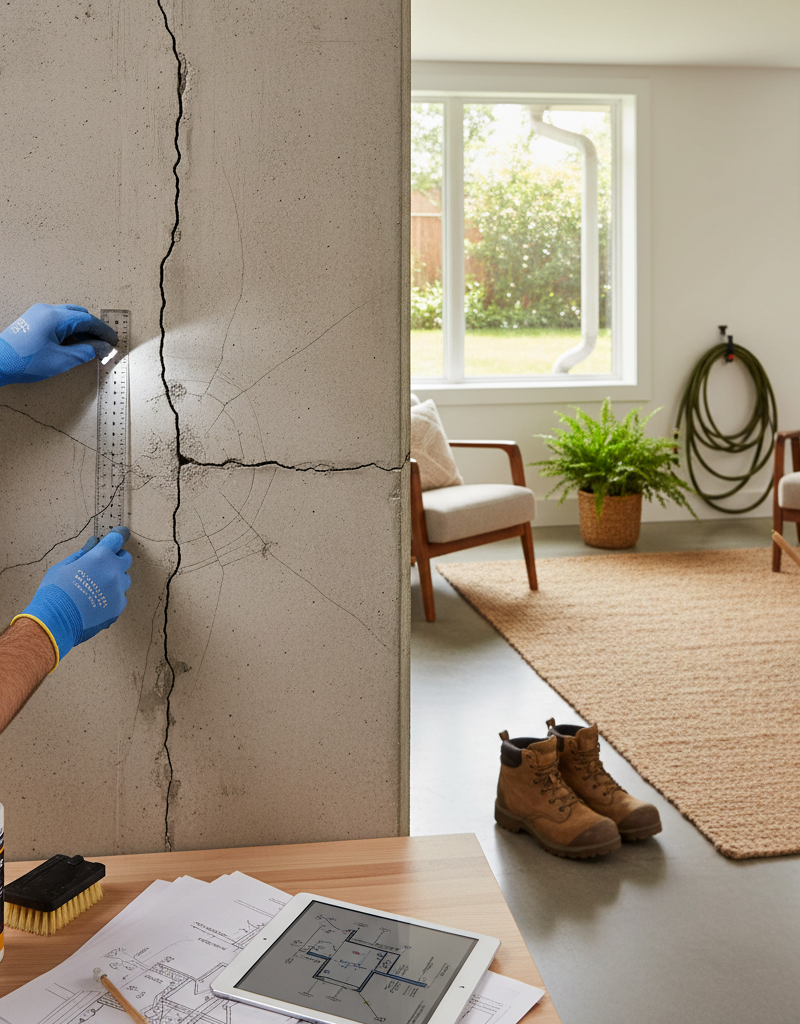
- Crack monitor or pencil marks with dates
- Tape measure
- Marble or level for floor slope
When to stop and call a pro
- A crack wider than 1/4 inch or growing month over month
- Doors and windows that suddenly stick or will not latch
- Stair-step cracks in brick or block
- Separation between walls and ceilings or floors
Need professional help?
Get a Foundation EvaluationCheck these numbers against your project
National averages are a starting point. These tools narrow it to your scope and ZIP.
Free, no signup required. Estimates are educational guidance, not a quote or an inspection.
Recommended for DIYers & woodworkers
Sponsored
The Top 20 Tools for Workshops of Any Budget
No stationary machines or power tools required — plus 3 fundamental tools that can't be bought at any price.
Get the free guide
Ted's Woodworking — The #1 Woodworking Resource
Detailed instructions, dimensioned drawings, materials & cutting lists, and 3D schematics for every skill level.
See the plansSponsored: links above are affiliate links. FixlyGuide may earn a commission on qualifying purchases — at no extra cost to you.
Frequently asked questions
How much does foundation repair cost in 2026?+
The average homeowner spends between $2,500 and $9,000 on foundation repairs in 2026. Minor crack repairs may cost as little as $700, while extensive structural repairs involving multiple piers or severe settlement can exceed $25,000. The final price depends on foundation type, damage severity, soil conditions, accessibility, and repair method.
What are the first signs of foundation problems?+
Early warning signs include drywall cracks, stair-step cracks in brick, sticking doors and windows, uneven or sloping floors, gaps around doors and windows, cabinets pulling away from walls, cracks in the concrete slab, and a chimney leaning away from the home. Several symptoms together warrant a professional inspection.
Can foundation cracks be repaired?+
Yes. Many foundation cracks can be repaired, but the right method depends on the cause and severity. Options include epoxy crack injection, polyurethane injection, concrete patching, steel piers, helical piers, and slab leveling. A specialist can determine whether a crack is cosmetic or structural.
How long does foundation repair take?+
Most residential foundation repair projects take one to five days. Larger homes or projects requiring multiple piers, drainage improvements, or extensive leveling may take one to two weeks. Your contractor should provide a written timeline before work begins.
Is foundation repair covered by homeowners insurance?+
Usually not. Standard homeowners policies exclude damage from normal settling, expansive clay soil, poor drainage, tree roots, and natural soil movement. Damage resulting from a covered peril, such as a burst plumbing pipe, may be covered. Review your policy and confirm with your insurer.
Does foundation repair increase home value?+
Foundation repair rarely raises market value on its own, but it preserves value, makes the home easier to sell, improves structural stability, prevents future damage, and reduces inspection objections. A professionally repaired foundation with a transferable warranty is far more appealing to buyers than unresolved movement.
How much does one foundation pier cost?+
Expect $1,200 to $3,500 per pier installed in 2026. Steel piers run $1,500 to $3,500, helical piers $1,400 to $3,000, and concrete piers $1,000 to $2,500. Most homes need between 8 and 20 piers depending on the extent of settlement.
What causes foundation movement?+
The most common causes are expansive clay soils that swell and shrink with moisture, poor drainage, plumbing leaks under the slab, tree roots drawing moisture from the soil, heavy rain followed by drought, poor soil compaction during construction, and erosion.

Discussion
Loading comments…