
- The system runs much longer
- Certain rooms no longer get comfortable
- Energy usage changes unexpectedly
- The system begins short-cycling
Plumbing · Leak
| Project category | Plumbing |
|---|---|
| Problem type | Leak |
| Trade required | Plumbing |
| Urgency | Emergency — act now |
| Safety risk | High safety risk |
| DIY suitability | DIY for experienced homeowners |
| Cost category | Low cost |
| Typical timeline | Shut water off now; repair usually same or next day |
| Contractor type | Licensed plumber |
Repair option
Isolate at the shutoff, replace the failed component, and dry the cavity fully.
Replacement option
Repipe the run or the branch when corrosion is widespread.
Common causes
- Failed supply line or shutoff valve
- Worn washers, cartridges, or P-trap connections
- Pinhole corrosion in older copper
Relevant tools:emergency checklistdiy or hire a pro
Published September 2, 2026Last updated September 2, 2026
Every house has quirks.
Maybe one bedroom door needs a little extra push during humid weather. Maybe the floor creaks in the hallway. Maybe your refrigerator makes a noise that sounds like it's preparing for takeoff.
After living somewhere for years, you learn the personality of your house. That's normal.
But there's a downside: you can get so used to a problem that you stop seeing it as a problem.
The breaker trips again? "It does that sometimes."
Water underneath the sink? "It's only a little."
That stain on the ceiling? "It's been there forever."
Toilet moves? "You just have to sit on it carefully."
No.
Homeownership doesn't require panicking every time something creaks, drips, or cracks. But it does require knowing when something deserves a closer look.
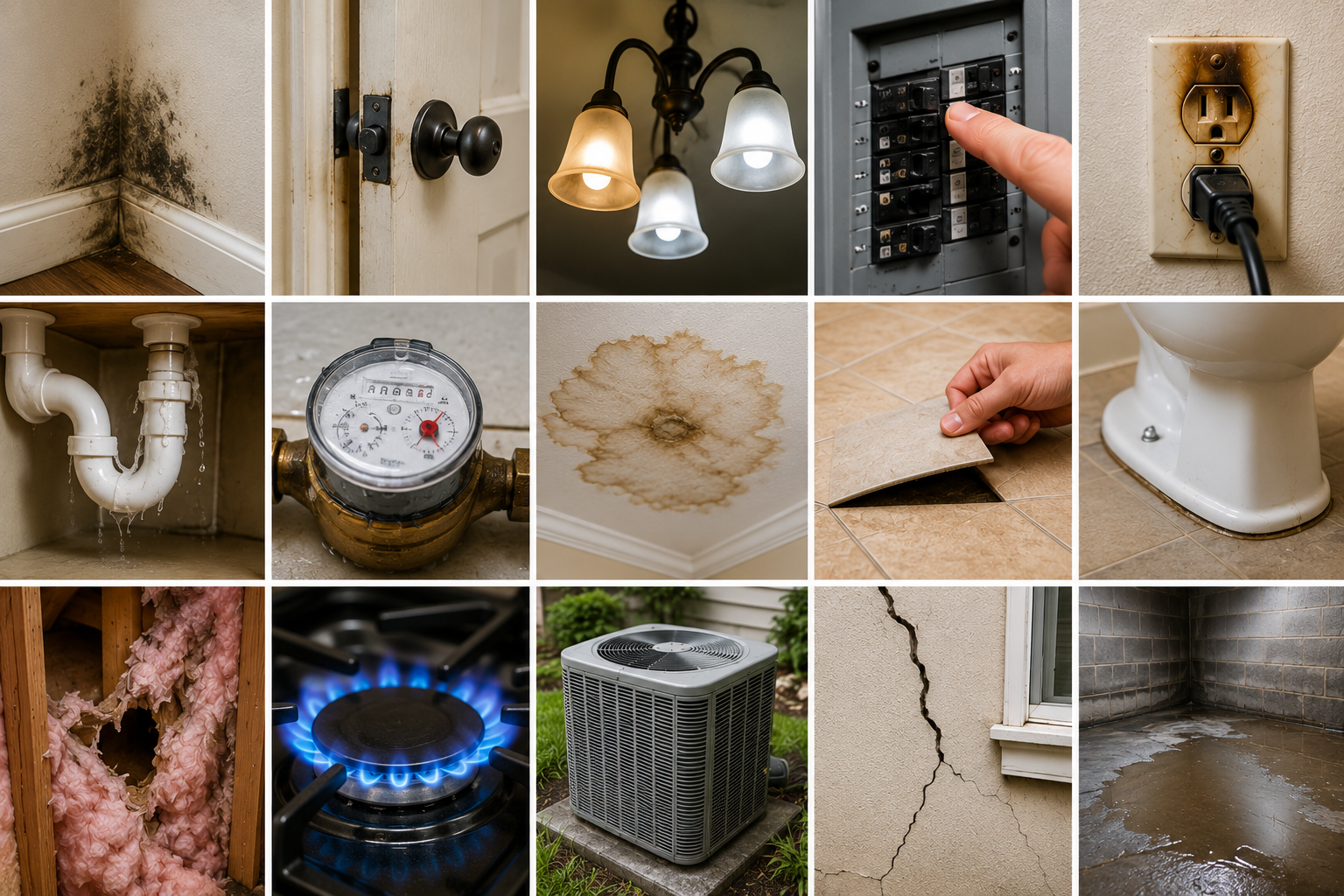
Here are 15 things around your home that shouldn't automatically be dismissed as "normal."
1. A Breaker That Keeps Tripping
A circuit breaker isn't there to annoy you. It's a protective device.
A breaker can trip for different reasons, and one trip doesn't necessarily mean your electrical system is failing. But repeatedly walking to the panel and resetting the same breaker isn't a repair strategy.
Pay attention to the pattern. Does it happen when:
- The microwave runs?
- A space heater turns on?
- Several appliances operate simultaneously?
- A particular outlet is used?
- Or seemingly at random?
That information can be useful to an electrician.
What you shouldn't do: Don't keep resetting a repeatedly tripping breaker indefinitely without understanding why it's happening. And don't start opening the electrical panel or modifying wiring unless you're qualified.
Fixly Guide rule: A protective device repeatedly activating is giving you information. Don't silence the messenger without investigating the message.
2. An Outlet or Switch That Gets Unusually Hot
Electrical components can sometimes feel slightly warm depending on design and load, but unusual heat, scorching, melting, sparking, smoke, or a burning odor deserves attention — especially if the condition is new.
Don't continue using an obviously damaged electrical component simply because "it still works." That's not the standard. The better question is: "Is this operating safely?"
If you see scorching, smoke, sparking, or other serious electrical warning signs, stop using the affected equipment as appropriate and seek qualified help. Electrical troubleshooting isn't a good place for guessing.
3. Water Underneath the Sink
This is one of the most ignored problems in a house. Why? Because it's hidden behind trash bags, dishwasher detergent, cleaning products, sponges, and forty grocery bags you swear you'll reuse someday.
A tiny drip may not seem important. But water doesn't need to arrive dramatically to cause damage. Repeated moisture can affect cabinet materials, wood, drywall, flooring, and other nearby components.
Once a month, open the cabinet and look. Use a flashlight. Run the faucet. Check the plumbing connections you can safely observe. Look for:
- Moisture
- Staining
- Corrosion
- Swollen materials
- Musty odors
Don't simply dry the cabinet and forget about it. Find the source.
4. A Toilet That Rocks
Your toilet shouldn't behave like a rocking chair. If it moves when someone sits on it, don't simply accept "that's just how this toilet is."
Movement can have different causes. The important point is that the fixture isn't behaving as intended — and depending on the underlying problem, continued movement could potentially affect seals, connections, or surrounding materials.
Don't start aggressively tightening bolts without understanding the cause; you can damage the fixture. Have the reason for the movement identified.
5. A Ceiling Stain That Keeps Growing
Here's a classic homeowner repair: ceiling stain appears, homeowner paints ceiling, problem solved. Except… the stain comes back.
Paint can hide discoloration. It cannot repair a roof leak, plumbing leak, HVAC-related moisture, a condensation problem, or another source of water.
If the stain is changing, expanding, or returning, focus on the source before the cosmetic repair. Ask:
- When does it appear? After rain? After someone showers? When the air conditioner runs?
- Is there plumbing above it?
Pattern first. Paint second.
If the ceiling is actively leaking, sagging, or otherwise appears unsafe, treat that as a different and potentially more urgent situation.
6. Your HVAC Suddenly Runs Much Longer Than It Used To
Your air conditioner running a lot during extreme summer weather isn't automatically a problem. Context matters. But homeowners should pay attention when performance changes noticeably. Maybe:
- The system runs much longer
- Certain rooms no longer get comfortable
- Airflow seems different
- Energy usage changes unexpectedly
- The system begins short-cycling
- New noises appear
That doesn't automatically mean you need a new HVAC system — there may be many possible causes. Start with basic homeowner maintenance appropriate for your system, such as checking the filter, and consider professional evaluation when needed.
Diagnose before replacing. That's a good rule for almost every expensive system in your house.
7. Several Doors Suddenly Start Sticking
One door sticking? Could have a simple explanation — humidity can affect materials, hinges move, doors need adjustment.
But here's where homeowners should become more observant: several doors change at approximately the same time. Especially if you're also seeing new or changing cracks, floor changes, window operation changes, or other signs of movement.
That doesn't automatically diagnose a foundation problem, and you shouldn't jump from "bedroom door sticks" to "I need a $30,000 foundation repair." Instead: look for patterns, document changes, take photographs, and if multiple signs continue changing, consider appropriate professional evaluation.
8. A Crack That's Getting Bigger
Homes can develop cracks for many reasons. Some are minor. Some are cosmetic. Some deserve further investigation.
The useful distinction isn't simply "crack" vs. "no crack." It's: "Is it changing?"
If you notice a crack, photograph it. Include something that helps establish scale when appropriate. Record the date. Check it later. If it becomes significantly longer, wider, or is accompanied by other changes, that's useful information.
Don't diagnose structural failure from a single crack based on a social-media photo. But don't ignore obvious progression either.
9. A Musty Smell That Never Goes Away
You clean. Open the windows. Use an air freshener. The smell returns.
At that point, stop asking "How do I make the house smell better?" and start asking "Why does the house smell like this?"
Persistent musty odors can have different causes. Possible moisture sources are worth investigating, particularly when accompanied by visible staining, leaks, condensation, damp materials, past flooding, or poorly ventilated areas.
Don't assume every musty smell means a massive mold problem. But masking the odor isn't the same as understanding the cause.
10. Gutters Overflow Every Time It Rains
You stand at the window during a storm. Water pours over the gutter like a waterfall. You think, "Wow, it's really raining." Maybe. But gutters are supposed to manage roof runoff.
Repeated overflowing can be related to debris, drainage restrictions, gutter configuration, damage, improper slope, downspout problems, or water volume beyond what the system is handling.
The bigger question is: where is that water going? If it's repeatedly dumping beside the house, onto siding, over entryways, or into areas where it causes problems, investigate.
Water management is one of the least exciting parts of homeownership. It's also one of the most important.
11. Water Always Collects Next to the House
A puddle after an extreme storm doesn't automatically mean your foundation is in danger. But repeated water accumulation around the same area deserves attention.
Walk outside during or after rain when it's safe. Look at gutters, downspouts, grading, drainage paths, low spots, erosion, and areas where water repeatedly collects.
You don't need to become a drainage engineer. You need to understand: where does the water go? That's a question every homeowner should be able to answer.
12. Your Lights Frequently Flicker
One brief flicker doesn't automatically mean your house has a dangerous electrical problem — there can be multiple causes. But frequent, new, or widespread flickering is different from an occasional isolated event.
Pay attention to:
- Which lights flicker
- When it happens
- Whether appliances are starting at the same time
- Whether it's one room or multiple areas
- Whether you notice other electrical symptoms — especially burning smells, heat, buzzing, sparking, or scorching
If electrical behavior has noticeably changed, don't troubleshoot beyond your skill level.
13. You Hear Water Running When Nobody Is Using Water
Everyone is asleep. Dishwasher is off. Washing machine isn't running. Nobody is showering. Yet you hear water.
Don't automatically assume there's a hidden catastrophic leak — first determine whether a legitimate appliance or system could be operating. But unexplained water sounds deserve investigation. You can also pay attention to unexpected changes in water usage or bills.
The key word is unexplained. You don't need to know exactly what's wrong. You need to recognize: "This isn't how the house normally behaves."
14. Your Deck Moves More Than It Used To
Decks are supposed to support people safely. If you notice loose railings, significant movement, soft or deteriorated boards, damaged stairs, loose-looking connections, rot, or structural components that appear compromised — don't simply say "it's an old deck."
Age doesn't make unsafe conditions acceptable. A faded deck may be cosmetic; a moving railing is a different category.
Learn to separate appearance from safety. That's an important homeowner skill.
15. A Strange Smell Appears Suddenly
Your nose can sometimes detect changes before your eyes do. Don't ignore new persistent odors such as:
- Burning
- Electrical/plastic odors
- Fuel/gas-like odors
- Sewage odors
- Persistent mustiness
- Other unusual smells
Different odors have different possible causes and levels of urgency. If you suspect a fuel-gas leak or carbon monoxide concern, don't investigate it like an ordinary maintenance issue — follow appropriate emergency and utility guidance and get people to safety as directed. Remember that carbon monoxide itself is odorless, which is why appropriate carbon monoxide alarms matter.
The Most Important Word in Home Maintenance
Want one word that can make you a better homeowner? CHANGE.
Something changed. The AC sounds different. The door suddenly sticks. The stain got bigger. The outlet became hot. The water bill jumped. The gutter started overflowing. The deck feels different. The crack grew. The smell appeared.
Your house doesn't need to be silent, perfectly level, and completely free of imperfections — older houses especially have plenty of quirks. What you want to notice is when the house stops behaving the way it normally does.
That's information.
Don't Diagnose Your House From Social Media
This has become a real problem. A homeowner posts a picture: "What's this crack?" Someone replies: "YOUR FOUNDATION IS FAILING." Another person: "Totally normal." Third person: "Termites." Fourth: "You need a new roof."
It's a photograph of drywall. Nobody has inspected the house.
Social media can help homeowners learn what questions to ask. It shouldn't automatically replace proper diagnosis.
Use Your Phone as a Home-Maintenance Tool
Your phone is one of the best homeowner tools you own. Not because of an app — because of the camera, video, notes, and calendar.
- See a crack? Photo + date.
- Hear a strange HVAC noise? Video.
- Ceiling stain? Photograph it.
- Leak only happens during heavy rain? Record it safely.
- Contractor repaired something? Before-and-after photos.
Create an album called HOME MAINTENANCE. Now you have a visual history of the property.
Before Calling a Contractor, Document These 6 Things
You don't need to diagnose the problem. Just collect information.
- What changed? Describe what you're noticing.
- When did it start? Yesterday? Last month? After a storm?
- When does it happen? Constantly? During rain? When the AC runs? When someone showers?
- Is it getting worse? Very important.
- Has this area been repaired before? Tell the contractor.
- Do you have photos or video? Show them.
Then instead of saying "I think I need a new roof," say "Here's what I've noticed." Let the professional investigate.
Know the Difference Between a Symptom and a Diagnosis
This may save you a lot of money.
| Symptom | Diagnosis |
|---|---|
| Ceiling stain | Unknown until the cause is identified |
| Sticking door | Unknown |
| HVAC running longer | Unknown |
| Breaker trips | Unknown |
See the pattern? Homeowners get into trouble when they turn a symptom into the most expensive possible diagnosis.
Observe first. Investigate second. Repair third.
The Fixly Guide "Should I Worry?" Test
When something strange happens, ask five questions:
- Is it new? New changes deserve attention.
- Is it getting worse? Progression matters.
- Does it involve water? Water can cause secondary damage.
- Could it affect safety? Electrical, structural, fuel-gas, fire, and fall hazards move up the priority list.
- Is it happening repeatedly? Repeated problems are different from isolated events.
If you're answering yes several times: stop calling it "normal." Find out what's happening.
Things That CAN Be Normal
Let's balance this out. Not every imperfection means your house needs a contractor. Depending on the house and circumstances, you may encounter things such as:
- Minor cosmetic drywall cracks
- Floor squeaks
- Normal material expansion and contraction
- Occasional HVAC sounds associated with normal operation
- Doors that change slightly with seasonal humidity
- Minor cosmetic wear
The point isn't to become paranoid. The point is to learn the difference between a house having character and a house telling you something changed.
What Should You Fix First?
If you've now discovered seven problems, don't panic. Prioritize.
🔴 FIRST — SAFETY. Electrical hazards, fuel-gas concerns, unsafe stairs/decks, other immediate dangers.
🔵 SECOND — ACTIVE DAMAGE. Leaks, water intrusion, conditions actively damaging other materials.
🟡 THIRD — PROGRESSIVE PROBLEMS. Things likely to worsen if ignored.
🟢 FOURTH — COSMETIC. Ugly paint can wait. The leak behind it can't.
Contractors Can Help Homeowners Without Scaring Them
Good contractors don't need to turn every homeowner concern into "YOU NEED TO REPLACE EVERYTHING." Sometimes the most valuable thing a contractor can say is:
- "This isn't urgent."
- "Let's monitor this."
- "We can repair this without replacing the whole thing."
- "I don't handle this type of problem — you need someone who specializes in it."
That's how trust gets built. Homeowners remember the professional who helped them understand the problem instead of immediately trying to maximize the invoice.
The 10-Minute Monthly House Walk
Once a month, walk around your house. You don't need tools. Look at:
- ☐ Ceilings
- ☐ Under sinks
- ☐ Toilets
- ☐ Windows
- ☐ Doors
- ☐ HVAC filter
- ☐ Exterior siding/trim
- ☐ Gutters
- ☐ Deck/stairs
- ☐ Areas where water collects
Then ask: "What's different?"
Ten minutes. That's it. You may catch something while it's still small.
Final Thought
You don't have to walk around your house worrying about every sound. That's miserable.
Instead, learn what's normal for your house. Then notice when something changes.
Because some of the most expensive home repairs don't announce themselves with "HELLO! I'M A $15,000 PROBLEM!" They start with a drip, a stain, a smell, a noise, a loose railing, a sticking door, a breaker that trips again — and the homeowner says, "It's been doing that for a while."
That's the habit worth breaking.
Don't panic. Don't immediately assume the worst. Don't diagnose the problem from a Facebook comment. Just ask: "Why did this change?"
Sometimes the answer is nothing serious. Sometimes it's a simple repair. And sometimes noticing it early can prevent a much larger headache.
🏠 Something around your house doesn't seem right? Start by documenting what changed, when it happens, and whether it's getting worse. Then get the right professional involved when the problem requires expertise beyond your own.
Keep reading on Fixly Guide:
What should this project cost?
Enter your project details for a realistic cost range before you call anyone.
Common repairs run $150–$650; repipes and water-heater replacements reach $1,500–$4,500.
- Regional adjustment
- National average
- Labor share (typical)
- ~$754
- Quotes to collect
- 3 written estimates
Educational estimate based on national averages — not a binding quote. Always confirm with written local estimates.
Fixly Project Decision Box
- DIY difficulty
- Advanced
- Estimated time
- Homeowner checks 20–30 minutes
- Cost level
- Moderate
Main tools / materials
- Clean air filter
- Garden hose for condenser coils
- Shop vac for the condensate line
When to stop and call a pro
- Burning smell, smoke, or a tripping breaker
- Refrigerant lines iced over or hissing
- Any work inside the sealed refrigerant circuit (EPA-licensed only)
- Gas smell near a furnace — leave and call the utility
Need professional help?
Find an HVAC Pro Near YouRecommended for DIYers & woodworkers
Sponsored
The Top 20 Tools for Workshops of Any Budget
No stationary machines or power tools required — plus 3 fundamental tools that can't be bought at any price.
Get the free guide
Ted's Woodworking — The #1 Woodworking Resource
Detailed instructions, dimensioned drawings, materials & cutting lists, and 3D schematics for every skill level.
See the plansSponsored: links above are affiliate links. FixlyGuide may earn a commission on qualifying purchases — at no extra cost to you.
Frequently asked questions
What home problems should never be ignored?+
Potential safety hazards, active leaks, significant electrical warning signs, fuel-gas concerns, structural instability, and rapidly changing conditions deserve particular attention.
Is a small ceiling stain something to worry about?+
A stain doesn't tell you the cause. If it's new, returning, or growing, investigate the source of moisture rather than simply painting over it.
Is it normal for circuit breakers to trip?+
A breaker can trip for several reasons, but repeated trips shouldn't simply be treated as routine. If the cause isn't obvious and safely correctable, appropriate professional evaluation may be needed.
Are cracks in walls always a foundation problem?+
No. Cracks can occur for many reasons. Their location, pattern, size, progression, and accompanying symptoms matter. Significant or changing conditions may warrant professional evaluation.
Why does my toilet rock?+
A toilet can move for different reasons, but noticeable movement shouldn't simply be accepted as normal. Identify the cause rather than repeatedly tightening components without understanding the problem.
When should I call a contractor?+
Consider professional help when a problem involves safety, specialized systems, active damage, repeated failures, significant progression, or work beyond your experience and equipment.

Discussion
Loading comments…