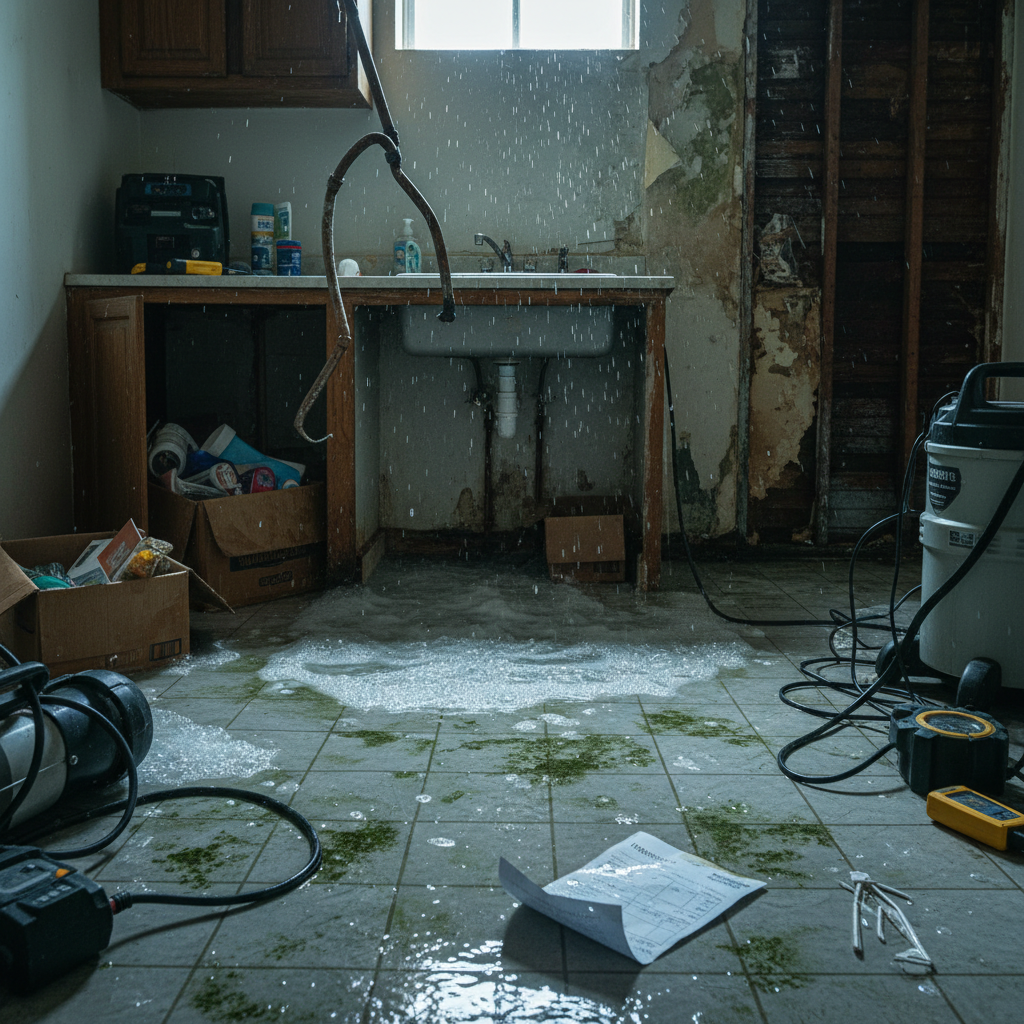
- Emergency response and extraction — pumping and removing standing water.
- Drying equipment — air movers and dehumidifiers, typically priced per day.
- Demolition — removing saturated drywall, insulation, cabinetry, and flooring.
- Mold remediation — containment, removal, and clearance where growth is present.
- Reconstruction — putting the finishes back, usually the largest share.
Plumbing · Leak
| Project category | Plumbing |
|---|---|
| Problem type | Leak |
| Trade required | Plumbing |
| Urgency | Emergency — act now |
| Safety risk | High safety risk |
| DIY suitability | DIY for experienced homeowners |
| Cost category | Low cost |
| Typical timeline | Shut water off now; repair usually same or next day |
| Contractor type | Licensed plumber |
Repair option
Isolate at the shutoff, replace the failed component, and dry the cavity fully.
Replacement option
Repipe the run or the branch when corrosion is widespread.
Common causes
- Failed supply line or shutoff valve
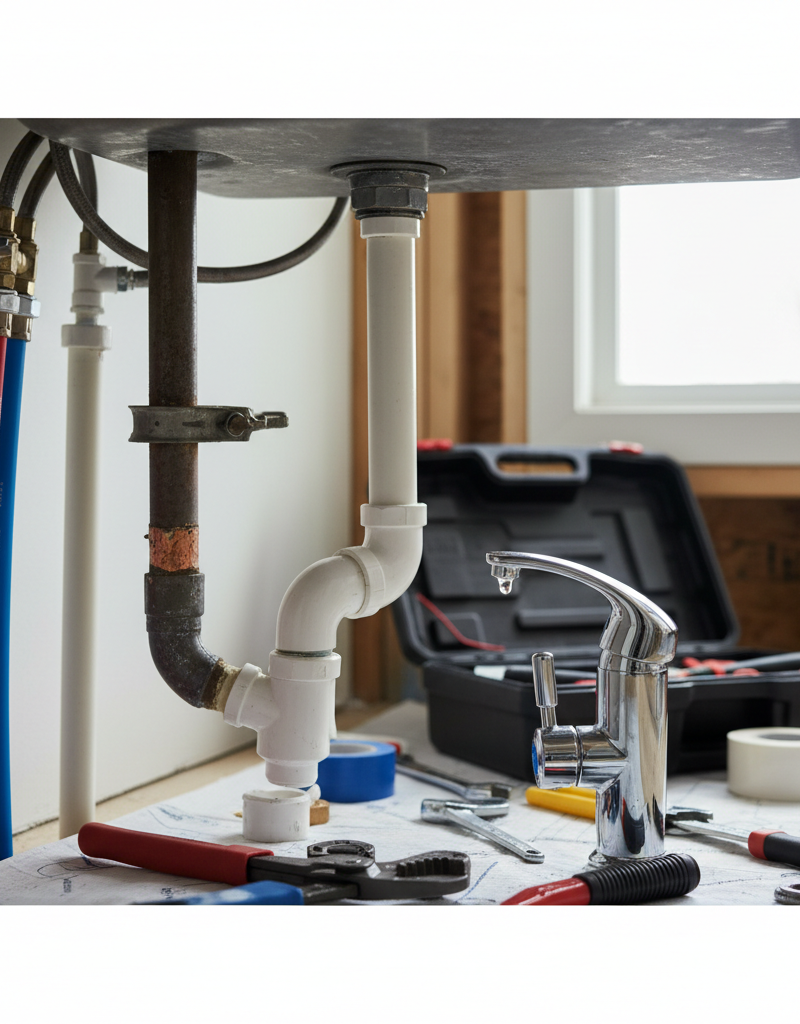
- Worn washers, cartridges, or P-trap connections
- Pinhole corrosion in older copper
Relevant tools:emergency checklistdiy or hire a pro
Published September 5, 2026Last updated September 5, 2026
Tools & materials you'll need
Affiliate linksNo materials required.
As an Amazon Associate FixlyGuide earns from qualifying purchases — at no extra cost to you. Prices and availability are accurate as of publication and subject to change.
Quick Answer
There are two bills after water intrusion: mitigation (stopping and drying) and restoration (rebuilding). Fast mitigation keeps the second bill small. Slow response turns a drying job into demolition, mold remediation, and reconstruction.
What You Are Paying For
- Emergency response and extraction — pumping and removing standing water.
- Drying equipment — air movers and dehumidifiers, typically priced per day.
- Demolition — removing saturated drywall, insulation, cabinetry, and flooring.
- Mold remediation — containment, removal, and clearance where growth is present.
- Reconstruction — putting the finishes back, usually the largest share.
- Contents — cleaning or replacing affected belongings.
How to Read a Cost Range
Every honest cost guide is a range, because price is set by five things you can actually check before you call anyone:
- Scope — what is genuinely being replaced versus repaired.
- Access — crawlspace, attic, second story, or tight side yards all add labor hours.
- Condition behind the surface — rot, corrosion, or code-era materials found on opening up.
- Materials chosen — builder-grade and premium can differ by multiples for the same job.
- Local labor and permits — the same job prices differently across metros and even suburbs.
When two estimates are far apart, the cause is almost always scope, not greed. Line up the line items before you compare the totals.
How to Compare Estimates Without Guessing
- Get the scope in writing, with quantities and materials named.
- Ask what is excluded — that is where surprise invoices come from.
- Confirm permits, inspections, and who pulls them.
- Ask what happens if hidden damage is found, and how that gets priced.
- Check the payment schedule against progress, not against the calendar.
Category Matters More Than Volume
| Water source | Category | Handling |
|---|---|---|
| Supply line, clean water | Clean | Often dryable if caught fast |
| Appliance discharge, washing machine | Gray | Partial demolition typical |
| Sewage backup or outside flooding | Black | Removal and remediation required |
The First Hour
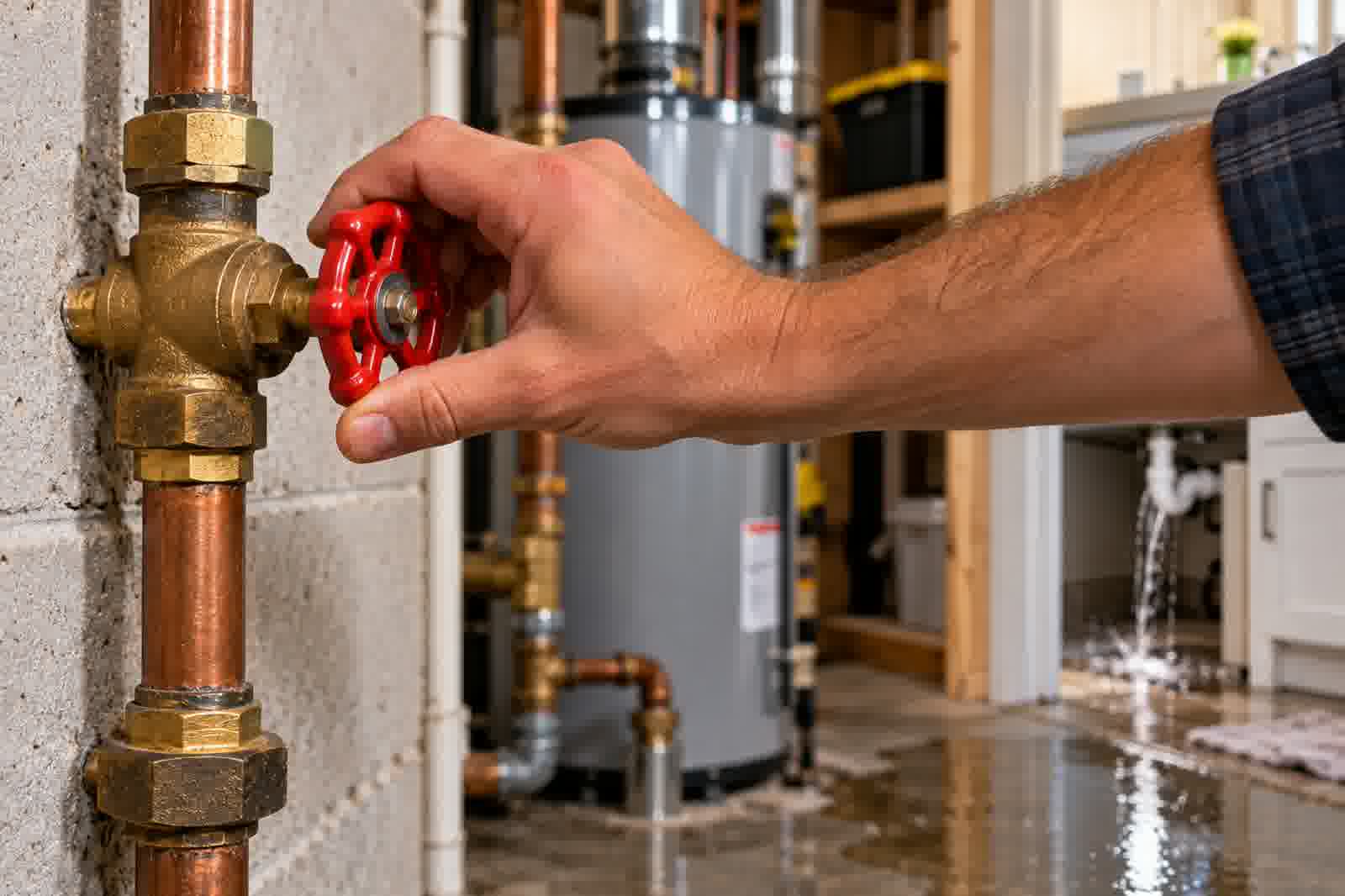
- Shut off the water source, or the main if you cannot isolate it.
- Cut power to affected areas from the panel if water is near outlets.
- Photograph everything before you move anything, with timestamps.
- Get air moving and start extraction.
- Call your insurer and a restoration contractor.
Insurance Reality
Sudden and accidental discharge is commonly covered; gradual leaks, seepage, and deferred maintenance commonly are not. Groundwater flooding usually requires separate flood coverage. Documentation is what decides the outcome — photograph before, during, and after.
When to Stop and Call a Pro
Any contact with sewage, water near electrical, or moisture inside walls that you cannot verify is dry. Hidden moisture behind drywall is what becomes mold.
Get a Real Number for Your Home
Published ranges are a sanity check, not a quote. The only number that matters is the one written against your house, your access, and your scope.
- Find a local pro — pick your trade and ZIP code to see contractors serving your area.
- Repair or replace? 12 expensive home decisions — how to judge a big-ticket recommendation.
- 20 questions to ask a contractor before hiring — the licensing, deposit, and change-order questions that protect you.
- DIY or hire a pro? — a two-minute check on which jobs are safe to handle yourself.
- Home problem guides — start with the symptom, get likely causes and safety guidance.
Fixly Guide provides educational cost guidance only. Nothing here is a quote, an inspection, or a professional diagnosis.
Questions to ask before you sign
Ask every contractor the same questions and the cheapest bid stops looking cheapest. Check them off as you go — your progress is saved on this device.
Free, no signup. Bring this to every walkthrough so you compare bids on the same terms.
What should this project cost?
Enter your project details for a realistic cost range before you call anyone.
Common repairs run $150–$650; repipes and water-heater replacements reach $1,500–$4,500.
- Regional adjustment
- National average
- Labor share (typical)
- ~$754
- Quotes to collect
- 3 written estimates
Educational estimate based on national averages — not a binding quote. Always confirm with written local estimates.
Handle this before it gets worse
First steps that limit damage, then a way to reach a qualified pro.
- Emergency repair checklistThe first steps that limit damage before a pro arrives.Open
- Get local estimatesSend one request and compare written estimates from vetted pros.Open
- Estimate this projectGet a cost range for your scope and ZIP before you call anyone.Open
Free, no signup required. Estimates are educational guidance, not a quote or an inspection.
Frequently asked questions
How fast does mold grow after water damage?+
Growth can begin within a couple of days on damp organic materials. That is why drying speed, not water volume, is the main cost driver.
Does homeowners insurance cover water damage?+
Typically yes for sudden and accidental discharge, typically no for gradual leaks, maintenance failures, or groundwater flooding. Read your policy and document the event immediately.
Can I dry it myself?+
Small, clean-water spills caught immediately, yes. Anything that soaked into drywall, insulation, subfloor, or involved gray or black water needs professional drying with moisture readings.
Discussion
Loading comments…