- Damaged or Missing Shingles: Wind, hail, and plain old age can crack, curl, or rip shingles right off, leaving the underlayment exposed. Once that’s compromised, you’re in trouble.
- Faulty Flashing: This is probably the most common culprit. Around chimneys, vents, and skylights, flashing can corrode, shift, or lose its seal, and that opens the door.
- Clogged Gutters and Downspouts: When water can’t drain properly, it backs up, sometimes overflowing behind the fascia and into the eaves or pooling on the roof and working under the shingles.
- Ice Dams: In colder climates, snowmelt can refreeze at the roof edge and create a dam that blocks drainage. That backed-up water can seep under shingles and into your home.
- Roof Age: Everything wears out. Asphalt shingle roofs typically last 20-30 years. As they get old, materials get brittle, sealants fail, and the whole system starts falling apart.
Plumbing · Leak
| Project category | Plumbing |
|---|---|
| Problem type | Leak |
| Trade required | Plumbing |
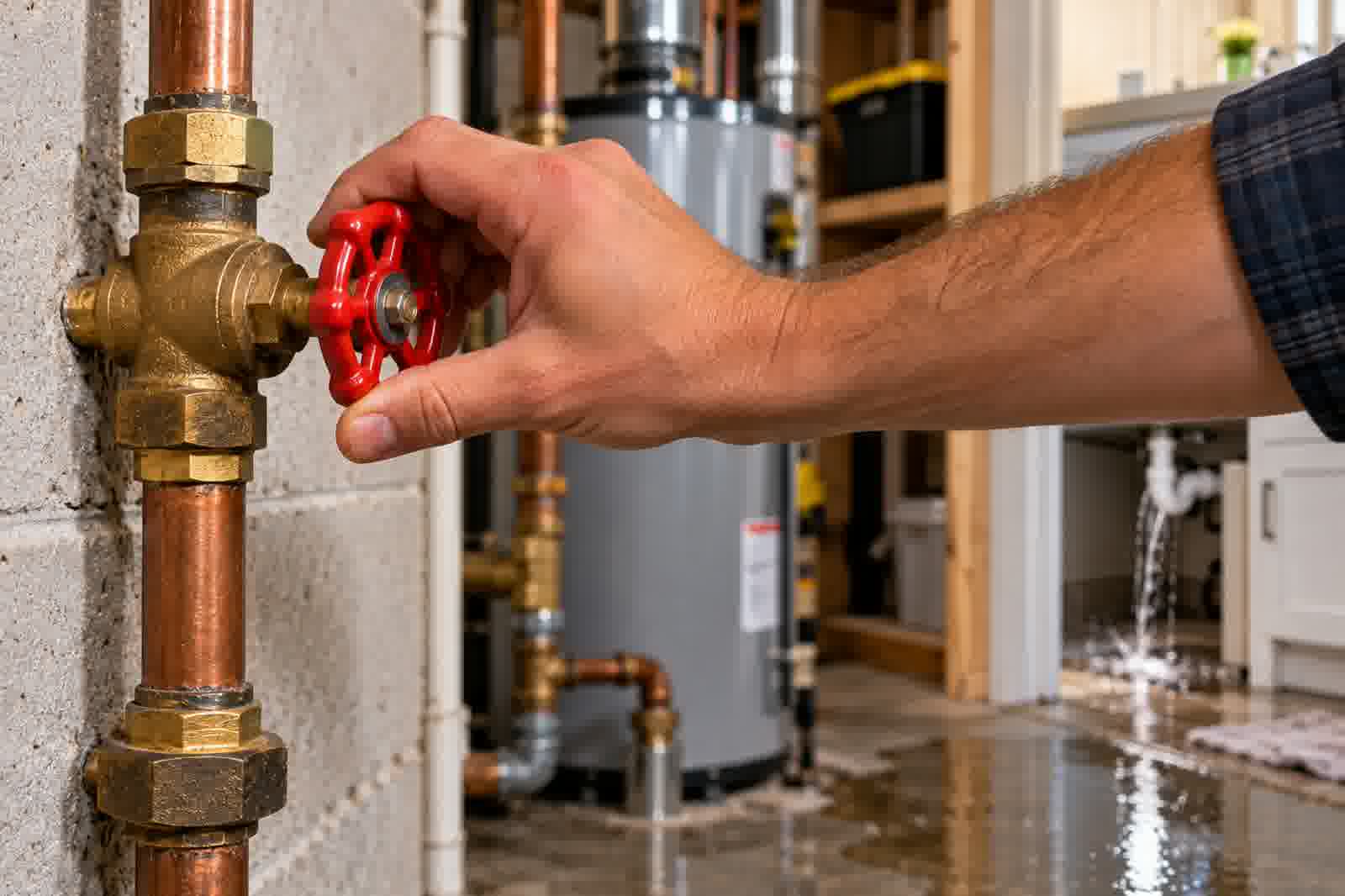
| Urgency | Emergency — act now |
| Safety risk | High safety risk |
| DIY suitability | DIY for experienced homeowners |
| Cost category | Low cost |
| Typical timeline | Shut water off now; repair usually same or next day |
| Contractor type | Licensed plumber |
Repair option
Isolate at the shutoff, replace the failed component, and dry the cavity fully.
Replacement option
Repipe the run or the branch when corrosion is widespread.
Common causes
- Failed supply line or shutoff valve
- Worn washers, cartridges, or P-trap connections
- Pinhole corrosion in older copper
Relevant tools:emergency checklistdiy or hire a pro
Published August 9, 2026Last updated August 17, 2026
Tools & materials you'll need
Affiliate linksAs an Amazon Associate FixlyGuide earns from qualifying purchases — at no extra cost to you. Prices and availability are accurate as of publication and subject to change.
Quick Answer
I’ve seen plenty of homeowners get blindsided by a roof leak that looked like it came out of nowhere. Truth is, your roof usually gives you a heads-up. You just gotta know what to look for. And no, it ain’t always a drip in the bucket. We’re talking about the quiet stuff: faint water stains on the attic ceiling, a musty smell that wasn’t there last week, even bubbling paint on an inside wall. Catch that early, and you’ll save yourself a pile of grief and a serious chunk of change later on.
The Problem
Alright, let’s get real. A roof leak isn’t just a nuisance; it’s a slow-moving wrecking ball for your house. Water doesn’t care. It’ll take the easiest path every single time, and once it gets inside, it starts chewing up insulation, drywall, framing, and even your electrical system. I had a job in Northwood where a homeowner sat on a small attic stain for months. By the time they finally called me, the kitchen ceiling was sagging, the insulation was soaked solid, and black mold was creeping down a wall stud. What could’ve been a simple $300 flashing repair turned into a $7,000 gut job. Don’t let it get that far. Catching leaks when they’re whispering, not screaming, is how you protect the biggest investment most folks will ever make.
How It Works
Your roof is a layered system built to shed water away from your house. You’ve got shingles or tiles up top, which take the brunt of the weather. Under that is usually underlayment—basically a waterproof barrier—and then the roof deck, usually plywood or OSB, which gives everything its backbone. Flashing, which is thin metal or sometimes rubber, seals up the weak spots around chimneys, vents, skylights, and where walls meet the roof. Gutters and downspouts? They’re there to move water away from your foundation.
It all works together, right? When one part fails, water doesn’t just vanish. It finds a way in. A cracked shingle lets water hit the underlayment. If that underlayment’s old or damaged, the water reaches the roof deck. From there, gravity does its thing, and the water starts working downward, often along rafters or around plumbing vents, until it shows up in your attic, ceiling, or wall cavity. The entry point on the roof can be a long way from the stain inside—10 or 15 feet isn’t unusual. That’s why pinning it down can be a real pain without a methodical approach.
Step-by-Step Fix
Before you even think about climbing a ladder, let’s talk safety. Seriously. If your roof’s steep, wet, or you’re not comfortable up there, don’t push it. Call a pro. It’s not worth a busted bone, or worse. For anything you can handle, wear non-slip shoes and have somebody spot you if you’re using a ladder. And for Pete’s sake, if you’re dealing with anything electrical, kill the breaker first!
-
Attic Inspection – Your First Line of Defense
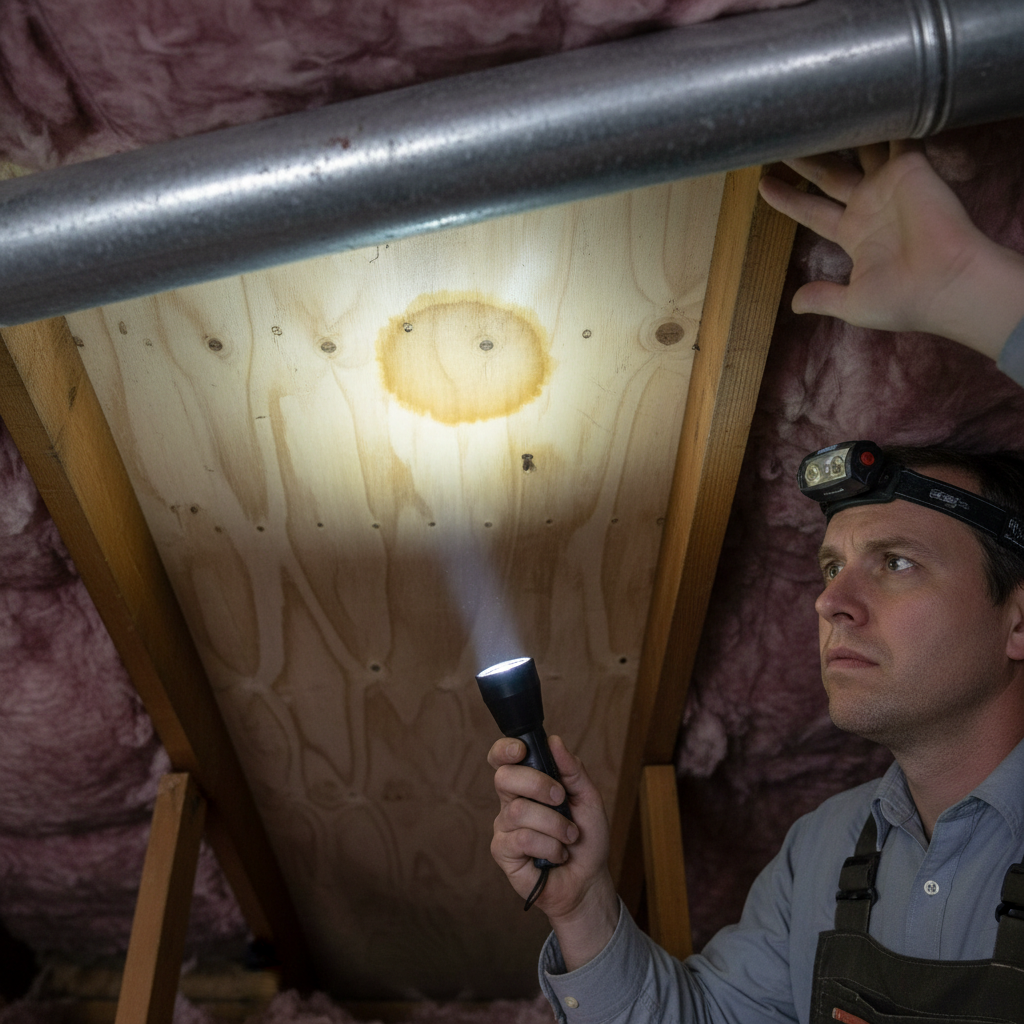
- What to do: Grab a good flashlight and head into the attic on a sunny day. Look for signs of water intrusion on the underside of the roof deck, rafters, or insulation. I’m talking dark stains, streaks, or even a slight sheen that tells you moisture’s been there. Don’t skip the smell test, either—musty or mildewy odors are a dead giveaway. Pay extra attention around vents, chimneys, and pipe penetrations. If you can see daylight where you shouldn’t, that’s a big clue. If you catch an active drip during a rainstorm, mark the spot with chalk or a piece of tape.
-
Interior Ceilings & Walls – The Visible Clues
- What to do: Walk through every room in the house. Check ceilings for yellow, brown, or grayish stains. Look for plaster that’s crumbling, drywall that feels soft when you press it, or paint that’s bubbling and peeling. Don’t blow off wall stains, especially near the top, because water can run down studs from above. Sometimes it starts as a hairline crack or a faint shadow, then it darkens up fast. That’s water doing its dirty work behind the scenes.
-
Exterior Roof – Ground-Level Scan
- What to do: From the ground, use binoculars to scan the roof. Look for missing, cracked, curling, or blistered shingles. Pay attention to valleys—where two roof planes meet—and any flashing around chimneys, skylights, or vents that looks loose or out of place. See any bent metal? Cracked sealant? Satellite dishes or other mounted gear that looks like it was slapped on without much thought? That can create new leak points. And don’t forget the gutters; if they’re clogged or spilling over, water can back up under the shingles in a hurry.
-
Gutter & Downspout Check – Channeling Water Away
- What to do: Make sure your gutters are clear of leaves, twigs, and debris. Clogged gutters can make water pool at the roof edge or overflow against your fascia and foundation, which leads to rot and leaks. Check that downspouts extend at least 4-6 feet away from the foundation. If water isn’t being pushed away, it’s just looking for a new path—and that path might run right into your house.
-
Flashing Inspection – The Critical Seals
- What to do: If you’re safely on a ladder, inspect every flashing point you can reach. That means around chimneys, dormers, vent pipes, and skylights. Look for corrosion, rust, bent sections, or sealant that’s dried out, cracked, or missing. This is where I find a lot of leaks starting. A tiny gap, even an eighth of an inch, is enough to cause trouble.
-
Sealant & Caulking – Quick Patch-Up
- What to do: For minor, visible cracks in non-critical flashing or around small penetrations, a high-quality exterior-grade sealant or roofing cement can buy you time. Clean the area first, make sure it’s dry, then apply the sealant smoothly. Don’t mistake this for a permanent fix on a bigger problem. It’s a patch, not a cure. It gives you breathing room to track down the real issue or get a pro out there. Don’t cake it on; if you do it right, less is more.
-
Identify the Source – The Detective Work
- What to do: If you’ve got a leak inside, you need to trace it back. Sometimes it’s right above the stain. Other times, water runs along joists, pipes, or wiring before it finally drops. If you can get into the attic, wait for a dry spell, then have a helper spray a garden hose on a small section of roof directly above the interior stain. Start low and work upward slowly, waiting 5-10 minutes between sections until you see the drip. That’s how you narrow down the exact breach. Be patient; this can take a while. It beats tearing half the roof apart chasing a guess. I pulled a water heater in Frisco last month that had exactly this kind of “mystery leak” situation—turned out the water was traveling twenty feet before it ever showed itself.
-
Document Everything – For the Pros (or Insurance)
- What to do: Take pictures of any damage you find, inside and out. Note the location, size, and type of damage. This isn’t just for insurance; it helps a roofing pro understand the problem before they even show up. Date your photos, too. If the damage changes, you’ll have proof of it.
Common Causes
- Damaged or Missing Shingles: Wind, hail, and plain old age can crack, curl, or rip shingles right off, leaving the underlayment exposed. Once that’s compromised, you’re in trouble.
- Faulty Flashing: This is probably the most common culprit. Around chimneys, vents, and skylights, flashing can corrode, shift, or lose its seal, and that opens the door.
- Clogged Gutters and Downspouts: When water can’t drain properly, it backs up, sometimes overflowing behind the fascia and into the eaves or pooling on the roof and working under the shingles.
- Ice Dams: In colder climates, snowmelt can refreeze at the roof edge and create a dam that blocks drainage. That backed-up water can seep under shingles and into your home.
- Roof Age: Everything wears out. Asphalt shingle roofs typically last 20-30 years. As they get old, materials get brittle, sealants fail, and the whole system starts falling apart.
- Poor Installation: Sometimes the roof was installed wrong from day one. Bad shingle overlap, too little underlayment, or sloppy sealing around penetrations can cause problems way earlier than they should.
Common Mistakes
- Ignoring Small Stains: That little water spot? It’s not going away on its own. It starts small, then turns into a bigger mess. Deal with it now.
- Over-reliance on Caulk: Smearing caulk over a big crack or missing shingle isn’t a fix. It’s a band-aid. You need the damaged part repaired or replaced if you want it to last.
- Walking on a Wet or Damaged Roof: That’s a big safety risk, and you can make the damage worse. If you’re not sure, stay off it.
- Not Checking the Attic Regularly: The attic’s your early warning system. A lot of leaks show up there long before they reach the living space. A quick check every few months can save you thousands.
- Assuming the Leak is Directly Above the Stain: Water travels. It can enter in one spot, run along a rafter, and drip 10 or 15 feet away. You’ve gotta investigate it the right way.
- Ignoring Gutter Maintenance: Clean your gutters. Seriously. Clogged gutters cause more leak calls than most folks think. It’s cheap, simple work that prevents a whole mess later.
Cost & Time Breakdown
Here’s a rough idea of what you might be looking at, depending on how you tackle a leak:
| Task | DIY Cost | Pro Cost | Time |
|---|---|---|---|
| Minor Flashing Sealant Repair | $10-$30 | $150-$300 | 30-60 minutes |
| Replace a Few Shingles | $20-$50 | $200-$400 | 1-2 hours |
| Clean Gutters/Downspouts | $0-$20 | $100-$250 | 1-2 hours |
| Repair Small Deck/Attic Water Damage | $50-$200 | $500-$1,500+ | 4-8 hours (multiple days) |
| Extensive Roof Repair (e.g., Valley, Chimney) | Advanced DIY: $100-$500+ | $500-$2,000+ | 1-2 days |
| Full Roof Replacement | N/A | $8,000-$25,000+ | Several days |
Tips & Prevention
- Regular Attic Checks: Every season, especially after big storms, poke your head into the attic. Look for fresh stains, mold, or musty smells. That’s your best early warning system.
- Gutter Maintenance is Key: Clean your gutters twice a year, usually in late spring and late fall, so water can drain the way it should. This is a big one—don’t skip it.
- Trim Overhanging Branches: Keep branches trimmed back at least 6 feet from the roof. They drop debris, scratch shingles, and give pests a handy bridge.
- Inspect Flashing Annually: Take a look at your flashing from the ground with binoculars. Watch for wear, rust, or sealant failure. Catching a cracked piece of caulk today can save you from a major leak next month.
- Know Your Roof's Age: Most asphalt shingle roofs last around 20-30 years. If yours is getting up there, start budgeting for a replacement and stay extra alert for trouble.
- Consider Roof Tune-Ups: Some roofing companies offer annual “tune-up” services where they inspect and knock out minor repairs. That can be money well spent if it keeps a small issue from turning into a big one.
When to Call a Professional
Look, I’m a DIY guy at heart, but some jobs just aren’t worth the risk—or the chance you’ll make things worse. If you’re dealing with a steep pitch (anything over 6/12—meaning it rises 6 inches for every 12 inches it runs horizontally), major shingle damage across a large area, or an active leak you can’t easily trace, it’s time to make the call. If you suspect structural damage to the roof deck or rafters, or you’re seeing widespread mold growth, you want a licensed roofing contractor on site. They’ve got the gear, the know-how, and the insurance to do it safely and right. Don’t try to re-flash a chimney yourself unless you really know what you’re doing—a bad flashing job is a guaranteed leak. If you can’t safely get on the roof or you’re not sure where the leak’s starting, a pro will save you money and headaches down the line.
FAQ
Q: How often should I inspect my roof for leaks?
A: I tell my clients to do a quick visual check from the ground quarterly, especially after heavy storms. Then do a thorough attic and exterior inspection, maybe from a ladder if it’s safe, twice a year—spring and fall are perfect.
Q: Can a small roof leak fix itself?
A: No, it can’t. Water damage gets worse over time. That tiny drip turns into a bigger drip, then rot, mold, and real structural problems if you let it ride. Handle it even if it seems minor.
Q: Why do I smell mold or mildew but can't see a leak?
A: That’s a classic one. Water might be trapped in insulation or behind a wall cavity, and that makes a perfect breeding spot for mold. The smell often shows up before the stain does. Get into the attic and start sniffing around.
Q: What's the difference between a roof repair and a roof replacement?
A: A repair fixes a specific, local problem like a few bad shingles or faulty flashing. A replacement means tearing off the old roof and putting on a new one, usually when the roof’s old, badly damaged, or failing in multiple places.
Q: Can hail damage cause a leak?
A: You bet it can. Hail can crack shingles, knock off the granules that protect them, or leave impact marks that weaken the roof. You might not see it right away, but it sets you up for leaks later.
Q: Is DIY roof repair always cheaper than hiring a professional?
A: For tiny fixes, like sealing a small crack or swapping out one shingle, sure, DIY is cheaper. But if you’re dealing with broad damage, steep roofs, or tricky flashing, hiring a pro usually saves money in the long run by keeping you from making a costly mistake.
Q: How long does it take for water damage to appear after a roof leak starts?
A: It depends. A big breach might show up in hours, while a slow leak might take weeks or even months before you see stains or damage inside, especially if it’s soaking into insulation first.
Q: Should I call my insurance company if I suspect a leak?
A: If you think the damage came from a storm—wind, hail, that sort of thing—absolutely. Take photos of everything. For normal wear and tear, insurance usually won’t cover it, but it’s still worth checking your policy.
Q: Can clogged gutters really cause a roof leak?
A: Yes, 100%. When gutters clog up, water can’t drain and backs up at the edge of the roof. That standing water can seep under shingles, especially if the underlayment’s old or installed wrong, and cause leaks in the eaves or attic. Clean those gutters!
Q: What's the average lifespan of a typical asphalt shingle roof?
A: Most standard asphalt shingle roofs, if they’re installed right and maintained, will last anywhere from 20 to 30 years. Architectural or laminate shingles often land near the high end of that range, while basic 3-tab shingles may be closer to 15-20 years. Climate, storms, and sun exposure all play a part, too.","meta_title=
Related Articles
Keep troubleshooting with these hand-picked guides from FixlyGuide:
- The One Hidden Sign of a Roof Leak Most Homeowners Miss (And the $10 Fix) — Catching a roof leak early can save thousands in repairs. Learn the elusive signs and a simple, effective fix before minor issues become ma…
- The Silent Destroyer: 7 Hidden Signs Your Roof Has a Leak (Before You Need a New Ceiling) — Catching roof leaks early can save your home from extensive damage and costly repairs. Learn the subtle indicators that reveal hidden water…
- The Secret Culprit Behind Your Leaky Refrigerator (It’s Not Always a Hose) — Discover the hidden causes of your refrigerator leaking water and how to fix them with our comprehensive troubleshooting guide.
- The 5-Minute Trick to Restore Your Kitchen Sink Sprayer's Lost Pressure — Restore your kitchen sink sprayer's low pressure with a quick, simple trick that often takes less than five minutes and requires no special…
- The $5 Secret to Silencing That Annoying Dripping Faucet (Single-Handle Fix) — Stop a dripping single-handle faucet with a simple and inexpensive DIY fix by replacing a worn-out o-ring or washer.
- The #1 Gutter Mistake You're Making (And 3 Hidden Causes of Overflow) — Overflowing gutters in heavy rain are often a sign of a deeper issue than just debris, leading to potential foundation damage and costly re…
Should you do this yourself?
Answer five quick questions before you start. Safety outranks savings every time.
Your experience with work like this
How high do you have to work?
Does the job involve any of these?
Will it need a permit?
Specialty tools
Free and instant. Educational guidance only — not a quote, inspection, or professional diagnosis.
Questions to ask before you sign
Ask every contractor the same questions and the cheapest bid stops looking cheapest. Check them off as you go — your progress is saved on this device.
Free, no signup. Bring this to every walkthrough so you compare bids on the same terms.
What should this project cost?
Enter your project details for a realistic cost range before you call anyone.
Common repairs run $150–$650; repipes and water-heater replacements reach $1,500–$4,500.
- Regional adjustment
- National average
- Labor share (typical)
- ~$754
- Quotes to collect
- 3 written estimates
Educational estimate based on national averages — not a binding quote. Always confirm with written local estimates.
Fixly Project Decision Box
- DIY difficulty
- Professional Recommended
- Estimated time
- Inspection 1–2 hours · repairs 1–3 days
- Cost level
- High
Main tools / materials
- Binoculars for a ground-level look
- Flashlight for attic checks
- Moisture meter
- Roofing cement (temporary patch only)
When to stop and call a pro
- Active leak near lights, fans, or any wiring
- Sagging, bulging, or water-filled ceiling
- Steep, wet, or two-story roof — do not climb it
- Storm or hail damage you plan to claim on insurance
Need professional help?
Free roof assessment first — no phone calls until you ask for them.
Get Local Roofing HelpGet help with your roof now
Stay off the roof. These free tools help you protect the house and reach the right professional fast.
- Emergency repair checklistThe first steps that limit damage before a pro arrives.Open
- Repair or replace your roof?Answer 10 questions about age, leaks, and damage to get a clear next step.Open
- Get local estimatesSend one request and compare written estimates from vetted pros.Open
Free, no signup required. Estimates are educational guidance, not a quote or an inspection.
Get the print-ready PDF of this guide
A clean, ad-free, printable version you can keep on your phone or pin to the workshop wall. Free with a FixlyGuide account.
- Print-optimized layout
- Tools, materials & every step included
- Saved to your account
Frequently asked questions
How often should I inspect my roof for leaks?+
I tell my clients to do a quick visual check from the ground quarterly, especially after heavy storms. Then, a thorough attic and exterior inspection, maybe from a ladder if it's safe, twice a year—spring and fall are perfect.
Can a small roof leak fix itself?+
Absolutely not. Water damage is progressive. That tiny drip will eventually turn into a bigger drip, leading to rot, mold, and significant structural issues if ignored. Act on it, even if it seems minor.
Why do I smell mold or mildew but can't see a leak?+
That's a classic one. Water might be trapped in your insulation or behind a wall cavity, creating a perfect breeding ground for mold. The smell is often the first sign, even before you see a visible stain. Get into the attic and start sniffing around.
What's the difference between a roof repair and a roof replacement?+
A repair targets a specific, localized issue, like a few damaged shingles or faulty flashing. A replacement involves tearing off the old roof and installing a new one, typically done when the roof is old, has widespread damage, or multiple areas are failing.
Can hail damage cause a leak?+
You bet it can. Hail can crack shingles, knock off granules that protect the shingle, or even create impact marks that compromise the roof's integrity. This damage often isn't immediately obvious, but it sets the stage for future leaks.
Is DIY roof repair always cheaper than hiring a professional?+
For very minor fixes, like sealing a small crack or replacing a single shingle, sure, DIY is cheaper. But for anything involving widespread damage, steep roofs, or complex flashing, hiring a pro almost always saves you money in the long run by preventing costly mistakes or further damage.
How long does it take for water damage to appear after a roof leak starts?+
It can vary widely. A significant breach might show up within hours, while a slow, persistent leak might take weeks or even months to cause visible stains or damage inside your home, especially if it's soaking into insulation first.
Should I call my insurance company if I suspect a leak?+
If you suspect significant damage due to a storm (wind, hail) or other sudden events, absolutely. Document everything with photos. For age-related wear and tear, insurance typically won't cover it, but it's always worth checking your policy.
Can clogged gutters really cause a roof leak?+
Yes, 100%. When gutters are clogged, water can't drain and backs up, pooling at the roof's edge. This standing water can then seep under shingles, especially if your underlayment is older or improperly installed, leading to leaks in your eaves or attic. Clean those gutters!
What's the average lifespan of a typical asphalt shingle roof?+
Most standard asphalt shingle roofs, when properly installed and maintained, will last you anywhere from 20 to 30 years. Architectural or laminate shingles often hit the higher end of that range, while basic 3-tab shingles might be closer to 15-20 years. Variables like climate and storm exposure play a big part, too.

Discussion
Loading comments…