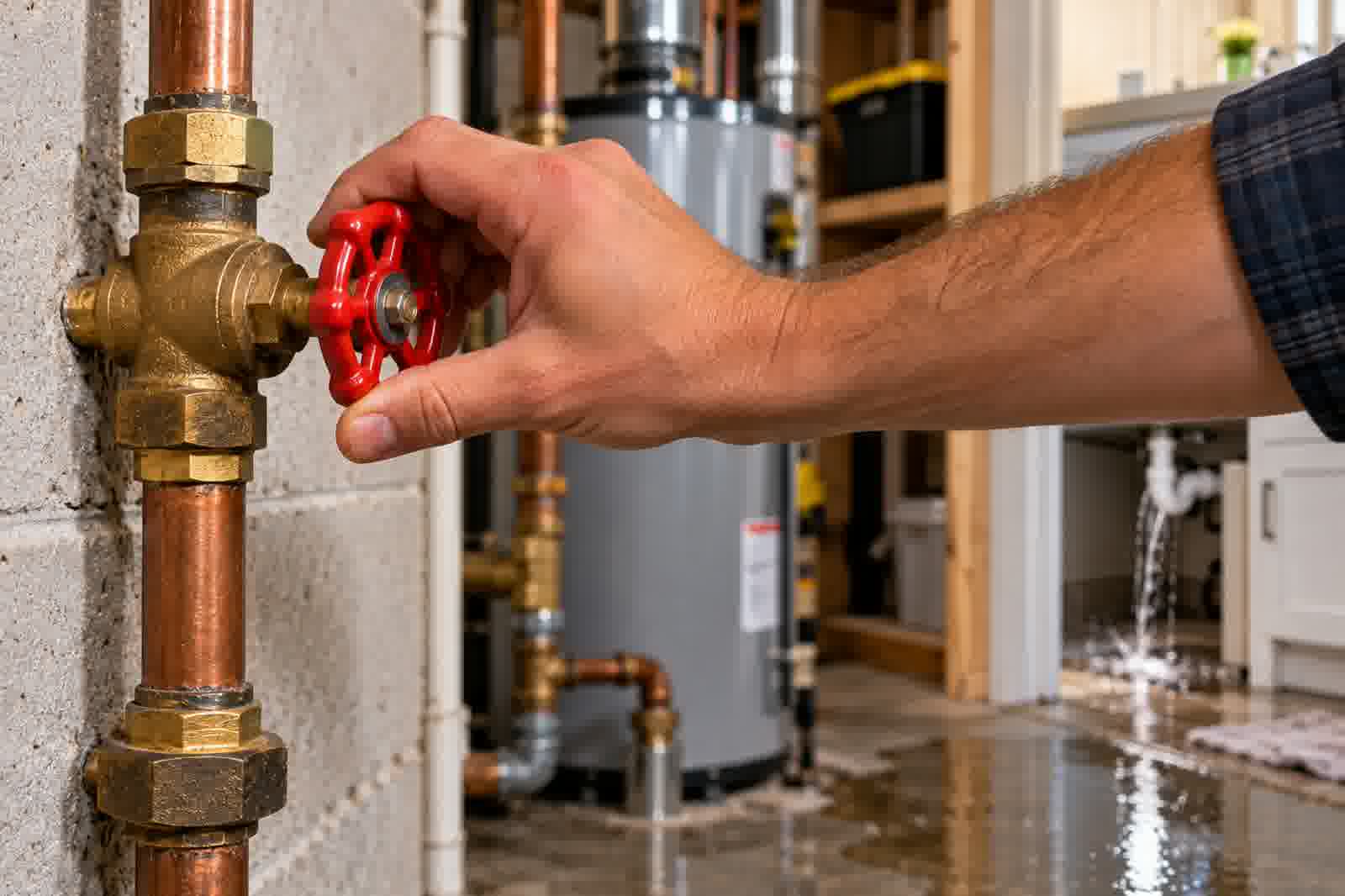
- A pipe bursts inside a wall.
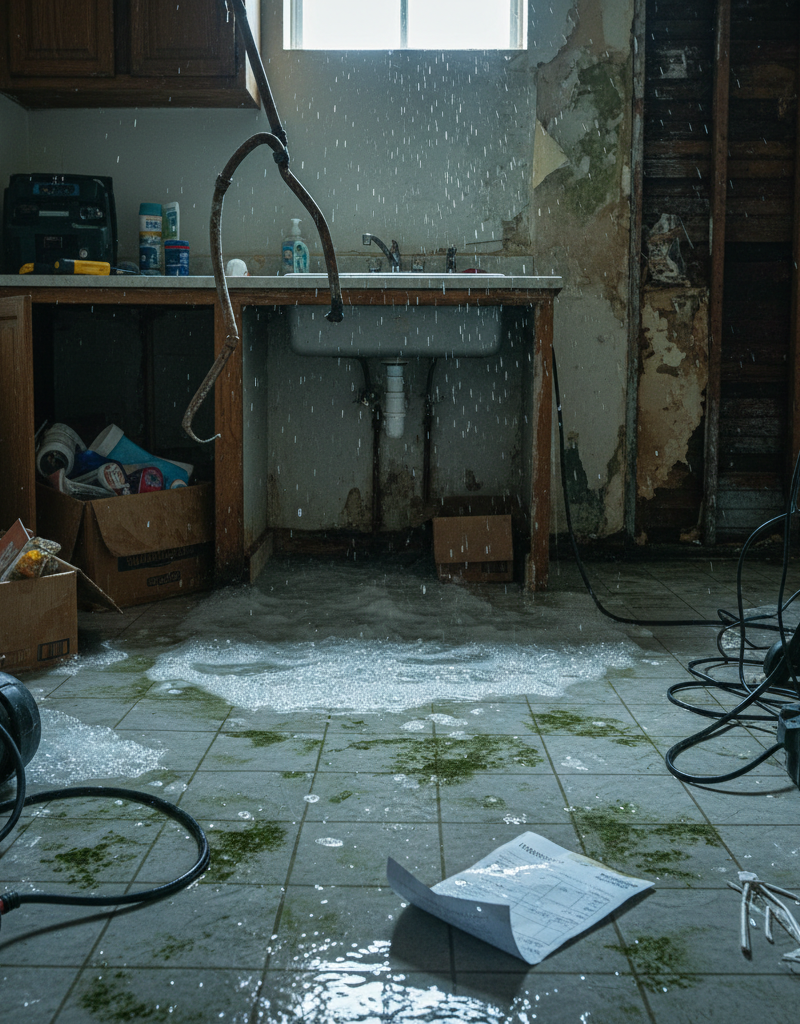
- Water starts pouring through the ceiling.
- A supply line fails and the local valve doesn't work.
- You can't determine where the water is coming from.
- A major plumbing connection fails.
Plumbing · Leak
| Project category | Plumbing |
|---|---|
| Problem type | Leak |
| Trade required | Plumbing |
| Urgency | Emergency — act now |
| Safety risk | High safety risk |
| DIY suitability | DIY for experienced homeowners |
| Cost category | Low cost |
| Typical timeline | Shut water off now; repair usually same or next day |
| Contractor type | Licensed plumber |
Repair option
Isolate at the shutoff, replace the failed component, and dry the cavity fully.
Replacement option
Repipe the run or the branch when corrosion is widespread.
Common causes
- Failed supply line or shutoff valve
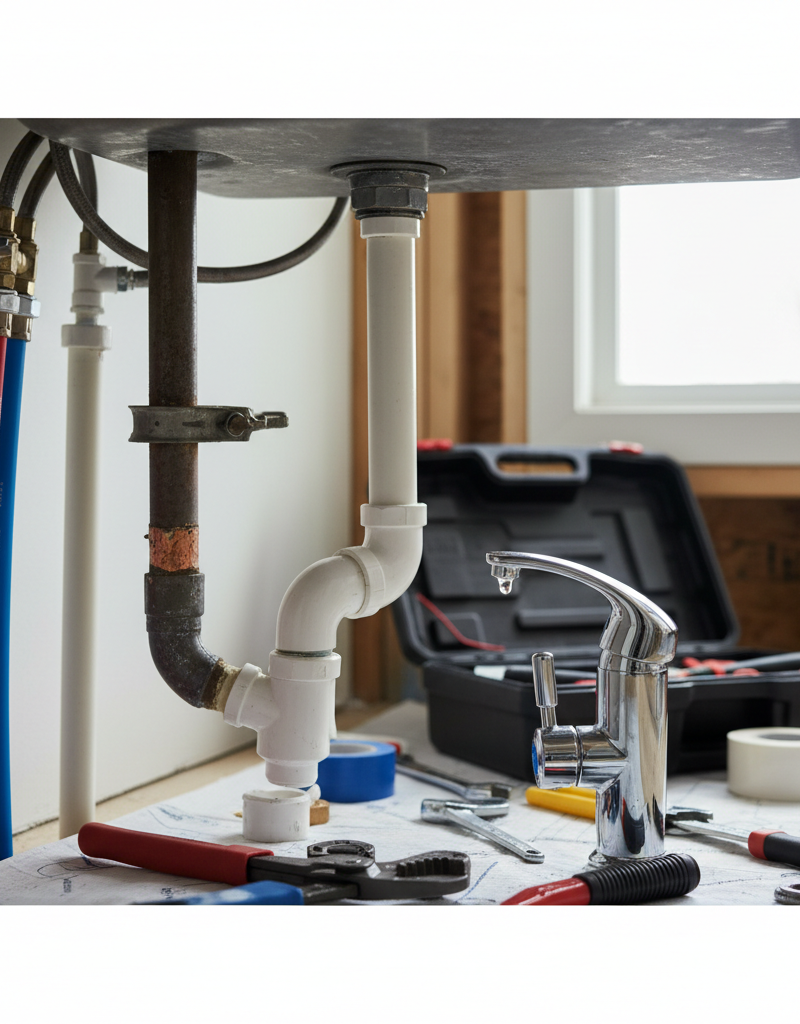
- Worn washers, cartridges, or P-trap connections
- Pinhole corrosion in older copper
Relevant tools:emergency checklistdiy or hire a pro
Published September 15, 2026Last updated September 15, 2026
The One Valve Every Homeowner Should Know: How to Shut Off Your Water Before a Small Leak Becomes a Disaster
Imagine waking up at 2:17 in the morning to the sound of running water.
You walk into the hallway.
The floor is wet.
Water is coming through the ceiling.
You don't know whether it's a toilet, washing machine, water heater, pipe inside the wall—or something else entirely.
You grab towels.
You grab a bucket.
Then you realize something:
You have absolutely no idea how to stop the water.
That is not the moment you want to start searching:
“Where is the water shutoff valve in my house?”
Knowing how to shut off your home's water is one of the simplest pieces of homeowner knowledge that can potentially limit an enormous amount of damage.
And yet plenty of homeowners don't know where their valve is.
Let's fix that.
Why Your Main Water Shutoff Matters
Your plumbing system is pressurized.
When everything is working correctly, that's exactly what you want.
Turn on a faucet and water comes out.
Start the washing machine and it fills.
Flush a toilet and the tank refills.
But when a pipe, fixture, supply line or connection fails, that same water supply can continue feeding the leak.
And that's when minutes matter.
The goal during a serious plumbing leak isn't necessarily to diagnose the problem yourself.
Your first goal may simply be:
Stop more water from entering the house.
Fresh fall plumbing guidance is specifically reminding homeowners to locate their main shutoff before an emergency because quickly stopping the water can limit damage while waiting for a plumber.
Where Is the Main Water Shutoff Valve?
There's no single location that applies to every house.
The location depends on the home's age, plumbing design, climate and local construction practices.
You might find a main shutoff:
- Where the main water line enters the house
- In a garage
- In a basement
- In a crawlspace
- In a utility area
- Near an exterior wall
- Near the water meter
- In an exterior meter box
Texas homes can be especially confusing because the setup may differ significantly from houses homeowners have owned in other parts of the country.
Don't wait for an emergency to figure yours out.
Find it during daylight, when the floor isn't covered in water and you're not under pressure.
First: Understand That You May Have More Than One Shutoff
This is where homeowners sometimes get confused.
Your house may have several valves.
For example:
Fixture shutoff valves
These control individual fixtures.
Look underneath many sinks and you'll usually see small valves supplying hot and cold water.
Toilet shutoff valve
Usually located near the toilet.
Appliance shutoffs
Washing machines, refrigerators and other water-using appliances may have their own supply valves.
Water heater shutoff
Controls water entering the water heater.
Main house shutoff
Controls the primary water supply serving the home.
Utility-side shutoff or meter valve
Depending on the system, there may also be equipment associated with the municipal supply.
These aren't interchangeable.
The best valve to use depends on where the problem is.
When Should You Shut Off the Entire House?
Suppose the supply line under one sink is leaking and you can safely close the local fixture valve.
Great.
You may not need to shut down the entire house.
But imagine:
- A pipe bursts inside a wall.
- Water starts pouring through the ceiling.
- A supply line fails and the local valve doesn't work.
- You can't determine where the water is coming from.
- A major plumbing connection fails.
- Water is rapidly spreading through the house.
That's when knowing the main shutoff becomes extremely valuable.
If you can safely stop the incoming water, you may be able to dramatically reduce how much additional water enters the structure while help is on the way.
The $10 Problem That Can Become a Very Expensive Problem
One reason plumbing failures are so frustrating is that the component that fails isn't always the expensive part.
A relatively small plumbing component can fail.
But then water damages:
- Drywall.
- Insulation.
- Flooring.
- Cabinets.
- Baseboards.
- Furniture.
- Ceilings.
- Electrical components.
- Personal belongings.
And potentially areas you can't even see.
The cost isn't necessarily:
“How much does the pipe cost?”
It's:
“Where did the water go?”
That's a completely different question.
Your First 5 Minutes During a Major Water Leak
When water is actively entering your home, it's easy to panic.
Instead, think in this order.
- Protect people first.
If water is near electrical equipment, outlets, appliances or other electrical hazards, don't walk into an unsafe area simply to reach a valve.
Electrical safety comes before property.
- Stop the water if you can do so safely.
Use the appropriate local or main shutoff.
- Confirm the flow has stopped.
Open a faucet and observe whether pressure drops.
Remember that some water already inside pipes, tanks or fixtures may continue draining temporarily.
- Identify the general source.
You don't necessarily need to diagnose the exact failure.
Was it near:
- A toilet?
- Sink?
- Water heater?
- Washing machine?
- Ceiling?
- Exterior wall?
- Call the appropriate professional.
For many active plumbing failures, that's going to be a plumber.
Significant water damage may also require restoration professionals.
Electrical involvement may require an electrician.
What If the Valve Won't Turn?
This is exactly why you should locate and understand your shutoff before you need it.
Old valves can become difficult to operate.
They may corrode.
They may seize.
They may leak.
Or you may discover that what you thought was the main shutoff isn't actually controlling what you expected.
Don't aggressively force an old valve.
You don't want your emergency preparation to create the emergency.
If the valve appears damaged, severely corroded or doesn't operate properly, have a qualified plumber evaluate it.
What Does a Main Shutoff Valve Look Like?
Two common styles homeowners may encounter are:
Ball valve
Usually has a lever-style handle.
The handle typically aligns with the pipe when open and turns perpendicular when closed.
Gate-style valve
Usually has a round handle that turns multiple times.
Older homes may have these.
But don't identify a valve solely from a description online.
Plumbing configurations vary.
If you're unsure whether you've found the correct valve, ask a plumber to identify and label it for you.
That's a tiny job that could become extremely valuable later.
Put a Label on It
This may be the simplest tip in this entire article.
Once you've positively identified your main shutoff:
Label it.
Something as simple as:
MAIN WATER SHUTOFF
can eliminate confusion during an emergency.
Then make sure other adults in the house know where it is.
Because you might not be home when the leak happens.
Take a Picture With Your Phone
Here's another trick.
Take several pictures showing:
- Where the valve is located.
- What the valve looks like.
- How to access it.
Then save them in a folder on your phone called:
HOUSE EMERGENCY
You could also include:
- Electrical panel location
- Gas emergency information
- HVAC filter size
- Plumber contact
- Electrician contact
- Insurance information
- Appliance model numbers
Now you're building something much more useful than a random collection of home-maintenance photos.
You're building a simple emergency reference for your house.
Don't Forget the Water Meter
You should also know where your water meter is located.
Why?
Because the meter can sometimes help identify a hidden water problem.
If you're concerned about unexplained water use, a plumber or utility may use meter information as part of the investigation.
But don't tamper with utility-owned equipment.
Rules and configurations vary by water provider.
If you're unsure what you're allowed to operate, contact your utility or a licensed plumber.
Your Water Bill Can Warn You Too
Not every plumbing leak announces itself with water pouring through the ceiling.
Some leaks hide.
A sudden unexplained increase in water consumption can be an important clue.
Maybe there's:
- A running toilet.
- An irrigation leak.
- A dripping fixture.
- A hidden plumbing leak.
- A water heater problem.
- An underground leak.
The bill doesn't diagnose the problem.
It tells you:
Something may have changed.
That's when you investigate.
Know These 5 Plumbing Shutoffs
Every homeowner should try to identify these before an emergency:
- Main water shutoff
The big one.
- Toilet shutoffs
Especially useful when a toilet or supply line develops a problem.
- Sink shutoffs
Know what's under your kitchen and bathroom sinks.
- Washing machine supply valves
Washing machine hoses and connections deserve attention because a failure can release substantial water.
- Water heater water supply
Know the general plumbing arrangement around your water heater, but leave gas, electrical and complex water-heater repairs to qualified professionals.
What About Frozen Pipes?
This is where this article becomes especially timely.
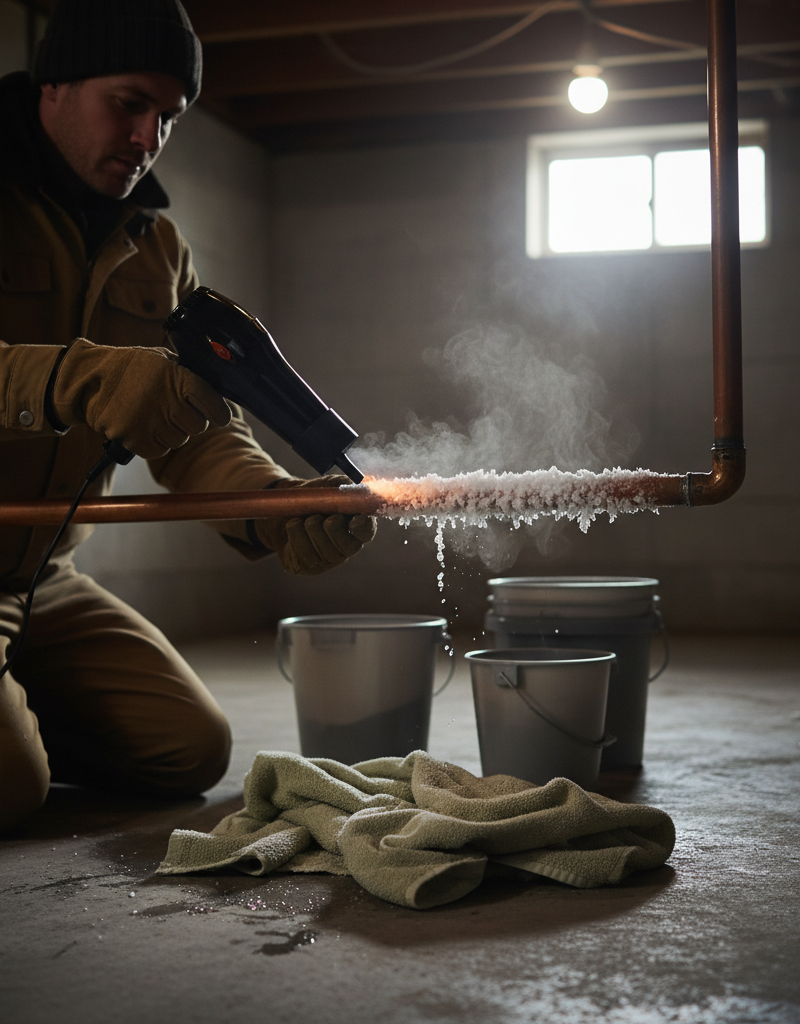
Cold weather can freeze water inside vulnerable plumbing.
As water freezes and plumbing is damaged, a leak may become apparent when conditions change and water begins flowing again.
Texas isn't immune.
In fact, the Texas Department of Insurance specifically advises homeowners to identify their water shutoff valves and protect exposed plumbing rather than waiting until a freeze is imminent. TDI particularly calls attention to exposed attic plumbing because Texas homes experienced freeze problems there.
National real-estate guidance also identifies frozen pipes and water damage among costly winter home problems that homeowners can take steps to prevent.
That's why September is a great time to learn your house.
Not the night the temperature crashes.
What Should You Do Before a Freeze?
Your exact preparation depends on your house and local conditions, but common preventive measures include:
- Protecting vulnerable exposed pipes.
- Disconnecting outdoor hoses when appropriate.
- Protecting exterior faucets.
- Knowing where your shutoff is.
- Maintaining adequate indoor heat.
- Addressing existing plumbing leaks.
- Following local utility and emergency guidance.
Recent September plumbing guidance is already encouraging homeowners to inspect exterior faucets and hoses and identify vulnerable plumbing in garages, attics, crawlspaces and exterior walls before freezing temperatures arrive.
Does Homeowners Insurance Cover a Burst Pipe?
This is where homeowners should avoid assumptions.
Policies differ.
Coverage depends on the cause, policy language and circumstances.
Generally, homeowners insurance may cover resulting water damage from a sudden and accidental plumbing failure, but maintenance, negligence and certain sources of water can be treated differently.
The Texas Department of Insurance specifically warns homeowners to take preventive steps against frozen pipes.
If you have questions about your own coverage, ask your insurer or agent.
Don't wait until there's water on the floor to learn what your policy says.
One More Thing: Document the Damage
After stopping the immediate problem and making sure everyone is safe:
Take pictures.
Take video.
Document where the water originated.
Document affected rooms and belongings.
Save receipts.
Keep records of emergency repairs.
If you're making an insurance claim, follow your insurer's instructions regarding mitigation, documentation and repairs.
The 15-Minute Challenge
Here's something every Fixly Guide reader can do this week.
Set a timer for 15 minutes.
Find:
- ☐ Your main water shutoff
- ☐ Your water meter
- ☐ Toilet shutoffs
- ☐ Sink shutoffs
- ☐ Washing machine valves
- ☐ Water heater location
- ☐ Your electrical panel
- ☐ Your smoke alarms
- ☐ Your carbon monoxide alarms
Take pictures.
Label what needs labeling.
Show another adult in the house.
Then ask:
“If something went wrong at 2 a.m., would we know what to do?”
If the answer is yes, you've accomplished something important.
If the answer is no, now is the perfect time to fix that.
The Fixly Guide Bottom Line
You can own a house for years without ever needing your main water shutoff.
Then one day you may need it immediately.
That's what makes this little piece of homeowner knowledge so valuable.
You don't need to know how to replumb your house.
You don't need to diagnose every leak.
You don't need a truck full of tools.
But you should know:
Where your water comes in—and how to stop it from coming in when something goes wrong.
Find the valve.
Identify it correctly.
Label it.
Photograph it.
Show your family.
And make sure it actually works before an emergency.
Because during a serious leak:
The most valuable tool in your house might be the valve you never thought about.
If you discover leaking, corroded or questionable plumbing while checking your home, Fixly Guide is building its network of qualified contractors throughout Dallas-Fort Worth to help homeowners connect with local professionals.
DFW plumbers: Learn about the DFW Founding Contractor Program
Homeowners: without looking right now, could you point to your home's main water shutoff?
Plumbers: what's the one plumbing shutoff you wish every homeowner knew how to find?
🏠 Follow Fixly Guide for more home tips, DIY advice, repair costs, contractor insights, and simple things every homeowner should know before an emergency happens.
Should you do this yourself?
Answer five quick questions before you start. Safety outranks savings every time.
Your experience with work like this
How high do you have to work?
Does the job involve any of these?
Will it need a permit?
Specialty tools
Free and instant. Educational guidance only — not a quote, inspection, or professional diagnosis.
Questions to ask before you sign
Ask every contractor the same questions and the cheapest bid stops looking cheapest. Check them off as you go — your progress is saved on this device.
Free, no signup. Bring this to every walkthrough so you compare bids on the same terms.
What should this project cost?
Enter your project details for a realistic cost range before you call anyone.
Common repairs run $150–$650; repipes and water-heater replacements reach $1,500–$4,500.
- Regional adjustment
- National average
- Labor share (typical)
- ~$754
- Quotes to collect
- 3 written estimates
Educational estimate based on national averages — not a binding quote. Always confirm with written local estimates.
Fixly Project Decision Box
- DIY difficulty
- Moderate
- Estimated time
- 30 minutes – half a day
- Cost level
- Moderate
Main tools / materials
- Adjustable wrench
- Plunger or drain auger
- Bucket and towels
- Thread tape
When to stop and call a pro
- Water you cannot shut off at the fixture or main
- Sewage backing up into more than one fixture
- Water near electrical panels or outlets
- Gas water heater work beyond relighting a pilot
Need professional help?
Get a Licensed PlumberHandle this before it gets worse
First steps that limit damage, then a way to reach a qualified pro.
- Emergency repair checklistThe first steps that limit damage before a pro arrives.Open
- Get local estimatesSend one request and compare written estimates from vetted pros.Open
- Estimate this projectGet a cost range for your scope and ZIP before you call anyone.Open
Free, no signup required. Estimates are educational guidance, not a quote or an inspection.
Frequently asked questions
Where is the main water shutoff in my house?+
Locations vary. It may be near where the main water line enters the house, in a garage, basement, utility area, crawlspace, exterior area or near the meter. If you can't confidently identify yours, ask a plumber or your water utility.
Should I shut off the whole house for a leaking toilet?+
Not necessarily. If the leak can safely be stopped using the toilet's functioning fixture shutoff, that may be sufficient. If the local valve fails or water continues flowing, the main shutoff may be necessary.
Can I turn off my own water at the meter?+
Rules and equipment vary by utility and jurisdiction. Don't assume you're permitted to operate utility-owned equipment. Contact your water provider or plumber if you're unsure.
What if my main shutoff is stuck?+
Don't aggressively force a damaged or severely corroded valve. Have a plumber evaluate it before an emergency occurs.
Should everyone in my house know where the water shutoff is?+
Absolutely. The person who knows where it is may not be home when something fails.
Discussion
Loading comments…