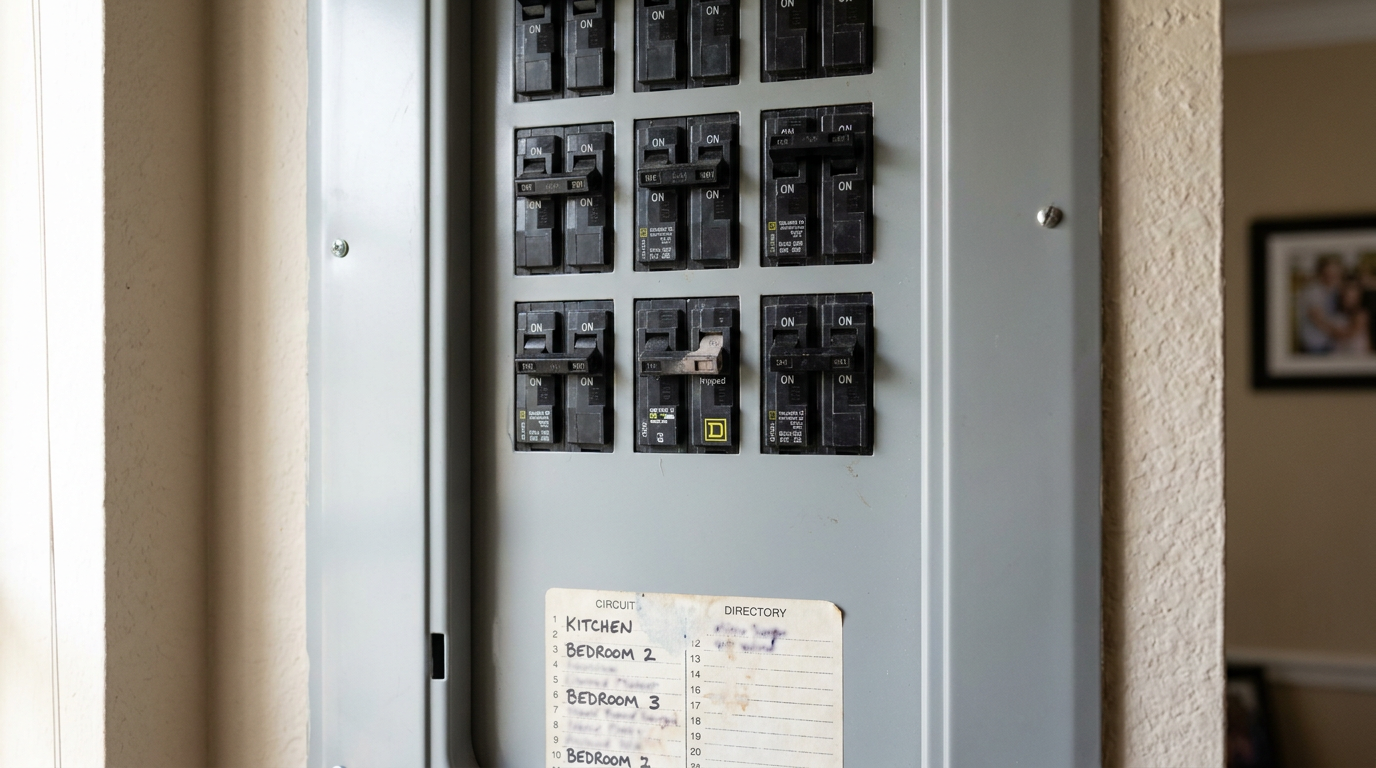
- Go back to the panel and reset the breaker again.
- If it stays on: Good sign. The wiring may be fine, and one of the devices you unplugged is probably the problem.
- If it trips immediately: You’re likely dealing with a short circuit or ground fault in the wiring, an outlet, or a switch box. Stop here. That’s electrician territory for most homeowners.
Electrical · Breaker keeps tripping
| Project category | Electrical |
|---|---|
| Problem type | Breaker keeps tripping |
| Trade required | Electrical |
| Urgency | Urgent — within days |
| Safety risk | High safety risk |
| DIY suitability | Pro recommended |
| Cost category | Low cost |
| Typical timeline | Diagnosis in a single visit |
| Contractor type | Licensed electrician |
Repair option
Isolate the load, then repair the fault or replace the breaker.
Replacement option
New dedicated circuit when the load simply exceeds what the circuit was built for.
Common causes
- Genuine overload on a shared circuit
- Ground fault from moisture in an exterior box
- Failing breaker or a damaged appliance cord
Relevant tools:diy or hire a prodiy difficulty
Published October 13, 2026Last updated October 13, 2026
Tools & materials you'll need
Affiliate links- AmazonCircuit breaker1 · If you are qualified to replace one, ensure it's the exact same type and amperage.
As an Amazon Associate FixlyGuide earns from qualifying purchases — at no extra cost to you. Prices and availability are accurate as of publication and subject to change.
Quick Answer
If your circuit breaker keeps tripping, that’s your electrical system waving a big red flag. Something on that circuit isn’t right. Most of the time, it’s one of three things: too much load on the circuit, a short circuit, or a ground fault.
Start simple. Unplug everything on the dead circuit, then reset the breaker. If it stays on, one of those devices is the troublemaker. If it pops again right away, you’re probably dealing with wiring, and that’s where a licensed electrician needs to step in.
The Problem
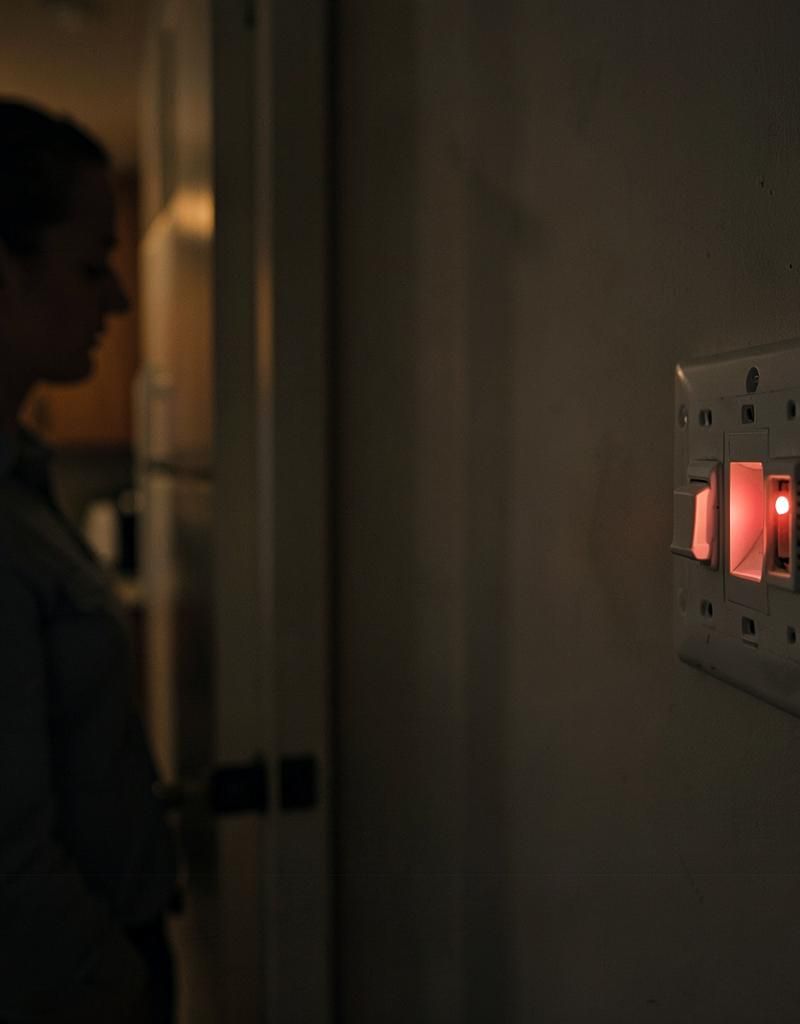
You hit the microwave, and—click—half the kitchen drops dead. You walk to the panel, flip the breaker back on, and it all comes back like nothing happened. Then tomorrow it does the same thing. Sound familiar?
A breaker that keeps tripping isn’t just being dramatic. It’s doing its job and telling you there’s a problem before wires get hot enough to cook insulation or, worse, light something up. I pulled a water heater in Frisco last month that kept tripping the same breaker, and sure enough, the element had gone bad and was pulling way too hard. Same story, different house. Your move is figuring out what’s overloading the circuit or causing that fault in the first place.
How It Works
I like to explain a home’s electrical system like a road map. Power comes in from the utility, hits your main panel, and then splits off into smaller branch circuits. Each one has its own breaker watching the traffic. Think of that breaker as the gatekeeper for that stretch of wire.
Most standard lighting and outlet circuits run on 15 or 20 amps. An amp is just the unit we use to measure electrical current. Simple enough.
Inside a modern thermal-magnetic breaker, there are two separate trip systems. One is a bimetallic strip. Current runs through it, it heats up, and if the load stays too high for too long, that strip bends and trips the switch. That’s the overload side of things. It’s not instant — sometimes it takes minutes, sometimes hours.
The other part is the electromagnet. If you’ve got a dead short, the current spikes hard and fast. The magnet reacts almost immediately and yanks the breaker open in a fraction of a second. That’s the fast trip. Either way, the breaker is keeping the wire from turning into a space heater inside your walls. And trust me, you don’t want that.
Step-by-Step Fix
Finding a tripping breaker is mostly patience and a little logic. Work through it one step at a time.
Safety First: Don’t mess with the panel if your hands are wet or you’re standing in water. If you smell burning plastic, see scorch marks, or notice corrosion around the breakers, stop right there and call an electrician.
1. Identify the Tripped Breaker
- Head to the main panel. The bad breaker usually sits in the OFF position or halfway between ON and OFF. It won’t line up with the others.
2. Reset the Breaker
- To reset it the right way, push the handle all the way to OFF first. That resets the internal mechanism. Then flip it back to ON. If the problem was just a temporary overload, you’re back in business.
3. Check for a Simple Overload
- If it trips again, think about what was running when it went. Was it a vacuum, space heater, hair dryer, or something else that pulls a lot of juice? Kitchen circuits get hit hard — microwave, toaster oven, coffee maker, all at once, and no dice.
- A typical 15-amp circuit can handle about 1,800 watts (15A x 120V). A 20-amp circuit can handle 2,400 watts. Add up what you were using and see if you’ve simply overloaded it.
4. Isolate the Circuit
- Unplug everything from the outlets in the room or area that lost power. That means lamps, chargers, power strips, the whole pile.
- Turn off every light switch on that circuit too. Don’t leave anything in play.
5. Test the Empty Circuit
- Go back to the panel and reset the breaker again.
- If it stays on: Good sign. The wiring may be fine, and one of the devices you unplugged is probably the problem.
- If it trips immediately: You’re likely dealing with a short circuit or ground fault in the wiring, an outlet, or a switch box. Stop here. That’s electrician territory for most homeowners.
6. Identify the Faulty Appliance
- If the breaker held in the last step, go back to the room and plug things in one at a time. Start with a lamp or some other simple load, then work your way up.
- Take your time here. Rushing just gets you back to square one.
7. The Moment of Truth
- Sooner or later, you’ll plug in the bad actor and the breaker will trip again. That’s your culprit. The device has an internal fault or short and it’s pulling too much current. Unplug it and mark it faulty. Don’t keep using it like nothing happened.
8. Test with a Different Device
- If you want to be sure, plug a known good lamp into that same outlet. If the lamp works and the breaker stays on, the appliance was the problem.
- If the lamp trips it too, the outlet itself may be bad. At that point, call a pro.
Common Causes
- Circuit Overload: This is the most common one. You’re asking a circuit to do more than it was built for. Older houses get nailed by this all the time because they just don’t have enough circuits. Run a 1,500-watt space heater and a 1,200-watt hair dryer on the same 15-amp (1,800-watt) circuit, and you’re asking for a trip.
- Short Circuit: This happens when a "hot" wire (black) touches a "neutral" wire (white). Current suddenly gets a low-resistance path, amps spike hard, and the breaker kicks out fast. Bad appliance cords, loose wires in a box, even a nail through a wall can do it.
- Ground Fault: Same general headache, different path. A "hot" wire touches a ground wire or a grounded metal part in an appliance or box. That creates a dangerous surge too. I see this a lot with older appliances where the insulation’s seen better days.
- Faulty Appliance: Bad motor, burned heating element, chewed-up internal wiring — any of that can trip a breaker the second you turn the thing on.
- Weak or Worn-Out Breaker: Breakers wear out. They’re mechanical parts, and after enough trips, the spring inside can get tired. An old breaker may trip below its rating or feel mushy when you reset it. If that’s the case, let an electrician replace it; they cost about $10-$20 for the part but installation requires working in a live panel.
Common Mistakes
- Repeatedly Resetting: If it trips once, fine — you investigate. If it trips again and you keep flipping it back on, you’re just making the problem worse. That wire can get hot in a hurry.
- Ignoring the Signs: Buzzing at the panel, a burnt-plastic smell, or discoloration around an outlet isn’t normal. Don’t shrug it off.
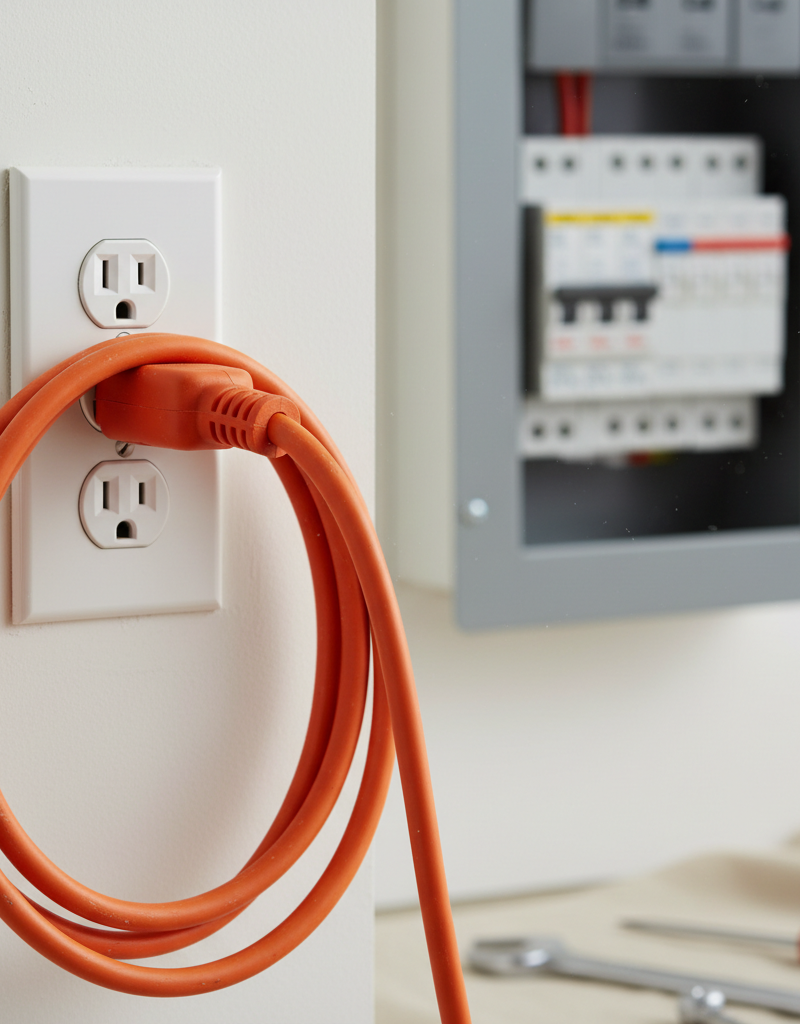
- Using Too Many Extension Cords: A mess of cords and power strips is a classic overload setup. If you need that much temporary wiring, the real fix is more outlets.
- Replacing a Breaker with a Higher-Amp One: Never swap a 15-amp breaker for a 20-amp breaker just to stop nuisance trips. The breaker protects the wire size in the wall. A 15-amp breaker protects 14-gauge wire. Put a 20-amp breaker on that circuit and you’ve just allowed 33% more current than the wire was designed for. That’s a serious fire hazard and a code violation, plain and simple.
Cost & Time Breakdown
Here's what to expect for troubleshooting and repairs.
| Task | DIY Cost | Pro Cost | Time |
|---|---|---|---|
| Identify and remove an overloaded device | $0 | N/A | 5–30 minutes |
| Replace a faulty appliance plug/cord | $5–$15 | $125–$200 (service call) | 20 minutes |
| Electrician diagnoses a short in wiring | N/A | $150–$300+ | 1–3 hours |
| Replace a single standard circuit breaker | $10 (part only) | $125–$250 | 30–60 minutes |
| Replace a faulty GFCI outlet | $20–$30 | $150–$275 | 30 minutes |
| Add a new dedicated 20A circuit | N/A | $400–$900+ | 2–5 hours |
Tips & Prevention
- Map Your Breakers: Spend half an hour figuring out what each breaker actually controls. Turn lights on, plug a radio into a few outlets, then shut breakers off one by one and see what dies. Label the panel clearly. Knowing that "SE Bedroom & Hall" are on breaker #12 saves a ton of guessing later.
- Balance Your Loads: Once you know what’s on what, use a little common sense. Don’t run the toaster oven and the air fryer on the same kitchen circuit at the same time. Split them up.
- Invest in Dedicated Circuits: If you’ve got a big power hog like a garage freezer or treadmill, give it its own circuit. That way it’s not fighting with everything else in the house.
- Check Cords Regularly: Look over appliance cords now and then. Cracks, frays, loose plugs — those are all trouble waiting to happen.
When to Call a Professional
You can figure out an overload on your own. Past that, electrical work gets serious fast. Call a licensed electrician right away if you run into any of these:
- The breaker trips again right away, even with everything on the circuit unplugged.
- You hear buzzing or crackling sounds from the electrical panel or any outlet.
- You smell burning plastic or see smoke coming from the panel or a device.
- Resetting the breaker feels "mushy" or it won't physically latch back into the "ON" position.
- You see scorch marks or discoloration on the panel, breakers, or outlets.
- You receive a slight shock or tingle when you touch an appliance.
Working in a live electrical panel can kill you if you don’t know exactly what you’re doing. An electrician’s got the tools, the training, and the experience to track down shorts, replace breakers, and make sure the system’s safe and up to code.
Related Articles
Keep troubleshooting with these hand-picked guides from FixlyGuide:
- The Hidden Reason Your Extension Cord Keeps Tripping the Breaker (and What to Do) — Discover why your extension cord might be tripping a circuit breaker and learn how to diagnose and fix common electrical issues safely.
- The 3 Hidden Reasons Your Circuit Breaker Keeps Tripping (And How to Stop It) — Uncover the surprising culprits behind repeatedly tripping circuit breakers and learn practical, actionable steps to diagnose and resolve t…
- The Sneaky Reason Your Extension Cord Keeps Tripping the Breaker — Don't just reset that breaker again! Discover why your extension cord keeps tripping your circuit and how to fix it right.
- The Hidden Reason Your Circuit Breaker Keeps Tripping (It's Not Always an Overload) — Unexpected circuit breaker trips are a common, frustrating issue often pointing to more than just a simple overload and can indicate underl…
- Why Does My Breaker Trip When I Use the Hair Dryer? The Overload vs. Short Circuit Puzzle — Is your hair dryer tripping the breaker every morning? We'll show you how to figure out if it's a simple appliance overload or a dangerous…
- That Ceiling Stain Isn't a Leak: 5 Hidden Causes — A mysterious ceiling stain can be alarming, especially when there's no active leak. The real culprits are often hidden issues like attic co…
Should you do this yourself?
Answer five quick questions before you start. Safety outranks savings every time.
Your experience with work like this
How high do you have to work?
Does the job involve any of these?
Will it need a permit?
Specialty tools
Free and instant. Educational guidance only — not a quote, inspection, or professional diagnosis.
What should this project cost?
Enter your project details for a realistic cost range before you call anyone.
Outlet and switch work usually $150–$400; panel upgrades commonly $1,800–$4,200.
- Regional adjustment
- National average
- Labor share (typical)
- ~$709
- Quotes to collect
- 3 written estimates
Educational estimate based on national averages — not a binding quote. Always confirm with written local estimates.
Fixly Project Decision Box
- DIY difficulty
- Professional Recommended
- Estimated time
- Diagnosis 1–2 hours
- Cost level
- Moderate
Main tools / materials
- Non-contact voltage tester
- Outlet tester
- Flashlight
When to stop and call a pro
- Burning smell, scorch marks, or a warm outlet or switch plate
- A breaker that trips again right after being reset
- Any work inside the service panel
- Aluminum wiring or cloth-insulated wiring
Need professional help?
Talk to a Licensed ElectricianBefore you start
Check the difficulty, permits, and safety risk — then decide whether to call a pro.
- Estimate this projectGet a cost range for your scope and ZIP before you call anyone.Open
- Get local estimatesSend one request and compare written estimates from vetted pros.Open
Free, no signup required. Estimates are educational guidance, not a quote or an inspection.
Frequently asked questions
Why does my breaker trip but nothing is plugged in?+
If a breaker trips with nothing plugged in, it almost always indicates a short circuit or a ground fault in the wiring itself. This could be a loose wire in an outlet or junction box, or even a problem at a light fixture. This requires an electrician to trace and repair safely.
Can a bad circuit breaker cause tripping?+
Yes, absolutely. Circuit breakers are mechanical devices that can wear out over time, especially if they have tripped many times. The internal spring can weaken, causing it to trip at a current level below its rating. If you've ruled out overloads and shorts, a 'weak' breaker is a likely culprit.
How do I know if I have a short circuit or an overloaded circuit?+
An overloaded circuit usually trips the breaker after a few minutes of high-power use as the bimetallic strip heats up. A short circuit causes a massive, instantaneous surge of current that trips the breaker's magnetic mechanism immediately—it's a much more abrupt 'snap' and happens the moment you plug in or turn on the faulty device.
Why does my breaker trip when it rains?+
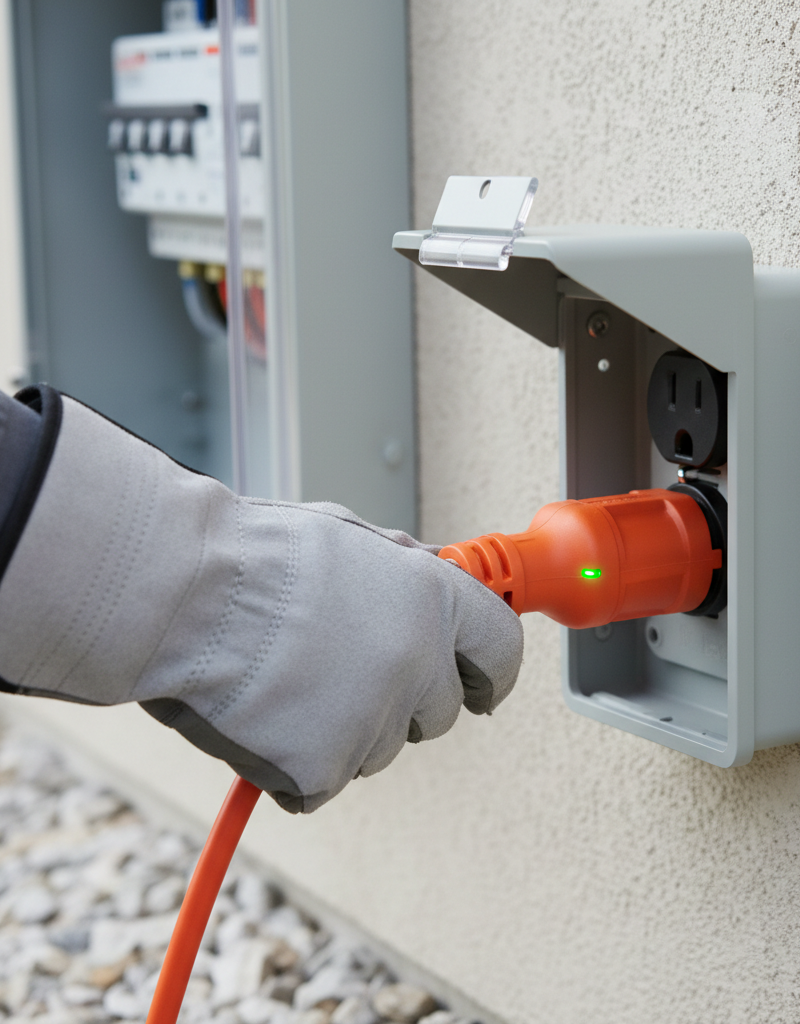
This often points to moisture getting into an outdoor electrical component. The most common culprits are outdoor outlets with bad weather seals, landscape lighting, or an exposed junction box. Water creates a path for electricity to ground, causing a ground fault that trips the breaker.
Is a tripping circuit breaker a fire hazard?+
A tripping breaker is not a fire hazard; it's a fire *prevention* device. The hazard comes from ignoring the problem. If you repeatedly reset the breaker without fixing the underlying overload or short, you can cause the circuit wiring to overheat, melt its insulation, and potentially ignite surrounding materials.
How much does it cost to have an electrician fix a tripping breaker?+
The cost depends entirely on the cause. If it's a simple diagnosis and breaker replacement, you might pay $125 to $250. If the electrician has to spend a few hours tracing a hidden short circuit in a wall, the labor cost could be $300 to $500 or more.
What's the difference between a standard breaker and a GFCI or AFCI breaker?+
A standard breaker only protects against overloads and shorts. A GFCI (Ground Fault Circuit Interrupter) breaker also protects against ground faults, offering better shock protection. An AFCI (Arc Fault Circuit Interrupter) breaker detects the specific electrical signatures of dangerous arcs—tiny sparks in wiring that are a major cause of electrical fires.
Why did my new appliance start tripping the breaker?+
If a brand new appliance trips the breaker, there are two possibilities. First, it could be defective and have an internal short. Second, it might be a high-power device (like a new microwave or portable AC) that is simply overloading a circuit that was already close to its limit.
Discussion
Loading comments…