- Overloaded Circuit: This is the most frequent cause. Too many appliances or high-wattage devices are drawing more current than the circuit (and potentially the extension cord) is designed to handle.
- Damaged Extension Cord: Knicks, cuts, frays, or crushed spots in the cord can expose wires and create a short circuit, causing an immediate trip.
- Faulty Appliance: An internal short circuit or a drawing too much current within the appliance itself can cause the breaker to trip, even if the extension cord is fine.
- Improper Cord Gauge: Using a thin, lightweight extension cord (high gauge number, e.g., 18-gauge) for heavy-duty appliances can cause the cord to overheat and the breaker to trip.
- Excessively Long Cords: Very long extension cords (over 50 feet) can experience significant voltage drop, leading to increased current draw and overheating, which can trip a breaker.
Electrical · Panel or service upgrade
| Project category | Electrical |
|---|---|
| Problem type | Panel or service upgrade |
| Trade required | Electrical |
| Urgency | Planned project |
| Safety risk | High safety risk |
| DIY suitability | Licensed pro only |
| Cost category | High cost |
| Typical timeline | Permit plus utility scheduling, commonly 2–6 weeks |
| Contractor type | Licensed electrician |
Repair option
Add a subpanel when the main service is adequate.
Replacement option
Full service upgrade with utility coordination and permits.
Common causes
- Obsolete or recalled panel brands
- Service capacity too small for added loads
- No room for required AFCI/GFCI breakers
Relevant tools:project cost estimatorcompare quotes
Published July 9, 2026Last updated August 17, 2026
Tools & materials you'll need
Affiliate links- AmazonNew Heavy-Duty Extension Cord1 · If existing cord is damaged or undersized
As an Amazon Associate FixlyGuide earns from qualifying purchases — at no extra cost to you. Prices and availability are accurate as of publication and subject to change.
Quick Answer
When an extension cord trips a circuit breaker, it's a clear signal that too much current is flowing, or there's a direct short circuit. This often points to an overloaded cord/circuit, a damaged cord, or an issue with the appliance. The breaker trips to protect your home's wiring from overheating and potential fire.
The Problem
Imagine plugging in your trusty power tool or outdoor string lights with an extension cord, only for the lights to go out, followed by a tell-tale 'thunk' from your electrical panel. Your extension cord has tripped the breaker. This isn't just an annoyance; it's your home's electrical system telling you something is wrong and potentially dangerous. Ignoring the repeated trips or trying to 'reset and forget' can lead to serious hazards, including damaged appliances, melted wiring, and even electrical fires. The core issue almost always boils down to an excessive electrical load or a fault within the cord or the connected device, demanding a systematic approach to diagnose and resolve.
How It Works
Your home's electrical system is a carefully balanced network designed to deliver power safely. Circuit breakers are the unsung heroes of this system. Each breaker is essentially an automatic switch that monitors the flow of electricity through a specific circuit in your home. These circuits are designed to safely handle a certain amount of current, measured in amperes (amps), typically 15 or 20 amps for standard household circuits. When the current draw exceeds this safe limit, due to too many devices operating simultaneously or a direct short circuit, the breaker trips. This 'trip' mechanism rapidly cuts off power to that circuit, preventing the wires within your walls from overheating. Overheated wires can melt their insulation, potentially causing sparks, damage to the electrical system, and fire. Extension cords, while convenient, are not designed for permanent wiring and also have their own current ratings based on their wire gauge and length. If an extension cord, or the devices plugged into it, demands more current than either the cord or the circuit breaker can safely provide, a trip is inevitable.
Step-by-Step Fix
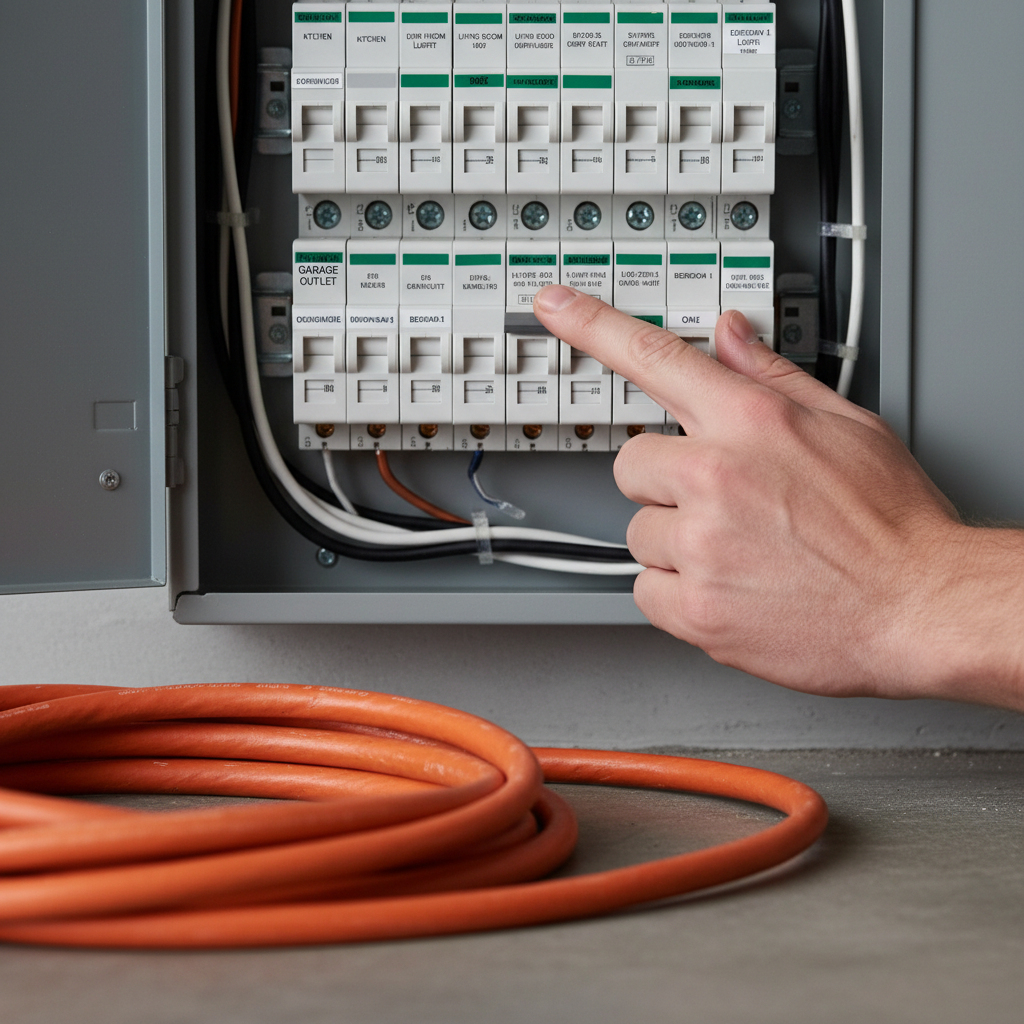
1. Identify the Tripped Breaker — Locate your electrical panel. It's usually a gray metal box in a basement, garage, or utility closet. Open the panel door and look for a breaker switch that is in the 'off' position, or sometimes in a middle position (often marked 'trip'). * Safety First: Never touch inside the electrical panel. Only reset the breaker switch, which is designed to be handled. Stand on a dry surface.
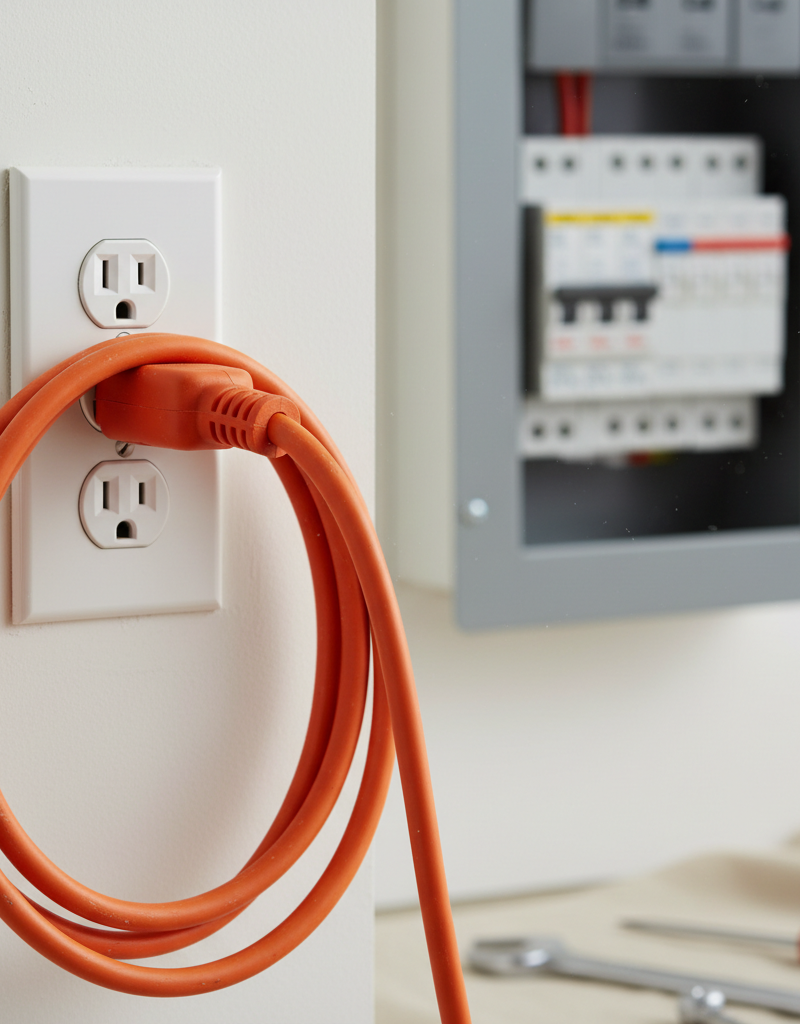
2. Unplug Everything from the Extension Cord — Before attempting to reset the breaker, unplug all appliances and devices from the extension cord. Then, unplug the extension cord itself from the wall outlet. * Why this matters: This isolates the problem. If the cord or an appliance is faulty, unplugging them prevents an immediate re-trip.
3. Inspect the Extension Cord and Appliances — Carefully examine the entire length of the extension cord. Look for any signs of damage: cuts, frayed insulation, crushed areas, burn marks, or discoloration around the plug and receptacle ends. Also, inspect the plugs and power cords of the appliances you were using. * Damaged cord? If you find any damage, discard the extension cord immediately and replace it with a new one. Never attempt to repair a damaged extension cord. * Appliance issues? Look for similar damage on appliance cords. If an appliance cord is damaged, have a professional inspect or repair the appliance if it's high-value, or consider replacing it.
4. Reset the Circuit Breaker — Firmly push the tripped breaker switch entirely to the 'off' position first, then push it firmly to the 'on' position. You should feel a distinct click. * Does it immediately trip again? If the breaker trips instantly without anything plugged into the wall outlet, or with just the extension cord plugged in (and nothing attached to the cord), you likely have a more serious issue like a faulty outlet or even an internal wiring problem. Call a licensed electrician immediately.
5. Test the Circuit (No Load) — Plug only the extension cord back into the wall outlet (nothing plugged into the extension cord yet). Does the breaker hold? If so, the circuit and cord itself are likely okay at this stage. * Still tripping? If the breaker trips with just the extension cord plugged in (and it passed visual inspection), the cord might have an internal short. Discard it.
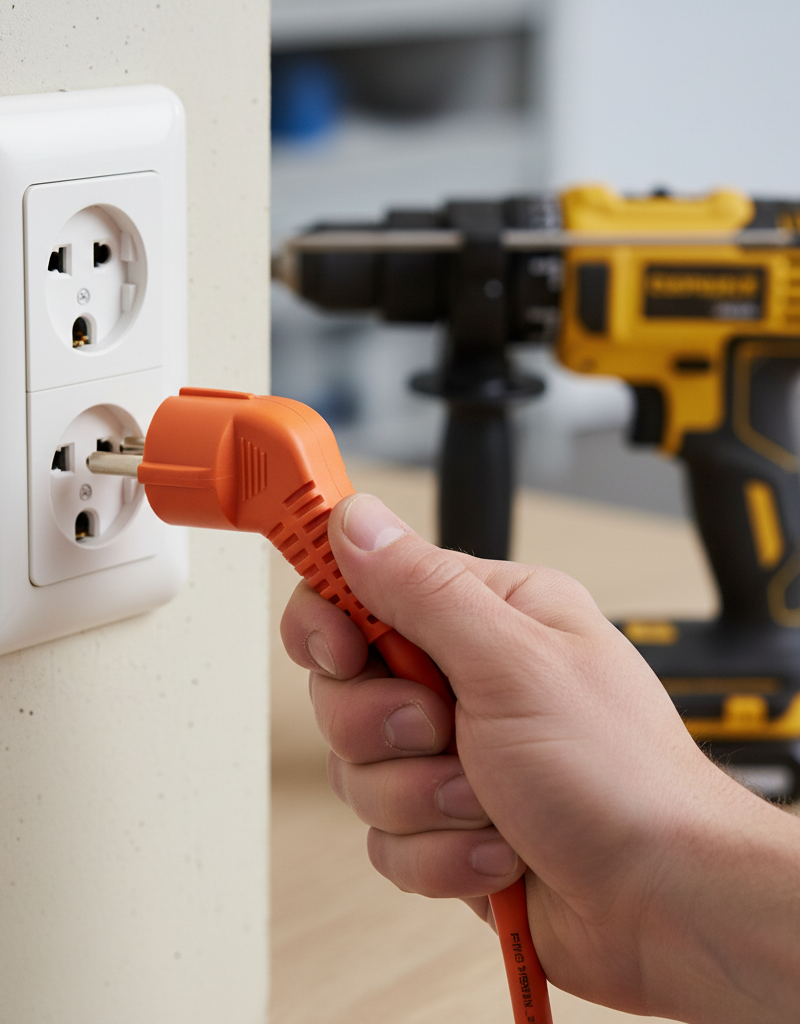
6. Gradually Reconnect Appliances — If the breaker holds with just the extension cord, plug one of your original appliances into the extension cord and turn it on. If it works, try the next appliance, one at a time, until the breaker trips again. * The Culprit: The last appliance you plugged in or turned on before the trip is the most likely cause of an overload or a fault. Inspect that appliance closely or try it on a different, dedicated circuit if available. * Overload: Often, the total wattage of all devices plugged into the extension cord (and the original circuit) exceeds its capacity. Calculate the total wattage of your devices (Watts = Volts x Amps, typically 120V in the US) and ensure it's below the circuit's capacity (e.g., a 15-amp circuit can safely handle about 1,800 watts continuously, 20-amp about 2,400 watts).
7. Confirm Proper Cord Sizing — Ensure your extension cord is adequately sized (gauge) and rated for the power draw of the appliances you're connecting, especially for high-draw items like power tools, heaters, or air conditioners. Thicker cords (lower gauge numbers like 12-gauge) handle more current over longer distances without overheating. * Rule of Thumb: Match the cord's amperage rating to the appliance's need and avoid excessively long cords, which cause voltage drop and heat.
8. Try an Alternate Outlet/Circuit — If the problem persists with a particular appliance and a confirmed good extension cord, try plugging the extension cord (and the appliance) into a different wall outlet on a different circuit if possible. This helps determine if the issue is with the original circuit or the appliance.
9. Consider a Dedicated Circuit — For high-power tools or appliances that frequently trip breakers, consider having an electrician install a dedicated circuit. This ensures the appliance has its own power supply without competing with other devices.
Common Causes
- Overloaded Circuit: This is the most frequent cause. Too many appliances or high-wattage devices are drawing more current than the circuit (and potentially the extension cord) is designed to handle.
- Damaged Extension Cord: Knicks, cuts, frays, or crushed spots in the cord can expose wires and create a short circuit, causing an immediate trip.
- Faulty Appliance: An internal short circuit or a drawing too much current within the appliance itself can cause the breaker to trip, even if the extension cord is fine.
- Improper Cord Gauge: Using a thin, lightweight extension cord (high gauge number, e.g., 18-gauge) for heavy-duty appliances can cause the cord to overheat and the breaker to trip.
- Excessively Long Cords: Very long extension cords (over 50 feet) can experience significant voltage drop, leading to increased current draw and overheating, which can trip a breaker.
- Water Exposure: Using extension cords in wet or damp conditions can create a short circuit due to water bridging the electrical contacts.
Common Mistakes
- Ignoring the Trip: Repeatedly resetting a breaker without investigating the cause is extremely dangerous. Breakers trip for a reason – to prevent overheating and fire.
- Using Indoor Cords Outdoors: Indoor extension cords lack the robust insulation and weatherproofing needed for outdoor use, increasing the risk of damage and shorts.
- Daisy-Chaining Cords: Plugging multiple extension cords into one another is a major fire hazard. It can lead to excessive voltage drop, overheating, and overloading.
- Overloading the Cord Itself: Plugging high-wattage appliances into a light-duty extension cord can cause the cord to overheat and melt, even if the circuit breaker hasn't technically tripped yet (though it usually will).
- Running Cords Under Rugs or Through Doorways: This can damage the cord's insulation, creating a shock or fire hazard from repeated pressure or pinching.
- Using Damaged Cords: Taping up a damaged extension cord is a temporary fix that leaves a significant safety risk. Damaged cords should be replaced immediately.
Cost & Time Breakdown
| Task | DIY cost | Pro cost | Time |
|---|---|---|---|
| Diagnose & Reset Breaker | $0 | $0 (initial) | 5–10 minutes |
| Replace Damaged Extension Cord | $15–$50 | N/A | 2–5 minutes |
| Appliance Repair/Replacement | $0–$500+ | $100–$800+ | Varies |
| Outlet/Wiring Inspection | N/A | $150–$300+ | 1–2 hours |
| Dedicated Circuit Installation | N/A | $300–$800+ | 2–4 hours |
Tips & Prevention
- Match Cord to Task: Always use an extension cord with the correct gauge and length for the power requirements of the appliance. For high-draw items (more than 10 amps), use a heavy-duty, 12- or 14-gauge cord. For outdoor use, always select a cord specifically rated for outdoor conditions (marked with a 'W' for weather resistant).
- Check Wattage Ratings: Before plugging in multiple devices, check their wattage ratings and ensure the total doesn't exceed the extension cord's (or the circuit's) capacity. A circuit's capacity is usually 80% of its breaker rating for continuous loads (e.g., 12 amps for a 15-amp breaker).
- Avoid Overloading Outlets: Don't plug multiple power strips or extension cords into a single wall outlet. Distribute high-draw appliances across different circuits in your home if possible.
- Regular Inspection: Periodically inspect your extension cords for any kinks, cuts, frays, or heat damage. Discard any cord showing even minor damage.
- Proper Storage: Store extension cords loosely coiled in a dry place, away from extreme temperatures and heavy objects that could crush them. Avoid tightly wrapping cords around objects, which can damage internal wires.
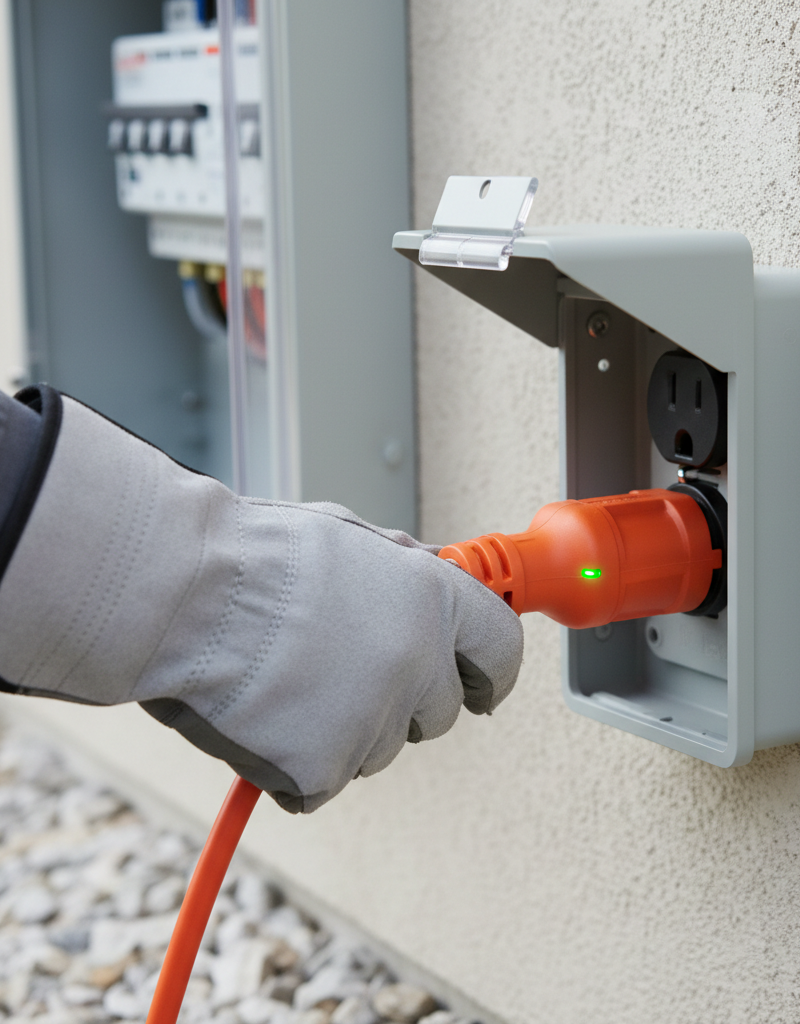
- Use Ground-Fault Circuit Interrupters (GFCIs): When using extension cords outdoors or near water sources, plug them into GFCI-protected outlets. GFCIs provide added protection against electric shock.
- Never Remove the Ground Pin: Do not remove the third (grounding) prong from a three-prong plug or extension cord. This is a critical safety feature that protects against electrical shock.
When to Call a Professional
If your circuit breaker immediately trips again after you've unplugged everything and reset it, even with nothing connected to the outlet, it's a strong indicator of a more serious electrical issue within your home's wiring or the outlet itself. You should also call a licensed electrician if you notice burning smells, scorch marks around outlets or the electrical panel, or if any part of the electrical system (outlets, cords, appliances) feels unusually hot. If the problem persists after troubleshooting and replacing a damaged extension cord or faulty appliance, or if you suspect an issue with your home's main electrical panel or internal wiring, it's crucial to consult a professional. Never attempt to diagnose or repair internal wiring issues, as this poses a significant risk of electric shock, fire, and could violate local electrical codes, potentially voiding your home insurance.
Related Articles
Keep troubleshooting with these hand-picked guides from FixlyGuide:
- The Hidden Reason Your Extension Cord Keeps Tripping the Breaker (and What to Do) — Discover why your extension cord might be tripping a circuit breaker and learn how to diagnose and fix common electrical issues safely.
- Why Your Wall Switch Feels Hot: The Hidden Danger Most Homeowners Miss — A hot light switch isn't just uncomfortable; it's a critical warning sign of potential electrical hazards that demand immediate attention.
- Why Your Extension Cord Keeps Tripping the Breaker (And the Simple Test to Find the Hidden Cause) — Discover why your extension cord keeps tripping the circuit breaker and learn how to safely diagnose and fix the real problem with a simple…
- The Hidden Reason Your Circuit Breaker Keeps Tripping (It's Not Always an Overload) — Discover the often-overlooked causes behind a frequently tripping circuit breaker and learn how to diagnose and fix them safely.
- That One Warm Breaker Is Trying to Tell You Something — A single warm circuit breaker is not normal; it's a critical warning sign of an electrical issue, often an overload or a dangerous loose co…
- That Annoying Water Heater Popping Sound? It's Trying to Tell You This One Thing — A popping water heater usually signals a common issue: sediment buildup. Learn why it happens and how to fix it with a simple flush.
What should this project cost?
Enter your project details for a realistic cost range before you call anyone.
Outlet and switch work usually $150–$400; panel upgrades commonly $1,800–$4,200.
- Regional adjustment
- National average
- Labor share (typical)
- ~$709
- Quotes to collect
- 3 written estimates
Educational estimate based on national averages — not a binding quote. Always confirm with written local estimates.
Fixly Project Decision Box
- DIY difficulty
- Professional Recommended
- Estimated time
- Diagnosis 1–2 hours
- Cost level
- Moderate
Main tools / materials
- Non-contact voltage tester
- Outlet tester
- Flashlight
When to stop and call a pro
- Burning smell, scorch marks, or a warm outlet or switch plate
- A breaker that trips again right after being reset
- Any work inside the service panel
- Aluminum wiring or cloth-insulated wiring
Need professional help?
Talk to a Licensed ElectricianFrequently asked questions
Why does my breaker trip when I plug in an extension cord?+
A breaker usually trips when an extension cord is plugged in due to an electrical overload (too many devices drawing power), a short circuit (often a damaged cord or appliance), or a faulty appliance connected to the cord. The breaker acts as a safety device to prevent overheating and fire risks.
Can a bad extension cord trip a breaker?+
Absolutely. A damaged extension cord with frayed wires, cuts, or internal shorts can easily create a direct path for electricity to bypass its intended route, causing a surge in current that immediately trips the circuit breaker.
What kind of extension cord won't trip a breaker?+
No extension cord can inherently 'not trip a breaker' if the connected load exceeds the circuit's capacity or if there's a fault. However, using a heavy-duty extension cord (lower gauge number like 12- or 10-gauge) that is rated for the specific amperage of your appliance, and ensuring the total load doesn't exceed the circuit's limits, significantly reduces the likelihood of tripping.
How do I know if my circuit is overloaded?+
Signs of an overloaded circuit include frequently tripping breakers, dimming lights when appliances turn on, buzzing sounds from outlets, or outlets/switch plates feeling warm to the touch. You can also calculate the total wattage of all devices on a circuit to see if it exceeds what your breaker can safely handle (e.g., 1800 watts for a 15-amp circuit, 2400 watts for a 20-amp circuit).
Discussion
Loading comments…