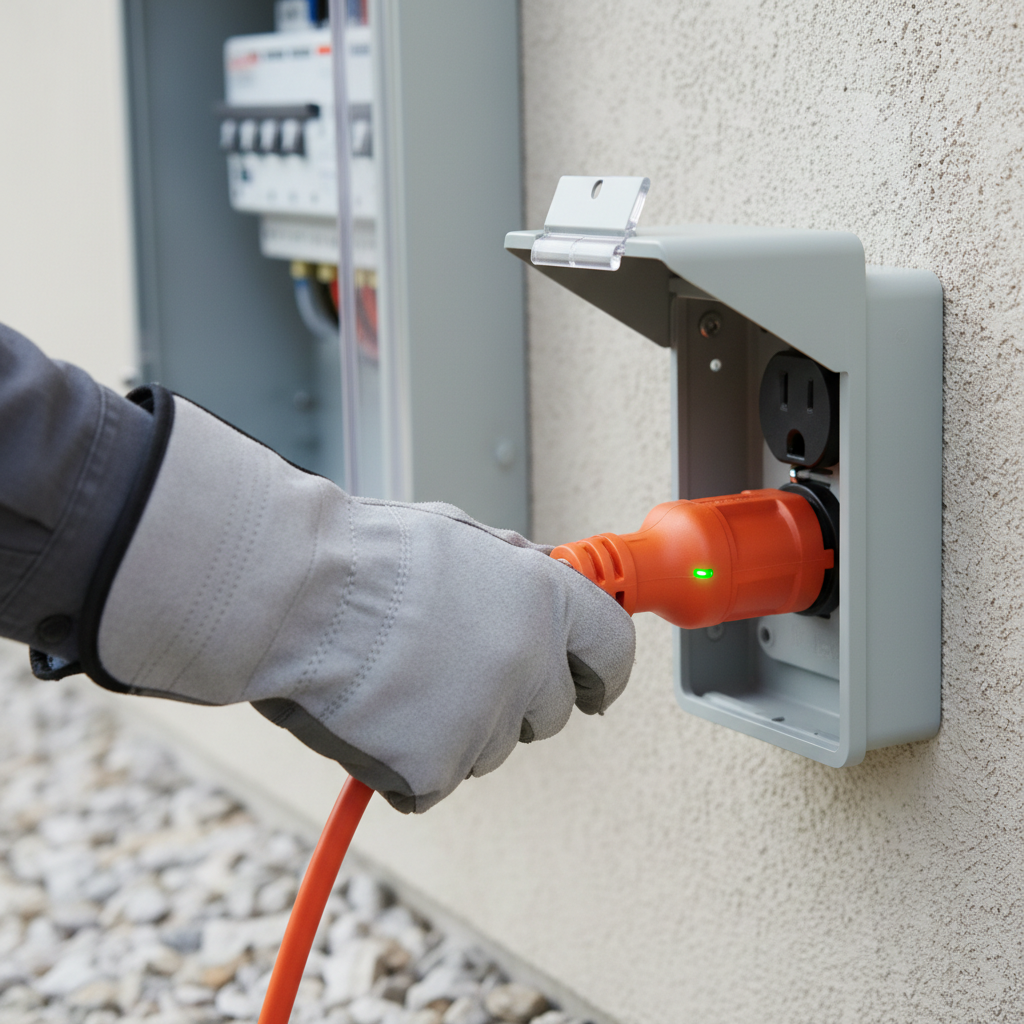
- The Hidden Reason Your Extension Cord Keeps Tripping the Breaker (and What to Do) — Discover why your extension cord might be tripping a circuit breaker and learn how to diagnose and fix common electrical issues safely.
- Why Your Extension Cord Keeps Tripping the Breaker (And the Simple Test to Find the Hidden Cause) — Discover why your extension cord keeps tripping the circuit breaker and learn how to safely diagnose and fix the real problem with a simple…
- The Hidden Reason Your Extension Cord Keeps Tripping the Breaker (and It's Not Overload) — Discover why your extension cord might be tripping a circuit breaker even when it seems like nothing is overloaded, and how to fix it.
- Why Does My Extension Cord Keep Tripping the Breaker? (It's Not Always Overload) — An extension cord repeatedly tripping a circuit breaker indicates a serious electrical issue that homeowners need to diagnose and resolve s…
- Why Does My Extension Cord Keep Tripping the Breaker? (It's Not Overload) — Discover the hidden reasons your extension cord repeatedly trips the breaker, often more subtle than simple overload, and how to fix it saf…
Electrical · Panel or service upgrade
| Project category | Electrical |
|---|---|
| Problem type | Panel or service upgrade |
| Trade required | Electrical |
| Urgency | Planned project |
| Safety risk | High safety risk |
| DIY suitability | Licensed pro only |
| Cost category | High cost |
| Typical timeline | Permit plus utility scheduling, commonly 2–6 weeks |
| Contractor type | Licensed electrician |
Repair option
Add a subpanel when the main service is adequate.
Replacement option
Full service upgrade with utility coordination and permits.
Common causes
- Obsolete or recalled panel brands
- Service capacity too small for added loads
- No room for required AFCI/GFCI breakers
Relevant tools:project cost estimatorcompare quotes
Published July 25, 2026Last updated August 17, 2026
Tools & materials you'll need
Affiliate links- AmazonMultimeterOptional, for advanced appliance testing
- AmazonAmperage clamp meterOptional, for measuring appliance draw
- AmazonFlashlight
- AmazonElectrical outlet testerOptional, to check for proper wiring in outlet
- AmazonWire strippersOnly if repairing a very minor cord end; generally not recommended
As an Amazon Associate FixlyGuide earns from qualifying purchases — at no extra cost to you. Prices and availability are accurate as of publication and subject to change.
Quick Answer
When your extension cord keeps tripping a breaker, it’s usually not the cord itself being “bad” the way folks think. Most times, you’re asking too much of the circuit it’s plugged into, the cord’s too light for the job, or the problem’s in whatever you’ve got running off that cord. Overloading the circuit is the big one by a mile. It’s pulling more amps than the breaker’s built to carry, and the breaker trips just to keep things safe. You’ve gotta stay inside that amperage limit, or that breaker’s gonna keep kicking off on you.
The Problem
I’ve got to tell you, homeowners call me all the time about this one. They’re frustrated, sometimes a little rattled, because that breaker keeps popping and they’re wondering if they’re one bad plug away from burning the place down. “It’s just an extension cord,” they say. “How much trouble can it be?” Plenty, I tell ’em. Plenty.
That breaker tripping is your electrical system hollering for help. It’s not some tiny nuisance; it’s doing exactly what it was made to do. Breakers protect wires from overheating, and overheating can cook appliances, scorch wiring, and in a bad enough case, start a fire. If you keep resetting it without finding out why it tripped, you’re just kicking the can down the road. That’s no fix at all.
I’ve seen all kinds of messes over the years — old frayed cords feeding brand-new tools, folks trying to run a whole woodworking setup off one basement outlet, you name it. I pulled a water heater in Frisco last month that had exactly this kind of “mystery” trip, and sure enough, the load was the culprit. Most of the time, though, it’s plain old too much demand. A lot of homes have 15-amp circuits on standard outlets. Plug in a couple of space heaters (12-13 amps each) or a high-powered vacuum (10-12 amps) through an extension cord, and you’re over that 15-amp line in a hurry. The breaker senses the overload, warms up, and click. Done. It’s doing its job.
How It Works
To really get a handle on this, you need a basic picture of how the electrical system’s laid out. Think of your home’s panel as the heart of the whole thing. Power comes in from the utility, then gets split out through separate circuits all over the house. Each circuit has a circuit breaker protecting it — basically an automatic switch that trips if it sees too much current or a short. We measure that in amps. Most general-purpose outlets are on 15-amp or 20-amp circuits. That means the whole circuit, every outlet and light tied to it, can safely handle a combined total of 15 or 20 amps before the breaker shuts it down.
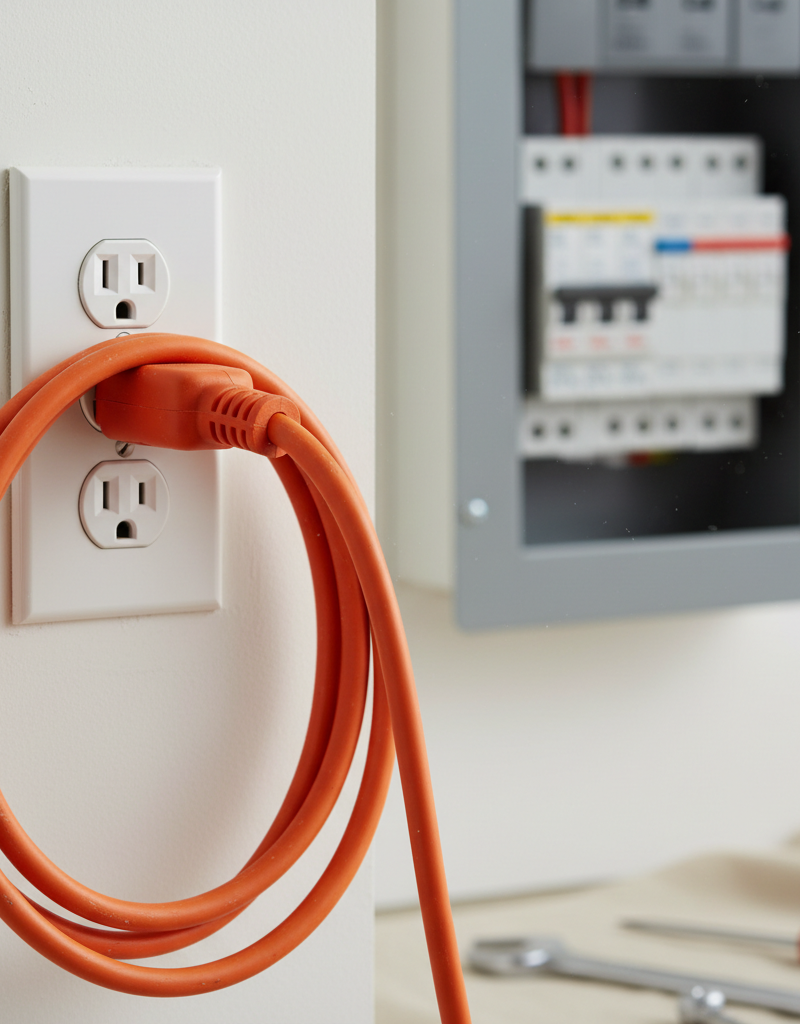
When you plug an appliance into an extension cord and then plug that cord into the wall, you’re just stretching that same circuit farther out. The cord itself has an ampacity rating too — that’s how much current it can safely carry. If the appliance, or the pile of appliances, wants more current than the circuit or the cord can handle, the breaker trips. It’s simple math: voltage (your house is typically 120V) multiplied by amperage equals wattage. So, a 15-amp circuit can handle about 1800 watts (120V x 15A = 1800W). If your vacuum cleaner is 1500 watts, and you plug in a small fan (100W) on the same circuit using an extension cord, you’re fine. But if you then decide to plug in an electric kettle (1500W) on the same circuit, you’re pushing 3100 watts, almost double what that 15-amp circuit can manage. That breaker’s going to trip every single time. That’s not opinion — that’s how the juice works.
Step-by-Step Fix
Here’s how I usually walk my clients through tracking down these nuisance trips. Don’t skip steps. I know, everybody wants the quick answer, but this stuff usually takes a little elbow grease.
-
Check the Breaker First — Safety check and reset
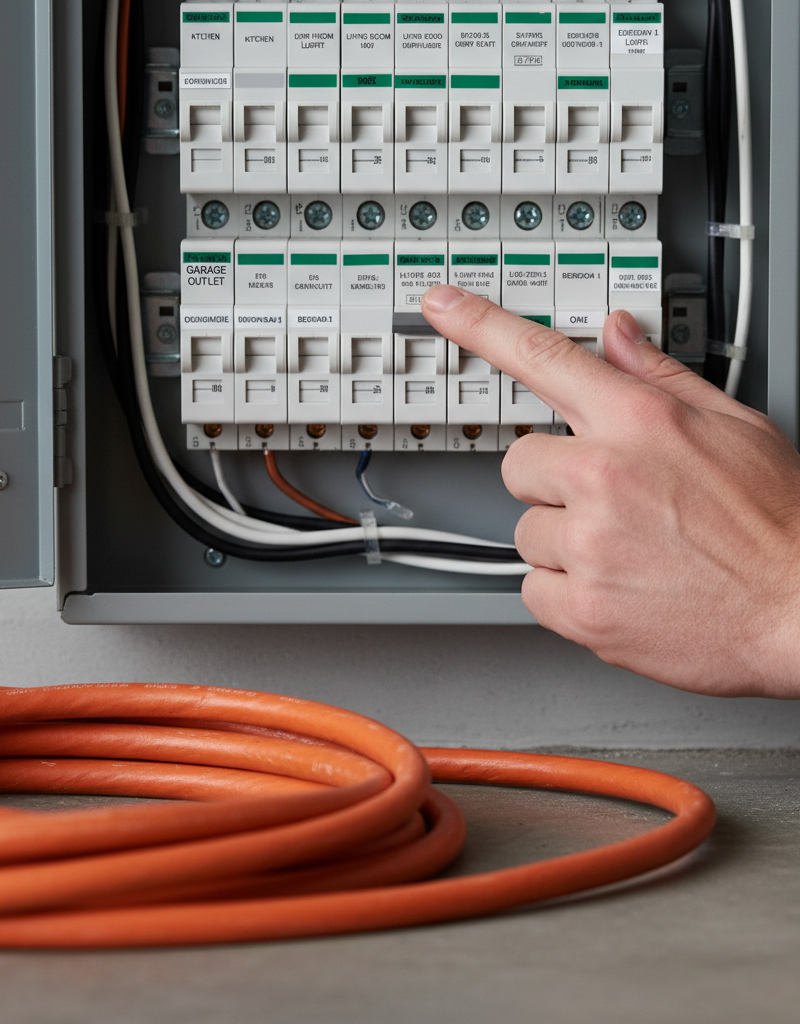
Before you do anything else, make sure the breaker is actually tripped and not just off. A tripped breaker will usually sit somewhere between ON and OFF, or sometimes all the way in the OFF position. Push it firmly all the way to OFF, then back to ON. If it trips again right away with nothing plugged in, you may have a short in the house wiring — and that’s where I’d tell you to call a pro. If it holds, move on. -
Unplug EVERYTHING — Isolate the problem
Go to the outlet where the extension cord was plugged in and unplug everything connected to it, cord included. Appliances too. You want a clean slate, no load, no guessing. That’s how you get a real answer. If the breaker holds after resetting with nothing plugged in, the circuit itself is probably okay. -
Inspect the Extension Cord — Look for visible damage
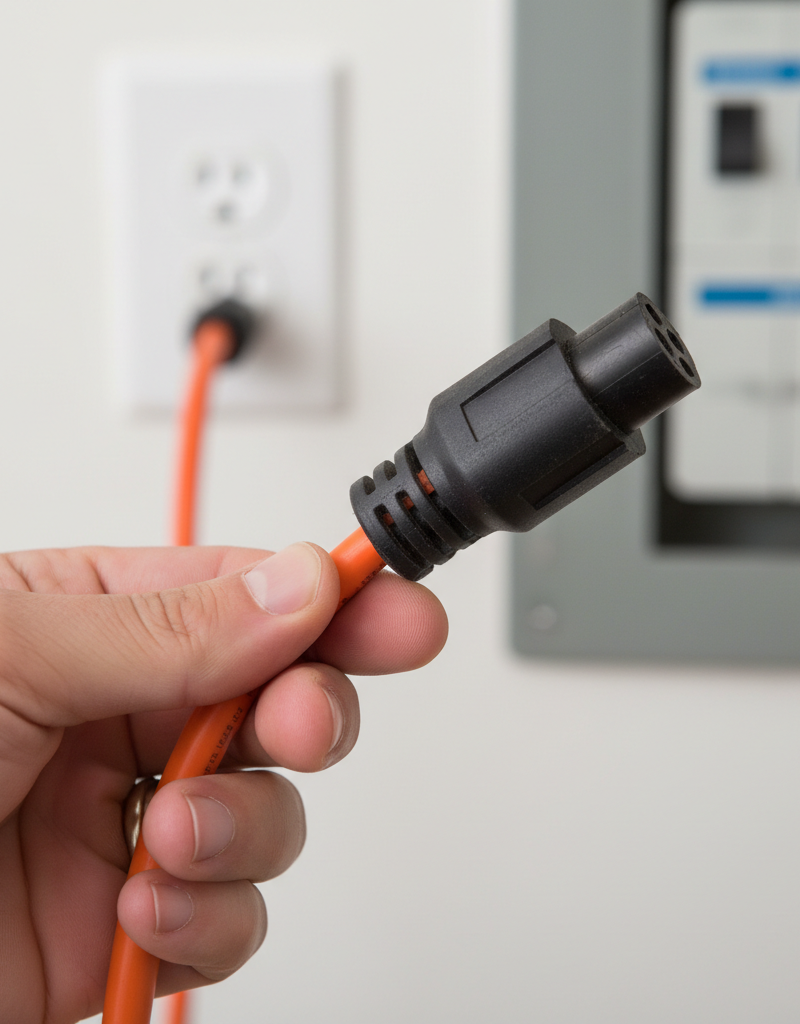
Uncoil the whole cord and inspect it end to end. Look for cuts, nicks, frayed insulation, cracked plugs, bent prongs, or discoloration. Sometimes somebody runs over a cord with a mower in the driveway or a dog chews halfway through it. If you find any damage, even if it looks minor, that thing’s toast. Don’t patch it with tape and call it a day. Toss it and get a new one. A damaged cord can cause a short circuit, and the breaker’ll trip every time. -
Confirm Cord Rating — Match the cord to the load
Find the gauge and amperage rating printed on the extension cord itself. It’ll usually say something like "16 AWG" or "14 AWG" and then a maximum amperage, like "13A." Lower AWG means a thicker cord — 12 AWG is beefier than 16 AWG. Make sure the cord’s rating is equal to or greater than the total amperage drawn by whatever you’re plugging into it. If you’re using a light-duty 16 AWG cord (rated for about 10-13 amps) for a heavy-duty air compressor (which might pull 15 amps or more), you’re asking for trouble. For outdoor work or power tools, I always like at least a 12 or 14 AWG cord. -
Test the Appliance Directly (If Safe) — Bypass the extension cord
If it’s safe to do so, plug the appliance that was on the extension cord directly into a wall outlet on a different, known good circuit. Turn it on. If it runs fine, the appliance is probably okay, and that puts the spotlight back on the cord or the original circuit being overloaded. If it trips that breaker too, then the appliance itself has an internal fault and needs repair or replacement. That’s especially true with power tools and bigger motors — they can fool you. -
Reduce the Load — The most common culprit
This is where most of these problems get solved. If the cord and appliance checked out, the circuit is almost certainly overloaded. Look around and see what else is on that same circuit. Microwave? Toaster oven? Hairdryer? Space heater? Those things are power hogs. Unplug a few of them. Then try running just the essential appliance through your properly rated extension cord. If the breaker holds, you found it: too many things pulling from one circuit. Spread the load across different circuits if you can. This is especially common in older homes that weren’t built for today
Related Articles
Keep troubleshooting with these hand-picked guides from FixlyGuide:
- The Hidden Reason Your Extension Cord Keeps Tripping the Breaker (and What to Do) — Discover why your extension cord might be tripping a circuit breaker and learn how to diagnose and fix common electrical issues safely.
- Why Your Extension Cord Keeps Tripping the Breaker (And the Simple Test to Find the Hidden Cause) — Discover why your extension cord keeps tripping the circuit breaker and learn how to safely diagnose and fix the real problem with a simple…
- The Hidden Reason Your Extension Cord Keeps Tripping the Breaker (and It's Not Overload) — Discover why your extension cord might be tripping a circuit breaker even when it seems like nothing is overloaded, and how to fix it.
- Why Does My Extension Cord Keep Tripping the Breaker? (It's Not Always Overload) — An extension cord repeatedly tripping a circuit breaker indicates a serious electrical issue that homeowners need to diagnose and resolve s…
- Why Does My Extension Cord Keep Tripping the Breaker? (It's Not Overload) — Discover the hidden reasons your extension cord repeatedly trips the breaker, often more subtle than simple overload, and how to fix it saf…
- The Hidden Reason Your GFCI Trips (It’s Not Always a Short Circuit) — A persistently tripping GFCI outlet is often a sign of a hidden electrical issue, frequently caused by moisture, a faulty appliance, or sub…
Should you do this yourself?
Answer five quick questions before you start. Safety outranks savings every time.
Your experience with work like this
How high do you have to work?
Does the job involve any of these?
Will it need a permit?
Specialty tools
Free and instant. Educational guidance only — not a quote, inspection, or professional diagnosis.
What should this project cost?
Enter your project details for a realistic cost range before you call anyone.
Outlet and switch work usually $150–$400; panel upgrades commonly $1,800–$4,200.
- Regional adjustment
- National average
- Labor share (typical)
- ~$709
- Quotes to collect
- 3 written estimates
Educational estimate based on national averages — not a binding quote. Always confirm with written local estimates.
Fixly Project Decision Box
- DIY difficulty
- Advanced
- Estimated time
- Homeowner checks 20–30 minutes
- Cost level
- Moderate
Main tools / materials
- Clean air filter
- Garden hose for condenser coils
- Shop vac for the condensate line
When to stop and call a pro
- Burning smell, smoke, or a tripping breaker
- Refrigerant lines iced over or hissing
- Any work inside the sealed refrigerant circuit (EPA-licensed only)
- Gas smell near a furnace — leave and call the utility
Need professional help?
Find an HVAC Pro Near YouGet the print-ready PDF of this guide
A clean, ad-free, printable version you can keep on your phone or pin to the workshop wall. Free with a FixlyGuide account.
- Print-optimized layout
- Tools, materials & every step included
- Saved to your account
Frequently asked questions
Why does my extension cord trip the breaker repeatedly?+
The most common reason is an overloaded circuit. You're trying to draw too much electrical current through that circuit with all the appliances plugged in, exceeding the breaker's safe limit. It could also be a damaged extension cord or a faulty appliance.
Can a bad extension cord cause a circuit breaker to trip?+
Yes, absolutely. A damaged extension cord with frayed insulation, cuts, or crushed wires can create a short circuit, which will instantly trip the breaker as a safety measure. Always inspect your cords for damage before use.
What is the difference between a 15-amp and 20-amp circuit?+
A 15-amp circuit can safely handle up to 15 amps of current, while a 20-amp circuit can handle up to 20 amps. High-power devices like kitchen appliances or workshop tools often require a 20-amp circuit. Most general-purpose outlets are on 15-amp circuits.
How do I know if my circuit is overloaded?+
If your breaker trips when multiple high-wattage appliances (like space heaters, microwaves, or hair dryers) are running simultaneously on the same circuit, especially when using an extension cord, it's likely overloaded. You can also map your circuits to see what's connected to each breaker.
Is it safe to keep resetting a tripped breaker?+
No, it's not safe to repeatedly reset a tripped breaker without investigating the cause. The breaker is tripping for a reason – usually to prevent overheating wires or a fire hazard. Continuously resetting it can mask a serious underlying electrical problem.
What kind of extension cord should I use for heavy-duty tools?+
For heavy-duty tools like circular saws, air compressors, or pressure washers, you should use a heavy-gauge extension cord, typically 12 AWG (American Wire Gauge) or even 10 AWG. The lower the AWG number, the thicker and more capable the wire. Light-duty cords (16 or 18 AWG) aren't suitable for these applications.
How can I prevent my circuit breaker from tripping?+
The best way is to manage your electrical load. Avoid plugging multiple high-wattage appliances into the same circuit. Use appropriate-gauge extension cords for the task, inspect them regularly for damage, and distribute power-hungry devices across different circuits in your home.
When should I call an electrician for a tripping breaker?+
You should call an electrician immediately if the breaker trips without anything plugged in, if it trips immediately after resetting (after you've unplugged everything), if you see sparks or smell burning, or if your outlets feel hot. These are signs of potentially serious wiring problems that require professional diagnosis and repair.
Can old appliances cause a breaker to trip?+
Yes, older appliances, especially those with motors or heating elements, can develop internal faults over time. Worn insulation, loose wiring, or a failing motor can cause them to draw excessive current, leading to a tripped breaker. Testing the appliance directly on a different circuit can help diagnose this.
Discussion
Loading comments…