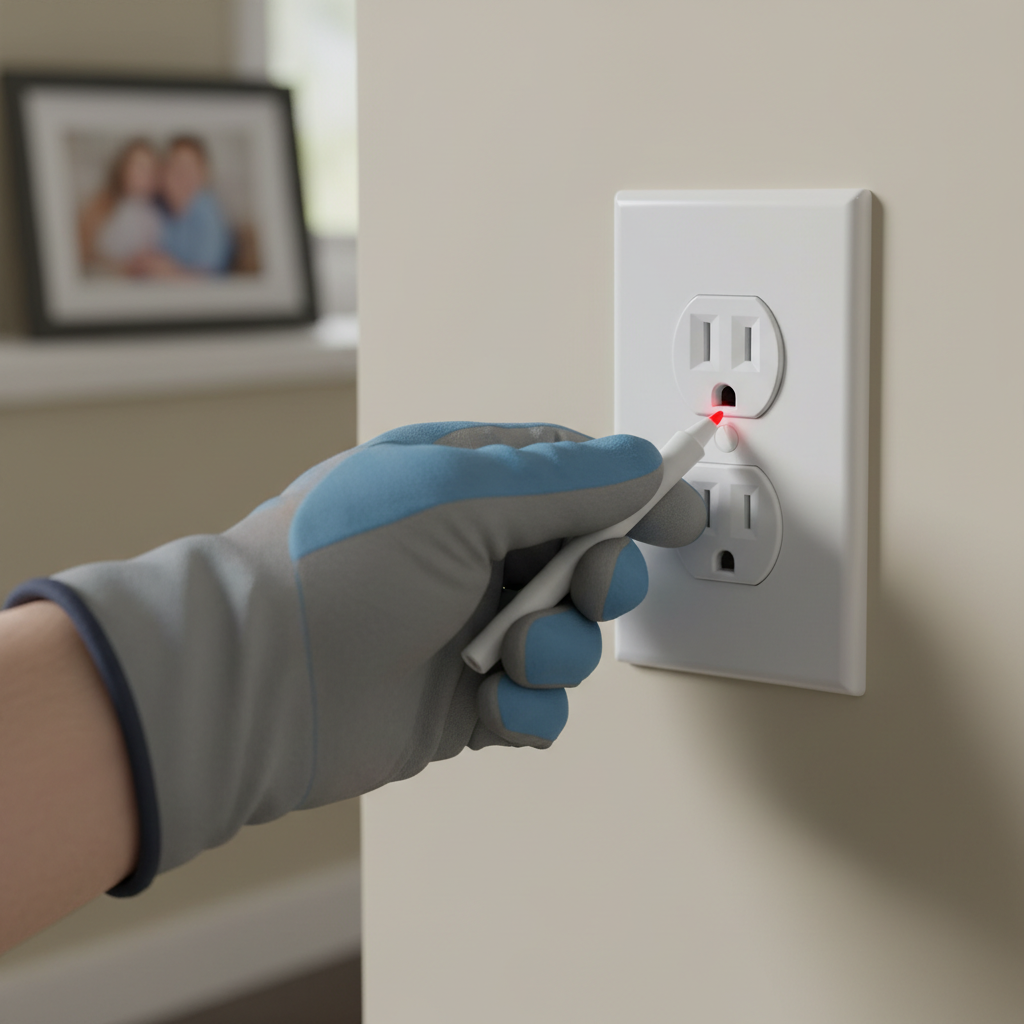
- Tools: Screwdriver set (Phillips and flathead), voltage tester.
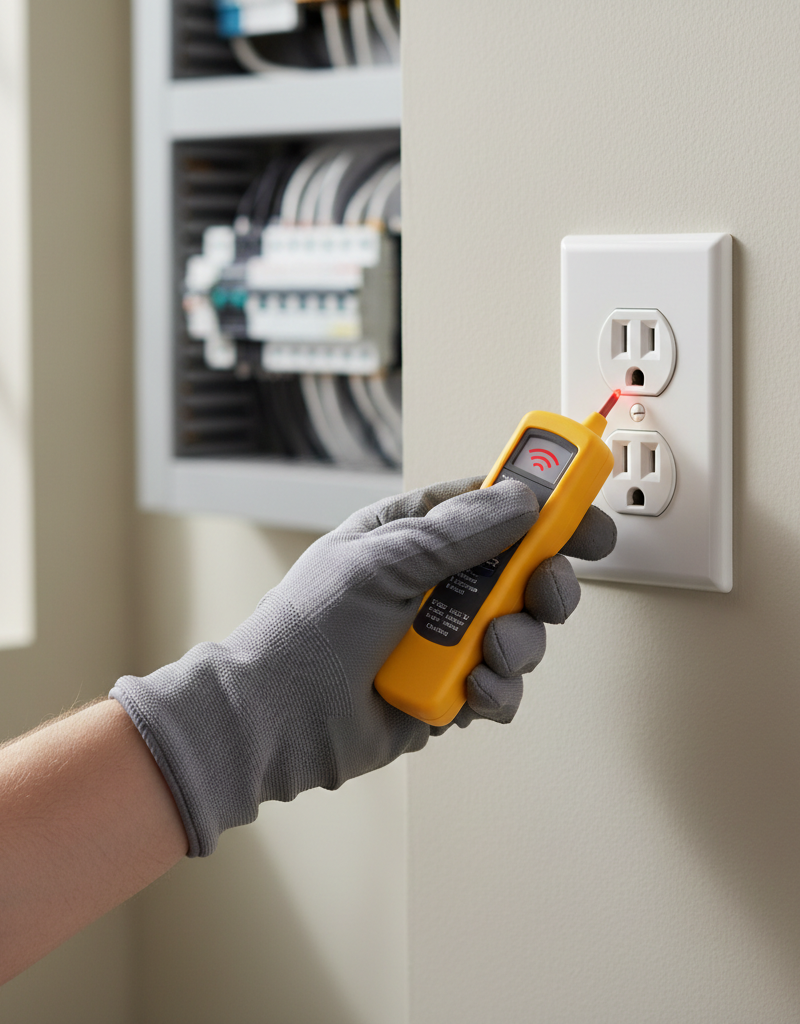
- Safety: Crucially, turn off the power to the affected circuit at the main breaker panel before proceeding. Verify with your voltage tester that the power is off at the outlet you are inspecting.
- If this doesn't work: If the wires seem secure, proceed to the next step. Sometimes, the problem is not a loose connection, but the outlet itself.
Electrical · Breaker keeps tripping
| Project category | Electrical |
|---|---|
| Problem type | Breaker keeps tripping |
| Trade required | Electrical |
| Urgency | Urgent — within days |
| Safety risk | High safety risk |
| DIY suitability | Pro recommended |
| Cost category | Low cost |
| Typical timeline | Diagnosis in a single visit |
| Contractor type | Licensed electrician |
Repair option
Isolate the load, then repair the fault or replace the breaker.
Replacement option
New dedicated circuit when the load simply exceeds what the circuit was built for.
Common causes
- Genuine overload on a shared circuit
- Ground fault from moisture in an exterior box
- Failing breaker or a damaged appliance cord
Relevant tools:diy or hire a prodiy difficulty
Published July 8, 2026Last updated August 17, 2026
Tools & materials you'll need
Affiliate linksAs an Amazon Associate FixlyGuide earns from qualifying purchases — at no extra cost to you. Prices and availability are accurate as of publication and subject to change.
Quick Answer
When a wall outlet suddenly stops providing power, yet the circuit breaker in your electrical panel remains in the 'On' position, it's a puzzling—and often frustrating—mystery for homeowners. The most common reasons for this peculiar electrical issue are a tripped Ground Fault Circuit Interrupter (GFCI) or Arc Fault Circuit Interrupter (AFCI) outlet or breaker (often located further down the circuit), a loose wire connection either at the dead outlet itself or at another outlet/switch on the same circuit, or a damaged wire or faulty outlet. Rarely, it could indicate an open circuit somewhere in the wiring. The fix typically involves systematically checking and resetting GFCI/AFCI devices, then inspecting and securing wiring connections, or replacing a defective outlet.
The Problem
You plug in your phone charger, a lamp, or a vacuum cleaner, and nothing happens. The outlet is dead. You dutifully check your electrical panel, expecting to find a tripped breaker, but to your surprise, all the breakers are firmly in the 'On' position. This scenario sends many homeowners into a spiral of confusion. If the breaker isn't tripped, shouldn't the outlet be working? This problem isn't just an inconvenience; a dead outlet can disrupt daily routines and, in some rare cases, hint at underlying wiring issues that need attention. The key is understanding that a breaker's primary job is to protect against overcurrents and short circuits, not necessarily every single point of failure within a circuit. Other protective devices, or simply loose connections, can cause an outage without tripping the main breaker for that circuit.
How It Works
To understand why an outlet might die without tripping a breaker, it's helpful to remember how your home's electrical system functions. Power flows from your utility provider, through your main service panel, and into individual circuit breakers. Each breaker protects a specific circuit, which is a loop of wiring that feeds power to outlets, lights, and appliances. Standard circuit breakers are designed to 'trip' (switch to the 'Off' position, or an intermediate position) when they detect an overload (too many devices drawing too much power) or a short circuit (where current bypasses the normal path, creating excessive heat and potential fire risk). This protective action prevents damage to wiring and appliances.
However, not all electrical faults are overloads or short circuits. Modern homes, particularly in kitchens, bathrooms, garages, and outdoor areas, are equipped with Ground Fault Circuit Interrupter (GFCI) outlets. These devices monitor the flow of electricity and trip if they detect an imbalance, indicating current is leaking out of the circuit—a common sign of a ground fault, which can occur when water is involved and poses a serious shock hazard. Similarly, Arc Fault Circuit Interrupter (AFCI) outlets or breakers are designed to detect dangerous electrical arcs (sparks) often caused by damaged or loose wiring, which can lead to fires. Crucially, a single GFCI or AFCI outlet can protect all standard outlets downstream on the same circuit. If that upstream GFCI/AFCI trips, all subsequent outlets lose power, even if the main breaker for the circuit remains on.
Another common cause is a loose wire connection. Electricity relies on continuous, secure pathways. If a hot, neutral, or ground wire comes loose from an outlet terminal, a wire nut, or a switch, it can break the circuit at that point, or for all devices downstream from that point. Since this isn't an overcurrent or a short, the main circuit breaker won't trip. This is particularly common with 'back-stabbed' wiring (where wires are pushed into small holes on the back of an outlet) rather than properly secured to screw terminals, as back-stab connections are notorious for loosening over time due to normal vibration and temperature changes. Lastly, the outlet itself can simply fail internally, usually due to wear and tear, internal wiring fatigue, or a small but localized arc that damages the components without drawing enough current to trip the breaker at the panel.
Step-by-Step Fix
1. Safety First – Prioritize your personal safety before touching any electrical components.
- Tools: Voltage tester (non-contact or multimeter), insulated gloves (optional but recommended).
- Safety: Always assume wires are live until you've verified otherwise with a voltage tester. Turn off the breaker for the affected circuit at your main electrical panel before working on outlets. Use rubber-soled shoes for extra insulation. Never work with wet hands or while standing in water.
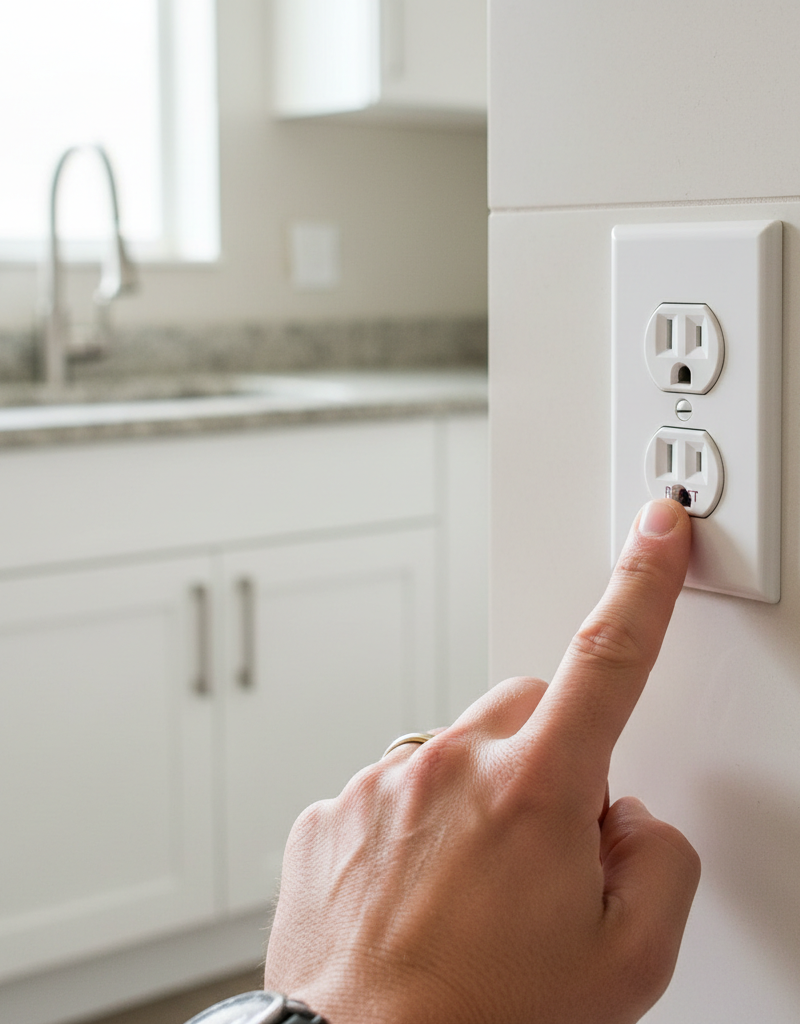
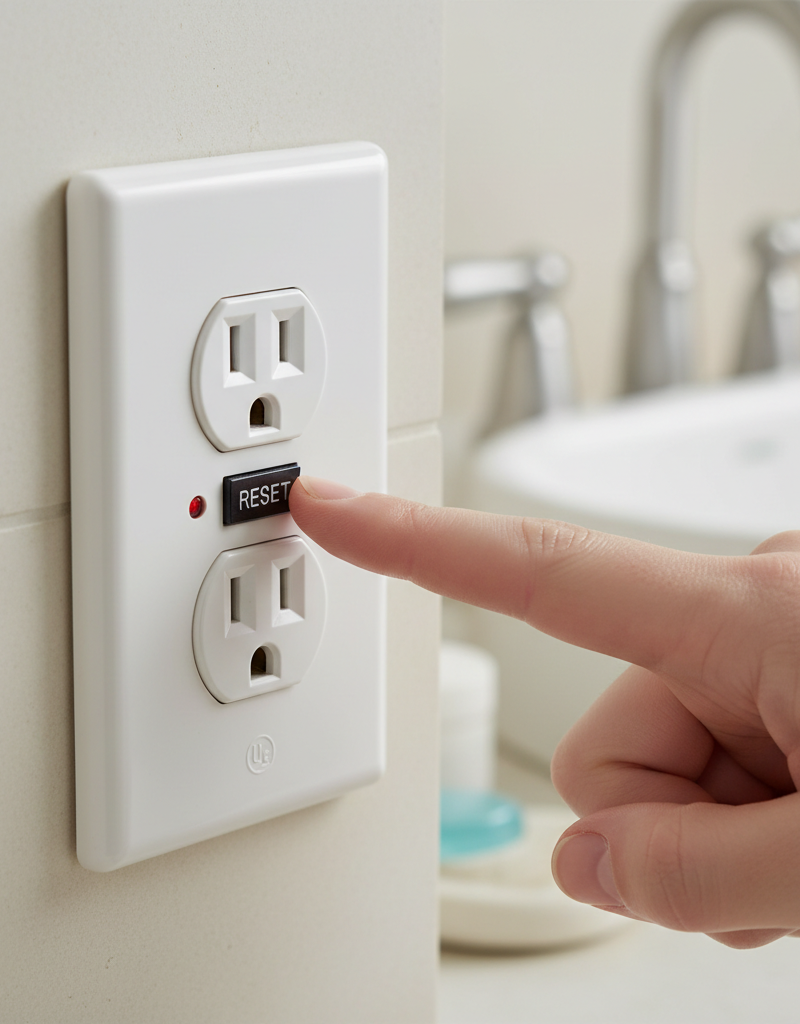
2. Check & Reset GFCI/AFCI Outlets – Identify and reset any tripped ground fault or arc fault devices.
- Task: Start by looking for GFCI (outlets with 'Test' and 'Reset' buttons) or AFCI outlets in likely locations: bathrooms, kitchens, garages, basements, laundry rooms, and outdoors. Even if the dead outlet isn't in one of these areas, an upstream GFCI/AFCI could be protecting it. Press the 'Reset' button firmly on any found GFCI/AFCI outlets. If the button doesn't stay in or immediately trips again, there's still a fault.
- If this doesn't work: Also check your electrical panel for GFCI or AFCI circuit breakers, which will have a small 'Test' button on them. If one is tripped, it might be in an intermediate position. Flip it fully to the 'Off' position, then back to 'On'.
3. Test Other Outlets on the Circuit – Determine if the issue affects multiple points or just one.
- Task: Use a lamp, phone charger, or a voltage tester to check other outlets in the same room, or other rooms that are likely on the same circuit (e.g., all bedroom outlets, all kitchen counter outlets). If other outlets are also dead, it points to an issue further upstream, like a tripped GFCI/AFCI or a loose connection at an earlier point in the circuit.
- Tip: If you're unsure which outlets are on which circuit, you can systematically turn breakers off one by one and test all outlets in your home until you map out the connections.
4. Inspect the Dead Outlet for Loose Connections – A common culprit for isolated outlet failures.
- Tools: Screwdriver set (Phillips and flathead), voltage tester.
- Safety: Crucially, turn off the power to the affected circuit at the main breaker panel before proceeding. Verify with your voltage tester that the power is off at the outlet you are inspecting.
- Task: Carefully remove the faceplate of the dead outlet. Gently pull the outlet receptacle out of the box. Look for any wires that appear loose, disconnected, or scorched. Pay close attention to the screw terminals where wires are attached, and also any 'back-stabbed' wires (wires inserted into small holes on the back of the outlet). Gently tug on each wire to ensure it's secure. If a wire is loose, re-strip about 3/4 inch of insulation, form a shepherd's hook, and secure it firmly under the correct screw terminal (black/hot to brass, white/neutral to silver, bare/green/ground to green). If there are back-stabbed wires, move them to the screw terminals for a more secure connection. Make sure to match wire colors to the correct terminal screws.
- If this doesn't work: If the wires seem secure, proceed to the next step. Sometimes, the problem is not a loose connection, but the outlet itself.
5. Replace a Suspect Outlet – Faulty components can manifest without tripping a breaker.
- Tools: New outlet (matching the amperage and type of the old one), screwdriver set, wire strippers, voltage tester.
- Safety: Absolutely ensure the power is off at the breaker panel and verified with a voltage tester before touching any wires.
- Task: If inspecting connections didn't resolve the issue and you suspect the outlet is faulty (perhaps it's very old, or you see signs of charring/damage), it's time to replace it. Disconnect the old outlet by loosening the terminal screws and unhooking the wires. Note which wire connects to which terminal (black to brass, white to silver, ground to green). Attach the wires to the new outlet, ensuring tight, secure connections. Make sure ground wires are connected to the ground screw and any metal box. Push the new outlet back into the box, secure it with screws, and reattach the faceplate. Turn the breaker back on and test the outlet.
- Tip: When connecting wires to screw terminals, wrap the wire clockwise around the screw so that as you tighten the screw, it pulls the wire tighter rather than pushing it out.
6. Check a Downstream Switch or Outlet – A break in the chain affects everything after it.
- Task: If the dead outlet is part of a series (e.g., one of several outlets in a room, or it's controlled by a switch), a loose connection or fault in an outlet or switch before the dead one in the circuit could be the cause. Systematically inspect other outlets and any wall switches on the same circuit, starting with the closest one to your electrical panel. Follow the same inspection steps as in Step 4, looking for loose wires or signs of damage. This is more time-consuming but necessary if the problem isn't isolated to the 'dead' outlet.
- Warning: Troubleshooting multiple outlets or switches requires a good understanding of circuit layout. If you're uncomfortable, this is a good point to consult a professional.
Common Causes
- Tripped GFCI/AFCI Outlet or Breaker: This is by far the most common reason for a 'dead' outlet with an 'on' breaker. These safety devices react to ground faults or arc faults without tripping the main circuit breaker.
- Loose Wire Connection: Wires can come loose from terminal screws or back-stab connections over time due to vibration, thermal expansion/contraction, or improper installation. A loose hot wire will cause an open circuit, killing power.
- Faulty Outlet: Outlets themselves can fail internally, especially older ones. Components can wear out, or minor arcs can occur internally, melting plastic and breaking connections without drawing enough current to trip the main breaker.
- Open Circuit/Damaged Wire: Less common, but a wire could be damaged inside the wall (e.g., from a nail, rodent chewing, or sustained heat), creating an open circuit that prevents power flow to downstream outlets.
- Poor Back-Stab Connections: Many older outlets, and some newer ones, allow wires to be 'back-stabbed' into small holes. These connections are less secure than screw terminals and are prone to loosening and causing intermittent or complete power loss.
Common Mistakes
- Ignoring GFCI/AFCI Outlets: Many homeowners overlook checking every GFCI/AFCI outlet in their home, especially those in less-used areas (garage, basement) or in adjacent rooms, assuming the issue must be at the panel. Always check ALL GFCIs/AFCIs first.
- Not Shutting Off Power: Attempting to work on electrical outlets or wiring without first turning off the corresponding circuit breaker is incredibly dangerous and can lead to severe electric shock. Always verify power is off with a voltage tester.
- Tightening Wires Insufficiently or Excessively: Wires need to be snug and secure but not over-tightened, which can damage the wire or the terminal. 'Back-stabbing' wires instead of using screw terminals is also a common mistake, leading to future problems.
- Assuming the Breaker is the Only Protection: Homeowners often mistakenly believe that if the breaker isn't tripped, the circuit must be perfectly fine. This ignores the role of local protection devices like GFCIs/AFCIs and common loose connection issues.
- Not Inspecting Upstream: Focusing solely on the dead outlet without considering that the problem might be at an outlet or switch earlier in the circuit's run. Electricity flows in a chain; a broken link upstream affects everything downstream.
- Mismatching Outlet Types: Replacing a 15-amp outlet with a 20-amp outlet on a 15-amp circuit (or vice versa, but especially upgrading) can be a code violation and a safety hazard. Always replace with an identical amperage and voltage rating.
Cost & Time Breakdown
| Task | DIY Cost | Pro Cost | Time (DIY) |
|---|---|---|---|
| Check/Reset GFCI/AFCI | $0 | $75–$150 | 5–15 minutes |
| Inspect Outlet Connections | $0 | $100–$250 | 30–60 minutes |
| Replace Standard Outlet | $2–$10 | $120–$200 | 45–90 minutes |
| Replace GFCI/AFCI Outlet | $15–$30 | $150–$250 | 60–120 minutes |
| Troubleshooting Entire Circuit | $0 | $200–$400+ | 1–3 hours |
Tips & Prevention
- Regular GFCI/AFCI Testing: Test your GFCI and AFCI outlets and breakers monthly by pressing the 'Test' button. This ensures they are functioning correctly and will trip when needed. Simply press 'Test,' and if power is cut, press 'Reset' to restore it. If it doesn't trip, or doesn't reset, the device needs replacement.
- Use Screw Terminals: When installing or replacing outlets, always use the screw terminals to secure wires rather than the 'back-stab' holes. Hook the wire clockwise around the screw and tighten it firmly for a much more reliable connection.
- Avoid Overloading Circuits: Be mindful of how many high-power devices you plug into a single circuit, even if your breaker isn't tripping. Overloading can stress wiring and connections over time, leading to premature failure.
- Inspect Outlets Periodically: Occasionally check outlets for signs of wear, such as loose connections, discoloration, cracks, or warmth to the touch. These can indicate a problem developing.
- Proper Wire Management: Ensure wires are neatly folded and not pinched when pushing outlets back into the electrical box. Pinched wires can lead to damage and potential shorts.
- Label Your Electrical Panel: Clearly label your electrical panel to identify which breaker controls which circuit. This saves immense time during troubleshooting.
When to Call a Professional
While many dead outlet issues can be resolved with basic DIY troubleshooting, there are clear instances where calling a licensed electrician is not just recommended, but essential for safety and proper functioning. If you've systematically checked all GFCI/AFCI devices and inspected accessible outlets for loose connections, and the problem persists, it's time to call in a pro. This suggests a deeper issue potentially involving wiring inside walls, damaged conductors, or problems within the electrical panel itself. Furthermore, if you detect a burning smell, hear buzzing or popping sounds from the walls or electrical panel, or see charred outlets, immediately call an electrician. These are signs of serious electrical faults that could lead to fire. If you are uncomfortable working with electricity, are unsure about any step, or if your home's wiring is very old and potentially problematic (e.g., knob and tube, or aluminum wiring), a professional's expertise is invaluable. They have specialized tools to trace circuits, diagnose hidden faults, and ensure all repairs meet current electrical codes, safeguarding your home and family.
Related Articles
Keep troubleshooting with these hand-picked guides from FixlyGuide:
- Why Your Outlet Died (Even If the Breaker's ON): The Hidden Causes Everyone Misses — Discover the surprising reasons why an electrical outlet might stop working even when the circuit breaker appears to be on, and learn how t…
- The 7 Head-Scratching Reasons Your Outlet Died (Even With The Breaker On) — Discover the surprising reasons why an electrical outlet might stop working even when its circuit breaker is fully engaged, and how to safe…
- Why Your Outlet Died But the Breaker's STILL On (The GFCI Culprit) — Discover the hidden reasons an electrical outlet stops working, even when the circuit breaker remains on, often pointing to a tripped GFCI.
- Why Your Outlet Died (Even If the Breaker's On) — Discover the hidden reasons an electrical outlet stops working, even when the circuit breaker appears to be on, and learn simple diagnostic…
- The 3 Hidden Reasons Your Circuit Breaker Keeps Tripping (And How to Stop It) — Uncover the surprising culprits behind repeatedly tripping circuit breakers and learn practical, actionable steps to diagnose and resolve t…
- The Secret Culprit Behind Your Slow Sink Drain (It's Not Always Hair) — Uncover the surprising reasons your kitchen sink drains slowly and learn actionable steps to fix common clogs yourself.
Should you do this yourself?
Answer five quick questions before you start. Safety outranks savings every time.
Your experience with work like this
How high do you have to work?
Does the job involve any of these?
Will it need a permit?
Specialty tools
Free and instant. Educational guidance only — not a quote, inspection, or professional diagnosis.
What should this project cost?
Enter your project details for a realistic cost range before you call anyone.
Outlet and switch work usually $150–$400; panel upgrades commonly $1,800–$4,200.
- Regional adjustment
- National average
- Labor share (typical)
- ~$709
- Quotes to collect
- 3 written estimates
Educational estimate based on national averages — not a binding quote. Always confirm with written local estimates.
Fixly Project Decision Box
- DIY difficulty
- Professional Recommended
- Estimated time
- Diagnosis 1–2 hours
- Cost level
- Moderate
Main tools / materials
- Non-contact voltage tester
- Outlet tester
- Flashlight
When to stop and call a pro
- Burning smell, scorch marks, or a warm outlet or switch plate
- A breaker that trips again right after being reset
- Any work inside the service panel
- Aluminum wiring or cloth-insulated wiring
Need professional help?
Talk to a Licensed ElectricianFrequently asked questions
Why would an outlet stop working if the breaker isn't tripped?+
The most common reasons are a tripped GFCI or AFCI outlet (protecting downstream outlets), a loose wire connection inside the outlet box or at another point on the circuit, or a defective outlet itself. Standard breakers only trip for overloads or short circuits, not necessarily for these other issues.
How do I find a tripped GFCI outlet?+
Look for outlets with 'Test' and 'Reset' buttons. They are typically found in bathrooms, kitchens, garages, basements, laundry rooms, and outdoors. An upstream GFCI can protect many other outlets on the same circuit, so check all of them.
Is it safe to try and fix an outlet myself?+
Yes, if you follow strict safety precautions like turning off power at the breaker and verifying with a voltage tester. However, if you're uncomfortable or unsure at any point, it's always safest to call a licensed electrician.
When should I call an electrician for a dead outlet?+
You should call an electrician if you've tried resetting GFCIs/AFCIs and checking visible connections without success, if you detect burning smells or unusual sounds, or if you're uncomfortable performing electrical work yourself. Hidden wiring issues require professional expertise.
Can an old outlet just stop working without a breaker trip?+
Yes, absolutely. Over time, internal components can wear out or small, localized arcs can occur within the outlet, damaging its internal connections without drawing enough current to trip the main circuit breaker.
Discussion
Loading comments…