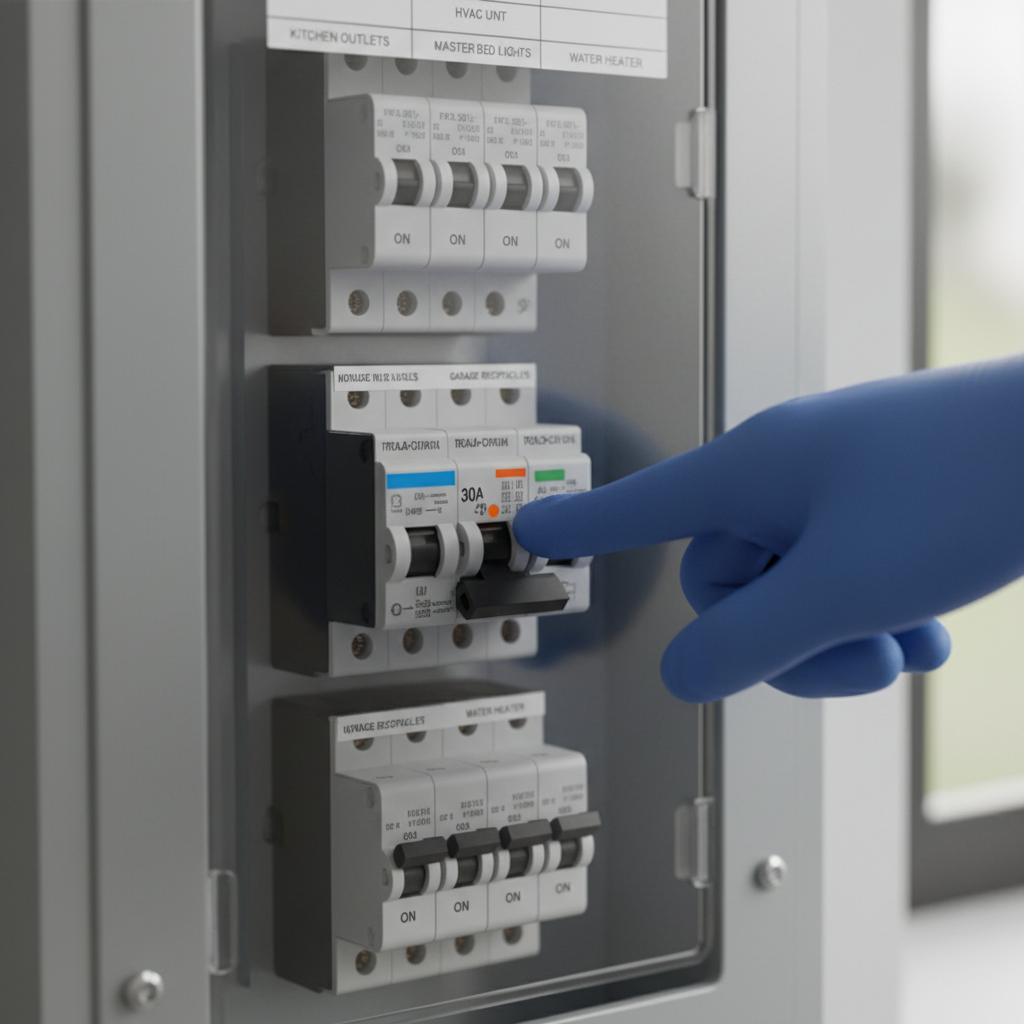
- Identify the Tripped Breaker and Affected Circuit — Pinpoint the problem zone.
- Go to your electrical panel. Look for the breaker that is in the 'OFF' or '中間' position.
- Flip the tripped breaker firmly to the full 'OFF' position, then to the 'ON' position.
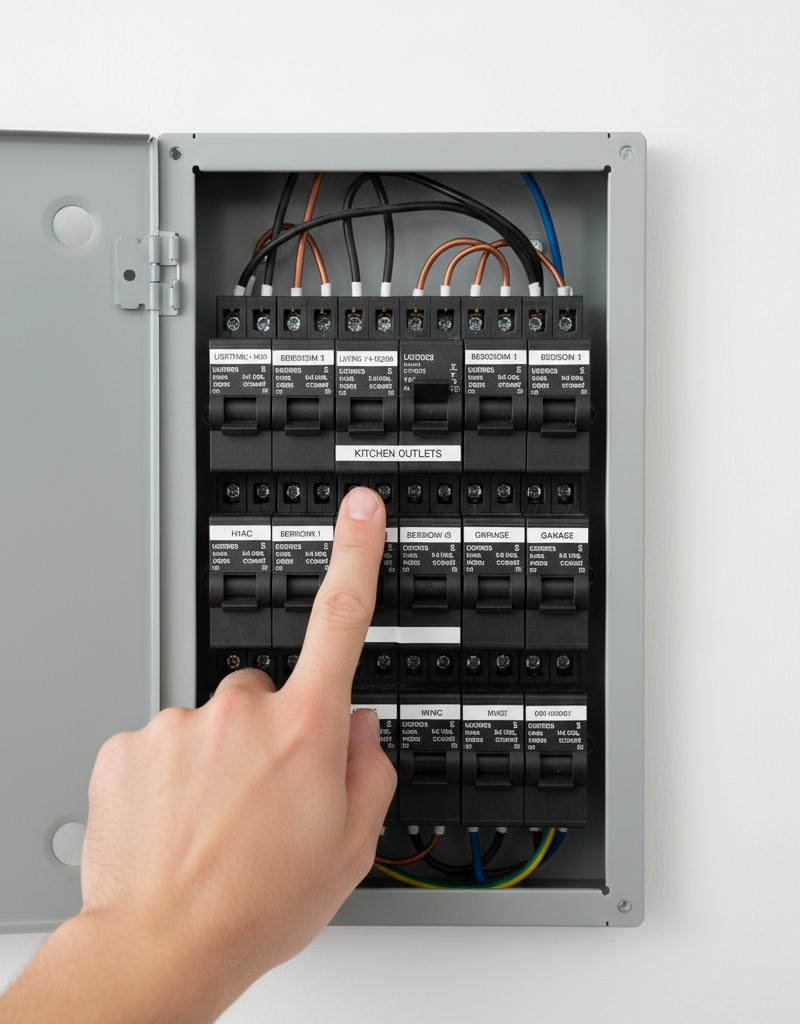
- Note which area of your home (rooms, appliances) loses power when the breaker trips. This helps narrow down the investigation.
- Pro Tip: If your panel isn't clearly labeled, use a 'fox and hound' circuit tracer or systematically plug a lamp into outlets in each room. When the lamp goes out, you've found the circuit.
Electrical · Breaker keeps tripping
| Project category | Electrical |
|---|---|
| Problem type | Breaker keeps tripping |
| Trade required | Electrical |
| Urgency | Urgent — within days |
| Safety risk | High safety risk |
| DIY suitability | Pro recommended |
| Cost category | Low cost |
| Typical timeline | Diagnosis in a single visit |
| Contractor type | Licensed electrician |
Repair option
Isolate the load, then repair the fault or replace the breaker.
Replacement option
New dedicated circuit when the load simply exceeds what the circuit was built for.
Common causes
- Genuine overload on a shared circuit
- Ground fault from moisture in an exterior box
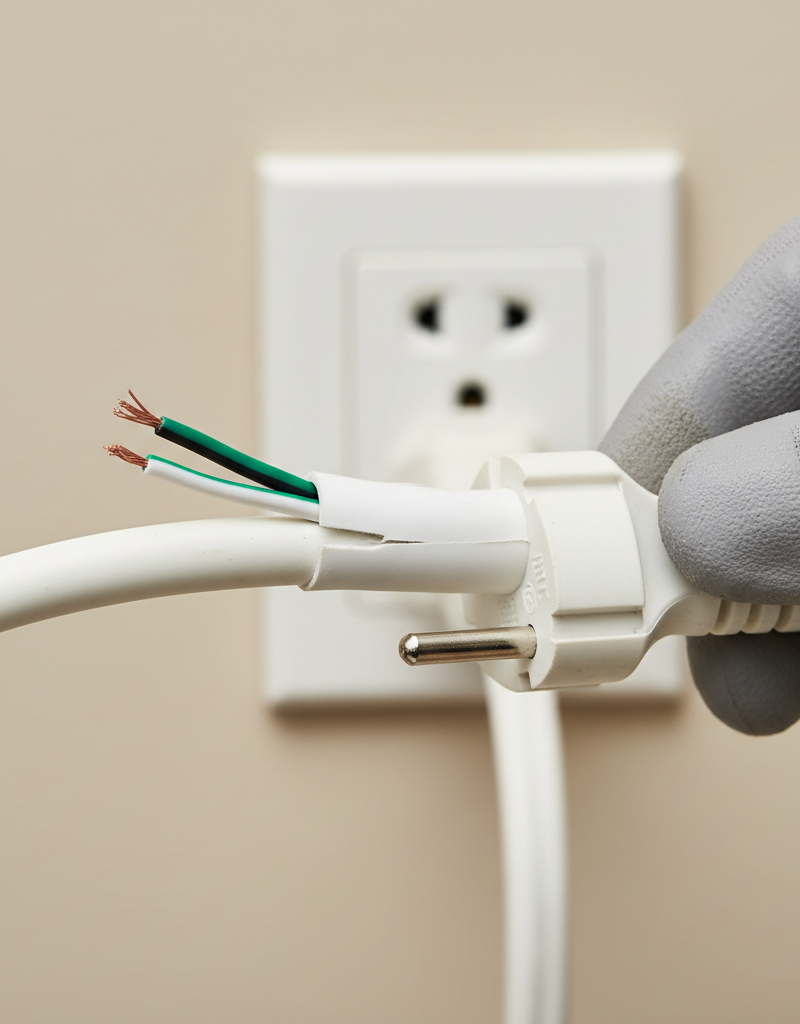
- Failing breaker or a damaged appliance cord
Relevant tools:diy or hire a prodiy difficulty
Published June 1, 2026Last updated August 17, 2026
Tools & materials you'll need
Affiliate linksAs an Amazon Associate FixlyGuide earns from qualifying purchases — at no extra cost to you. Prices and availability are accurate as of publication and subject to change.
Quick Answer
AWhen your circuit breaker repeatedly trips, it's a clear signal that something is wrong with your electrical system. While an immediate thought might be too many devices plugged into one outlet, the true culprit can be more insidious, ranging from a faulty appliance or wiring issue causing a short circuit, to a dangerous ground fault, or even a weakening breaker itself. Diagnosing the exact problem requires a systematic approach to ensure both your safety and an effective repair.
The Problem
Your circuit breaker is a vital safety device, designed to automatically cut off electrical flow when it detects a problem, protecting your home's wiring from overheating and preventing fires. When a breaker trips, it's doing its job by interrupting the circuit. The challenge arises when it trips repeatedly, even after you reset it. This isn't just an annoyance; it's a persistent warning sign that shouldn't be ignored. A frequently tripping breaker indicates an underlying electrical issue that, if left unaddressed, could lead to damaged appliances, compromised wiring, or even an electrical fire. Understanding why this happens and how to systematically troubleshoot it is crucial for every homeowner.
How It Works
To understand why a breaker trips, it helps to know how it operates. Electricity flows from your utility company, through your main service panel, and then branches out through individual circuits to power different parts of your home. Each circuit is protected by a circuit breaker, sized appropriately for the wiring it protects (e.g., a 15-amp breaker for 14-gauge wire, a 20-amp breaker for 12-gauge wire).
Inside a standard thermal-magnetic circuit breaker, there are two primary mechanisms for protection:
- Thermal Trip: This component consists of a bimetallic strip that heats up and bends when current exceeds the breaker's rated amperage for an extended period (an overload). The bending eventually trips a latch, opening the circuit. This protects against sustained overloads.
- Magnetic Trip: This component senses sudden, large surges in current, characteristic of a short circuit or ground fault. An electromagnet quickly pulls open the circuit even before the thermal trip can react. This provides immediate protection against dangerous fault conditions.
When a breaker trips, it moves to an 'OFF' or '中間' (middle) position, indicating it has interrupted the flow of electricity. Resetting it typically involves pushing it firmly to the 'OFF' position first, and then to the 'ON' position. If it immediately trips again, the fault is still present.
Ground Fault Circuit Interrupter (GFCI) and Arc Fault Circuit Interrupter (AFCI) breakers offer additional protection. A GFCI monitors the balance of current between the hot and neutral wires. If it detects an imbalance (meaning current is leaking to ground, potentially through a person), it trips rapidly. These are commonly found in kitchens, bathrooms, and outdoors. An AFCI detects dangerous electrical arcs, which can be caused by damaged insulation or loose connections, and trips to prevent fires. These are often required in bedrooms and living areas.
Step-by-Step Fix
Safety First: Before troubleshooting any electrical issue, always prioritize safety. Turn off the main breaker if you suspect a serious wiring problem. Never work with wet hands or while standing in water. If you are uncomfortable or unsure at any point, call a licensed electrician.
-
Identify the Tripped Breaker and Affected Circuit — Pinpoint the problem zone.
- Go to your electrical panel. Look for the breaker that is in the 'OFF' or '中間' position.
- Flip the tripped breaker firmly to the full 'OFF' position, then to the 'ON' position.
- Note which area of your home (rooms, appliances) loses power when the breaker trips. This helps narrow down the investigation.
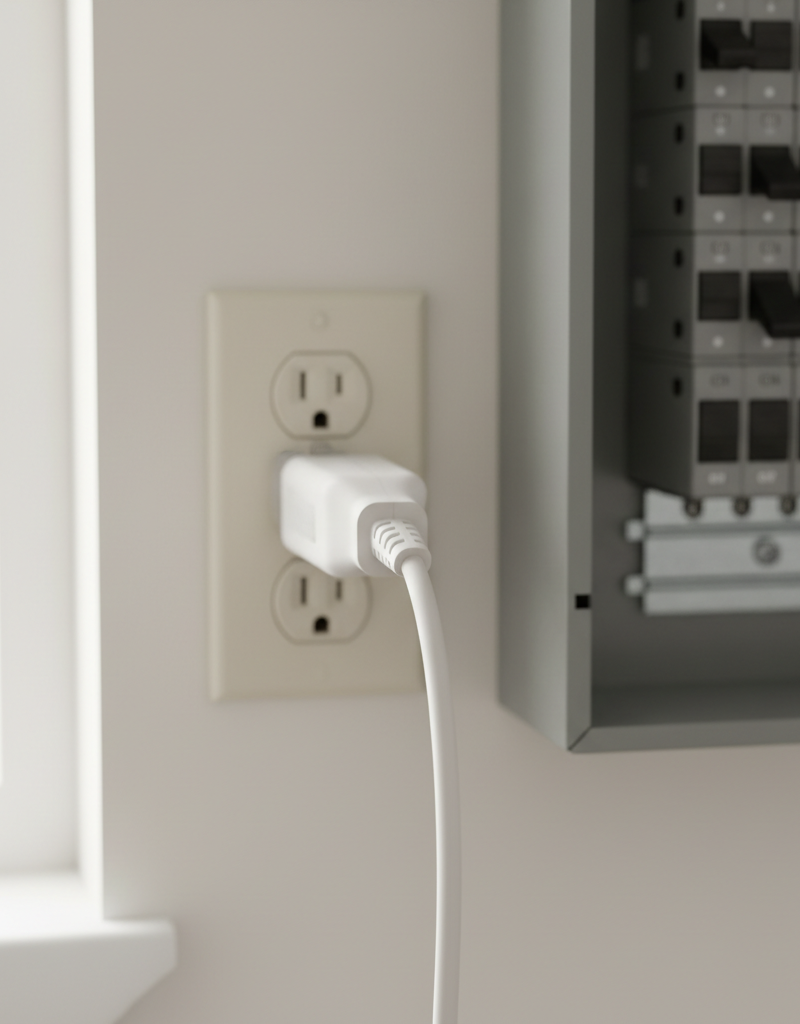
- Pro Tip: If your panel isn't clearly labeled, use a 'fox and hound' circuit tracer or systematically plug a lamp into outlets in each room. When the lamp goes out, you've found the circuit.
-
Unplug All Devices from the Affected Circuit — Eliminate overloads and faulty appliances.
- Once you've identified the circuit, unplug everything connected to it. This includes lamps, computers, TVs, chargers, and especially high-wattage appliances like space heaters, hair dryers, toasters, and microwaves.
- Reset the breaker. If it holds, the problem is likely an overload or one of the unplugged appliances. If it trips immediately, the issue is with the wiring or the breaker itself.
-
Test Appliances One by One — Isolate a problematic appliance.
- If the breaker held after unplugging everything, plug devices back in one at a time, resetting the breaker after each addition.
- When the breaker trips again, the last appliance plugged in is your culprit. Try plugging it into a different circuit (if possible, with an extension cord temporarily) to confirm if it's the appliance or the original circuit's capacity.
- If this doesn't work: Consider a damaged extension cord or power strip as well.
-
Check for Overloaded Circuits — Calculate your load.
- If no single appliance causes the trip, you might be consistently drawing too much power. Sum the wattage of all devices typically used simultaneously on that circuit. Divide the total wattage by the voltage (120V in most US homes) to get a rough amperage. This should be 80% or less of your breaker's rating (e.g., 12 amps for a 15-amp breaker, 16 amps for a 20-amp breaker).
- Distribute high-demand appliances across different circuits or use them one at a time.
- Common Mistakes: Running a space heater and a vacuum cleaner on the same bedroom circuit, or a microwave and a toaster simultaneously on a kitchen circuit.
-
Examine Outlets and Switches for Visible Damage — Look for signs of short circuits.
- Safety Note: Turn off the breaker controlling the circuit before removing any outlet or switch cover. Use a non-contact voltage tester to confirm the power is off.
- Look for burn marks, discoloration, loose wires, or strange smells. These are signs of a short circuit inside the box.
- If you find damage, it's best to replace the faulty component. Ensure all wire connections are tight and secure.
-
Test GFCI and AFCI Outlets/Breakers — Verify specialized protection is working.
- If the tripped breaker is a GFCI or AFCI, push the 'TEST' button (on the outlet or breaker) to trip it, then reset it. If it doesn't trip and reset properly, the device itself might be faulty and needs replacement.
- These devices are sensitive, and sometimes nuisance trips can occur, but repeated trips suggest a real fault.
-
Isolate Sections of Wiring (Advanced) — Determine if the fault is in the walls.
- Pro-level Diagnostic: This step requires electrical knowledge and tools like a multimeter. Turn off the breaker. Disconnect certain receptacles or switches on the circuit one by one (starting from the one closest to the panel) and then carefully reset the breaker. If the breaker holds after disconnecting a section, the fault is in that section of wiring or the device you just disconnected. This process is complex and often best left to a professional.
-
Replace the Breaker (If Suspected Faulty) — Sometimes the breaker itself is the problem.
- Breakers can wear out over time, especially if they've tripped many times. If you've eliminated all other possibilities and the breaker still trips without a load, it might be defective.
- Extreme Safety Warning: Replacing a circuit breaker involves working inside the main electrical panel where lethal voltages are present. This should only be performed by a qualified, licensed electrician. Never attempt this yourself unless you are a certified electrician, as it poses a severe risk of electrocution, fire, or property damage.
Common Causes
- Overloaded Circuit: The most common cause. Too many high-wattage appliances (e.g., space heater, hair dryer, vacuum cleaner, microwave) drawing more current than the circuit or breaker is rated for.
- Short Circuit: Occurs when a 'hot' wire touches a 'neutral' wire, or another 'hot' wire, creating an immediate, low-resistance path for current. This causes a massive surge in current, tripping the magnetic part of the breaker instantly. Often due to damaged wire insulation, loose connections, or a faulty appliance.
- Ground Fault: Similar to a short circuit, but occurs when a 'hot' wire touches a metallic part of an appliance or a ground wire, creating a path for current to flow to the ground. Extremely dangerous, as it can cause electric shock. GFCI breakers are specifically designed to detect these.
- Faulty Appliance: An appliance with internal wiring damage or a defective component can create a short circuit or ground fault, causing the breaker to trip whenever it's plugged in or turned on.
- Loose Connections: Over time, wire connections at outlets, switches, light fixtures, or in the electrical panel itself can loosen. A loose connection can create resistance, generate heat, and sometimes lead to arcing, which can trip an AFCI breaker or even cause a fire.
- Worn-Out Breaker: Circuit breakers aren't designed to last forever, especially if they've tripped frequently. The internal mechanisms can weaken over time, leading to nuisance trips even when no fault exists.
Common Mistakes
- Ignoring the Problem: Continually resetting a tripping breaker without investigating the cause is extremely dangerous. It overrides the safety mechanism and can lead to wiring damage or fire.
- Overlooking High-Demand Appliances: Many homeowners underestimate the power draw of items like space heaters, hair dryers, toasters, and vacuums. These are frequent culprits in circuit overloads.
- Using Incorrect Light Bulbs: Installing a light bulb with a wattage higher than the fixture's stated maximum can create excessive heat and potentially overload the circuit, especially if multiple high-wattage bulbs are on the circuit.
Related Articles
Keep troubleshooting with these hand-picked guides from FixlyGuide:
- The Hidden Reason Your Circuit Breaker Keeps Tripping (It's Not Always an Overload) — Discover the often-overlooked causes behind a frequently tripping circuit breaker and learn how to diagnose and fix them safely.
- The 3 Hidden Reasons Your Circuit Breaker Keeps Tripping (And How to Stop It) — Uncover the surprising culprits behind repeatedly tripping circuit breakers and learn practical, actionable steps to diagnose and resolve t…
- The Hidden Reason Your Circuit Breaker Keeps Tripping (It's Not Always an Overload) — Discover the often-overlooked electrical issues that cause circuit breakers to trip repeatedly, and how to accurately diagnose and fix them.
- The Hidden Reason Your Circuit Breaker Keeps Tripping (It's Not Always an Overload) — Discover the often-overlooked culprits behind a frequently tripping circuit breaker and learn how to diagnose and fix the most common issue…
- The Hidden Reason Your Extension Cord Keeps Tripping the Breaker (and What to Do) — Discover why your extension cord might be tripping a circuit breaker and learn how to diagnose and fix common electrical issues safely.
- The Secret Reason Your Toilet Clogs Every Few Days (It’s Not What You Think) — Discover the often-overlooked culprits behind a frequently clogging toilet and learn how to implement lasting fixes without calling a plumb…
Should you do this yourself?
Answer five quick questions before you start. Safety outranks savings every time.
Your experience with work like this
How high do you have to work?
Does the job involve any of these?
Will it need a permit?
Specialty tools
Free and instant. Educational guidance only — not a quote, inspection, or professional diagnosis.
What should this project cost?
Enter your project details for a realistic cost range before you call anyone.
Outlet and switch work usually $150–$400; panel upgrades commonly $1,800–$4,200.
- Regional adjustment
- National average
- Labor share (typical)
- ~$709
- Quotes to collect
- 3 written estimates
Educational estimate based on national averages — not a binding quote. Always confirm with written local estimates.
Fixly Project Decision Box
- DIY difficulty
- Professional Recommended
- Estimated time
- Diagnosis 1–2 hours
- Cost level
- Moderate
Main tools / materials
- Non-contact voltage tester
- Outlet tester
- Flashlight
When to stop and call a pro
- Burning smell, scorch marks, or a warm outlet or switch plate
- A breaker that trips again right after being reset
- Any work inside the service panel
- Aluminum wiring or cloth-insulated wiring
Need professional help?
Talk to a Licensed ElectricianBefore you start
Check the difficulty, permits, and safety risk — then decide whether to call a pro.
- Estimate this projectGet a cost range for your scope and ZIP before you call anyone.Open
- Get local estimatesSend one request and compare written estimates from vetted pros.Open
Free, no signup required. Estimates are educational guidance, not a quote or an inspection.
Get the print-ready PDF of this guide
A clean, ad-free, printable version you can keep on your phone or pin to the workshop wall. Free with a FixlyGuide account.
- Print-optimized layout
- Tools, materials & every step included
- Saved to your account
Frequently asked questions
Why does my circuit breaker trip with nothing plugged in?+
If a breaker trips immediately with no load, it often indicates a short circuit or ground fault within the permanent wiring itself (in the walls, outlets, or fixtures), or the breaker itself might be faulty. This requires professional diagnosis.
Can a bad outlet cause a circuit breaker to trip?+
Yes, a damaged or faulty outlet can cause a circuit breaker to trip. Internal short circuits, loose connections, or corrosion within the outlet can lead to a fault condition that trips the breaker.
How do you tell if a breaker is weak?+
A weak or worn-out breaker might trip frequently at loads well below its rated amperage, or trip without any clear fault in the circuit. If after ruling out overloads, short circuits, and faulty appliances, the breaker still trips, it's a strong indicator that the breaker itself needs replacement by a qualified electrician.
Is it bad if my circuit breaker keeps tripping?+
Yes, it's very bad and potentially dangerous. A constantly tripping breaker is a clear sign of an underlying electrical problem that needs immediate attention. Ignoring it can lead to damaged appliances, fire hazards, or electrical shock.
What's the difference between a short circuit and a ground fault?+
A short circuit occurs when a hot wire touches a neutral wire or another hot wire, creating a direct, low-resistance path and a massive current surge. A ground fault happens when a hot wire touches a ground wire or a grounded object, allowing current to leak to the ground. Both are dangerous and trip breakers.
Discussion
Loading comments…