- Plug a low-power, known good appliance (like a small lamp or a cell phone charger) directly into an outlet on a different circuit that is known to be working correctly. If the lamp works, go to the next step.
- Now, plug the same low-power appliance into the extension cord, and then plug the extension cord into an outlet on a different circuit.
- If the breaker still trips on the new circuit, the extension cord itself is likely faulty – dispose of it and replace it. Do not use damaged extension cords, ever.
- Tools: Small lamp or cell phone charger (known working).
Electrical · Panel or service upgrade
| Project category | Electrical |
|---|---|
| Problem type | Panel or service upgrade |
| Trade required | Electrical |
| Urgency | Planned project |
| Safety risk | High safety risk |
| DIY suitability | Licensed pro only |
| Cost category | High cost |
| Typical timeline | Permit plus utility scheduling, commonly 2–6 weeks |
| Contractor type | Licensed electrician |
Repair option
Add a subpanel when the main service is adequate.
Replacement option
Full service upgrade with utility coordination and permits.
Common causes
- Obsolete or recalled panel brands
- Service capacity too small for added loads
- No room for required AFCI/GFCI breakers
Relevant tools:project cost estimatorcompare quotes
Published June 13, 2026Last updated August 18, 2026
Tools & materials you'll need
Affiliate links- AmazonSmall lamp or cell phone chargerFor testing purposes.
- AmazonScrewdriver setFor removing outlet covers, if needed for inspection.
- AmazonMultimeterOptional, for advanced diagnostics, if comfortable (or recommended for pro).
- AmazonFlashlightTo inspect electrical panel and cords in dimly lit areas.
As an Amazon Associate FixlyGuide earns from qualifying purchases — at no extra cost to you. Prices and availability are accurate as of publication and subject to change.
Quick Answer
An extension cord repeatedly tripping a circuit breaker often points to one of three core issues: an overloaded circuit, a short circuit in the extension cord or the appliance connected to it, or a ground fault. The most common scenario is an overloaded circuit, where the combined wattage of all devices on that circuit exceeds its capacity, typically 1,800 watts for a standard 15-amp breaker. However, if the breaker trips immediately even with a low-power device, a short circuit or ground fault is more likely, demanding immediate attention to identify and rectify the dangerous electrical fault.
The Problem
Imagine you plug in your trusty vacuum cleaner, or perhaps a new power tool, using an extension cord. The moment you flip the switch, there's a click, and suddenly, the lights go out in that part of your house. Your circuit breaker has tripped. Frustrating as it is, this isn't just an inconvenience; it's your home's electrical safety system doing its job. A repeated tripping of the breaker when an extension cord is in use signals that something is fundamentally wrong. It could be a temporary surge, but more often, it's a persistent issue that needs diagnosis and correction. Ignoring it or continuously resetting the breaker without addressing the root cause can lead to damaged appliances, wiring, and even fire hazards.
This isn't just about an overloaded outlet; it’s about understanding the specific interaction between your extension cord, the connected device, and your home's electrical panel. Is the cord itself faulty? Is the appliance drawing too much power? Or is there a deeper, more dangerous electrical fault lurking unseen? Pinpointing the exact cause is crucial for a safe and lasting fix.
How It Works
Your home's electrical system is a carefully engineered network designed to safely deliver power. Electricity flows from the utility pole, through your electrical meter, and into your main service panel. Inside this panel are circuit breakers, which act as critical safety devices. Each breaker controls a specific circuit, a dedicated pathway of wiring that feeds power to a group of outlets, lights, or appliances in your home.
These breakers are essentially sophisticated switches with a built-in protection mechanism. They are rated for a maximum amperage (e.g., 15 amps or 20 amps for general purpose circuits). When the electrical current flowing through a circuit exceeds this amperage rating, the breaker 'trips.' This means it automatically switches off, interrupting the flow of electricity to prevent overheating of wires, potential damage to appliances, and most importantly, to mitigate fire hazards.
There are three primary reasons a breaker trips:
- Overload: This is the most common reason. It occurs when too many devices drawing too much power are plugged into a single circuit. For instance, a 15-amp circuit can safely handle approximately 1,800 watts (15 amps x 120 volts). If you plug in a space heater (1,500 watts) and a powerful vacuum cleaner (1,200 watts) on the same circuit, the combined draw of 2,700 watts will exceed the circuit's capacity, causing the breaker to trip.
- Short Circuit: A short circuit happens when a 'hot' (live) wire accidentally touches a 'neutral' wire or another 'hot' wire. This creates an extremely low-resistance path, causing a massive surge of current – far beyond what's safe. Breakers are designed to trip almost instantaneously in response to a short circuit, preventing severe damage and fire.
- Ground Fault: Similar to a short circuit, a ground fault occurs when a 'hot' wire touches a grounded surface or the ground wire itself. This sends current along an unintended path to the earth. Ground fault circuit interrupters (GFCIs), often found in bathrooms, kitchens, and outdoors, are specifically designed to detect these slight imbalances in current and trip quickly, protecting people from electrical shock. Standard circuit breakers also offer some ground fault protection, but GFCIs are more sensitive.
When an extension cord is involved, it introduces another potential point of failure. A damaged extension cord can develop a short circuit or a ground fault internally. An appliance plugged into the cord might also have an internal fault. Understanding these mechanisms is key to diagnosing why your extension cord keeps tripping the breaker.
Step-by-Step Fix
1. Safety First — Always prioritize your safety when dealing with electrical issues.
- Safety Note: Never work on active electrical circuits. Always ensure the breaker to the affected circuit is OFF before inspecting or working on outlets, cords, or appliances. If you're unsure, or smell burning, call a licensed electrician immediately. Do not touch frayed wires or submerged electrical devices. Always wear rubber-soled shoes for insulation.
2. Identify the Breaker and Reset — Locate the tripped breaker in your electrical panel and reset it properly.
- Go to your main electrical panel. Tripped breakers are usually indicated by being in an 'off' position or an 'indicator' position (often halfway between ON and OFF). Some older breakers simply appear slightly off-kilter.
- To reset, firmly push the breaker lever completely to the 'OFF' position first, then firmly push it to the 'ON' position. If it immediately trips again, do not force it. This signals a persistent fault.
- If this doesn't work: If the breaker refuses to reset or immediately trips again, there's likely a short circuit or ground fault. Unplug everything on the circuit and try resetting it. If it still trips, the fault is likely in the circuit wiring itself, requiring professional help.
3. Unplug Everything from the Circuit — Completely de-energize the circuit to safely begin diagnosis.
- Before proceeding, unplug the extension cord and all other appliances and lamps from outlets on the affected circuit. This helps isolate the problem. If you’re not sure which outlets are on the circuit, unplug everything from all outlets connected to where the tripped breaker supplies power.
4. Test the Extension Cord (Low-Power Device) — Determine if the extension cord itself is causing the issue.
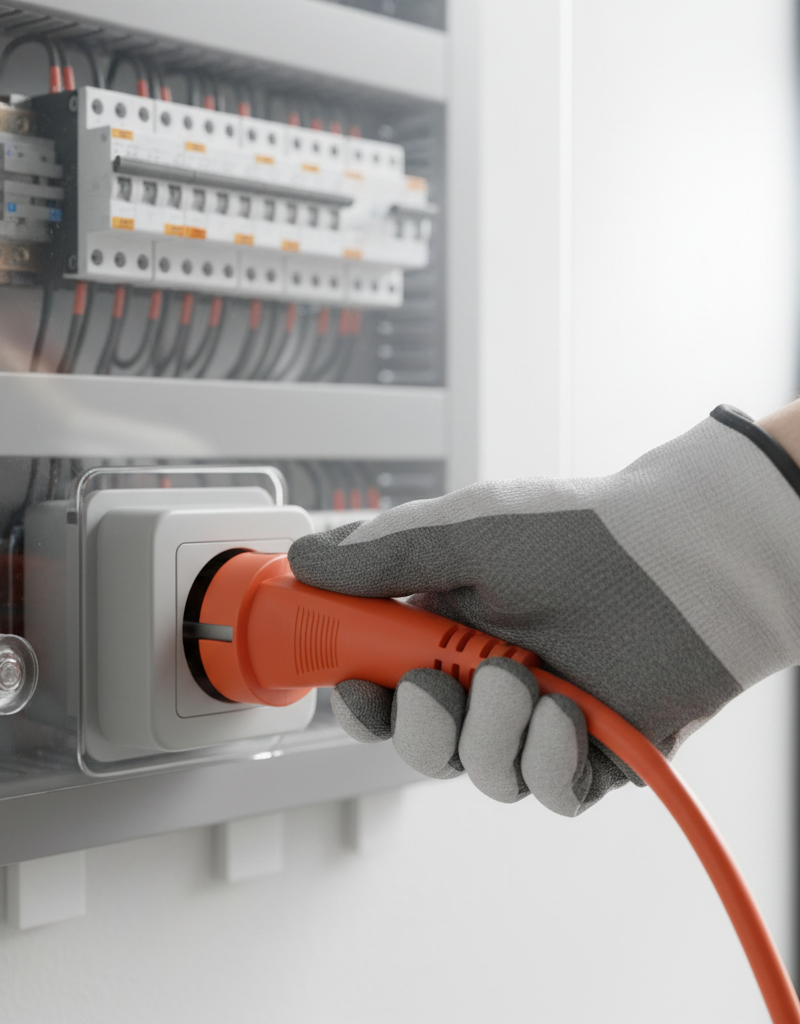
- Plug a low-power, known good appliance (like a small lamp or a cell phone charger) directly into an outlet on a different circuit that is known to be working correctly. If the lamp works, go to the next step.
- Now, plug the same low-power appliance into the extension cord, and then plug the extension cord into an outlet on a different circuit.
- If the breaker still trips on the new circuit, the extension cord itself is likely faulty – dispose of it and replace it. Do not use damaged extension cords, ever.
- Tools: Small lamp or cell phone charger (known working).
5. Inspect the Extension Cord for Damage — Visually check for any signs of wear or damage.
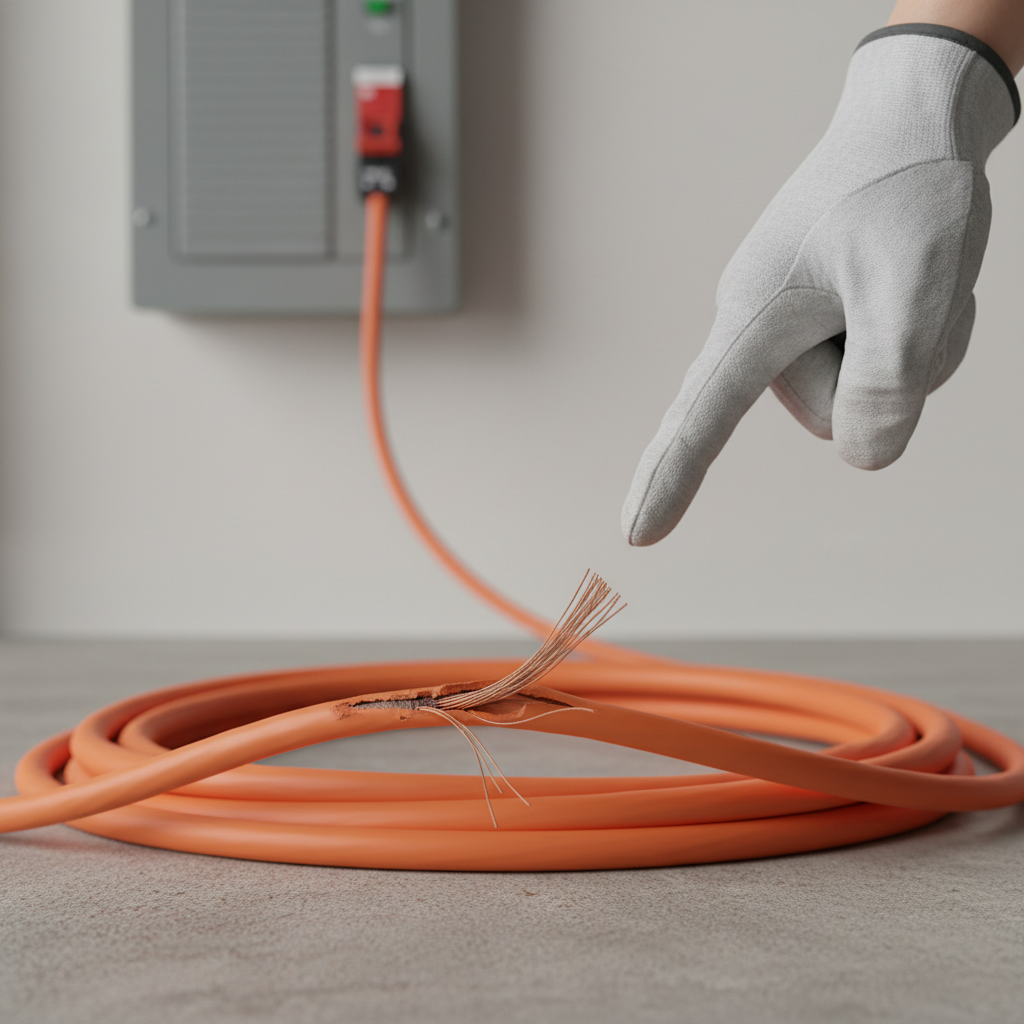
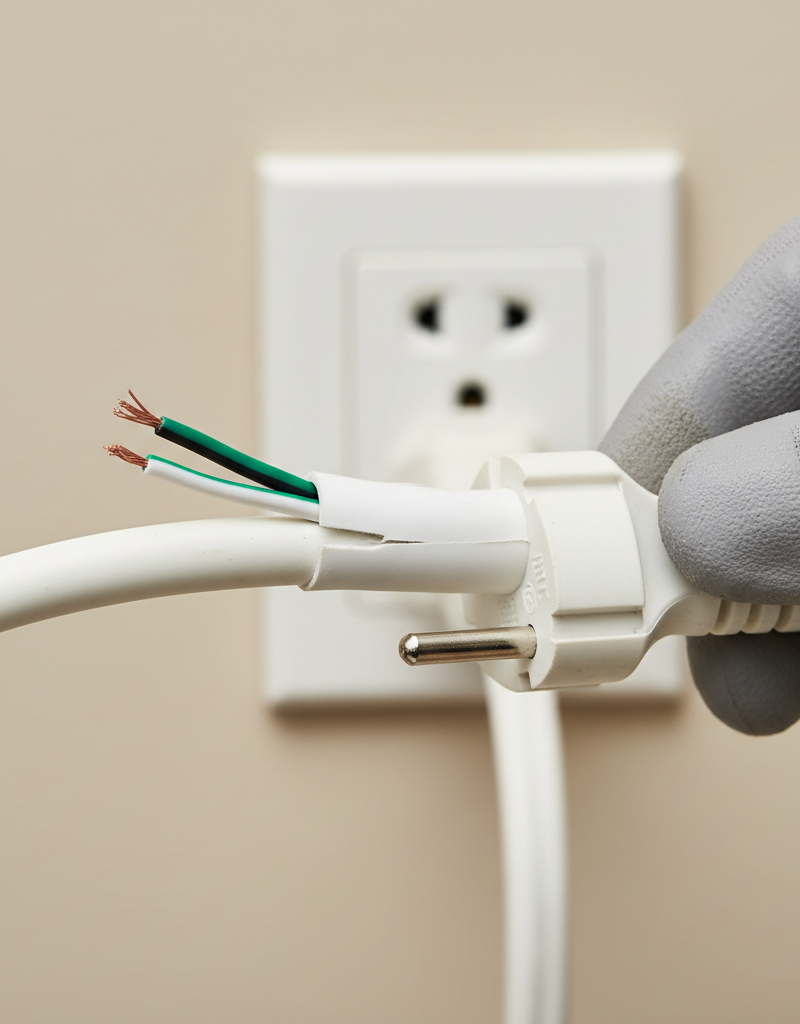
- Carefully examine the entire length of the extension cord. Look for cuts, frayed insulation, exposed wires, kinks, bulges, discolored spots (indicating overheating), or crushed sections.
- Check the plug ends for bent or loose prongs, cracks in the housing, or signs of burning. Any of these could indicate a short circuit or ground fault within the cord.
- If this doesn't work: If you find any damage, no matter how small, the cord is compromised and unsafe. Discard it immediately. Do not attempt to repair an extension cord; purchase a new one.
6. Inspect the Appliance(s) — Check the device you were powering with the extension cord.
- Examine the appliance's power cord and plug for the same types of damage listed for the extension cord (frays, cuts, bent prongs, discolored spots).
- If the appliance's cord appears okay, try plugging the appliance directly into a known working wall outlet on a different circuit (without the extension cord). If it trips that circuit, the appliance itself has an internal electrical fault and needs professional repair or replacement.
- Safety Note: Be particularly cautious with appliances that get hot, have motors, or are used in wet environments (e.g., space heaters, power tools, hair dryers). These are common culprits for internal shorts.
7. Check for Overload (Wattage Calculation) — The most common reason for tripping: too many devices.
- Identify the amperage of the tripped circuit breaker (usually written on the breaker handle – 15A or 20A).
- Multiply the amperage by 120 volts to get the approximate maximum safe wattage for the circuit (e.g., 15A x 120V = 1800 watts; 20A x 120V = 2400 watts).
- Look at the labels on all devices currently (or previously) plugged into that circuit (including lights, other appliances, and the one that was using the extension cord). Note their wattage ratings.
- Add up the total wattage of all devices. If the total exceeds the circuit's maximum safe wattage, you have an overload issue.
- Solution: Redistribute appliances to other circuits, use lower-wattage alternatives, or avoid using multiple high-draw appliances simultaneously on the same circuit. For example, relocate a space heater to a different circuit than your microwave.
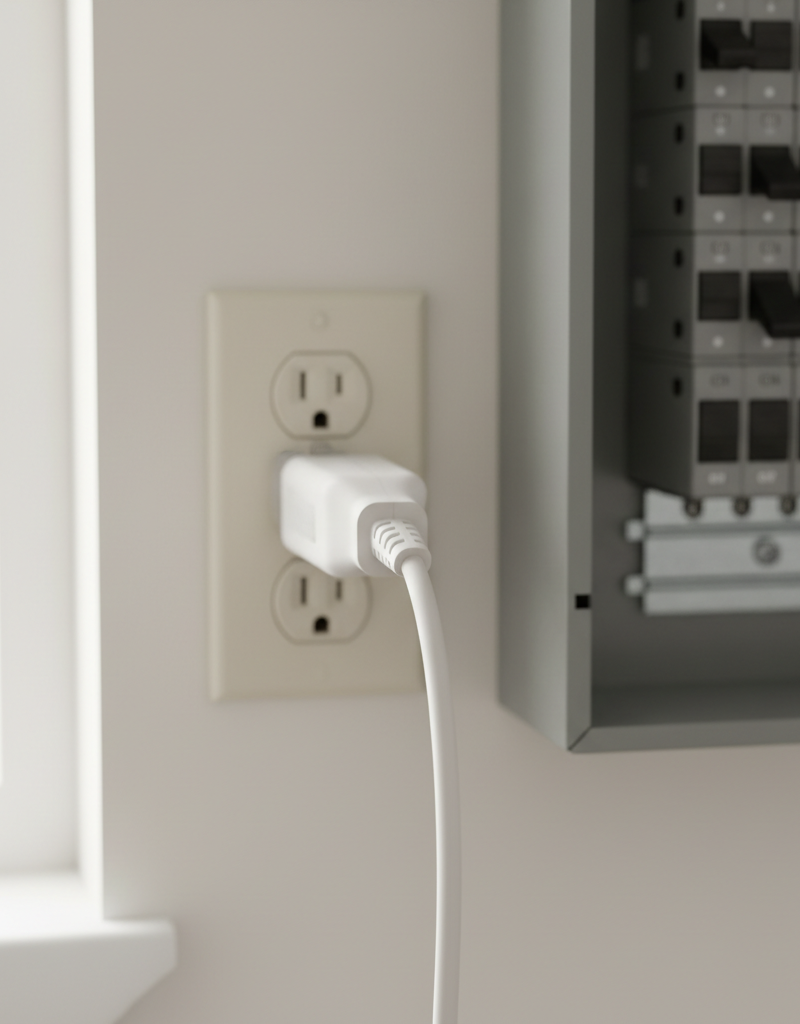
8. Check the Outlet — Inspect the wall outlet where the extension cord was connected.
- Visually inspect the outlet face for any signs of burning, charring, cracks, or loose components.
- If the outlet feels loose or appears damaged, it could be creating a poor connection or internal short. Stop using it and consider replacing it (after turning off the breaker to that specific outlet).
- Tools: Screwdriver (Phillips or flathead, depending on outlet cover screws).
9. Consider Environmental Factors — Sometimes, the environment plays a role.
- Is the extension cord being used in a wet environment (outdoors, near a sink, in a damp basement)? Moisture can easily cause ground faults or short circuits.
- Is the cord being run under carpets, through doorways, or near sharp objects where it could be pinched or abraded? Physical stress significantly increases the risk of damage.
- Solution: Use appropriately rated cords for outdoor or damp environments (rated 'W' for weather resistant). Never run cords under carpets or through doorways where they can be damaged or become a tripping hazard.
Common Causes
- Circuit Overload: The most frequent offender. Plugging in too many high-wattage devices (space heaters, hair dryers, vacuums, microwaves, power tools) into a single circuit. Extension cords often facilitate this by allowing more devices to reach a single outlet.
- Damaged Extension Cord: Worn insulation, cuts, pinches, or crushing can expose internal wires, leading to a short circuit or ground fault. This is especially common with older, misused, or improperly stored cords.
- Faulty Appliance: The device plugged into the extension cord may have an internal short circuit or ground fault, which the cord merely facilitates transmitting to the circuit.
- Improper Cord Use: Using an indoor-rated cord outdoors, using a cord that's too thin (under-gauged) for the power draw, or daisy-chaining multiple extension cords together.
- Loose Connections: A loose wire within the extension cord's plug, the appliance's plug, or even the wall outlet itself can create intermittent arcs or resistance leading to a trip.
- Aging or Faulty Breaker: While less common, a circuit breaker can weaken over time and become overly sensitive, tripping at lower loads than its rating, or failing internally.
Common Mistakes
- Ignoring the First Trip: Thinking it's a one-off event. A tripped breaker is a safety warning. Ignoring it can lead to further issues or, worse, fire.
- Overlooking the Wattage: Not knowing the power draw of your appliances or the capacity of your circuit. This leads directly to overload.
- Using Indoor Cords Outdoors: Indoor cords lack the robust insulation and weather resistance needed for outdoor use, making them highly susceptible to damage and ground faults from moisture.
- Daisy-Chaining Extension Cords: Connecting multiple extension cords end-to-end. This increases resistance, risk of overheating, and potential for damage, creating a dangerous fire hazard.
- Repairing Damaged Cords: Attempting to tape up or otherwise 'fix' a damaged extension cord. Any compromise to the insulation is a serious safety risk. Always replace damaged cords.
- Running Cords Under Carpets: This hides damage and prevents heat dissipation, increasing fire risk. It also makes cords more prone to being stepped on and damaged.
Cost & Time Breakdown
| Task | DIY cost | Pro cost | Time |
|---|---|---|---|
| New Extension Cord | $15–$50 | N/A | 5 minutes |
| Appliance Repair/Replacement | $50–$500+ | $100–$800+ | Varies |
| Outlet Replacement | $5–$20 | $100–$250 | 15–30 minutes |
| Breaker Replacement | $15–$50 | $150–$300 | 30–60 minutes |
| Diagnosing Circuit Overload | $0 | N/A | 10–20 minutes |
Tips & Prevention
- Match Cord to Task: Always use the correct gauge and length of extension cord for the power requirements of the appliance. Thicker cords (lower gauge numbers like 12-gauge) handle more power.
- Avoid Overload: Plan your power usage. Distribute high-wattage appliances across different circuits. Use power strips with surge protection, but remember they don't prevent circuit overload—they merely expand the number of outlets.
- Regular Inspection: Periodically check your extension cords and appliance cords for any signs of wear, cuts, or heat damage. Retire and replace any damaged cords immediately.
- Store Properly: When not in use, coil extension cords loosely and store them in a dry place, away from direct sunlight or extreme temperatures. Avoid tight coiling or kinking.
- Use GFCI Outlets: For outdoor use or in areas near water (kitchens, bathrooms, basements), always plug into a Ground Fault Circuit Interrupter (GFCI) outlet. These offer enhanced protection against shock.
- Never Daisy-Chain: Do not plug one extension cord into another to extend length. If you need a longer reach, buy a single cord of the appropriate length.
When to Call a Professional
While many extension cord tripping issues can be resolved with careful diagnostics and simple replacements, it's crucial to know when to call a licensed electrician. You should immediately contact a professional if the breaker trips even when nothing is plugged into the circuit, as this indicates a fault within your home's permanent wiring. If you suspect an issue with your electrical panel, or if you smell burning odors, see sparks, or hear buzzing from outlets or the panel, these are serious warning signs requiring immediate professional intervention. Furthermore, if you’re uncomfortable working with electricity, or if diagnosing the issue requires more than basic visual inspection and unplugging, a professional can safely and accurately identify and fix the problem, ensuring your home's electrical system remains safe and up to code.
Related Articles
Keep troubleshooting with these hand-picked guides from FixlyGuide:
- The Hidden Reason Your Extension Cord Keeps Tripping the Breaker (and What to Do) — Discover why your extension cord might be tripping a circuit breaker and learn how to diagnose and fix common electrical issues safely.
- The Hidden Reason Your GFCI Won't Reset (And It's Not Always a Short) — When your GFCI outlet refuses to reset, it's often more than a simple tripped circuit, pointing to underlying electrical issues you can saf…
- Why Your Extension Cord Keeps Tripping the Breaker (And the Simple Test to Find the Hidden Cause) — Discover why your extension cord keeps tripping the circuit breaker and learn how to safely diagnose and fix the real problem with a simple…
- The Hidden Reason Your Circuit Breaker Keeps Tripping (It's Not Always an Overload) — Discover the often-overlooked causes behind a frequently tripping circuit breaker and learn how to diagnose and fix them safely.
- Why Does My Extension Cord Keep Tripping the Breaker? (It's Not Always Overload) — An extension cord repeatedly tripping a circuit breaker indicates a serious electrical issue that homeowners need to diagnose and resolve s…
- The Hidden Reason Your GFCI Trips (It’s Not Always a Bad Outlet) — A tripping GFCI outlet is a safety mechanism doing its job, often indicating a problem like moisture, a faulty appliance, or a wiring issue…
Should you do this yourself?
Answer five quick questions before you start. Safety outranks savings every time.
Your experience with work like this
How high do you have to work?
Does the job involve any of these?
Will it need a permit?
Specialty tools
Free and instant. Educational guidance only — not a quote, inspection, or professional diagnosis.
What should this project cost?
Enter your project details for a realistic cost range before you call anyone.
Outlet and switch work usually $150–$400; panel upgrades commonly $1,800–$4,200.
- Regional adjustment
- National average
- Labor share (typical)
- ~$709
- Quotes to collect
- 3 written estimates
Educational estimate based on national averages — not a binding quote. Always confirm with written local estimates.
Fixly Project Decision Box
- DIY difficulty
- Professional Recommended
- Estimated time
- Diagnosis 1–2 hours
- Cost level
- Moderate
Main tools / materials
- Non-contact voltage tester
- Outlet tester
- Flashlight
When to stop and call a pro
- Burning smell, scorch marks, or a warm outlet or switch plate
- A breaker that trips again right after being reset
- Any work inside the service panel
- Aluminum wiring or cloth-insulated wiring
Need professional help?
Talk to a Licensed ElectricianFrequently asked questions
Why does my extension cord keep tripping the breaker?+
Your extension cord keeps tripping the breaker most commonly due to a circuit overload, a short circuit in the cord or the connected appliance, or a ground fault. An overload means too many high-wattage devices are drawing power from one circuit. A short or ground fault is a more serious wiring issue.
Can a faulty extension cord cause a breaker to trip?+
Yes, absolutely. A faulty extension cord with damaged insulation, cuts, or pinched wires can create a short circuit or ground fault, causing the breaker to trip instantly as a safety measure. Always inspect your extension cords for any damage.
What is the difference between an overload and a short circuit?+
An overload occurs when too much current flows through a circuit over time, exceeding its rated capacity (e.g., plugging in too many appliances). A short circuit is an instantaneous, massive surge of current caused by a 'hot' wire touching another conductor it shouldn't, like a neutral wire or ground.
How do I test if my appliance is causing the breaker to trip?+
To test an appliance, first ensure the problematic circuit's breaker is off. Unplug the appliance FROM THE WALL. Reset the breaker. Then, plug the appliance directly into a different, known-working outlet on a *different* circuit. If it trips that breaker, the appliance is faulty. If not, the issue might be with the original circuit or extension cord.
When should I call an electrician for a tripping breaker?+
Call an electrician immediately if the breaker trips even when nothing is plugged into the circuit, if you smell burning, see sparks, or hear buzzing from your electrical panel or outlets. Also call if you are uncomfortable troubleshooting the issue yourself or if your diagnostics point to an issue with your home's wiring system.
Discussion
Loading comments…