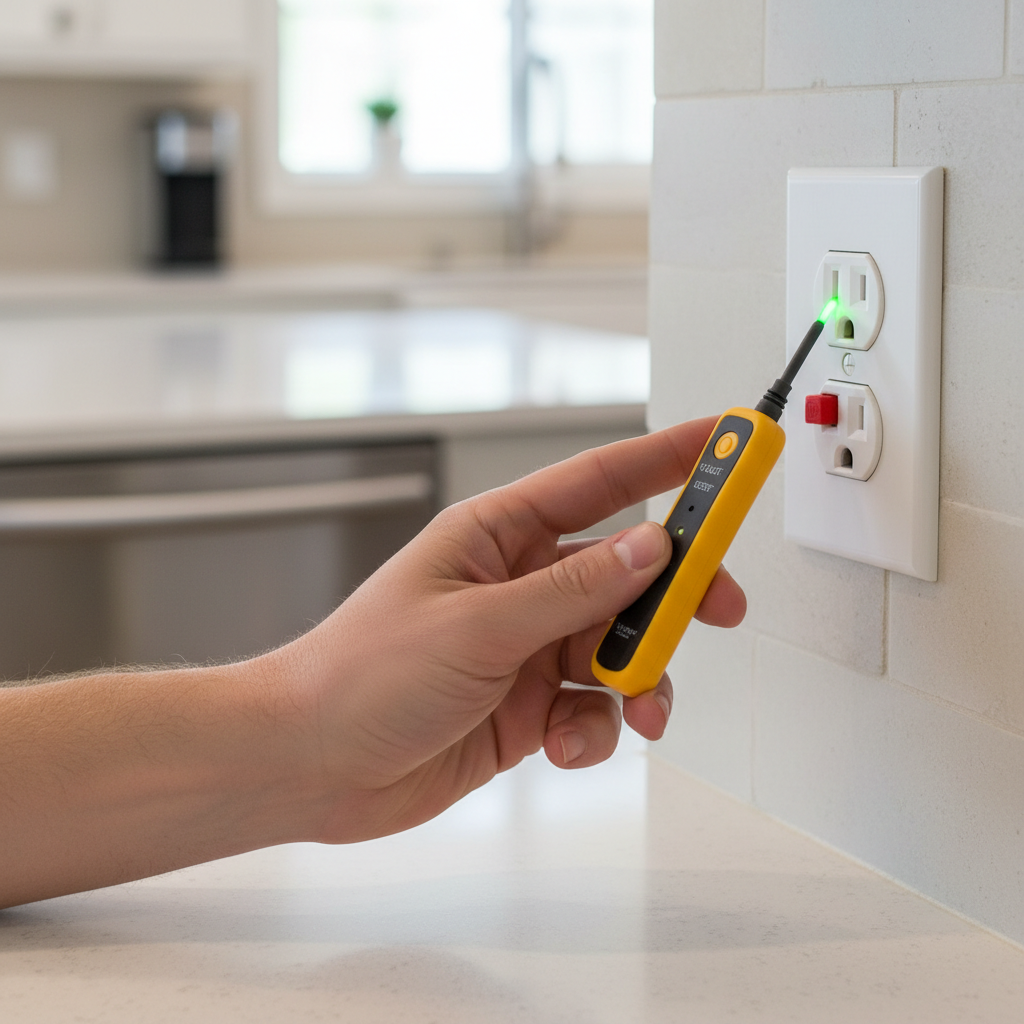
- Tripped GFCI/AFCI Outlet: The most frequent reason. These safety outlets trip locally without affecting the main breaker to protect against ground faults or arc faults downstream.
- Loose Wire Connection: Over time, wires can vibrate loose from screw terminals or push-in connectors within an outlet, in a junction box, or at another outlet on the same circuit, creating an open circuit.
- Faulty Outlet Receptacle: Outlets wear out, especially cheaper builder-grade ones, or those frequently used. Internal components can fail, even if the exterior looks fine.
- Backstabbed Wiring: Many older and some newer outlets use
Electrical · Breaker keeps tripping
| Project category | Electrical |
|---|---|
| Problem type | Breaker keeps tripping |
| Trade required | Electrical |
| Urgency | Urgent — within days |
| Safety risk | High safety risk |
| DIY suitability | Pro recommended |
| Cost category | Low cost |
| Typical timeline | Diagnosis in a single visit |
| Contractor type | Licensed electrician |
Repair option
Isolate the load, then repair the fault or replace the breaker.
Replacement option
New dedicated circuit when the load simply exceeds what the circuit was built for.
Common causes
- Genuine overload on a shared circuit
- Ground fault from moisture in an exterior box
- Failing breaker or a damaged appliance cord
Relevant tools:diy or hire a prodiy difficulty
Published June 13, 2026Last updated August 17, 2026
Tools & materials you'll need
Affiliate linksAs an Amazon Associate FixlyGuide earns from qualifying purchases — at no extra cost to you. Prices and availability are accurate as of publication and subject to change.
Quick Answer
When a wall outlet suddenly stops providing power, yet the corresponding circuit breaker in your electrical panel remains in the 'on' position, the most frequent, yet often overlooked, cause is a tripped GFCI (Ground Fault Circuit Interrupter) or AFCI (Arc Fault Circuit Interrupter) outlet located somewhere upstream on the same circuit. These safety outlets, designed to prevent electrical shock and fires, can trip independently of the main breaker, cutting power to all subsequent outlets. Other common reasons include loose wire connections within the outlet box, a faulty outlet receptacle itself, or an open circuit somewhere along the line.
The Problem
You've plugged in your phone charger, a lamp, or perhaps a small appliance, and nothing happens. You check the light switch (if it's a switched outlet), then head to your electrical panel, expecting to find a tripped breaker. But to your surprise, all the breakers are firmly in the 'on' position. This leaves many homeowners baffled, wondering how an outlet can be dead when its protective breaker is clearly engaged. The frustration mounts, especially when it's an essential outlet in the kitchen, bathroom, or bedroom. This seemingly contradictory scenario points to a problem beyond a simple overcurrent trip at the main panel, requiring a more nuanced understanding of how your home's electrical system is wired and protected.
How It Works
To understand why an outlet goes dead with the breaker on, it helps to visualize your home's electrical pathways. Electricity flows from your main service panel, where circuit breakers act as safety gates, out to various circuits that feed your lights, appliances, and outlets. Each circuit breaker protects a specific set of electrical points. When a breaker 'trips,' it means it has detected an overload or a short circuit and has automatically cut power to that entire circuit, preventing damage or fire. This is why you typically reset breakers by pushing them firmly to 'off' and then back to 'on.'
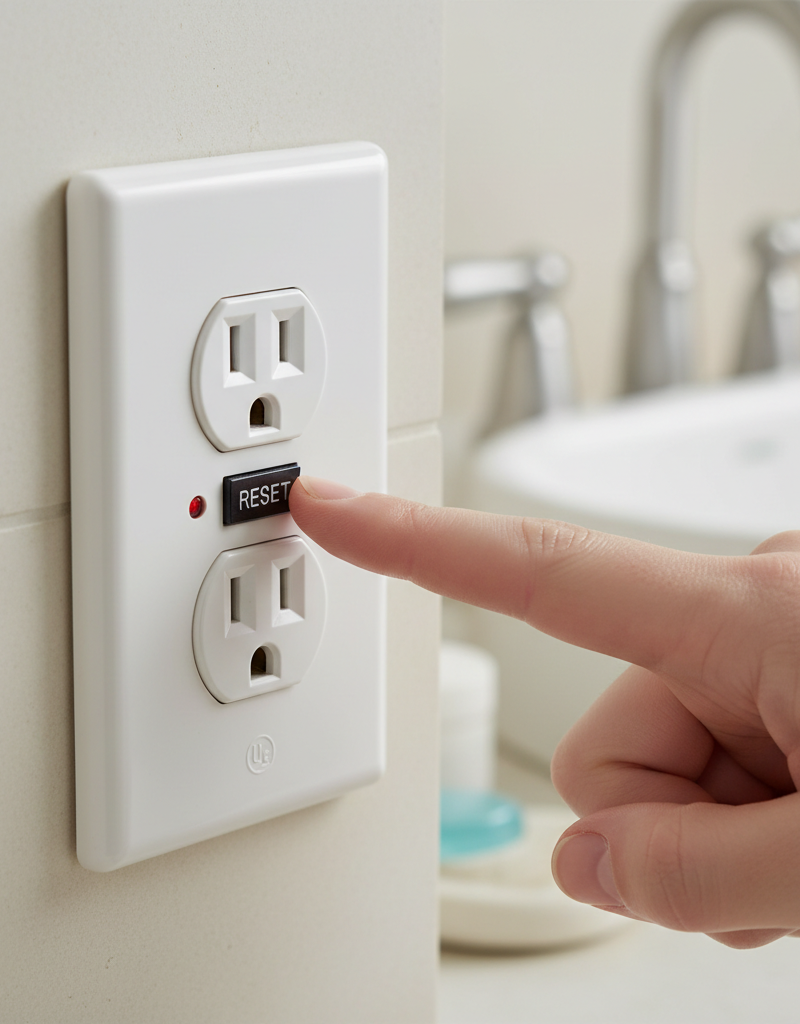
However, not all electrical protection happens at the main panel. Modern electrical codes mandate additional safety devices: GFCI and AFCI outlets and breakers. GFCI devices protect against ground faults – a situation where electricity takes an unintended path to the ground, often through a person, causing a shock hazard. They are commonly found in kitchens, bathrooms, garages, and outdoor locations. AFCI devices protect against arc faults – dangerous electrical arcs that can occur from damaged or loose wiring, potentially igniting fires. You'll find AFCI protection in living areas, bedrooms, and other general-purpose circuits. Both GFCI and AFCI outlets (not just breakers) have 'Test' and 'Reset' buttons. Crucially, a single GFCI or AFCI outlet can protect all standard outlets downstream (further along the circuit) from it. If that single GFCI or AFCI outlet trips, it will cut power to every other standard outlet on that leg of the circuit, even if their main breaker is still on.
Beyond these safety devices, the internal wiring of your home relies on tight connections. Electrical current needs a continuous path. If a wire connection at an outlet terminal, a wire nut, or even within the outlet itself becomes loose or corroded, it can create an 'open circuit' – essentially a break in the path – causing the outlet (and potentially others downstream) to lose power. Outlets are wired in series or parallel, sometimes 'daisy-chained' from one to the next. A problem at one outlet can therefore affect others connected to it.
Step-by-Step Fix
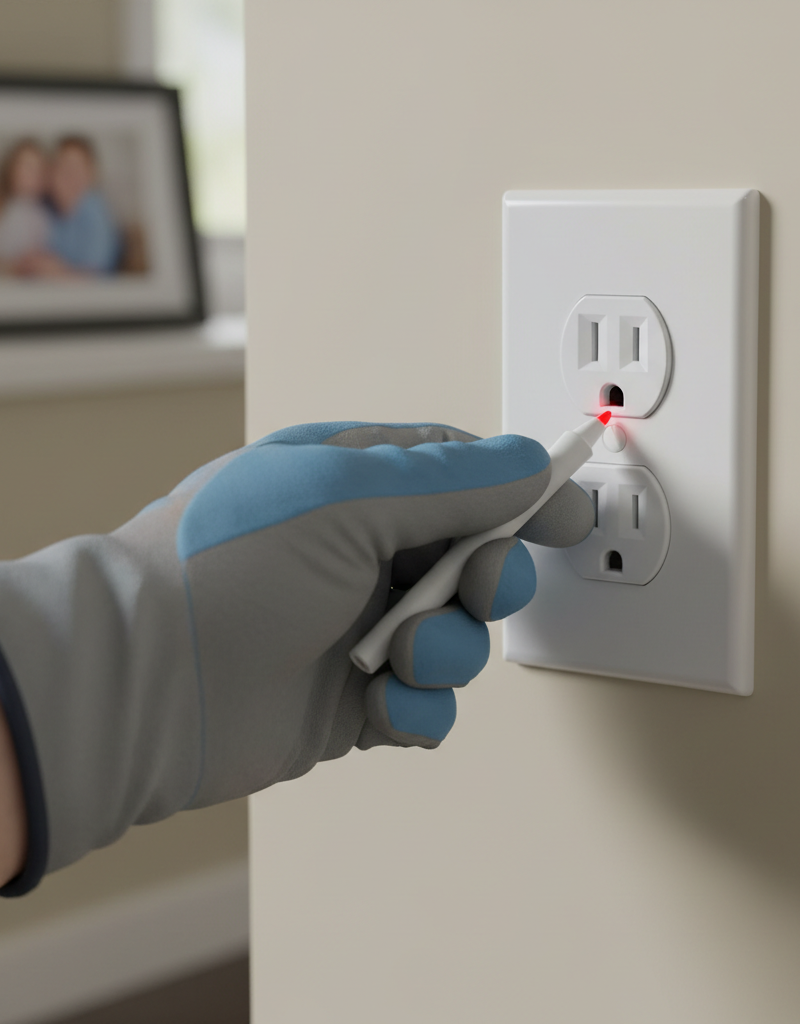
Always prioritize safety when working with electricity. Turn off the main power to the circuit at the breaker panel before performing any work inside an outlet box. Use a non-contact voltage tester to confirm the power is off.
1. Check for Tripped GFCI or AFCI Outlets – The most common culprit.
- Action: Systematically check every GFCI and AFCI outlet in your home, especially those in kitchens, bathrooms, garages, laundry rooms, basements, and outdoors. Remember, a GFCI in one room (like a garage) might protect outlets in an adjacent room (like a kitchen or entry hall). AFCI outlets also have 'Test' and 'Reset' buttons and can look similar to GFCIs. Push the 'Reset' button firmly on any GFCI or AFCI outlet that might be on the same circuit as the dead outlet. You should hear a click and feel the button engage. If it immediately trips again, there's an underlying electrical problem that needs professional attention.
- Tools: None
- Safety Note: If an GFCI or AFCI consistently trips, do not force it. This indicates a persistent problem that requires diagnosis by a licensed electrician.
2. Test the 'Working' Status of the Breaker – Ensure it's truly on.
- Action: Even if a breaker looks 'on,' it might be subtly tripped. Go to your electrical panel, locate the breaker protecting the dead outlet's circuit (if known). Firmly push it all the way to the 'off' position, then firmly push it back to the 'on' position. Sometimes, a breaker will appear on but has actually tripped internally and needs a full reset.
- Tools: None
- Safety Note: Never touch bare wires in the breaker panel. If you are unsure which breaker controls the outlet, flip the main breaker to the entire house to OFF before proceeding with any work inside an outlet box.
3. Inspect the Dead Outlet's Wiring – Loose connections are frequent.
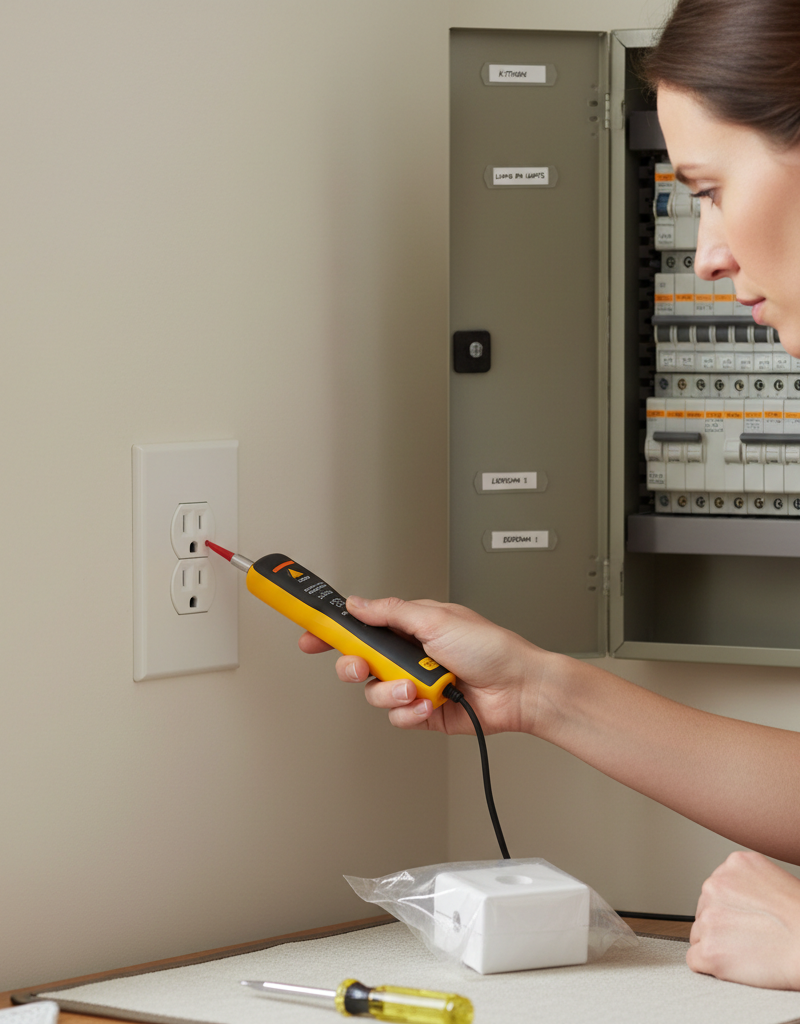
- Action: Before touching anything, turn off the breaker for the affected circuit at your main panel. Use a non-contact voltage tester to confirm power is off at the dead outlet. Unscrew the cover plate and then the outlet receptacle from the electrical box. Gently pull the outlet forward. Examine all wire connections: the black (hot) wires, white (neutral) wires, and bare copper or green (ground) wires. Look for any wires that are loose, corroded, or disconnected from the screw terminals or push-in connectors. If using push-in connectors, gently pull on each wire to ensure it's secure. For screw terminals, tighten any loose screws clockwise. Ensure about 3/4 inch of insulation is stripped from the wire and that the wire makes a complete clockwise loop under the screw, with no bare copper showing beyond the screw head.
- Tools: Flathead screwdriver, Phillips head screwdriver, Non-contact voltage tester, Wire strippers (if rewiring is needed)
- Safety Note: Always confirm power is off before handling wires. Be careful not to damage insulation when tightening screws.
4. Check Other Outlets on the Same Circuit – A daisy-chain issue.
- Action: If the dead outlet is part of a series (daisy-chain), a loose connection in an earlier outlet on that circuit could be cutting power to all subsequent outlets. Identify other outlets that stopped working at the same time or are in proximity. Start with the closest working outlet upstream from the dead one, or the one that's physically closest to the breaker panel. Repeat Step 3 for these potentially upstream outlets, inspecting their wiring for looseness. A continuity tester or multimeter can help trace if power is reaching an outlet but not leaving it.
- Tools: Flathead screwdriver, Phillips head screwdriver, Non-contact voltage tester, Optional: Multimeter/Continuity tester
- Safety Note: Turn off the circuit breaker for each outlet you are inspecting. Mark wires carefully if you disconnect them to ensure correct reassembly.
5. Test and Replace the Outlet (If Necessary) – The outlet itself may be faulty.
- Action: After checking connections, if the outlet is still dead, the receptacle itself might be faulty. With the power still off (confirmed by your voltage tester), disconnect all wires from the old outlet, paying close attention to which wire goes to which terminal (typically black to brass screws, white to silver screws, bare/green to green screw). Attach the wires to a new matching replacement outlet, ensuring tight connections. Screw the new outlet back into the box, replace the cover plate, and restore power at the breaker panel. Test the outlet with a known working device.
- Tools: Flathead screwdriver, Phillips head screwdriver, Non-contact voltage tester, New electrical outlet (rated for 15A or 20A, matching existing type), Wire strippers (if necessary)
- Safety Note: Always match the new outlet's amperage rating to the circuit's breaker (e.g., 15A outlet for a 15A breaker). Incorrect installation can be a fire hazard.
6. Inspect Wire Nuts – Hidden breaks.
- Action: In some outlet boxes, especially if multiple wires are spliced together to feed another outlet, wire nuts are used. With the power off, gently pull on each wire coming out of the wire nut inside the box. If any wire comes loose, uncap the nut, twist the wires together firmly (clockwise), and re-secure with a new, correctly sized wire nut.
- Tools: Flathead screwdriver, Phillips head screwdriver, Non-contact voltage tester, New wire nuts (various sizes)
- Safety Note: Ensure wires are twisted together tightly before applying the wire nut. The metal conductor of the wire should be fully covered by the wire nut's insulation.
Common Causes
- Tripped GFCI/AFCI Outlet: The most frequent reason. These safety outlets trip locally without affecting the main breaker to protect against ground faults or arc faults downstream.
- Loose Wire Connection: Over time, wires can vibrate loose from screw terminals or push-in connectors within an outlet, in a junction box, or at another outlet on the same circuit, creating an open circuit.
- Faulty Outlet Receptacle: Outlets wear out, especially cheaper builder-grade ones, or those frequently used. Internal components can fail, even if the exterior looks fine.
- Backstabbed Wiring: Many older and some newer outlets use
Related Articles
Keep troubleshooting with these hand-picked guides from FixlyGuide:
- Why Your Outlet Died (Even If the Breaker's ON): The Hidden Causes Everyone Misses — Discover the surprising reasons why an electrical outlet might stop working even when the circuit breaker appears to be on, and learn how t…
- The 7 Head-Scratching Reasons Your Outlet Died (Even With The Breaker On) — Discover the surprising reasons why an electrical outlet might stop working even when its circuit breaker is fully engaged, and how to safe…
- Why Your Outlet Died (Even If the Breaker's On) — Discover the hidden reasons an electrical outlet stops working, even when the circuit breaker appears to be on, and learn simple diagnostic…
- Why Your Outlet Died, But the Breaker Isn't Tripped: The GFCI Secret — Discover why your electrical outlet might stop working even when the breaker hasn't tripped, and how a hidden GFCI outlet could be the surp…
- Why Your Outlet Died But the Breaker's STILL On (The GFCI Culprit) — Discover the hidden reasons an electrical outlet stops working, even when the circuit breaker remains on, often pointing to a tripped GFCI.
- The 3 Hidden Reasons Your Sprinkler Hits the House (and the 5-Minute Fix) — Even a perfectly installed sprinkler system can go awry, throwing water onto your house, driveway, or non-lawn areas. Learn how to diagnose…
What should this project cost?
Enter your project details for a realistic cost range before you call anyone.
Outlet and switch work usually $150–$400; panel upgrades commonly $1,800–$4,200.
- Regional adjustment
- National average
- Labor share (typical)
- ~$709
- Quotes to collect
- 3 written estimates
Educational estimate based on national averages — not a binding quote. Always confirm with written local estimates.
Fixly Project Decision Box
- DIY difficulty
- Professional Recommended
- Estimated time
- Diagnosis 1–2 hours
- Cost level
- Moderate
Main tools / materials
- Non-contact voltage tester
- Outlet tester
- Flashlight
When to stop and call a pro
- Burning smell, scorch marks, or a warm outlet or switch plate
- A breaker that trips again right after being reset
- Any work inside the service panel
- Aluminum wiring or cloth-insulated wiring
Need professional help?
Talk to a Licensed ElectricianFrequently asked questions
Why would an outlet stop working if the breaker isn't tripped?+
The most common reason an outlet stops working with the breaker on is a tripped GFCI (Ground Fault Circuit Interrupter) or AFCI (Arc Fault Circuit Interrupter) outlet located somewhere earlier on the same circuit. These safety devices trip locally to prevent shocks or fires, cutting power downstream without affecting the main breaker.
How do I find a tripped GFCI outlet?+
Look for outlets with 'Test' and 'Reset' buttons. They are typically found in kitchens, bathrooms, garages, basements, laundry rooms, and outdoor areas. You may need to check every room on the affected circuit, as one GFCI can protect many standard outlets downstream.
Is it safe to fix a dead outlet myself?+
Diagnosing and fixing a dead outlet can be safe if you follow proper safety precautions, specifically turning off the circuit breaker before handling any wiring and verifying the power is off with a non-contact voltage tester. If you're uncomfortable or the problem persists, always call a licensed electrician.
What if resetting GFCI outlets doesn't work?+
If resetting GFCIs doesn't restore power, the problem could be a loose wire connection within the dead outlet or an upstream outlet, a faulty outlet receptacle, or an open circuit elsewhere. Carefully inspect wiring connections or consider replacing the outlet. If still unresolved, it's time to call an electrician.
Discussion
Loading comments…