- Inspect Cords and Plugs Regularly: Periodically check appliance cords for fraying, cuts, or heat damage. Ensure plugs fit snugly into outlets. Replace damaged cords or repair faulty plugs immediately.
- Install GFCI Protection: Ensure all outlets in bathrooms, kitchens, laundry rooms, garages, unfinished basements, and outdoors are GFCI protected. These devices are critical for preventing severe electric shocks from ground faults.
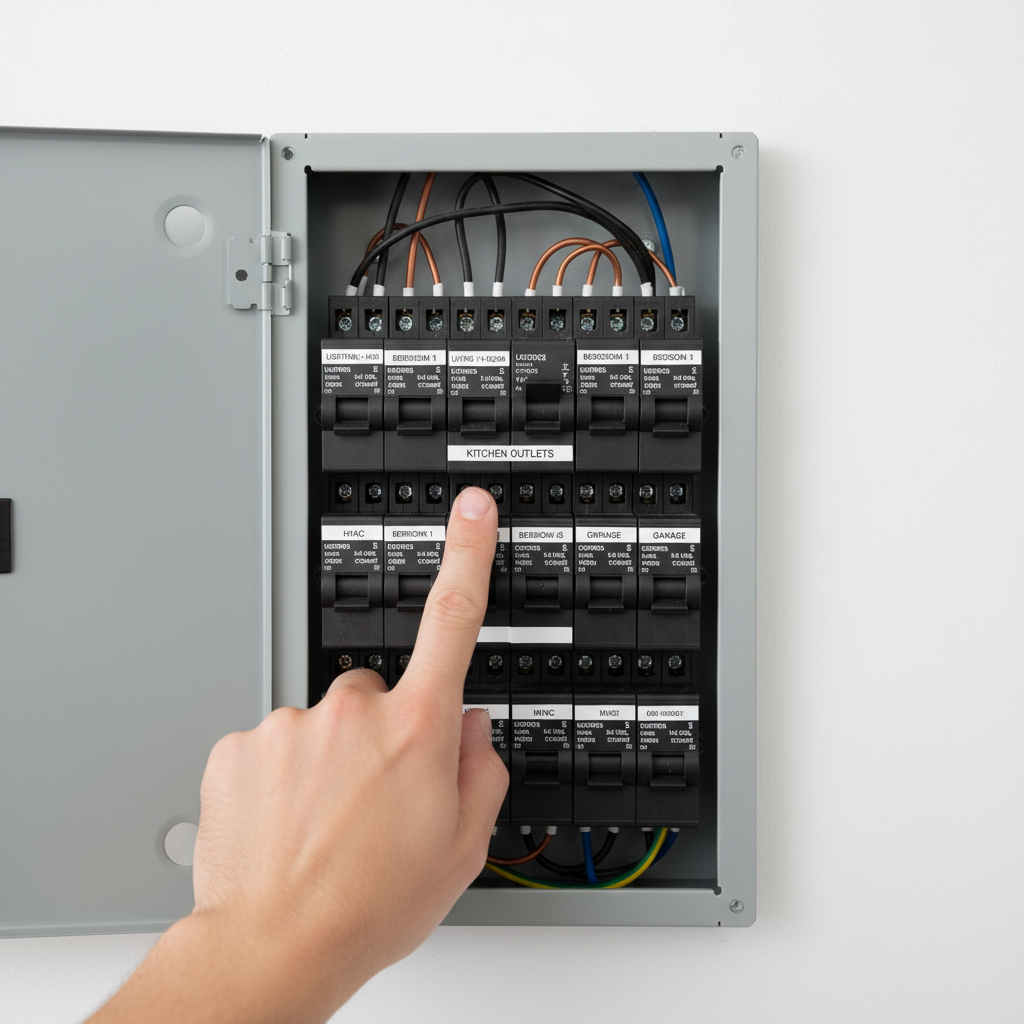
- Keep Your Electrical Panel Accessible: Don't use your electrical panel as storage. Keep the area around it clear and easily accessible for quick and safe troubleshooting. Ensure the panel door closes securely.
Electrical · Breaker keeps tripping
| Project category | Electrical |
|---|---|
| Problem type | Breaker keeps tripping |
| Trade required | Electrical |
| Urgency | Urgent — within days |
| Safety risk | High safety risk |
| DIY suitability | Pro recommended |
| Cost category | Low cost |
| Typical timeline | Diagnosis in a single visit |
| Contractor type | Licensed electrician |
Repair option
Isolate the load, then repair the fault or replace the breaker.
Replacement option
New dedicated circuit when the load simply exceeds what the circuit was built for.
Common causes
- Genuine overload on a shared circuit
- Ground fault from moisture in an exterior box
- Failing breaker or a damaged appliance cord
Relevant tools:diy or hire a prodiy difficulty
Published July 8, 2026Last updated August 18, 2026
Tools & materials you'll need
Affiliate links- AmazonNon-contact voltage testerEssential for safety, confirms if power is off
- AmazonScrewdriver set (Phillips and flathead)For removing outlet/switch plates if needed
- AmazonFlashlight or headlampFor working in dimly lit electrical panel areas
- AmazonMultimeterOptional, for advanced diagnostics like continuity and voltage checks
As an Amazon Associate FixlyGuide earns from qualifying purchases — at no extra cost to you. Prices and availability are accurate as of publication and subject to change.
Quick Answer
A circuit breaker that repeatedly trips is signaling an interruption in the electrical current. This usually points to one of three main culprits: an overload (too many devices drawing power), a short circuit (a momentary bypass of the normal electrical path, causing a huge surge of current), or a ground fault (where electricity escapes the circuit and tries to find the quickest route to the ground). Pinpointing the exact cause involves a systematic approach, starting with identifying the affected circuit and isolating appliances, then visually inspecting outlets for damage, and finally, using a multimeter to check for more subtle electrical issues. Ignoring a frequently tripping breaker can lead to damaged appliances, wiring, or even pose a fire hazard.
The Problem
Imagine you're enjoying a quiet evening, and suddenly, the lights go out in a section of your home, or a major appliance unexpectedly shuts off. You head to the electrical panel, flip the circuit breaker back on, and for a moment, all is well. But then, it trips again, perhaps instantly, perhaps after a few minutes, or maybe only when a specific device is plugged in. This frustrating cycle of a repeatedly tripping circuit breaker is a common yet concerning issue for homeowners. It's more than just an inconvenience; it's a clear warning signal from your home's electrical system that something is amiss. Left unaddressed, a recurring tripped breaker can lead to damaged electronics and appliances, compromised wiring, or, in severe cases, create a fire hazard. The challenge lies in diagnosing the specific cause, as the symptoms often don't immediately reveal the underlying electrical fault.
How It Works
To understand why a circuit breaker trips, it's essential to grasp its fundamental role in your home's electrical system. Think of your home's wiring as a network of roads, and electricity as the traffic. Each 'road' (circuit) has a maximum traffic capacity. A circuit breaker is essentially a safety valve, designed to automatically shut off the flow of electricity to a circuit when that capacity is exceeded or when a dangerous condition is detected.
Inside a typical thermal-magnetic circuit breaker, there are two primary mechanisms. The thermal trip mechanism uses a bimetallic strip, which comprises two different metals bonded together. When an overcurrent condition (an overload) occurs—meaning too many amps are flowing through the wire for a prolonged period—the resistance in the wire generates heat. This heat causes the bimetallic strip to bend. At a certain point of bending, it trips a latch, opening the circuit and cutting off power. This protects the wiring from overheating, which could melt insulation and cause fires.
The magnetic trip mechanism, on the other hand, deals with instantaneous, high-current events like short circuits. It consists of an electromagnet. When a sudden, very large surge of current flows through the circuit, as happens during a short circuit or ground fault, it creates a powerful magnetic field. This field instantly pulls a plunger, which also trips the latch and disconnects the circuit. This mechanism acts much faster than the thermal trip, crucial for suppressing dangerous arcing and immediate damage from severe faults.
When a breaker trips, it's doing its job, but it's also telling you there's a problem requiring your attention. Understanding these mechanisms helps in diagnosing whether the issue is a gradual overload (thermal) or a sudden, severe fault (magnetic), guiding your troubleshooting efforts.
Step-by-Step Fix
Safety First: Before touching your electrical panel, always ensure your hands are dry, and wear rubber-soled shoes. Never force a breaker back on if it immediately trips again. If you smell burning, hear buzzing from the panel, or see smoke, immediately evacuate and call emergency services. Never attempt to bypass a breaker.
1. Identify the Affected Circuit – Figure out which areas are without power
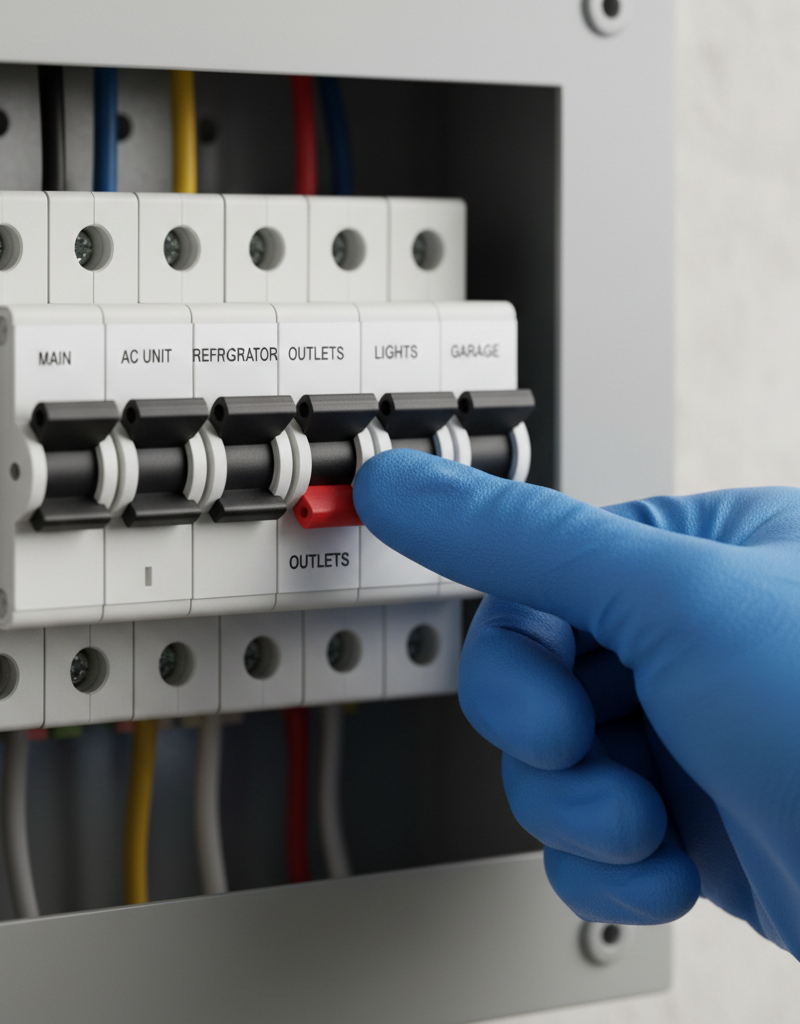
- Start by noting which lights, outlets, or appliances are no longer working. This helps narrow down the search to a specific circuit. Look for a tripped breaker in your electrical panel (it will typically be in the 'off' position or an intermediate 'trip' position, often indicated by a red or orange marker). Some breakers require you to push them fully 'off' before you can reset them to 'on'.
2. Reset the Breaker Safely – Test if it stays on
- Turn off all affected light switches and unplug all appliances from the outlets on the circuit you identified. This is crucial to prevent immediate re-tripping if an appliance caused the issue. Go to your electrical panel. Firmly push the tripped breaker all the way to the 'OFF' position. Then, firmly push it to the 'ON' position. If it immediately trips again, do not force it. This indicates a severe short circuit or ground fault, and you should proceed with caution.
- If it immediately trips again: Do not attempt to reset it again. This is a strong indicator of a short circuit or ground fault. Skip ahead to steps 5 and 6 and call a professional if you cannot find an obvious fault.
3. Check for Overloads – Systematically add devices back to the circuit
- If the breaker held after resetting, plug devices back into the circuit one at a time. Start with essential items or those you suspect might be the culprit. Wait a few minutes after plugging each device in. If the breaker trips after plugging in a specific appliance or turning on a particular light, that device or fixture is likely the cause. It could be faulty, or its combined wattage might be overloading the circuit when other things are already running.
- If a specific appliance trips the breaker: Unplug it permanently and test another device in the same outlet to confirm the appliance is the problem. If so, repair or replace the faulty appliance. If the outlet also trips the breaker with a known good appliance, the problem might be the outlet itself or the wiring behind it.
- Monitor total wattage: Be aware of the total power draw. Common culprits for overloading include space heaters, hair dryers, toasters, microwaves, and multiple high-wattage electronics on a single circuit. Use extension cords sparingly and ensure they are rated for the devices they power. If you constantly have too many devices on one circuit, consider redistributing them to other circuits or having an electrician add a new dedicated circuit.
4. Examine Outlets and Switches for Damage – Look for visible signs of trouble
- With the power off at the breaker, carefully check all outlets and switches on the affected circuit. Look for scorch marks, discoloration, burning smells, loose wires, or damaged receptacles. If an outlet feels loose or has a burning odor, it could be the source of a short or ground fault.
- Safety Note: Always turn off the breaker for the specific circuit before inspecting outlets or switches. Use a non-contact voltage tester to confirm power is off before touching anything. If you find significant damage, do not attempt to repair it yourself unless you are experienced with electrical work. Replace damaged outlets or switches, ensuring all wire connections are tight and correct.
5. Identify Short Circuits – Look for exposed wiring
- A short circuit occurs when the hot wire directly touches a neutral or ground wire, creating a path of very low resistance and a huge surge of current. This often causes the breaker to trip instantly. Common causes include damaged appliance cords, frayed wiring inside walls, loose connections in outlets or light fixtures, or a nail/screw puncturing a wire.
- Unplug everything: If the breaker trips immediately even with nothing plugged in, the short circuit is likely in the fixed wiring or a wired-in fixture. Unplug every single appliance and turn off every light switch on the circuit. Reset the breaker. If it holds, plug in or turn on items one by one until it trips again. The last item connected is the likely culprit. If it still trips with everything disconnected, the fault is within the permanent wiring, requiring professional help.
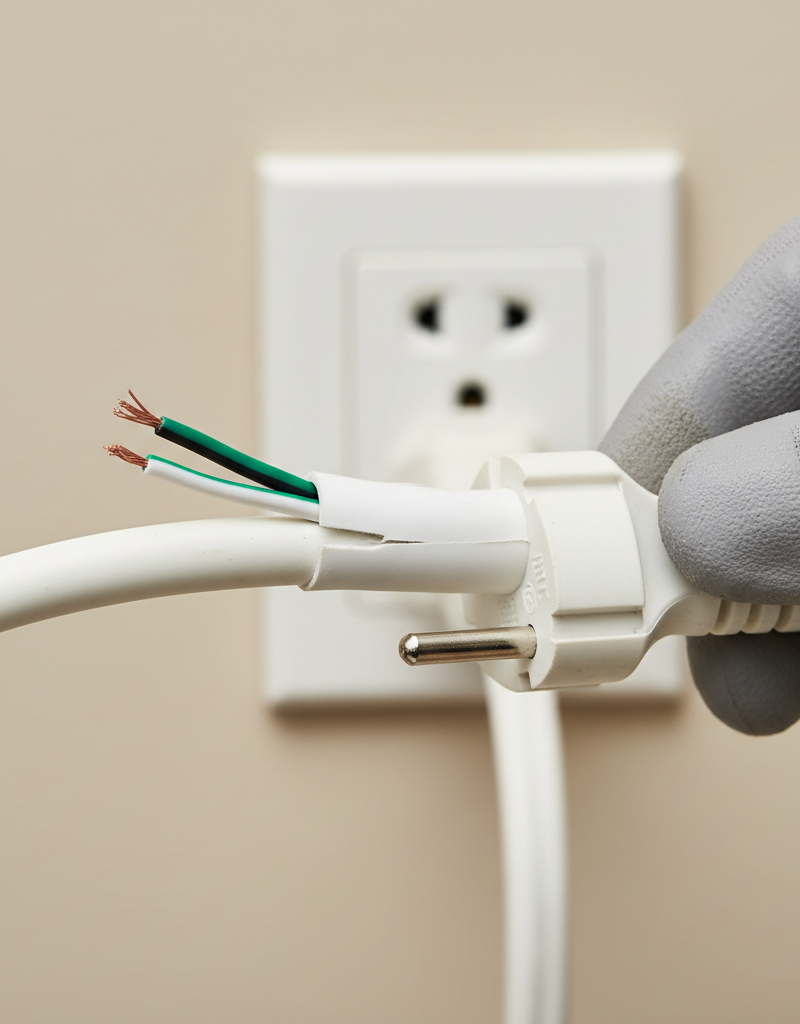
- Inspect cords: Check all appliance cords for visible damage (frays, cuts, pinched spots).
6. Pinpoint Ground Faults – Especially common in wet areas
- A ground fault occurs when electricity escapes its intended path and flows to the ground through an unintended route—often through a person or a conductive material. This is particularly dangerous. GFCI (Ground Fault Circuit Interrupter) outlets and breakers are designed to detect these small leakages and trip quickly. If you have GFCI outlets in wet areas (kitchens, bathrooms, outdoors) and they are tripping, it indicates a ground fault.
- Test GFCI outlets: Press the 'TEST' button on your GFCI outlets. The 'RESET' button should pop out. If it doesn't, the GFCI is faulty. Press 'RESET' to restore power. If a GFCI outlet trips repeatedly with no apparent appliance fault, it could be detecting a ground fault in the wiring or another device on the same circuit downstream. Unplug everything from that GFCI and reset it. If it still trips, the fault is likely in the GFCI itself or the wiring leading to it.
7. Test with a Multimeter (Advanced DIY) – Check for continuity and voltage
- For persistent issues or if you suspect a faulty component, a multimeter can be invaluable. With the power OFF at the breaker, you can use the multimeter to check for continuity in unplugged appliances (indicating a short within the device) or to test individual outlets for proper wiring and voltage when the power is on. If you're not comfortable with electrical testing, this is where a professional steps in.
- Continuity test (power off): Disconnect the appliance from the power source. Set your multimeter to the continuity setting (usually a beep icon). Touch the probes to the hot and neutral prongs on the appliance plug. If it beeps, there's a short in the appliance. Do not plug it back in. Repeat for hot and ground, and neutral and ground. A beep indicates a short circuit.
- Voltage test (power on): Extreme caution is required. With the breaker ON, insert the multimeter probes into the hot and neutral slots of an outlet. You should read around 120V. If there's no voltage, the circuit is dead, or the breaker is faulty or tripped. Do not attempt this unless you are fully comfortable and understand the risks.
Common Causes
- Circuit Overload: This is the most frequent cause. It happens when too many high-power-demand devices are operating simultaneously on a single circuit, drawing more current than the circuit's wire gauge and breaker are designed to handle. Examples include running a microwave, toaster, and coffee maker on the same kitchen circuit, or multiple space heaters in different rooms. Your home's circuits are designed for specific loads, typically 15 amps or 20 amps, for general use. Overloading causes the bimetallic strip in the breaker to heat up and trip.
- Short Circuit: More dangerous than an overload, a short circuit occurs when a 'hot' (live) wire directly touches a 'neutral' wire or a 'ground' wire. This creates an immediate path of very low resistance, causing a massive surge of current (thousands of amps) in an instant. This dramatic increase in current triggers the magnetic trip mechanism in the breaker, shutting off power almost instantaneously. Short circuits are often caused by damaged appliance cords, faulty wiring within appliances, loose connections in outlets or switches, or accidental piercing of wires (e.g., a nail through a wall). The danger here is intense heat and potential arcing, which can quickly start fires.
- Ground Fault: Similar to a short circuit but with a different path, a ground fault occurs when a 'hot' wire touches a grounded object or the ground wire itself, allowing electricity to escape the normal circuit path. This commonly happens in areas with moisture, such as bathrooms, kitchens, and outdoors, where water can provide a conductive path. Even a small leakage of current can be deadly. Ground Fault Circuit Interrupters (GFCIs), available as outlets or breakers, are specifically designed to detect these minute current imbalances and trip rapidly, protecting people from electric shock.
- Faulty Appliance: An internal wiring issue or component failure within an appliance can lead to an overload, short circuit, or ground fault. If the breaker trips consistently when a specific appliance is plugged in or turned on, that appliance is the most likely culprit.
- Bad Breaker: While less common, a circuit breaker itself can become worn out or faulty over time. Repeated tripping, especially without a detectable fault in the circuit, can sometimes indicate a weak or defective breaker that needs replacement. These usually stop holding a reset after a while or feel unusually hot to the touch.
- Loose Wiring: Connections in outlets, switches, light fixtures, or within the electrical panel itself can become loose over time due to expansion and contraction, vibration, or improper installation. Loose connections can increase resistance, leading to heat buildup (an overload condition) or intermittent contact that mimics a short circuit, causing the breaker to trip.
Common Mistakes
- Ignoring the Warning Signs: The biggest mistake is repeatedly resetting a breaker without investigating the cause. A tripping breaker is a safety mechanism doing its job. Ignoring it can lead to overheating wires, damaged appliances, and potentially electrical fires. Never tape a breaker in the 'on' position.
- Overloading the Circuit with Extension Cords: Relying on extension cords or power strips to power multiple high-draw devices from a single outlet is a recipe for overloading. Extension cords are for temporary use; they are not a substitute for proper permanent wiring or additional circuits.
- Not Unplugging Everything Before Resetting: If a short circuit or ground fault is present, resetting the breaker with the faulty appliance or connection still active will likely cause it to trip again immediately. Always unplug items and turn off switches before resetting to isolate the problem.
- Failing to Check All Outlets/Fixtures on the Circuit: The fault might not be in the most obvious or recently used outlet. A comprehensive check of all points on the affected circuit is necessary, especially if the cause isn't immediately apparent.
- Using the Wrong Breaker for Replacement: If you determine the breaker itself is faulty and decide to replace it (which should only be done by a qualified individual), using the wrong amperage or type of breaker (e.g., a 20-amp breaker where a 15-amp is specified) can create a serious fire hazard. Always match the original specifications precisely.
- Underestimating the Danger: Electricity is dangerous. Many DIYers take unnecessary risks by working on live circuits, failing to confirm power is off, or attempting repairs beyond their skill level. When in doubt, call a professional.
Cost & Time Breakdown
| Task | DIY Cost | Pro Cost | Time |
|---|---|---|---|
| Diagnose simple overload | $0 | $75–$150 (service fee) | 15–30 minutes |
| Diagnose short/ground fault (DIY) | $0–$30 (multimeter) | $150–$300 | 30 minutes – 2 hours |
| Replace faulty outlet/switch | $5–$25 | $100–$250 per item | 30 minutes – 1 hour |
| Replace faulty appliance cord | $10–$40 | $50–$100 | 15–30 minutes |
| Replace faulty circuit breaker (DIY) | $10–$50 | $150–$300 | 30 minutes – 1 hour |
| Install new dedicated circuit | N/A | $500–$1,000+ | 4–8 hours |
Tips & Prevention
- Understand Your Circuits: Familiarize yourself with your home's electrical panel. Label each breaker with the specific areas or outlets it controls. This makes troubleshooting much faster and safer. Consider drawing a simple diagram of your home's electrical zones.
- Watch Appliance Wattage: Be mindful of the Wattage (W) or Amperage (A) ratings of your appliances. High-draw devices like space heaters (typically 1500W), hair dryers (1200-1800W), microwaves (800-1500W), and toasters (800-1500W) should ideally be on dedicated circuits or in areas where few other devices are running simultaneously.
- Distribute High-Load Appliances: Whenever possible, avoid plugging multiple high-wattage appliances into outlets on the same circuit. For example, if your kitchen outlets are all on one 20-amp circuit, avoid using the toaster and microwave at the same time.
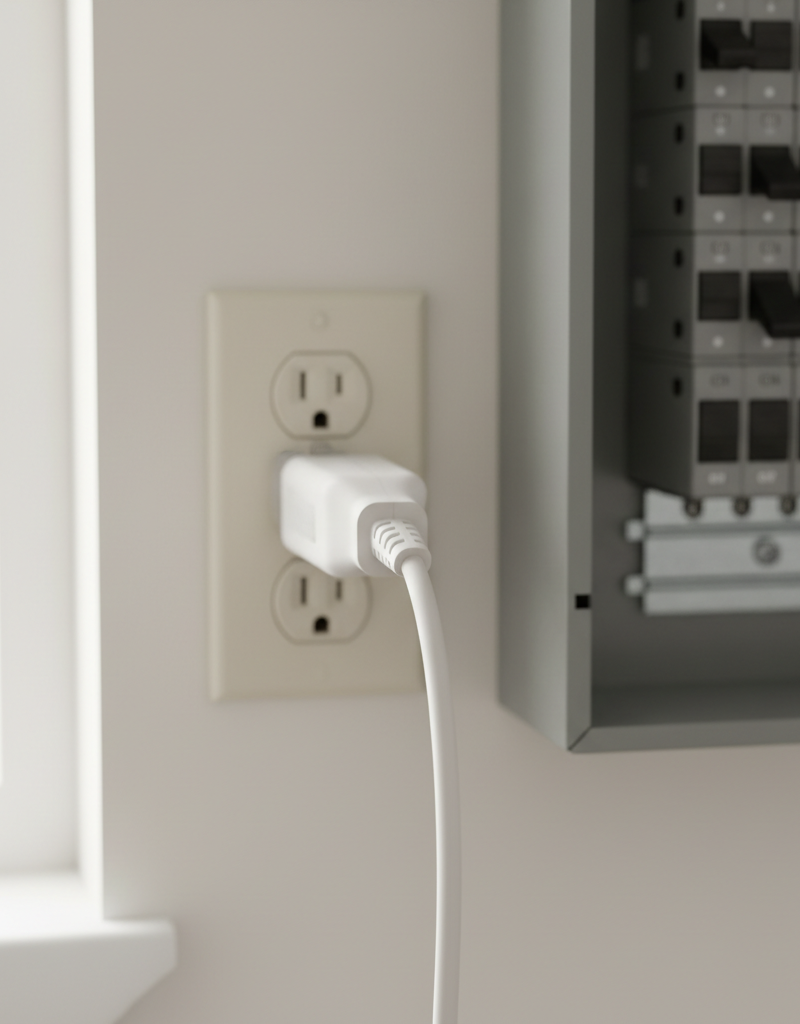
- Inspect Cords and Plugs Regularly: Periodically check appliance cords for fraying, cuts, or heat damage. Ensure plugs fit snugly into outlets. Replace damaged cords or repair faulty plugs immediately.
- Install GFCI Protection: Ensure all outlets in bathrooms, kitchens, laundry rooms, garages, unfinished basements, and outdoors are GFCI protected. These devices are critical for preventing severe electric shocks from ground faults.
- Keep Your Electrical Panel Accessible: Don't use your electrical panel as storage. Keep the area around it clear and easily accessible for quick and safe troubleshooting. Ensure the panel door closes securely.
- Consider an Electrical Audit: If you have an older home or frequently experience electrical issues, a professional electrical audit can identify outdated wiring, overloaded circuits, or potential hazards before they become major problems. This can be especially useful if you are adding new heavy-load appliances.
When to Call a Professional
While identifying and resolving simple circuit overloads is often within a homeowner's capability, several situations warrant calling a licensed electrician immediately. If your breaker trips instantly every time you try to reset it, even with all appliances unplugged, it strongly suggests a severe short circuit or ground fault within your home's fixed wiring, which is dangerous and difficult for a DIYer to diagnose safely. Any signs of burning smells, smoke, sparks, or buzzing sounds coming from your electrical panel or outlets are critical warnings that require immediate professional attention to prevent fire. If you’ve systematically tried troubleshooting all connected devices and inspected visible wiring without success, the problem likely lies deeper within the electrical system, requiring tools and expertise beyond typical homeowner skills. Furthermore, if you are uncomfortable working with electricity, even for minor tasks, or if your home is older and has outdated wiring (like knob-and-tube or aluminum wiring), it's always safer to consult a professional.
Related Articles
Keep troubleshooting with these hand-picked guides from FixlyGuide:
- The Hidden Reason Your Circuit Breaker Keeps Tripping (It's Not Always an Overload) — Discover the often-overlooked causes behind a frequently tripping circuit breaker and learn how to diagnose and fix them safely.
- The Hidden Reason Your Circuit Breaker Keeps Tripping (It's Not Always an Overload) — Discover the often-overlooked electrical issues that cause circuit breakers to trip repeatedly, and how to accurately diagnose and fix them.
- The Hidden Reason Your GFCI Won't Reset (And It's Not Always a Faulty Outlet) — A GFCI outlet that won't reset usually indicates an underlying electrical issue, most commonly a ground fault or overloaded circuit, not al…
- The Hidden Reason Your GFCI Won't Reset (And It's Not Always a Short) — When your GFCI outlet refuses to reset, it's often more than a simple tripped circuit, pointing to underlying electrical issues you can saf…
- The Hidden Reason Your Extension Cord Keeps Tripping the Breaker (and What to Do) — Discover why your extension cord might be tripping a circuit breaker and learn how to diagnose and fix common electrical issues safely.
- The Hidden Reason Your GFCI Trips (It's Not Always a Faulty Outlet) — A continuously tripping GFCI outlet is a critical safety warning, often indicating moisture, a faulty appliance, or a wiring problem that r…
What should this project cost?
Enter your project details for a realistic cost range before you call anyone.
Outlet and switch work usually $150–$400; panel upgrades commonly $1,800–$4,200.
- Regional adjustment
- National average
- Labor share (typical)
- ~$709
- Quotes to collect
- 3 written estimates
Educational estimate based on national averages — not a binding quote. Always confirm with written local estimates.
Fixly Project Decision Box
- DIY difficulty
- Professional Recommended
- Estimated time
- Diagnosis 1–2 hours
- Cost level
- Moderate
Main tools / materials
- Non-contact voltage tester
- Outlet tester
- Flashlight
When to stop and call a pro
- Burning smell, scorch marks, or a warm outlet or switch plate
- A breaker that trips again right after being reset
- Any work inside the service panel
- Aluminum wiring or cloth-insulated wiring
Need professional help?
Talk to a Licensed ElectricianFrequently asked questions
What does it mean if a circuit breaker keeps tripping?+
A continually tripping circuit breaker is a safety signal that power is being cut off due to an electrical issue like an overload (too much power drawn), a short circuit (hot wire touching neutral/ground), or a ground fault (electricity escaping proper path). It indicates a problem you need to investigate to prevent damage or fire.
How do I find out what is tripping my breaker?+
To find the cause, first, identify the affected circuit and unplug all devices connected to it. Reset the breaker. If it holds, plug items back in one by one until the breaker trips again. The last item plugged in or the outlet itself is likely the culprit. Also, visually inspect outlets for damage.
Should I be worried if my breaker keeps tripping?+
Yes, you should be worried. A constantly tripping breaker is a serious warning sign. While some trips are simple overloads, persistent tripping can indicate dangerous electrical faults that could lead to wiring damage, appliance failure, or even an electrical fire if ignored.
Can a bad circuit breaker cause it to trip?+
Yes, a faulty circuit breaker can cause nuisance tripping even when there's no actual electrical fault. Breakers can wear out over time, especially after repeatedly tripping. If you've ruled out overloads and faults, a weak or defective breaker might be the problem and should be replaced by a professional.
Discussion
Loading comments…