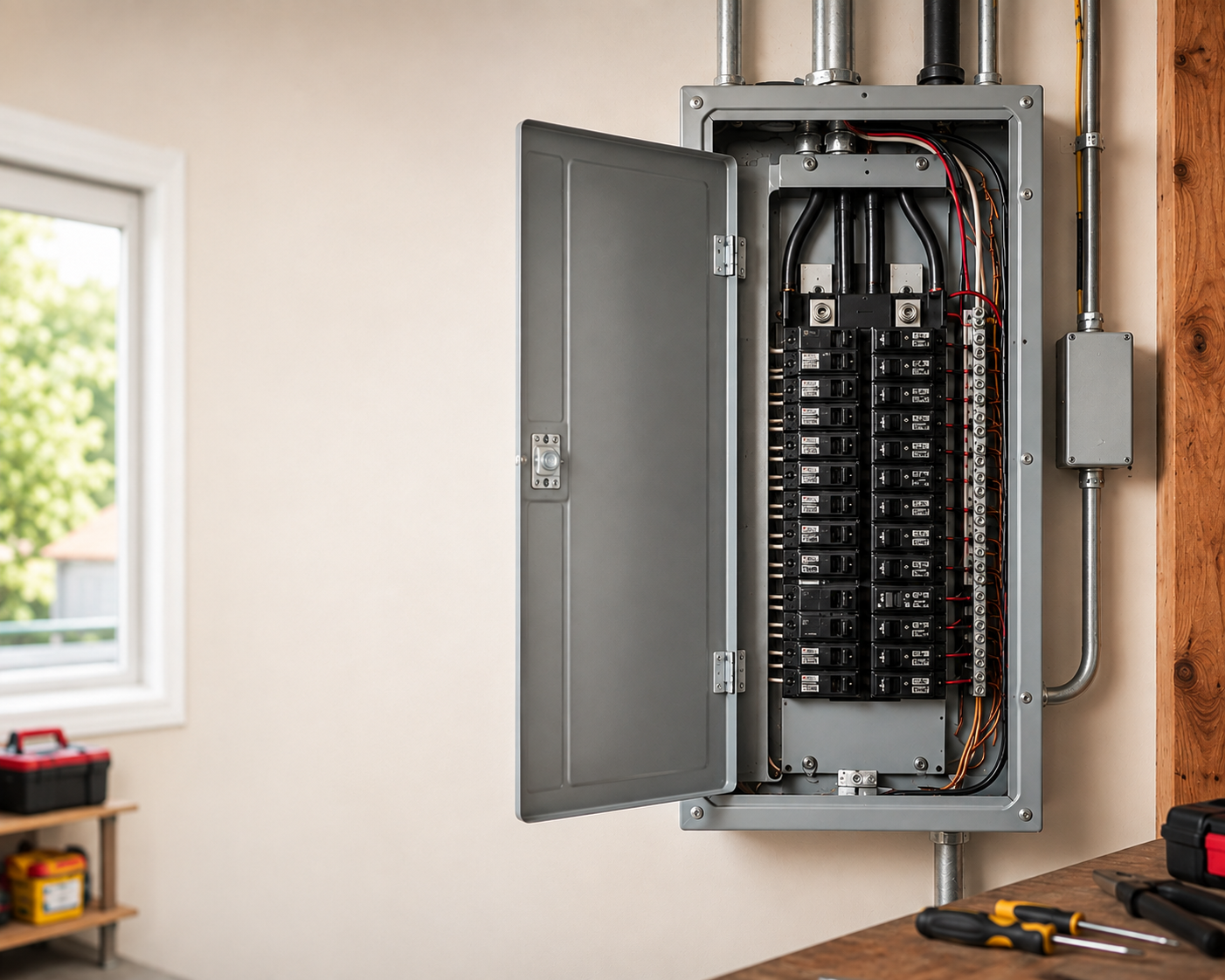
- Flickering or dimming lights
- A burning smell near the panel
- Rust or corrosion on the enclosure
- The panel feels warm or hot to the touch
- Buzzing or crackling sounds
Electrical · Panel or service upgrade
| Project category | Electrical |
|---|---|
| Problem type | Panel or service upgrade |
| Trade required | Electrical |
| Urgency | Planned project |
| Safety risk | High safety risk |
| DIY suitability | Licensed pro only |
| Cost category | High cost |
| Typical timeline | Permit plus utility scheduling, commonly 2–6 weeks |
| Contractor type | Licensed electrician |
Repair option
Add a subpanel when the main service is adequate.
Replacement option
Full service upgrade with utility coordination and permits.
Common causes
- Obsolete or recalled panel brands
- Service capacity too small for added loads
- No room for required AFCI/GFCI breakers
Relevant tools:project cost estimatorcompare quotes
Published August 7, 2026Last updated August 17, 2026
Tools & materials you'll need
Affiliate linksNo special tools required.
As an Amazon Associate FixlyGuide earns from qualifying purchases — at no extra cost to you. Prices and availability are accurate as of publication and subject to change.
Quick Answer
Most homeowners spend $2,500 to $4,500 to replace a 200-amp electrical panel in 2026. A smaller 100-amp panel runs $1,200 to $2,200, while a 320/400-amp service upgrade can exceed $8,500. Labor, permits, utility fees, and any required rewiring drive the final number.
What an Electrical Panel Replacement Costs in 2026
Your home's electrical panel is the heart of its electrical system. Every outlet, appliance, light fixture, and electronic device depends on it to safely distribute power throughout your home.
If your breaker box is outdated, overloaded, or constantly tripping breakers, replacing the panel does more than improve safety — it prepares your home for today's much heavier electrical demands. Whether you're adding an EV charger, installing a hot tub, remodeling a kitchen, or simply replacing an aging box, understanding the cost helps you budget before you call an electrician.
| Service size | Typical installed cost (2026) |
|---|---|
| 100-amp panel | $1,200 – $2,200 |
| 150-amp panel | $1,800 – $3,000 |
| 200-amp panel | $2,500 – $4,500 |
| 320/400-amp service | $4,500 – $8,500+ |
Several factors influence pricing: labor, permits, utility company fees, wiring upgrades, and the condition of your existing electrical system.
Signs You May Need a New Electrical Panel
- Breakers trip frequently
- Flickering or dimming lights
- A burning smell near the panel
- Rust or corrosion on the enclosure
- The panel feels warm or hot to the touch
- Buzzing or crackling sounds
- No open breaker spaces left
- A fuse box instead of breakers
- A home built before the 1980s
- You're installing high-powered appliances
A modern panel increases safety and gives your home room to grow.
What Affects the Cost of a Panel Replacement
No two panel replacements are exactly alike. While the average homeowner spends $2,500 to $4,500 on a standard 200-amp replacement, several variables move that number.
1. Size of the electrical panel
The larger the service, the more expensive the project. Most newer homes benefit from 200-amp service, especially with electric heat, multiple HVAC systems, or an electric vehicle in the garage.
2. Labor costs
Electricians generally charge $75 to $150 per hour, depending on your region and the complexity of the install.
- 6–10 hours for a straightforward replacement
- 1–2 days if the service entrance also needs upgrading
- Longer if extensive rewiring is required
Labor often accounts for nearly half of the total project cost.
3. Permit and inspection fees
Most municipalities require a permit before a panel is replaced. Typical permit costs range from $75 to $500. After the work is done, a city inspector verifies the installation meets current code before power is permanently restored. Skipping permits creates problems when you sell the home or file an insurance claim.
4. Utility company costs
If your service is being upgraded from 100 amps to 200 amps, your utility provider may need to:
- Disconnect power
- Upgrade the service line
- Replace the electrical meter
- Install a new meter base
- Reconnect power after inspection
Some utilities include this at no charge; others bill several hundred dollars.
5. Additional wiring and safety upgrades
Sometimes the panel is only part of the job. Older homes may also need:
- A new grounding system
- Updated service entrance cables
- A new meter base
- AFCI breakers
- GFCI protection
- Replacement of damaged wiring
These upgrades add anywhere from a few hundred to several thousand dollars depending on the condition of the home.
100-Amp vs. 200-Amp Panel
A 100-amp panel may be adequate for:
- Smaller homes
- Homes with gas appliances
- Minimal electrical usage
A 200-amp panel is recommended for homes with:
- Electric water heaters
- Electric ranges
- EV chargers
- Home offices
- Multiple HVAC systems
- Hot tubs
- Workshops
- Finished garages
If you're planning future renovations, upgrading now is cheaper than doing it twice.
Is It Better to Repair or Replace?
Sometimes swapping a single breaker solves the problem. Full replacement is usually the smarter investment if:
- The panel is 30–40 years old or more
- Your home still uses a fuse box
- The panel contains recalled components
- Breakers trip frequently
- There is visible rust or water damage
- The panel is undersized for your electrical needs
A new panel improves safety, reliability, and future expansion possibilities.
Choosing the Right Electrician
Hiring the right electrician matters as much as choosing the right panel. When comparing contractors, make sure they:
- Are licensed and insured
- Have experience replacing residential panels
- Pull all required permits
- Offer written estimates
- Provide workmanship warranties
- Have positive online reviews
- Clearly explain the scope of work
- Carry liability and workers' compensation insurance
Avoid hiring on price alone. A poorly installed panel leads to code violations, expensive rework, or fire hazards.
Questions to ask before hiring
- Is the permit included in the estimate?
- Will you coordinate with the utility company?
- How long will the power be off?
- Does this price include inspections?
- What brand of panel do you install?
- Is there a workmanship warranty?
- Are there any additional costs I should expect?
A reputable electrician will answer all of these without hesitation.
How Long Does a Panel Replacement Take?
For most homes, the replacement takes one to two days.
Day 1
- Utility company disconnects power
- Old panel is removed
- New panel is installed
- Existing circuits are transferred
- Grounding is upgraded if needed
Day 2 (if required)
- Final wiring is completed
- City inspection is performed
- Utility company reconnects power
Simple swaps often finish in a single day; larger service upgrades take longer.
Ways to Save Money
Electrical work isn't a DIY project, but you can still control cost:
- Get at least three written estimates
- Schedule during slower seasons when contractors discount
- Bundle the panel replacement with other electrical upgrades
- Ask about utility rebates or local incentive programs
- Consider financing if available
- Upgrade once instead of making several smaller improvements over time
Quality materials and professional installation usually save money long term by reducing repair calls.
Return on Investment
A new panel won't dramatically raise resale value by itself, but it:
- Improves electrical safety
- Reduces the risk of overloaded circuits
- Supports modern appliances and technology
- Makes future remodeling easier
- Increases buyer confidence
- Helps the home meet current electrical codes
- Eases insurance concerns about outdated systems
If you're selling, a modern panel is a real selling point against comparable older homes.
Common Mistakes to Avoid
- Choosing the cheapest estimate without checking credentials
- Ignoring permit requirements
- Replacing only breakers when the whole panel is outdated
- Installing a panel that's too small for future needs
- Forgetting to budget for utility or inspection fees
- Hiring an unlicensed contractor
Expert Tips
- Choose a panel with room for future expansion
- Always obtain the proper permits
- Ask about manufacturer and workmanship warranties
- Keep permit and inspection documentation for resale
- Add whole-home surge protection while the panel is open
- Have the grounding system inspected at the same time
- Mention planned solar or EV charging during the estimate so the panel is sized correctly
Related Guides
Questions to ask before you sign
Ask every contractor the same questions and the cheapest bid stops looking cheapest. Check them off as you go — your progress is saved on this device.
Free, no signup. Bring this to every walkthrough so you compare bids on the same terms.
What should this project cost?
Enter your project details for a realistic cost range before you call anyone.
Outlet and switch work usually $150–$400; panel upgrades commonly $1,800–$4,200.
- Regional adjustment
- National average
- Labor share (typical)
- ~$709
- Quotes to collect
- 3 written estimates
Educational estimate based on national averages — not a binding quote. Always confirm with written local estimates.
Fixly Project Decision Box
- DIY difficulty
- Professional Recommended
- Estimated time
- Diagnosis 1–2 hours
- Cost level
- Moderate
Main tools / materials
- Non-contact voltage tester
- Outlet tester
- Flashlight
When to stop and call a pro
- Burning smell, scorch marks, or a warm outlet or switch plate
- A breaker that trips again right after being reset
- Any work inside the service panel
- Aluminum wiring or cloth-insulated wiring
Need professional help?
Talk to a Licensed ElectricianCheck these numbers against your project
National averages are a starting point. These tools narrow it to your scope and ZIP.
- Estimate this projectGet a cost range for your scope and ZIP before you call anyone.Open
- Get local estimatesSend one request and compare written estimates from vetted pros.Open
Free, no signup required. Estimates are educational guidance, not a quote or an inspection.
Frequently asked questions
How much does it cost to replace an electrical panel in 2026?+
Most homeowners pay between $2,500 and $4,500 for a standard 200-amp electrical panel replacement. Smaller 100-amp panels can cost as little as $1,200, while larger 400-amp service upgrades can exceed $8,500 depending on your home’s electrical needs and local labor rates.
Is upgrading from 100 amps to 200 amps worth it?+
For many homeowners, yes. A 200-amp service provides capacity for EV chargers, modern HVAC systems, electric water heaters, home offices, large kitchen appliances, hot tubs, workshops, and future additions. If your panel trips breakers often or you are planning major renovations, upgrading is usually a smart long-term investment.
Can I replace an electrical panel myself?+
No. Panel replacement involves high-voltage service lines that stay energized even when the main breaker is off. In most areas the work requires a licensed electrician, permits, inspections, and coordination with the utility company. Hire a qualified professional.
How long will my power be off during a panel replacement?+
Most homeowners experience a 4 to 8 hour outage during a standard panel replacement. More complex service upgrades may require a full day without power depending on scope and the utility company’s schedule.
What is the lifespan of an electrical panel?+
A well-installed electrical panel typically lasts 25 to 40 years. Moisture, corrosion, outdated technology, chronically overloaded circuits, or recalled panel brands can shorten that considerably. Periodic inspections catch problems early.
Does homeowners insurance cover electrical panel replacement?+
Usually not. Replacing an old or worn-out panel is considered normal maintenance. If the panel is damaged by a covered event such as a fire, lightning strike, or severe storm, your policy may help pay for repair or replacement. Check with your insurer.
Do I need a permit to replace an electrical panel?+
Almost always. Most municipalities require an electrical permit and a final inspection, with fees typically running $75 to $500. Unpermitted panel work can create problems during a home sale or an insurance claim.
How long does an electrical panel replacement take?+
A straightforward replacement takes about 6 to 10 hours, or one working day. If the service entrance, meter base, or grounding also needs upgrading, plan on one to two days including the inspection and utility reconnect.
Discussion
Loading comments…