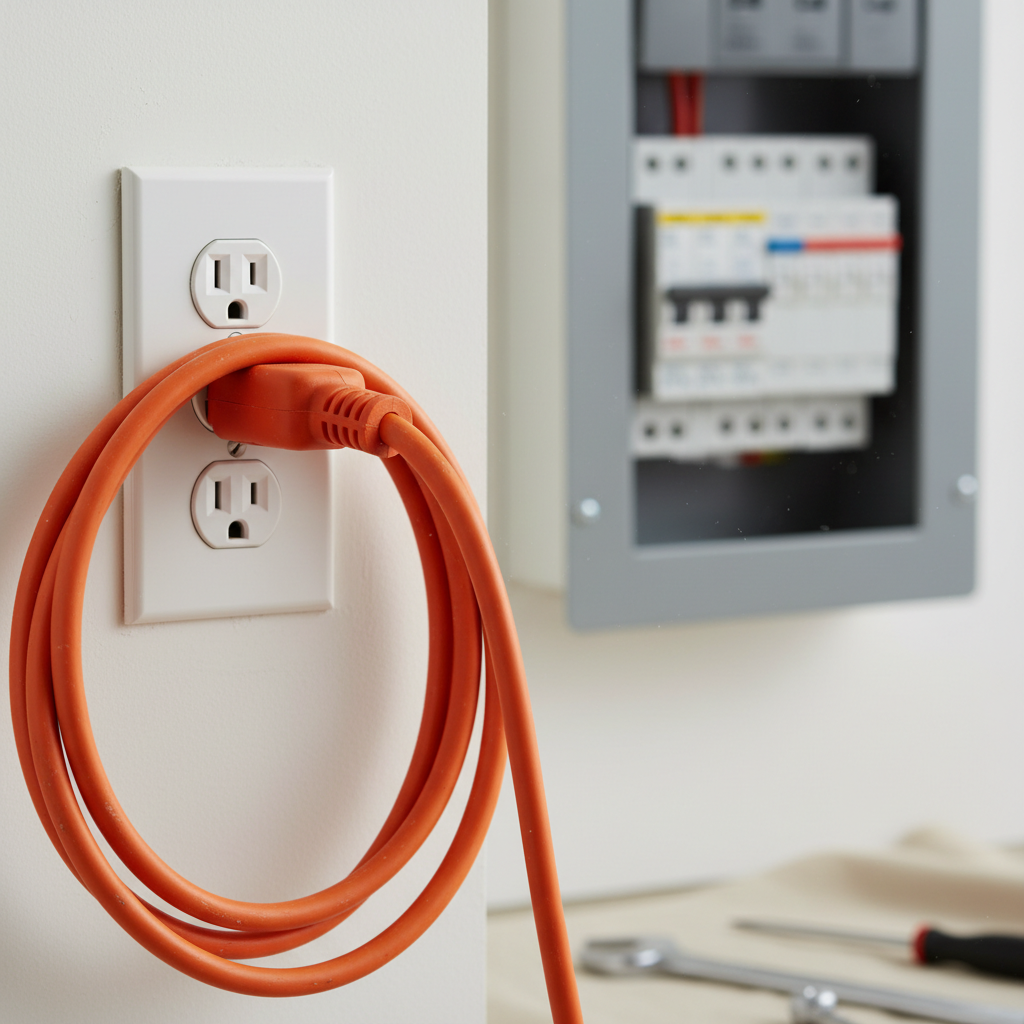
- Visual Inspection of the Cord & Outlet
- Tool: Flashlight (if you need it for dark spots).
- If this doesn't work: If the cord looks fine, don’t assume it actually is. Internal damage can hide in plain sight.
Electrical · Panel or service upgrade
| Project category | Electrical |
|---|---|
| Problem type | Panel or service upgrade |
| Trade required | Electrical |
| Urgency | Planned project |
| Safety risk | High safety risk |
| DIY suitability | Licensed pro only |
| Cost category | High cost |
| Typical timeline | Permit plus utility scheduling, commonly 2–6 weeks |
| Contractor type | Licensed electrician |
Repair option
Add a subpanel when the main service is adequate.
Replacement option
Full service upgrade with utility coordination and permits.
Common causes
- Obsolete or recalled panel brands
- Service capacity too small for added loads
- No room for required AFCI/GFCI breakers
Relevant tools:project cost estimatorcompare quotes
Published August 23, 2026Last updated August 23, 2026
Tools & materials you'll need
Affiliate links- AmazonNew heavy-duty extension cord1 · Appropriate gauge (e.g., 12 or 10 gauge) if old one is damaged or too thin.
As an Amazon Associate FixlyGuide earns from qualifying purchases — at no extra cost to you. Prices and availability are accurate as of publication and subject to change.
Quick Answer
Look, if an extension cord keeps tripping your breaker, that’s not just a nuisance—it’s the circuit waving a red flag at you. That breaker’s popping for a reason. Usually it’s too much load, a bad cord, or a faulty appliance. Ignore it, and you’re asking for trouble. You need to find out what’s drawing too much power, or what’s broken, before you plug anything back in.
The Problem
Alright, let’s talk about extension cords and those annoying breaker trips. You’ve got something plugged in—maybe it’s a shop vac, a space heater, or a pile of power tools—and snap, there goes the breaker. You reset it, try again, and snap—out it goes again. Or maybe it hangs in there for a minute, then trips. I see this all the time. Homeowners get frustrated and figure the breaker’s “bad.” Nine times out of ten, that breaker’s doing exactly what it’s supposed to do.
It’s telling you something’s wrong, usually one of three things:
- Overload: You’re asking for more power than the circuit—or the cord—can safely deliver. Think of it like trying to stuff ten pounds of potatoes into a five-pound bag. No dice.
- Short Circuit: There’s a direct path for electricity to go where it shouldn’t, bypassing the normal resistance of the appliance. That’s a hot connection between the hot and neutral wires, and it sends current screaming through the circuit. Dangerous stuff.
- Damaged Cord/Appliance: The insulation on your extension cord might be cracked, pinched, or cut, or the appliance itself may have an internal fault. Either way, electricity’s going somewhere it shouldn’t, and now you’ve got a short or a ground fault on your hands.
I’ve rolled up to plenty of jobs in places like Brookhaven and seen extension cords that looked like they’d been dragged behind a truck. Folks keep patching ’em up or using them anyway. Don’t be that guy. This isn’t just inconvenience—it’s a fire hazard. That breaker’s there to keep the place from turning into a bad day.
How It Works
To really get a handle on this, you’ve gotta know what’s happening behind the walls—and out on that cord. Electricity moves in a circuit, right? From your service panel, through a breaker, out to an outlet, through your cord and appliance, then back to the panel.
That breaker in your electrical panel? It’s a safety device. Inside, there’s usually a bimetallic strip or an electromagnet, sometimes both. When too much current flows through it, the strip heats up and bends, which trips a latch and opens the circuit. That’s the overload side. If there’s a sudden big surge, like from a short circuit, the electromagnet snaps it open even faster. Most standard 15-amp and 20-amp breakers have both thermal and magnetic protection.
Now, your extension cord has a “gauge.” That’s the thickness of the copper wire inside. Lower gauge number means thicker wire, and thicker wire can carry more current. A 16-gauge cord can handle less than a 12-gauge cord. When you plug in something hungry, like a 15-amp circular saw or a 1500-watt space heater, that appliance pulls a certain amount of current. If the total load on that circuit—and that cord—goes past the breaker's rating, say more than 15 amps on a 15-amp breaker, things start heating up. When they get hot enough, that bimetallic strip does its job and pops, saving you from cooked wires and a house fire.
Extension cords have amperage ratings too. You’ll usually see it printed right on the jacket or the plug. A light-duty 16-gauge cord might only be rated for 10 amps, while a heavy-duty 12-gauge cord could handle 15 or 20 amps. Push a cord past its rating, and it’s not just the house breaker sweating—the cord itself can overheat, melt, and start burning. It’s all tied together. The breaker’s supposed to fail first, nice and safe.
Step-by-Step Fix
Okay, let’s roll up our sleeves. This isn’t rocket science, but you do need to be methodical. We’re going to pin down the problem.
-
Stop, Look, and Listen — Assess the Situation — Don’t keep resetting that breaker like it’s gonna magically forgive you. When it trips, it’s trying to tell you something. Take a breath. What were you running right before it quit? What was plugged in?
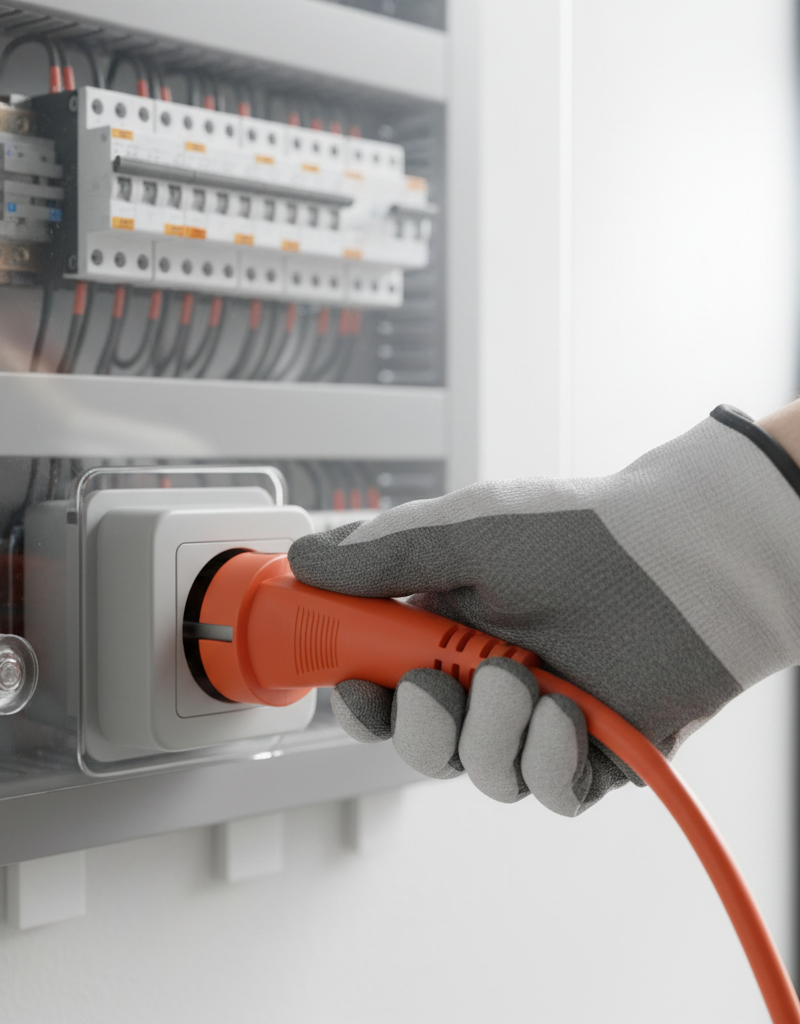
- Safety First: Unplug the extension cord from the wall outlet before you reset the breaker. That keeps you from getting a surprise when the power comes back.
-
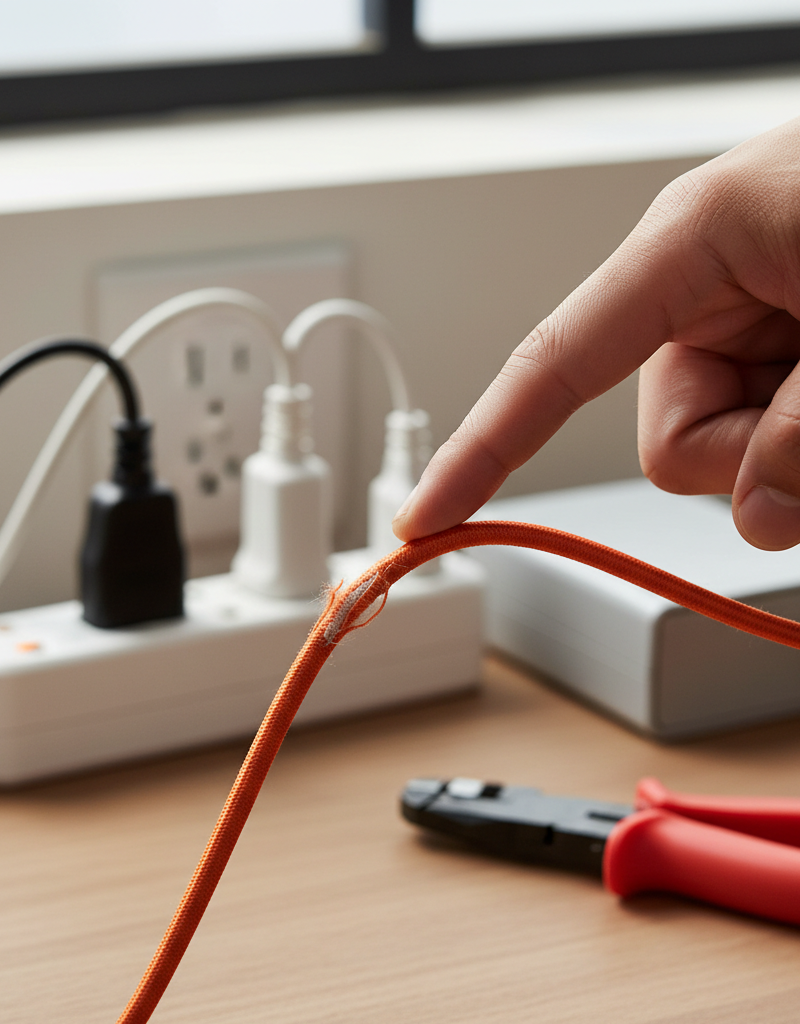
Visual Inspection of the Cord & Outlet — Unplug everything from the extension cord. Now really look at it, end to end. Check the wall plug, the body of the cord, and the receptacle end. Any cuts, frays, melted spots, or crushed sections? Is the insulation cracked near the plugs? Does it feel warm or hot anywhere?
- Tool: Flashlight (if you need it for dark spots).
- If this doesn't work: If the cord looks fine, don’t assume it actually is. Internal damage can hide in plain sight.
-
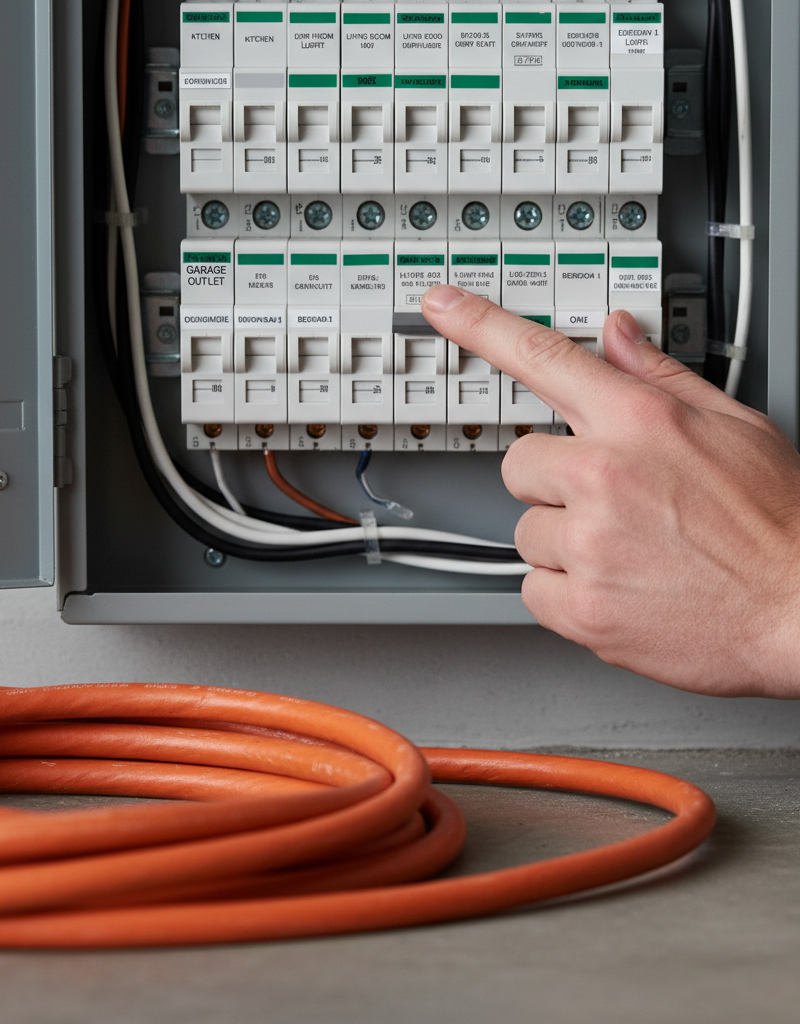
Check the Outlet & Breaker — With the cord unplugged, inspect the wall outlet. Any burn marks around the slots? Do the receptacles feel loose? Then head to the panel. Is the breaker warm to the touch? Does it reset cleanly? If it feels really hot, or if it won’t stay reset even with nothing plugged in, that’s a big warning sign.
- Pro Callout: If the outlet looks burned, or the breaker won’t reset empty, stop right there and call a licensed electrician. That’s bigger than an extension cord problem.
-
Isolate the Appliance — Plug the appliance that was tripping the breaker directly into the wall outlet, with the extension cord out of the picture. Make sure nothing else heavy is running on that same circuit. Turn it on. Does the breaker trip now? That tells you whether the appliance itself is the troublemaker.
- Safety: Stand clear the first time you power it up directly. If it sparks or trips right away, it’s probably faulty.
-
Test the Extension Cord (Carefully) — If the appliance works fine straight into the wall, the cord’s probably the issue. Try a different, low-draw item—like a lamp with a standard bulb, not an LED—on that extension cord, then plug the cord into the wall. Does the breaker trip? If it does, that cord’s almost certainly bad.
- Material: A known good lamp or small radio for testing.
- If this doesn't work: If even a low-draw item trips it, that cord is toast. If it doesn't trip, then the original appliance and the cord together may have been too much load.
-
Calculate Load vs. Capacity — Here’s where a little math comes in. Find the amperage (A) or wattage (W) rating on the appliance. It’s usually on a sticker or nameplate. For watts, divide by 120, since that’s standard household voltage, to get amps. A 1500W space heater, for example, is 1500W / 120V = 12.5 amps. Check the amperage rating on your extension cord—10A, 13A, 15A, whatever it says—and check the breaker too, usually 15A or 20A. Are you over either limit? The cord’s rating should always meet or exceed the appliance draw, and the total load on that circuit needs to stay under the breaker rating. Don’t forget whatever else is on that same wall circuit.
-
Choose the Right Cord — If you need an extension cord, get one that’s actually built for the job. For high-power tools or appliances like space heaters, power saws, and air compressors, you want a heavy-duty, low-gauge cord—12-gauge or 10-gauge—and keep the length as short as you can. Longer cords add voltage drop and resistance, which can heat things up and trip the breaker. For outdoor use, make sure it’s rated “W” for weather resistance.
-
Replace or Repair? — If the cord’s damaged, replace it. Don’t patch it with electrical tape and call it a day. That’s just not worth the gamble. A new, properly rated extension cord costs a lot less than a house fire. I’ve seen too many DIY “fixes” turn into real headaches later on.
Common Causes
- Overloading the Circuit: This is the big one. Plugging too many high-wattage devices—space heaters, hair dryers, vacuums, microwaves, power tools—into one circuit, especially through an extension cord, pushes you right past the breaker's limit. Standard circuits are usually 15 amps.
- Overloading the Extension Cord: You might not trip the house breaker, but the cord itself can still overheat if the appliance pulls more current than the wire gauge can handle. That’s a bad setup.
- Damaged Extension Cord: Kinks, cuts, crushing, or just plain wear can break down the insulation and expose the wires, which can cause a short or ground fault. Using an outdoor cord indoors is fine, but using an indoor cord outdoors? That’s asking for trouble.
- Faulty Appliance: The tool or appliance on the cord may have an internal short or ground fault. That’s why testing it straight into a wall outlet is such a useful step.
- Too Long/Too Thin Cord: Using a really long or too-thin cord for a power-hungry appliance creates voltage drop and extra resistance. That makes the cord and appliance work harder, draw more current, and run hotter.
Common Mistakes
- Ignoring the Warning: Resetting the breaker over and over without digging into the cause is like ignoring the check engine light. It’s a fire hazard.
- Using Indoor Cords Outdoors: Indoor cords aren’t built for moisture, UV, or temperature swings. They break down fast and get unsafe quick. Use a cord rated “W” for outdoor work.
- "Daisy Chaining" Cords: Plugging one extension cord into another to get more reach is a big no-no. It adds resistance, increases voltage drop, and raises the fire risk.
- Running Cords Under Rugs or Through Doorways: That can pinch or fray the insulation and create hidden damage. And yeah, it’s a trip hazard too.
- Trying to Repair Damaged Cords: Electrical tape feels like a quick fix, but it doesn’t restore the insulation or the cord’s original current capacity. Replace damaged cords—don’t bandage ’em up.
- Using the Wrong Gauge: Grabbing a flimsy, high-gauge cord like 16 or 18 gauge for anything with a heating element or a motor is a recipe for an overloaded cord and a tripped breaker.
Cost & Time Breakdown
| Task | DIY Cost | Pro Cost | Time (DIY) |
|---|---|---|---|
| Diagnosing the issue | $0 | N/A | 10–20 minutes |
| Replacing a faulty cord | $15–$50 | N/A | 5 minutes |
| Replacing a faulty outlet | $5–$20 | $150–$300 | 30–60 minutes |
| Replacing a faulty breaker | $10–$30 | $150–$300 | 30–60 minutes |
| Diagnosing appliance issue | $0 (test only) | N/A | 5–10 minutes |
| Total (DIY if simple) | $15–$50 | N/A | 15–60 minutes |
| Total (Pro needed) | N/A | $150–$500+ | 1–3 hours (pro) |
Tips & Prevention
- Match the Load: Always use an extension cord with an amperage rating equal to or higher than the appliance it’s powering. For tools over 10 amps, use a 12-gauge or 10-gauge cord. A 100-foot 14-gauge cord can only safely carry about 13 amps, while a 25-foot 12-gauge cord can handle 20 amps without much voltage drop.
- Short and Sweet: Use the shortest extension cord that’ll do the job. Longer cords mean more resistance and more voltage drop, which can lead to overheating.
- Outdoor Rated: If you’re working outside, use only extension cords marked for outdoor use. They’ll often have a “W” on the jacket, like SJTW.
- Avoid Overloading Outlets/Circuits: Keep track of what else is on the same circuit. High-draw appliances ought to be on dedicated circuits, or at least spread out so you’re not tripping breakers all day.
- Inspect Regularly: Before every use—especially with power tools or seasonal gear—give the cord a quick look for cuts, frayed insulation, crushed spots, or discolored plugs.
- Proper Storage: Store cords loosely coiled in a dry spot, away from extreme temps. Don’t wrap them tight or hang them on sharp hooks, because that’ll mess up the wiring over time.
When to Call a Professional
Look, I’m all for DIY, but there are lines you don’t cross. If you’ve gone through these steps and the breaker still trips, or if you run into any of these, you need to call a licensed electrician:
If the wall outlet shows signs of burning, sparking, or melting, or if it feels loose when you plug something in. If the circuit breaker trips right away when you reset it, even with nothing plugged into that circuit, the breaker itself or the wiring behind it could be bad. Any steady burning smell coming from outlets or your electrical panel is a code red—unplug everything and get a pro out there. If you’ve got an older home with knob-and-tube wiring, or you’re not sure about your panel, it’s smart to get a professional look before you start running high-draw appliances through extension cords.
Related Articles
Keep troubleshooting with these hand-picked guides from FixlyGuide:
- The Hidden Reason Your Extension Cord Keeps Tripping the Breaker (and What to Do) — Discover why your extension cord might be tripping a circuit breaker and learn how to diagnose and fix common electrical issues safely.
- Why Your Extension Cord Keeps Tripping the Breaker (And the Simple Test to Find the Hidden Cause) — Discover why your extension cord keeps tripping the circuit breaker and learn how to safely diagnose and fix the real problem with a simple…
- The Hidden Reason Your Extension Cord Keeps Tripping the Breaker (and It's Not Overload) — Discover why your extension cord might be tripping a circuit breaker even when it seems like nothing is overloaded, and how to fix it.
- The Hidden Reason Your Circuit Breaker Keeps Tripping (It's Not Always an Overload) — A tripping circuit breaker is a warning sign; diagnosing the cause protects your home and family from electrical hazards and costly repairs.
- The 3 Hidden Reasons Your Circuit Breaker Keeps Tripping (And How to Stop It) — Uncover the surprising culprits behind repeatedly tripping circuit breakers and learn practical, actionable steps to diagnose and resolve t…
- The Giant Drywall Hole: 3 Hidden Mistakes That Make Fixing It Worse — Don’t just spackle over that huge drywall hole; learn the right way to repair it and avoid common mistakes that lead to an even bigger head…
What should this project cost?
Enter your project details for a realistic cost range before you call anyone.
Outlet and switch work usually $150–$400; panel upgrades commonly $1,800–$4,200.
- Regional adjustment
- National average
- Labor share (typical)
- ~$709
- Quotes to collect
- 3 written estimates
Educational estimate based on national averages — not a binding quote. Always confirm with written local estimates.
Fixly Project Decision Box
- DIY difficulty
- Professional Recommended
- Estimated time
- Diagnosis 1–2 hours
- Cost level
- Moderate
Main tools / materials
- Non-contact voltage tester
- Outlet tester
- Flashlight
When to stop and call a pro
- Burning smell, scorch marks, or a warm outlet or switch plate
- A breaker that trips again right after being reset
- Any work inside the service panel
- Aluminum wiring or cloth-insulated wiring
Need professional help?
Talk to a Licensed ElectricianGet the print-ready PDF of this guide
A clean, ad-free, printable version you can keep on your phone or pin to the workshop wall. Free with a FixlyGuide account.
- Print-optimized layout
- Tools, materials & every step included
- Saved to your account
Frequently asked questions
Why does my extension cord keep tripping the breaker?+
The most common reasons are an overloaded circuit (too many devices drawing power), an overloaded extension cord (cord isn't thick enough for the appliance), or a damaged cord creating a short circuit. The breaker trips as a safety mechanism.
Is it safe to keep resetting a tripped breaker?+
No, it's not. A breaker trips to prevent overheating and potential fires. Repeatedly resetting it without addressing the underlying cause can damage your electrical system, the cord, or the appliance, and greatly increases fire risk.
How do I know if my extension cord is overloaded?+
Check the amperage or wattage of the appliance you're using against the amperage rating of your extension cord. If the appliance draws more power than the cord is rated for, the cord is overloaded. You'll often see the cord or plug getting hot.
Can a faulty appliance cause an extension cord to trip the breaker?+
Absolutely. An appliance with an internal short circuit or electrical fault will draw excessive current, causing the breaker to trip. Test the appliance directly into a wall outlet to confirm if it's the culprit.
What gauge extension cord should I use?+
For most household appliances, a 14-gauge or 16-gauge cord is sufficient. For high-power tools or appliances (over 10 amps), use a heavier-duty 12-gauge or even 10-gauge cord. Lower gauge numbers mean thicker wire and higher current capacity.
Can I repair a damaged extension cord?+
No, you shouldn't. While it might seem like a quick fix, taping or repairing a damaged cord doesn't restore its safety. The integrity of the insulation is compromised, posing a serious shock and fire risk. Always replace damaged cords.
What's the difference between an indoor and outdoor extension cord?+
Outdoor extension cords have thicker, more durable insulation designed to withstand moisture, UV rays, and temperature changes. They are typically marked with a 'W' (e.g., SJTW). Indoor cords are not built for these conditions and will degrade quickly and unsafely outdoors.
My breaker trips even without an extension cord. What's wrong?+
If the breaker trips with nothing plugged into the circuit or only low-draw items, it suggests a problem with the circuit wiring, the wall outlet, or the breaker itself. This requires a professional electrician to diagnose and fix safely.
Why does my extension cord get hot?+
An extension cord gets hot when it's overloaded, meaning the appliance plugged into it is drawing more current than the cord's wires can safely handle. This is a fire hazard. Immediately unplug the cord and replace it with one of the correct gauge.
Discussion
Loading comments…