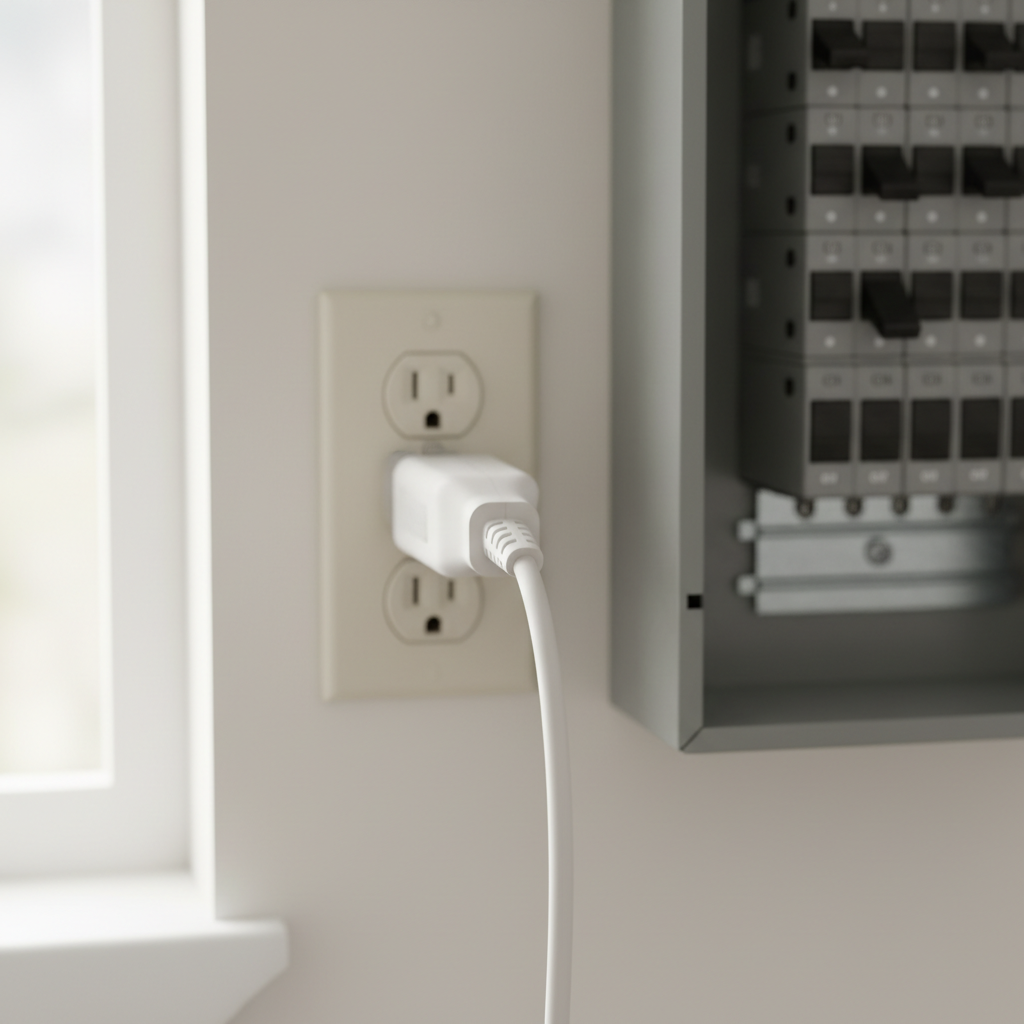
- Why Does My Extension Cord Keep Tripping the Breaker? (It's Not Always Overload) — An extension cord repeatedly tripping a circuit breaker indicates a serious electrical issue that homeowners need to diagnose and resolve s…
- The Hidden Reason Your GFCI Won't Reset – And the One Thing Most Homeowners Forget — Don’t panic when your GFCI outlet won't reset. Most issues are minor and can be resolved with a few simple diagnostic steps before calling…
- The Hidden Reason Your GFCI Won't Reset (And It's Not Always a Short) — When your GFCI outlet refuses to reset, it's often more than a simple tripped circuit, pointing to underlying electrical issues you can saf…
- The Hidden Reason Your Extension Cord Keeps Tripping the Breaker (and What to Do) — Discover why your extension cord might be tripping a circuit breaker and learn how to diagnose and fix common electrical issues safely.
- The 7 Head-Scratching Reasons Your Outlet Died (Even With The Breaker On) — Discover the surprising reasons why an electrical outlet might stop working even when its circuit breaker is fully engaged, and how to safe…
Electrical · Panel or service upgrade
| Project category | Electrical |
|---|---|
| Problem type | Panel or service upgrade |
| Trade required | Electrical |
| Urgency | Planned project |
| Safety risk | High safety risk |
| DIY suitability | Licensed pro only |
| Cost category | High cost |
| Typical timeline | Permit plus utility scheduling, commonly 2–6 weeks |
| Contractor type | Licensed electrician |
Repair option
Add a subpanel when the main service is adequate.
Replacement option
Full service upgrade with utility coordination and permits.
Common causes
- Obsolete or recalled panel brands
- Service capacity too small for added loads
- No room for required AFCI/GFCI breakers
Relevant tools:project cost estimatorcompare quotes
Published July 19, 2026Last updated August 17, 2026
Tools & materials you'll need
Affiliate links- AmazonNew extension cordIf yours is damaged or undersized
As an Amazon Associate FixlyGuide earns from qualifying purchases — at no extra cost to you. Prices and availability are accurate as of publication and subject to change.
Quick Answer
An extension cord causing a circuit breaker to trip is a clear signal that something is wrong with your electrical setup. While an overloaded circuit is the most common suspect, a damaged extension cord, a faulty appliance, or even a more serious ground fault can be the real culprit. Identifying the precise cause involves a systematic diagnostic approach, starting with inspecting the cord and connected devices, and understanding how your electrical system reacts to these issues. Addressing the problem quickly is crucial to prevent electrical hazards and potential damage.
The Problem
Imagine you're powering a hedge trimmer, only to have the lights suddenly go out and the drone of the trimmer cease. You check the electrical panel, and indeed, a circuit breaker has flipped to the 'off' position. This scenario, where an extension cord is connected and the breaker trips, is a common and frustrating problem for homeowners. Not only does it interrupt your work or activity, but it also signals a potential electrical issue that shouldn't be ignored. Repeated tripping can indicate anything from a simple overloaded circuit, where too many appliances draw too much power, to a more critical issue like a short circuit or a ground fault, which can pose serious safety risks.
The real pain here is the uncertainty. Is the extension cord bad? Is the appliance faulty? Is there something wrong with my house wiring? This article will walk you through diagnosing the most common reasons an extension cord trips a breaker, helping you pinpoint the problem and implement a safe, effective solution. We'll demystify the electrical behaviors involved and empower you to address these issues with confidence, knowing when you can safely DIY and when it's time to call in a professional.
How It Works
To understand why an extension cord trips a breaker, it's essential to grasp the basics of how your home's electrical system and circuit breakers function. Household electricity flows in a complete circuit, from the electrical panel through wiring to outlets and appliances, and back to the panel. This flow of electricity is measured in amperes (amps), and the electrical 'pressure' is measured in volts (V). The amount of work electricity can do is measured in watts (W), which is simply volts multiplied by amps (W = V x A).
Circuit breakers are safety devices designed to protect your home's wiring from overcurrent conditions. Each breaker is rated for a specific amperage (e.g., 15 amps or 20 amps). If the current flowing through a circuit exceeds this rating, the breaker 'trips,' interrupting the flow of electricity to prevent the wires from overheating. Overheating wires can melt their insulation, leading to short circuits, fires, and other dangerous situations. There are three primary reasons a breaker might trip:
- Overload: This occurs when the total wattage of all devices plugged into a single circuit exceeds the circuit's capacity. For instance, a 15-amp circuit at 120 volts can safely handle about 1800 watts (15 A * 120 V = 1800 W). If you plug in a space heater (1500W) and a vacuum cleaner (1000W) into the same circuit, the combined wattage (2500W) will cause an overload, tripping the breaker.
- Short Circuit: A short circuit happens when a hot wire (carrying current) accidentally touches a neutral wire (completing the circuit) or a ground wire without going through a load (like an appliance). This creates a direct path for electricity with very low resistance, causing a sudden, massive surge in current. This surge is far beyond the breaker's rating, causing it to trip almost instantaneously to prevent severe damage or fire. Short circuits can occur in faulty appliances, damaged extension cords, or within the home's wiring.
- Ground Fault: Similar to a short circuit, a ground fault occurs when a hot wire comes into contact with a grounded object, such as the metal casing of an appliance or the ground wire within an electrical system. This diverts current directly to the ground, circumventing the normal circuit path. Like a short circuit, it causes a sudden surge in current, triggering the breaker. Ground Fault Circuit Interrupters (GFCIs) are specifically designed to detect even small ground faults and trip much faster than standard breakers, offering enhanced protection against electrocution, especially in areas where water might be present.
Extension cords themselves introduce additional points of potential failure. A damaged cord can expose wires, leading to shorts or ground faults. Using a cord that is too thin (higher gauge number) for the power it needs to carry can also cause it to overheat, especially over longer distances, indirectly contributing to overload or insulation breakdown.
Step-by-Step Fix
1. Safety First — Before touching anything, ensure your safety.
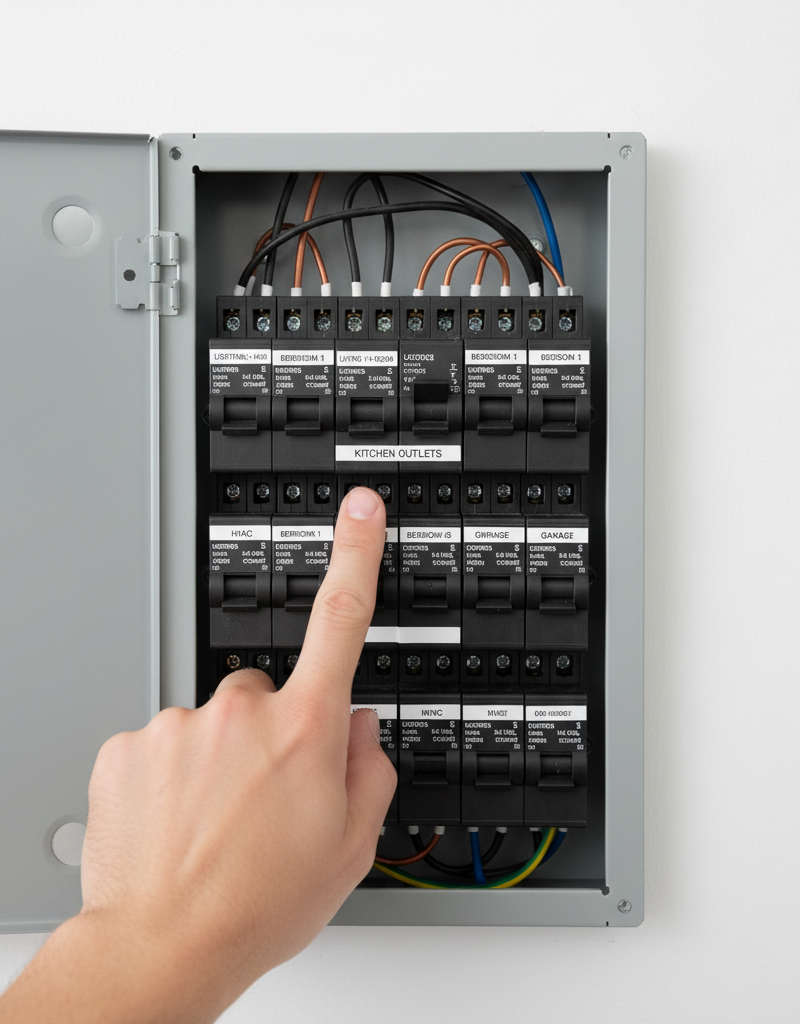
Always disconnect power before inspecting electrical components. Identify the tripped breaker in your electrical panel (it will be in the 'off' position or midway between 'on' and 'off'). Flip it firmly to the 'off' position. This ensures no power can flow back to the circuit you are troubleshooting. If you smell burning, hear crackling, or see sparks, do NOT proceed and call a licensed electrician immediately.
2. Unplug Everything — Clear the circuit completely.
Unplug the extension cord from the wall outlet. Then, unplug all appliances and devices connected to the extension cord. If other items are plugged into the same wall outlet or other outlets on the shared circuit, unplug those as well. The goal is to isolate the circuit and eliminate any potential sources of the trip.
3. Inspect the Extension Cord — Look for visible signs of damage.
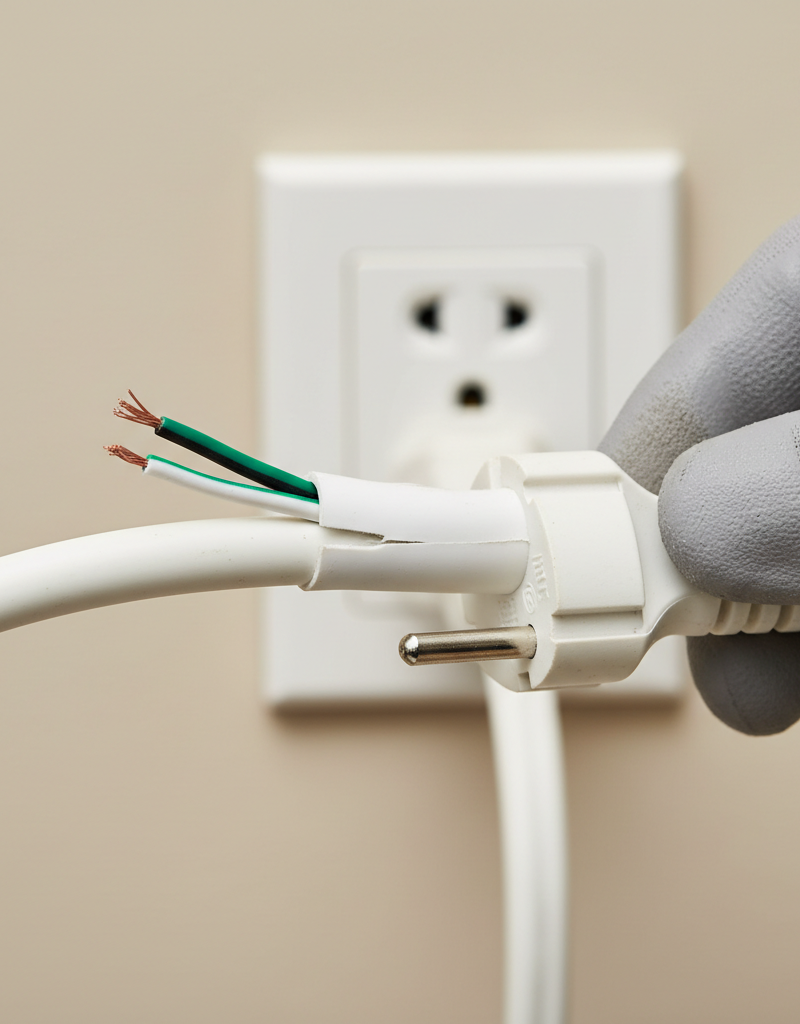
Carefully examine the entire length of the extension cord. Look for cuts, nicks, frayed insulation, crushed areas, or heat damage (melted plastic, discoloration). Pay close attention to the plug ends for bent prongs, discoloration, or loose connections. If you find any damage, no matter how small, the cord is compromised and should be replaced immediately. Do not attempt to repair damaged extension cords.
4. Inspect the Appliance(s) — Check connected devices for faults.
Next, examine each appliance or device that was plugged into the extension cord. Look for physical damage, burning smells, or signs of electrical arcing (blackened areas). If an appliance has a cut cord, a damaged plug, or smells burnt, it is likely the source of the short or ground fault and should be repaired by a qualified technician or replaced. Pay particular attention to devices with heating elements or motors, as these are common failure points.
5. Test the Breaker (without load) — Confirm the breaker holds power.
With everything unplugged from the circuit (including the extension cord), go back to your electrical panel. Flip the tripped breaker firmly all the way to 'off,' then firmly back to 'on.' If the breaker trips immediately without anything plugged in, there is an internal wiring issue on that circuit, and you must call a licensed electrician. Do not try to reset it repeatedly.
6. Reintroduce the Extension Cord (alone) — Isolate the cord as the problem.
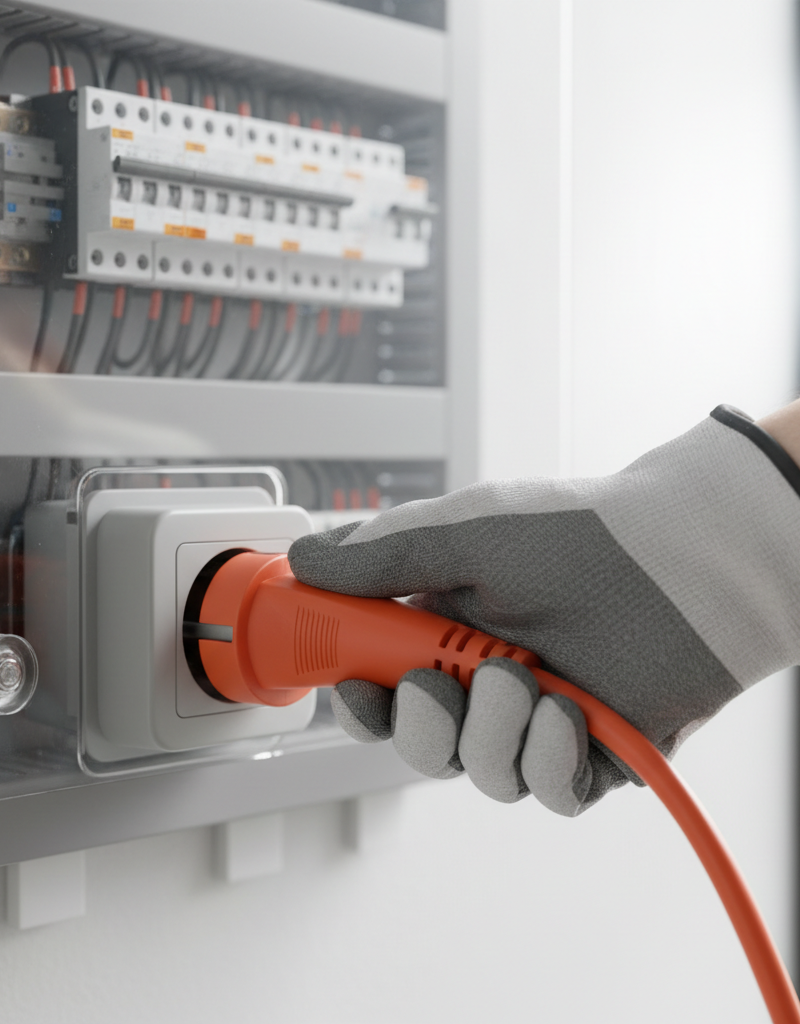
If the breaker holds, plug only the extension cord (with no appliances connected) into the wall outlet where it was previously plugged in. Go back to the panel. If the breaker trips now, the extension cord itself is faulty (likely an internal short) and needs to be replaced. If it doesn't trip, the cord is probably okay, and the issue lies with the connected appliance or an overloaded circuit.
7. Reintroduce Appliances One by One — Find the offending device or spot the overload.
If the breaker tolerated the extension cord alone, plug one appliance at a time into the extension cord and then into the wall outlet. After plugging in each device, check if the breaker immediately trips. If it trips after plugging in a specific appliance, that appliance is the problem. If you plug in several appliances and the breaker trips then, you've likely identified an overloaded circuit. Add up the wattages of the devices (often listed on a label or in the manual) and compare it to the circuit's capacity (e.g., 1800W for a 15A circuit). If the total exceeds the capacity, you've confirmed an overload.
8. Check for Proper Cord Sizing — Ensure the cord can handle the load.
If you've identified an overload or suspect it, ensure your extension cord is adequately rated for the power draw. Thinner cords (higher gauge numbers like 16 AWG or 18 AWG) are for light-duty use. Thicker cords (lower gauge numbers like 12 AWG or 14 AWG) are for heavy-duty tools and appliances. Using a thin cord for a high-wattage device can cause the cord itself to overheat and fail, or contribute to voltage drop, making appliances work harder and draw more current, further stressing the circuit.
9. Consider GFCI Outlets — Especially for outdoor or damp locations.
If the tripping occurs specifically with outdoor use or in damp locations (bathrooms, kitchens, garages), a Ground Fault Circuit Interrupter (GFCI) outlet or breaker should be used. GFCIs provide essential protection against ground faults, which are more common in wet environments. If your GFCI outlet is tripping, it's detecting a current leakage to ground, and the problem often lies with the appliance or cord being used in that environment. Follow the troubleshooting steps above, but remember a GFCI trip is specifically pointing to a ground fault.
Safety Note: Never defeat the grounding prong on a three-prong plug or extension cord. Never use interior extension cords outdoors. Always use extension cords temporarily; they are not intended as permanent wiring solutions. Overuse or improper use of extension cords can lead to electrical fires.
Common Causes
- Overloaded Circuit: The most frequent culprit. Plugging too many high-wattage devices (heaters, vacuums, power tools) into a single circuit, especially via an extension cord, exceeds its ampere rating, causing the breaker to trip as a safety measure. An extension cord might also be too long or too thin (high gauge), leading to voltage drop and increased current draw by the appliance, contributing to overload.
- Damaged Extension Cord: Extension cords are prone to damage from being stepped on, run over, kinked, or abraded. Internal wires can short circuit or develop ground faults, leading to immediate breaker trips. Heat damage or exposure to moisture can also compromise insulation.
- Faulty Appliance: The appliance itself may have an internal short circuit or a ground fault. This can happen due to worn wiring, damaged heating elements, or motor issues. When a faulty appliance is plugged in, it instantly draws excessive current, tripping the breaker.
- Internal Wiring Short/Ground Fault: Less common, but possible. If the symptoms persist even after replacing the cord and testing appliances, there might be a short or ground fault within the home's permanent wiring on that particular circuit. This requires professional diagnosis.
- Using an Undersized Extension Cord: Using an extension cord that is too long or has too high a gauge (e.g., 16 AWG for a heavy-duty tool) can cause it to heat up significantly and contribute to voltage drop. This forces the connected appliance to draw more current to perform its work, potentially leading to an overload situation on the circuit breaker, or even damaging the cord itself.
- Wet or Damp Conditions: Using extension cords or appliances in wet environments (outdoors without proper rating, near spills) significantly increases the risk of a ground fault, which will trip a GFCI or a standard breaker if the fault is severe enough.
Common Mistakes
- Ignoring the Amp/Wattage Ratings: Many homeowners overlook the power requirements of their appliances and the capacity of their circuits, leading to frequent overloads. Always check appliance wattage and circuit breaker amperage.
- Using Indoor Cords Outdoors: Interior extension cords are not designed to withstand moisture, temperature fluctuations, or UV radiation. Using them outdoors is a significant fire and shock hazard.
Related Articles
Keep troubleshooting with these hand-picked guides from FixlyGuide:
- Why Does My Extension Cord Keep Tripping the Breaker? (It's Not Always Overload) — An extension cord repeatedly tripping a circuit breaker indicates a serious electrical issue that homeowners need to diagnose and resolve s…
- The Hidden Reason Your GFCI Won't Reset – And the One Thing Most Homeowners Forget — Don’t panic when your GFCI outlet won't reset. Most issues are minor and can be resolved with a few simple diagnostic steps before calling…
- The Hidden Reason Your GFCI Won't Reset (And It's Not Always a Short) — When your GFCI outlet refuses to reset, it's often more than a simple tripped circuit, pointing to underlying electrical issues you can saf…
- The Hidden Reason Your Extension Cord Keeps Tripping the Breaker (and What to Do) — Discover why your extension cord might be tripping a circuit breaker and learn how to diagnose and fix common electrical issues safely.
- The 7 Head-Scratching Reasons Your Outlet Died (Even With The Breaker On) — Discover the surprising reasons why an electrical outlet might stop working even when its circuit breaker is fully engaged, and how to safe…
- The Hidden Reason Your GFCI Trips (It's Not Always a Faulty Outlet) — A continuously tripping GFCI outlet is a critical safety warning, often indicating moisture, a faulty appliance, or a wiring problem that r…
What should this project cost?
Enter your project details for a realistic cost range before you call anyone.
Outlet and switch work usually $150–$400; panel upgrades commonly $1,800–$4,200.
- Regional adjustment
- National average
- Labor share (typical)
- ~$709
- Quotes to collect
- 3 written estimates
Educational estimate based on national averages — not a binding quote. Always confirm with written local estimates.
Fixly Project Decision Box
- DIY difficulty
- Professional Recommended
- Estimated time
- Diagnosis 1–2 hours
- Cost level
- Moderate
Main tools / materials
- Non-contact voltage tester
- Outlet tester
- Flashlight
When to stop and call a pro
- Burning smell, scorch marks, or a warm outlet or switch plate
- A breaker that trips again right after being reset
- Any work inside the service panel
- Aluminum wiring or cloth-insulated wiring
Need professional help?
Talk to a Licensed ElectricianFrequently asked questions
Can a bad extension cord trip a breaker?+
Yes, a damaged extension cord with frayed insulation, cut wires, or internal shorts can cause a direct short circuit or ground fault, leading to an immediate breaker trip.
How do I know if my circuit is overloaded?+
An overloaded circuit often trips when multiple high-wattage appliances (like space heaters, vacuums, or power tools) are used simultaneously on the same circuit. You can confirm by adding up the wattages of all devices on the circuit and comparing it to the circuit's maximum capacity (e.g., 1800W for a 15A circuit).
Is it safe to reset a tripped breaker?+
It is generally safe to reset a breaker once after it trips. However, if it trips immediately again, or repeatedly, there is a serious electrical problem that requires investigation. Repeatedly resetting a breaker without addressing the cause can lead to fire or damage.
When should I call an electrician for a tripping breaker?+
You should call a licensed electrician if the breaker trips immediately after being reset with nothing plugged in, if the issue persists after you've troubleshooting the extension cord and appliances, or if you notice burning smells, sparks, or discolored outlets/plugs. These are signs of serious underlying wiring problems.
Discussion
Loading comments…