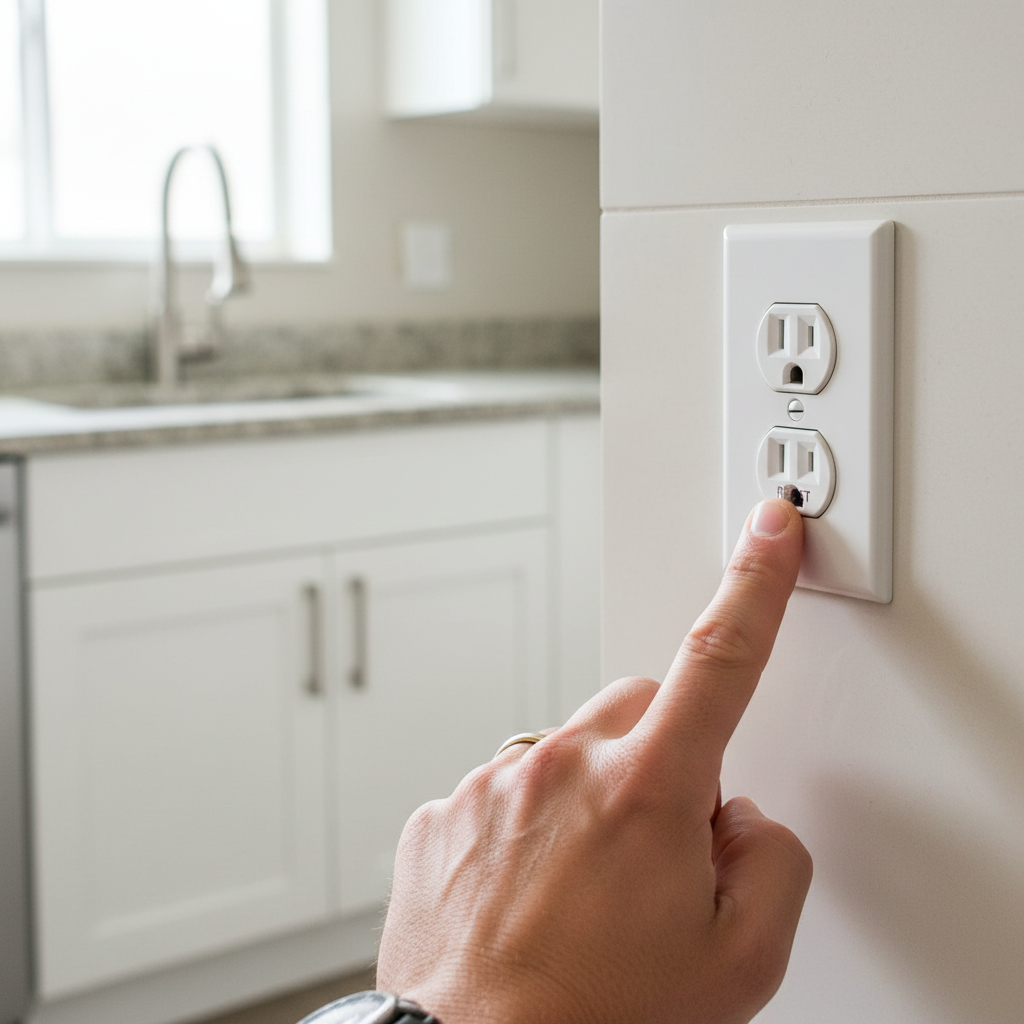
- Tripped GFCI/AFCI Outlet: The most frequent culprit. These protective outlets trip to prevent shock or fire hazards, cutting power to themselves and any downstream outlets they protect.
- Tripped GFCI/AFCI Breaker: Similar to the outlets, these specialized breakers in your main panel can trip and look 'on' but have actually interrupted the circuit.
- Partially Tripped Standard Breaker: Some breakers don't snap fully to 'off' when tripped, resting instead in a middle or slightly 'off' position that can be mistaken for 'on.'
- Loose Wire Connection: Over time, vibrations or improper installation can cause a hot, neutral, or ground wire to become loose at the outlet, switch, or a junction box, interrupting the flow of electricity.
- Faulty Outlet: Outlets wear out. Internal components can fail, leading to an inability to deliver power consistently.
Electrical · Outlet or lights not working
| Project category | Electrical |
|---|---|
| Problem type | Outlet or lights not working |
| Trade required | Electrical |
| Urgency | Soon — within weeks |
| Safety risk | Moderate safety risk |
| DIY suitability | DIY for experienced homeowners |
| Cost category | Low cost |
| Typical timeline | Often under an hour once the cause is found |
| Contractor type | Licensed electrician |
Repair option
Reset the upstream GFCI first, then replace the failed device.
Replacement option
Rewire the circuit when connections are failing in multiple boxes.
Common causes
- Tripped GFCI upstream on the same circuit
- Loose neutral in a daisy-chained run
- Failed switch or receptacle
Relevant tools:diy difficultydiy or hire a pro
Published July 19, 2026Last updated August 17, 2026
Tools & materials you'll need
Affiliate linksAs an Amazon Associate FixlyGuide earns from qualifying purchases — at no extra cost to you. Prices and availability are accurate as of publication and subject to change.
Quick Answer
Many homeowners face the perplexing issue of an electrical outlet that refuses to deliver power, even though the correlating circuit breaker in the service panel appears to be in the 'on' position. The most frequent culprits are not a faulty breaker, but rather a tripped GFCI (Ground-Fault Circuit Interrupter) or AFCI (Arc-Fault Circuit Interrupter) outlet or breaker feeding the dead outlet. Other common causes include a hidden tripped breaker that hasn't fully reset, a loose wire connection inside the outlet or switch box, or even a problem with the outlet itself. Tackling this problem requires a systematic approach to safely identify and resolve the hidden issue.
The Problem
Imagine plugging in your phone charger or a lamp, only to find the outlet completely dead. You head to the electrical panel, armed with confidence, only to discover the breaker for that circuit is already in the 'on' position. Frustrating, right? This common household puzzle can range from a minor inconvenience to a sign of a more complex electrical issue. A dead outlet on an 'on' breaker typically means the power flow is interrupted somewhere between the breaker and the outlet itself, or the outlet is simply at the end of its life.
While the breaker itself might look on, it might not be. Some breakers, especially older or faulty ones, can trip to a middle position that's not clearly 'off.' Others, particularly GFCI or AFCI breakers, integrate their own trip mechanisms that can be more subtle. This issue is particularly prevalent in kitchens, bathrooms, garages, and outdoor areas where GFCI outlets are mandated, but it can occur anywhere in your home. Ignoring a dead outlet isn't just an inconvenience; it can sometimes point to underlying wiring problems that could pose a safety risk.
How It Works
To understand why an outlet might be dead with the breaker on, let's briefly review how your home's electrical system typically functions. Power enters your home from the utility grid and goes to your main electrical service panel. Inside this panel, large wires distribute power to individual circuit breakers. Each breaker protects a specific circuit, which is essentially a dedicated path of wires providing electricity to a group of outlets, lights, or appliances.
When a circuit breaker is 'on,' it completes the electrical path, allowing current to flow from the panel, through the wiring, and to the various devices on that circuit. If too much current flows (an overload) or there's a short circuit, the breaker is designed to 'trip' to interrupt the flow of electricity, preventing damage to wiring and appliances, and reducing the risk of fire. Most standard breakers will physically snap to the 'off' position when tripped, or to a center position that indicates a trip.
However, modern electrical codes increasingly require Ground-Fault Circuit Interrupters (GFCIs) and Arc-Fault Circuit Interrupters (AFCIs) for enhanced safety. A GFCI is designed to protect against electric shock by detecting current imbalances – even small ones – that indicate electricity is flowing along an unintended path, such as through water or a person. If a GFCI senses such a 'ground fault,' it trips almost instantaneously. GFCI protection can come in the form of a GFCI outlet (which protects all subsequent outlets downstream on the same circuit) or a GFCI circuit breaker in the main panel.
Similarly, an AFCI protects against electrical fires caused by arc faults. An arc fault occurs when electricity jumps through damaged insulation or loose connections, creating intense heat. AFCIs detect these dangerous arcing conditions and trip the circuit. Like GFCIs, AFCIs can be found as individual outlets or as circuit breakers. If a GFCI or AFCI device (either an outlet or a breaker) trips, it will cut power to all downstream receptacles on that circuit, even if the primary breaker in the main panel remains 'on.' This daisy-chain effect is a crucial concept when troubleshooting a dead outlet.
Understanding this hierarchy – main breaker to GFCI/AFCI protection to standard outlets – is key to diagnosing your dead outlet. The problem often lies not with the main breaker itself, but with one of these protective devices or a physical wiring issue further down the line.
Step-by-Step Fix
Always prioritize safety when working with electricity. If you are uncomfortable or unsure at any point, stop and call a licensed electrician.
1. Confirm the Breaker is Truly On — Reset it fully.
Even if a breaker looks 'on,' it might have subtly tripped to a middle position, or be faulty. Go to your electrical service panel. Locate the breaker for the dead outlet's circuit. Firmly push the breaker all the way to the 'off' position, then firmly push it all the way back to the 'on' position. Listen for a distinct click. If it immediately trips back to 'off' or the middle position, do not attempt to reset it again; this indicates a short circuit or overload needing professional attention. If you're unsure which breaker it is, turn off the main breaker for your home (usually a large, double-pole breaker at the top of the panel) before manipulating individual breakers. However, it's safer to identify the specific breaker for the affected circuit.
2. Check All GFCI Outlets — Test and reset every likely candidate.
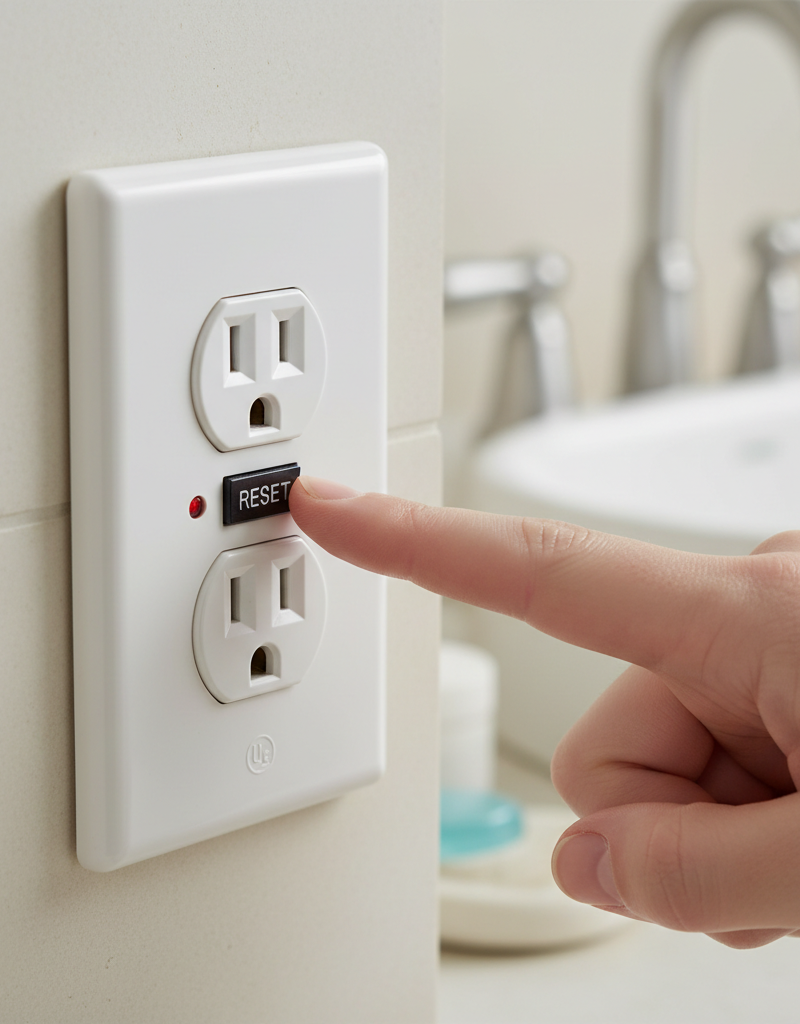
This is the most common reason for a dead outlet when the breaker is on. GFCI outlets are typically found in kitchens, bathrooms, garages, basements, and outdoor areas, but they can be anywhere. Look for outlets with small 'TEST' and 'RESET' buttons. Your dead outlet might be a standard outlet that is downstream from a tripped GFCI outlet in another location. Systematically check every GFCI outlet in the room, and then in adjacent rooms, the garage, and even outside. Press the 'TEST' button (you should hear a click and the outlet will lose power). Then press the 'RESET' button firmly. If pressing 'RESET' restores power to your dead outlet, you've found the issue. If the GFCI keeps tripping, there's a ground fault somewhere on that circuit, and you'll need professional help.
3. Locate and Reset AFCI Breakers/Outlets — Identify and reset arc-fault protection.
Similar to GFCIs, AFCI protection can also cause downstream outlets to lose power. AFCI breakers are in your main electrical panel and typically have a small 'TEST' button on them, sometimes with an indicator light. If you have an AFCI breaker for your dead outlet's circuit, try pushing it fully 'off' then fully 'on' (as in step 1). If it has a 'TEST' button, you may also need to test and reset it. Some homes also have AFCI outlets, which look similar to GFCI outlets with 'TEST' and 'RESET' buttons, but are explicitly labeled 'AFCI protected.' Reset these similarly to how you would a GFCI outlet.
4. Examine the Dead Outlet for Issues — Inspect for physical damage or loose connections.
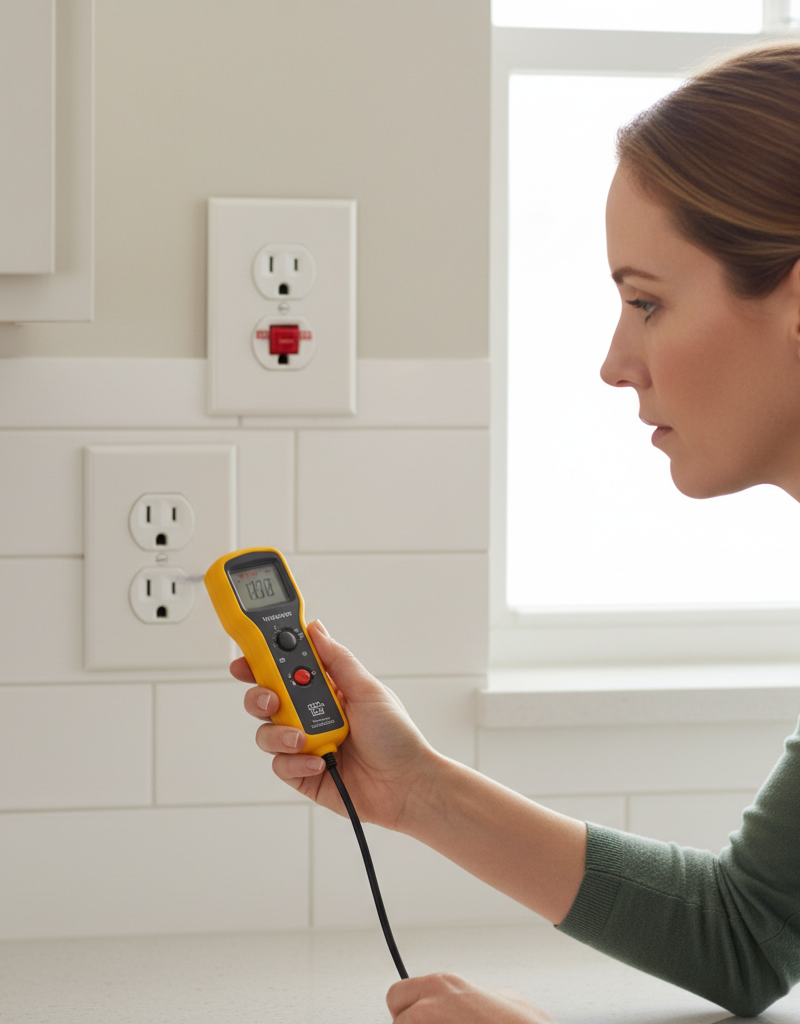
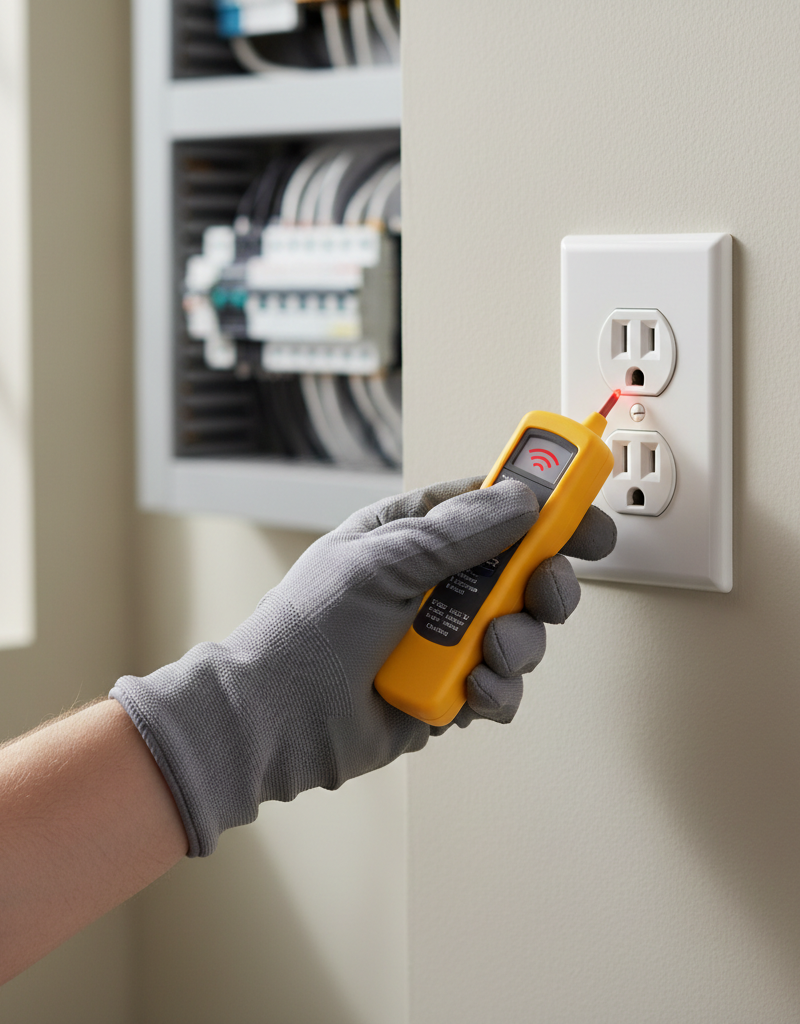
Safety Note: Before proceeding, turn off the power to the circuit at the main electrical panel. Confirm the power is off using a non-contact voltage tester on the dead outlet.
- Visible Damage: Look for burn marks, discoloration, or cracks on the outlet itself. If visible damage is present, replace the outlet.
- Loose Plug: Sometimes, the problem is simply a loose connection to the device you're trying to power. Try plugging in a different, known-working device. If that still doesn't work, proceed.
- Internal Connections: Using a screwdriver, carefully remove the faceplate and then unscrew the outlet from the electrical box. Gently pull the outlet out. Look for any loose wires, wires that have come disconnected from their terminals, or wires that show signs of burning or fraying. If you find loose wires, carefully re-secure them to the appropriate terminals (brass screws for hot, silver for neutral, green for ground). Ensure no bare wire is exposed beyond the terminal screw. If wires are burnt or frayed, the outlet needs to be replaced, and potentially the damaged section of wire. If you are not confident in your ability to safely handle wiring, do not proceed with this step and call a professional. Reinstall the outlet and faceplate, then restore power and test.
5. Check Related Light Switches — Don't overlook switched outlets.
In some rooms, particularly living rooms or bedrooms, one half (or even the entire) duplex outlet may be controlled by a wall switch. This is common for floor or table lamps. Ensure that any wall switches in the room are in the 'on' position. Sometimes, the issue isn't a dead outlet, but simply an outlet that's turned off by a switch you've forgotten about or didn't realize controlled it.
6. Test Other Outlets on the Same Circuit — Is it an isolated problem?
If multiple outlets on the same circuit are dead, the problem likely lies further upstream – potentially at the breaker, a GFCI/AFCI device, or a junction point. If only this one outlet is dead, and others on the same circuit are working fine, the issue is almost certainly localized to that specific outlet or its immediate wiring connection.
Common Causes
- Tripped GFCI/AFCI Outlet: The most frequent culprit. These protective outlets trip to prevent shock or fire hazards, cutting power to themselves and any downstream outlets they protect.
- Tripped GFCI/AFCI Breaker: Similar to the outlets, these specialized breakers in your main panel can trip and look 'on' but have actually interrupted the circuit.
- Partially Tripped Standard Breaker: Some breakers don't snap fully to 'off' when tripped, resting instead in a middle or slightly 'off' position that can be mistaken for 'on.'
- Loose Wire Connection: Over time, vibrations or improper installation can cause a hot, neutral, or ground wire to become loose at the outlet, switch, or a junction box, interrupting the flow of electricity.
- Faulty Outlet: Outlets wear out. Internal components can fail, leading to an inability to deliver power consistently.
- Switched Outlet: The outlet might be intentionally controlled by a wall switch that is currently in the 'off' position.
Common Mistakes
- Ignoring the GFCI/AFCI Reset Buttons: Many homeowners focus solely on the main breaker panel, forgetting to check the local GFCI or AFCI outlets/breakers first. This is the fix for over 70% of these issues.
- Not Fully Resetting Breakers: Simply pushing a partially tripped breaker back to 'on' might not properly reset it. Always push it fully 'off' first, then fully 'on' to ensure a complete reset.
- Failing to Check All Outlets on the Circuit: A tripped GFCI in the bathroom could be protecting outlets in the living room. Systematically check all GFCI and AFCI devices, not just the one closest to the dead outlet.
- Assuming the Breaker is the Problem: While possible, it's less common for the breaker to be faulty itself if it's staying 'on.' The problem is usually a safety device or a loose connection further along the line.
- Working with Live Power: Never attempt to inspect or repair an outlet, switch, or wiring without first turning off the power at the main breaker panel and verifying it's off with a non-contact voltage tester. Electrocution is a serious risk.
- Overlooking Switched Outlets: It's easy to forget that some outlets are controlled by wall switches. Always check nearby switches as a basic diagnostic step.
Cost & Time Breakdown
| Task | DIY cost | Pro cost | Time |
|---|---|---|---|
| Reset breaker/GFCI/AFCI | $0 | $0 (if self-fix) | 5-10 minutes |
| Diagnose/inspect outlet | $0 (tools) | $75-$150 | 15-30 minutes |
| Replace standard outlet | $2-$10 | $100-$200 | 20-40 minutes |
| Replace GFCI/AFCI outlet | $15-$30 | $150-$250 | 30-60 minutes |
| Diagnose complex internal wire | $0 (tools) | $150-$350+ | 45-120 minutes |
Tips & Prevention
- Label Your Breaker Panel: Clearly label each breaker in your electrical panel so you know exactly which areas or outlets it controls. This saves significant time during troubleshooting.
- Regular GFCI/AFCI Testing: Periodically (monthly or quarterly) test your GFCI and AFCI outlets and breakers by pressing the 'TEST' button. This ensures they are functioning correctly and will trip when needed.
- Avoid Overloading Circuits: Be mindful of how many high-draw appliances (heaters, hair dryers, toasters) are plugged into a single circuit. Overloading can cause breakers to trip, leading to inconvenience and potential wear on the electrical system.
- Check for Loose Plugs: Ensure appliance cords are fully seated in outlets. Loose connections can generate heat and even micro-arcs, potentially tripping AFCI devices.
- Professional Electrical Inspections: Consider a professional electrical inspection every 5-10 years, especially in older homes. An electrician can identify potential issues like loose wiring or failing components before they cause problems.
- Upgrade Old Outlets: If you have very old, two-prong outlets, consider upgrading them to modern three-prong grounded outlets (with GFCI protection if a ground wire isn't present) for enhanced safety and reliability.
When to Call a Professional
While many dead outlet issues can be resolved with simple resets, there are clear signs it's time to call a licensed electrician. If the circuit breaker immediately trips again after you reset it, or if you smell burning, see smoke, or hear buzzing from the outlet or electrical panel, do not attempt further DIY repairs and call an electrician immediately. These are signs of a serious short circuit, overload, or arcing condition that could lead to fire or electrocution. If you've methodically checked all GFCI/AFCI devices and fully reset the breaker, but the outlet remains dead, it points to a more complex internal wiring issue, a faulty breaker, or a problem within a junction box that requires specialized knowledge and tools to diagnose safely. Furthermore, if you open an outlet and find burnt, frayed, or brittle wires, or if you're uncomfortable at any point with handling electrical components, it's always best to err on the side of safety and consult a qualified professional.
Related Articles
Keep troubleshooting with these hand-picked guides from FixlyGuide:
- Why Your Outlet Died (Even If the Breaker's ON): The Hidden Causes Everyone Misses — Discover the surprising reasons why an electrical outlet might stop working even when the circuit breaker appears to be on, and learn how t…
- Why Your Outlet Died (Even If the Breaker's On) — Discover the hidden reasons an electrical outlet stops working, even when the circuit breaker appears to be on, and learn simple diagnostic…
- The Secret Reason Half Your Wall Outlet Dies (And It's Not What You Think) — Discover why only half of your electrical outlet might be working and how to diagnose and fix the common culprit, saving you from a costly…
- Why Your Outlet Died But the Breaker's STILL On (The GFCI Culprit) — Discover the hidden reasons an electrical outlet stops working, even when the circuit breaker remains on, often pointing to a tripped GFCI.
- The 7 Head-Scratching Reasons Your Outlet Died (Even With The Breaker On) — Discover the surprising reasons why an electrical outlet might stop working even when its circuit breaker is fully engaged, and how to safe…
- The Hidden Reason Your GFCI Trips (It's Not Always a Faulty Outlet) — A continuously tripping GFCI outlet is a critical safety warning, often indicating moisture, a faulty appliance, or a wiring problem that r…
Should you do this yourself?
Answer five quick questions before you start. Safety outranks savings every time.
Your experience with work like this
How high do you have to work?
Does the job involve any of these?
Will it need a permit?
Specialty tools
Free and instant. Educational guidance only — not a quote, inspection, or professional diagnosis.
What should this project cost?
Enter your project details for a realistic cost range before you call anyone.
Outlet and switch work usually $150–$400; panel upgrades commonly $1,800–$4,200.
- Regional adjustment
- National average
- Labor share (typical)
- ~$709
- Quotes to collect
- 3 written estimates
Educational estimate based on national averages — not a binding quote. Always confirm with written local estimates.
Fixly Project Decision Box
- DIY difficulty
- Professional Recommended
- Estimated time
- Diagnosis 1–2 hours
- Cost level
- Moderate
Main tools / materials
- Non-contact voltage tester
- Outlet tester
- Flashlight
When to stop and call a pro
- Burning smell, scorch marks, or a warm outlet or switch plate
- A breaker that trips again right after being reset
- Any work inside the service panel
- Aluminum wiring or cloth-insulated wiring
Need professional help?
Talk to a Licensed ElectricianBefore you start
Check the difficulty, permits, and safety risk — then decide whether to call a pro.
- Estimate this projectGet a cost range for your scope and ZIP before you call anyone.Open
- Get local estimatesSend one request and compare written estimates from vetted pros.Open
Free, no signup required. Estimates are educational guidance, not a quote or an inspection.
Frequently asked questions
Why would an outlet not work if the breaker is on?+
The most common reasons are a tripped GFCI or AFCI outlet or breaker upstream from the dead outlet, a partially tripped standard breaker that appears 'on,' or a loose wiring connection inside the outlet box or at a switch.
How do I find a tripped GFCI outlet?+
Look for outlets with 'TEST' and 'RESET' buttons, typically found in kitchens, bathrooms, garages, basements, and outdoor areas. Systematically check all of these in the vicinity of the dead outlet, and in adjacent rooms or even outside, as one GFCI can protect many other outlets.
Can a breaker look on but actually be off?+
Yes, some standard breakers can trip to a middle position that isn't clearly 'off,' requiring you to push it fully to 'off' then firmly back to 'on' to reset it properly. AFCI and GFCI breakers also have internal trip mechanisms that might not be visibly 'off.'
When should I call an electrician for a dead outlet?+
Call a licensed electrician immediately if a breaker repeatedly trips, if you smell burning, see smoke, or hear buzzing. Also call if you've tried all troubleshooting steps and the outlet remains dead, or if you're uncomfortable working with electrical wiring.
Discussion
Loading comments…