- Tripped GFCI: By far the 1 reason. One GFCI in a bathroom can knock out outlets in two other rooms.
- Loose Wire Connection: Wires can work loose over time from vibration and temperature swings, and once that happens, the circuit opens up.
- Faulty Outlet: The guts of an outlet can wear out and fail, especially in a house that's seen heavy use or a few decades of living.
- "Upstream" Problem: The dead outlet isn't the real problem. The loose connection is on the outlet before it in the circuit line.
- Tripped Breaker (That Doesn't Look It): Sometimes a breaker trips internally without the handle moving all the way to the "OFF" position. A firm reset usually clears it.
Electrical · Outlet or lights not working
| Project category | Electrical |
|---|---|
| Problem type | Outlet or lights not working |
| Trade required | Electrical |
| Urgency | Soon — within weeks |
| Safety risk | Moderate safety risk |
| DIY suitability | DIY for experienced homeowners |
| Cost category | Low cost |
| Typical timeline | Often under an hour once the cause is found |
| Contractor type | Licensed electrician |
Repair option
Reset the upstream GFCI first, then replace the failed device.
Replacement option
Rewire the circuit when connections are failing in multiple boxes.
Common causes
- Tripped GFCI upstream on the same circuit
- Loose neutral in a daisy-chained run
- Failed switch or receptacle
Relevant tools:diy difficultydiy or hire a pro
Published October 19, 2026Last updated October 19, 2026
Tools & materials you'll need
Affiliate links- AmazonReplacement electrical outletif needed
As an Amazon Associate FixlyGuide earns from qualifying purchases — at no extra cost to you. Prices and availability are accurate as of publication and subject to change.
Quick Answer
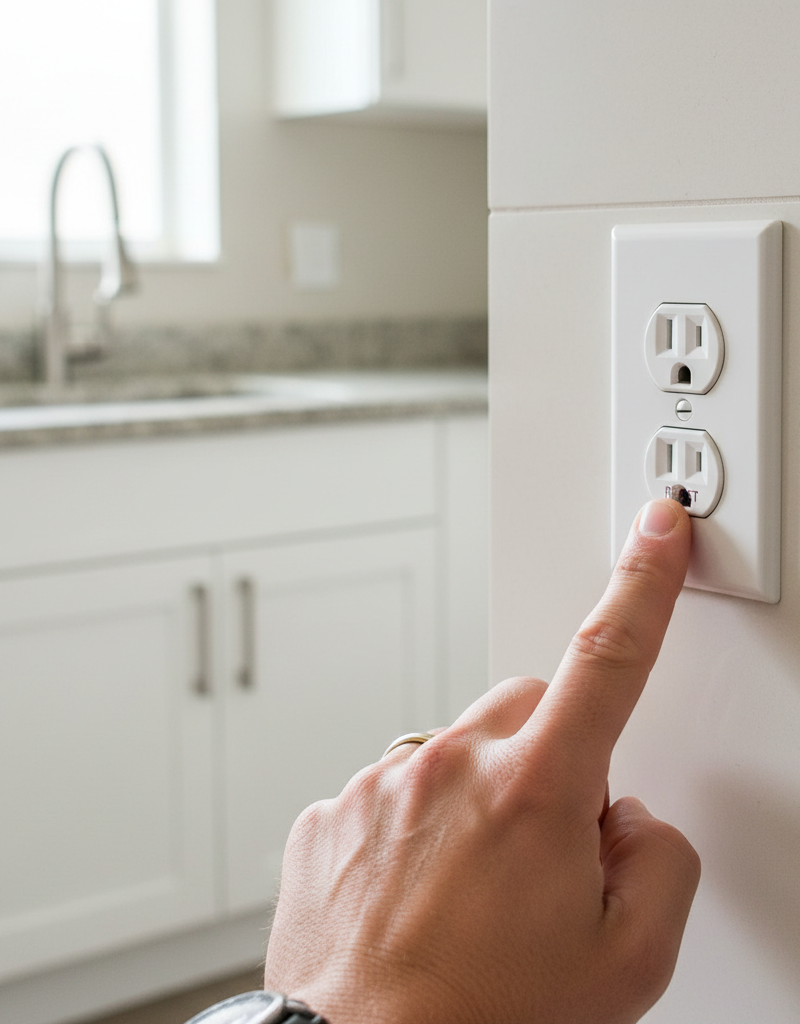
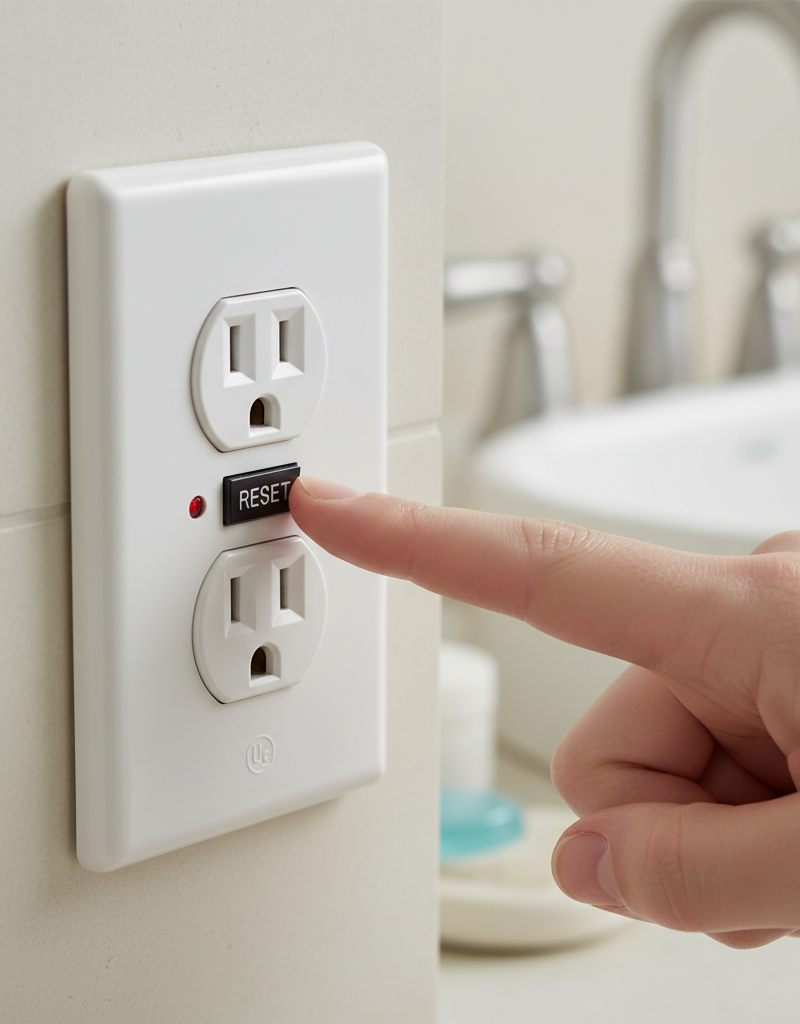
If your outlet isn't working but the breaker is on, nine times out of ten you're looking at a tripped GFCI somewhere else on that circuit. Start hunting for a GFCI outlet—the kind with 'TEST' and 'RESET' buttons—in a nearby bathroom, kitchen, garage, basement, or even on an outside wall, and push that 'RESET' button in good and firm. Those safety outlets can kill power to a whole string of regular outlets downstream. If that doesn't bring it back, you've probably got a loose wire connection at the outlet itself, and that means shutting off the breaker before you open anything up.
The Problem
You plug in a lamp or your phone charger and... nothing. Then you head to the panel, and every breaker looks fine. Nothing's tripped. Everything's sitting there in the "ON" position like it's innocent. So why's that outlet dead? That's the part that drives people nuts, because the easy answer—flip the breaker—isn't the answer. The power's on, but it isn't making it to that one outlet. Usually that means there's a break somewhere between the panel and the receptacle, and now you're the one playing detective.
How It Works
I like to explain a house's electrical system like a tree. The main panel is the trunk, each breaker is a big branch, and the wiring in the walls is all the smaller branches. Outlets, switches, and light fixtures are the leaves hanging off the ends. A lot of outlets in one room—and sometimes half the house—are wired in series, one after another, on the same branch. So if one outlet has a problem, the ones "downstream" can go dead right along with it.
That's especially true with Ground Fault Circuit Interrupter (GFCI) outlets. A single GFCI is often installed at the beginning of a circuit run in "wet" areas like kitchens, bathrooms, and garages. Its job is to catch tiny imbalances in current—like if electricity's leaking where it shouldn't—and shut off power in milliseconds before somebody gets shocked. When a GFCI trips, it doesn't just cut power at its own sockets. It can take out every standard outlet wired after it on that same circuit. So yeah, an outlet in the bedroom can go dead because the GFCI in the master bath tripped. I pulled a water heater in Frisco last month and found exactly this setup—dead garage outlet, tripped GFCI in a laundry room three rooms away. That's the kind of thing that'll make you scratch your head if you don't know the wiring path. Finding that one tripped "parent" GFCI is usually the whole trick.
Step-by-Step Fix
Safety First: We're talking about electricity. If you're not sure, if you're uncomfortable, or if you see scorching, melting, or smell burning plastic, stop right there and call a licensed electrician. For any step below that has you opening the outlet, you MUST turn the power off at the breaker panel.
1. Confirm the Breaker.
- Head to the breaker panel and find the breaker that controls the room with the dead outlet. Flip it all the way to OFF, then back to ON. You should feel a solid click. Sometimes a breaker looks fine but it's tripped internally. That's a reset. Go back and check the outlet. Still dead? Move on.
2. Hunt for a Tripped GFCI.
- This is the usual suspect. Go through the house and check every GFCI you can find. Bathrooms, kitchen, garage, any outdoor outlets, laundry room, basement—don't skip the oddball spots. Look for the little 'TEST' and 'RESET' buttons. If one has the RESET button popped out, press it in until it clicks. Then go see if the dead outlet came back to life.
3. Test Other Outlets.
- Is it one outlet, or are several outlets dead? Grab a lamp or a phone charger you already know works and test the nearby outlets. If more than one outlet is dead, that points even harder at a tripped GFCI or a loose connection on an outlet "upstream." If it's just one outlet, odds are the trouble's right there in that box.
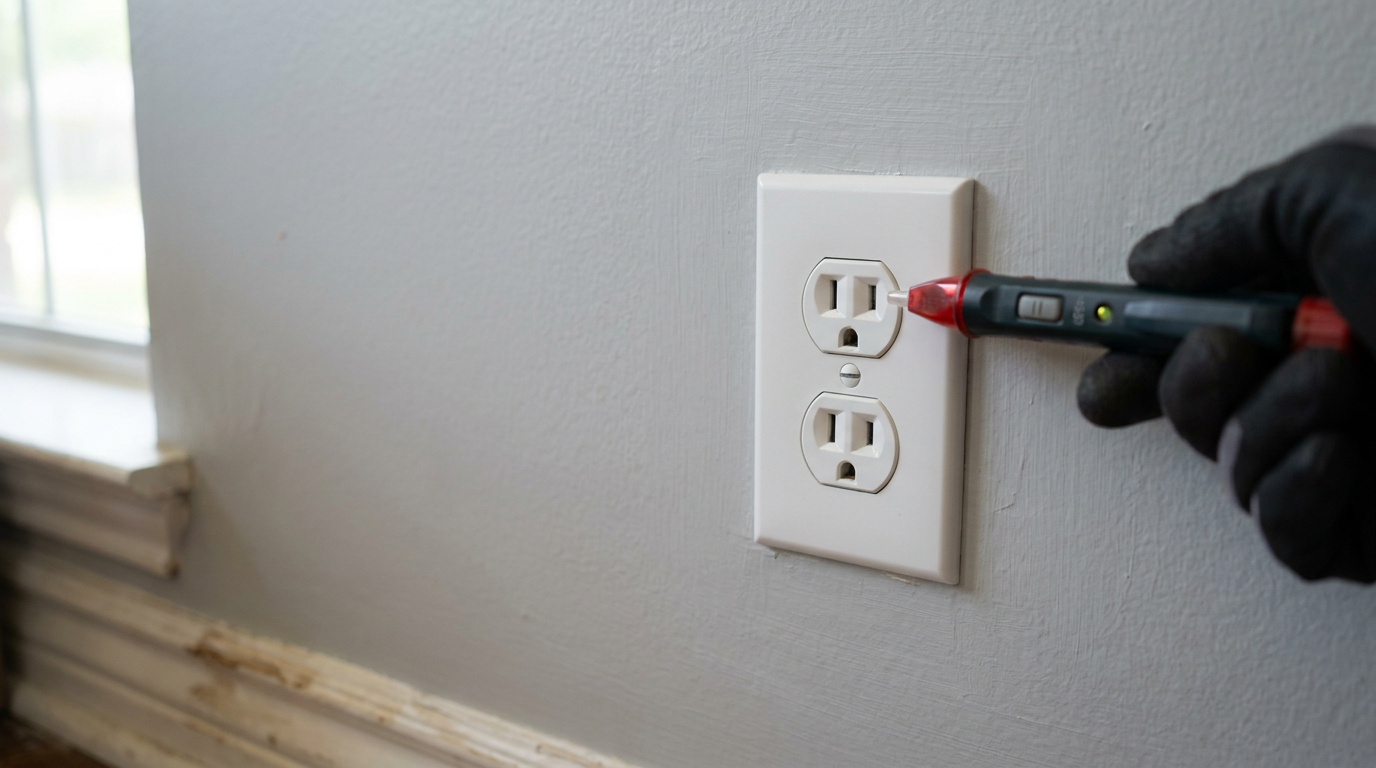
4. Get a Voltage Tester.
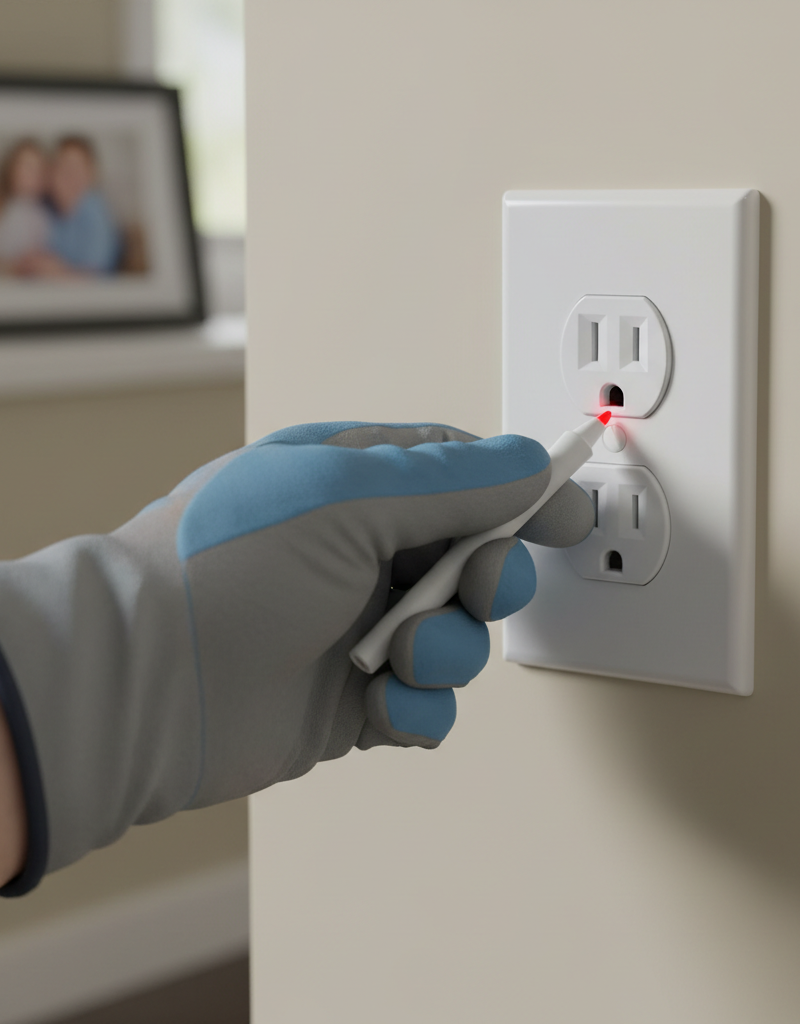
- Before you go any farther, you need to know whether power is actually reaching the outlet. A non-contact voltage tester is a cheap little tool that beeps or lights up when it senses voltage. You can pick one up for $10–$20 at any home center. Honestly, it's one of those tools every homeowner ought to own.
5. SHUT OFF THE POWER.
- Before you touch a single wire, go back to the breaker panel and shut off the breaker for that circuit. To make sure you're not fooling yourself, plug a lamp into the outlet. If it worked before, it should be off now. Then use your non-contact voltage tester to check the outlet again. It should stay quiet. No guessing here.
6. Open Up the Outlet.
- Tools: Flathead and Phillips screwdriver.
- Remove the faceplate. Then take out the two long screws at the top and bottom holding the receptacle in the box. Pull the outlet out slowly. Don't yank on it; there's usually not much slack in the wires, and you don't want to make a bad situation worse.
7. Inspect the Wires.
- Look at the screw terminals on the sides of the outlet. You should see a black wire (hot) on a brass/gold screw, a white wire (neutral) on a silver screw, and a bare copper or green wire (ground) on a green screw. Check whether any wire's loose, broken, or pulled off the terminal. This is a very common failure point.
- Also look for "back-stab" connections. Some outlets have little holes in the back where the wire just gets pushed in. They're flimsy. No dice long term. If you find back-stabbed wires, I'd move them over to the screw terminals.
8. Check for Scorch Marks.
- While the outlet's out, look for blackening, scorching, or melted plastic on the receptacle or inside the electrical box. That usually means arcing, and arcing's a fire hazard. If you see that, the outlet's toast and it needs to be replaced. Don't just hook it back up and call it a day. You want somebody to figure out why it arced in the first place.
9. Tighten the Connections (or Replace the Outlet).
- If you found a loose wire, loosen the matching screw terminal, make sure the wire's got a clean C-shaped hook on the end, wrap it around the screw the way the screw tightens—clockwise—and snug it down tight. Give the wire a gentle tug to make sure it's locked in. If the outlet looks old, discolored, or beat up, just replace it. A standard receptacle costs less than $3.
10. Button It Back Up. - Tuck the wires carefully back into the box. Screw the outlet back onto the box, then put the faceplate back on. Don't crank the screws down too hard or you'll crack the plastic. Happens all the time.
11. Restore Power and Test. - Go back to the breaker panel and turn the breaker back on. Use your voltage tester or a lamp to see if the outlet's working again. If it is, you're done. - If it still doesn't work: The problem's probably farther upstream at another outlet box on the circuit, or you've got a break in the wire inside the wall. At that point, you've handled the safe and easy DIY checks. Time to bring in a pro.
Common Causes
- Tripped GFCI: By far the #1 reason. One GFCI in a bathroom can knock out outlets in two other rooms.
- Loose Wire Connection: Wires can work loose over time from vibration and temperature swings, and once that happens, the circuit opens up.
- Faulty Outlet: The guts of an outlet can wear out and fail, especially in a house that's seen heavy use or a few decades of living.
- "Upstream" Problem: The dead outlet isn't the real problem. The loose connection is on the outlet before it in the circuit line.
- Tripped Breaker (That Doesn't Look It): Sometimes a breaker trips internally without the handle moving all the way to the "OFF" position. A firm reset usually clears it.
- Switched Outlet: Don't overlook the simple stuff. Some outlets, especially in living rooms, are controlled by a wall switch for a lamp.
Common Mistakes
- Forgetting to Check GFCIs: Folks check the breaker panel and stop there, not realizing the GFCI is the real culprit.
- Replacing the Wrong Outlet: If several outlets are dead, people often replace the last one in the line, when the actual issue is a loose wire at the first dead outlet in the chain.
- Using Back-Stab Connections: When you're swapping an outlet, it's tempting to use the push-in holes on the back. Don't. Take the extra minute and wrap the wires around the screw terminals for a solid connection that lasts.
- Working with the Power On: That's dangerous. Real dangerous. Never assume the power's off. Test it with a non-contact voltage tester before you touch anything.
- Ignoring Scorch Marks: Black marks mean arcing and a serious fire risk. Don't just swap the outlet and move on. A pro needs to find out what caused it.
Cost & Time Breakdown
| Task | DIY Cost | Pro Cost | Time |
|---|---|---|---|
| Reset a tripped GFCI | $0 | $100–$150 (service call) | 2 minutes |
| Replace a single outlet | $3–$5 (for the outlet) | $125–$200 | 15-20 minutes |
| Replace a single GFCI outlet | $15–$25 (for the outlet) | $150–$250 | 20-30 minutes |
| Troubleshoot & fix loose wire | $0–$20 (for tester) | $150–$300+ | 30-60 minutes |
| Trace a fault in the wall | N/A (requires pro tools) | $250–$500+ | 1-3 hours+ |
Tips & Prevention
- Map Your GFCIs: Once you figure out which GFCI controls the other outlets, slap a little label on it—something like "Controls garage + patio outlets." Saves a headache later.
- Test GFCIs Monthly: Make it a habit to press the "TEST" button on all your GFCI outlets every month. The power should cut off. Then hit "RESET" to bring it back.
- Don't Overload Circuits: Try not to stack high-draw appliances like space heaters or hair dryers on the same circuit. A 1,500-watt heater on a 15-amp circuit is already pulling over 12 amps, so there's not much room left.
- Upgrade Old Outlets: If your house is old enough to still have original two-prong outlets or loose, discolored three-prong ones, think about upgrading them all together. You'll get better safety and a lot less hassle.
- Invest in a Voltage Tester: A non-contact voltage tester is a must-have in any homeowner's toolbox. It lets you check for power safely without touching wires.
When to Call a Professional
If you've reset the breakers, hunted down and reset all the GFCIs, and checked that the connections inside the outlet box are tight, it's time to call a licensed electrician. Stop immediately and call a pro if you see scorch marks or melted plastic, smell a fishy or burning odor, or if the breakers trip again right after you reset them. Those are signs of a bigger problem like an arc fault, a short circuit, or a bad breaker, and that takes proper diagnosis. Don't gamble with it—bad wiring's one of the leading causes of house fires. An electrician's got the tools to trace the fault safely and fix it right.
Related Articles
Keep troubleshooting with these hand-picked guides from FixlyGuide:
- Light Switch Not Working? 7 Causes to Check Before You Call an Electrician — Can't figure out why your light switch stopped working? Don't panic—this guide walks through the 7 most common causes, from a simple trippe…
- The 7 Head-Scratching Reasons Your Outlet Died (Even With The Breaker On) — Discover the surprising reasons why an electrical outlet might stop working even when its circuit breaker is fully engaged, and how to safe…
- Why Your Outlet Died (Even If the Breaker's ON): The Hidden Causes Everyone Misses — Discover the surprising reasons why an electrical outlet might stop working even when the circuit breaker appears to be on, and learn how t…
- The Flickering Light Switch Fix Plumbers Don't Want You to Know (Because They Can't Help) — Don't live with flickering lights or a switch that feels loose. I'll walk you through diagnosing and replacing a faulty light switch safely…
- Why One Room Has No Power (But the Breaker Isn't Tripped) — Discover why a whole room might suddenly lose power even when your circuit breaker stays stubbornly on, and learn how to safely troubleshoo…
- Fridge Door Won't Stay Shut? 9 Reasons It Keeps Popping Open—and What to Check First — Is your refrigerator door refusing to stay closed? We'll walk you through the most common causes, from a simple overloaded shelf to a worn-…
What should this project cost?
Enter your project details for a realistic cost range before you call anyone.
Outlet and switch work usually $150–$400; panel upgrades commonly $1,800–$4,200.
- Regional adjustment
- National average
- Labor share (typical)
- ~$709
- Quotes to collect
- 3 written estimates
Educational estimate based on national averages — not a binding quote. Always confirm with written local estimates.
Fixly Project Decision Box
- DIY difficulty
- Professional Recommended
- Estimated time
- Diagnosis 1–2 hours
- Cost level
- Moderate
Main tools / materials
- Non-contact voltage tester
- Outlet tester
- Flashlight
When to stop and call a pro
- Burning smell, scorch marks, or a warm outlet or switch plate
- A breaker that trips again right after being reset
- Any work inside the service panel
- Aluminum wiring or cloth-insulated wiring
Need professional help?
Talk to a Licensed ElectricianFrequently asked questions
Can one bad outlet affect others?+
Yes, absolutely. Outlets are often wired in series. A loose wire or a bad connection on one outlet can interrupt the flow of electricity to all the other outlets that are 'downstream' from it on the same circuit.
Why did my outlet suddenly stop working?+
The most common reason for a sudden failure is a tripped GFCI outlet somewhere else in the house. Another frequent cause is simply that the internal components of the outlet have worn out and failed, especially if it's old or frequently used.
What's the difference between a GFCI and a regular outlet?+
A regular outlet is just a connection point for power. A GFCI (Ground Fault Circuit Interrupter) is a safety device. It constantly monitors for tiny electrical imbalances and will instantly cut power to prevent a dangerous shock, which is why they are required in kitchens, bathrooms, and garages.
What does a buzzing sound from an outlet mean?+
A buzzing or sizzling sound from an outlet is a serious warning sign. It usually indicates a loose wire that is 'arcing'—electricity is jumping through the air. This creates intense heat and is a major fire hazard. Turn off the breaker for that circuit immediately and call an electrician.
Is it safe to replace an electrical outlet myself?+
For a confident DIYer, yes, it is generally safe as long as you FIRST turn off the power at the breaker panel and double-check with a voltage tester that the outlet is dead. If you are even slightly unsure, it's always best to hire a licensed electrician.
Why are some of my outlets upside down?+
An upside-down outlet is often used to signify that it's controlled by a wall switch. This is common in living rooms or bedrooms that may not have a built-in ceiling light, allowing you to control a plug-in lamp from the wall.
Can a breaker be bad even if it looks like it's on?+
Yes. Sometimes the internal mechanism of a circuit breaker can fail or weaken. It might not trip when it should, or it might not make a solid connection even when the handle is in the 'ON' position. If you suspect a bad breaker, a professional should test and replace it.
What does it mean if the outlet is hot to the touch?+
A warm outlet can be normal if it's powering a heavy-load appliance like a space heater. However, if the outlet itself feels hot to the touch with nothing plugged in, or with a small load like a phone charger, there is likely a dangerous loose connection inside. Turn off the power and have it inspected immediately.
Discussion
Loading comments…