
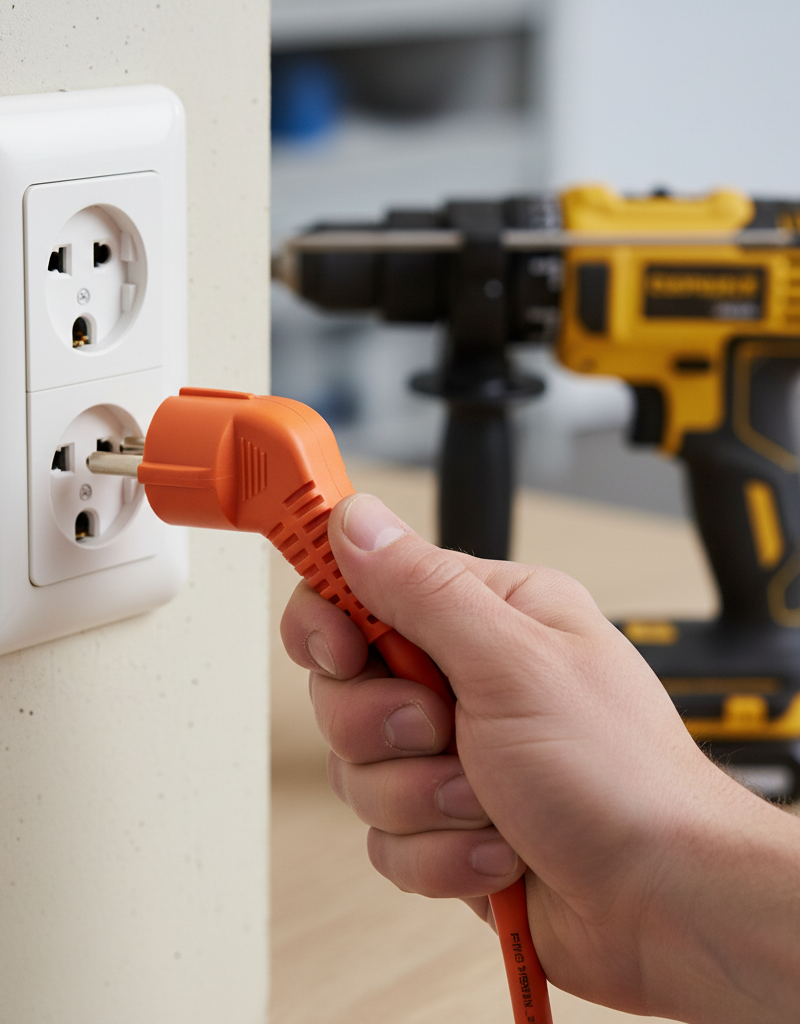
- Safety First: Kill the Power — Find your main electrical panel and switch off the breaker for the affected room/circuit.
- Tools: Flashlight, if the room’s dead dark.
- Safety: Treat every wire like it’s live until you’ve tested it. Use a non-contact voltage tester (NCVT) on an outlet you know is working, then check the dead ones to make sure the power’s actually off. No shortcuts. Not on this.
- Pro Tip: If you can’t figure out which breaker feeds the room, shut off the main breaker for the whole house. It’s a hassle, sure, but I’d rather reset a few clocks than call it a day with a hot wire.
Electrical · Breaker keeps tripping
| Project category | Electrical |
|---|---|
| Problem type | Breaker keeps tripping |
| Trade required | Electrical |
| Urgency | Urgent — within days |
| Safety risk | High safety risk |
| DIY suitability | Pro recommended |
| Cost category | Low cost |
| Typical timeline | Diagnosis in a single visit |
| Contractor type | Licensed electrician |
Repair option
Isolate the load, then repair the fault or replace the breaker.
Replacement option
New dedicated circuit when the load simply exceeds what the circuit was built for.
Common causes
- Genuine overload on a shared circuit
- Ground fault from moisture in an exterior box
- Failing breaker or a damaged appliance cord
Relevant tools:diy or hire a prodiy difficulty
Published September 11, 2026Last updated September 11, 2026
Tools & materials you'll need
Affiliate linksAs an Amazon Associate FixlyGuide earns from qualifying purchases — at no extra cost to you. Prices and availability are accurate as of publication and subject to change.
Quick Answer
When a whole room goes dead and the breaker for that circuit still looks fine, I usually figure the circuit’s got a break in the path before the breaker ever gets a chance to react. Could be a loose wire in an outlet or switch box, a hidden GFCI or AFCI tripped somewhere upstream, or a breaker that’s gone bad and isn’t doing its job. Start with the easy stuff: check for upstream GFCIs, then go after outlets and switches with the power off at the main panel. That’s the game.
The Problem
Alright, let’s talk about one of those calls that makes homeowners scratch their heads. You walk into the living room, hit the switch, and… nothing. Plug in a lamp? Still nothing. Then you head to the panel expecting to find a tripped breaker, but every one of them is sitting there in the ON position. So what gives? It’s annoying, sure, but it can also feel a little spooky. Most of the time, though, it’s not some giant disaster. It’s usually something common, just buried enough to make you work for it. I’ve seen folks burn half a day swapping bulbs and poking around old fuse boxes that weren’t even part of the house anymore, while the real problem was tucked away in an outlet box two rooms over.
How It Works
To really understand why a room can go dark while the breaker stays on, you’ve gotta know how power moves through a house. Think of the electrical system like a tree. The main service comes in as the trunk. The panel is where that trunk splits into branches, and those branches are your circuit breakers. Each breaker protects one branch of wiring that feeds a group of outlets, lights, and appliances. If too much current flows through that branch, or if there’s a short, the breaker is supposed to trip and shut things down before the wires get hot enough to become a problem. Simple idea. Big job.
Now, if the breaker doesn’t trip but you still don’t have power, then the interruption’s happening somewhere else. Power leaves the breaker, runs through the hot wire, usually black or red, reaches the outlets and switches, then comes back on the neutral wire, usually white, and completes the circuit. If that path gets broken anywhere — loose screw terminal, busted wire, hidden safety device, whatever — everything downstream loses power. That’s where GFCI and AFCI outlets come into the picture. They’re not just regular outlets. They’re little local protectors that trip when they spot certain problems, like a ground fault or an arc fault, and they can shut off power to everything on that line without the main breaker ever flinching. Sneaky, but that’s what they’re built to do.
Step-by-Step Fix
Alright, let’s get after it. Safety first, always. Before you touch a thing, kill the power. I’m serious. Don’t wing this.
-
Safety First: Kill the Power — Find your main electrical panel and switch off the breaker for the affected room/circuit.
- Tools: Flashlight, if the room’s dead dark.
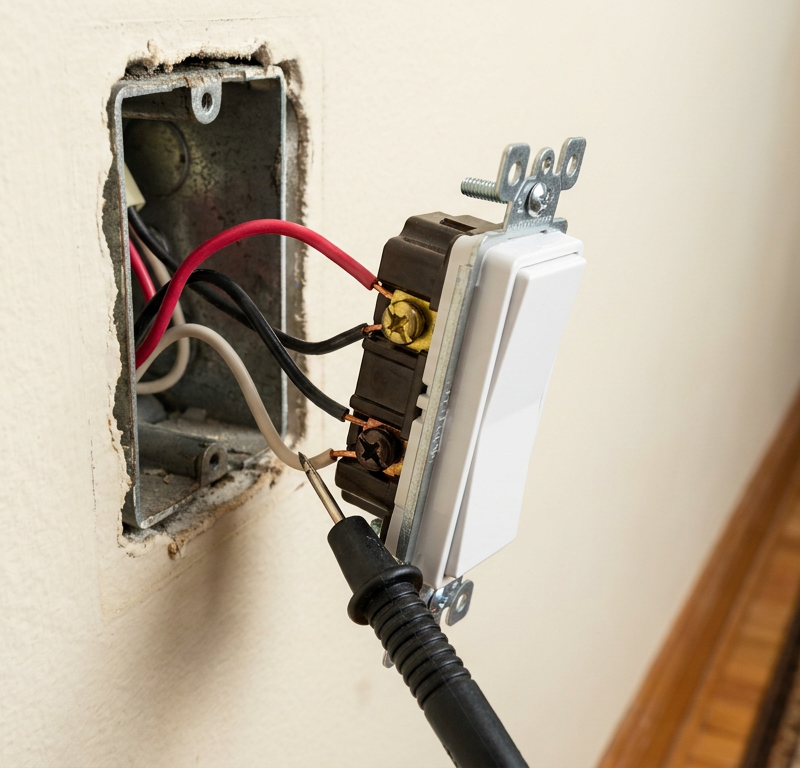
- Safety: Treat every wire like it’s live until you’ve tested it. Use a non-contact voltage tester (NCVT) on an outlet you know is working, then check the dead ones to make sure the power’s actually off. No shortcuts. Not on this.
- Pro Tip: If you can’t figure out which breaker feeds the room, shut off the main breaker for the whole house. It’s a hassle, sure, but I’d rather reset a few clocks than call it a day with a hot wire.
-
Check for Upstream GFCI/AFCI Outlets — These are often the hidden culprits for dead circuits.
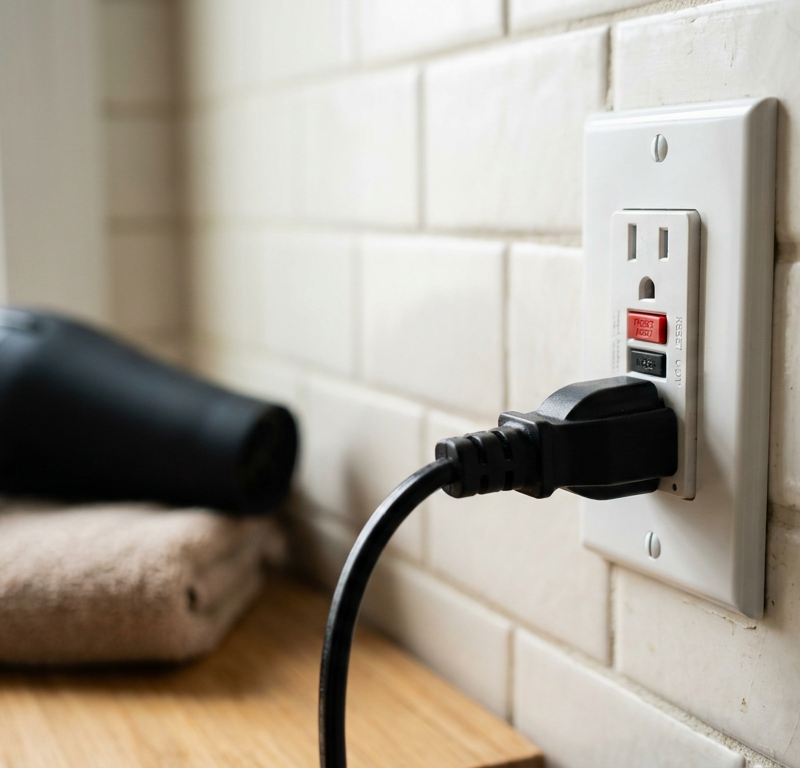
- Action: Look for any GFCI outlets — the ones with "TEST" and "RESET" buttons — or AFCI outlets in bathrooms, kitchens, garages, basements, laundry rooms, or outside. If a room’s dead, one of those upstream devices could be the reason. Hit "RESET" firmly on any you find. Sometimes they’re behind furniture, in a guest bath nobody uses, or tucked in some awkward corner. I pulled a water heater in Frisco last month that had exactly this kind of issue, and the culprit turned out to be a GFCI buried behind a laundry basket in the garage. You can guess how thrilled the homeowner was.
- If this doesn't work: If the reset doesn’t bring the power back, the GFCI or AFCI itself may be bad, or you’ve still got another issue farther upstream.
-
Inspect the First Dead Outlet/Switch Box — The point of failure is often the first device on a dead string.
- Action: Take off the cover plate from the first dead outlet or switch, or the one closest to a working part of the circuit. Gently pull the device out of the box — it’ll still be wired in. Look for loose conductors, burnt insulation, or broken terminals. Check especially for the black (hot) or white (neutral) wires backing out of screw terminals or push-in connections. Those backstabs are trouble. If you find them, move the wires to the screw terminals. A loose connection builds heat, and that can open the circuit up without tripping the breaker right away.
- Tools: Screwdriver (flathead and Phillips), wire strippers if you’re moving wires off backstabs.
- Safety: Absolutely confirm power is off with your NCVT inside the box before you touch anything. Even with the breaker off, another circuit in that box might still be live.
-
Tighten Loose Connections — A common culprit for intermittent or complete power loss.
- Action: If you find any loose wires, give them a gentle tug to make sure they’re not hanging on by a thread. Then reconnect them to the right terminals and tighten the screws firmly. If they were in a backstab, cut the end clean, strip about 3/4 inch of insulation, loop it clockwise around the proper screw terminal, and snug it down. Don’t leave bare copper sticking out past the terminal.
- Torque: Shoot for about 12-14 inch-pounds of torque on screw terminals so the connection stays solid without crushing the wire or stripping the screw. Snug. Not gorilla-tight.
-
Check Splices in Junction Boxes — Hidden connections can fail.
- Action: If the trouble isn’t at an outlet or switch, start thinking about junction boxes. They’re usually behind a blank cover plate and might be sitting in an attic, basement, or, every now and then, buried where they shouldn’t be. I’ve seen that mess too. Open any accessible junction boxes on the affected circuit and look for loose wire nuts or wires that’ve pulled apart. Rework them properly, make sure stranded wire’s twisted tight, and replace the wire nut if needed.
- Safety: Always verify the power’s off before opening any junction box.
-
Test the Breaker Itself — Sometimes, the bouncer is asleep on the job.
- Action: If you’ve checked all the upstream GFCIs/AFCIs and gone through the accessible devices without finding the problem, the breaker itself might be toast. A breaker can fail inside without showing a trip. Flip it all the way to "OFF" — you should feel a solid click — then push it firmly back to "ON." If the power still doesn’t come back, the breaker may need replacing. That’s pro territory. Working inside the panel is not the place to learn by trial and error.
- Pro Callout: Replacing a breaker means working directly inside the main electrical panel. Do not attempt this yourself unless you are a qualified electrician. There’s 240 volts of serious power in there; one bad move can be fatal.
-
Consider a Damaged Wire — Less common, but it happens.
- Action: In rare cases, a wire may be damaged inside the wall. Maybe a nail got it, maybe a rodent chewed it, maybe the house shifted a bit and finally finished the job. That kind of fault is almost impossible for a DIYer to track down without the right tools and experience. If you’ve checked everything else and still haven’t found the problem, it’s time to call a licensed electrician with a wire tracer.
Common Causes
- Tripped GFCI/AFCI Outlet: This is the one I see most when a room loses power but the main breaker looks normal. They protect everything downstream and trip locally.
- Loose Wire Connection: Vibration, heat cycles, or a sloppy original install can loosen screw terminals or push-in connections and break the circuit.
- Faulty Outlet or Switch: Not as common, but devices can fail internally, especially older ones, and shut off power to everything after them.
- Faulty Circuit Breaker: A breaker can fail to trip when it should, or it can just quit conducting power even though it still looks fine.
- Damaged Wiring: A nail through a wire during a remodel, rodent damage, or corrosion can open the circuit.
Common Mistakes
- Forgetting to Kill the Power: Deadly mistake. Always test with a non-contact voltage tester before you touch any wire.
- Only Checking the Breaker: People assume the breaker has to be tripped. That’s not always how this goes.
- Ignoring Upstream GFCIs: A GFCI in one room — like a bath or garage — can protect outlets in another room or even outside.
- Using Backstab Connections: Fast for installers, sure. Reliable? Not so much. If you find them, move the wires to screw terminals.
- Overtightening or Undertightening Screws: Too loose and you get heat, arcing, or intermittent power. Too tight and you can damage the wire or the device. You want firm, not brutal.
- Guessing Which Breaker is Which: Don’t just flip stuff at random. Label the panel properly so you know what each breaker does. Saves a pile of grief later.
Cost & Time Breakdown
| Task | DIY Cost | Pro Cost | Time |
|---|---|---|---|
| Check/Reset GFCI/AFCI Outlet | $0 | $150–$300 | 5–15 min |
| Tighten Loose Outlet Wires | $0–$10 | $150–$350 | 15–45 min |
| Replace Faulty Outlet/Switch | $5–$25 | $175–$400 | 30–60 min |
| Replace Faulty Circuit Breaker | $10–$50 | $200–$500 | N/A (Pro Only) |
| Diagnose Damaged Wiring | N/A | $300–$800+ | 1–3+ hours |
Tips & Prevention
- Label Your Panel: Spend an hour and map out which breaker controls which rooms and devices. That little bit of work pays off every time something quits.
- Regular GFCI Tests: Hit the "TEST" button on your GFCI outlets once a month. It should trip. Then hit "RESET" and make sure power comes back. Easy habit.
- Avoid Overloading Circuits: Don’t pile too many high-draw appliances onto one circuit. Surge protectors help with electronics, but they don’t stop overloads.
- Periodic Outlet Inspection: Every few years, especially in older homes, pull a few outlets out with the power off and look for loose or corroded connections. Cheap insurance.
- Upgrade Old Outlets: If you’ve still got old two-prong outlets, think about upgrading them — or having a pro do it — to modern three-prong or GFCI outlets. Safer all around.
When to Call a Professional
Look, I’m all for DIY, but there are lines you don’t cross. If you’ve reset every GFCI/AFCI, tightened every accessible connection, and the room’s still dead, or if you suspect a bad breaker or damaged wiring inside the walls, bring in a licensed electrician. Working inside the main panel is extremely dangerous — one wrong move can cause serious injury or even death. Same story if you see burning, smell smoke, hear buzzing, or keep finding warm outlets or switches. Cut the power and call a pro. Don’t mess around with electricity if you’re not sure what you’re looking at. A good electrician can trace the problem safely, use the right gear, and swap out parts like breakers without turning the job into a bigger problem. Your family’s safety isn’t something to gamble with.
FAQ
What's the difference between a tripped breaker and a tripped GFCI?
A tripped breaker in your main panel cuts power to an entire circuit because of an overload or short. A tripped GFCI outlet cuts power at the outlet itself and anything downstream when it detects a ground fault, without touching the main breaker.
Why would a breaker fail to trip when there's a problem?
Breakers can fail inside because of age, defects, or repeated tripping. They can get weak and not trip when they should, or they can stop carrying power even while the handle still sits in the ON position.
Can a loose connection cause a fire if the breaker doesn't trip?
Yes, absolutely. A loose connection creates resistance, and resistance makes heat. That heat can melt insulation, ignite nearby material, and cause an arc fault without drawing enough current to trip a standard breaker right away.
How do I know which GFCI protects my dead outlets?
Start by checking every GFCI outlet in bathrooms, kitchens, garages, basements, and exterior walls. If the home was built or updated recently, look for AFCI breakers in the panel with "TEST" buttons on them too, since they can play a similar role.
Is it safe to move a wire from a backstab connection to a screw terminal?
Yes, usually it’s safer and the better move. Backstabs loosen over time. Just make sure the power’s off, strip the wire properly, form a good loop, and tighten it clockwise on the screw terminal.
What's an "upstream" GFCI?
An upstream GFCI is a ground-fault circuit interrupter outlet that’s wired earlier in the circuit, so it protects the outlets and devices wired after it — the downstream stuff — on the same circuit.
Should I replace all my old outlets with new ones?
Not always necessary unless they’re damaged, but upgrading old two-prong outlets to grounded three-prong or GFCI outlets is a solid safety improvement. If they’re cracked, loose, or discolored, replacement’s the right move.
How much does it cost to have an electrician diagnose a "no power" issue?
Diagnosis alone usually runs from $150 to $300 for a service call. The final bill depends on how nasty the problem is and whether parts like outlets or breakers need to be replaced. If the wiring’s damaged, expect the cost to climb.
Related Articles
Keep troubleshooting with these hand-picked guides from FixlyGuide:
- The 7 Head-Scratching Reasons Your Outlet Died (Even With The Breaker On) — Discover the surprising reasons why an electrical outlet might stop working even when its circuit breaker is fully engaged, and how to safe…
- The Hidden Reason Your Circuit Breaker Keeps Tripping (It's Not Always an Overload) — Discover the often-overlooked causes behind a frequently tripping circuit breaker and learn how to diagnose and fix them safely.
- Why Your Outlet Died But the Breaker's STILL On (The GFCI Culprit) — Discover the hidden reasons an electrical outlet stops working, even when the circuit breaker remains on, often pointing to a tripped GFCI.
- The Hidden Reason Your GFCI Won't Reset (And It's Not Always a Short) — Discover the often-overlooked culprits behind a GFCI outlet that refuses to reset and learn how to safely diagnose and fix the issue yourse…
- The Hidden Reason Your GFCI Won't Reset (And It's Not Always a Short) — Discover why your GFCI outlet refuses to reset, often due to hidden issues beyond a simple short circuit, and how to safely troubleshoot it.
- The Hidden Reason Your GFCI Trips (It's Not Always a Faulty Outlet) — A continuously tripping GFCI outlet is a critical safety warning, often indicating moisture, a faulty appliance, or a wiring problem that r…
What should this project cost?
Enter your project details for a realistic cost range before you call anyone.
Outlet and switch work usually $150–$400; panel upgrades commonly $1,800–$4,200.
- Regional adjustment
- National average
- Labor share (typical)
- ~$709
- Quotes to collect
- 3 written estimates
Educational estimate based on national averages — not a binding quote. Always confirm with written local estimates.
Fixly Project Decision Box
- DIY difficulty
- Professional Recommended
- Estimated time
- Diagnosis 1–2 hours
- Cost level
- Moderate
Main tools / materials
- Non-contact voltage tester
- Outlet tester
- Flashlight
When to stop and call a pro
- Burning smell, scorch marks, or a warm outlet or switch plate
- A breaker that trips again right after being reset
- Any work inside the service panel
- Aluminum wiring or cloth-insulated wiring
Need professional help?
Talk to a Licensed ElectricianGet the print-ready PDF of this guide
A clean, ad-free, printable version you can keep on your phone or pin to the workshop wall. Free with a FixlyGuide account.
- Print-optimized layout
- Tools, materials & every step included
- Saved to your account
Frequently asked questions
What's the difference between a tripped breaker and a tripped GFCI?+
A tripped breaker in your main panel cuts power to a whole circuit due to overload or a short. A tripped GFCI outlet cuts power locally to itself and any downstream outlets when it detects a ground fault, without affecting the main breaker.
Why would a breaker fail to trip when there's a problem?+
Breakers can fail internally due to age, manufacturing defects, or repeated tripping. They might become weak and not trip when they should, or they might simply stop conducting power even when in the "ON" position.
Can a loose connection cause a fire if the breaker doesn't trip?+
Yes, absolutely. A loose connection creates resistance, which generates heat. This heat can melt wire insulation, ignite surrounding materials, and lead to an arc fault, all without necessarily drawing enough current to trip a standard breaker immediately.
How do I know which GFCI protects my dead outlets?+
Start by checking all GFCI outlets in bathrooms, kitchens, garages, basements, and exterior walls. If your home was built or renovated recently, look for AFCI breakers in your panel that might have "TEST" buttons on them, as they also provide similar protection.
Is it safe to move a wire from a backstab connection to a screw terminal?+
Yes, it's generally safer and recommended. Backstab connections are known for loosening over time. Just make sure the power is off, strip the wire properly, create a good loop, and secure it clockwise around the screw terminal.
What's an "upstream" GFCI?+
An upstream GFCI is a ground-fault circuit interrupter outlet that is wired earlier in the circuit, and therefore provides protection to all subsequent outlets and devices that are wired "downstream" from it on the same circuit.
Should I replace all my old outlets with new ones?+
While not strictly necessary unless they're damaged, upgrading very old two-prong outlets to grounded three-prong or GFCI outlets significantly improves safety. If they're discolored, cracked, or loose, replacement is definitely recommended.
How much does it cost to have an electrician diagnose a "no power" issue?+
Diagnosis alone typically runs from $150 to $300 for a service call. The total cost will depend on the complexity of the issue and whether any parts (like outlets or breakers) need to be replaced and installed. Damaged wiring can push the cost higher.
Discussion
Loading comments…