- Backstabbed Connections: The most frequent cause. The small spring clips inside these push-in terminals provide poor contact area and loosen over time, leading to arcing.
- Improper Torque: Screws that are too loose fail to make solid contact. Screws that are too tight can damage the copper wire conductor, creating a weak spot that heats up.
- Aluminum Wiring: Common in homes built from the mid-1960s to mid-1970s. Aluminum expands and contracts differently than copper, causing connections to loosen. This wiring requires special connectors (CO/ALR) and handling by an electrician.
- Vibrations: Over many years, normal vibrations in a house can cause screw terminals to work themselves loose.
- Overloading: Plugging a high-draw appliance (like a 1,500W space heater) into an outlet that has a slightly loose connection will dramatically accelerate the failure, generating intense heat.
Electrical · Panel or service upgrade
| Project category | Electrical |
|---|---|
| Problem type | Panel or service upgrade |
| Trade required | Electrical |
| Urgency | Planned project |
| Safety risk | High safety risk |
| DIY suitability | Licensed pro only |
| Cost category | High cost |
| Typical timeline | Permit plus utility scheduling, commonly 2–6 weeks |
| Contractor type | Licensed electrician |
Repair option
Add a subpanel when the main service is adequate.
Replacement option
Full service upgrade with utility coordination and permits.
Common causes
- Obsolete or recalled panel brands
- Service capacity too small for added loads
- No room for required AFCI/GFCI breakers
Relevant tools:project cost estimatorcompare quotes
Published June 4, 2026Last updated August 17, 2026
Tools & materials you'll need
Affiliate links- Amazon15A Duplex Receptacle1 · Spec-grade or Commercial-grade recommended
As an Amazon Associate FixlyGuide earns from qualifying purchases — at no extra cost to you. Prices and availability are accurate as of publication and subject to change.
Quick Answer
A warm electrical outlet is a clear sign of a dangerous condition. It means a loose electrical connection—often the neutral wire—is creating resistance. This resistance generates heat, like a tiny, uncontrolled heater in your wall, which can easily ignite surrounding materials and cause a house fire. You should stop using the outlet immediately and investigate the wiring.
The Problem
You plug in your vacuum cleaner, and when you’re done, you notice the outlet feels warm. Maybe a phone charger or a lamp leaves the plastic faceplate noticeably hot to the touch. It’s a subtle issue, one that’s easy to dismiss. This is a dangerous mistake. Heat is the number one enemy of your home's electrical system, and an outlet that feels warm is a red flag signaling a potential fire hazard burning inside your wall.
Think of your wiring as a plumbing system for electricity. When connections are tight, electricity flows effortlessly. But a loose connection is like a blockage or a crimp in a pipe. The electricity has to "fight" to get through this high-resistance spot. This struggle generates an immense amount of heat in a very small area. According to the U.S. Fire Administration, loose or failed wiring connections are a leading cause of residential fires. An outlet or switch should never be warm or hot. The only exception might be dimmer switches, which can feel slightly warm due to their internal electronics, but even they shouldn't be hot.
The warmth you feel is the symptom of a condition called arcing. At the microscopic level, the loose wire is making and breaking contact thousands of times a second. Each time, a tiny spark—an arc—jumps the gap. These sparks, which can reach temperatures over 10,000°F, heat up the terminals, cook the wire’s insulation, and can eventually ignite the plastic outlet, the paper on your drywall, or a nearby wood stud. What feels like minor warmth on the outside could be a dangerously glowing connection on the inside.
How It Works
To understand the risk, you need to know how a basic 120-volt circuit operates. It’s a simple loop. The "hot" wire (usually insulated in black) carries 120 volts of electrical potential from your breaker panel to the outlet. The "neutral" wire (usually insulated in white) completes the loop, carrying the current back to the panel. The bare copper or green wire is the ground, a safety line that doesn't carry current an normal operation.
A common misconception is that the black "hot" wire is the only dangerous one. This isn't true. A loose connection on either the hot or the neutral side can cause a fire. However, the loose neutral is a particularly insidious problem. While a loose hot wire creates heat at its connection point, a loose neutral can create that same localized heat and cause bizarre voltage problems elsewhere in the house.
Here’s why: Electricity wants to return to its source. If its primary path back through the loose neutral wire is compromised, the current can seek alternative routes. It might try to travel through shared neutral wires on other circuits, or even through grounding wires, energizing parts of your electrical system that should never carry current. This can lead to flickering lights, electronics behaving strangely, or even shock hazards from touching appliances. But the most immediate danger is the heat. Electrical resistance heating is described by the formula P = I²R, where P is power (heat), I is current, and R is resistance. Even a small resistance (R) from a loose connection, when squared current (I) is flowing through it, generates a significant amount of heat (P). A 1,500-watt space heater on a 15-amp circuit creates heat by design. A loose neutral wire can turn your outlet into a small, uncontrolled, and far more dangerous version of that heater.
Step-by-Step Fix
This guide details how to inspect and tighten a loose connection at a standard 15-amp duplex receptacle. If you are not 100% confident in these steps, or if you see significant scorching, call an electrician.
SAFETY FIRST: You will be working with wiring that can cause a fatal shock. This entire procedure must be done with the circuit breaker turned off.
-
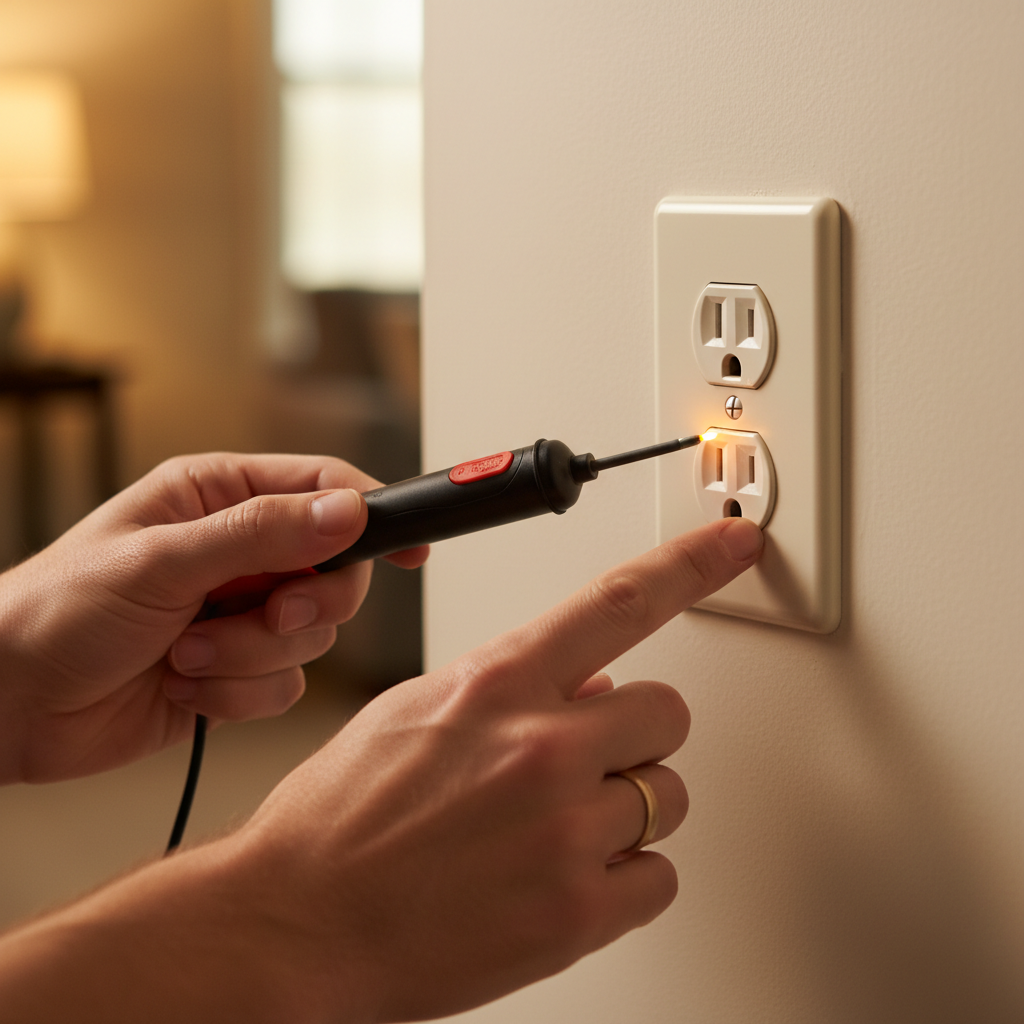
Kill the Power. — Go to your home’s main electrical panel. Locate the breaker that controls the circuit for the warm outlet. It may be labeled "Living Room Outlets" or "Bedroom." Flip it to the full "OFF" position. To be certain, plug a lamp into the outlet to confirm it has no power, or use a non-contact voltage tester (the safest method) to verify there is no voltage present.
-
Gather Your Tools & Materials. — You’ll need a flathead screwdriver, a Phillips head screwdriver, needle-nose pliers, and a reliable non-contact voltage tester. If the outlet shows any sign of damage, you'll need a new 15A "spec-grade" or "commercial-grade" receptacle (costing ~$3-5) which provides better clamping power than cheap builder-grade models.
-
Unscrew and Remove. — Use the flathead screwdriver to remove the single screw holding the faceplate. With the plate off, use the Phillips head screwdriver to remove the two screws at the top and bottom holding the outlet in its electrical box. Carefully pull the outlet straight out from the wall. The wires will still be attached.
-
Confirm Power is Off. — This is not paranoia; it's professional practice. With the outlet pulled out, carefully use your non-contact voltage tester to check the wires themselves. Place the tip near each screw terminal (brass for hot, silver for neutral) to be absolutely certain no voltage is present before you proceed.
-
Visually Inspect the Connections. — Look for tell-tale signs of a bad connection. You might see melted plastic around the screw terminals, black or brown scorch marks on the outlet body, or wire insulation that looks burnt, brittle, or melted back from the connection point. Pay equal attention to the silver (neutral) and brass (hot) terminals.
-
Identify the Loose Culprit. — Gently tug on each wire where it connects to the outlet. Does it wiggle? Is it held firmly? The most common and dangerous issue is "backstabbed" connections. These are small holes on the back of the outlet where installers can quickly push wires in. They are notorious for failing and creating high-resistance connections. Any wires in these backstab holes should be moved to the screw terminals.
-
Correct the Loose Connection. — If you find a loose screw, simply tighten it an additional half-turn until snug—don't overtighten. If a wire was backstabbed, turn the corresponding screw terminal to open the clamp, remove the wire, and re-secure it under the screw. The proper method is to strip about 3/4" of insulation, use pliers to bend a C-shaped hook in the direction the screw turns (clockwise), hook it around the screw, and then tighten the screw firmly. The insulation should come right up to the edge of the outlet body, with no bare copper showing on the sides.
-
Replace When in Doubt. — If the outlet shows any signs of melting, discoloration, or heat damage, do not reuse it. Cut the wires, re-strip them, and connect a new receptacle. It’s a $3 part and is not worth the risk. Connect the black wire to the brass-colored screw, the white wire to the silver-colored screw, and the bare copper wire to the green ground screw.
-
Fold Wires and Reinstall. — Carefully fold the wires back into the electrical box in an accordion or "S" shape. Do not just jam the outlet back in, as this can loosen the connections you just fixed. Screw the receptacle back into the box, attach the faceplate, but don't overtighten and crack it.
-
Power Up and Test. — Turn the circuit breaker back to the "ON" position. Plug in a lamp to test the outlet. For peace of mind, plug in a small appliance (like a phone charger) and leave it for 30 minutes. Come back and feel the outlet. It should be completely cool to the touch. If it is, your repair was a success.
Common Causes
- Backstabbed Connections: The most frequent cause. The small spring clips inside these push-in terminals provide poor contact area and loosen over time, leading to arcing.
- Improper Torque: Screws that are too loose fail to make solid contact. Screws that are too tight can damage the copper wire conductor, creating a weak spot that heats up.
- Aluminum Wiring: Common in homes built from the mid-1960s to mid-1970s. Aluminum expands and contracts differently than copper, causing connections to loosen. This wiring requires special connectors (CO/ALR) and handling by an electrician.
- Vibrations: Over many years, normal vibrations in a house can cause screw terminals to work themselves loose.
- Overloading: Plugging a high-draw appliance (like a 1,500W space heater) into an outlet that has a slightly loose connection will dramatically accelerate the failure, generating intense heat.
- Damaged Wires: A wire nicked or damaged during installation can create a high-resistance point that heats up under load.
Common Mistakes
- Ignoring It: The number one mistake is feeling a warm outlet and assuming it's normal or will fix itself. It will only get worse.
- Forgetting to Kill the Power: Failing to turn off the breaker and verify with a tester before working is a recipe for electrocution.
- Using Backstab Terminals: When replacing an outlet, it’s tempting to use the quick push-in holes. Always use the screw terminals for a secure, long-lasting connection.
- Replacing a Melted Outlet Without Fixing the Wires: The melted outlet is the symptom, not the root cause. You must find and fix the loose wire that caused the heat.
- Leaving Exposed Copper: After connecting a wire to a screw, too much bare copper shouldn’t be visible. Trim and strip the wire to the correct length.
- Painting Over Outlets: Paint can get into the slots, creating a poor connection for plugs and potentially introducing an insulating layer that contributes to heat buildup.
Cost & Time Breakdown
Fixing a warm outlet is an inexpensive repair if caught early, but the cost of ignoring it can be catastrophic.
| Task | DIY Cost | Pro Cost | Time (per outlet) |
|---|---|---|---|
| Inspect & Tighten Wires | $0 (if you have tools) | $125 - $200 (service call) | 20-30 minutes |
| Replace Single Receptacle | $3 - $15 | $150 - $250 | 30-45 minutes |
| Pro Electrical System Checkup | N/A | $200 - $400 | 1-3 hours |
| Upgrade from Backstab to Screws | $3 per outlet | Included in replacement cost | Additional 5 min/outlet |
| Remediate Aluminum Wiring | N/A (Pro Only) | $8 - $65 per outlet | 3-8 hours for a whole house |
Tips & Prevention
- Periodic Checks: Once a year, go around and feel the outlets you use most often, especially those for high-draw appliances like space heaters, hair dryers, or window AC units.
- Avoid "Octopus" Plugs: Overloading a single outlet with multi-taps and power strips can contribute to heat buildup, especially if the underlying connection is weak.
- Always Use Screw Terminals: When you or an electrician are installing new devices, insist on using the screw terminals. Never use the backstab connections.
- Buy Quality Devices: Spend the extra $2 on "spec-grade" or "commercial-grade" receptacles. They have much better internal contacts and clamping pressure.
- Listen and Smell: A faint, intermittent buzzing or crackling sound from an outlet, or a sharp smell of ozone or burnt plastic, are urgent warning signs. Kill the circuit immediately.
- Professional Inspection: If your house is over 30 years old, consider having a licensed electrician perform a comprehensive inspection of your electrical system every 5-10 years.
When to Call a Professional
The step-by-step guide above is for a straightforward fix. However, you should call a licensed electrician immediately if you encounter any of the following:
- You Are Not 100% Confident: Your safety is worth more than a service call fee. If you have any hesitation, make the call.
- Multiple Warm Outlets: If more than one outlet feels warm, it could signal a more widespread problem, a faulty circuit, or even an issue at the breaker panel.
- Burning Smell or Scorch Marks: If you smell burnt plastic or see black marks spreading onto the wall itself, the problem has advanced. Do not use the circuit until it has been professionally inspected.
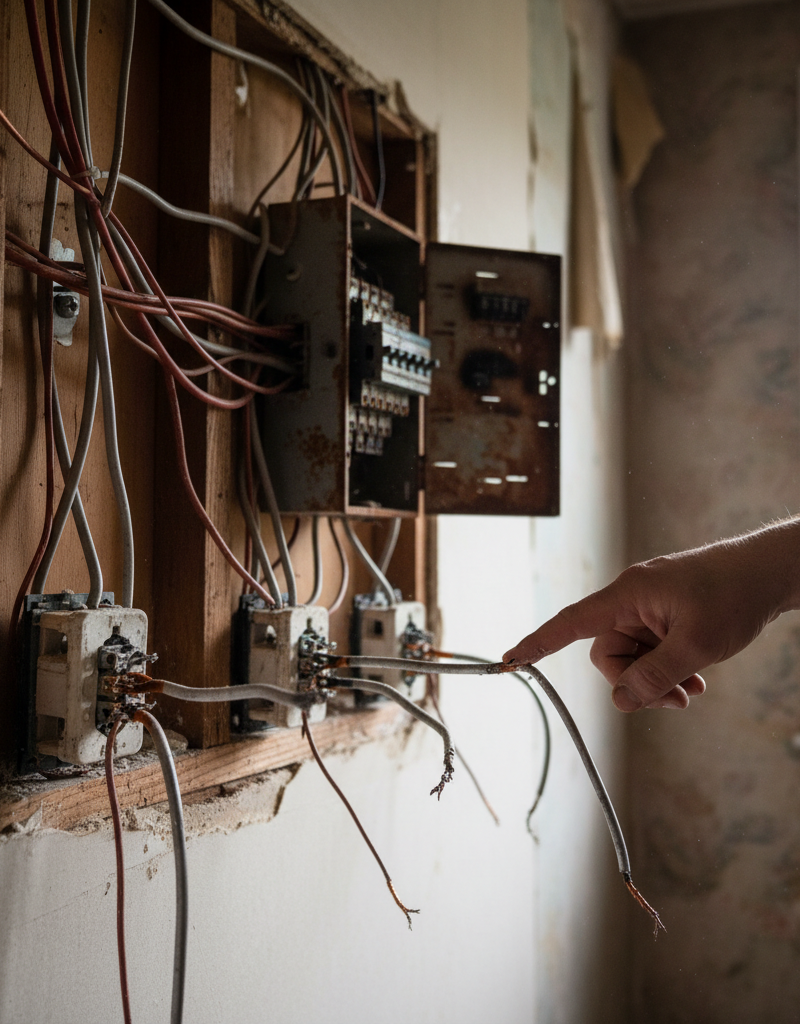
- Aluminum Wiring: If you open the outlet and see silver-colored wires instead of copper, stop immediately. Aluminum wiring is a special fire hazard that requires an expert.
- The Lights Flicker When You Use the Outlet: This often points to a serious arcing connection that needs immediate attention.
- The Breaker is Also Warm: If the breaker controlling the circuit feels warm to the touch in the panel, this is a major red flag indicating a possible overload or breaker failure. All work inside a main panel is a job for a professional.
What should this project cost?
Enter your project details for a realistic cost range before you call anyone.
Outlet and switch work usually $150–$400; panel upgrades commonly $1,800–$4,200.
- Regional adjustment
- National average
- Labor share (typical)
- ~$709
- Quotes to collect
- 3 written estimates
Educational estimate based on national averages — not a binding quote. Always confirm with written local estimates.
Fixly Project Decision Box
- DIY difficulty
- Professional Recommended
- Estimated time
- Diagnosis 1–2 hours
- Cost level
- Moderate
Main tools / materials
- Non-contact voltage tester
- Outlet tester
- Flashlight
When to stop and call a pro
- Burning smell, scorch marks, or a warm outlet or switch plate
- A breaker that trips again right after being reset
- Any work inside the service panel
- Aluminum wiring or cloth-insulated wiring
Need professional help?
Talk to a Licensed ElectricianGet the print-ready PDF of this guide
A clean, ad-free, printable version you can keep on your phone or pin to the workshop wall. Free with a FixlyGuide account.
- Print-optimized layout
- Tools, materials & every step included
- Saved to your account
Frequently asked questions
Is it ever normal for an outlet to be warm?+
No. A standard electrical outlet should never feel warm or hot to the touch. The only exception is with some electronic devices like dimmers, GFCI test buttons, or smart outlets, which may feel slightly above room temperature. A truly warm or hot outlet indicates a dangerous loose connection.
What is the difference between the hot and neutral wire?+
The hot wire (black) carries electrical current from your panel to the device. The neutral wire (white) completes the circuit by carrying that current back to the panel. A loose connection on either wire is dangerous, but a loose neutral is especially problematic as it can cause arcing and unpredictable voltage issues.
Can a loose neutral wire actually cause a fire?+
Yes, absolutely. A loose neutral wire creates high electrical resistance, which generates intense heat. This heat can melt the outlet's plastic, char surrounding wood framing, and ignite drywall, leading to a serious house fire.
Are 'backstab' electrical outlets against code?+
In many areas, backstab connections are not strictly against code, but they are universally considered bad practice by professional electricians. The connections are notoriously unreliable and are a leading cause of failures that lead to warm outlets and fire hazards. Always use the screw terminals for a safer connection.
Discussion
Loading comments…