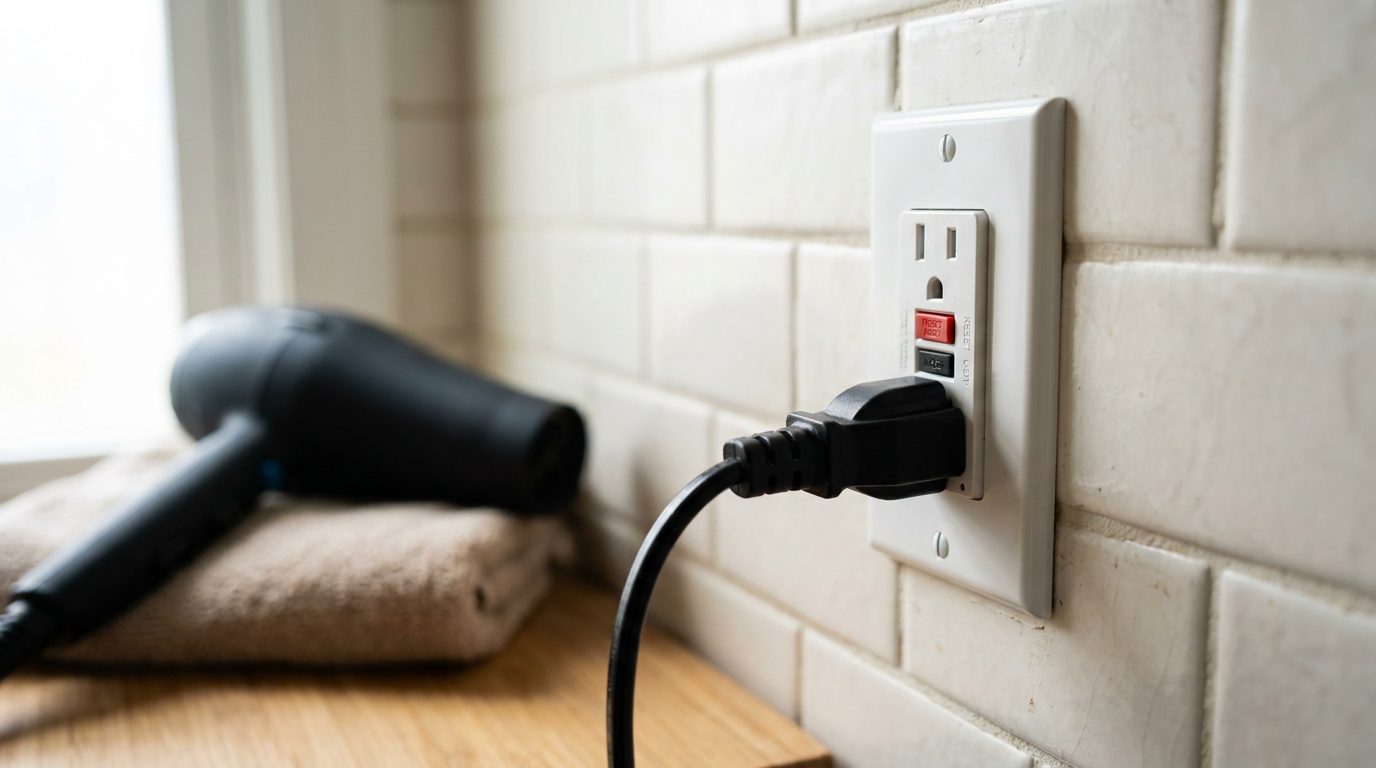
- Plug the hair dryer in and run it on high.
- If the breaker in this new room trips, the dryer’s the problem. It’s got a fault or a short. Toss that thing and buy a new one. It’s not worth risking.
- If the hair dryer works perfectly fine, the appliance isn’t the culprit. That points back to the original circuit. Keep going.
Electrical · Panel or service upgrade
| Project category | Electrical |
|---|---|
| Problem type | Panel or service upgrade |
| Trade required | Electrical |
| Urgency | Planned project |
| Safety risk | High safety risk |
| DIY suitability | Licensed pro only |
| Cost category | High cost |
| Typical timeline | Permit plus utility scheduling, commonly 2–6 weeks |
| Contractor type | Licensed electrician |
Repair option
Add a subpanel when the main service is adequate.
Replacement option
Full service upgrade with utility coordination and permits.
Common causes
- Obsolete or recalled panel brands
- Service capacity too small for added loads
- No room for required AFCI/GFCI breakers
Relevant tools:project cost estimatorcompare quotes
Published October 13, 2026Last updated October 13, 2026
Tools & materials you'll need
Affiliate links- AmazonNew standard outlet1 · Only if you isolate the problem to a single faulty outlet.
As an Amazon Associate FixlyGuide earns from qualifying purchases — at no extra cost to you. Prices and availability are accurate as of publication and subject to change.
Quick Answer
When a hair dryer or another high-wattage appliance trips your circuit breaker, it’s usually one of two things. Most times, it’s a plain old circuit overload—you’re trying to pull more juice than that circuit can safely give. The other one’s the uglier cousin: a short circuit, where bad wiring or a junk appliance creates a dangerous path for electricity. Once you know which one you’re dealing with, you’ll know if this is a 5-minute fix or a call-a-pro situation.
The Problem
You plug in the hair dryer, flip it to high, and click—the bathroom lights go dark, and sometimes the bedroom goes with them. You walk to the garage or closet, find the panel, and reset the breaker. Everything’s fine until you try it again. Same story. Same annoyance. That little switch isn’t being dramatic. It’s doing its job, plain and simple. A breaker trips because something’s wrong, and the whole game is figuring out what kind of wrong it is.
How It Works
Think of your home’s electrical system like a bunch of roads. Each circuit is its own lane, and it’s only built to handle so much traffic—electrical current, measured in amps. Your breakers are the traffic cops. A standard residential breaker is usually 15 or 20 amps. That number isn’t a suggestion. It’s the hard ceiling for the wires in that circuit. Push past it for more than a few seconds, and the breaker heats up and trips, cutting power before those wires in your wall cook themselves and start a fire.
This trip usually happens for two reasons:
-
Overload: This is the common one. It’s just math. You’ve got too many things running on the same circuit at once. A beefy hair dryer can pull 15 amps all by itself (a typical 1875-watt model on high). If that dryer’s on a 15-amp circuit and the lights, a curling iron, and maybe a TV in the next room are also pulling power, you’ve blown past the circuit’s limit. The breaker shuts it down. No drama. Just a traffic jam.
-
Short Circuit: This is the one that gets my attention fast. A short happens when a "hot" wire (black) touches a "neutral" wire (white) or a ground wire (bare copper). That gives electricity a shortcut, bypassing the load it’s supposed to go through. The current spikes hard—hundreds of amps in a blink—and the breaker trips with a much sharper snap. That can come from a bad appliance, sure, but it can also come from damaged wiring in an outlet, a switch, or something hiding in the wall. That’s the stuff that keeps a guy honest.
Knowing the difference matters. An overload is a nuisance. A short circuit is a fire hazard, and no dice on ignoring it.
Step-by-Step Fix
Let’s sort out why your breaker’s tripping. You don’t need a pile of tools here. You need patience and a simple process of elimination.
Safety First: Before you touch anything, make sure your hands are dry and you’re not standing in water. If an outlet smells burnt or looks scorched, stop right there and call an electrician. Don’t try to be a hero.
1. Identify the Tripped Circuit
- Head to your electrical panel. The tripped breaker’ll usually be sitting in the "off" position or stuck halfway. To reset it, you’ve got to push it firmly all the way to "off" first, then flip it back to "on." If it won’t stay on even with everything unplugged, you’ve likely got a wiring problem—that’s pro territory.
2. Unplug Everything
- Go to the room, or rooms, that lost power. Unplug every single thing from the outlets on that circuit. Don’t miss the small stuff—nightlights, chargers, power strips, the works. Turn off the lights on that circuit, too. You want the whole thing unloaded.
3. Reset the Breaker
- With everything unplugged, go back and reset it again. It ought to stay on now. If it trips right away, you’ve probably got a short in the permanent wiring, not in one of your appliances. STOP HERE and call an electrician. This isn’t a DIY save.
4. Isolate the Appliance
- If the breaker stays on, good. Now you’ve got a baseline. The problem’s likely one of the devices you unplugged. The main suspect is the one that was running when the breaker popped—the hair dryer. Take it to a different room on a different circuit. Kitchen or garage outlets are usually a good bet since they’re often on heavier-duty 20-amp circuits.
5. Test the Suspect Appliance
- Plug the hair dryer in and run it on high.
- If the breaker in this new room trips, the dryer’s the problem. It’s got a fault or a short. Toss that thing and buy a new one. It’s not worth risking.
- If the hair dryer works perfectly fine, the appliance isn’t the culprit. That points back to the original circuit. Keep going.
6. The Overload Test
- Go back to the original bathroom. Plug in only the hair dryer. Turn it on high. If it runs without tripping the breaker, you’ve got an overload. The circuit can handle the dryer by itself, but not with other stuff running alongside it. You can prove it pretty quick by turning on the bathroom lights or plugging in another device while the dryer’s running. Chances are the breaker trips again.
7. The Lingering Short-Circuit Test
- If the breaker still trips in the original bathroom even with only the hair dryer plugged in, and you’ve already proven the dryer works fine elsewhere, the problem could be a bad outlet. I’ve seen outlet contacts get loose or burned just enough to short out when a plug gets wiggled or a heavy load gets put on it. Try the dryer in another outlet on the same circuit. If it works in one outlet but not the other, you’ve found the bad receptacle that needs replacing. I pulled a water heater in Frisco last month that had exactly this kind of sneaky connection issue—looked fine until you put a load on it.
8. Living with an Overloaded Circuit
- If you’ve confirmed it’s just an overload, the fix is load management. That means you don’t run the 1875-watt hair dryer at the same time as a 1500-watt space heater on the same 15-amp circuit. Dry your hair before you kick on the electric curling iron. In older homes, one circuit often feeds more than you’d expect, so you may have to figure out what else is tied into it.
Common Causes
- High-Wattage Appliances: This is the big one. Hair dryers, space heaters, toasters, microwaves, and vacuums are power hogs. A lot of them sit around 1,500 watts, which is 12.5 amps on its own. On a 15-amp circuit, that doesn’t leave much breathing room.
- Too Many Devices: It’s not just the big stuff. Little loads add up fast—lights, TVs, computers, chargers. Before you know it, you’ve overloaded the circuit without realizing it.
- Faulty Appliance Cord: A frayed or damaged cord on your hair dryer can short out. All that winding, unwinding, twisting, and yanking beats up the cord right where it meets the appliance.
- Worn-Out Outlets: The spring contacts inside an outlet that hold the plug prongs wear out over time. Once they get loose, you can get arcing, heat, and intermittent shorting.
- Aging Circuit Breakers: Breakers don’t last forever. An old one can get weak and start tripping below its rated amperage ("nuisance tripping"). If a breaker starts acting up on loads it used to handle just fine, the breaker itself might be on its way out.
- Shared Circuits in Older Homes: Before the 1990s, it was common to put multiple rooms—like a master bedroom and the attached bathroom—on one 15-amp circuit. That setup and modern plug-in loads don’t always get along.
Common Mistakes
- Ignoring the Trip: Don’t keep resetting a breaker over and over without digging into it. It’s telling you something. If it trips more than once, stop and figure out why.
- Using a "Cheater" Plug or Extension Cord: Don’t run a heavy-duty appliance like a hair dryer on a cheap, light-duty extension cord. The thin wires in that cord can overheat and melt long before the breaker ever thinks about tripping. And a three-prong to two-prong adapter? Bad move. It kills the ground protection.
- Replacing the Breaker with a Bigger One: This is the worst mistake on the list. Never swap a 15-amp breaker for a 20-amp breaker just to stop nuisance trips. The wiring in the wall is sized for 15 amps. Forcing 20 amps through it is like trying to shove a fire hose through a garden hose—the wires get hot enough to start cooking the framing around them.
- Assuming It’s Always an Overload: Overloads happen, sure. But a short circuit is a different animal. If a breaker trips with a loud snap, or you see sparks or smell burning, treat it like a short and get help.
Cost & Time Breakdown
Here’s what you can expect in terms of cost and time to solve your tripping breaker issue.
| Task | DIY Cost | Pro Cost | Time |
|---|---|---|---|
| Identifying an appliance overload | $0 | $100–$150 (trip fee) | 15–30 minutes |
| Replacing a faulty hair dryer | $25–$80 | N/A | 5 minutes |
| Replacing a standard 15-amp outlet | $3–$10 | $125–$200 | 30–45 minutes |
| Replacing a faulty 15-amp circuit breaker | $10–$20 (breaker only) | $150–$250 | 1 hour |
| Running a new dedicated 20-amp circuit | Not a recommended DIY project | $400–$900+ | 4–8 hours |
Tips & Prevention
- Check the Wattage: When you buy a new high-power appliance, look at the wattage (W) on the box. Divide watts by 120 (volts) to get the amps it’ll draw. An 1875W hair dryer pulls 15.6 amps—already over the limit for a 15-amp circuit.
- Stagger Your Routine: This is the easiest overload fix. Run the space heater for 15 minutes to warm up the bathroom, then shut it off before you use the hair dryer. Simple load juggling.
- Map Your Circuits: Spend an hour figuring out what outlets and lights are on each circuit. Turn on all the lights and plug a small lamp into every outlet. Then flip one breaker off at a time and see what goes dead. Make yourself a chart and tape it inside the panel door.
- Inspect Cords Regularly: Give your appliance cords a quick look. If you see cracks, exposed wire, or fraying near the plug or the appliance body, replace it.
- Invest in a Dedicated Circuit: If you’re always fighting overloads in the bathroom, the real fix is to have an electrician run a new dedicated 20-amp circuit just for the bathroom outlets. That’s standard in new construction for a reason.
When to Call a Professional
Figuring out an overload is a straightforward DIY job, but electrical work itself carries real risk. Stop and call a licensed electrician right away if you run into any of these:
- The breaker trips again instantly after you’ve unplugged everything from the circuit.
- You hear buzzing or crackling from an outlet, a switch, or the breaker panel.
- You smell a fishy, acrid, or ozone-like odor, which usually means melting plastic or an electrical arc.
- You see scorch marks or discoloration on an outlet or the wall around it.
- The circuit breaker itself feels hot to the touch.
Those are all signs of a dangerous condition, like a short circuit or a loose connection hiding in the walls. Don’t roll the dice—that’s what the pros are for.
Related Articles
Keep troubleshooting with these hand-picked guides from FixlyGuide:
- Light Switch Not Working? 7 Causes to Check Before You Call an Electrician — Can't figure out why your light switch stopped working? Don't panic—this guide walks through the 7 most common causes, from a simple trippe…
- That One Warm Breaker Is Trying to Tell You Something — A single warm circuit breaker is not normal; it's a critical warning sign of an electrical issue, often an overload or a dangerous loose co…
- The Sneaky Reason Your Extension Cord Keeps Tripping the Breaker — Don't just reset that breaker again! Discover why your extension cord keeps tripping your circuit and how to fix it right.
- The Hidden Reason Your Circuit Breaker Keeps Tripping (It's Not Always an Overload) — Unexpected circuit breaker trips are a common, frustrating issue often pointing to more than just a simple overload and can indicate underl…
- The 3 Hidden Reasons Your Circuit Breaker Keeps Tripping (And How to Stop It) — Uncover the surprising culprits behind repeatedly tripping circuit breakers and learn practical, actionable steps to diagnose and resolve t…
- The Grain Tear-Out That Makes Your Wood Look Like Trash — Grain tear-out isn't just ugly; it ruins projects. I'll show you why it happens and the simple tricks I use to get clean, crisp cuts every…
Repair or replace this system?
Plug in four numbers and see which choice holds up financially.
Free and instant. Educational guidance only — not a quote, inspection, or professional diagnosis.
Questions to ask before you sign
Ask every contractor the same questions and the cheapest bid stops looking cheapest. Check them off as you go — your progress is saved on this device.
Free, no signup. Bring this to every walkthrough so you compare bids on the same terms.
What should this project cost?
Enter your project details for a realistic cost range before you call anyone.
Outlet and switch work usually $150–$400; panel upgrades commonly $1,800–$4,200.
- Regional adjustment
- National average
- Labor share (typical)
- ~$709
- Quotes to collect
- 3 written estimates
Educational estimate based on national averages — not a binding quote. Always confirm with written local estimates.
Fixly Project Decision Box
- DIY difficulty
- Professional Recommended
- Estimated time
- Diagnosis 1–2 hours
- Cost level
- Moderate
Main tools / materials
- Non-contact voltage tester
- Outlet tester
- Flashlight
When to stop and call a pro
- Burning smell, scorch marks, or a warm outlet or switch plate
- A breaker that trips again right after being reset
- Any work inside the service panel
- Aluminum wiring or cloth-insulated wiring
Need professional help?
Talk to a Licensed ElectricianRepair or replace?
Run the age, cost ratio, and repair history through the calculator before you commit.
- Estimate this projectGet a cost range for your scope and ZIP before you call anyone.Open
- Get local estimatesSend one request and compare written estimates from vetted pros.Open
Free, no signup required. Estimates are educational guidance, not a quote or an inspection.
Frequently asked questions
Why does the breaker trip with a hair dryer but not a vacuum cleaner?+
It comes down to wattage. A high-power hair dryer can use up to 1875 watts, while many vacuums use 1000-1400 watts. On a 15-amp circuit, that 1875-watt dryer is already pushing the limit, while the vacuum leaves a little more headroom for lights or other small devices.
Is it safe to just use a lower setting on my hair dryer?+
Yes, that's a perfectly safe and practical way to manage an overloaded circuit. Using the 'low' or 'medium' heat setting draws significantly less current, often preventing the breaker from tripping. It's a great temporary solution.
My house is new. Why would a modern home have this problem?+
Even in new homes built to modern code, which requires a 20-amp circuit for bathroom outlets, you can still cause an overload. Running a 15-amp hair dryer and a 12-amp portable space heater at the same time will trip even a 20-amp breaker. It's less common, but the math still applies.
Can a faulty power strip cause a breaker to trip?+
Absolutely. An old or cheap power strip can develop internal shorts, or you might plug too many things into the strip itself, creating an overload. If you suspect the strip, test the hair dryer by plugging it directly into the wall outlet.
What's the difference between a standard breaker and a GFCI or AFCI breaker?+
A standard breaker protects against overloads and short circuits. A GFCI (Ground Fault Circuit Interrupter) also protects against electrical shock by sensing tiny imbalances in current, like if electricity is flowing through a person. An AFCI (Arc Fault Circuit Interrupter) is designed to detect dangerous electrical arcs—the kind that start fires—which a standard breaker might not catch.
How can I tell if I have 15-amp or 20-amp circuits?+
Just look at the breaker in your electrical panel. The number printed on the switch handle (e.g., '15' or '20') is its amperage rating. You can also sometimes tell by the outlets; 20-amp outlets have a little T-shaped slot on the neutral side, though 20-amp circuits can also have standard-looking 15-amp outlets.
The breaker handle feels warm. Is that normal?+
No, a breaker should not feel noticeably warm to the touch. A warm breaker can indicate that it's carrying a heavy load close to its limit, or it could be a sign of a bad connection or a failing breaker. If it's hot, call an electrician right away.
Why does my hair dryer trip the breaker at my new house but not my old one?+
This is often due to modern safety devices. Your new home likely has AFCI breakers, which are much more sensitive than older standard breakers. They can sometimes be 'fooled' into tripping by the normal electrical arcs created inside the motor and switches of certain appliances, even if the appliance isn't faulty.
Discussion
Loading comments…