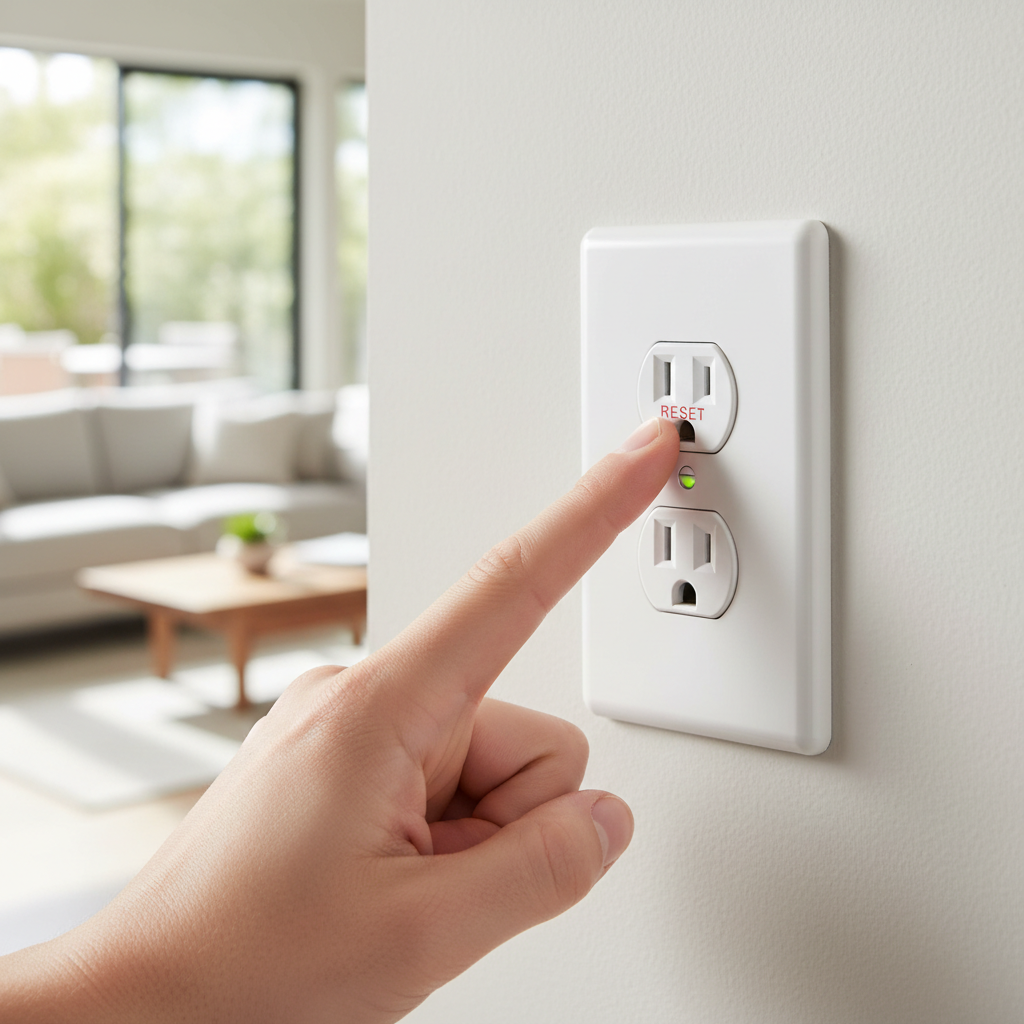
- Test the Outlet and Appliances – Verify power returns and isolate the problem.
- After resetting any GFCIs and/or toggling the breaker, plug a known-working small appliance (like a lamp or a phone charger) into the previously non-working outlet. Confirm if power has been restored.
- If power is back, congratulate yourself! If not, try the known-working appliance in a different outlet that you know for sure is working. This verifies the appliance itself isn't the problem.
- If only the original appliance caused the GFCI to trip, that appliance is likely faulty and should be repaired or replaced.
Electrical · Panel or service upgrade
| Project category | Electrical |
|---|---|
| Problem type | Panel or service upgrade |
| Trade required | Electrical |
| Urgency | Planned project |
| Safety risk | High safety risk |
| DIY suitability | Licensed pro only |
| Cost category | High cost |
| Typical timeline | Permit plus utility scheduling, commonly 2–6 weeks |
| Contractor type | Licensed electrician |
Repair option
Add a subpanel when the main service is adequate.
Replacement option
Full service upgrade with utility coordination and permits.
Common causes
- Obsolete or recalled panel brands
- Service capacity too small for added loads
- No room for required AFCI/GFCI breakers
Relevant tools:project cost estimatorcompare quotes
Published May 18, 2026Last updated August 17, 2026
Tools & materials you'll need
Affiliate linksAs an Amazon Associate FixlyGuide earns from qualifying purchases — at no extra cost to you. Prices and availability are accurate as of publication and subject to change.
Quick Answer
When a wall outlet suddenly stops providing power, yet the corresponding circuit breaker in your electrical panel remains firmly in the “ON” position, it can be a baffling and frustrating mystery. The most frequent explanation for this perplexing situation isn't a faulty breaker or a wiring nightmare, but rather a tripped Ground Fault Circuit Interrupter (GFCI) device. GFCI outlets and breakers are designed to prevent powerful electrical shocks by cutting power the instant they detect an imbalance in the current, such as when electricity is flowing through an unintended path – like a person. Crucially, one GFCI outlet can protect several standard outlets downstream on the same circuit, meaning the GFCI itself might be located in an entirely different room.
The Problem
You plug in a lamp, a phone charger, or a vacuum cleaner, and nothing happens. No light, no charging, no hum. You head to the electrical panel, only to find all the breakers are seemingly in their correct “ON” positions. This scenario often leads homeowners to assume a complex electrical issue. However, the problem is frequently much simpler and safer to address than you might think: a tripped GFCI. These safety devices are mandatory in areas susceptible to moisture or outside, such as kitchens, bathrooms, garages, basements, and outdoor locations. They even appear in older homes as part of safety upgrades. If an outlet in your living room, for example, shares a circuit with a bathroom GFCI, a trip in the bathroom could cut power to the living room outlet without flipping a breaker.
How It Works
To understand why an outlet might die without tripping a breaker, it's essential to grasp the basics of how your home's electrical system works and the specific role of GFCIs. Electricity flows from your utility company, through your main service panel, and into individual circuits that power specific areas or appliances in your home. Each circuit is protected by a circuit breaker, which is essentially an automatic switch designed to "trip" (turn off) and cut power if there's an overcurrent (too many appliances drawing power) or a short circuit (a direct path for electricity outside its intended wiring). This prevents wiring from overheating and causing fires.
A Ground Fault Circuit Interrupter (GFCI) adds another layer of safety, specifically against electrical shock. Unlike a standard circuit breaker, a GFCI doesn't primarily protect against overcurrents or short circuits – it protects people. It constantly monitors the electrical current flowing to an appliance and the current flowing back from it. In a perfectly functioning circuit, these two currents should be identical. If the GFCI detects even a tiny imbalance – as little as 5 milliamperes (mA) – it assumes some current is leaking out of the circuit, potentially through a person who has come into contact with a live wire or an appliance submerged in water. In a fraction of a second (typically 1/40th of a second), the GFCI trips, breaking the circuit and cutting power to prevent a severe shock or electrocution. This is why a GFCI can trip without a breaker tripping: it's responding to a ground fault, not an overload or short circuit that would trigger the breaker.
When a GFCI outlet trips, its internal mechanism opens the circuit, cutting power to itself and any standard outlets or lights wired downstream from it on the same circuit. The circuit breaker for that circuit remains on because there wasn't an overcurrent or short that would cause it to trip. This "daisy-chaining" of protected outlets is a common and code-approved practice, meaning a GFCI in your garage could be protecting outlets in a hall or bedroom. Furthermore, you might have a GFCI breaker in your main electrical panel, which looks like a standard breaker but has a small test/reset button on it. If this type of GFCI trips, it will switch to the OFF position, but it functions similarly by detecting ground faults.
Step-by-Step Fix
Safety First! Before working on any electrical outlet, always ensure your hands are dry. If you are unsure at any point, stop and call a licensed electrician. Never attempt to bypass a GFCI or work with live electricity.
-
Check All GFCI Outlets on the Circuit – Identify and reset a tripped GFCI.
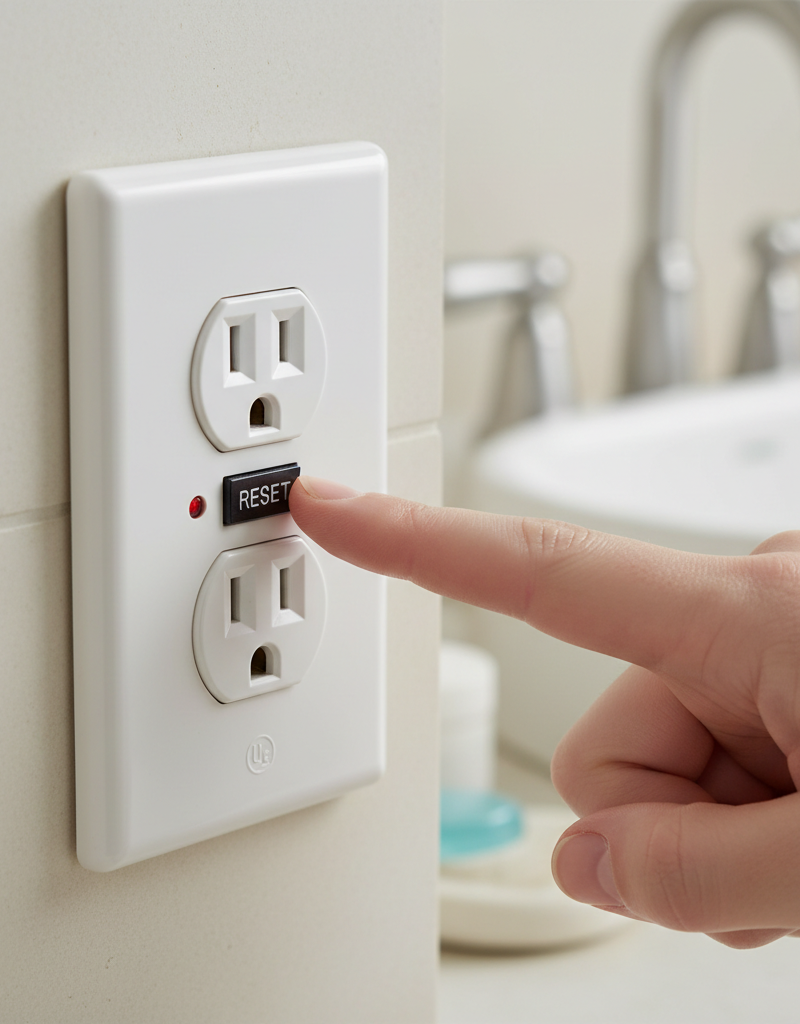
- Begin by looking for the GFCI outlet itself. These are easily recognizable by the distinct "TEST" and "RESET" buttons located on their face. They are typically found in bathrooms, kitchens, garages, basements, laundry rooms, and outdoor areas. You might need to search other rooms, especially if the non-working outlet is far from a typical wet area, as one GFCI can protect multiple downstream outlets. Walk through your entire home, looking at every outlet.
- When you locate a GFCI, press the "RESET" button firmly. You should hear a distinct click. If the button doesn't stay in, or if it immediately trips again, there's still a ground fault somewhere. Unplug all devices from the non-working outlet and all outlets protected by the GFCI, then try resetting it again. If it holds, plug in one device at a time to identify the faulty appliance. If it still won't reset, the GFCI itself might be faulty or there's a stubborn ground fault.
-
Toggle the Circuit Breaker – Ensure the breaker is fully engaged.
- Even if the breaker appears to be in the "ON" position, sometimes it can be subtly tripped without visually indicating it. Go to your electrical panel. Carefully locate the breaker that controls the non-working outlet's circuit. If you're unsure which one it is, you might need to flip breakers one by one, noting which rooms lose power.
- Firmly push the suspect breaker completely to the "OFF" position, then push it back just as firmly to the "ON" position. Don't just nudge it. This fully resets its internal mechanism. If the breaker instantly trips back to OFF, do NOT force it on; there is a short circuit or overload that needs professional attention.
-
Test the Outlet and Appliances – Verify power returns and isolate the problem.
- After resetting any GFCIs and/or toggling the breaker, plug a known-working small appliance (like a lamp or a phone charger) into the previously non-working outlet. Confirm if power has been restored.
- If power is back, congratulate yourself! If not, try the known-working appliance in a different outlet that you know for sure is working. This verifies the appliance itself isn't the problem.
- If only the original appliance caused the GFCI to trip, that appliance is likely faulty and should be repaired or replaced.
-
Check Other Outlets on the Same Wall/Circuit – Identify a pattern or further GFCIs.
- Sometimes, an entire run of outlets (all on the same circuit) might be affected. Check other outlets mounted in the same wall box as the dead outlet, or other adjacent outlets down the wall. This can help you confirm if the issue is isolated to one outlet or a larger section of the circuit.
- Additionally, visually inspect for any other GFCI outlets on the circuit that you might have missed in step 1. Remember, they don't have to be in the same room.
-
Inspect the Outlet for Visible Damage – Look for signs of a burnt or damaged receptacle.
- SAFETY NOTE: This step involves working near live electricity. Only proceed if you are comfortable and have a non-contact voltage tester. ALWAYS turn off the power to the circuit at the main breaker panel before attempting this inspection.
- Once power is off, carefully remove the faceplate of the non-working outlet. Gently pull the outlet receptacle slightly away from the wall box (without disconnecting wires yet). Look for any signs of burnt wires, loose connections, discolored insulation, or a melted/scorched outlet body. Pay close attention to the wire terminals. Loose screw terminals are a common culprit for intermittent power.
- If you see any damage, do NOT attempt a DIY repair beyond replacing the entire outlet. This likely indicates an electrical fault requiring further investigation.
-
Test for Voltage – Use a non-contact voltage tester (NCVT) safely.
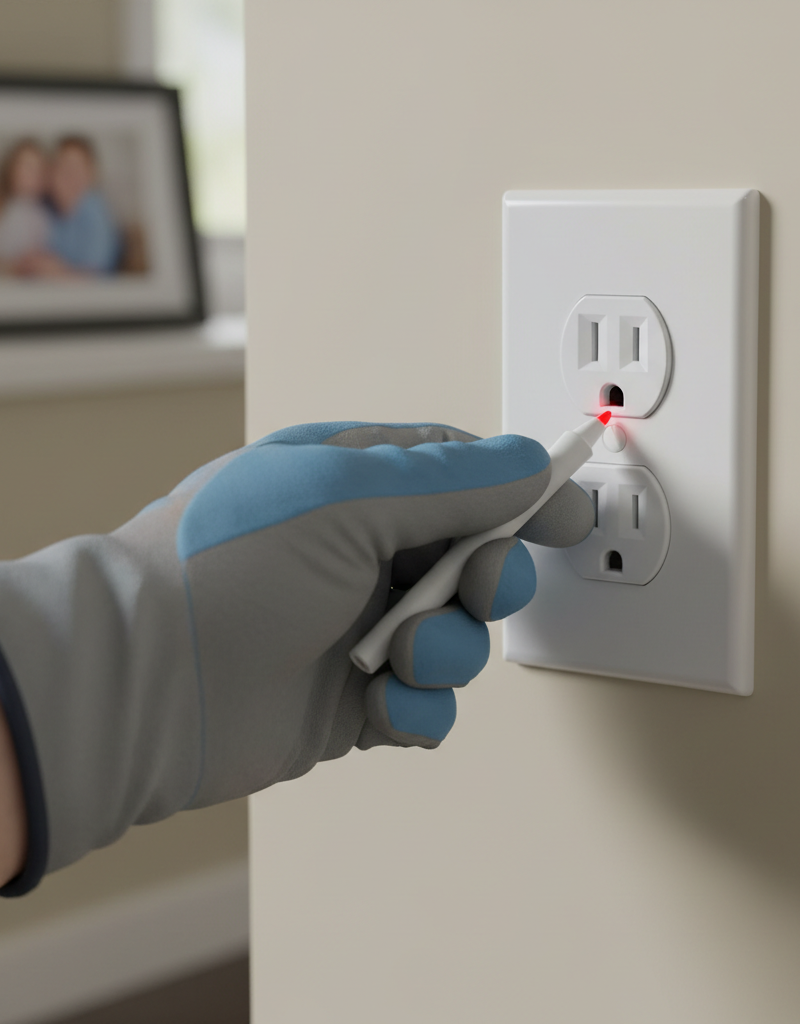
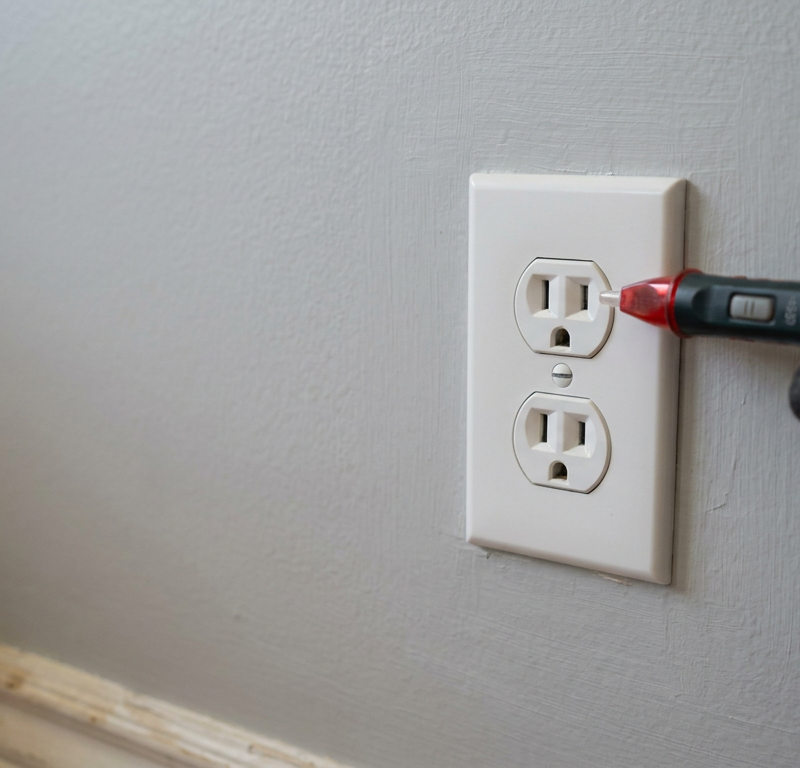
- SAFETY NOTE: Ensure power is OFF at the breaker before manipulating any wires. After inspection, turn power back on for this test, but stand clear of the outlet until you are ready to test. If you are extremely uncomfortable with live circuit testing, skip this step and call a pro.
- With the outlet faceplate removed and the power on to the circuit, carefully use a non-contact voltage tester to verify if any voltage is present at the terminals (especially the 'hot' or 'black' wire terminal and the 'common' or 'white' wire terminal). Hover the NCVT near the wires connected to the outlet. If the NCVT lights up or beeps, there's voltage, indicating the power is reaching the outlet box, but the outlet itself might be faulty internally. If no voltage, the problem is further upstream, potentially a loose wire connection within the wall or at the electrical panel.
-
Consider a Faulty Outlet – If all else fails, replace the outlet.
- If you've confirmed power is reaching the outlet box (with an NCVT) but the outlet still isn't working, and there's no visible damage, the outlet itself might be internally faulty. Over time, the internal springs and contacts can wear out.
- SAFETY NOTE: ALWAYS turn off the power to the circuit at the main breaker panel before replacing an outlet. Double-check with your NCVT that no power is present before touching any wires. If you are not confident in correct wiring practices, call an electrician.
- Replace the faulty outlet with a new, matching one (standard 15A or 20A, depending on your circuit). Ensure all wire connections are tight and correct (black wire to brass screw, white wire to silver screw, bare copper/green wire to green ground screw).
Common Causes
- Tripped GFCI Outlet (Most Common): A ground fault somewhere on the circuit, even if it's intermittent or from a faulty appliance, will cause a GFCI to trip. The GFCI protecting the dead outlet might be in another room (bathroom, kitchen, garage, basement, outdoors).
- Tripped GFCI Breaker: If your home uses GFCI circuit breakers in the main electrical panel (often identifiable by a
Related Articles
Keep troubleshooting with these hand-picked guides from FixlyGuide:
- The 7 Head-Scratching Reasons Your Outlet Died (Even With The Breaker On) — Discover the surprising reasons why an electrical outlet might stop working even when its circuit breaker is fully engaged, and how to safe…
- Why Your Outlet Died (Even If the Breaker's ON): The Hidden Causes Everyone Misses — Discover the surprising reasons why an electrical outlet might stop working even when the circuit breaker appears to be on, and learn how t…
- Why Your Outlet Died But the Breaker's STILL On (The GFCI Culprit) — Discover the hidden reasons an electrical outlet stops working, even when the circuit breaker remains on, often pointing to a tripped GFCI.
- Why Your Outlet Died (Even If the Breaker's On) — Discover the hidden reasons an electrical outlet stops working, even when the circuit breaker appears to be on, and learn simple diagnostic…
- Only Half Your Outlet Works? The Hidden Split-Receptacle Culprit — Discover why only half of your electrical outlet might be working and how to safely troubleshoot and fix the common culprit: a split-recept…
- The Hidden Reason Your GFCI Trips (and 7 Ways to Stop It) — A persistently tripping GFCI outlet is a safety warning, often indicating moisture, a faulty appliance, or a wiring problem that homeowners…
What should this project cost?
Enter your project details for a realistic cost range before you call anyone.
Outlet and switch work usually $150–$400; panel upgrades commonly $1,800–$4,200.
- Regional adjustment
- National average
- Labor share (typical)
- ~$709
- Quotes to collect
- 3 written estimates
Educational estimate based on national averages — not a binding quote. Always confirm with written local estimates.
Fixly Project Decision Box
- DIY difficulty
- Professional Recommended
- Estimated time
- Diagnosis 1–2 hours
- Cost level
- Moderate
Main tools / materials
- Non-contact voltage tester
- Outlet tester
- Flashlight
When to stop and call a pro
- Burning smell, scorch marks, or a warm outlet or switch plate
- A breaker that trips again right after being reset
- Any work inside the service panel
- Aluminum wiring or cloth-insulated wiring
Need professional help?
Talk to a Licensed ElectricianGet the print-ready PDF of this guide
A clean, ad-free, printable version you can keep on your phone or pin to the workshop wall. Free with a FixlyGuide account.
- Print-optimized layout
- Tools, materials & every step included
- Saved to your account
Frequently asked questions
How do I find a tripped GFCI outlet?+
GFCI outlets have distinct 'TEST' and 'RESET' buttons. Check all outlets in bathrooms, kitchens, garages, basements, and outdoor areas. One GFCI can protect several standard outlets downstream, so search thoroughly even in unexpected rooms.
Can a circuit breaker be tripped without looking like it?+
Yes, sometimes a circuit breaker can be subtly tripped and not appear fully in the 'OFF' position. To reset it, firmly push it all the way to 'OFF' first, then back to 'ON'. If it immediately trips again, there's a problem.
Why would only one outlet stop working?+
Often, it's a GFCI protecting that specific outlet or a series of outlets. Other causes include a loose wire connection within that outlet's box, a faulty (dead) receptacle, or if it's the last outlet in a series, a problem with the wiring feeding it.
When should I call an electrician for a dead outlet?+
Call an electrician if you can't locate or reset a tripped GFCI, if the circuit breaker repeatedly trips, if you smell burning, see smoke or sparks, or if you've opened the outlet and see no obvious issues but still have no power. Dealing with persistent electrical problems yourself can be dangerous.
What's the difference between a GFCI and a regular outlet?+
A GFCI (Ground Fault Circuit Interrupter) outlet has built-in sensing electronics to detect ground faults (imbalances in current) and instantly cut power to prevent electric shock. A regular outlet (duplex receptacle) simply provides power and doesn't have this advanced safety feature.
Why does my GFCI keep tripping?+
A GFCI that repeatedly trips indicates a persistent ground fault. This could be due to a faulty appliance plugged into the circuit, water intrusion, damaged wiring, or a failing GFCI unit itself. Unplug all devices and try resetting. If it still trips, contact an electrician to diagnose the underlying fault, which could be dangerous.
Discussion
Loading comments…