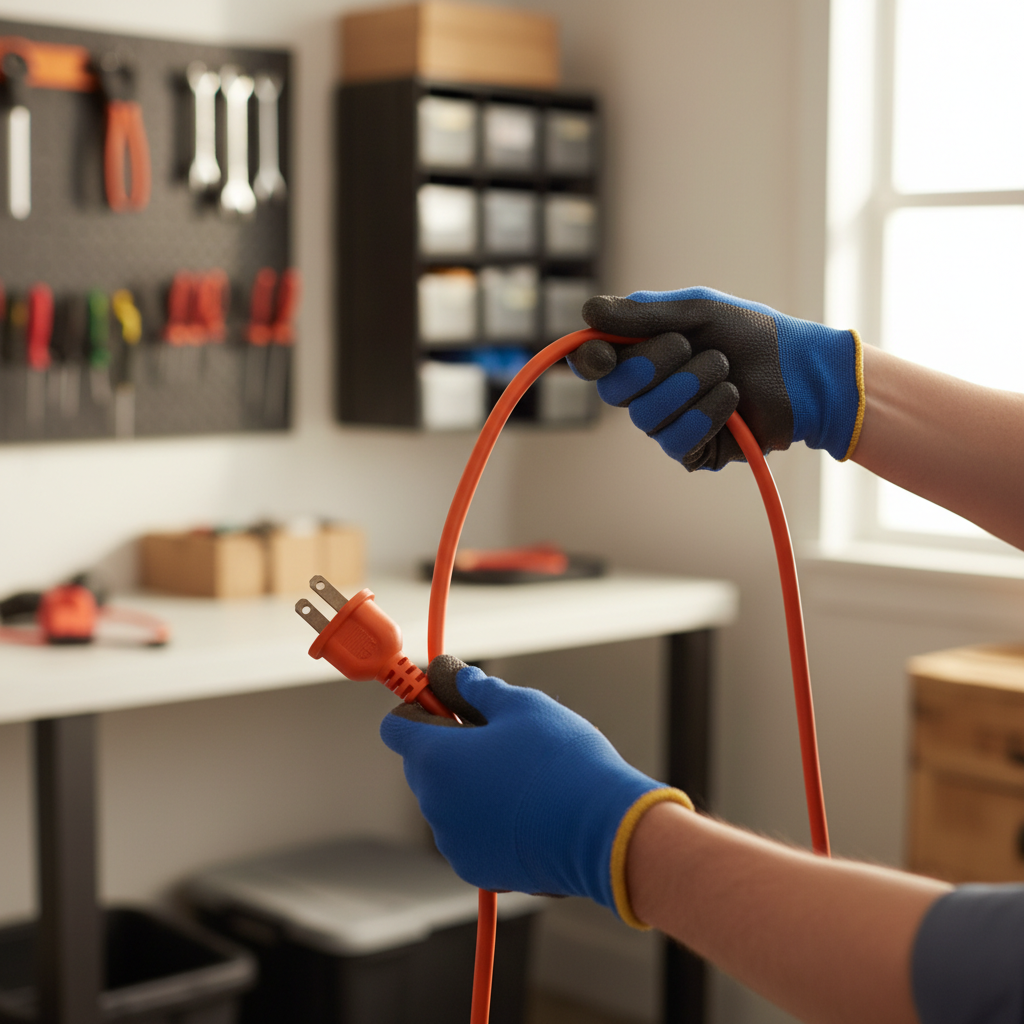
- Unplug Everything from the Extension Cord – Remove all power draws.
- Disconnect every appliance and device from the extension cord. This isolates the cord and the circuit.
- If the breaker still trips with nothing plugged into the extension cord (or the cord itself is unplugged from the wall), the issue is likely with the wall outlet or the circuit wiring, requiring professional help.
Electrical · Breaker keeps tripping
| Project category | Electrical |
|---|---|
| Problem type | Breaker keeps tripping |
| Trade required | Electrical |
| Urgency | Urgent — within days |
| Safety risk | High safety risk |
| DIY suitability | Pro recommended |
| Cost category | Low cost |
| Typical timeline | Diagnosis in a single visit |
| Contractor type | Licensed electrician |
Repair option
Isolate the load, then repair the fault or replace the breaker.
Replacement option
New dedicated circuit when the load simply exceeds what the circuit was built for.
Common causes
- Genuine overload on a shared circuit
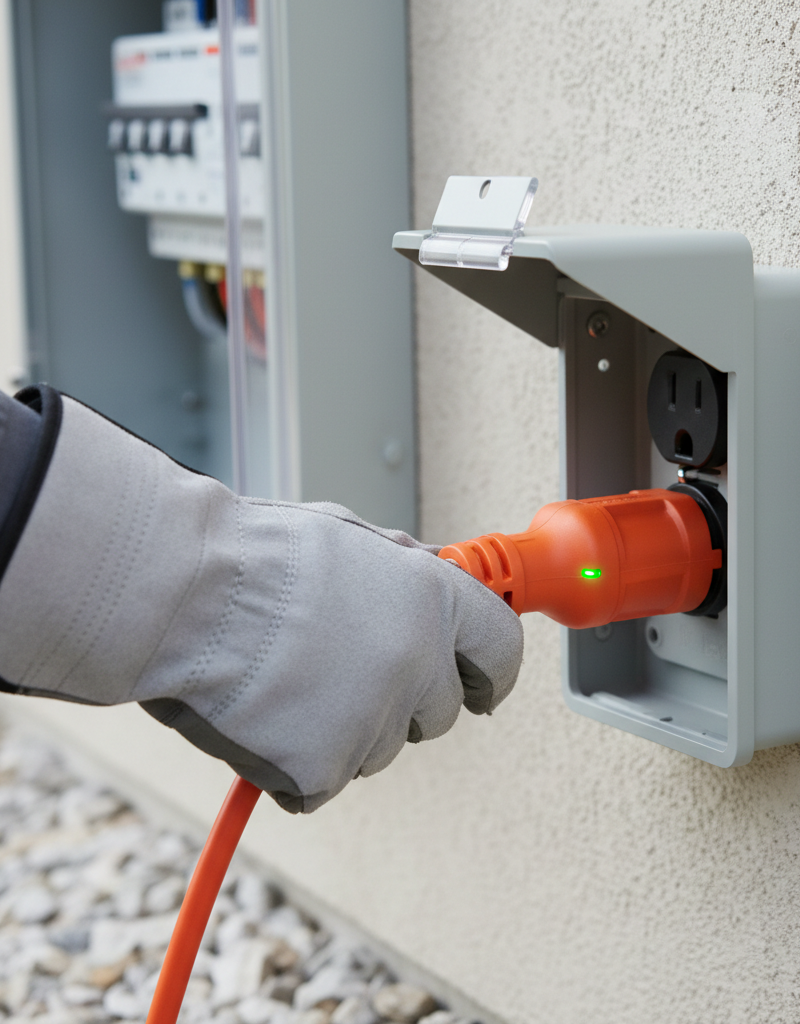
- Ground fault from moisture in an exterior box
- Failing breaker or a damaged appliance cord
Relevant tools:diy or hire a prodiy difficulty
Published June 25, 2026Last updated August 17, 2026
Tools & materials you'll need
Affiliate links- AmazonAppropriately rated extension cord1 · Match to appliance wattage, lower gauge number for higher power
As an Amazon Associate FixlyGuide earns from qualifying purchases — at no extra cost to you. Prices and availability are accurate as of publication and subject to change.
Quick Answer
An extension cord repeatedly tripping your circuit breaker is a classic sign of an overloaded circuit. This safety mechanism protects your home's wiring from overheating and potential fires by shutting off power when the current drawn exceeds the breaker's limit, usually because you've plugged in too many high-power devices, are using an inadequate extension cord for the load, or the cord itself is faulty. Diagnosing the issue involves identifying the total wattage of connected devices, inspecting the extension cord and electrical outlets, and understanding your circuit's capacity.
The Problem
Imagine plugging in your vacuum cleaner, then your power drill, and finally a portable heater into a single extension cord daisy-chained to a wall outlet, only to have the lights suddenly go out. This isn't just an inconvenience; it's your circuit breaker doing its job. When an extension cord consistently trips a breaker, it means the electrical demand from the appliances connected through that cord is exceeding the safe operating limit of the circuit it's plugged into. This isn't necessarily a fault with the extension cord itself, but rather an indication that the sum of the electrical current flowing through it and the circuit is too high. Ignoring this repeated tripping can lead to serious hazards, including overheating of wires, damage to appliances, and even electrical fires. Understanding why this happens and how to properly diagnose and fix it is crucial for every homeowner's safety.
How It Works
To understand why your extension cord trips a breaker, you need a basic grasp of how your home's electrical system and circuit breakers function. Household electricity flows in circuits, much like water in pipes. Each circuit originates from your home's main electrical panel, which houses numerous circuit breakers. These breakers are essentially safety switches, designed to automatically 'trip' or cut off power if too much electrical current flows through the circuit. They are rated for specific amperages – commonly 15 or 20 amps for general outlets.
When you plug an appliance into an outlet, it draws a certain amount of electrical current, measured in amps (A). The power an appliance uses is typically measured in watts (W), and you can calculate current (Amps) by dividing power (Watts) by voltage (Volts). In North America, residential circuits operate at approximately 120 volts (V). So, a 1500-watt hair dryer draws about 12.5 amps (1500W / 120V). A 15-amp circuit can safely handle a total load of about 1800 watts (15A * 120V). However, for continuous loads (running for 3 hours or more), electricians recommend staying at 80% of the breaker's rating to prevent nuisance tripping and excessive heat buildup, meaning a 15-amp circuit should ideally not exceed 12 amps (1440 watts).
An extension cord acts as a temporary extension of your home's wiring. It has its own amperage rating, typically printed on the cord or its packaging. This rating is determined by the gauge (thickness) of the wire inside the cord; lower gauge numbers (e.g., 12-gauge) indicate thicker wire, which can carry more current safely than higher gauge numbers (e.g., 16-gauge). When the combined current drawn by all appliances plugged into an extension cord, and subsequently into a wall outlet, exceeds the limit of either the extension cord OR the wall circuit's breaker, the breaker trips to prevent overheating and potential damage. This is a critical safety feature, not a malfunction.
Step-by-Step Fix
Safety First! Before working with any electrical components, always ensure the circuit breaker for the affected outlet is switched OFF. Use a non-contact voltage tester to confirm the power is off at the outlet.
-
Identify the Overloaded Circuit – Determine which breaker tripped.
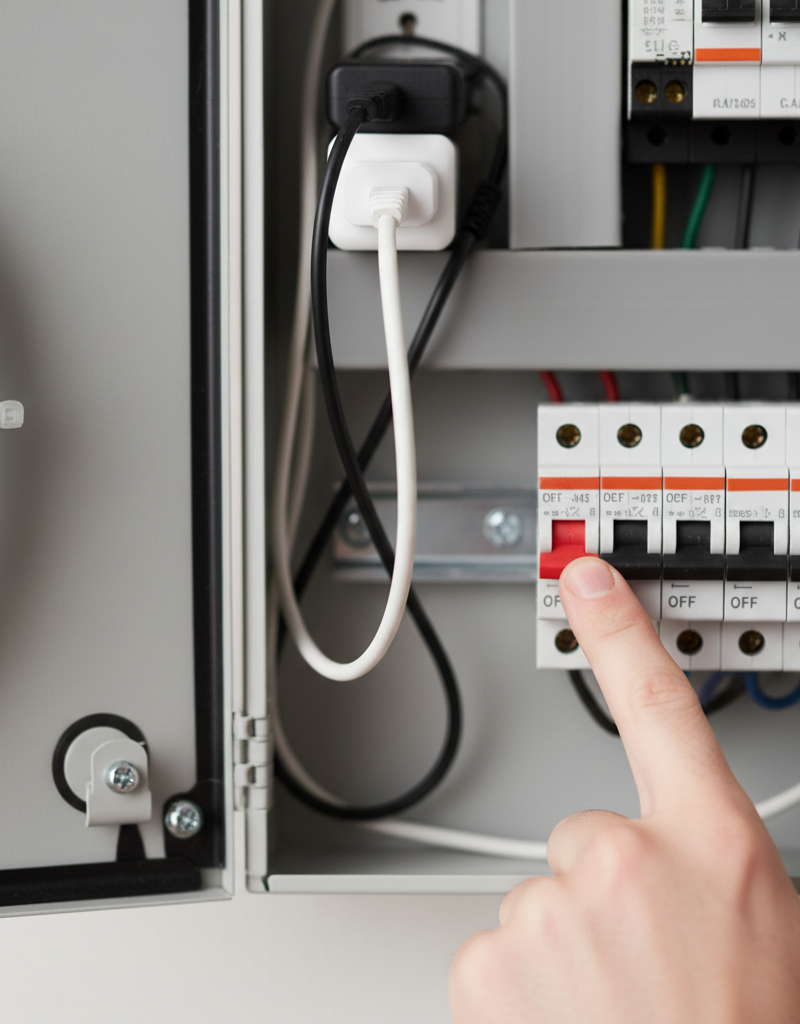
- Go to your electrical panel. The tripped breaker will typically be in the 'OFF' or middle position. Reset it by firmly pushing it to the 'OFF' position first, then to the 'ON' position. If it immediately trips again, do not force it. There's a persistent issue that needs addressing.
- Safety Note: Never stand in water while working with an electrical panel. If you're unsure, or the panel looks damaged, call a licensed electrician.
-
Unplug Everything from the Extension Cord – Remove all power draws.
- Disconnect every appliance and device from the extension cord. This isolates the cord and the circuit.
- If the breaker still trips with nothing plugged into the extension cord (or the cord itself is unplugged from the wall), the issue is likely with the wall outlet or the circuit wiring, requiring professional help.
-
Inspect the Extension Cord – Look for visible damage.
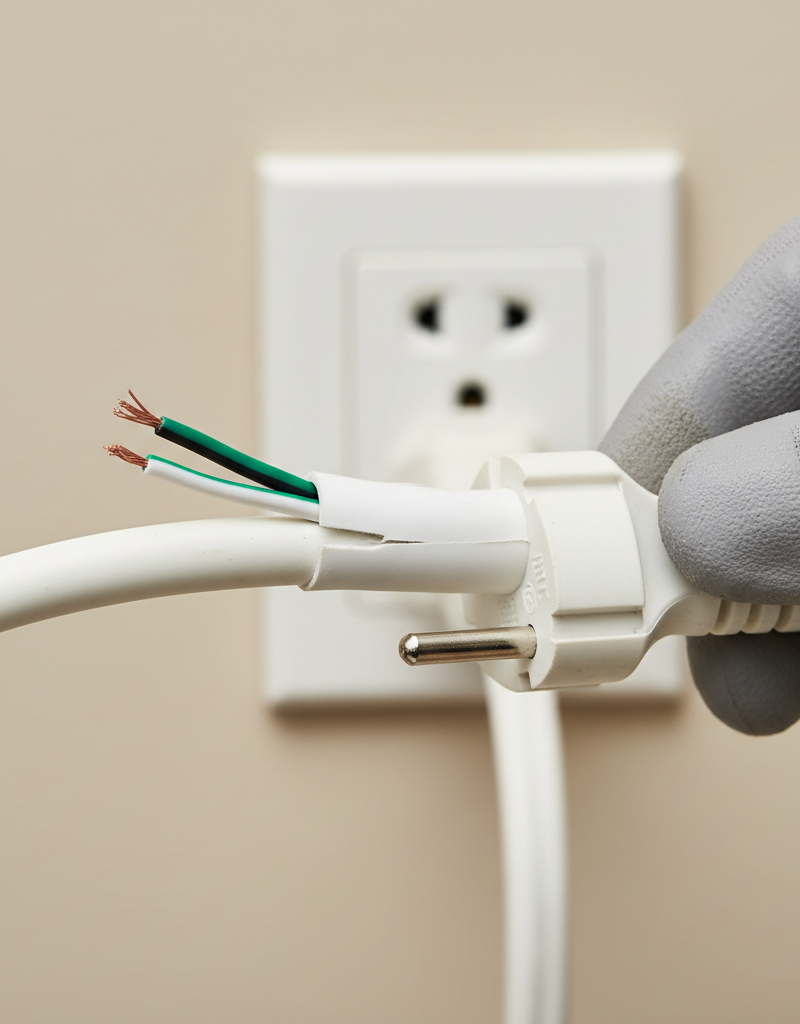
- Carefully examine the entire length of the extension cord for any cuts, fraying, melted insulation, or discolored spots. Pay close attention to the plug and receptacle ends.
- Feel the cord for any unusually warm spots, especially near the plugs or where it might have been pinched. A damaged or compromised extension cord can create a short circuit or draw excessive current, causing the breaker to trip.
- If the cord is damaged, dispose of it and replace it with a new, appropriately rated cord.
-
Check Appliance Wattage (and Amperage) – Calculate the total load.
- Look at the labels on all the appliances you were using with the extension cord. They typically list wattage (W) or amperage (A). If only wattage is given, divide by 120V to get approximate amps.
- Add up the total amperage of all devices intended for simultaneous use. Compare this sum to the amperage rating of your extension cord and the circuit breaker (e.g., 15 amps or 20 amps).
- For example, a vacuum cleaner (1200W/10A) and a space heater (1500W/12.5A) plugged into the same cord would draw 22.5A, significantly exceeding a 15-amp circuit's capacity (and likely a 20-amp circuit's continuous load capacity). This is the most common cause of nuisance tripping.
-
Use an Appropriately Rated Extension Cord – Match the cord to the load.
- Ensure your extension cord is rated for the total wattage/amperage of the devices you're plugging into it. Generally, a heavier gauge (lower number, e.g., 12-gauge) cord is needed for high-power appliances like power tools, air conditioners, or space heaters.
- A 16-gauge cord is typically rated for up to 10 amps (1200W), a 14-gauge for 15 amps (1800W), and a 12-gauge for 20 amps (2400W). Always err on the side of a heavier gauge for safety.
- Never use indoor-rated cords outdoors, and avoid 'daisy-chaining' multiple extension cords together, as this increases resistance and fire risk.
-
Distribute the Load – Avoid overloading one circuit.
- If your combined appliance load exceeds the circuit's capacity, plug some devices into a different outlet that is on a separate circuit. You can usually tell if outlets are on different circuits by checking which lights or outlets lose power when you trip a specific breaker.
- High-wattage appliances (e.g., space heaters, microwaves, refrigerators, hair dryers, power tools) should ideally be on dedicated circuits, or at least not share a general-purpose circuit with other significant power draws.
-
Test the Wall Outlet – Rule out an outlet fault.
- Plug a known working, low-wattage appliance (like a lamp) directly into the wall outlet where the extension cord was connected. If the lamp works without tripping the breaker, the outlet itself is likely fine. If it trips the breaker immediately, the outlet or its wiring may be faulty and needs professional inspection.
- Inspect the wall outlet for any signs of scorching, loose connections, or a loose faceplate.
-
Consider the Appliance(s) Itself – One device could be the culprit.
- If you've systematically eliminated other causes, try plugging each appliance that was on the extension cord individually into a separate, known good wall outlet (not the extension cord). If a specific appliance trips the breaker on its own, that appliance may have an internal fault (e.g., a short circuit) and needs repair or replacement.
Common Causes
- Circuit Overload: The most frequent offender. Too many high-wattage devices are plugged into a single extension cord or circuit, exceeding its amperage rating. Picture a single garden hose trying to supply three sprinklers and a pressure washer – not enough flow for everyone.
- Inadequate Extension Cord: Using a 'light-duty' (high gauge number, thin wire) extension cord for heavy-duty appliances. This cord can't safely carry the necessary current, leading to overheating of the cord itself and potential tripping.
- Damaged Extension Cord: Frayed wires, cuts, pinches, or melted insulation on an extension cord can cause a short circuit or draw excessive current, immediately tripping the breaker.
- Short Circuit in an Appliance: A faulty appliance plugged into the extension cord can create a direct path for electricity to bypass normal resistance, causing a huge surge in current and an instant breaker trip.
- Ground Fault: If the circuit has a Ground Fault Circuit Interrupter (GFCI) (common in bathrooms, kitchens, and outdoors), a ground fault can occur if electricity escapes the intended path and flows to the ground, tripping the GFCI and potentially the main breaker.
- Faulty Wall Outlet or Wiring: Less common, but a loose connection, damaged receptacle, or compromised wiring within the wall outlet itself can cause intermittent tripping.
Common Mistakes
- Daisy-chaining extension cords: Plugging one extension cord into another to extend reach. This significantly increases resistance, voltage drop, and fire risk. Always use a single cord of adequate length.
- Using indoor-rated cords outdoors: Indoor cords are not designed to withstand moisture, UV exposure, or extreme temperatures, leading to rapid deterioration and hazards.
- Overloading a power strip: Assuming a power strip provides more power. Power strips only offer additional outlets; they don't increase the circuit's capacity. Plugging multiple high-wattage items into a power strip can still overload the wall outlet's circuit.
- Ignoring cord ratings: Not checking the amperage or wattage rating of the extension cord and matching it to the connected devices. A thin, cheap cord can quickly overheat with a space heater.
- Running cords under carpets or through doorways: This can pinch the cord, cause insulation damage, restrict heat dissipation, and create a tripping hazard. Cords should be openly visible and not compressed.
- Using damaged cords: Continuing to use an extension cord with visible damage (cuts, fraying, scorching). This is a severe fire and shock hazard and should never be done.
Cost & Time Breakdown
| Task | DIY cost | Pro cost | Time |
|---|---|---|---|
| Inspect & Reset Breaker | $0 | $0 (part of call) | 5-10 minutes |
| Inspect/Replace Extension Cord | $15–$50 | N/A | 5-15 minutes |
| Calculate Appliance Load | $0 | N/A | 10-20 minutes |
| Distribute Loads | $0 | N/A | 5-10 minutes |
| Replace Faulty Outlet | $5–$20 | $150–$300+ | 30-60 minutes |
| Diagnose Appliance Fault | $0 | $50–$150+ | 10-30 minutes |
Tips & Prevention
- Match Cord to Job: Always use an extension cord that is rated for the specific power requirements of the tool or appliance you plan to connect. High-power items need heavy-gauge (lower AWG number) cords. For outdoor use, select cords specifically marked for outdoor suitability.
- Avoid Overloading: Be mindful of the total wattage of all devices on a single circuit. Use a wattage meter (available for $20-$30) to understand the real-time draw of your appliances. Distribute high-demand appliances across different circuits.
- Shortest Cord Possible: Use the shortest extension cord that can comfortably reach the outlet. Longer cords have more resistance, leading to voltage drop and increased heat.
- Regular Inspections: Periodically inspect all extension cords for signs of wear and tear, such as cuts, fraying, discoloration, or loose connections. Discard and replace any damaged cords immediately.
- Unplug When Not in Use: Unplug extension cords when they are not in active use to prevent accidental damage or potential hazards.
- Know Your Circuits: Familiarize yourself with your home's electrical panel and know which outlets are connected to which breakers. Labeling your circuit breaker panel can be a huge help in troubleshooting.
When to Call a Professional
While many extension cord tripping issues stem from simple overloads or damaged cords, there are clear signs when you should step back and call a licensed electrician. If the breaker trips immediately after being reset, even with nothing plugged into the outlet, it could indicate a short circuit within the wall wiring or a faulty breaker itself. If you notice burning smells, scorching around outlets, dimming or flickering lights across multiple rooms, or if your electrical panel is hot to the touch, these are serious red flags. Repeated tripping that cannot be resolved by distributing loads or replacing the extension cord suggests a deeper, more dangerous electrical problem that requires professional diagnosis and repair. Never attempt to repair internal wall wiring, troubleshoot a main electrical panel, or replace a circuit breaker without proper licensing and experience, as doing so poses severe risks of electrocution, fire, and property damage. An electrician can safely assess circuit capacity, identify underlying wiring faults, or replace problematic components.
Related Articles
Keep troubleshooting with these hand-picked guides from FixlyGuide:
- The Hidden Reason Your Extension Cord Keeps Tripping the Breaker (and What to Do) — Discover why your extension cord might be tripping a circuit breaker and learn how to diagnose and fix common electrical issues safely.
- The 3 Hidden Reasons Your Circuit Breaker Keeps Tripping (And How to Stop It) — Uncover the surprising culprits behind repeatedly tripping circuit breakers and learn practical, actionable steps to diagnose and resolve t…
- Why Your Extension Cord Keeps Tripping the Breaker (And the Simple Test to Find the Hidden Cause) — Discover why your extension cord keeps tripping the circuit breaker and learn how to safely diagnose and fix the real problem with a simple…
- That One Warm Breaker Is Trying to Tell You Something — A single warm circuit breaker is not normal; it's a critical warning sign of an electrical issue, often an overload or a dangerous loose co…
- The Hidden Reason Your Circuit Breaker Keeps Tripping (It's Not Always an Overload) — Discover the often-overlooked causes behind a frequently tripping circuit breaker and learn how to diagnose and fix them safely.
- The #1 Gutter Mistake That Causes Overflow (And How to Fix It in 20 Minutes) — Overflowing gutters during heavy rain are usually caused by a readily fixable clog, often due to a common cleaning mistake.
What should this project cost?
Enter your project details for a realistic cost range before you call anyone.
Outlet and switch work usually $150–$400; panel upgrades commonly $1,800–$4,200.
- Regional adjustment
- National average
- Labor share (typical)
- ~$709
- Quotes to collect
- 3 written estimates
Educational estimate based on national averages — not a binding quote. Always confirm with written local estimates.
Fixly Project Decision Box
- DIY difficulty
- Professional Recommended
- Estimated time
- Diagnosis 1–2 hours
- Cost level
- Moderate
Main tools / materials
- Non-contact voltage tester
- Outlet tester
- Flashlight
When to stop and call a pro
- Burning smell, scorch marks, or a warm outlet or switch plate
- A breaker that trips again right after being reset
- Any work inside the service panel
- Aluminum wiring or cloth-insulated wiring
Need professional help?
Talk to a Licensed ElectricianGet the print-ready PDF of this guide
A clean, ad-free, printable version you can keep on your phone or pin to the workshop wall. Free with a FixlyGuide account.
- Print-optimized layout
- Tools, materials & every step included
- Saved to your account
Frequently asked questions
How do I know if my extension cord is too small?+
Check the amperage or wattage rating printed on your extension cord and compare it to the total amperage or wattage of the devices you plug into it. If the devices' combined power exceeds the cord's rating, it's too small. Thicker cords (lower gauge number) can handle more power.
Can a bad extension cord cause a breaker to trip?+
Yes, absolutely. A damaged extension cord with frayed wires, cuts, melted insulation, or loose connections can cause a short circuit or excessive current draw, leading the circuit breaker to trip as a safety measure.
What's the difference between a 15-amp and 20-amp circuit?+
A 15-amp circuit can safely handle a total load of about 1800 watts (15A x 120V), though continuous loads should stay around 1440 watts. A 20-amp circuit can handle roughly 2400 watts (20A x 120V), with continuous loads ideally not exceeding 1920 watts. High-demand appliances often require 20-amp circuits.
Should I reset a tripped breaker repeatedly?+
No. If a breaker trips immediately after being reset, or trips repeatedly, it indicates a persistent electrical problem (overload, short, or ground fault) that needs to be diagnosed and fixed. Continuously resetting it without addressing the underlying issue can lead to overheating, damage, and fire hazards.
Can I plug a space heater into any extension cord?+
No. Space heaters are high-wattage appliances and require a heavy-duty, low-gauge (e.g., 12 or 14-gauge) extension cord specifically rated for the heater's wattage. Using a light-duty cord is a major fire hazard, as the cord will overheat.
Discussion
Loading comments…