- Why Does My Extension Cord Keep Tripping the Breaker? (It's Not Always Overload) — An extension cord repeatedly tripping a circuit breaker indicates a serious electrical issue that homeowners need to diagnose and resolve s…
- The Hidden Reason Your Extension Cord Keeps Tripping the Breaker (and What to Do) — Discover why your extension cord might be tripping a circuit breaker and learn how to diagnose and fix common electrical issues safely.
- The Hidden Reason Your Circuit Breaker Keeps Tripping (It's Not Always an Overload) — Discover the often-overlooked culprits behind a frequently tripping circuit breaker and learn how to diagnose and fix the most common issue…
- The Hidden Reason Your Circuit Breaker Keeps Tripping (It's Not Always an Overload) — Discover the often-overlooked causes behind a frequently tripping circuit breaker and learn how to diagnose and fix them safely.
- Why Your Extension Cord Keeps Tripping the Breaker (And the Simple Test to Find the Hidden Cause) — Discover why your extension cord keeps tripping the circuit breaker and learn how to safely diagnose and fix the real problem with a simple…
Electrical · Breaker keeps tripping
| Project category | Electrical |
|---|---|
| Problem type | Breaker keeps tripping |
| Trade required | Electrical |
| Urgency | Urgent — within days |
| Safety risk | High safety risk |
| DIY suitability | Pro recommended |
| Cost category | Low cost |
| Typical timeline | Diagnosis in a single visit |
| Contractor type | Licensed electrician |
Repair option
Isolate the load, then repair the fault or replace the breaker.
Replacement option
New dedicated circuit when the load simply exceeds what the circuit was built for.
Common causes
- Genuine overload on a shared circuit
- Ground fault from moisture in an exterior box
- Failing breaker or a damaged appliance cord
Relevant tools:diy or hire a prodiy difficulty
Published June 25, 2026Last updated August 18, 2026
Tools & materials you'll need
Affiliate linksAs an Amazon Associate FixlyGuide earns from qualifying purchases — at no extra cost to you. Prices and availability are accurate as of publication and subject to change.
Quick Answer
When your extension cord consistently trips the circuit breaker, the immediate assumption is often an overload. While this is a common culprit, frequently overlooked issues include a damaged extension cord or a faulty appliance plugged into it. Nuisance trips from high-starting-current devices or a subtle ground fault within the cord can also be to blame. Pinpointing the exact problem requires a methodical approach: first, check the cord for visible damage; second, test the cord with a lower-power device; and third, assess the total load on the circuit to ensure it's not exceeding its capacity. Addressing these issues can save you from repeated interruptions and unnecessary professional calls.
The Problem
Few things are more aggravating than plugging in an essential appliance via an extension cord, only for the circuit breaker to immediately trip, cutting power to half your room. This isn't just an inconvenience; it can be a sign of an underlying issue that could range from a simple overloaded outlet to a potentially hazardous electrical fault. Homeowners often scratch their heads, assuming the cord must be faulty or the appliance drawing too much power. While these are valid concerns, the reason an extension cord specifically triggers a breaker can be more nuanced. Repeated trips can cause wear and tear on your breaker, and more importantly, indicate a safety risk that shouldn't be ignored.
How It Works
To understand why an extension cord trips a breaker, it's essential to grasp how your home's electrical system and circuit breakers function. Household circuits are designed to deliver a specific amount of electrical current, measured in amperes (amps), safely. Each circuit is protected by a circuit breaker, typically rated at 15 or 20 amps for general-purpose outlets. This rating indicates the maximum current the circuit can safely handle before the wire insulation overheats, potentially causing a fire.
When you plug an appliance into an outlet, it draws current. An extension cord acts as a conduit, extending that circuit to where you need power. If the total current drawn by all devices on a single circuit (including those plugged into outlets directly and those using extension cords) exceeds the breaker's rated capacity, the breaker's internal mechanism heats up. This heat causes a bimetallic strip inside the breaker to bend, eventually triggering a trip, which opens the circuit and stops the flow of electricity. This is an overload trip.
However, circuit breakers also protect against short circuits and ground faults. A short circuit occurs when the hot wire accidentally touches a neutral or ground wire, creating a very low resistance path and an immediate surge of extremely high current. A ground fault occurs when current unintentionally flows to the ground, perhaps through a damaged cord or appliance. Both short circuits and ground faults draw massive, instantaneous current, which causes the magnetic mechanism within the breaker to trip almost immediately, much faster than a thermal overload trip. Extension cords, being mobile and subject to wear and tear, are particularly vulnerable to these types of faults, especially if they are old, frayed, or misused. Understanding these distinct tripping mechanisms is key to diagnosing the problem properly.
Step-by-Step Fix
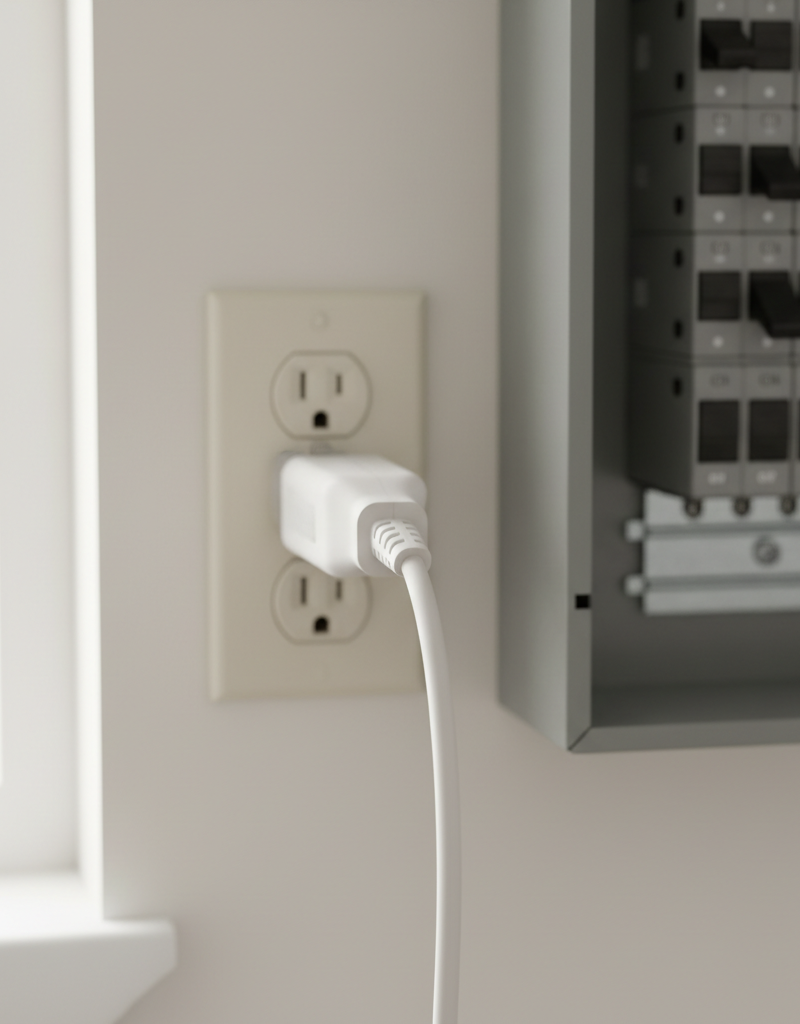
1. Safety First — Before doing any diagnostic work, always unplug the extension cord and the appliance from the wall. Locate your electrical panel and identify the tripped breaker. Flip it firmly to the 'OFF' position and then back to the 'ON' position to reset it. If it trips immediately again without anything plugged in, you have a more serious circuit issue requiring a professional.
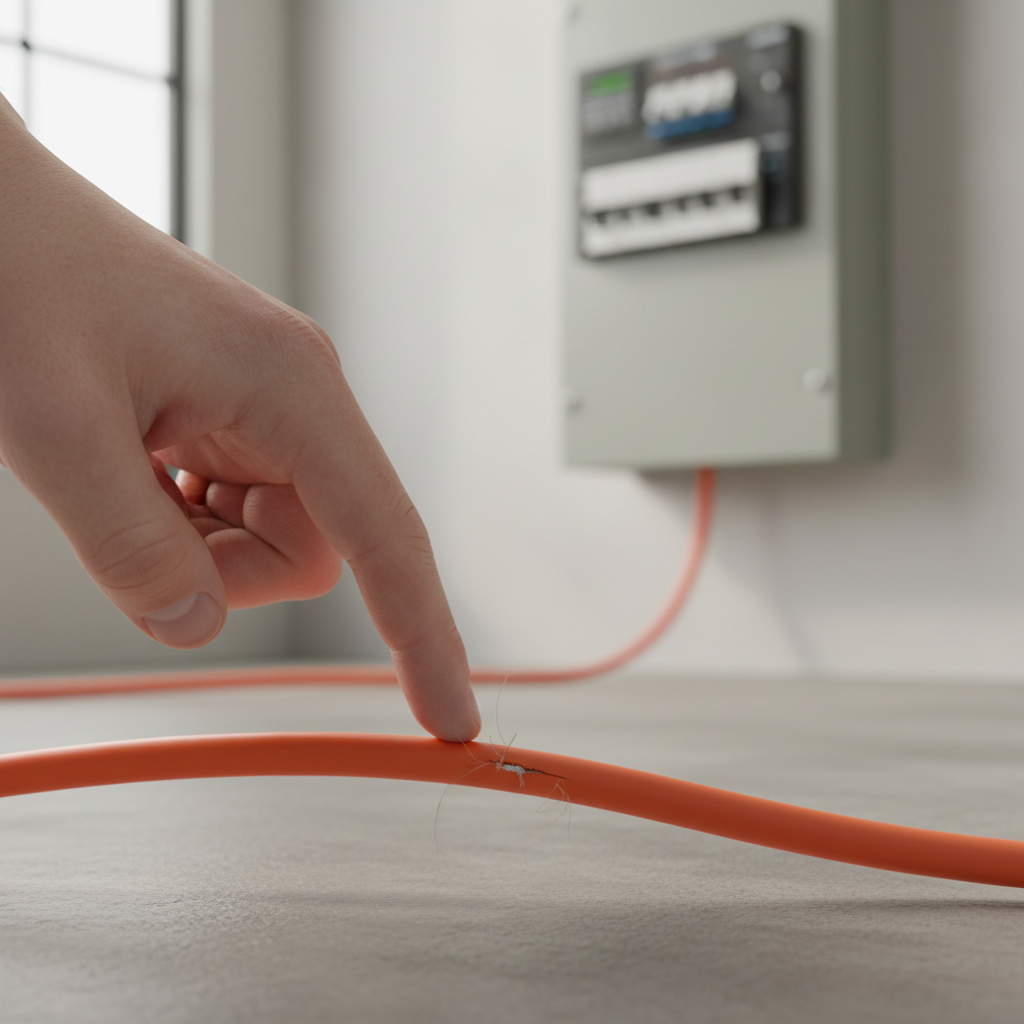
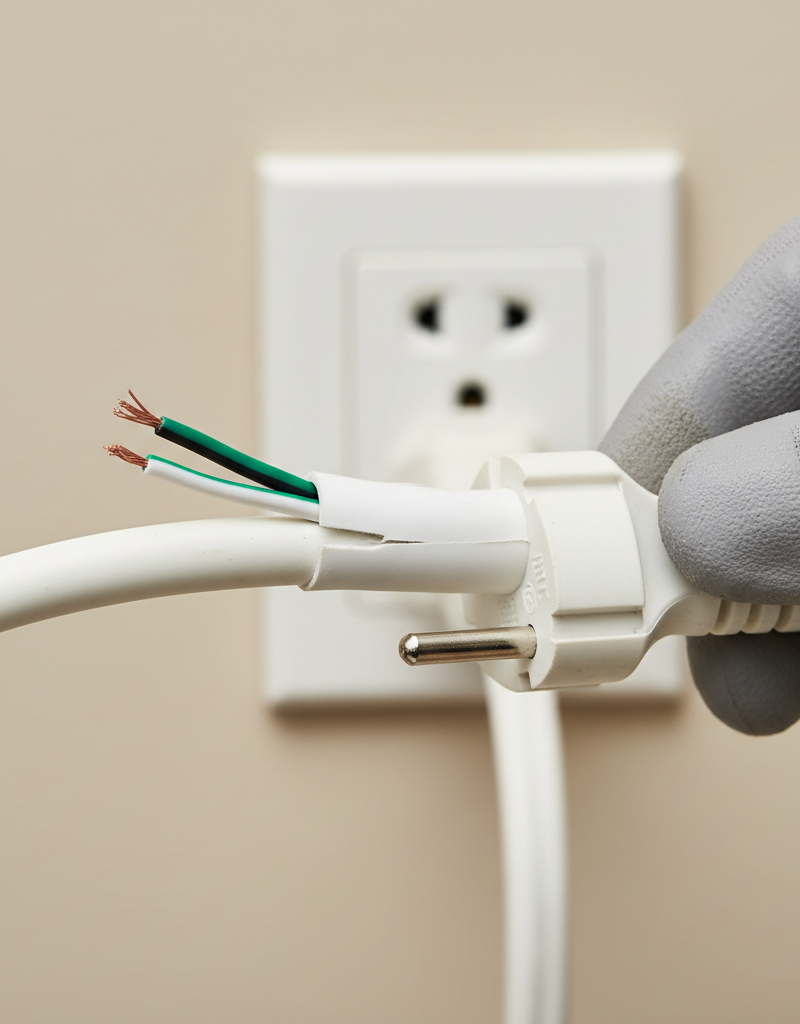
2. Inspect the Extension Cord for Damage — Visually examine the entire length of the extension cord. Look for any cuts, nicks, frayed insulation, crushed sections, or evidence of scorching, especially near the plugs and receptacles. Even minor damage can expose wires and lead to short circuits or ground faults.
- If you find damage: Immediately discard the cord. Do not attempt to repair it with electrical tape, as this is a temporary and unsafe fix. Replace it with a new, appropriately rated cord.
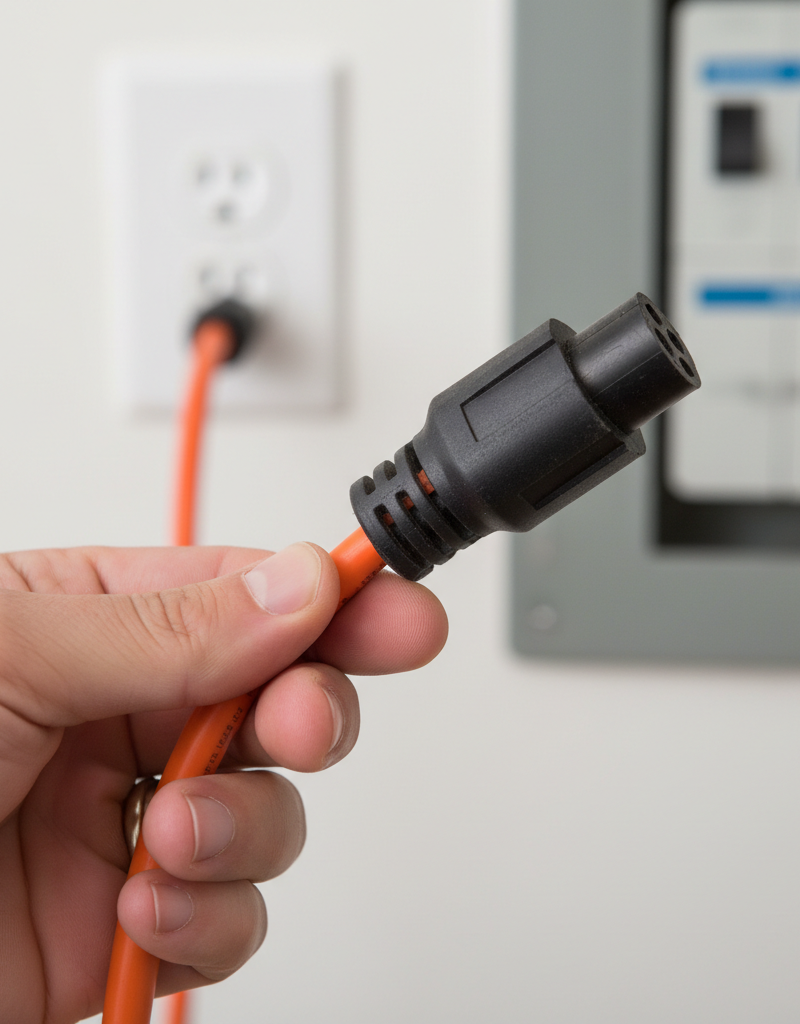
3. Check the Cord's Rating Against the Appliance — Ensure the extension cord is rated for the power draw of the appliance you're using. The cord's gauge (thickness) matters: smaller gauge numbers (e.g., 12-gauge) indicate thicker wires capable of handling higher current and longer distances with less voltage drop. Larger gauge numbers (e.g., 16-gauge) are for lighter duty. This information is usually printed on the cord itself or its packaging.
- For high-power appliances: Use a heavy-duty, outdoor-rated (if applicable) extension cord with a lower gauge number (e.g., 12-gauge or 10-gauge) and a 3-prong grounded plug. Examples include air conditioners, space heaters, power tools, and large vacuums.
- For low-power appliances: A standard 16-gauge or 14-gauge cord may suffice for lamps, chargers, or small electronics. Never use a light-duty indoor cord for demanding appliances.
4. Isolate the Appliance — To determine if the appliance itself is the culprit, plug the suspected appliance directly into a wall outlet that is known to be on a different circuit, if possible. Avoid using the extension cord for this test. If the appliance trips that breaker, the issue is with the appliance and not the cord.
- If the appliance trips a different breaker: The appliance is faulty. Discontinue use and have it repaired by a professional or replace it.
- If the appliance works fine directly: The problem likely lies with the extension cord or the original circuit's capacity.
5. Test the Extension Cord with a Low-Power Device — Plug a known low-power, non-critical device (like a small lamp or a cell phone charger) into the extension cord, and then plug the extension cord into the original wall outlet. If the breaker trips immediately with a low-power device, the extension cord is most likely defective.
- If it trips: The extension cord is shorted or grounded internally. Discard it. (See Safety Note below).
- If it doesn't trip: The extension cord likely isn't the direct cause of a short or ground fault, but still review its condition for damage. Proceed to checking circuit load.
6. Assess the Circuit Load — Often, the problem isn't just the appliance or the cord, but the total number of devices drawing power from that single circuit. Unplug all other appliances and devices currently connected to outlets on the same circuit (including any directly plugged into wall outlets). Try plugging your appliance into the extension cord again. If it now works without tripping, the circuit was simply overloaded.
- To find out what's on the circuit: Turn off the breaker for the problematic circuit. Walk around your home and note which lights and outlets are no longer working. These are all on the same circuit.
- Calculate rough load: High-wattage devices like space heaters (1500W), hair dryers (1800W), toasters (1200W), and microwave ovens (1000-1500W) draw significant current. Divide watts by volts (typically 120V) to get amps (e.g., 1500W / 120V = 12.5 amps). A 15-amp circuit should ideally not exceed 12 amps for continuous use, and a 20-amp circuit not more than 16 amps.
- Solution for overload: Distribute high-demand appliances across different circuits. Avoid using extension cords for continuous, high-power loads. If you regularly need more power in an area, consider having a new dedicated circuit installed by a licensed electrician.
7. Consider Inductive Loads (Nuisance Trips) — *Some devices, especially those with motors (like refrigerators, air compressors, power tools), have a very high
Related Articles
Keep troubleshooting with these hand-picked guides from FixlyGuide:
- Why Does My Extension Cord Keep Tripping the Breaker? (It's Not Always Overload) — An extension cord repeatedly tripping a circuit breaker indicates a serious electrical issue that homeowners need to diagnose and resolve s…
- The Hidden Reason Your Extension Cord Keeps Tripping the Breaker (and What to Do) — Discover why your extension cord might be tripping a circuit breaker and learn how to diagnose and fix common electrical issues safely.
- The Hidden Reason Your Circuit Breaker Keeps Tripping (It's Not Always an Overload) — Discover the often-overlooked culprits behind a frequently tripping circuit breaker and learn how to diagnose and fix the most common issue…
- The Hidden Reason Your Circuit Breaker Keeps Tripping (It's Not Always an Overload) — Discover the often-overlooked causes behind a frequently tripping circuit breaker and learn how to diagnose and fix them safely.
- Why Your Extension Cord Keeps Tripping the Breaker (And the Simple Test to Find the Hidden Cause) — Discover why your extension cord keeps tripping the circuit breaker and learn how to safely diagnose and fix the real problem with a simple…
- The Hidden Reason Your GFCI Trips (It's Not Always a Faulty Outlet) — A continuously tripping GFCI outlet is a critical safety warning, often indicating moisture, a faulty appliance, or a wiring problem that r…
Frequently asked questions
Can a bad extension cord trip a breaker?+
Yes, a damaged or faulty extension cord can easily trip a circuit breaker. Internal shorts, frayed wires, or compromised insulation can create a low-resistance path for current, leading to an immediate 'trip' due to a short circuit or ground fault.
What kind of extension cord won't trip a breaker?+
The best extension cord to prevent trips is one with an appropriate gauge (lower number indicates thicker wire, e.g., 12-gauge or 10-gauge) for the appliance's power draw and length. It should be in good condition, certified for safety (UL, ETL), and match the ground prong type of your appliance and outlet.
How do you know if an outlet is overloaded?+
An overloaded outlet or circuit often shows signs like frequently tripping breakers, dimming lights when appliances turn on, buzzing sounds from outlets, or outlets/switch plates that are warm to the touch. If multiple high-wattage devices are plugged into the same circuit, it's a strong indicator of potential overload.
Is it safe if an extension cord keeps tripping?+
No, it is not safe if an extension cord keeps tripping the breaker. This indicates an electrical fault or overload, which can lead to overheating, electrical fires, or shock hazards. Immediately stop using the cord and troubleshoot the issue.
Can an appliance cause an extension cord to trip?+
Absolutely. A faulty appliance with an internal short, damaged wiring, or a motor drawing excessive current can cause an extension cord (and subsequently the breaker) to trip. Always test the appliance directly in a wall outlet to rule out this possibility.
Discussion
Loading comments…