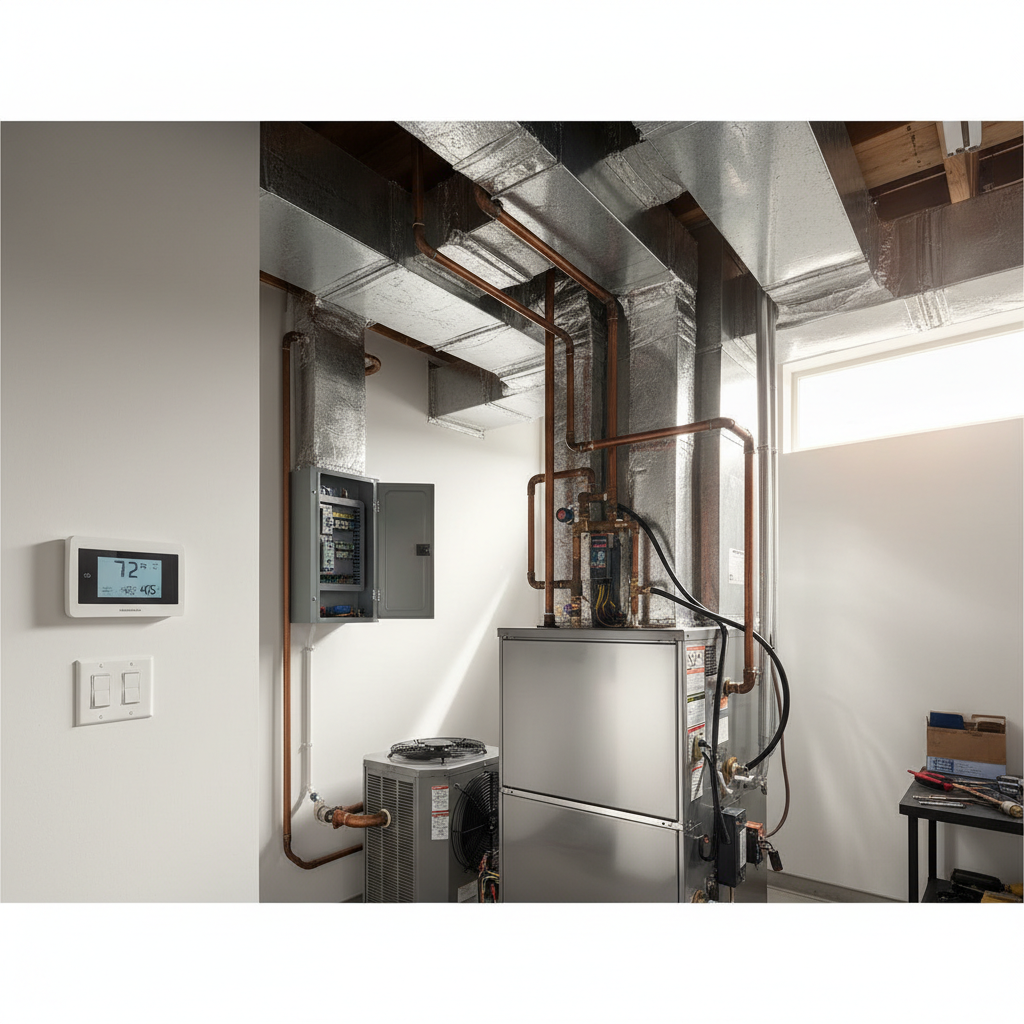
- The furnace or air handler — the blower and heat source, usually in a closet, attic, or basement.
- The outdoor condenser — the unit outside that rejects heat in summer.
- The refrigerant lines — the copper pair connecting the two.
- The ductwork and thermostat — the distribution and the brain.
HVAC · High energy usage
| Project category | HVAC |
|---|---|
| Problem type | High energy usage |
| Trade required | HVAC |
| Urgency | Planned project |
| Safety risk | Low safety risk |
| DIY suitability | DIY for experienced homeowners |
| Cost category | High cost |
| Typical timeline | Assessment within weeks; replacement planned off-season |
| Contractor type | Licensed HVAC technician |
Repair option
Duct sealing, insulation, and a tune-up before touching the equipment.
Replacement option
High-efficiency replacement sized by a load calculation, not a rule of thumb.
Common causes
- Aging, low-efficiency equipment
- Leaking ducts losing conditioned air
- Insufficient attic insulation
- Oversized system short-cycling
Relevant tools:project cost estimatorrepair or replace
Published September 4, 2026Last updated September 4, 2026
Tools & materials you'll need
Affiliate linksNo materials required.
As an Amazon Associate FixlyGuide earns from qualifying purchases — at no extra cost to you. Prices and availability are accurate as of publication and subject to change.
Quick Answer
Your HVAC system moves heat, not just air. Most "sudden" failures are the end of a slow decline you could have caught with filters, airflow, and a twice-yearly service visit. When something does fail, the deciding question is never "how old is it" — it's "what failed, why, and what does repairing it actually accomplish."
What Your System Is Actually Doing
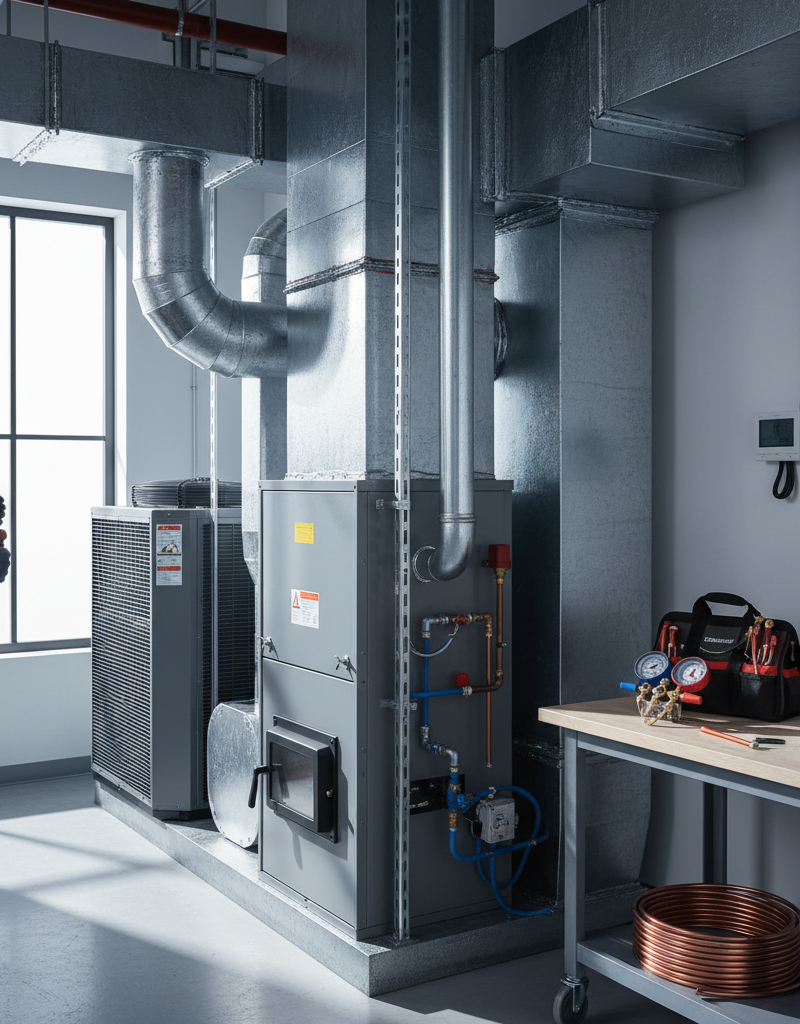
A typical home system has four pieces working together:
- The furnace or air handler — the blower and heat source, usually in a closet, attic, or basement.
- The outdoor condenser — the unit outside that rejects heat in summer.
- The refrigerant lines — the copper pair connecting the two.
- The ductwork and thermostat — the distribution and the brain.
When one of those four is compromised, the symptom usually shows up somewhere else. Weak airflow at the vents is often a duct or filter problem, not a compressor problem. Understanding that keeps you from buying the wrong solution.
Maintenance That Actually Matters
Most of the value is in a short list:
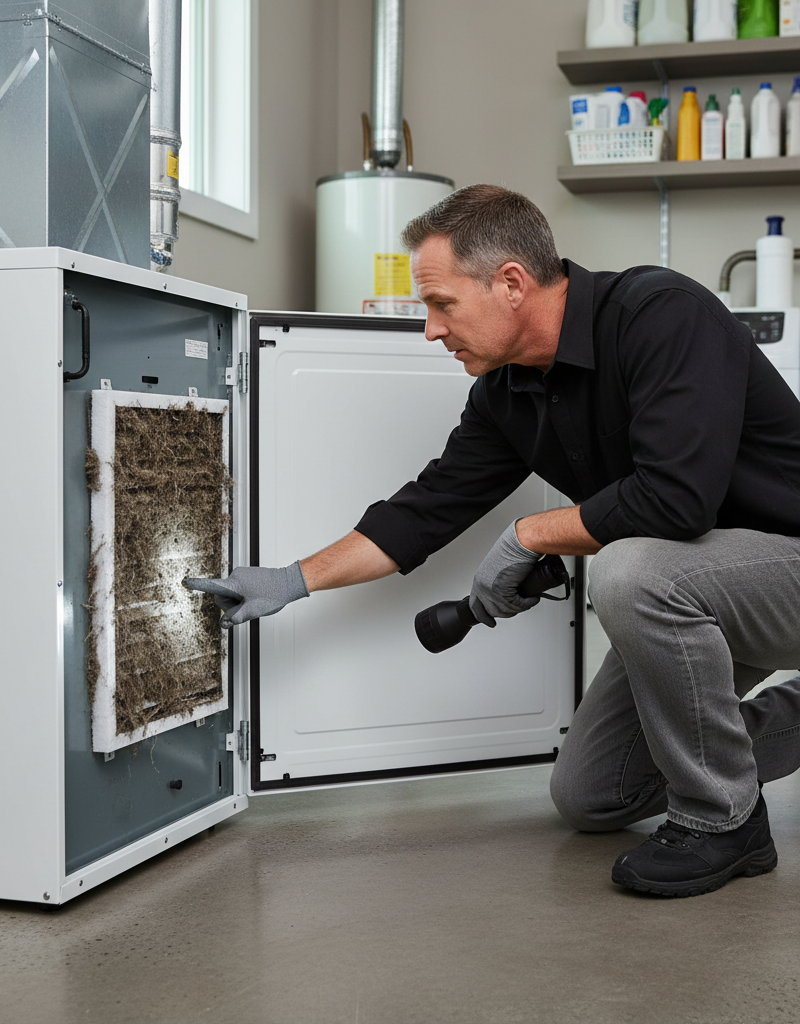
- Filters — every 1–3 months depending on pets, dust, and filter thickness. A blocked filter starves the system and shortens its life.
- Clear the outdoor unit — two feet of clearance, no leaves packed into the coil, no shrubs grown over it.
- Condensate drain — a clogged drain line backs water into a pan or a ceiling. Many systems have a float switch that shuts the unit off instead.
- Two service visits a year — cooling check in spring, heating check in fall.
- Register discipline — closing off too many vents raises static pressure and stresses the blower.
Symptoms and What They Usually Point To
| Symptom | Common causes | Urgency |
|---|---|---|
| Warm air from vents in cooling mode | Low refrigerant, dirty coil, failed capacitor, thermostat setting | Same week |
| Short cycling (on and off quickly) | Oversized system, restricted airflow, control fault | Same week |
| Ice on the refrigerant line or coil | Restricted airflow or low charge — shut it off and let it thaw | Prompt |
| Water around the indoor unit | Clogged condensate drain or failed pan | Prompt |
| Burning or electrical smell | Wiring, motor, or control failure | Stop and call now |
| Gas smell near a furnace | Possible gas leak | Leave and call the gas utility now |
| High bills with no comfort change | Duct leakage, failing components, dirty coils | Schedule service |
Repair or Replace
Age matters, but it isn't a diagnosis. Before you approve a five-figure quote, get answers in writing:
- What specific component failed, and why?
- Is the failure isolated or part of broader deterioration?
- What is the repair cost against the replacement cost?
- Has this system needed repeated repairs in the last two seasons?
- Is the replacement correctly sized for this house, not just matched to the old unit?
A contractor who can answer those clearly is worth more than one with the lowest number.
When to Stop and Call a Pro
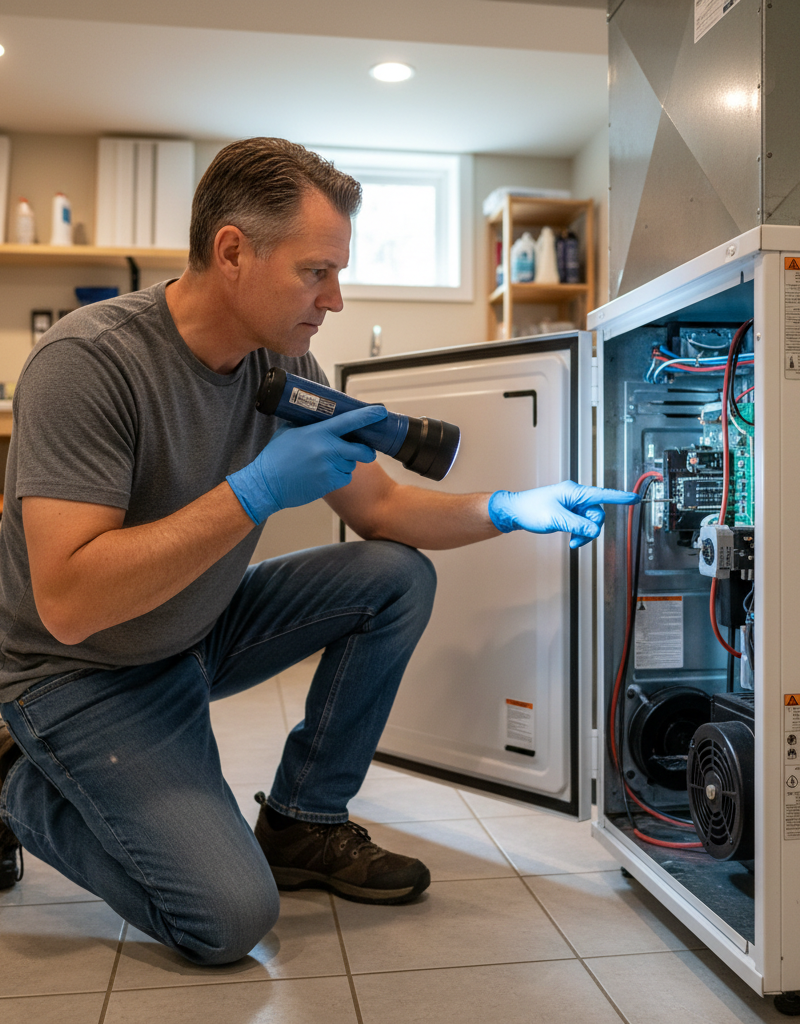
Refrigerant handling, gas connections, and electrical work inside the equipment are licensed work. Call immediately for gas smells, burning smells, scorched wiring, water damage, or a system that trips its breaker. Filters, thermostat batteries, register cleaning, and clearing debris are safely yours.
Find a Pro Through Fixly Guide
If the next step is a professional, don't start with a phone book. Start with a diagnosis and a short list.
- Find a local pro — pick your trade and ZIP code to see vetted contractors serving your area.
- DIY or hire a pro? — a two-minute check that tells you which jobs are safe to handle yourself.
- Repair or replace? 12 expensive home decisions — how to judge a big-ticket quote.
- Home problem guides — start with the symptom, get likely causes and safety guidance.
- 15 house problems you shouldn't ignore — warning signs homeowners get used to.
Fixly Guide provides educational guidance only. Nothing here is a professional diagnosis or an inspection.
What should this project cost?
Enter your project details for a realistic cost range before you call anyone.
Service calls and common repairs run $150–$900; full system replacement typically $6,000–$12,000.
- Regional adjustment
- National average
- Labor share (typical)
- ~$1,935
- Quotes to collect
- 3 written estimates
Educational estimate based on national averages — not a binding quote. Always confirm with written local estimates.
Fixly Project Decision Box
- DIY difficulty
- Advanced
- Estimated time
- Homeowner checks 20–30 minutes
- Cost level
- Moderate
Main tools / materials
- Clean air filter
- Garden hose for condenser coils
- Shop vac for the condensate line
When to stop and call a pro
- Burning smell, smoke, or a tripping breaker
- Refrigerant lines iced over or hissing
- Any work inside the sealed refrigerant circuit (EPA-licensed only)
- Gas smell near a furnace — leave and call the utility
Need professional help?
Find an HVAC Pro Near YouFrequently asked questions
How often should I change my HVAC filter?+
Every 1–3 months for a standard 1-inch filter, more often with pets or heavy dust. Thicker media filters can run longer, but check them monthly until you know how fast they load up.
Why is my AC blowing warm air?+
Common causes include a thermostat setting, a dirty filter or coil restricting airflow, a failed capacitor, or a refrigerant problem. Turn the system off if you see ice forming and have it diagnosed rather than topping off refrigerant repeatedly.
Is an old HVAC system automatically worth replacing?+
No. Age raises the odds that replacement makes sense, but the decision should rest on the actual failure, repair history, parts availability, and repair cost against replacement cost.
How many HVAC quotes should I get?+
Get at least two for any major repair or replacement, and compare the diagnosis and scope, not just the price.
Discussion
Loading comments…