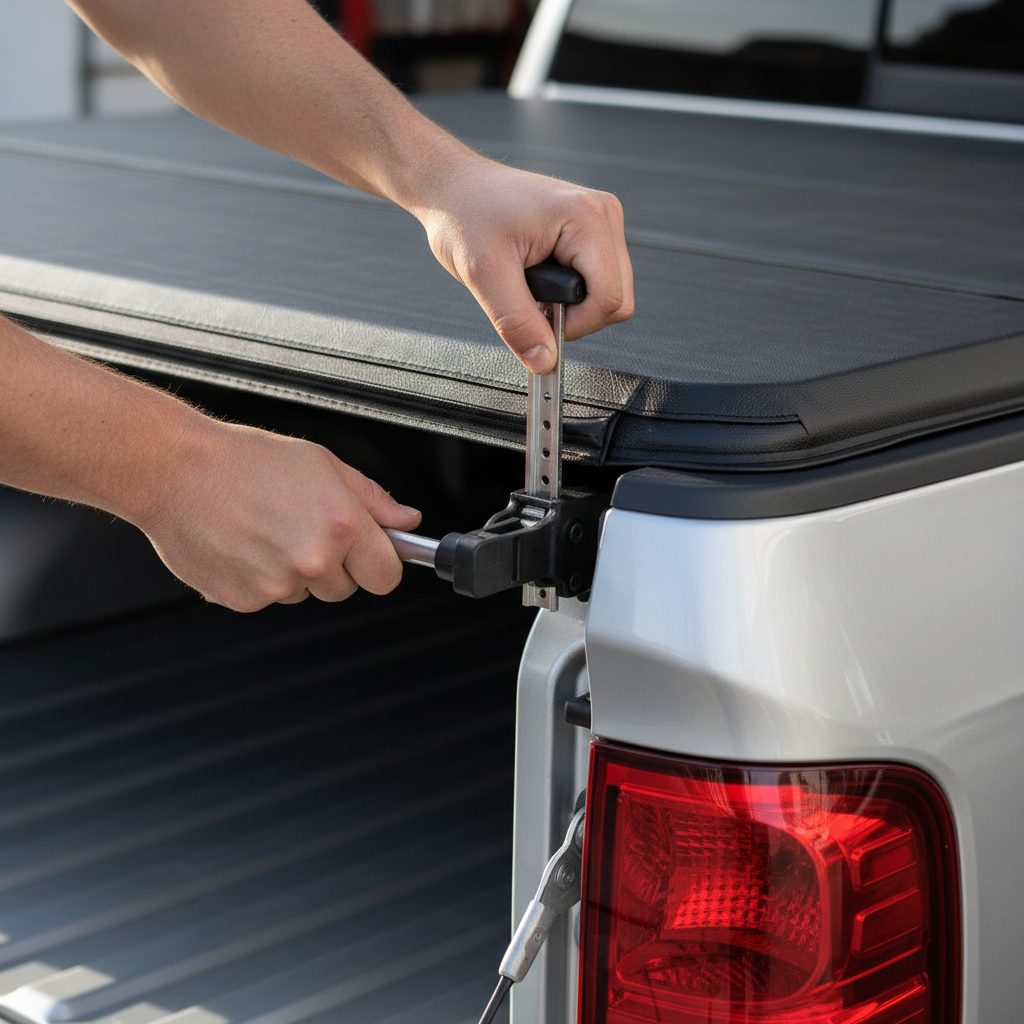
- Unpack and Inspect Components — Verify everything is present and undamaged.
- Carefully unbox your tonneau cover, laying out all components on a clean, flat surface. Refer to your owner's manual for a full parts list.
- Check for any damage incurred during shipping. If you find any, contact the manufacturer or retailer before proceeding.
- Familiarize yourself with the main cover assembly, side rails, clamps, and any weather seals.
Published June 19, 2026Last updated August 17, 2026
Tools & materials you'll need
Affiliate linksAs an Amazon Associate FixlyGuide earns from qualifying purchases — at no extra cost to you. Prices and availability are accurate as of publication and subject to change.
Quick Answer
Installing a tonneau cover on your truck bed is a straightforward DIY project that typically takes less than an hour, significantly enhancing your truck's functionality. This upgrade protects your cargo from harsh weather conditions and secures it from theft, simultaneously improving fuel efficiency by reducing aerodynamic drag. With a variety of types available, from soft roll-up to hard trifold, you can choose a cover that perfectly fits your needs and budget, transforming your truck bed from an open-air bin into a secure, weather-resistant storage compartment.
The Problem
Imagine you've just picked up a new BBQ grill, a few bags of topsoil, or even your weekly groceries. You toss them into the bed of your pickup truck, completely exposed to the elements. A sudden downpour could ruin your new grill's box, turn your topsoil into muddy clumps, or soak your groceries. Worse, leaving valuable tools or gear unsecured in your open truck bed is an open invitation for theft. Even seemingly innocuous elements like direct sunlight can degrade plastic items, fade fabrics, and cause certain materials to warp over time. Dust and road grit constantly accumulate, turning your truck bed into a grime magnet that requires frequent cleaning. Beyond these immediate concerns, the open bed of a pickup truck creates significant aerodynamic drag, especially at highway speeds, which can noticeably impact your fuel economy. This constant exposure and vulnerability diminish the utility and longevity of your truck bed and its contents, making you think twice about what you can safely transport or store.
How It Works
A tonneau cover fundamentally works by creating a sealed or semi-sealed barrier over the open cargo area of your truck bed. This barrier serves multiple critical functions. Mechanically, most tonneau covers attach to the truck bed rails using clamps or a rail system, eliminating the need for drilling in many modern designs. This attachment forms a secure perimeter. For soft covers, a vinyl or fabric material is stretched taut over a frame, often with tensioning systems to keep it flat and prevent water pooling. Hard covers, made from aluminum, fiberglass, or hard plastic composites, use hinges (for trifold or folding designs) or a rolling mechanism (for retractable designs) to open and close. The edges typically feature weather stripping or gaskets that compress against the bed rails and tailgate, creating a seal against water and dust intrusion. Latches or locks, often integrated into the cover's design, secure it in the closed position, preventing unauthorized access to your cargo. This physical barrier not only protects against environmental damage (rain, snow, UV, dust) but also acts as a significant deterrent to theft by concealing contents from view and locking them away. Furthermore, by creating a smooth, uninterrupted surface over the truck bed, a tonneau cover streamlines the airflow over the truck, reducing turbulence and drag. This aerodynamic improvement can lead to a slight but measurable increase in fuel efficiency, particularly during highway driving. The specific mechanism varies by cover type – roll-up, trifold, retractable, or hinged – but the core principle remains consistent: enclose and protect the truck bed contents.
Step-by-Step Fix
-
Prepare Your Truck Bed — A clean bed ensures proper seal and fit.
- Thoroughly clean your truck bed and bed rails. Use a general-purpose cleaner and a stiff brush, then rinse well. Pay close attention to the top surfaces of the bed rails where the cover will sit. Any dirt or debris can compromise the seal and prevent proper clamping.
- Ensure the truck bed is completely dry before proceeding.
-
Unpack and Inspect Components — Verify everything is present and undamaged.
- Carefully unbox your tonneau cover, laying out all components on a clean, flat surface. Refer to your owner's manual for a full parts list.
- Check for any damage incurred during shipping. If you find any, contact the manufacturer or retailer before proceeding.
- Familiarize yourself with the main cover assembly, side rails, clamps, and any weather seals.
-
Attach Side Rails (If Applicable) — Precision is key for a good seal.
- For many soft covers and some hard covers, you'll first attach the side rails to the inside of your truck bed rails.
- Position one side rail along the top edge of your truck bed rail, aligning it so the weather seal (if present) rests squarely on the bed rail.
- Use the provided clamps to secure the rail. Typically, clamps are spaced every 1 to 2 feet. Hand-tighten them initially, ensuring the rail is level and parallel to the bed edge.
- Repeat for the opposite side rail. Do not fully tighten yet.
-
Install Bulkhead Seal — Prevent water intrusion from the cab.
- Clean the front bulkhead (the wall closest to the cab) of your truck bed where the tonneau cover will meet it.
- Apply the included foam or rubber bulkhead seal along the top edge of the bulkhead. This seal fills any gaps and prevents water from entering the bed from the front.
- Press firmly to ensure good adhesion.
-
Position the Main Cover Assembly — Proper alignment makes all the difference.
- Carefully place the main tonneau cover assembly onto the installed side rails or directly onto the truck bed rails, starting from the bulkhead end.
- Align the front edge of the cover with the bulkhead seal. Make sure it's centered left-to-right.
- For trifold covers, unfold the first section to ensure it sits flush. For roll-up covers, ensure the front header bar is properly seated.
-
Secure the Cover to Rails — Even tension for a smooth look and tight seal.
- Many covers use a quick-latch system or specific mounting brackets to secure the cover to the side rails. Follow your manufacturer's instructions precisely.
- For rolling or retractable covers, you'll often secure the rail system to the truck bed before placing the cover itself into the rails.
- Once the cover is in place and aligned, go back and fully tighten all clamps on the side rails. Do not overtighten, as this can deform the rails or strip threads. A snug, firm grip is sufficient.
-
Adjust and Test — Fine-tuning for optimal performance.
- Close the cover completely and check for even gaps and a tight seal around all edges, particularly at the tailgate.
- For soft covers, ensure the fabric is taut and free of major wrinkles. Adjust tensioning systems if provided.
- Open and close the cover several times to ensure smooth operation of latches, hinges, or rolling mechanisms.
- Safety Note: Never drive with a tonneau cover improperly secured or unlatched. It could fly open and create a hazard for yourself and others.
-
Water Test — The ultimate gauge of your installation quality.
- After installation, spray water over the entire cover with a garden hose, focusing on seams, edges, and the bulkhead area.
- Check inside the truck bed for any leaks. A small amount of moisture at extreme pressure might be normal, but significant drips or streams indicate an issue.
- If leaks occur, check clamp tightness, seal placement, and ensure the cover is level. Adjust as needed and retest.
Common Causes
An open truck bed, while offering unparalleled versatility for hauling large items, inherently comes with several drawbacks that a tonneau cover effectively addresses. The primary
Related Articles
Keep troubleshooting with these hand-picked guides from FixlyGuide:
- The Hidden Culprit Behind Your AC Not Cooling (and How to Find It) — If your central AC isn't cooling your home, the issue often stems from a surprisingly simple problem that's easy to overlook. Learn how to…
- The #1 Mistake Homeowners Make with Pellet Grills (and How to Fix It) — Unpredictable temperature swings are the most common and frustrating issue for pellet grill owners, often caused by maintenance oversights.
- The 4 Hidden Reasons Your Lawn Stays Yellow (And How to Fix It FAST) — Uncover the surprising culprits behind a yellow lawn and learn the quick, effective fixes to restore vibrant green growth.
- The Hidden Reason Your GFCI Trips (and 7 Ways to Stop It) — A persistently tripping GFCI outlet is a safety warning, often indicating moisture, a faulty appliance, or a wiring problem that homeowners…
- The Surprising Trick to Cutting Your Dryer Bill By $100 Per Year — Installing a clothesline can significantly reduce your energy bills and add a fresh scent to your laundry. This guide covers how to choose…
- The #1 Mistake Homeowners Make When a Gas Burner Won't Light (And the Easy Fix) — Before you call a technician, discover the most common, overlooked reason your gas stove burner isn't lighting and how to fix it yourself i…
Should you do this yourself?
Answer five quick questions before you start. Safety outranks savings every time.
Your experience with work like this
How high do you have to work?
Does the job involve any of these?
Will it need a permit?
Specialty tools
Free and instant. Educational guidance only — not a quote, inspection, or professional diagnosis.
What should this project cost?
Enter your project details for a realistic cost range before you call anyone.
Cost depends heavily on which system turns out to be the source.
- Regional adjustment
- National average
- Labor share (typical)
- ~$1,620
- Quotes to collect
- 3 written estimates
Educational estimate based on national averages — not a binding quote. Always confirm with written local estimates.
Before you start
Check the difficulty, permits, and safety risk — then decide whether to call a pro.
- Estimate this projectGet a cost range for your scope and ZIP before you call anyone.Open
- Get local estimatesSend one request and compare written estimates from vetted pros.Open
Free, no signup required. Estimates are educational guidance, not a quote or an inspection.
Get the print-ready PDF of this guide
A clean, ad-free, printable version you can keep on your phone or pin to the workshop wall. Free with a FixlyGuide account.
- Print-optimized layout
- Tools, materials & every step included
- Saved to your account
This article was independently written by FixlyGuide based on the source topic.
Frequently asked questions
How long does it take to install a tonneau cover?+
Most tonneau cover installations are designed to be DIY-friendly and can be completed in 30 minutes to 1.5 hours, depending on the type of cover and your familiarity with basic tools. Soft roll-up covers are generally the quickest, while hard retractable covers might take a bit longer.
Do tonneau covers really improve fuel economy?+
Yes, tonneau covers can improve fuel economy by reducing aerodynamic drag. An open truck bed creates turbulence and an air pocket, increasing drag. A closed tonneau cover streamlines the airflow over the truck, leading to a small but measurable increase in MPG, typically 5-10% during highway driving.
Can I install a tonneau cover by myself?+
Absolutely. The vast majority of tonneau covers are designed for single-person installation without the need for specialized tools or expertise. Most require only basic hand tools like a wrench or a socket set. Manufacturer instructions are usually comprehensive and easy to follow.
Will a tonneau cover keep my truck bed completely dry?+
While most high-quality tonneau covers provide excellent water resistance and will keep your truck bed contents largely dry in most weather, it's rare for any cover to be 100% watertight under all conditions (e.g., direct high-pressure car washes). Minor drips or condensation might occur, but significant leaks indicate an installation issue or a faulty seal.

Discussion
Loading comments…