- The Hidden Truth About — Uncover the surprising risks of buying used furniture and appliances, and learn essential inspection tips to protect your home and wallet.
- Your Home's Secret To-Do List: Are You Missing It? — Most new homeowners focus on decorating, but ignoring a basic home maintenance checklist can lead to thousands in unexpected repairs. Learn…
- The Hidden Reason Your GFCI Trips — And Why Most Homeowners Get It Wrong — A continuously tripping GFCI outlet is a safety warning, often indicating a problem like moisture, a faulty appliance, or a wiring issue th…
- 7 Inspection Red Flags That Secretly Signal a $20,000 Bill — Don't let your dream home become a money pit. Many buyers and even some inspectors overlook subtle home inspection red flags that lead to f…
- The Secret 5 Bugs Invading Homes (It's Not Just Lanternflies) — Discover the five most common invasive bugs pest professionals treated last year that homeowners often overlook, and learn how to protect y…
General remodeling · Renovation planning
| Project category | General remodeling |
|---|---|
| Problem type | Renovation planning |
| Trade required | General contracting |
| Urgency | Planned project |
| Safety risk | Low safety risk |
| DIY suitability | Pro recommended |
| Cost category | Major investment |
| Typical timeline | Design and permitting often 2–4 months before work starts |
| Contractor type | General contractor |
Repair option
Phase the work and fix the building envelope first.
Replacement option
Full renovation with permits, design, and a general contractor.
Common causes
- Space no longer fits how the household lives
- Resale preparation
- Deferred maintenance stacking up
Relevant tools:project cost estimatorcompare quoteshome improvement material prices
Published July 28, 2026Last updated August 17, 2026
Tools & materials you'll need
Affiliate linksAs an Amazon Associate FixlyGuide earns from qualifying purchases — at no extra cost to you. Prices and availability are accurate as of publication and subject to change.
Quick Answer
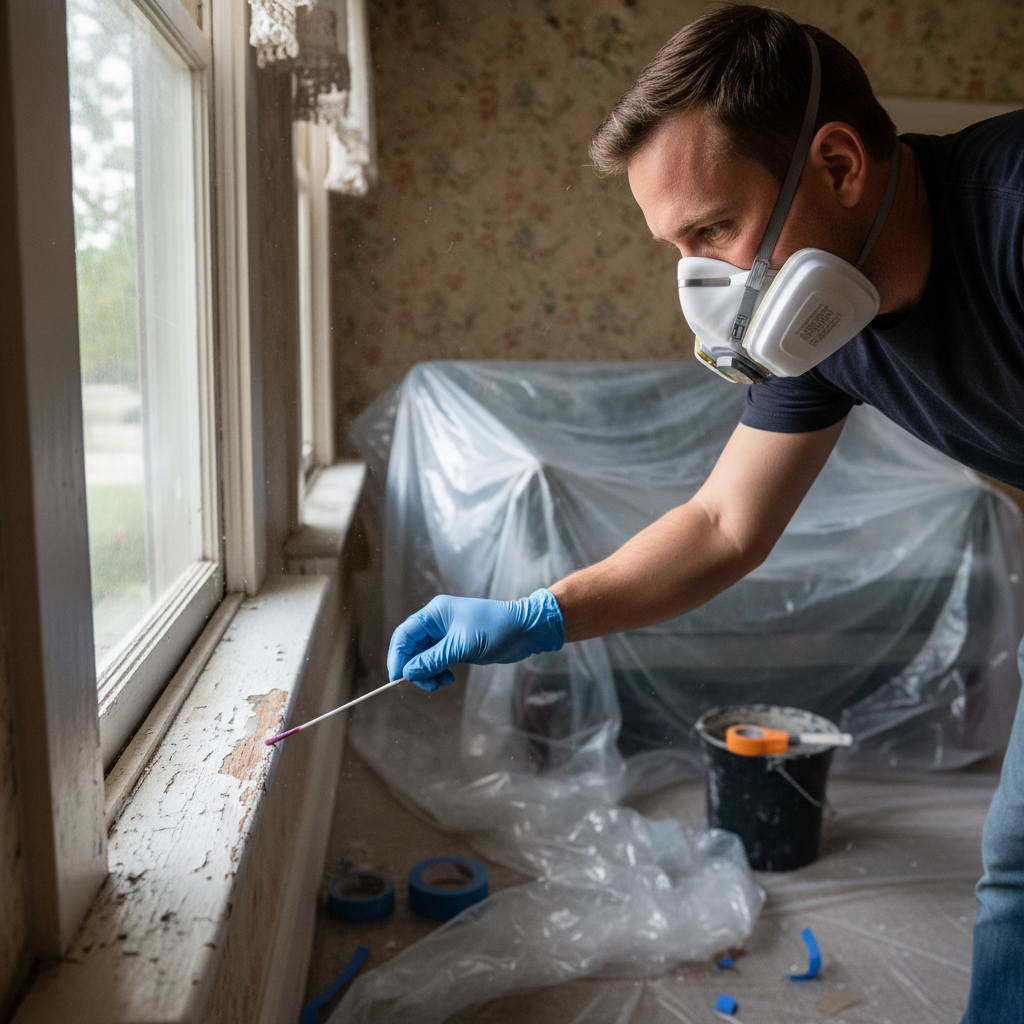
Look, here’s the deal: if your house went up before 1978, you’ve gotta assume there’s lead paint hiding somewhere. It’s not the paint that’s still stuck on solid that usually gets you in trouble — it’s when you start scraping, sanding, or ripping things out and kick up that dangerous, invisible dust. That dust is the real enemy. Test first, every time. If you find lead, you either bring in a pro or you follow some pretty strict safety steps to keep your family out of harm’s way.
The Problem
I’ve seen this a hundred times. Folks get excited about gutting an old kitchen or stripping some old trim, thinking they’re just doing a little DIY. What they don’t realize is they’re stirring up a silent mess inside the house: lead dust. This isn’t some abstract health risk, either. Lead poisoning, even at low levels, can mess with kids’ development, cause learning problems, and hit adults with stuff like high blood pressure and nerve damage. It’s serious business.
I remember a job out in Northlake once — nice young couple, bought a ’60s ranch, and started tearing out a wall themselves. They didn’t test, didn’t contain anything, just went at it with a sledgehammer. No dice. A few weeks later, their toddler started showing symptoms, and the follow-up test came back with high lead levels in the kid’s blood and all through the house. That’s a nightmare. Don’t be those folks.
How It Works
So why’s lead paint such a big deal, and how does it actually hurt people? Back in the day, lead got added to paint for a few reasons: it made colors pop, helped the paint last longer, and sped up drying. Sounds handy, right? Not so much. Lead doesn’t break down. It just hangs around.
When that old paint starts aging, it can chip, peel, or chalk off. Worse yet, when you mess with it — sanding an old door frame, drilling into a wall, tearing out cabinets — you make microscopic lead dust and tiny paint chips. That dust is so fine it can float around for hours, settle on every surface, and get tracked all over the house. Kids are hit hardest because they’re on the floor, they put their hands in their mouths, and their bodies soak up lead more easily than adults. It doesn’t take much; even a tiny bit, like a few grains of sugar, can cause trouble. Once lead gets in your body, it acts a lot like calcium and can get stored in your bones, organs, and even your brain. That’s where the long-term damage starts. So yeah, containment and careful cleanup aren’t suggestions. They’re the whole ballgame.
Step-by-Step Fix
Alright, let’s talk about how to tackle this beast without making a bigger mess. My advice is simple: test first. You can use DIY kits, or better yet, hire a pro for a more accurate read. If you confirm lead paint, here’s how I’d handle a small, contained renovation job.
-
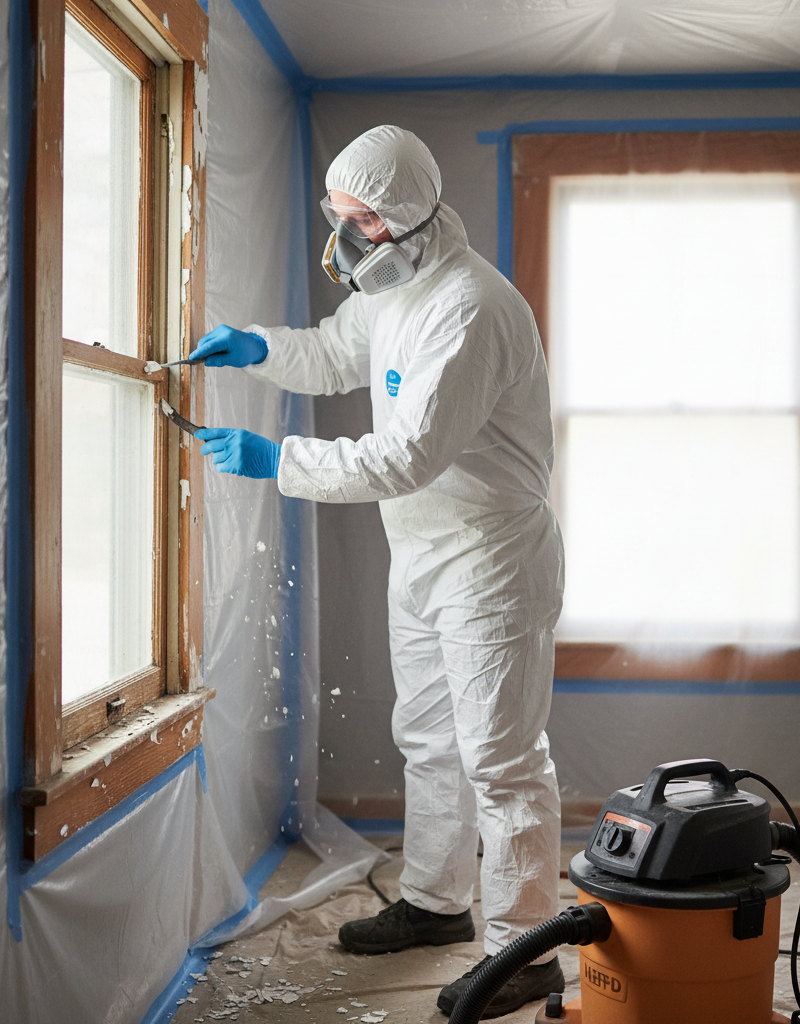
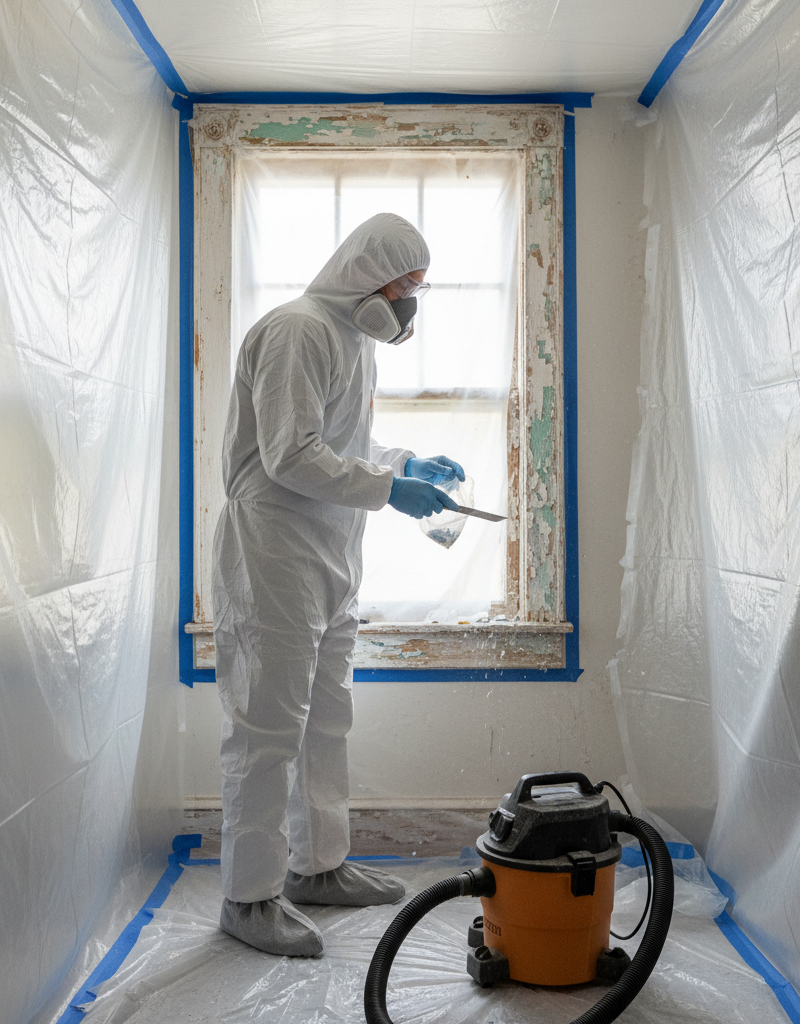
Prep the Area Safely — Before you even think about swinging a hammer or firing up a sander, you’ve gotta isolate the work zone. Pull out furniture, curtains, rugs, toys — anything that can hold onto lead dust. If you can’t move it, cover it with two layers of 6-mil plastic sheeting and tape it down good. Seal the work area off from the rest of the house. I’m talking heavy-duty plastic sheeting, the kind painters use, taped over doorways, HVAC vents, and any openings. Use masking tape on delicate surfaces, but use the strong stuff on trim and floors so you get a tight seal. Put up warning signs. That’s not overkill. That’s common sense.
-
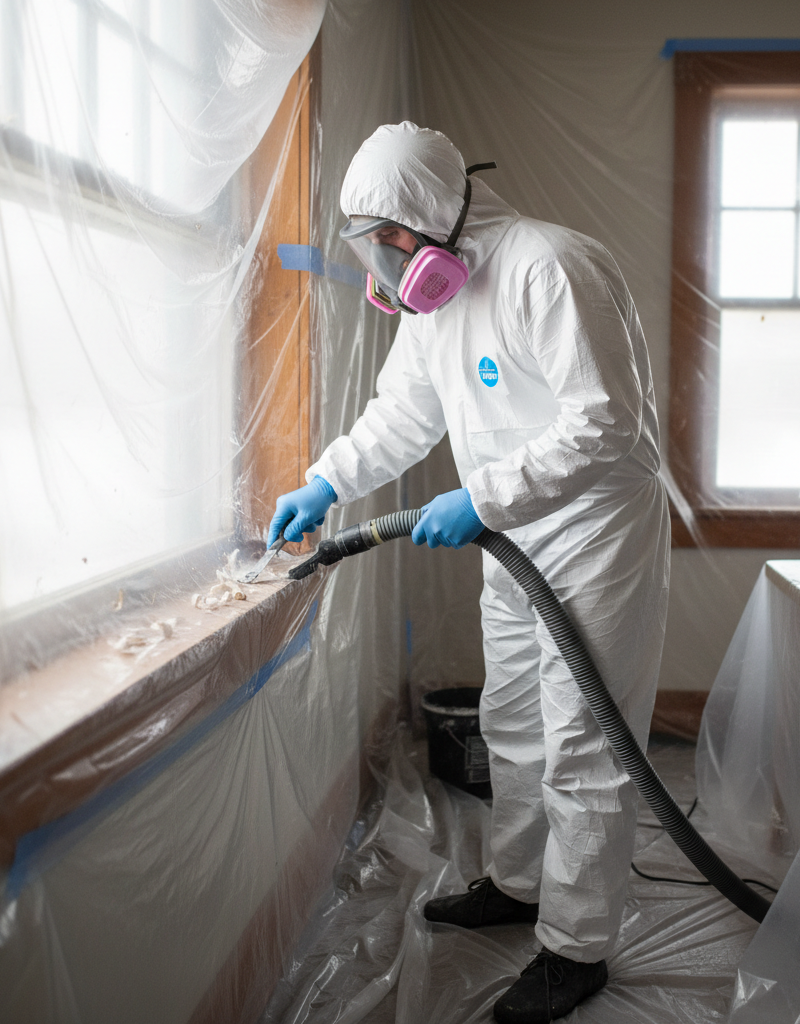
Gear Up for Protection — You wouldn’t walk into a fire without a helmet, would you? Same deal here. Put on a disposable full-body coverall, shoe covers, and an N100 or P100 respirator. Not those flimsy paper masks — I mean a real respirator with HEPA filters. Wear good safety glasses or goggles, too. You don’t want paint chips or dust in your eyes. And gloves? Absolutely. Cover every bit of skin you can. When you’re done, roll the coveralls inside out, pull them off carefully, and toss them with the shoe covers and gloves in a heavy-duty trash bag.
-
Minimize Dust Creation — This is the golden rule: wet beats dry every single time. Don’t sand or scrape dry paint unless you’ve got no other choice. Use wet sanding methods or chemical strippers made for lead paint. Score and snap drywall instead of sawing it, and grab hand tools instead of power tools if they’ll make less dust. If you have to use power tools for something like cutting out a window frame, hook them to a HEPA-filtered vacuum. Power tools with shrouds and HEPA vacuums can cut airborne dust by up to 90%.
-
Contain Debris Religiously — Every chip, every speck, every crumb has to stay put. Lay 6-mil plastic sheeting directly under the work area, and run it at least 2 feet past the perimeter. Mist surfaces with water before you disturb them to help keep dust down. As debris builds up, scoop it straight into heavy-duty 6-mil plastic bags. Don’t let it pile up. Double-bag everything, seal it tight, and label it
Related Articles
Keep troubleshooting with these hand-picked guides from FixlyGuide:
- The Hidden Truth About — Uncover the surprising risks of buying used furniture and appliances, and learn essential inspection tips to protect your home and wallet.
- Your Home's Secret To-Do List: Are You Missing It? — Most new homeowners focus on decorating, but ignoring a basic home maintenance checklist can lead to thousands in unexpected repairs. Learn…
- The Hidden Reason Your GFCI Trips — And Why Most Homeowners Get It Wrong — A continuously tripping GFCI outlet is a safety warning, often indicating a problem like moisture, a faulty appliance, or a wiring issue th…
- 7 Inspection Red Flags That Secretly Signal a $20,000 Bill — Don't let your dream home become a money pit. Many buyers and even some inspectors overlook subtle home inspection red flags that lead to f…
- The Secret 5 Bugs Invading Homes (It's Not Just Lanternflies) — Discover the five most common invasive bugs pest professionals treated last year that homeowners often overlook, and learn how to protect y…
- Is Your Smoke Detector Lying? The #1 Mistake Homeowners Make — Discover the crucial mistake most homeowners make with their smoke detectors and how to ensure your alarms are always ready to protect your…
Should you do this yourself?
Answer five quick questions before you start. Safety outranks savings every time.
Your experience with work like this
How high do you have to work?
Does the job involve any of these?
Will it need a permit?
Specialty tools
Free and instant. Educational guidance only — not a quote, inspection, or professional diagnosis.
Estimate your own project cost
National averages are a starting point. Enter your details for a range that fits your house.
Interior paint estimator
- Paint$96
- Supplies (tape, rollers, drop cloth)$35
- Estimated total (DIY)$131
Hiring a pro? Add roughly $1.50–$4.00/sq ft for labor depending on prep work and trim detail.
Educational estimate only — always confirm with written local bids.
What should this project cost?
Enter your project details for a realistic cost range before you call anyone.
Cost depends heavily on which system turns out to be the source.
- Regional adjustment
- National average
- Labor share (typical)
- ~$1,620
- Quotes to collect
- 3 written estimates
Educational estimate based on national averages — not a binding quote. Always confirm with written local estimates.
Before you start
Check the difficulty, permits, and safety risk — then decide whether to call a pro.
Free, no signup required. Estimates are educational guidance, not a quote or an inspection.
Get the print-ready PDF of this guide
A clean, ad-free, printable version you can keep on your phone or pin to the workshop wall. Free with a FixlyGuide account.
- Print-optimized layout
- Tools, materials & every step included
- Saved to your account
This article was independently written by FixlyGuide based on the source topic.
Frequently asked questions
How do I know if my house has lead paint?+
If your home was built before 1978, assume it has lead paint. The only way to know for sure is to test it using a home kit, or better yet, hire a certified lead inspector for a more comprehensive assessment. They'll use an XRF gun for non-destructive testing.
Is intact lead paint dangerous?+
Generally, intact lead paint that isn't chipping, peeling, or chalking isn't considered an immediate hazard. The danger primarily arises when the paint is disturbed through activities like sanding, scraping, or demolition, which create harmful lead dust and chips.
What kind of respirator do I need for lead paint work?+
You need a respirator rated N100 or P100. These have filters specifically designed to capture at least 99.97% of airborne particles, including lead dust. A simple dust mask is not sufficient and won't protect you.
Can I just paint over lead paint?+
Encapsulating lead paint by painting over it with a special encapsulant paint or even a good quality latex paint can be a temporary solution for intact surfaces. However, it's not a permanent fix and won't protect you if the underlying lead paint is later disturbed.
How do I clean up lead dust?+
Never dry sweep or use a regular vacuum, as this will just spread the dust. Use a HEPA-filtered vacuum, then wet-wipe all surfaces repeatedly with a general all-purpose cleaner and disposable cloths. Dispose of all cleaning materials in sealed bags.
What are the common symptoms of lead exposure?+
In children, symptoms can include developmental delays, learning difficulties, irritability, loss of appetite, and weight loss. In adults, it can cause high blood pressure, joint and muscle pain, memory problems, and headaches. Often, there are no obvious symptoms until levels are high.
When should I call a professional for lead paint?+
Always call a certified lead abatement professional for large-scale renovations, if you're dealing with lead paint on friction surfaces (windows, doors), or if you're unsure about the safest way to proceed. They have specialized equipment and training to safely remove or encapsulate lead.
What's the difference between lead testing and lead risk assessment?+
Lead testing (inspection) identifies if lead paint is present and where. A lead risk assessment goes a step further, identifying not just where lead is, but also its condition and potential for exposure, providing recommendations for managing those hazards.
How much does professional lead testing cost?+
Professional lead paint testing can range from $200-$600 for a typical single-family home, depending on the number of areas needing samples and the type of assessment. XRF gun testing is generally faster and less destructive than lab sample analysis.
Are there any grants available for lead paint removal?+
Yes, some local, state, and federal programs offer grants or low-interest loans to help homeowners or landlords with lead hazard reduction, particularly for low-income families or properties with children. Check with your local health department or HUD for options.
Discussion
Loading comments…