- Constant UV Exposure: Prolonged sun exposure breaks down fabric dyes and fibers, leading to fading and weakening of the material.
- Inadequate Drying: Leaving cushions wet after rain or cleaning creates a prime environment for mold and mildew growth in the foam core and fabric.
- Lack of Regular Cleaning: Dirt, pollen, bird droppings, and food spills provide organic matter that mold and mildew feed on, leading to stains and fabric degradation.
- Improper Storage: Storing damp cushions in airtight containers or humid environments without air circulation encourages mildew and musty odors.
- Harsh Cleaning Agents: Using strong detergents or abrasive brushes can strip protective coatings, damage fabric fibers, and accelerate wear.
Published June 12, 2026Last updated August 17, 2026
Tools & materials you'll need
Affiliate linksAs an Amazon Associate FixlyGuide earns from qualifying purchases — at no extra cost to you. Prices and availability are accurate as of publication and subject to change.
Quick Answer
The most common mistake homeowners make with outdoor cushions is improper storage and cleaning, leading to mold, mildew, sun damage, and material degradation. By consistently cleaning cushions with a mild soap solution, ensuring they are fully dry before storage, and protecting them from prolonged direct sunlight and harsh weather, you can significantly extend their lifespan and maintain their appearance.
The Problem
Outdoor cushions are designed to withstand the elements, but they aren't invincible. Homeowners often treat them as 'set and forget' items, leaving them exposed to constant sun, rain, and humidity. This neglect leads to a host of problems: vibrant colors fade into dull hues, mold and mildew spores take root, fabric loses its integrity leading to rips and tears, and the internal foam structures break down, making cushions lumpy and uncomfortable. Instead of lasting for years, neglected cushions often need replacing every season or two, a costly and frustrating cycle that can easily be avoided with a few simple, proactive steps.
How It Works
Outdoor cushions are engineered with specific materials to resist the rigors of exterior living, but even these advanced materials have limits. The outer fabric is typically made from solution-dyed acrylics, polyester, or olefin. Solution-dyed acrylics, like Sunbrella, are considered top-tier because the pigment is added during the fiber production, meaning the color goes all the way through the fiber, making them highly resistant to UV fading. Polyester and olefin fabrics are also durable but may fade more quickly if not treated with UV inhibitors. These fabrics are often treated with water-resistant or waterproof coatings, which help repel moisture and prevent it from soaking into the foam core. However, these coatings can break down over time due to UV exposure and abrasion.
Beneath the fabric, the core of the cushion is usually made from open-cell or closed-cell foam, or sometimes polyester fiberfill. Open-cell foam, common in many outdoor cushions, is designed to allow water to drain through it quickly, preventing saturation and aiding in drying. Closed-cell foam, while more expensive, is completely impervious to water absorption, making it ideal for marine environments or areas with consistent heavy rain. Polyester fiberfill offers a softer feel but can retain more moisture if the fabric cover is compromised. Proper air circulation around and through the cushion is crucial. When cushions remain wet for extended periods, especially in shaded, humid conditions, they become a breeding ground for mold and mildew. These fungi feed on organic matter (like dirt, pollen, and even the fabric itself), releasing spores that can cause discoloration, odors, and ultimately degrade the material. UV radiation from the sun, while providing warmth, is a powerful force that breaks down chemical bonds in the fabric, causing colors to fade and fibers to weaken, making the material brittle and prone to tearing. Understanding these vulnerabilities allows homeowners to implement targeted care strategies to counteract these natural forces.
Step-by-Step Fix
1. Initial Assessment — *Determine the extent of damage and plan your cleaning strategy.
Before diving into cleaning, perform a thorough inspection. Check for visible mold, mildew, stubborn stains, tears in the fabric, or significant fading. This assessment will help you decide if a simple spot clean is enough or if a more intensive wash is required. Note any areas of heavy buildup or discoloration, as these will need extra attention.
- Safety Note: If cushions show extensive black mold or a strong musty odor, consider wearing gloves and a mask to avoid contact with spores, especially if you have allergies or respiratory sensitivities.
2. Prepare the Work Area — *Set up a suitable space for cleaning and drying.
Choose an outdoor area that's shaded to prevent cleaning solutions from drying too quickly on the fabric, which can leave residue. A patio, driveway, or even a grassy spot works well. Lay down a tarp or old sheets if you're concerned about runoff hitting your plants. Gather all your cleaning supplies beforehand to ensure a smooth process.
3. Remove Loose Debris — *Brush off dirt, leaves, and pet hair.
Start by using a stiff brush or a handheld vacuum with a brush attachment to remove all loose dirt, leaves, spiderwebs, and pet hair from the cushion surfaces and crevices. This prevents these particles from turning into muddy streaks once water is introduced.
- Tip: If your vacuum has a 'blower' function, a quick blast can sometimes dislodge stubborn debris from seams.
4. Spot Treat Stubborn Stains — *Address isolated marks before a full wash.
For specific stains like bird droppings, tree sap, or food spills, pre-treat them. Mix a small amount of mild liquid dish soap with water to create a dilute solution. Apply directly to the stain, let it sit for 5-10 minutes, then gently blot with a clean cloth. Avoid harsh scrubbing, which can spread the stain or damage the fabric.
- If this doesn't work: For tougher stains, a specialized outdoor fabric cleaner might be necessary. Always patch-test in an inconspicuous area first.
5. Apply Cleaning Solution — *Wash the entire cushion surface.
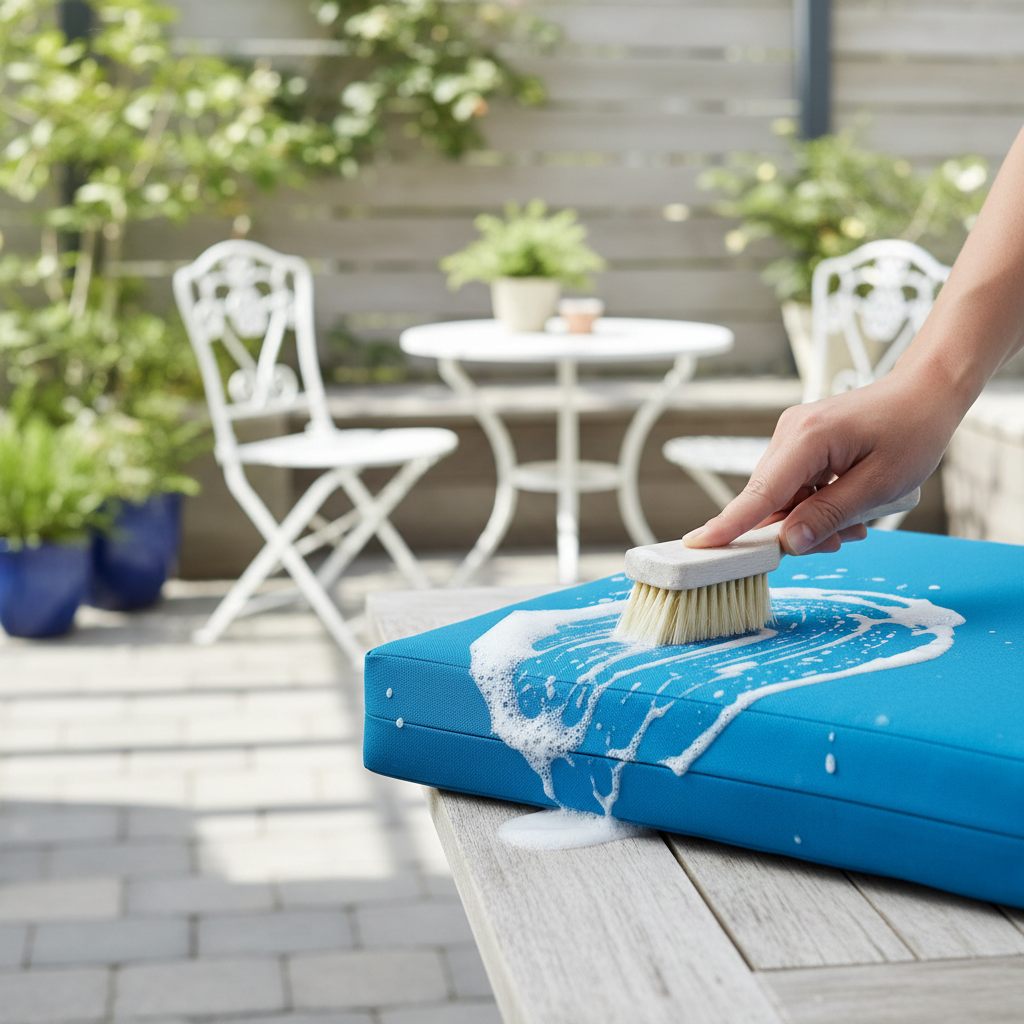
Mix 1/4 cup of mild liquid dish soap (like Dawn) with 1 gallon of warm water in a bucket. For mold and mildew, add 1 cup of household bleach to 1 gallon of water (for white or light-colored fabrics) or 1 cup of Borax to 1 gallon of water (for colored fabrics or a bleach-free option). Apply the solution generously all over the cushion using a soft-bristle brush, sponge, or spray bottle. Allow the solution to soak into the fabric for 10-15 minutes, ensuring it penetrates well.
- Safety Note: When using bleach, wear protective gloves and glasses, and ensure good ventilation. Avoid contact with skin and clothing. Never mix bleach with ammonia-based cleaners.
6. Gently Scrub — *Loosen dirt and grime from the fabric fibers.
Using your soft-bristle brush, gently scrub the entire surface of the cushion in a circular motion. Pay extra attention to heavily soiled areas, seams, and corners where dirt and mold tend to accumulate. The goal is to lift the grime, not to abrade the fabric.
7. Rinse Thoroughly — *Remove all traces of soap or cleaning solution.
Using a garden hose with a spray nozzle, thoroughly rinse the cushions. Start from the top and work your way down, ensuring all soap suds and cleaning solution are washed away. Residual soap can attract more dirt and leave a film on the fabric. Continue rinsing until the water runs clear and no suds are visible.
8. Facilitate Drying — *Ensure cushions dry completely to prevent mildew regrowth.
This is perhaps the most critical step. Stand cushions on their sides or prop them up to allow maximum air circulation. If possible, place them in a sunny spot, rotating them periodically to ensure even drying. Allow several hours, or even a full day, for them to dry completely, both inside and out. Squeeze or press out excess water if the foam core is very saturated.
- Tip: Portable fans or dehumidifiers in a garage can significantly speed up drying during humid weather.
- If this doesn't work: If cushions remain damp for too long, mildew can return. Consider unzipping covers (if removable) to aid in drying the foam separately.
9. Apply Fabric Protector (Optional) — *Add an extra layer of defense against stains and moisture.
Once the cushions are completely dry, you can apply a fabric protector spray (like Scotchgard Outdoor Water Shield) to enhance their water and stain resistance. Follow the product's instructions carefully for application and drying times. This step is optional but highly recommended, especially for cushions exposed to frequent rain or spills.
10. Proper Storage — *Protect cushions when not in use.
When not in use for extended periods, especially during rainy seasons or winter, store cushions in a dry, well-ventilated area like a deck box, garage, or shed. Ensure they are completely dry before storage to prevent mold and mildew. Using breathable storage bags can offer added protection against dust and pests.
Common Causes
- Constant UV Exposure: Prolonged sun exposure breaks down fabric dyes and fibers, leading to fading and weakening of the material.
- Inadequate Drying: Leaving cushions wet after rain or cleaning creates a prime environment for mold and mildew growth in the foam core and fabric.
- Lack of Regular Cleaning: Dirt, pollen, bird droppings, and food spills provide organic matter that mold and mildew feed on, leading to stains and fabric degradation.
- Improper Storage: Storing damp cushions in airtight containers or humid environments without air circulation encourages mildew and musty odors.
- Harsh Cleaning Agents: Using strong detergents or abrasive brushes can strip protective coatings, damage fabric fibers, and accelerate wear.
- Poor Airflow: Cushions placed directly on solid surfaces (like concrete or plastic furniture) without adequate air circulation underneath can trap moisture and promote mildew.
Common Mistakes
- Leaving Cushions Out Year-Round: Assuming 'outdoor' means invincible. Even the best cushions need protection from prolonged elements, especially off-season. Store them indoors or in a protective, breathable container during extreme weather or winter.
- Ignoring Small Stains: Letting small spills or bird droppings sit for days. These become much harder to remove and can attract mold if left untreated.
- Not Drying Cushions Thoroughly: Packing or storing cushions that are even slightly damp. This is a guaranteed recipe for mold, mildew, and lingering musty odors.
- Using a Pressure Washer Too Closely: While tempting, a pressure washer can damage delicate outdoor fabric, create fuzzing, or strip waterproof coatings if used too close or with too high a pressure setting.
- Mixing Bleach with Other Cleaners: Combining bleach with ammonia (found in some glass or all-purpose cleaners) creates toxic chlorine gas. Always use bleach in isolation and with proper ventilation.
- Using Harsh Scrub Brushes on Delicate Fabrics: Aggressive scrubbing can abrade fabrics, causing pilling, thinning, and damaging protective finishes. Stick to soft to medium-bristle brushes.
Cost & Time Breakdown
| Task | DIY cost | Pro cost | Time |
|---|---|---|---|
| Routine Cleaning (per set) | $5–$15 | N/A | 30–60 minutes |
| Deep Cleaning (per set) | $10–$25 | $100–$250 | 1–2 hours |
| Fabric Protector Application | $15–$30 | N/A | 30–45 minutes |
| Replacement Cushions (single) | $30–$150+ | N/A | N/A |
| Professional Cleaning Service | N/A | $150–$400+ | 2–4 hours |
Tips & Prevention
- Regular Brushing: Once a week, quickly brush off loose dirt, pollen, and leaves from your cushions to prevent buildup.
- Store When Not in Use: If rain is in the forecast or you won't be using outdoor furniture for a few days, toss cushions into a deck box or move them under a covered patio.
- Rotate Cushions: Just like mattresses, rotate and flip cushions periodically to ensure even wear and sun exposure, minimizing localized fading and compression.
- Check for Tears: Regularly inspect cushion seams and fabric for small tears or punctures. Repair these promptly with a fabric patch or waterproof adhesive to prevent moisture intrusion.
- Clean Spills Immediately: Don't let food or drink spills set. Blot them up quickly with a clean cloth and a mild soap-and-water solution.
- Ventilate in Storage: If storing cushions in a garage or shed, ensure the area has decent airflow. Avoid stacking too tightly, which can trap moisture.
When to Call a Professional
While most outdoor cushion care is well within the DIY homeowner's capability, there are situations where professional help makes sense. If your cushions are extremely valuable, custom-made, or manufactured with highly specialized fabrics that require specific cleaning agents, a professional outdoor fabric cleaning service can ensure proper treatment without risk of damage. Additionally, if cushions have extensive, deeply embedded mold and mildew that resists all cleaning efforts, a professional can often achieve better results or advise on replacement. Finally, if you're dealing with a large quantity of cushions, or simply lack the time and space for a thorough cleaning and drying process, outsourcing the task to a professional can save you significant effort and ensure they are ready for the next season.
Related Articles
Keep troubleshooting with these hand-picked guides from FixlyGuide:
- The Hidden Reason Your GFCI Trips (It's Not Always a Faulty Outlet) — A continuously tripping GFCI outlet is a critical safety warning, often indicating moisture, a faulty appliance, or a wiring problem that r…
- The Secret to Lush Raised Beds? It's Not Just About How You Water — Smart irrigation for raised garden beds isn't just about automation; it's about delivering the right amount of water precisely when your pl…
- The 3-Ingredient Secret to Sparking Clean Carpets (That Most Don't Know) — Unlock the secret to brilliantly clean carpets with a simple, potent three-ingredient homemade solution that effectively tackles stains and…
- The 5-Minute Trick to Vacation-Proof Your Garden (Before You Leave Town) — Prevent your garden from wilting while you're away with simple, proactive steps that ensure lush growth and minimal fuss upon your return.
- The 6 Cleaning Secrets Hiding in Your Power Drill (Plus Attachments to Master) — Your power drill isn't just for DIY projects; with the right attachments, it's a powerful and efficient cleaning tool for tackling tough gr…
- The 3 Hidden Mistakes That Make Your Deck Sealer Fail (And How to Fix Them) — Properly sealing your wood deck protects it from the elements, but common mistakes often lead to early failure. Learn how to reseal your de…
Should you do this yourself?
Answer five quick questions before you start. Safety outranks savings every time.
Your experience with work like this
How high do you have to work?
Does the job involve any of these?
Will it need a permit?
Specialty tools
Free and instant. Educational guidance only — not a quote, inspection, or professional diagnosis.
Estimate your own project cost
National averages are a starting point. Enter your details for a range that fits your house.
Concrete slab calculator
- Bagged mix (80 lb)$372 – $527
- Ready-mix delivery (1.5 cu yd)$210 – $300
Ready-mix is usually cheaper above ~1 cu yd. Most suppliers have a short-load fee under 3 yd.
Educational estimate only — always confirm with written local bids.
What should this project cost?
Enter your project details for a realistic cost range before you call anyone.
Cost depends heavily on which system turns out to be the source.
- Regional adjustment
- National average
- Labor share (typical)
- ~$1,620
- Quotes to collect
- 3 written estimates
Educational estimate based on national averages — not a binding quote. Always confirm with written local estimates.
Before you start
Check the difficulty, permits, and safety risk — then decide whether to call a pro.
Free, no signup required. Estimates are educational guidance, not a quote or an inspection.
This article was independently written by FixlyGuide based on the source topic.
Frequently asked questions
How often should I clean my outdoor cushions?+
For routine maintenance, brush off loose debris weekly. For a deeper clean, wash them thoroughly at least once a season, or more frequently if they're exposed to heavy use, pollen, or rain. Spot treat spills immediately.
Can I put outdoor cushions in the washing machine?+
While some cushion COVERS can be machine washed (always check the care tag!), it's generally not recommended for the foam inserts, and many full cushions are too bulky for a standard machine. Hand washing is safer and more effective for most outdoor cushions.
How do I get rid of mold and mildew on outdoor cushions?+
For white or light-colored fabrics, a solution of 1 cup bleach to 1 gallon of water can be effective. For colored fabrics, use a solution of 1 cup Borax to 1 gallon of water, or a specialized outdoor fabric cleaner. Always scrub gently and rinse thoroughly, then ensure complete drying.
What's the best way to store outdoor cushions for winter?+
First, ensure they are completely clean and dry to prevent mold. Store them in a dry, well-ventilated area like a shed, garage, or breathable deck box. Avoid stacking them too tightly, which can trap moisture, and use breathable bags for extra protection.
Why do my outdoor cushions keep getting moldy?+
Persistent mold usually indicates a combination of trapped moisture and poor air circulation. Ensure cushions are completely dry after rain or cleaning, prop them up to air out, and store them in a very dry, ventilated space when not in use.


Discussion
Loading comments…