- Forgetting to Turn Off Power. The most critical mistake. Always verify the circuit is dead before touching any wires or components. A non-contact voltage tester is an excellent tool for this confirmation.
- Replacing the Motor Unnecessarily. DIYers often assume the motor is dead when the issue is a simple, inexpensive thermal fuse or a faulty control switch. Following a logical testing sequence saves time and money.
- Using Incorrect Cleaning Agents. Harsh chemicals or ammonia-based cleaners can damage or discolor aluminum mesh filters. Stick to a strong degreasing dish soap or a dedicated citrus-based degreaser.
- Ordering the Wrong Replacement Part. Range hood parts are highly model-specific. Always use the full model and serial number from the appliance's data tag to order parts, not just a visual match from an online photo.
Electrical · Panel or service upgrade
| Project category | Electrical |
|---|---|
| Problem type | Panel or service upgrade |
| Trade required | Electrical |
| Urgency | Planned project |
| Safety risk | High safety risk |
| DIY suitability | Licensed pro only |
| Cost category | High cost |
| Typical timeline | Permit plus utility scheduling, commonly 2–6 weeks |
| Contractor type | Licensed electrician |
Repair option
Add a subpanel when the main service is adequate.
Replacement option
Full service upgrade with utility coordination and permits.
Common causes
- Obsolete or recalled panel brands
- Service capacity too small for added loads
- No room for required AFCI/GFCI breakers
Relevant tools:project cost estimatorcompare quotes
Published April 20, 2026Last updated August 17, 2026
Tools & materials you'll need
Affiliate linksAs an Amazon Associate FixlyGuide earns from qualifying purchases — at no extra cost to you. Prices and availability are accurate as of publication and subject to change.
How it works
A range hood's function is to capture and either exhaust or filter airborne grease, smoke, heat, and odors generated during cooking. This process relies on a straightforward electromechanical system. All hoods, regardless of type, use a centrifugal fan, often called a squirrel cage or blower wheel, to move air. This fan is powered by a small electric motor. Power from your home’s 120V AC electrical system flows to a control panel, which can range from simple toggle switches to a complex electronic touchpad. Activating a switch completes a circuit, sending electricity to the fan motor, causing it to spin the fan blades at one or more speeds.
There are two primary types of range hoods:
-
Ducted (or Vented): These are the most effective. The fan pulls contaminated air through one or more mesh or baffle grease filters. These filters trap solid grease particles. The filtered air is then pushed into a duct system, typically made of round or rectangular metal pipe, which vents it to the outside of your home through a wall or roof cap.
-
Ductless (or Recirculating): These are used when outdoor venting isn't feasible. Air is pulled through grease filters, just as in a ducted system. Afterward, the air passes through a secondary set of charcoal filters. These activated carbon filters are designed to absorb smoke and odor molecules. The "cleaned" air is then expelled back into the kitchen through vents on the hood's body.
The fan's failure is almost always due to a disruption in this chain: a loss of power, a blocked airway, a failed switch, or a burned-out motor.
Step-by-Step Fix
Follow these steps in order, from the simplest to the most complex, to diagnose and repair your range hood fan. Do not proceed to the next step until you have confirmed the previous one is not the cause.
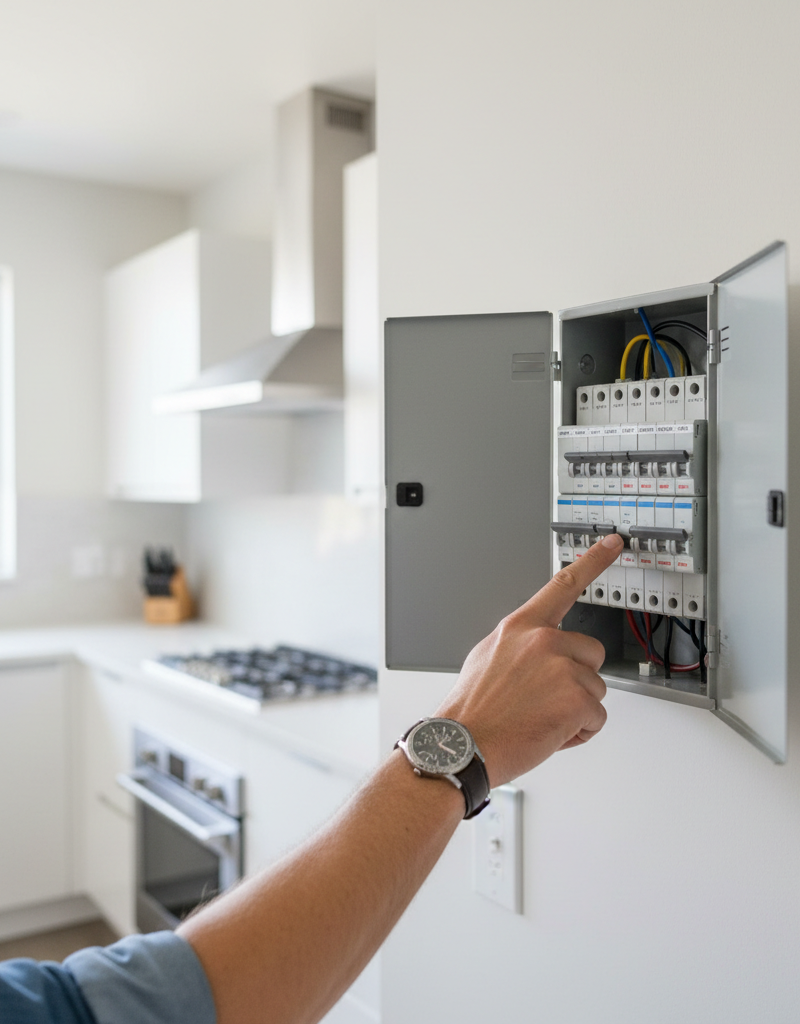
- Safety First: Before any inspection or repair, locate the circuit breaker for your range hood in your home's main electrical panel and switch it to the full OFF position. If the breaker is not clearly labeled, you may need to turn off the main breaker or test breakers until the light on the range hood (if it has one) goes out. Confirm power is off by attempting to turn on the fan and lights from the control panel.
-
Reset Power and Check Connections — The simplest fix is often a basic power issue. Go to your electrical panel and find the breaker for the kitchen or range hood. If it has tripped (handle is in the middle position), push it firmly to the OFF position, then back to the ON position. If your range hood is a plug-in model (common in over-the-range microwave combinations or some under-cabinet units), ensure the plug is firmly seated in its outlet, which is typically located in the cabinet above the hood.
-
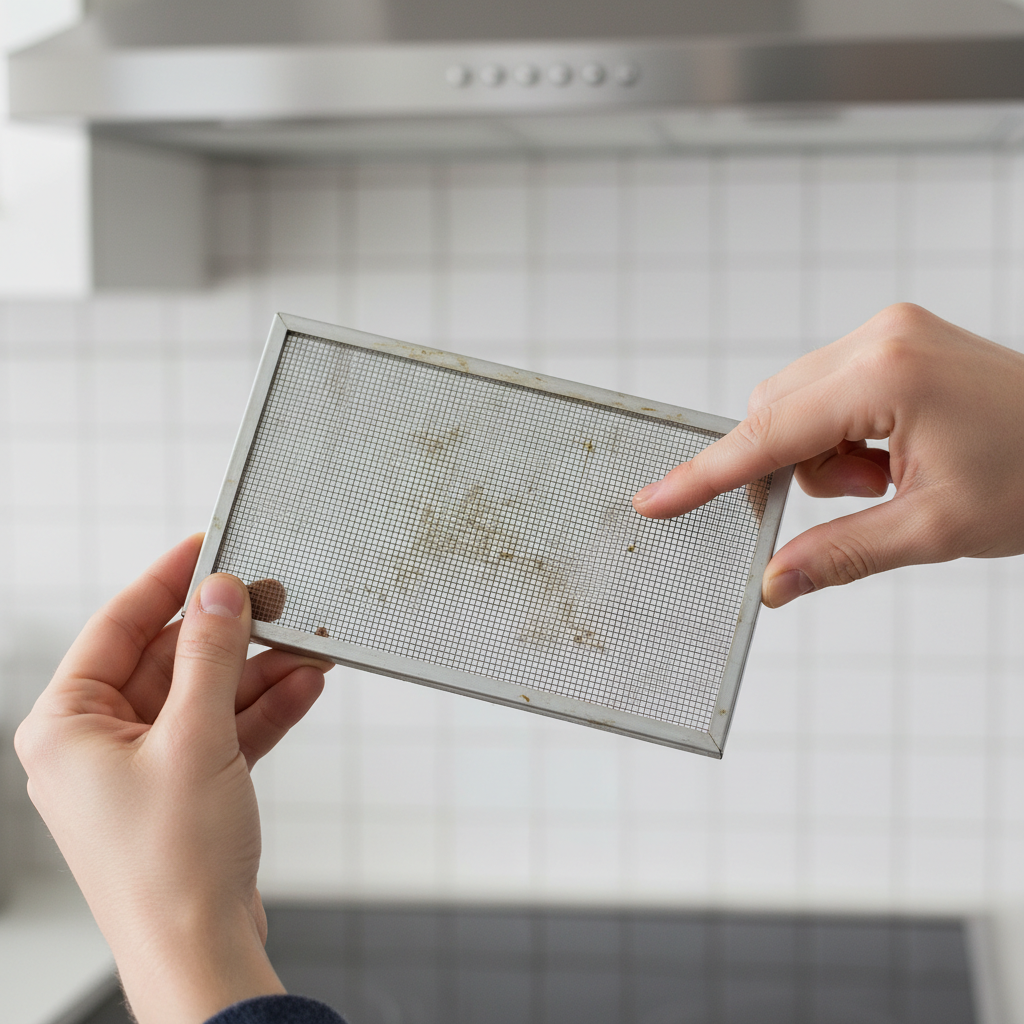
Thoroughly Clean the Grease Filters — Excessively clogged filters can restrict airflow so severely that the motor may overheat and shut down via a thermal protector, or simply be unable to spin the fan. Remove the filters, which are usually held in place by sliding latches or clips. Submerge them in a sink with hot water and a strong degreasing dish soap for 20-30 minutes. Use a non-abrasive brush to scrub away remaining grease, then rinse thoroughly and dry completely before reinstalling. Many modern metal filters are dishwasher-safe; check your owner's manual.
-
Inspect and Clear the Fan Blades — With the filters removed and power confirmed off, look up into the fan housing. The squirrel cage fan should be clearly visible. Use a flashlight to check for obstructions. Debris, fallen hardware, or extensive, hardened grease buildup can physically block the fan from spinning. Carefully use a wooden stick or gloved hand to remove any obstructions.
-
Test for Free Fan Blade Movement — With the power still off, gently try to spin the fan blade with your finger. It should rotate smoothly and freely for several revolutions. If it feels stiff, grinds, or doesn't move at all, the motor bearings are likely seized or failing. In this case, the fan motor will probably need to be replaced. If it spins freely, the problem is likely electrical.
-
Test the Fan Control Switch — The switch that controls the fan speed is a common failure point. To test it, you will need a multimeter. After ensuring the power is off, remove the control panel cover; this may involve prying off plastic switch knobs and undoing several screws. Visually inspect the switch and its wiring for any burn marks, discoloration, or loose connections. If everything looks okay, set your multimeter to the continuity setting (it often looks like a sound wave symbol). Disconnect the wires from the terminals of the fan switch. Touch one multimeter probe to the "common" or "power in" terminal and the other probe to the "low speed" terminal. With the switch in the OFF position, the meter should read "OL" (open line). Turn the switch to the low speed setting; the meter should now beep or read a very low number (near 0), indicating a complete circuit. Repeat this test for each fan speed setting, testing the corresponding output terminal. If any speed setting fails to show continuity when activated, the switch is faulty and must be replaced.
-
Inspect the Thermal Cutoff Fuse — Many fan motors are protected by a small, one-time thermal fuse. If the motor overheats due to clogged filters or a heavy load, this fuse blows to prevent a fire. The fuse is often located near the motor itself, tucked into the windings or taped to the motor housing, and may be covered in heat-shrink tubing. It looks like a small silver or black cylinder with a wire coming out of each end. To test it, clip the wires on either side of the fuse (leave enough wire to reconnect it). Set your multimeter to the continuity setting and touch one probe to each end of the fuse. It should show continuity (beep or read near 0). If it reads "OL," the fuse is blown and needs to be replaced with one of the exact same temperature and amperage rating.
-
Test the Fan Motor Windings — If the switch and thermal fuse are good, the motor itself may have burned out. Access the motor and disconnect the wires leading to it. Set your multimeter to measure resistance (Ohms, Ω). There are usually multiple wires for different speeds. Test between the common wire and each speed wire. You should get a resistance reading, typically between 5 and 40 ohms, for each winding. The exact values depend on the motor, but they should not be zero or "OL." If you get an "OL" reading on any winding, that part of the motor is open and has failed. If the readings are correct, the motor is likely functional.
-
Confirm Incoming Voltage — This step verifies that power is reaching the range hood from your home's wiring. This involves testing live voltage and should only be performed if you are confident and competent in working with live electrical circuits. Open the junction box where the hood's wiring connects to the house wiring (or test the outlet if it's a plug-in model). Carefully set your multimeter to AC Volts (V~). Without touching the wires, place one probe on the black (hot) wire connection and the other on the white (neutral) wire connection. The meter should read approximately 120V. If it reads 0V, the problem lies in your home's wiring, not the range hood. If it reads 120V, power is being successfully supplied to the appliance.
-
Replace the Faulty Component — Based on your testing, the culprit should now be clear: a bad switch, a blown fuse, or a failed motor. Order an exact replacement part using the model and serial number from your range hood's identification plate (usually located inside the hood housing). Follow the disassembly steps in reverse to install the new part, ensuring all connections are secure and tight.
-
Reassemble and Safely Test — Once the new part is installed and all wiring is reconnected, re-install any panels or covers. Put the clean, dry grease filters back in place. Go to the circuit panel and restore power to the range hood. Test all fan speeds and light functions to confirm the repair was successful.
Common mistakes
- Forgetting to Turn Off Power. The most critical mistake. Always verify the circuit is dead before touching any wires or components. A non-contact voltage tester is an excellent tool for this confirmation.
- Replacing the Motor Unnecessarily. DIYers often assume the motor is dead when the issue is a simple, inexpensive thermal fuse or a faulty control switch. Following a logical testing sequence saves time and money.
- Using Incorrect Cleaning Agents. Harsh chemicals or ammonia-based cleaners can damage or discolor aluminum mesh filters. Stick to a strong degreasing dish soap or a dedicated citrus-based degreaser.
- Ordering the Wrong Replacement Part. Range hood parts are highly model-specific. Always use the full model and serial number from the appliance's data tag to order parts, not just a visual match from an online photo.
- Bending Fan Blades. While cleaning or clearing an obstruction, it's easy to accidentally bend the delicate fins of the squirrel cage fan. A bent fan will be unbalanced, causing loud vibrations and noise, and will eventually damage the motor bearings.
- Ignoring a Repeatedly Tripping Breaker. If the breaker trips again immediately after you reset it, this signals a dead short in the wiring or a seized motor. Do not keep resetting it. Unplug the appliance and investigate the short circuit before restoring power.
Cost & time breakdown
Costs are estimates and can vary based on location and appliance model. Pro costs include the service call fee, labor, and parts markup.
| Task | DIY cost | Pro cost | Time |
|---|---|---|---|
| Diagnostics & Filter Cleaning | $0 - $20 (degreaser) | $95 - $175 | 1-2 hours |
| Replace Fan Control Switch | $20 - $50 (part) | $150 - $275 | 1 hour |
| Replace Thermal Cutoff Fuse | $5 - $15 (part & connectors) | $175 - $300 (often as part of motor job) | 1.5 hours |
| Replace Fan Motor | $75 - $200 (part) | $300 - $550 | 2-4 hours |
| Replace Start/Run Capacitor | $10 - $30 (part) | $140 - $250 | 1 hour |
| Full Range Hood Replacement | $150 - $700+ (appliance) | $400 - $1,200+ | 3-5 hours |
When to call a pro
While many range hood fan issues are fixable, certain situations warrant professional help. Immediately call a qualified appliance repair technician or an electrician if you encounter any of the following:
- The circuit breaker trips instantly upon being reset. This indicates a serious electrical short circuit that poses a fire hazard. Do not attempt to reset it again.
- You see or smell burned plastic, melted wires, or acrid smoke. These are clear signs of a significant electrical failure that has compromised the appliance's safety. Unplug the unit or turn off the breaker and do not use it.
- You are not comfortable or experienced using a multimeter to test for continuity and, especially, live voltage. Incorrect use can lead to electric shock or damage to the appliance and the meter.
- The required repair involves a complex electronic control board rather than simple mechanical switches. Diagnosing and replacing circuit boards requires specialized knowledge.
- The range hood is a high-end, downdraft, or integrated microwave/hood unit. These appliances are often more complex, with intricate wiring and components that are difficult to access and service without specialized training.
Prevention & maintenance
Consistent maintenance is the best way to prevent fan failure and ensure your range hood operates effectively for years.
- Clean Grease Filters Frequently: This is the single most important task. For heavy, greasy cooking, clean filters monthly. For average use, clean them every 2-3 months. Clean filters ensure proper airflow, reducing strain and heat buildup on the motor.
- Replace Charcoal Filters Regularly (Ductless Hoods): If you have a recirculating hood, the charcoal filters cannot be cleaned and must be replaced. They become saturated with odors and smoke particles over time. Replace them every 3 to 6 months, depending on your cooking habits.
- Wipe Down the Fan and Housing: Once or twice a year, remove the grease filters and use a cloth with a degreaser to wipe down the interior housing and the fan blades themselves. This prevents the heavy, hardened buildup that can unbalance the fan and obstruct movement.
- Check the External Vent Flap: If you have a ducted system, periodically go outside and ensure the vent flap on the wall or roof cap opens when the fan is on and closes when it's off. Debris, ice, or animal nests can block it, causing backpressure that strains the motor.
- Listen for Warning Signs: Pay attention to new noises. A high-pitched squeal or a low, grinding rumble often indicates that the motor bearings are beginning to fail. Addressing this early by replacing the motor can prevent a complete and sudden failure.
Related Articles
Keep troubleshooting with these hand-picked guides from FixlyGuide:
- Why Does Only One Outlet Have No Power (When the Breaker Is On)? — Discover the surprisingly common reasons a single electrical outlet stops working while its circuit breaker remains on, and learn how to sa…
- Fix Flickering Lights Throughout Your House: A DIY Guide — Flickering lights throughout your house are usually caused by loose connections. This guide will help you diagnose and fix the most common…
- The 7 Head-Scratching Reasons Your Outlet Died (Even With The Breaker On) — Discover the surprising reasons why an electrical outlet might stop working even when its circuit breaker is fully engaged, and how to safe…
- The Hidden Reason Your Ceiling Fan Wobbles (And 3 Cheap Fixes) — A wobbling ceiling fan isn’t just annoying; it can be a sign of imbalance or loose connections that are simple to fix with the right approa…
- Outlet Not Working? Here’s How to Troubleshoot (Breaker On) — When an electrical outlet stops working but the breaker hasn't tripped, it can be a puzzling and frustrating problem for homeowners. This g…
- The #1 Mistake Homeowners Make When Their AC Won't Turn On (And the Easy Fix) — Learn the most common oversight homeowners make when their AC won't turn on and how to troubleshoot basic issues to restore cooling.
What should this project cost?
Enter your project details for a realistic cost range before you call anyone.
Outlet and switch work usually $150–$400; panel upgrades commonly $1,800–$4,200.
- Regional adjustment
- National average
- Labor share (typical)
- ~$709
- Quotes to collect
- 3 written estimates
Educational estimate based on national averages — not a binding quote. Always confirm with written local estimates.
Get the print-ready PDF of this guide
A clean, ad-free, printable version you can keep on your phone or pin to the workshop wall. Free with a FixlyGuide account.
- Print-optimized layout
- Tools, materials & every step included
- Saved to your account
Frequently asked questions
Why did my range hood fan suddenly stop working?+
The most common reasons a range hood fan stops working are a tripped circuit breaker, heavily clogged grease filters, or a faulty fan switch. Less often, it could be due to loose wiring or a motor issue.
How often should I clean my range hood filters?+
You should clean your range hood grease filters every 3-6 months for average use. If you cook frequently,especially frying or greasy foods, clean them monthly to prevent buildup and maintain efficiency.
Can a dirty range hood filter cause the fan to stop working?+
Yes, a heavily caked grease filter can restrict airflow so severely that it can cause the fan motor to overheat or simply prevent the blades from spinning at all, leading to fan failure.
Discussion
Loading comments…