- Food Debris: Small crumbs, bits of packaging, or spilled liquids can find their way into the drain funnel and accumulate, especially in bottom-freezer models.
- Ice Buildup: In some cases, a partial clog can lead to ice forming in the drain tube, which then completely blocks water flow.
- Mold or Algae: The warm, moist environment of the drain tube and pan is an ideal breeding ground for mold or algae, which can create slimy blockages.
- Misaligned Drain Tube: Less common, but sometimes the drain tube itself can become dislodged or kinked, preventing proper drainage.
- Small Objects: Very rarely, small foreign objects can fall into the drain opening.
Plumbing · Leak
| Project category | Plumbing |
|---|---|
| Problem type | Leak |
| Trade required | Plumbing |
| Urgency | Emergency — act now |
| Safety risk | High safety risk |
| DIY suitability | DIY for experienced homeowners |
| Cost category | Low cost |
| Typical timeline | Shut water off now; repair usually same or next day |
| Contractor type | Licensed plumber |
Repair option
Isolate at the shutoff, replace the failed component, and dry the cavity fully.
Replacement option
Repipe the run or the branch when corrosion is widespread.
Common causes
- Failed supply line or shutoff valve
- Worn washers, cartridges, or P-trap connections
- Pinhole corrosion in older copper
Relevant tools:emergency checklistdiy or hire a pro
Published May 26, 2026Last updated August 17, 2026
Tools & materials you'll need
Affiliate linksAs an Amazon Associate FixlyGuide earns from qualifying purchases — at no extra cost to you. Prices and availability are accurate as of publication and subject to change.
Quick Answer
AIf your refrigerator is leaking water onto the kitchen floor, the culprit is almost certainly a clogged defrost drain tube. This common issue occurs when food particles, ice, or mold build up, blocking the path for defrost water to exit the freezer compartment. The good news is that this is a very manageable DIY repair, often taking less than an hour and requiring only a few basic tools.
The Problem
You spot a puddle of water under your refrigerator, seemingly out of nowhere. It's a frustrating and potentially damaging issue, not to mention a slipping hazard. While there are several reasons a refrigerator might leak, a blockage in the defrost drain tube is by far the most frequent cause, especially for leaks that appear sporadically or after the refrigerator has been running for a while. The design of modern refrigerators makes this a prime candidate for minor clogs.
How It Works
Most modern refrigerators, especially frost-free models, employ an automatic defrost cycle. Periodically, a heating element located near the evaporator coils in the freezer compartment turns on to melt any accumulated frost. This melted water, or condensate, is designed to flow down a small drain funnel, through a drain tube, and into a shallow drain pan (also called a drip pan or evaporator pan) located beneath the refrigerator, typically near the compressor. The heat generated by the compressor then evaporates this water. If the drain tube becomes partially or completely blocked by food debris, ice, or mold, the defrost water cannot flow freely into the pan. Instead, it backs up, overflows the drain funnel, and eventually finds its way out of the freezer or refrigerator compartment, dripping down the back or front of the appliance and pooling on the floor beneath.
Step-by-Step Fix
Safety First — Before attempting any repair, always unplug your refrigerator from the wall outlet to prevent electrical shock. Wear gloves to protect your hands from sharp edges or grime.
-
Empty the Freezer and Refrigerator — To gain access and prevent food spoilage, remove all food items from both the freezer and refrigerator compartments. Place perishable items in a cooler with ice.
- If your refrigerator is an older model or has a top freezer, you may need to empty only the freezer compartment.
-
Locate the Evaporator Cover — In the freezer compartment, you'll need to remove shelves and any ice maker components to expose the back panel (evaporator cover). This large plastic or metal panel covers the evaporator coils and the defrost drain funnel.
- Tools needed: Phillips screwdriver, flathead screwdriver
- If you have a bottom freezer, the drain might be accessible through that compartment. Check your owner's manual for specific instructions for your model.
-
Remove the Evaporator Cover — Carefully unscrew all retaining screws holding the evaporator cover in place. These are usually Phillips head screws. Once the screws are out, gently pry the cover away from the back wall. It might be sealed with a bit of frost or a gasket, so take your time. Disconnect any wire harnesses attached to the cover, such as for the fan motor or probes.
- Pro tip: Take a photo before you start disconnecting wires to remember where everything goes.
-
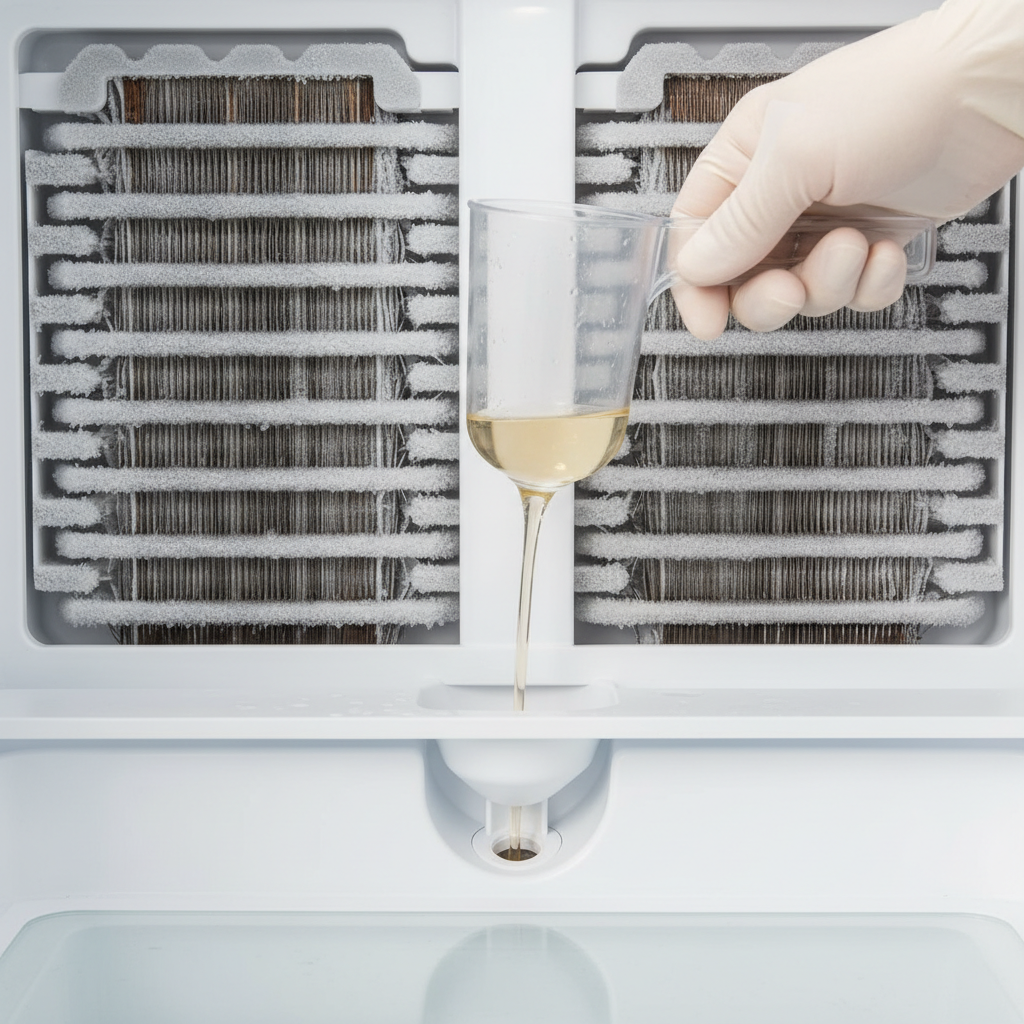
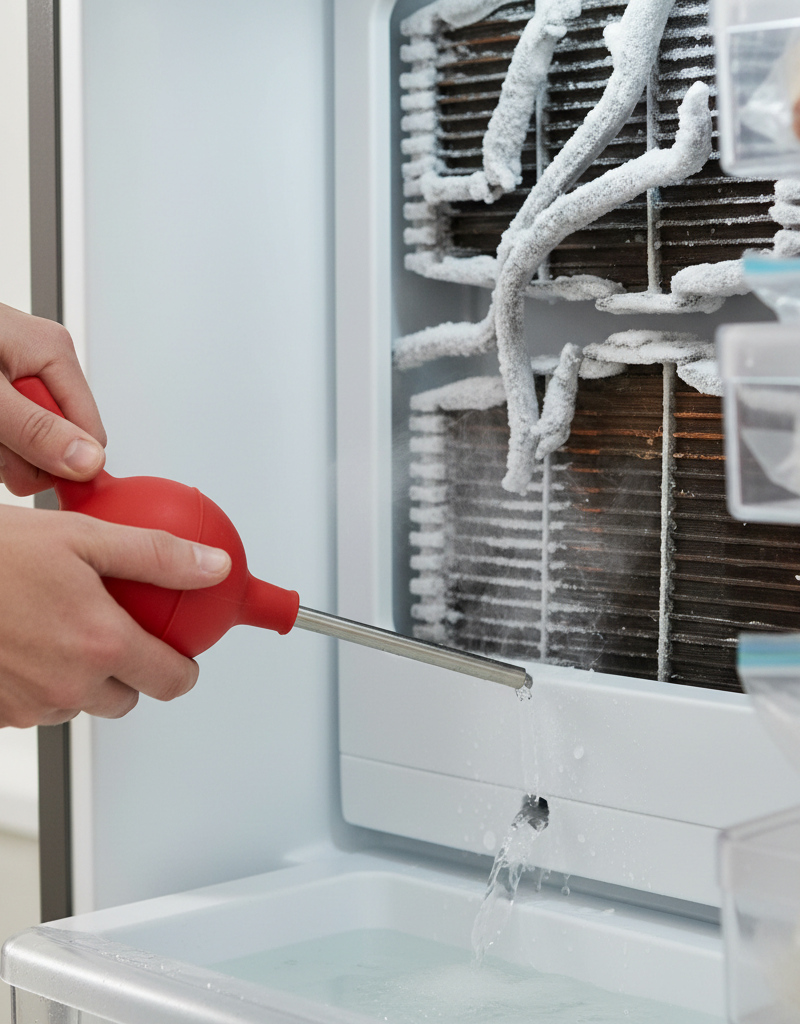
Identify and Clear the Clog — Once the evaporator cover is removed, you will see the evaporator coils and, at the bottom, a small drain trough or funnel. The opening to the defrost drain tube will be visible here. Use a turkey baster or syringe filled with warm water mixed with a little bleach (about 1 teaspoon of bleach per cup of water) to flush the drain opening. You can also carefully use a pipe cleaner, a long flexible brush, or a stiff piece of wire (like a straightened coat hanger) to poke into the drain tube and dislodge the clog. Be gentle to avoid puncturing the tube.
- If the water doesn't drain immediately, repeat the flushing with warm water. You might hear gurgling as the clog clears.
- If the tube is completely frozen, use a hairdryer on a low setting (keeping it away from plastic parts) to melt the ice, then flush.
-
Clean the Drain Pan (Optional but Recommended) — While you're at it, it's a good idea to locate the drain pan beneath the refrigerator and clean it. This pan collects the defrost water and can harbor mold or mildew. Pull the refrigerator away from the wall, locate the pan (it often slides out), empty it, and wash it thoroughly with soap and water.
- Safety note: Be careful when moving your refrigerator. Enlist help if it's heavy.
-
Reassemble the Refrigerator — Once you're sure the drain tube is clear, reattach any wire harnesses to the evaporator cover, carefully position the cover back into place, and secure it with all screws. Reinstall the shelving and ice maker components. Return your food items to the refrigerator.
-
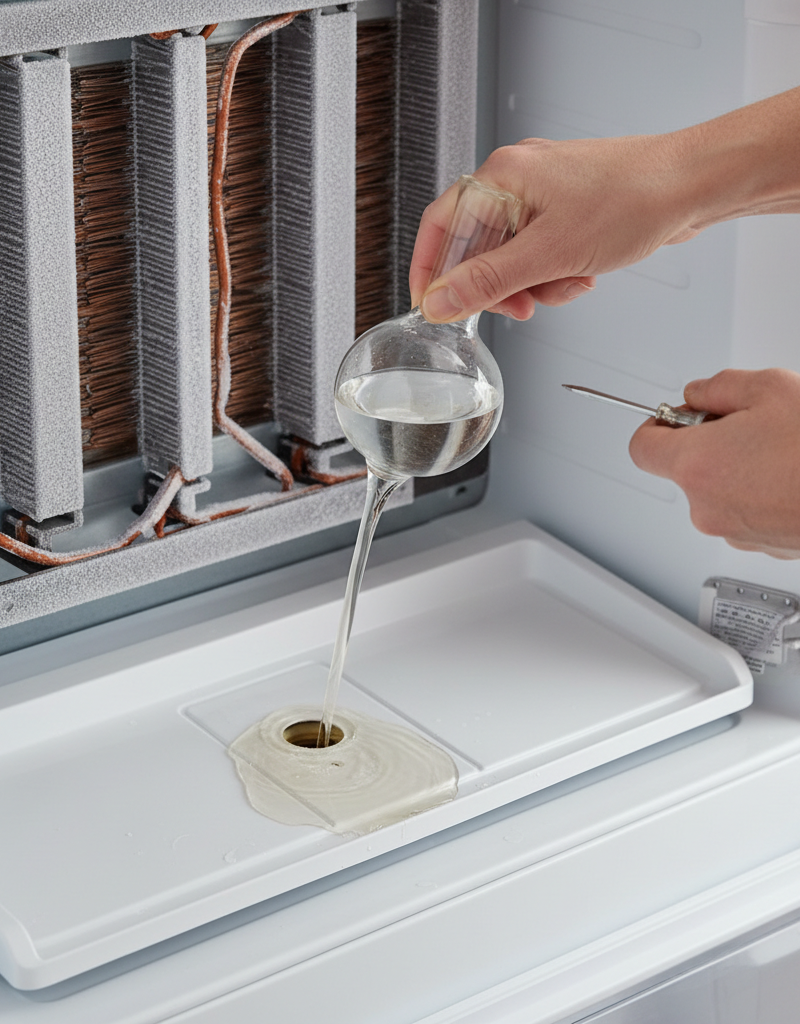
Test the Drain — After reassembly, pour a cup of water into the freezer's drain opening to ensure it flows freely into the drain pan below. Check the drain pan after a few minutes to confirm the water has reached it.
-
Plug In and Monitor — Plug the refrigerator back into the wall outlet. Monitor for a day or two to ensure no new puddles appear. The refrigerator will take several hours to return to optimal operating temperature.
Common Causes
- Food Debris: Small crumbs, bits of packaging, or spilled liquids can find their way into the drain funnel and accumulate, especially in bottom-freezer models.
- Ice Buildup: In some cases, a partial clog can lead to ice forming in the drain tube, which then completely blocks water flow.
- Mold or Algae: The warm, moist environment of the drain tube and pan is an ideal breeding ground for mold or algae, which can create slimy blockages.
- Misaligned Drain Tube: Less common, but sometimes the drain tube itself can become dislodged or kinked, preventing proper drainage.
- Small Objects: Very rarely, small foreign objects can fall into the drain opening.
Common Mistakes
- Ignoring the Safety Disconnect: Forgetting to unplug the refrigerator before working on it can lead to serious electrical shock. Always disconnect power.
- Using Harsh Chemicals: While a diluted bleach solution is fine, don't use strong drain cleaners or harsh chemicals, which can damage plastic components or seals in your refrigerator's drain system.
- Puncturing the Drain Tube: Being too aggressive with a wire or tool when clearing a clog can pierce the drain tube, creating a new, more difficult leak to fix.
- Not Cleaning the Drain Pan: Skipping cleaning the drain pan allows mold and mildew to persist, potentially leading to recurring clogs or unpleasant odors.
- Assuming a Different Problem: Immediately blaming a water supply line or cracked pan without first checking the defrost drain tube is a common mistake that wastes time and effort.
- Reassembling Before Testing: Putting everything back together without pouring water down the drain to confirm it's clear means you might have to take it all apart again if the clog wasn't fully removed.
Cost & Time Breakdown
| Task | DIY cost | Pro cost | Time |
|---|---|---|---|
| Diagnosing the leak | $0 | $100–$200 | 10–20 min |
| Clearing drain tube (materials) | $0–$10 | Included | 30–60 min |
| Removing/Reinstalling panels | $0 | Included | 20–40 min |
| Cleaning drain pan | $0 | Included | 10–15 min |
| Total | $0–$10 | $150–$350 | 1–2 hours |
Tips & Prevention
- Regular Cleaning: Periodically clean the drain pan (every 6 months) to prevent mold and mildew buildup. A diluted bleach solution helps.
- Keep Freezer Clean: Be mindful of food debris in the freezer. Wipe up spills immediately.
- Check Gaskets: Ensure freezer door gaskets are sealing properly. A poor seal can lead to excessive frost buildup and more defrost cycles, increasing the chance of clogs.
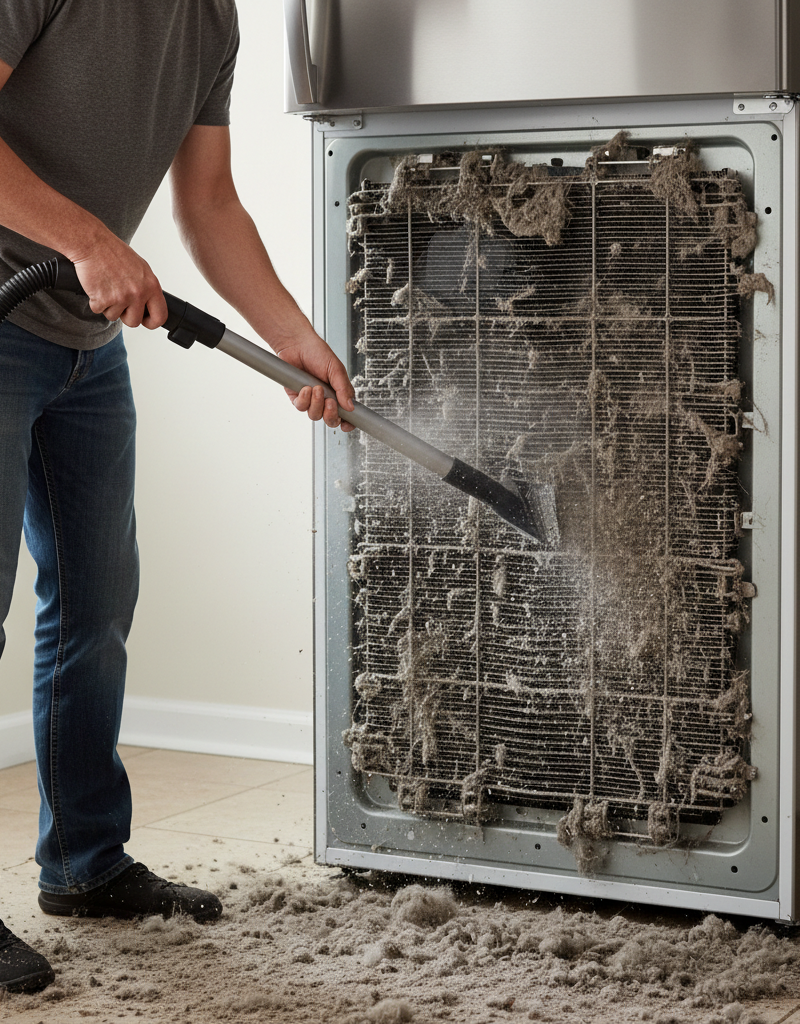
- Clear the Back: Ensure your refrigerator has adequate space behind it for air circulation. This helps the compressor operate efficiently and evaporate water from the drain pan.
- Listen for Sounds: Keep an ear out for unusual dripping or gurgling sounds from the freezer compartment, which could indicate a partial clog forming.
When to Call a Professional
While a clogged defrost drain tube is often a DIY fix, there are times when calling a qualified appliance technician is the wisest course of action. If you've followed these steps and the leak persists, or if you suspect the issue is more complex, a professional can diagnose it accurately. This includes situations where the leak appears to be coming from the water dispenser line, the ice maker supply line, a cracked drip pan, or a faulty water inlet valve – issues that require more specialized tools and expertise. If you're uncomfortable disassembling parts of your refrigerator, or if the leak is substantial and risks damaging your flooring or cabinetry, do not hesitate to call a licensed appliance repair professional. They can quickly identify the root cause, whether it's a damaged component, a more stubborn clog, or an issue with the refrigeration system itself, and perform the repair safely and effectively.
Related Articles
Keep troubleshooting with these hand-picked guides from FixlyGuide:
- The Surprising Culprit Behind Your Refrigerator's Water Leak (It's Not Always the Ice Maker) — Discover the most common, often overlooked reason your refrigerator is leaking water and how to fix it with simple steps.
- The Secret Culprit Behind Your Leaking Refrigerator (It’s Not Always a Big Repair) — Discover the most common, often overlooked reason your refrigerator is leaking water onto your kitchen floor and how to fix it yourself.
- The Secret Culprit Behind Your Leaky Refrigerator (It’s Not Always the Water Line) — Discover the most common, often overlooked, reasons your refrigerator is leaking water and how to fix them with simple DIY steps.
- The Secret Culprit Behind Your Leaking Refrigerator (It’s Not Always a Big Fix) — Discover the most common and often overlooked reasons why your refrigerator is leaking water on the floor, and how to fix them yourself.
- The 3 Hidden Reasons Your Refrigerator Leaks Water (And How to Fix Them in 30 Minutes) — Discover the most common culprits behind a leaking refrigerator and learn how to diagnose and fix them quickly with this comprehensive guid…
- The #1 Mistake Homeowners Make When a Gas Burner Won't Light (And the Easy Fix) — Before you call a technician, discover the most common, overlooked reason your gas stove burner isn't lighting and how to fix it yourself i…
Should you do this yourself?
Answer five quick questions before you start. Safety outranks savings every time.
Your experience with work like this
How high do you have to work?
Does the job involve any of these?
Will it need a permit?
Specialty tools
Free and instant. Educational guidance only — not a quote, inspection, or professional diagnosis.
Questions to ask before you sign
Ask every contractor the same questions and the cheapest bid stops looking cheapest. Check them off as you go — your progress is saved on this device.
Free, no signup. Bring this to every walkthrough so you compare bids on the same terms.
What should this project cost?
Enter your project details for a realistic cost range before you call anyone.
Common repairs run $150–$650; repipes and water-heater replacements reach $1,500–$4,500.
- Regional adjustment
- National average
- Labor share (typical)
- ~$754
- Quotes to collect
- 3 written estimates
Educational estimate based on national averages — not a binding quote. Always confirm with written local estimates.
Fixly Project Decision Box
- DIY difficulty
- Moderate
- Estimated time
- 30 minutes – half a day
- Cost level
- Moderate
Main tools / materials
- Adjustable wrench
- Plunger or drain auger
- Bucket and towels
- Thread tape
When to stop and call a pro
- Water you cannot shut off at the fixture or main
- Sewage backing up into more than one fixture
- Water near electrical panels or outlets
- Gas water heater work beyond relighting a pilot
Need professional help?
Get a Licensed PlumberHandle this before it gets worse
First steps that limit damage, then a way to reach a qualified pro.
- Emergency repair checklistThe first steps that limit damage before a pro arrives.Open
- Get local estimatesSend one request and compare written estimates from vetted pros.Open
- Estimate this projectGet a cost range for your scope and ZIP before you call anyone.Open
Free, no signup required. Estimates are educational guidance, not a quote or an inspection.
Get the print-ready PDF of this guide
A clean, ad-free, printable version you can keep on your phone or pin to the workshop wall. Free with a FixlyGuide account.
- Print-optimized layout
- Tools, materials & every step included
- Saved to your account
Frequently asked questions
Why is my refrigerator leaking water?+
The most common reason for a refrigerator to leak water on the floor is a clogged defrost drain tube. This tube allows melted frost to drain into an evaporation pan; if blocked, water overflows the freezer and leaks out.
Can I fix a refrigerator leak myself?+
Yes, in many cases, a refrigerator leak caused by a clogged defrost drain tube can be fixed by a homeowner. It involves accessing the freezer's back panel and clearing the drain tube of ice or debris.
What tools do I need to fix a clogged refrigerator drain?+
You'll typically need a Phillips head screwdriver, a flathead screwdriver, warm water, a turkey baster or syringe, and possibly a pipe cleaner or a straightened coat hanger. Gloves are also recommended.
How do I prevent my refrigerator from leaking again?+
To prevent future leaks, regularly clean your freezer for food debris, check the drain pan for mold, ensure door gaskets seal properly, and consider flushing the drain tube periodically with a diluted bleach solution.
Discussion
Loading comments…