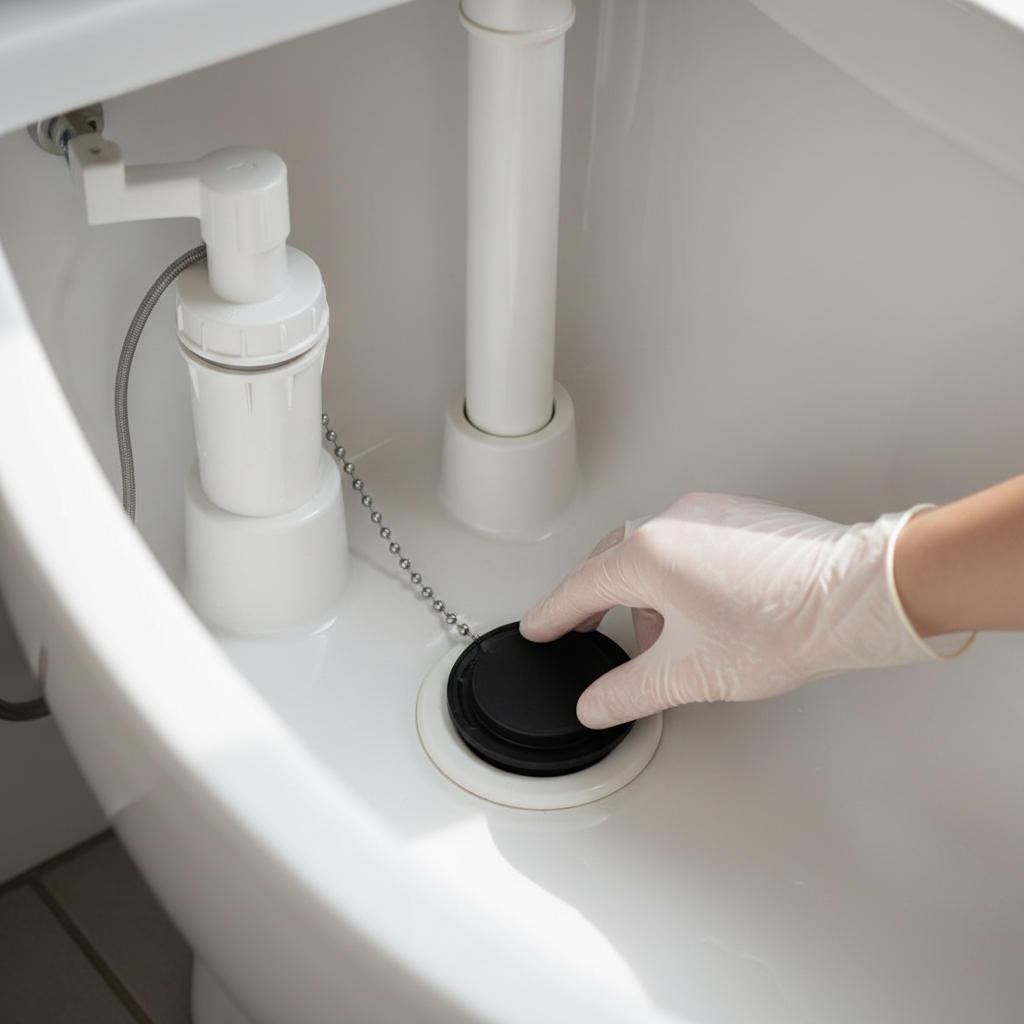
- Flush the toilet (with the water supply still off) to drain the tank. Observe the flapper (the rubber or plastic stopper at the bottom of the tank).
- Check for a proper seal: Is the flapper seating evenly over the drain hole? Sometimes it gets twisted or stiff with age.
- Inspect for damage: Look for cracks, tears, or mineral buildup on the flapper. A damaged flapper won't seal correctly.
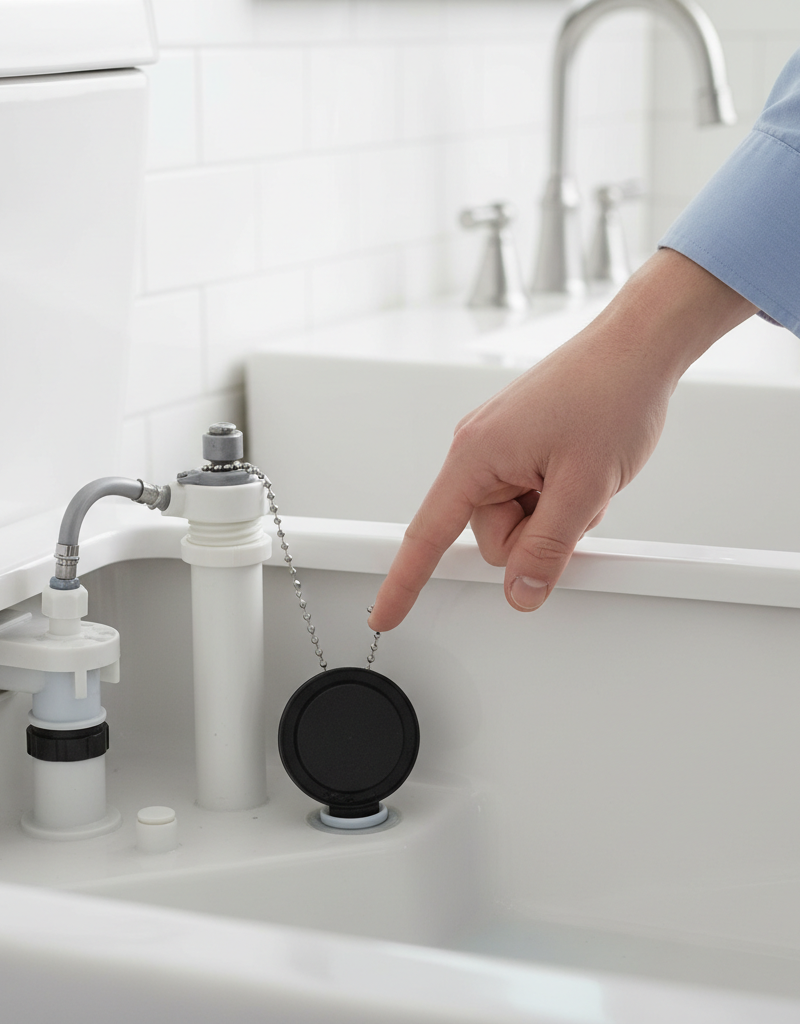
- Check the chain: Is the chain to the flush handle too short, preventing the flapper from fully closing? Is it too long, getting caught under the flapper? There should be about 1/2 inch to 1 inch of slack.
- TOOLS: Small flashlight for better visibility.
Published May 30, 2026Last updated August 17, 2026
Tools & materials you'll need
Affiliate linksAs an Amazon Associate FixlyGuide earns from qualifying purchases — at no extra cost to you. Prices and availability are accurate as of publication and subject to change.
Quick Answer
Is the sound of a continuously running toilet driving you crazy, and worse, driving up your water bill? The good news is that for many homeowners, a running toilet isn't a complex plumbing issue requiring a professional. Often, the culprit is a malfunctioning flapper or an improperly adjusted float arm inside the tank. With a quick check and a simple adjustment, you can silence that trickle in under a minute, potentially saving hundreds of gallons of water per week and dozens of dollars on your utility bill.
The Problem
Nobody likes the sound of a toilet that keeps running long after it's been flushed. Beyond the annoying noise, a running toilet is a significant waste of water. A toilet that constantly runs can waste anywhere from a few gallons to hundreds of gallons of water per day, depending on the severity of the leak. Over the course of a month, this can translate into a noticeable spike in your water bill. The problem typically stems from the internal mechanisms of the toilet tank failing to create a watertight seal or properly signal when refilling should stop. This constant flow not only impacts your wallet but also puts unnecessary strain on your plumbing system and can even lead to premature wear of components.
How It Works
To understand why your toilet is running, it helps to know how a standard gravity-fed toilet operates. When you push the flush handle, it lifts a chain connected to the flapper (or flush valve seal) at the bottom of the tank. This flapper opens, allowing water to rush from the tank into the bowl, creating the siphoning action that carries waste down the drain. As the water level in the tank drops, the flapper eventually falls back into place, sealing the tank outlet.
Simultaneously, as the tank drains, the float arm (or float cup in newer toilets) drops. This float is connected to a fill valve. When the float drops below a certain level, it opens the fill valve, allowing fresh water from your home's water supply line to enter the tank and bowl (via the overflow tube). As the water level rises, the float rises with it. Once the water reaches the predetermined fill line (often marked inside the tank), the float arm lifts high enough to close the fill valve, stopping the flow of water. If any part of this cycle malfunctions – the flapper doesn't seal, the float doesn't rise or is set too high, or the fill valve doesn't properly shut off – water will continue to flow or leak, resulting in a running toilet. Understanding this basic mechanism is key to diagnosing and fixing the issue.
Step-by-Step Fix
Once you’ve identified the likely cause, fixing a running toilet is usually straightforward. Always turn off the water supply to the toilet before making any adjustments inside the tank.
1. Turn Off the Water Supply — Always start here for safety and to prevent overflows.
- Locate the shut-off valve on the wall or floor near the base of your toilet. It's usually a small, chrome-plated knob or lever. Turn it clockwise until the water flow stops.
- TOOLS: None needed.
- SAFETY: Turning off the water prevents accidental spills and ensures you can work without water constantly refilling the tank.
2. Remove the Tank Lid — Gain access to the internal components.
- Carefully lift the ceramic lid directly up and set it aside on a clean, stable surface, like the bathroom counter or floor with a towel for protection. Ceramic is fragile!
- TOOLS: None needed.
- IF THIS DOESN'T WORK: If the lid is stuck or doesn't lift easily, check for any obstructions. Some older toilets might have mechanisms attached to the lid, but this is rare.
3. Inspect the Flapper and Chain — The most common culprit for a phantom flush.
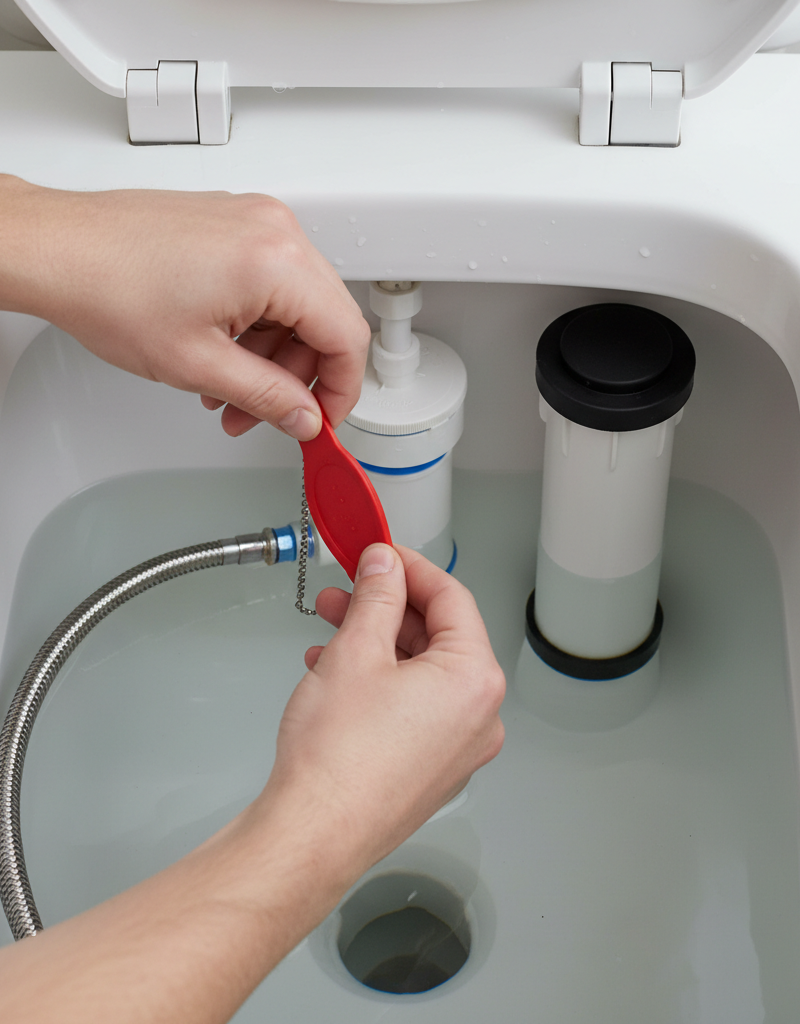
- Flush the toilet (with the water supply still off) to drain the tank. Observe the flapper (the rubber or plastic stopper at the bottom of the tank).
- Check for a proper seal: Is the flapper seating evenly over the drain hole? Sometimes it gets twisted or stiff with age.
- Inspect for damage: Look for cracks, tears, or mineral buildup on the flapper. A damaged flapper won't seal correctly.
- Check the chain: Is the chain to the flush handle too short, preventing the flapper from fully closing? Is it too long, getting caught under the flapper? There should be about 1/2 inch to 1 inch of slack.
- TOOLS: Small flashlight for better visibility.
- IF THIS DOESN'T WORK: If the flapper looks good, the chain has proper slack, and it's seating correctly, move on to the float arm.
4. Adjust the Float Arm (Ballcock or Float Cup) — Prevent overfilling the tank.
- With the water supply still off, gently push down on the float arm or cup. Does it move freely, or is it catching on something?
- For ballcock floats (older toilets): The float is usually a large plastic or brass ball on a rod. Bend the rod gently downwards a small amount to lower the water level. The goal is for the water level to be about 1 inch below the top of the overflow tube when full.
- For float cup floats (newer toilets): These are vertical cylinders. There's often an adjustment screw or a clip on the vertical rod that allows you to slide the float cup up or down. Lower the float cup to reduce the water level.
- TOOLS: Flathead screwdriver (for some float cup adjustments), small adjustable wrench (for some older ballcock nuts).
- SAFETY: Be gentle; excessive force can bend or break components.
- IF THIS DOESN'T WORK: If adjusting the float doesn't stop the running or if the float mechanism itself seems broken, the fill valve may need replacement.
5. Check the Fill Valve (Refill Tube) — Ensure water isn't constantly flowing into the overflow.
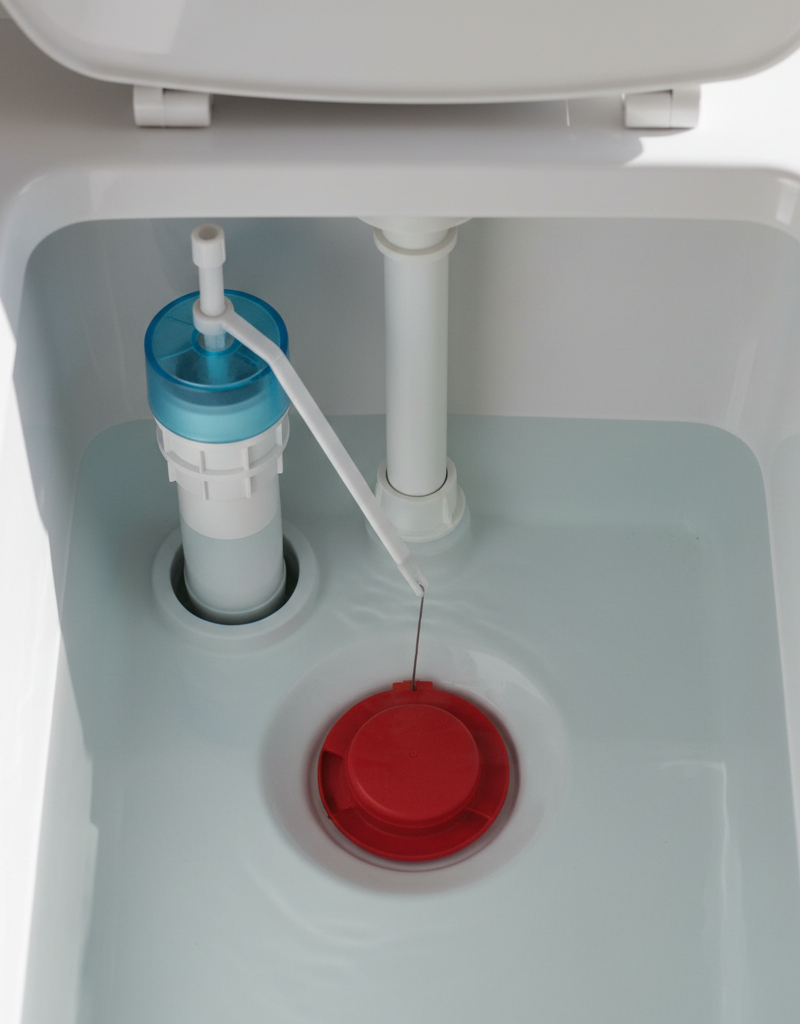
- Observe the small, flexible refill tube that connects the fill valve to the overflow tube (the tall, open pipe in the center of the tank).
- Is it properly inserted? The end of the refill tube should be slightly above the water level in the overflow tube, not submerged.
- Is it too far down? If the refill tube is inserted too far into the overflow tube, it can create a siphoning effect, causing continuous slight refilling. Pull it up so it's only just over the top.
- TOOLS: None needed.
- IF THIS DOESN'T WORK: If the fill valve itself is constantly letting water flow, even after adjusting the float, it likely needs replacement. This is more involved than a simple adjustment.
6. Look for Leaks at the Flapper Seat — A hidden cause of a running toilet.
- With the water supply still off and the tank empty, carefully feel around the rubber or plastic seat where the flapper rests. Is it rough, corroded, or uneven? Mineral buildup can prevent a good seal.
- Clean the seat: Use a non-abrasive scrubber and white vinegar solution to gently clean any mineral deposits. A clean flapper seat is crucial for a watertight seal.
- TOOLS: Small brush, white vinegar.
- IF THIS DOESN'T WORK: If the seat itself is badly pitted, cracked, or severely corroded, it can sometimes be repaired with dedicated repair kits or by replacing the flush valve assembly, which is a more advanced task.
7. Re-engage Water Supply and Test — Verify your fix.
- Once all adjustments are made, slowly turn the water supply valve counter-clockwise to open it.
- Allow the tank to fill completely. Observe the water level – it should stop about 1 inch below the top of the overflow pipe.
- Listen for any running water. Flush the toilet a few times to confirm the flapper seals and the fill valve shuts off properly.
- TOOLS: None needed.
- SAFETY: Watch for any leaks around the base of the toilet or the supply line connection.
Common Causes
- Worn or Damaged Flapper: The most frequent culprit. Over time, the rubber can degrade, warp, or crack, preventing a complete seal over the flush valve opening. Mineral deposits can also build up, hindering its ability to seal.
- Improperly Adjusted Float Arm/Cup: If the float is set too high, it won't shut off the fill valve when the tank reaches the appropriate water level. This causes water to continuously flow into the overflow tube.
- Broken or Malfunctioning Fill Valve: The fill valve itself might be faulty, failing to close completely even when the float signals it to stop. This is less common but can happen, especially with older units.
- Kinked or Misdirected Refill Tube: The small tube that directs water from the fill valve into the overflow tube can get kinked or pushed too far down into the overflow, leading to siphoning or constant dribbling.
- Flush Handle Problems: Occasionally, the flush handle can stick or not fully return to its resting position, keeping the flapper slightly open. The chain might also be too short, holding the flapper up.
Common Mistakes
- Ignoring the Problem: Many homeowners put off fixing a running toilet, unaware of how much water (and money) it wastes. Fix it promptly!
- Over-tightening the Supply Line Nut: When working with the water supply, avoid over-tightening plastic nuts, which can easily crack and cause leaks. Hand-tighten, then a quarter turn with a wrench.
- Bending a Brass Float Arm Too Aggressively: Brass arms can snap if bent too sharply or too often. Make small, gentle adjustments.
- Using the Wrong Replacement Flapper: Not all flappers are universal. Check your toilet's model number or take the old flapper to the store to get an exact match for the best seal.
- Forgetting to Clean the Flapper Seat: Even with a new flapper, a grimy or corroded rim where the flapper rests will prevent a proper seal.
- Not Checking the Chain Slack: Too much slack can let the chain get caught under the flapper, too little can prevent a full seal. Aim for about 1/2 to 1 inch of slack.
Cost & Time Breakdown
| Task | DIY Cost | Pro Cost | Time |
|---|---|---|---|
| Flapper Adjustment | $0 | $0 | 30 seconds |
| Float Arm Adjustment | $0 | $0 | 1 minute |
| Replace Flapper | $5–$20 | $100–$150 | 5–10 minutes |
| Replace Fill Valve | $15–$30 | $150–$250 | 30–60 minutes |
| Diagnose/Minor Repair | $0 | $75–$125 (call-out fee) | 5–10 minutes |
Tips & Prevention
- Regular Inspections: Periodically remove your tank lid and inspect the flapper, chain, and float mechanism. Look for wear, corrosion, or misalignments.
- The Dye Test: Add a few drops of food coloring to your tank water. Wait 15-20 minutes without flushing. If color appears in the bowl, you have a leak, likely at the flapper.
- Cleanliness Matters: Keep the inside of your tank clean. Mineral buildup can interfere with the operation of the flapper and fill valve.
- Use Quality Replacement Parts: When replacing components like the flapper or fill valve, opt for quality parts designed for your toilet model, even if they cost a few dollars more. They will last longer and perform better.
- Proper Water Level: Ensure your water level consistently sits about 1 inch below the top of the overflow tube. Too high, and water constantly runs; too low, and you get a weak flush.
When to Call a Professional
While many running toilet issues are DIY-friendly, there are specific situations when calling a licensed plumber is the wisest course of action. If you've replaced the flapper and fill valve but the toilet continues to run, there might be a more complex internal leak in the bowl or drain system that's difficult to diagnose. If you notice water leaking from the base of the toilet, around the shut-off valve, or from the tank bolt gaskets, this indicates a more serious leak that could cause water damage if not addressed by a professional. Similarly, if your toilet is consistently clogging, struggling to flush, or if you simply feel uncomfortable working with the internal mechanisms, a plumber can quickly and efficiently resolve the issue, often preventing more costly repairs down the line. Don't hesitate to call if you encounter persistent problems or if the fix seems beyond your comfort level.
Related Articles
Keep troubleshooting with these hand-picked guides from FixlyGuide:
- The Secret to Lush Raised Beds? It's Not Just About How You Water — Smart irrigation for raised garden beds isn't just about automation; it's about delivering the right amount of water precisely when your pl…
- The Hidden Reason Your GFCI Trips (It's Not Always a Faulty Outlet) — A continuously tripping GFCI outlet is a critical safety warning, often indicating moisture, a faulty appliance, or a wiring problem that r…
- The Hidden Reason Your AC Isn't Cooling (And Why Most Homeowners Get It Wrong) — Is your central AC blowing warm air or struggling to cool your home? The culprit is often a silent but serious issue many homeowners overlo…
- The #1 Mistake Owners Make With New Pellet Grills (And How to Fix It) — Avoid a bitter first cook by properly seasoning your new pellet grill before its inaugural use.
- The Hidden Reason Your GFCI Trips (It’s Not Always a Bad Outlet) — A tripping GFCI outlet is a safety mechanism doing its job, often indicating a problem like moisture, a faulty appliance, or a wiring issue…
- The 30-Second Toilet Fix Plumbers Don't Want You to Know — A running toilet can waste hundreds of gallons of water per day, but often the fix is incredibly simple and takes under a minute.
Should you do this yourself?
Answer five quick questions before you start. Safety outranks savings every time.
Your experience with work like this
How high do you have to work?
Does the job involve any of these?
Will it need a permit?
Specialty tools
Free and instant. Educational guidance only — not a quote, inspection, or professional diagnosis.
What should this project cost?
Enter your project details for a realistic cost range before you call anyone.
Common repairs run $150–$650; repipes and water-heater replacements reach $1,500–$4,500.
- Regional adjustment
- National average
- Labor share (typical)
- ~$754
- Quotes to collect
- 3 written estimates
Educational estimate based on national averages — not a binding quote. Always confirm with written local estimates.
Fixly Project Decision Box
- DIY difficulty
- Moderate
- Estimated time
- 30 minutes – half a day
- Cost level
- Moderate
Main tools / materials
- Adjustable wrench
- Plunger or drain auger
- Bucket and towels
- Thread tape
When to stop and call a pro
- Water you cannot shut off at the fixture or main
- Sewage backing up into more than one fixture
- Water near electrical panels or outlets
- Gas water heater work beyond relighting a pilot
Need professional help?
Get a Licensed PlumberThis article was independently written by FixlyGuide based on the source topic.
Frequently asked questions
How much water does a running toilet waste?+
A continuously running toilet can waste anywhere from a few gallons up to 200 gallons of water per day, depending on the severity of the leak. Over a month, this can significantly increase your water bill.
Why does my toilet keep running after I flush it?+
The most common reasons are a worn-out or misaligned flapper that isn't sealing properly, or a float arm (or cup) that is set too high, preventing the fill valve from shutting off the water flow.
Can I fix a running toilet myself?+
Yes, most running toilet issues are simple DIY fixes that involve adjusting the float arm, reseating the flapper, or replacing the flapper itself. These repairs often take less than 10 minutes.
How do I know if my flapper is the problem?+
You can perform a dye test: add a few drops of food coloring to your toilet tank. Wait 15-20 minutes without flushing. If color appears in the toilet bowl, your flapper is likely leaking and needs adjustment or replacement.
When should I call a plumber for a running toilet?+
Call a plumber if you've tried common DIY fixes (adjusting float, replacing flapper) and the toilet still runs, if there are leaks around the base of the toilet, or if you suspect a more complex issue with the fill valve or an internal leak you can't diagnose.
Discussion
Loading comments…