- The Surprising Trick to Cutting Your Dryer Bill By $100 Per Year — Installing a clothesline can significantly reduce your energy bills and add a fresh scent to your laundry. This guide covers how to choose…
- Your Home's Secret To-Do List: Are You Missing It? — Most new homeowners focus on decorating, but ignoring a basic home maintenance checklist can lead to thousands in unexpected repairs. Learn…
- The Secret 5 Bugs Invading Homes (It's Not Just Lanternflies) — Discover the five most common invasive bugs pest professionals treated last year that homeowners often overlook, and learn how to protect y…
- The 5-Minute Trick to Vacation-Proof Your Garden (Before You Leave Town) — Prevent your garden from wilting while you're away with simple, proactive steps that ensure lush growth and minimal fuss upon your return.
- The Hidden Truth About — Uncover the surprising risks of buying used furniture and appliances, and learn essential inspection tips to protect your home and wallet.
Published June 18, 2026Last updated August 17, 2026
Tools & materials you'll need
Affiliate linksAs an Amazon Associate FixlyGuide earns from qualifying purchases — at no extra cost to you. Prices and availability are accurate as of publication and subject to change.
Quick Answer
Installing a tonneau cover on your truck bed is a quick and effective DIY upgrade that offers significant protection for your cargo. The process generally takes between 30 to 60 minutes and requires only basic hand tools, such as wrenches or sockets, and a tape measure. You'll attach rails to the inside of your truck bed using clamps, ensuring they are level and properly spaced, and then mount the tonneau cover assembly to these rails. This project helps shield your valuable items from rain, snow, dust, and prying eyes, while also contributing to a minor improvement in your truck's aerodynamics and fuel economy.
The Problem
Truck beds are incredibly versatile for hauling, but they leave cargo completely exposed to the elements and vulnerable to theft. Whether you're transporting tools for a job, groceries after a shopping trip, or luggage for a weekend getaway, an open truck bed subjects your items to rain, snow, dust, and UV radiation, leading to potential damage or accelerated wear. Furthermore, anything left in an open truck bed is an easy target for opportunistic thieves. This lack of security and protection often forces truck owners to either leave valuable items at home, make multiple trips, or resort to less convenient solutions like tarps and tie-downs, which are cumbersome, offer poor security, and don't look professional. The core problem is the inherent vulnerability and exposure of an unenclosed truck bed, limiting its practical utility for everyday secure storage.
How It Works
A tonneau cover functions by creating a secure, weather-resistant enclosure over your truck bed, effectively transforming it into a large, lockable trunk. Most tonneau covers, particularly the popular roll-up or tri-fold soft and hard varieties, utilize a rail system that mounts along the inside edges of the truck bed side walls. These rails are typically clamped directly to the bed liners or truck bed lips, without the need for drilling into the truck body. Gaskets and weather stripping integrated into the cover and rail design create a seal that helps divert water and dust away from the cargo area.
For roll-up covers, a fabric or segmented hard cover material is attached to a front header bar and then rolls out over the bed, securing at the tailgate end with a latching mechanism. Tension systems ensure the cover remains taut and secure. Tri-fold covers, on the other hand, consist of two or three rigid panels hinged together. These panels fold upwards towards the cab, allowing for partial or full bed access, and latch down when closed. Hard covers, whether roll-up, tri-fold, or one-piece, often feature locking mechanisms integrated with the truck's tailgate or distinct from it, providing enhanced security. The underlying principle is to create a barrier that is both weather-tight and secure, leveraging simple mechanical latches, clamps, and seals to achieve its protective function. This design allows for relatively quick installation and removal, giving homeowners flexibility in how they use their truck bed while adding a layer of protection and security previously unavailable.
Step-by-Step Fix
Completing a tonneau cover installation is a rewarding DIY project that significantly enhances your truck's utility. Follow these steps for a smooth process:
-
Prepare Your Truck Bed — Begin by thoroughly cleaning the truck bed rails and the top edges where the tonneau cover will sit. Use an all-purpose cleaner and a rag to remove any dirt, dust, or debris. This ensures a good seal and proper adhesion for any weather stripping. Make sure the bed is dry before proceeding.
-
Attach Weather Stripping (If Applicable) — Some tonneau cover kits include weather stripping for the bulkhead (the front wall of the truck bed closest to the cab). This is crucial for preventing water intrusion from the front. Clean the bulkhead surface, then carefully apply the weather stripping along the top edge, pressing firmly to ensure a good seal.
-
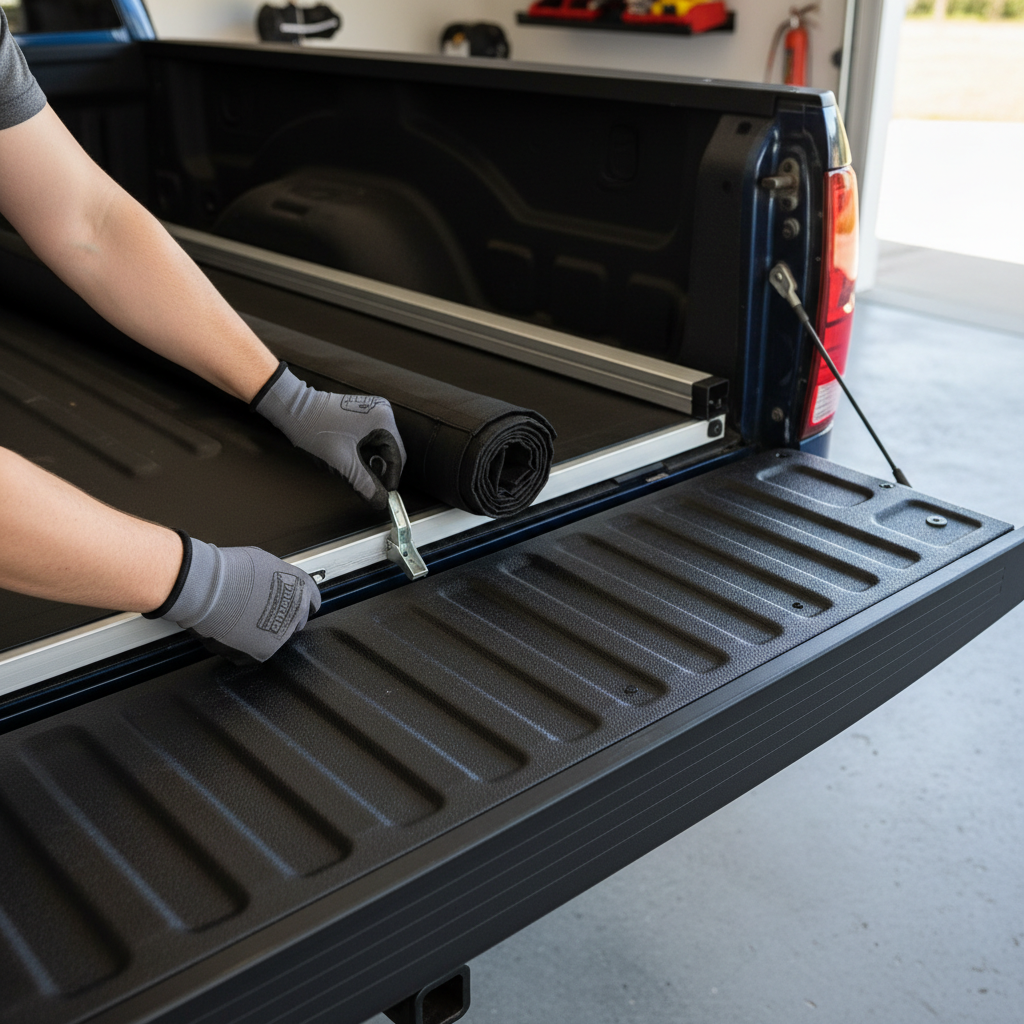
Assemble and Position Side Rails — Most tonneau covers come with two side rails that attach to the inside of your truck bed. Assemble these according to the manufacturer's instructions, ensuring all brackets and alignment pins are correctly engaged. Carefully place each rail along the top inside edge of your truck bed, aligning them parallel to each other and flush with the top of the bed walls. For accurate placement, measure from the cab wall to the end of each rail to ensure they are evenly positioned.
-
Secure the Side Rails with Clamps — With the rails properly positioned, use the included C-clamps or J-clamps to secure them to the truck bed's lip. Start by loosely attaching a clamp near the cab and another near the tailgate on each side. Work your way along the rail, adding remaining clamps and spacing them evenly. Tighten the clamps slowly and in succession, checking for rail alignment as you go. Overtightening can warp the rails or damage the truck bed lip.
- Safety Note: Always ensure clamps are securely fastened but do not over-tighten, as this can damage your truck bed.
- Pro Tip: If your truck has a bed liner, you may need to trim small sections of it to allow the clamps to fully engage with the metal bed lip. Use a utility knife and take care when cutting.
-
Install the Tonneau Cover Main Assembly — Carefully lift the main tonneau cover assembly (this might be a roll-up canister, a folded hard cover, or a single hard cover) and place it onto the front portion of the installed side rails near the cab. Most covers have locating pins or a tongue-and-groove system that will guide it into place. Secure the front of the cover to the rails using the manufacturer-provided bolts or clamps. Ensure it's centered and flush.
-
Extend and Latch the Cover — For roll-up covers, gently unroll the cover towards the tailgate, ensuring it tracks smoothly within the side rails. For tri-fold covers, unfold the panels until they lay flat over the bed. Once fully extended, engage the latching mechanisms at the tailgate end of the cover. These typically consist of spring-loaded latches that hook under the bed rail or a separate locking system. Verify that the cover is taut and evenly seated on all sides.
-
Test the Seal and Operation — Once installed, close your tailgate and test the tonneau cover's operation. Open and close it a few times to ensure all latches engage properly and smoothly. Check the seal along all edges for any gaps that could allow water or dust intrusion. If you find gaps, loosen the clamps on the corresponding rail slightly, adjust the rail to close the gap, and then re-tighten. You can perform a
Related Articles
Keep troubleshooting with these hand-picked guides from FixlyGuide:
- The Surprising Trick to Cutting Your Dryer Bill By $100 Per Year — Installing a clothesline can significantly reduce your energy bills and add a fresh scent to your laundry. This guide covers how to choose…
- Your Home's Secret To-Do List: Are You Missing It? — Most new homeowners focus on decorating, but ignoring a basic home maintenance checklist can lead to thousands in unexpected repairs. Learn…
- The Secret 5 Bugs Invading Homes (It's Not Just Lanternflies) — Discover the five most common invasive bugs pest professionals treated last year that homeowners often overlook, and learn how to protect y…
- The 5-Minute Trick to Vacation-Proof Your Garden (Before You Leave Town) — Prevent your garden from wilting while you're away with simple, proactive steps that ensure lush growth and minimal fuss upon your return.
- The Hidden Truth About — Uncover the surprising risks of buying used furniture and appliances, and learn essential inspection tips to protect your home and wallet.
- The 30-Minute Trick to Stop Your Single-Handle Faucet Drip (And What Plumbers Charge if You Don't) — A persistent drip from a single-handle faucet often signals a worn-out cartridge, a common issue homeowners can fix with basic tools in und…
What should this project cost?
Enter your project details for a realistic cost range before you call anyone.
Cost depends heavily on which system turns out to be the source.
- Regional adjustment
- National average
- Labor share (typical)
- ~$1,620
- Quotes to collect
- 3 written estimates
Educational estimate based on national averages — not a binding quote. Always confirm with written local estimates.
Get the print-ready PDF of this guide
A clean, ad-free, printable version you can keep on your phone or pin to the workshop wall. Free with a FixlyGuide account.
- Print-optimized layout
- Tools, materials & every step included
- Saved to your account
This article was independently written by FixlyGuide based on the source topic.
Frequently asked questions
How long does it take to install a tonneau cover?+
Most tonneau cover installations are designed for DIY and can be completed in 30 to 60 minutes with basic hand tools.
Do tonneau covers really improve gas mileage?+
While the improvement is often minor (typically 1-2 MPG), a tonneau cover can reduce aerodynamic drag, leading to a slight increase in fuel efficiency by smoothing airflow over the truck bed.
Can I install a tonneau cover by myself?+
Yes, most roll-up and tri-fold tonneau covers are designed for single-person installation. Hard folding or one-piece covers might benefit from an extra set of hands due to their weight and bulk.
Will a tonneau cover keep my bed completely dry?+
Most quality tonneau covers are highly weather-resistant and will keep the vast majority of water out. however, no cover is 100% waterproof, and some minor leaks can occur, especially in heavy downpours or at car washes.
Do I need to drill holes to install a tonneau cover?+
The vast majority of modern tonneau covers feature a no-drill clamp-on design, utilizing the existing truck bed rails for installation. Some older or specific heavy-duty models might require minor drilling, but this is less common.


Discussion
Loading comments…