- Trapped Moisture: Usually the biggest problem. If you shut the washer door after a cycle, humidity gets trapped inside and mold and mildew take off. Front-loaders, with those tight seals, are especially bad about it.
- Detergent Overuse & Residue: Too much detergent — especially non-HE detergent in an HE machine — creates heavy suds that don’t rinse away fully. That slimy residue builds up on the drum, gasket, and dispenser.
- Fabric Softener: It can leave behind a waxy film, and bacteria love that stuff.
- Low Wash Temperatures: Cold cycles save energy, but they’re not as good at dissolving detergent or knocking back bacteria and mold spores as hot water. Some buildup never gets
General remodeling · Renovation planning
| Project category | General remodeling |
|---|---|
| Problem type | Renovation planning |
| Trade required | General contracting |
| Urgency | Planned project |
| Safety risk | Low safety risk |
| DIY suitability | Pro recommended |
| Cost category | Major investment |
| Typical timeline | Design and permitting often 2–4 months before work starts |
| Contractor type | General contractor |
Repair option
Phase the work and fix the building envelope first.
Replacement option
Full renovation with permits, design, and a general contractor.
Common causes
- Space no longer fits how the household lives
- Resale preparation
- Deferred maintenance stacking up
Relevant tools:project cost estimatorcompare quoteshome improvement material prices
Published July 29, 2026Last updated August 17, 2026
Tools & materials you'll need
Affiliate linksAs an Amazon Associate FixlyGuide earns from qualifying purchases — at no extra cost to you. Prices and availability are accurate as of publication and subject to change.
Quick Answer
That stubborn, musty smell coming out of your washing machine isn’t just annoying. It’s usually mold, mildew, and detergent residue settling in places you don’t see every day. That crud doesn’t just stink up the laundry room; it gives bacteria a place to grow, can transfer onto your clothes, and over time it can gum up parts and wear the machine down faster. The fix? A little elbow grease, some basic household cleaners, and a proper cleaning cycle to knock that mess loose and get the washer smelling decent again.
The Problem
I’ve been in homeowners’ laundry rooms for over two decades, and I can tell you straight: that “clean laundry” smell isn’t always coming from the clothes. Sometimes it’s just covering up a deeper odor that hits you the second you crack open the washer door. What you’re smelling is almost always a mix of mold, mildew, and biofilm — that slimy layer of bacteria and fungi that loves warm, damp spots. And a washing machine? That thing’s practically a five-star hotel for it.
Modern high-efficiency (HE) washers, especially front-loaders, are more prone to this because they use less water and lower wash temperatures. Great for saving on utilities, sure, but it also means less water flushing away detergent and fabric softener residue. That residue sticks to the drum, the rubber gasket around the door, and the detergent dispenser. Then folks shut the door right after a cycle, trapping moisture inside, and boom — you’ve got the perfect setup for stink. I remember one job in an old Victorian in Highland Park last year where the smell was so bad the homeowner thought something had died in the walls. Nope. Just years of buildup in a front-loader. Ugly little mess, but it was all maintenance related.
How It Works
To really fix this, you’ve gotta understand what’s happening inside the machine. A washer isn’t just a tub that sloshes water around. It’s a system. Water comes in, detergent gets added, and an agitator on a top-loader or a tumbling drum on a front-loader gets the clothes moving. Then the dirty water drains, the machine rinses, and it spins out the extra moisture.
The trouble starts in the little hidden spots. Take the rubber gasket — that boot-like seal around the door on a front-loader. It’s there to keep water in, but those folds create pockets where water can sit after the cycle ends. Lint, hair, and half-dissolved detergent get trapped there. Top-loaders don’t have that same boot, but they’ve got their own trouble spots: under the agitator, in the fabric softener dispenser, and along the tub rim where water splashes and hangs around. Even the drum itself, especially the areas you can’t really get at behind the perforated inner drum, can collect a sticky film of detergent and softener. Standard wash cycles — especially cold ones — often don’t get hot or aggressive enough to strip all that off. So the film stays, moisture stays, and those microscopic stink-makers move right in. Anaerobic decomposition, plain and simple. And it smells like a swamp.
Step-by-Step Fix
Here’s how I handle it. You’ve got a couple of routes: a dedicated washer cleaner, or old-school vinegar and baking soda. For nasty cases, I lean toward the dedicated cleaner. For regular upkeep, vinegar does the job just fine.
1. Prep the Machine — Empty and inspect your washer.
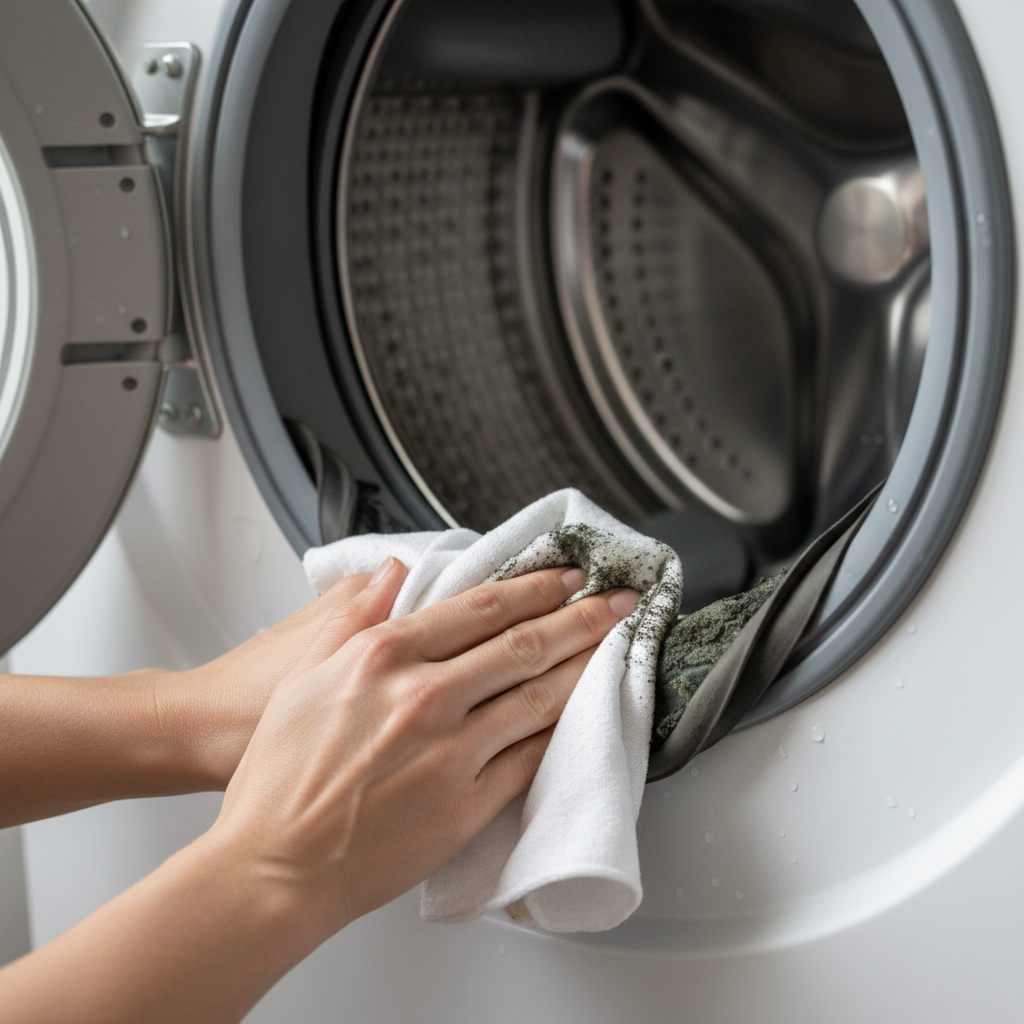
First thing, make sure there aren’t any clothes in there. I’ve seen people run a cleaning cycle with a sock stuck in the drum. Happens more than you’d think. Once it’s empty, take a quick look inside. On front-loaders, pay close attention to the rubber gasket around the door. Pull back every fold and check for trapped lint, hair, coins, or that one baby sock that somehow disappears for months. Grab a rag or some paper towels and wipe out any standing water or visible gunk.
2. Clean the Gasket (Front-Loaders Only) — Tackle the grimy rubber seal manually.
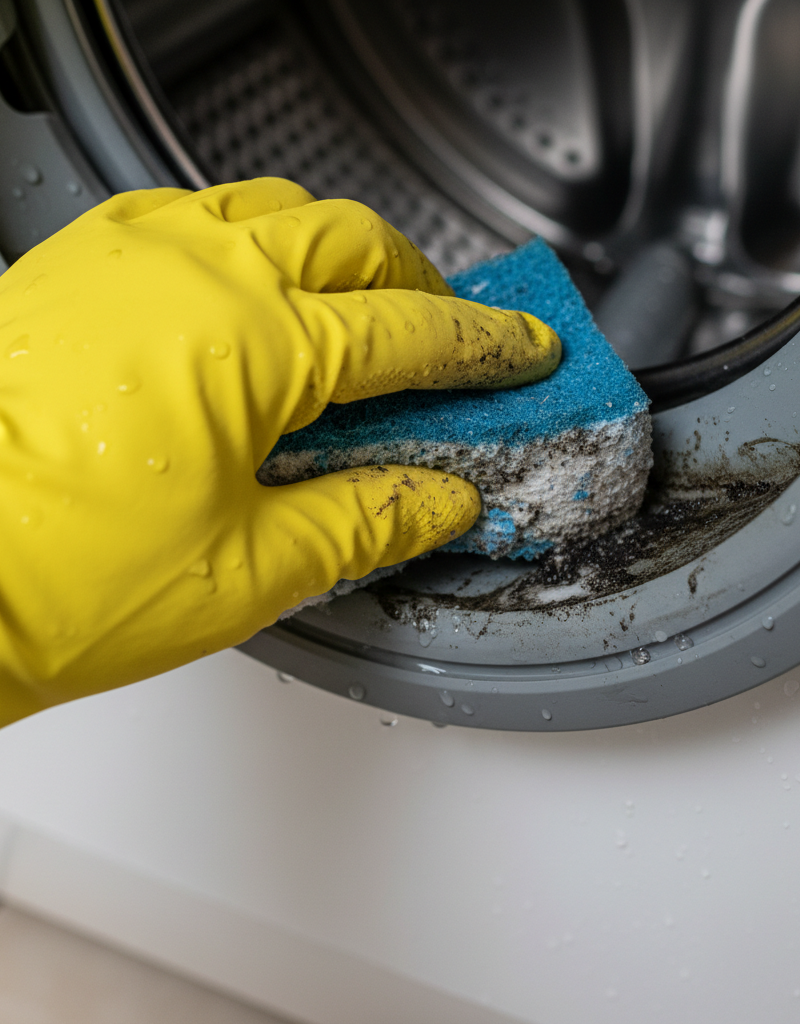
This one matters. That gasket is prime real estate for mold and mildew. Mix equal parts white vinegar and water, or use a little bleach diluted in water — about 1/4 cup bleach to 1 cup water. Dip a clean cloth in the solution and wipe the inside and outside of the gasket, pulling back every fold as you go. You’ll probably be surprised by how much nasty stuff comes out. Keep at it until the cloth comes back clean. Don’t baby it; get in there. An old toothbrush helps on stubborn spots. And dry it when you’re done. Moisture’s the enemy.
3. Clean the Detergent Dispenser — Scrub out the sticky residue.
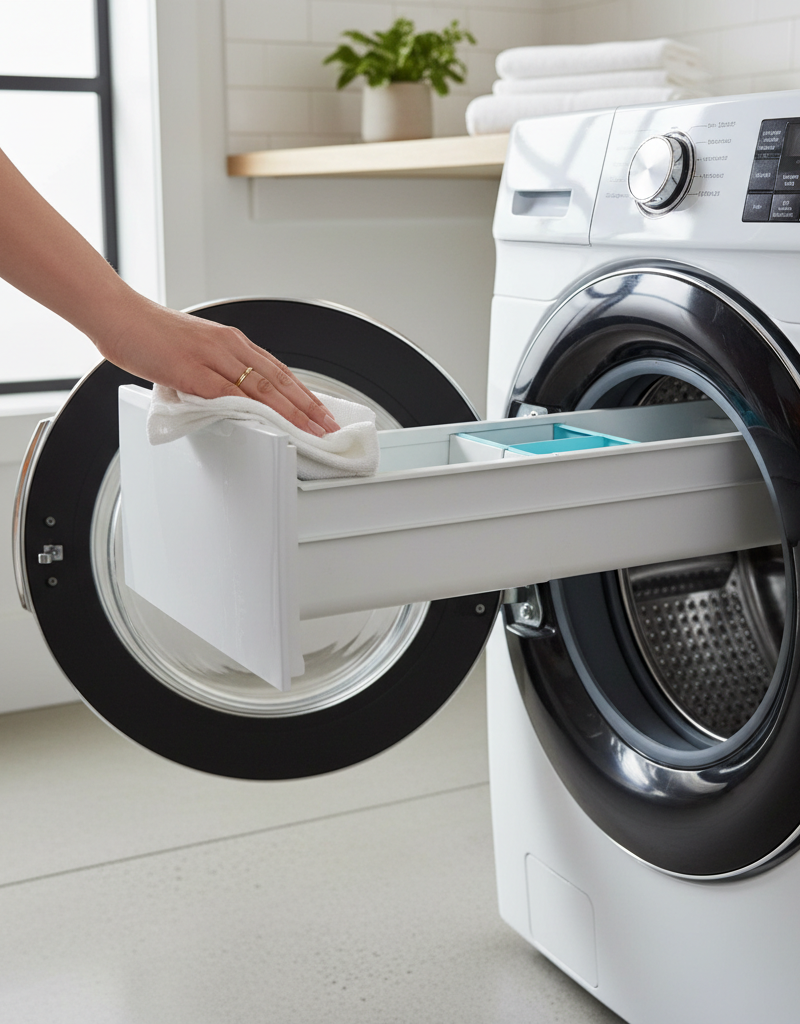
A lot of dispensers, especially on front-loaders, can be pulled out. If yours does, take it to the sink. Chances are you’ll find a crusty mess of detergent and fabric softener. Warm water, an old toothbrush, and dish soap usually take care of it. Rinse it well. If it doesn’t come out, use a spray bottle with your vinegar solution and clean the compartments with a toothbrush. Make sure the little jets and holes aren’t clogged. That buildup can mess with dispensing and leave residue in the drum.
4. Run a Hot Cleaning Cycle — Use a dedicated cleaner, bleach, or vinegar.
Now we get to the heavy lifting. Depending on the machine and what you’ve got on hand, you’ve got a few choices:
- Option A: Dedicated Washer Cleaner – These come as tablets or liquids, like Affresh or Tide Washing Machine Cleaner. Follow the label, but usually you’ll toss a tablet in the dispenser or drum and run a hot cycle — often called a “Clean Washer” or “Tub Clean” cycle. They’re made to break down buildup.
- Option B: Bleach Method – If you want strong disinfection, add 1/2 to 1 cup of liquid chlorine bleach directly to the bleach dispenser or straight into the drum if your washer doesn’t have one. Run the hottest, largest load cycle the machine offers. If there’s a “Sanitize” cycle, even better. Let it finish. Important safety note: Never mix bleach with vinegar or any other cleaner. You can make dangerous fumes, and nobody needs that kind of trouble.
- Option C: Vinegar Method – For a more natural route, pour 2 cups of distilled white vinegar into the detergent dispenser. Set the machine to the hottest water setting and the largest load cycle. Start it up. After about 5–10 minutes, once it’s filled and agitated a bit, pause the cycle and let that vinegar water sit for at least an hour, or even an entire afternoon. That soak gives the vinegar time to loosen the buildup. Then restart it and let it run out. If the machine’s really nasty, follow it with a second cycle using 1/2 cup of baking soda directly in the drum to help scrub the last of it loose.
5. Wipe Down the Interior — Remove any remaining grime.
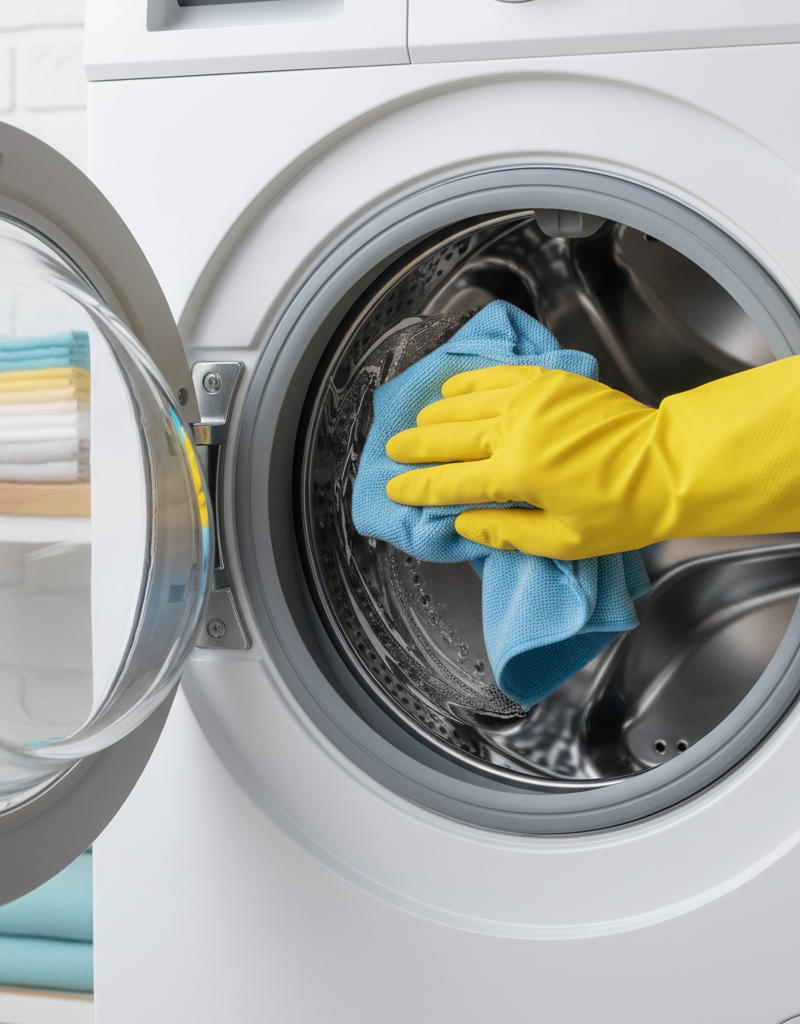
When the cleaning cycle’s done, open the door and take a sniff. Hopefully it’s already a whole lot better. Grab a clean cloth and wipe down the inside of the drum, especially the top rim on a top-loader and any visible surfaces. Sometimes the cycle loosens crud that settles again, so a quick wipe finishes the job.
6. Clean the Exterior — Don't forget the outside surfaces.
While you’re at it, wipe the outside of the washer with an all-purpose cleaner. Hit the control panel, knobs, and top surface. It’s not just about looks. Dust and grime on the outside can work their way into openings over time, and that’s just asking for more headaches later.
7. Inspect and Clean the Drain Filter (Front-Loaders/Some HE Top-Loaders) — Look for the access panel usually at the bottom front.
A lot of front-loaders and some newer HE top-loaders have a small drain pump filter, usually behind an access panel at the bottom front. That filter catches lint, coins, and other little debris before it gets to the drain pump. If it clogs up, the washer won’t drain right, and that means more dampness and more smell. Check your owner’s manual for the exact location and how to get to it. Safety first here – always unplug the machine before attempting this. Have a shallow pan and some towels ready because water’s coming out. Unscrew the cap slowly, let it drain, then pull the filter. Clean off the gunk, rinse it, and put it back tight. I make a point to check these for clients at least once a quarter, and I’ve fished out everything from guitar picks to small children’s toys. Amazing what ends up down there.
8. Prevent Future Odors — Adjust your laundry habits.
Once it’s clean, keep it that way. Leave the washer door, and the detergent drawer if it has one, open a good six inches after each use — especially on a front-loader. That lets air move through and dries the inside out. No moisture, no mold. Use only HE detergent in HE machines, and don’t overdo it. More soap doesn’t mean cleaner clothes; it usually means more residue. Run a cleaning cycle with bleach or vinegar about once a month, or every 30-40 washes. And once a week, give the gasket a quick wipe if you’ve got a front-loader.
Common Causes
- Trapped Moisture: Usually the biggest problem. If you shut the washer door after a cycle, humidity gets trapped inside and mold and mildew take off. Front-loaders, with those tight seals, are especially bad about it.
- Detergent Overuse & Residue: Too much detergent — especially non-HE detergent in an HE machine — creates heavy suds that don’t rinse away fully. That slimy residue builds up on the drum, gasket, and dispenser.
- Fabric Softener: It can leave behind a waxy film, and bacteria love that stuff.
- Low Wash Temperatures: Cold cycles save energy, but they’re not as good at dissolving detergent or knocking back bacteria and mold spores as hot water. Some buildup never gets
Related Articles
Keep troubleshooting with these hand-picked guides from FixlyGuide:
- The #1 Washing Machine Killer (It's Not Overloading!) — And How to Prevent It — Discover the surprising culprit behind premature washing machine failure and learn simple, actionable steps to extend its lifespan and keep…
- The 3 Washing Machine Mistakes That Cost You Hundreds (And How to Fix Them) — Avoid costly repairs and extend the life of your washing machine by understanding three common mistakes and how to prevent them.
- The 3 Washing Machine Mistakes That Cost You Hundreds (And How to Fix Them Forever) — Avoid costly repairs and premature replacement by learning three common washing machine mistakes and how to fix them for good.
- The #1 Hidden Culprit Behind Your Whole-House Low Water Pressure (It's Not Your City!) — Discover the most common, often overlooked cause of low water pressure throughout your entire home and how to fix it yourself.
- The #1 Mistake When Fixing Baseboards That Pull Away From Walls — Discover the crucial mistake homeowners make when reattaching baseboards and how to properly secure them for a lasting fix.
- The 9 Sneaky Filters Stealing Your Home's Efficiency (And How to Fix It) — Unseen or neglected filters throughout your home can secretly inflate utility bills, degrade air quality, and lead to expensive appliance b…
Your seasonal maintenance checklist
The small jobs that prevent the expensive repairs. Tick them off — progress saves on this device.
Free, no signup. Skip anything that requires roof access or working near live electrical.
What should this project cost?
Enter your project details for a realistic cost range before you call anyone.
Cost depends heavily on which system turns out to be the source.
- Regional adjustment
- National average
- Labor share (typical)
- ~$1,620
- Quotes to collect
- 3 written estimates
Educational estimate based on national averages — not a binding quote. Always confirm with written local estimates.
Before you start
Check the difficulty, permits, and safety risk — then decide whether to call a pro.
- Is this a safe DIY job?Check permits, tools, and risk before you start the steps below.Open
- Estimate this projectGet a cost range for your scope and ZIP before you call anyone.Open
- Get local estimatesSend one request and compare written estimates from vetted pros.Open
Free, no signup required. Estimates are educational guidance, not a quote or an inspection.
Recommended for DIYers & woodworkers
Sponsored
The Top 20 Tools for Workshops of Any Budget
No stationary machines or power tools required — plus 3 fundamental tools that can't be bought at any price.
Get the free guide
Ted's Woodworking — The #1 Woodworking Resource
Detailed instructions, dimensioned drawings, materials & cutting lists, and 3D schematics for every skill level.
See the plansSponsored: links above are affiliate links. FixlyGuide may earn a commission on qualifying purchases — at no extra cost to you.
Frequently asked questions
Why does my washing machine smell like mildew?+
The mildew smell in your washing machine comes from mold and mildew growth, often fueled by trapped moisture, detergent residue, and fabric softener buildup in the drum, gasket, or dispenser. Front-loaders are particularly prone due to their sealed doors.
How often should I clean my washing machine?+
For best results, I recommend cleaning your washing machine with a dedicated cleaner, bleach, or vinegar once a month, or after every 30-40 wash cycles. This prevents significant buildup and keeps odors at bay.
Can I use bleach and vinegar together to clean my washing machine?+
Absolutely not. Mixing bleach and vinegar creates highly toxic chlorine gas, which is very dangerous to inhale. Always use them separately and rinse the machine thoroughly between uses if you're alternating cleaning methods.
Is it safe to leave the washing machine door open?+
Yes, leaving the washing machine door (and detergent dispenser) ajar after each use is one of the best preventative measures. It allows air to circulate, drying out the interior and preventing mold and mildew growth.
Why does my front-loader smell worse than my old top-loader?+
Front-loaders use less water and have a tighter-sealing door gasket, which can trap more moisture and residue. This creates a prime environment for mold and mildew if not properly cleaned and aired out regularly. Top-loaders generally have better ventilation.
What's the best product to clean a washing machine?+
While vinegar and baking soda are effective for general cleaning, dedicated washing machine cleaners like Affresh or Tide Washing Machine Cleaner are formulated specifically to break down the type of residue and biofilm that causes odors. They often provide excellent results for stubborn smells.
Can too much detergent cause a smelly washer?+
Yes, definitely. Using too much detergent, especially in a high-efficiency machine, can lead to excessive suds that don't rinse away completely. This leftover residue provides a food source for mold and mildew, leading to those nasty odors.
My clothes still smell after washing. Is it my machine?+
If your clean clothes still have a musty odor, it's a strong indicator that your washing machine itself is the source of the problem. Lingering mold and mildew inside the machine can transfer bacteria and odor onto your 'clean' laundry. Give your machine a deep clean.
Discussion
Loading comments…