- Bio-Growth: The primary culprit is a naturally occurring slime, algae, and fungus (zooglea) that feeds on dust and debris in the dark, moist pipe.
- Improper Installation: A drain line that lacks a sufficient downward slope (at least 1/4 inch drop per 10 feet) will have standing water, encouraging growth.
- Dirty Air Filter: A clogged or cheap, low-efficiency air filter allows an excessive amount of dust and organic material to enter the system, which becomes food for the clog.
- Location of Outlet: If the drain line terminates in a busy garden bed, near a dusty path, or too low to the ground, it can easily get blocked by dirt, mulch, or insect nests.
- No P-Trap: A missing P-trap can allow insects and small pests to crawl up the line from the outside, building nests that cause a blockage.
Plumbing · Clog
| Project category | Plumbing |
|---|---|
| Problem type | Clog |
| Trade required | Plumbing |
| Urgency | Soon — within weeks |
| Safety risk | Low safety risk |
| DIY suitability | DIY friendly |
| Cost category | Low cost |
| Typical timeline | Same-day DIY attempt; pro visit within a day or two |
| Contractor type | Licensed plumber |
Repair option
Plunger, hand auger, or trap cleanout before chemicals.
Replacement option
Line replacement when clogs return in the same spot repeatedly.
Common causes
- Hair and soap buildup in the trap
- Grease cooling in the branch line
- Flushed wipes or foreign objects
Relevant tools:diy difficultydiy or hire a pro
Published June 4, 2026Last updated August 17, 2026
Tools & materials you'll need
Affiliate links- AmazonPVC Pipe Cutter or Hacksaw1 · A ratchet-style PVC cutter gives the cleanest cut.
- AmazonTape Measure1 · For measuring the section to be cut.
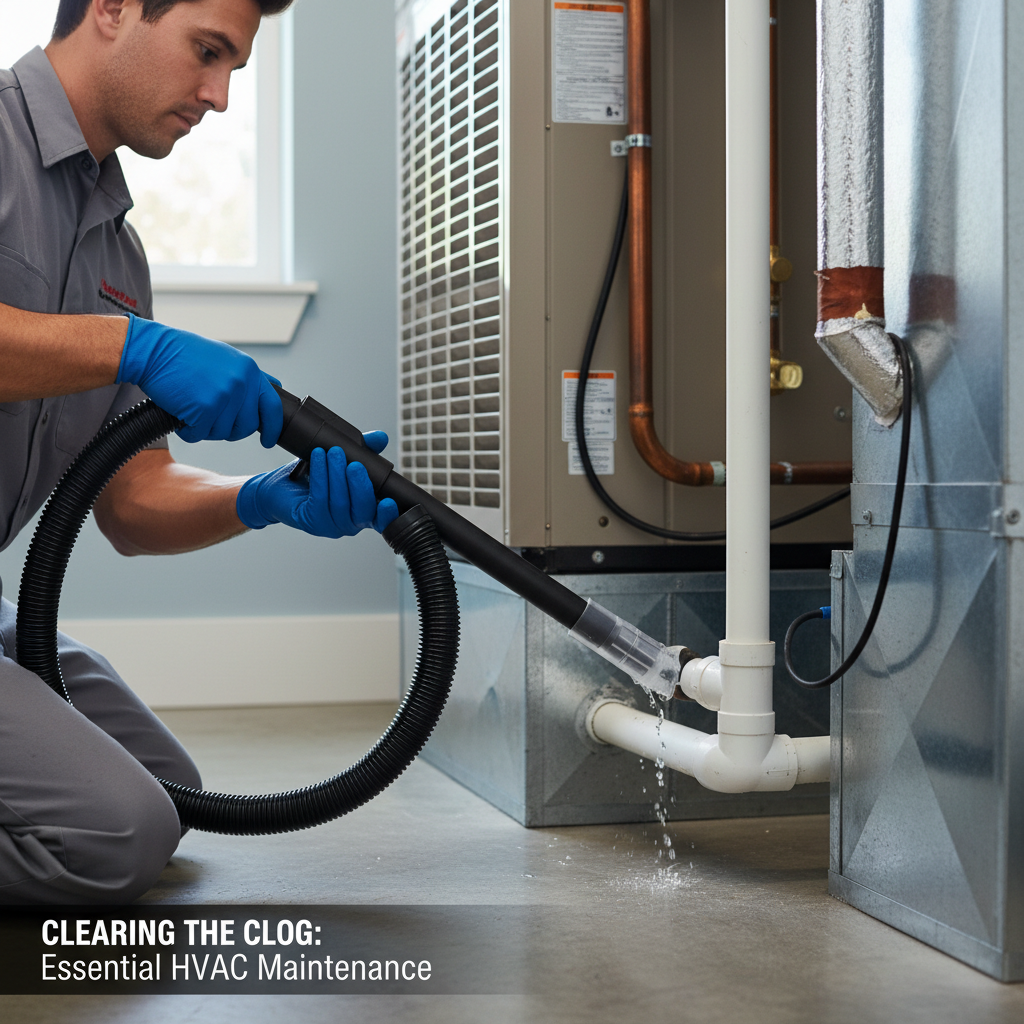
- AmazonWet/Dry Shop Vacuum1 · Essential for effectively clearing the existing clog.
- AmazonSafety Glasses1 · Protect your eyes when cutting pipe and working with primers.
- AmazonOld Towels or Rags2-3 · For cleaning up spills.
- AmazonPVC Slip-to-Thread Tee1 · Match the diameter of your existing pipe, usually 3/4" or 1"
- AmazonPVC Threaded Plug1 · Match the thread size of the Tee fitting
- AmazonPVC Primer1 · The small can with a dauber is sufficient.
- AmazonPVC Cement1 · Also called solvent cement.
- AmazonDistilled White Vinegar1 bottle · The key ingredient for preventative cleaning.
As an Amazon Associate FixlyGuide earns from qualifying purchases — at no extra cost to you. Prices and availability are accurate as of publication and subject to change.
Quick Answer
Your AC drain line clogs in the summer due to the growth of algae and sludge, which thrive in the dark, damp pipe fed by constant condensation from your evaporator coil. The most effective, long-term fix is creating an easy-access port with a $3 PVC "T" fitting to allow for regular, preventative cleaning with distilled white vinegar or specialized tablets, stopping the clog before it leads to water damage.
The Problem
That tell-tale puddle of water around your indoor air handler or the new, ominous water stain blooming on your ceiling is an unwelcome summer guest. When your air conditioner runs, it pulls gallons of moisture from the air every day, a process called condensation. This water collects in a drain pan and is supposed to flow harmlessly outside through a PVC pipe—the condensate drain line. The problem begins when that line becomes blocked. Instead of flowing out, the water backs up. First, it fills the primary drain pan. Then, it overflows into a secondary pan (if you have one) or, in many cases, spills directly over the pan's edge, soaking insulation, drywall, and framing. A functional safety float switch should shut down your AC to prevent this, but these switches can fail, leaving you with a costly mess. You might notice a musty, swampy smell long before you see water, which is a clear sign of the biological growth causing the issue. For homeowners with units in the attic, a clogged AC drain line can lead to catastrophic ceiling collapse, while closet or basement units can ruin flooring and promote dangerous mold growth in walls.
How It Works
To understand the fix, you need to understand the science. Your AC doesn't create cold air; it removes heat and humidity. As warm, moist indoor air passes over the frigid evaporator coil inside your air handler, its temperature drops dramatically. When the air temperature hits the "dew point," the water vapor it's holding can no longer stay in a gaseous state and condenses into liquid water, just like on a cold glass of iced tea. This water drips from the coil fins into the primary drain pan.
This pan is engineered with a slight slope, guiding the water into a 3/4-inch or 1-inch PVC drain line. This is where the trouble starts. The air passing over the evaporator coil isn't just warm and moist; it's also filled with microscopic dust, pollen, pet dander, and skin cells—particulate matter that even a good air filter can't completely stop. This organic cocktail washes down into the drain line, creating a nutrient-rich buffet. The inside of the pipe is dark, constantly damp, and relatively warm. It's the perfect breeding ground for a slimy, gelatinous biofilm, often referred to as zooglea. This sludge, combined with algae, accumulates over time, restricting flow until it forms a complete dam, causing a backup.
Most modern systems include a P-trap (a U-shaped bend) in the drain line near the air handler. This trap is designed to hold water to create a seal, preventing air from being sucked back into the unit from the drain line outlet and stopping sewer gases from entering your home if the line is tied into a plumbing vent. While necessary, this trap is also a common place for sludge to accumulate and create the initial blockage.
Step-by-Step Fix
This guide focuses on the permanent fix: installing a cleanout "T" and performing a deep clean. This gives you easy access for the 30-second preventative maintenance that will stop future clogs.
SAFETY FIRST: Turn off the power to your air handler at two locations: the thermostat (set to 'Off') and the circuit breaker that controls the unit. You'll be working around water and electrical components.
-
Locate Your Drain Line — Find your indoor air handler (often in an attic, basement, or closet). Identify the white or beige 3/4" or 1" PVC pipe coming from it. This is your condensate drain line. You will likely see a U-shaped trap near the unit.
-
Identify the Best Spot for Surgery — You will be cutting the pipe to install a T-shaped fitting. Choose a straight, accessible section of pipe between the air handler and the P-trap. You need a few inches of straight pipe to work with. If access is tight, so is the job.
-
Make the Cut — Using a PVC pipe cutter or a fine-toothed hacksaw, make a clean, straight cut. Remove a section of pipe about 1-2 inches long. Be prepared for some residual water to spill out; have old towels ready. Smooth the inside and outside of the cut edges with a deburring tool or sandpaper to ensure a good seal.
-
Dry-Fit the New Fitting — Take your 3/4" or 1" Slip-to-Thread PVC Tee fitting and a matching threaded plug. Without glue, insert the two cut ends of the drain line into the 'slip' ends of the Tee. Ensure it fits snugly. The threaded part of the Tee should be pointing up for easy access.
-
Glue the Fitting in Place — Apply a light, even layer of PVC primer to the outside of the pipe ends and the inside of the Tee sockets. Follow immediately with PVC cement and push the Tee onto the pipes, giving a quarter-turn twist to spread the cement. Hold firmly for 30 seconds. The cement sets incredibly fast.
-
Let it Cure — Wait at least 30 minutes for the PVC cement to fully cure before you allow any water to flow through the line. Do not skip this step, or you'll have leaks.
-
Clear the Existing Clog (Aggressive Method) — Now, with your new access port, you can clear the original clog. Go outside and find where the drain line terminates. Connect a wet/dry shop vacuum to the end of the line and create a seal with your hand or a rag. Have a helper watch the vacuum's canister. Turn it on for 2-3 minutes. This will suck the entire slimy clog out from the outside.
-
The Preventative Flush — Back at your new cleanout Tee, unscrew the plug. Pour a mixture of one cup of distilled white vinegar and one cup of warm water down the opening. The vinegar is acidic enough to kill the algae and biofilm without damaging your pipes or any metal components like bleach can.
-
Final Checks — Re-insert and hand-tighten the threaded plug on your new Tee. Go to the breaker and turn the power back on to the air handler. Set your thermostat to 'Cool' and let it run. After about 30-60 minutes, check the drain line outside to confirm you see a steady drip or slow trickle of water. Also, inspect your new fitting for any leaks.
-
Schedule Your Prevention — The secret isn't just the Tee fitting; it's using it. Add a recurring monthly reminder on your calendar during the cooling season: "AC Drain Line Flush." It will now take you less than a minute to unscrew the cap and pour in a cup of vinegar.
Common Causes
- Bio-Growth: The primary culprit is a naturally occurring slime, algae, and fungus (zooglea) that feeds on dust and debris in the dark, moist pipe.
- Improper Installation: A drain line that lacks a sufficient downward slope (at least 1/4 inch drop per 10 feet) will have standing water, encouraging growth.
- Dirty Air Filter: A clogged or cheap, low-efficiency air filter allows an excessive amount of dust and organic material to enter the system, which becomes food for the clog.
- Location of Outlet: If the drain line terminates in a busy garden bed, near a dusty path, or too low to the ground, it can easily get blocked by dirt, mulch, or insect nests.
- No P-Trap: A missing P-trap can allow insects and small pests to crawl up the line from the outside, building nests that cause a blockage.
Common Mistakes
- Using Bleach: Many online sources recommend bleach. DO NOT use it. Bleach can corrode the metal evaporator coil and drain pan, leading to a far more expensive repair. The fumes are also toxic and can circulate through your home. It's also harmful to plants and grass at the outlet point.
- Blowing Into the Line: Using an air compressor to blow air into the line from the outside is risky. The pressure can blow the fittings apart in your attic or, worse, blow the clog back into the drain pan, causing a massive overflow inside your house.
- Forgetting to Turn Off Power: Working on the drain line often means jostling the unit. It's easy to accidentally touch a live electrical component or dislodge a wire. Always kill the power at the breaker.
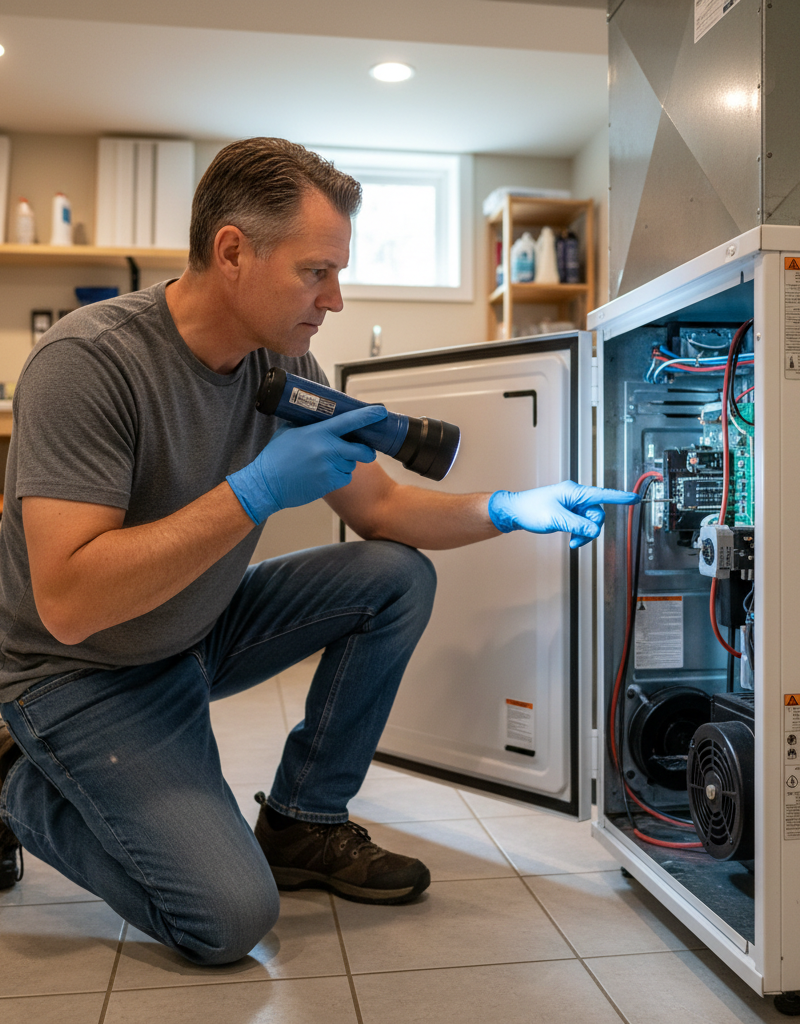
- Ignoring the Float Switch: After clearing a clog, physically lift the float on the safety switch (it's a small device on the side of the drain pan or line) to make sure it moves freely. Sometimes sludge can jam it in the 'down' position, rendering it useless for the next clog.
- Not Using Primer: Skipping the purple PVC primer is a rookie mistake. Primer cleans and softens the PVC, allowing the cement to create a true solvent weld. Without it, your new fitting is likely to leak.
Cost & Time Breakdown
| Task | DIY Cost | Pro Cost | Time |
|---|---|---|---|
| Monthly Vinegar Flush (Prevention) | $0.50 | N/A | 2 minutes |
| Installing a Cleanout Tee | $3 - $15 | $125 - $200 | 45 minutes |
| Emergency Clog Removal (Wet/Dry Vac) | $0 (if you own a vac) | $150 - $250 | 30 minutes |
| Professional Drain Line Jetting/Cleaning | N/A | $100 - $175 | 1 hour |
| Annual HVAC Tune-Up (includes drain check) | N/A | $100 - $300 | 1-2 hours |
| Damage Repair (Drywall, Paint) | $50 - $200+ | $500 - $2,500+ | Days |
Tips & Prevention
- Upgrade Your Air Filter: Use a pleated filter with a MERV (Minimum Efficiency Reporting Value) rating between 8 and 11. It's the best balance of filtration and airflow. Change it every 1-3 months based on usage.
- Use Condensate Pan Tablets: As an alternative or supplement to vinegar, you can drop specialized condensate pan tablets into your drain pan or down the cleanout Tee. They dissolve slowly, releasing chemicals that prevent algae and sludge growth.
- Check the Line's Exit Point: Once a month, check the spot where your AC drain line comes out of the house. Ensure it isn't blocked by mulch, grass, or dirt. If you don't see it dripping on a hot, humid day when the AC has been running, you may have a developing clog.
- Get an Annual HVAC Tune-Up: A professional tune-up in the spring should always include inspecting and cleaning the condensate drain system. This is a great way to ensure everything is working correctly before the heavy summer season begins.
- Install a Safety Cutoff Switch: If your system doesn't have a float switch (a small device near the drain pan that shuts the AC off if water backs up), have one installed immediately. It's the single best defense against water damage from a clog.
When to Call a Professional
While cleaning the AC drain line is a manageable DIY task, there are times when you absolutely should call a licensed HVAC technician. If the clog is severe and you cannot clear it with a wet/dry vacuum, a pro has tools like pressurized nitrogen or specialized flexible snakes that can clear the line safely and effectively. Call a professional if your system repeatedly clogs even after you've cleaned it, as this could indicate a more serious underlying issue like an improperly sloped pipe or a cracked drain pan. If you see significant water damage, rust on the air handler cabinet, or signs of mold, it is crucial to get a professional assessment. Furthermore, if you are not comfortable working with PVC pipes and cement, or if the drain line is in a very tight, inaccessible space like a cramped attic corner, paying a pro for an hour of work is well worth the peace of mind and the guarantee of a leak-free repair.
Should you do this yourself?
Answer five quick questions before you start. Safety outranks savings every time.
Your experience with work like this
How high do you have to work?
Does the job involve any of these?
Will it need a permit?
Specialty tools
Free and instant. Educational guidance only — not a quote, inspection, or professional diagnosis.
Estimate your own project cost
National averages are a starting point. Enter your details for a range that fits your house.
HVAC replacement cost
- Equipment$2,200 – $3,800
- Installation labor$1,200 – $2,500
Always insist on a Manual J load calculation — sq-ft sizing is only a rough check. Federal heat-pump rebates may reduce cost significantly.
Educational estimate only — always confirm with written local bids.
What should this project cost?
Enter your project details for a realistic cost range before you call anyone.
Service calls and common repairs run $150–$900; full system replacement typically $6,000–$12,000.
- Regional adjustment
- National average
- Labor share (typical)
- ~$1,935
- Quotes to collect
- 3 written estimates
Educational estimate based on national averages — not a binding quote. Always confirm with written local estimates.
Fixly Project Decision Box
- DIY difficulty
- Advanced
- Estimated time
- Homeowner checks 20–30 minutes
- Cost level
- Moderate
Main tools / materials
- Clean air filter
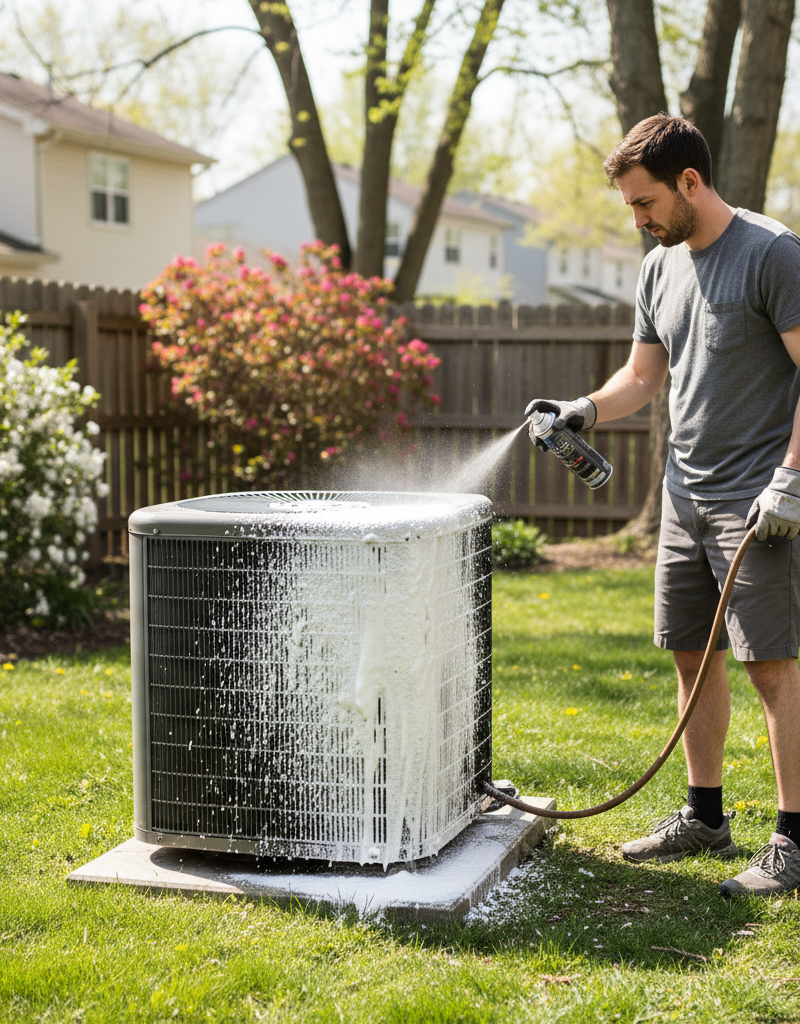
- Garden hose for condenser coils
- Shop vac for the condensate line
When to stop and call a pro
- Burning smell, smoke, or a tripping breaker
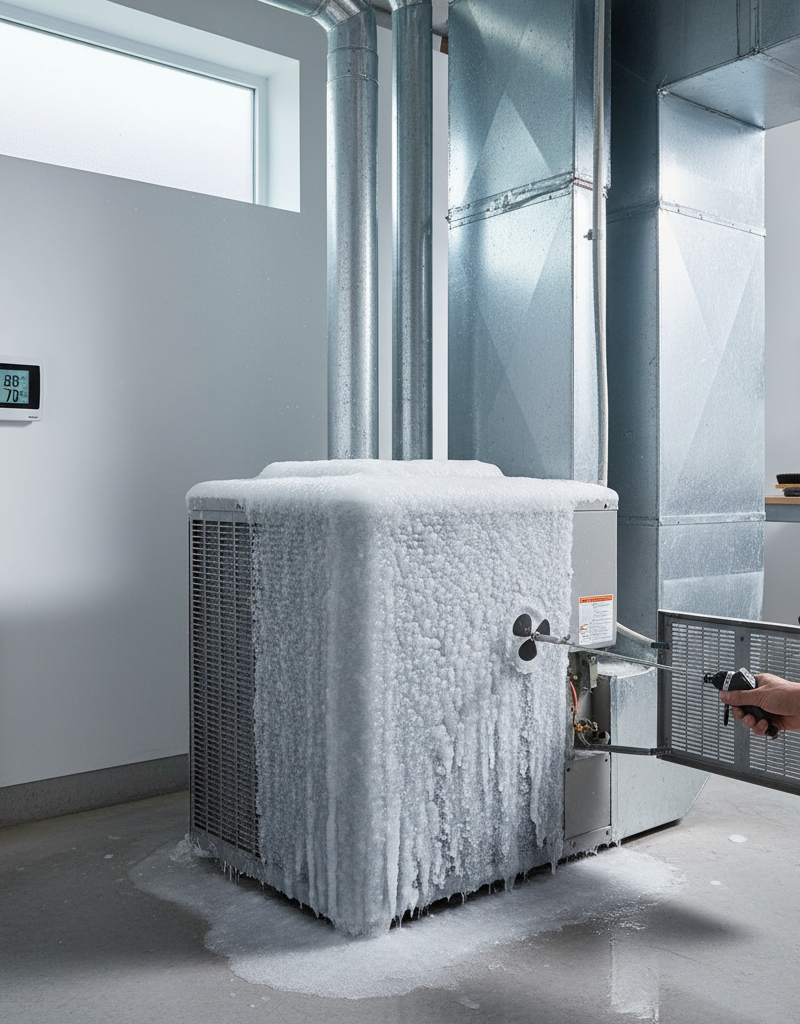
- Refrigerant lines iced over or hissing
- Any work inside the sealed refrigerant circuit (EPA-licensed only)
- Gas smell near a furnace — leave and call the utility
Need professional help?
Find an HVAC Pro Near YouGet the print-ready PDF of this guide
A clean, ad-free, printable version you can keep on your phone or pin to the workshop wall. Free with a FixlyGuide account.
- Print-optimized layout
- Tools, materials & every step included
- Saved to your account
Frequently asked questions
Can I use Drano or other chemical drain cleaners in my AC drain line?+
Absolutely not. Chemical drain cleaners are far too harsh for the materials in your HVAC system. They can corrode the metal drain pan and evaporator coils and damage the PVC pipes, leading to very expensive repairs. Always use distilled white vinegar or products specifically designed for HVAC condensate lines.
How often should I flush my AC drain line?+
During the peak cooling season, a preventative flush once a month is ideal. If you live in a very humid climate, you might consider doing it every 3-4 weeks. The goal is to never let the biological growth get established. It takes less than two minutes and is the best way to prevent a backup.
My AC is still leaking water after I cleared the drain line. What's wrong?+
If you are certain the line is clear, there could be other issues. The drain pan itself could be cracked or rusted through. The coils could be so dirty that water is dripping off them and missing the pan entirely. Or, the unit may not be level, causing water to spill out. In these cases, it's best to call a professional for a diagnosis.
Is a P-trap necessary on my condensate line?+
Yes, it is essential, especially on 'negative pressure' systems where the air handler is before the coil. The trap holds water to prevent the system from sucking unconditioned air back into your home through the drain line, which would decrease efficiency and could introduce humidity or even sewer gas if tied into plumbing. It's a required component in almost all installations.
Discussion
Loading comments…