- Call for Heat: It all starts when your thermostat detects the room temperature has dropped below your set point. It sends a low-voltage signal to the furnace's control board.
- Gas Valve Opens: With the igniter at full temperature, the control board opens the gas valve, releasing a steady flow of natural gas or propane to the burners.
- Ignition & Flame Sensing: The gas flows across the glowing-hot igniter and ignites, creating a row of steady blue flames across the burners.
HVAC · High energy usage
| Project category | HVAC |
|---|---|
| Problem type | High energy usage |
| Trade required | HVAC |
| Urgency | Planned project |
| Safety risk | Low safety risk |
| DIY suitability | DIY for experienced homeowners |
| Cost category | High cost |
| Typical timeline | Assessment within weeks; replacement planned off-season |
| Contractor type | Licensed HVAC technician |
Repair option
Duct sealing, insulation, and a tune-up before touching the equipment.
Replacement option
High-efficiency replacement sized by a load calculation, not a rule of thumb.
Common causes
- Aging, low-efficiency equipment
- Leaking ducts losing conditioned air
- Insufficient attic insulation
- Oversized system short-cycling
Relevant tools:project cost estimatorrepair or replace
Published June 8, 2026Last updated August 17, 2026
Tools & materials you'll need
Affiliate links- Amazon1/4" Nut Driver or SocketFor removing the flame sensor's mounting screw.
- AmazonLight-Grit Sandpaper or Steel Wool1 small piece · Crucial for polishing the sensor rod without damaging it. A crisp dollar bill can also work.
- AmazonPaper Towels or Microfiber Cloth1 · For wiping the sensor clean after polishing.
- AmazonReplacement Flame Sensor1 · Optional. Only needed if the original is cracked or cleaning doesn't work.
As an Amazon Associate FixlyGuide earns from qualifying purchases — at no extra cost to you. Prices and availability are accurate as of publication and subject to change.
'''
Quick Answer
When your furnace runs for only a minute or two before shutting down, especially during a cold snap, the most frequent cause is a dirty flame sensor. This safety component's job is to confirm that the burners have ignited. When it gets coated with soot or corrosion, it can't properly detect the flame. The furnace's control board, thinking there's a dangerous unburnt gas situation, shuts the system down. Cleaning the small metal rod—a 30-minute task requiring only light sandpaper—is the simple and effective fix for this common type of furnace short-cycles.
The Problem
It’s the coldest night of the year, and suddenly you notice a worrying pattern. The furnace kicks on with a familiar whoosh, the burners ignite, and you expect warm air to start flowing. But after only a minute or two, just as you start to feel a hint of warmth, the flames die. The blower might run for another minute, circulating cool air, before it too goes quiet. A few minutes later, the entire process repeats. Your thermostat setting is never reached, and the house slowly gets colder.
This frustrating on-and-off pattern is known as short-cycling. While it can happen anytime, it’s often most noticeable during extreme cold snaps when the furnace is working its hardest. The system is trying to do its job, but a safety or operational fault is cutting the heating cycle short, preventing it from ever entering the longer, sustained run time needed to heat your home.
How It Works
To understand why a dirty flame sensor causes such a specific problem, you need to understand your furnace's precise sequence of operations. It’s a carefully choreographed safety-first dance:
- Call for Heat: It all starts when your thermostat detects the room temperature has dropped below your set point. It sends a low-voltage signal to the furnace's control board.
- Safety Checks & Inducer Motor: The control board first checks that all safety switches are in a "go" state. It then activates the draft inducer motor—a small fan that pulls air through the heat exchanger and pushes exhaust gases out the flue vent. A pressure switch confirms the inducer is running and the flue is clear.
- Ignition: Once the pressure switch gives the okay, the control board initiates ignition. In modern furnaces, this is usually a hot surface igniter (HSI), a small ceramic or silicon carbide element that glows bright orange, reaching temperatures over 2,000°F.
- Gas Valve Opens: With the igniter at full temperature, the control board opens the gas valve, releasing a steady flow of natural gas or propane to the burners.
- Ignition & Flame Sensing: The gas flows across the glowing-hot igniter and ignites, creating a row of steady blue flames across the burners.
- THIS IS THE KEY STEP: The instant the gas valve opens, the control board starts a timer, typically 3-7 seconds long. Within this window, it must receive a confirmation signal that a flame is present. This is the flame sensor’s only job. A thin metal rod, typically positioned in front of the last burner, uses a principle called "flame rectification." The flame itself conducts a tiny electrical current, which the sensor allows to pass through to the control board. The board detects this micro-amp signal as proof of a stable flame.
- System Lockout (The Problem): If the control board does not receive this signal within its short F-sensing window, it assumes the burners failed to ignite. To prevent pumping dangerous, unburnt gas into your home, it immediately shuts the gas valve. The furnace has "locked out" for safety. It will typically wait a few minutes and try the entire sequence again, leading to the short-cycling you experience.
- Normal Operation: If the flame sensor does send its signal, the control board keeps the burners lit. After about 30-60 seconds, it engages the main blower motor, which pulls cool household air through the return ducts, pushes it across the hot heat exchanger, and sends warm air into your home.
When the flame sensor is coated in carbon, silica, or other residue, the film acts as an insulator, preventing the electrical signal from passing through the flame to the control board. The board sees no flame, even when one is clearly present, and initiates a safety shutdown.
Step-by-Step Fix: Cleaning the Flame Sensor
This procedure is one of the few furnace repairs that is safe and simple for most homeowners. Follow these steps exactly.
SAFETY FIRST: Your furnace has high-voltage electricity and combustible gas. You MUST disable both before starting. Failure to do so can result in serious injury or death.
- Turn Off the Power: Go to your home's main electrical panel and flip the circuit breaker that controls your furnace to the "OFF" position. Most furnaces also have a light-switch-style service switch on or near the unit; turn this off as well.
- Shut Off the Gas: Find the gas pipe leading to your furnace. There will be a shut-off valve, typically with a red or yellow handle. Turn the handle 90 degrees so it is perpendicular to the pipe. This is the "OFF" position.
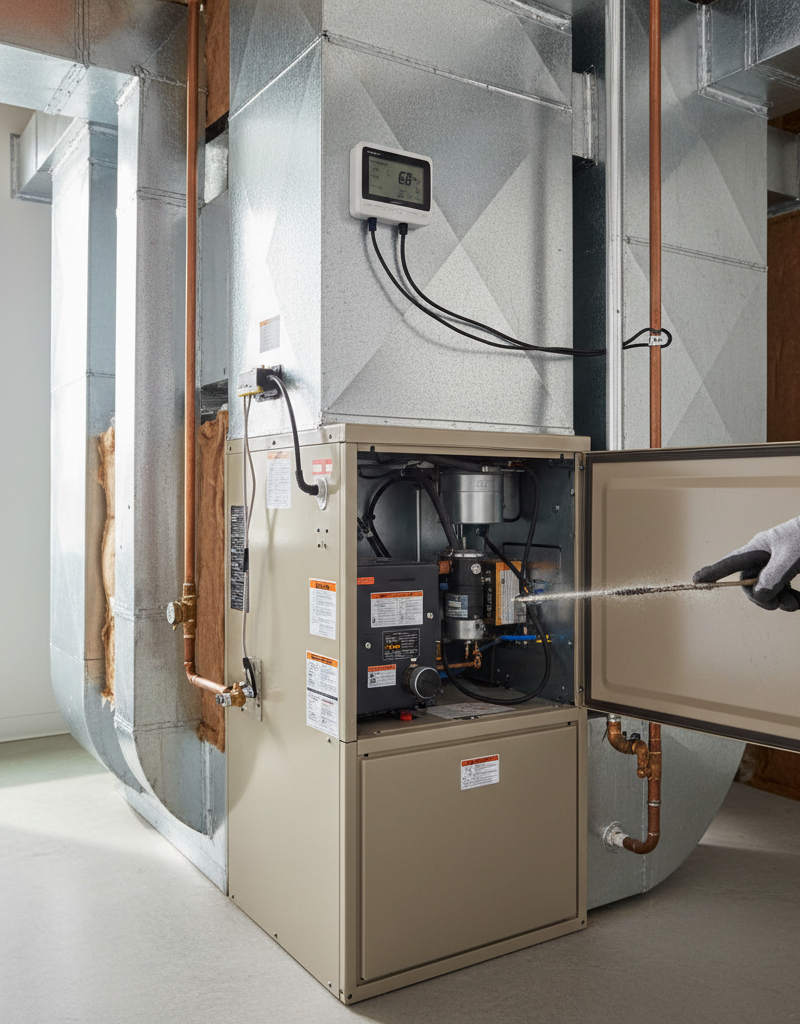
- Open the Furnace Cabinet: The main access doors on your furnace are usually held in place by thumbscrews or simple clips. You may need to remove the top panel (blower compartment) to access the bottom panel (burner compartment). Set the panels aside.
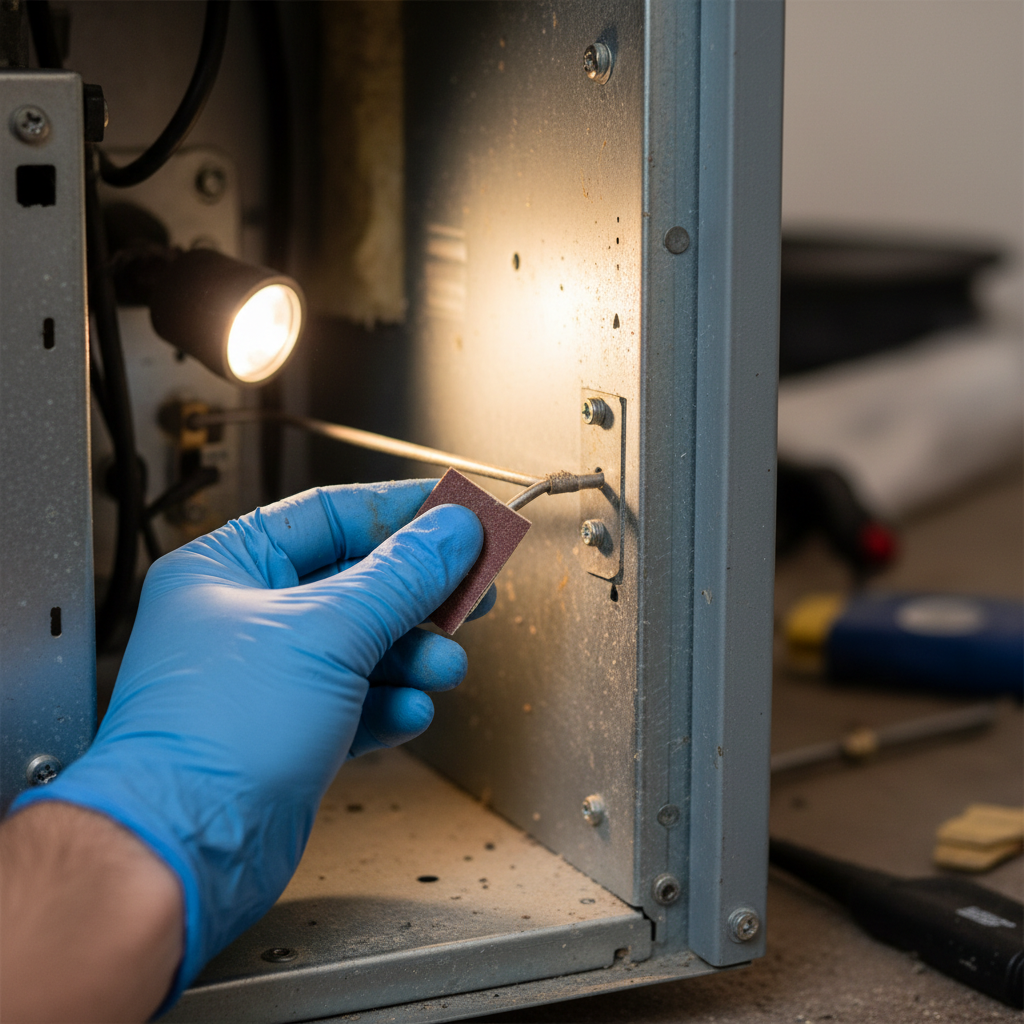
- Locate the Flame Sensor: Look inside the burner compartment, at the very end of the line of gas burners. You are looking for a thin, often L-shaped metal rod held in a white or brown ceramic base. It will be held in place by a single 1/4-inch hex-head screw and have a single thin wire attached to its end.
- Remove the Flame Sensor: Using a 1/4-inch nut driver or small socket wrench, carefully remove the single screw holding the sensor’s bracket in place. Do not try to remove the rod from the ceramic base. Gently pull the entire assembly out of the burner box.
- Inspect the Sensor: In a well-lit area, look closely at the metal rod. A dirty sensor won't be dripping with soot, but it will have a dull, powdery white or gray film on it. This is carbon and silica buildup that needs to be removed.
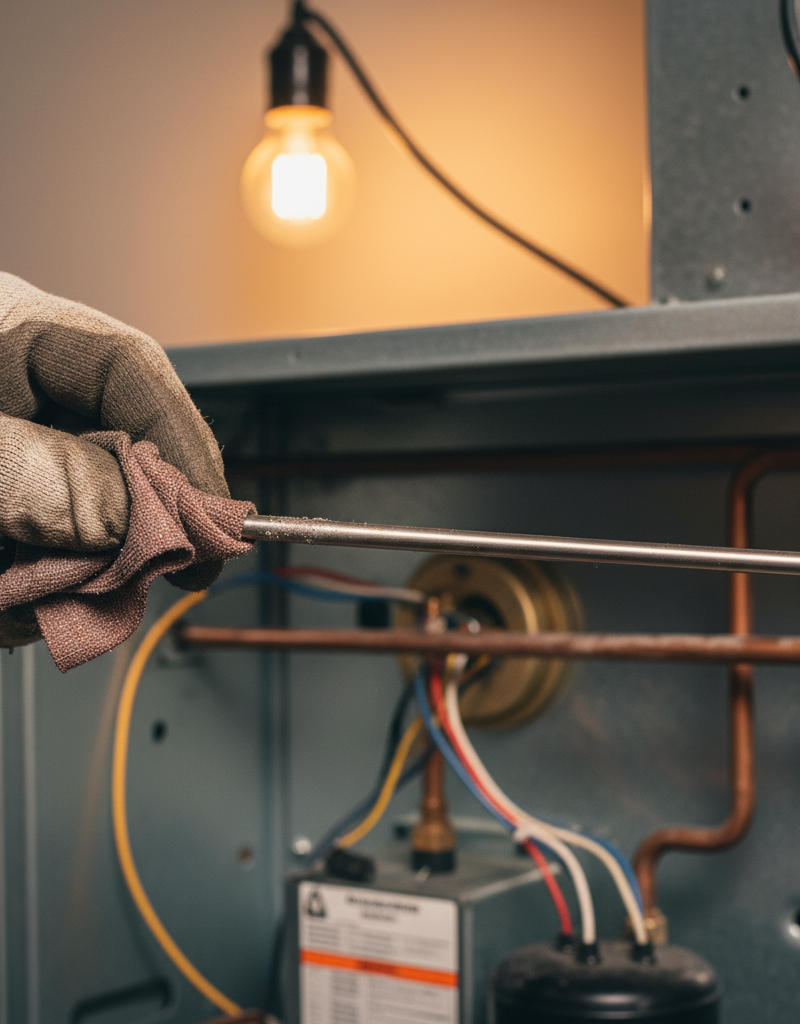
- Clean the Sensor Rod: Take a piece of light-grit emery cloth, steel wool, or even the abrasive texture of a crisp dollar bill. Gently pinch the metal rod and polish it, moving up and down its length. The goal is to remove the dull film and restore the rod’s natural metallic shine. DO NOT use heavy-grit sandpaper, a file, or a wire brush, as these will create grooves on the rod that encourage future buildup.
- Wipe the Rod: Use a clean paper towel or microfiber cloth to wipe away any sanding dust or residue. Avoid touching the clean rod with your bare fingers, as oils from your skin can bake onto it and cause the problem to return sooner.
- Reinstall the Sensor: Carefully guide the sensor back into its original position, ensuring the rod is sitting in the path of the flame. Secure it with the 1/4-inch screw. Make sure it’s snug, but do not overtighten, as this can crack the ceramic insulator. Reconnect the thin wire if you removed it.
- Reassemble and Restore Power/Gas: Place the furnace doors back on securely. The bottom door often has a safety switch that must be depressed for the furnace to operate. Turn the gas valve handle back so it is parallel with the pipe. Finally, turn the furnace circuit breaker back on.
- Test Your Work: Go to your thermostat and raise the temperature to call for heat. Watch the furnace go through its sequence. The inducer should start, the igniter should glow, and the burners should light. This time, they should stay lit. After a minute or so, the main blower should turn on, and the furnace should complete a full heating cycle.
Common Causes for Furnace Short-Cycling
While a dirty flame sensor is the #1 culprit for the "on for a minute, then off" symptom, other issues can also cause short-cycling.
- Overheating (Restricted Airflow): This is the second most common cause. If the furnace can't get rid of the heat it’s producing fast enough, the internal temperature gets too high, and a safety device called the high-limit switch will trip. This immediately shuts off the burners. The main cause is a severely clogged air filter. It can also be caused by too many closed heating vents, blocked return air grilles, or a dirty A/C evaporator coil sitting on top of your furnace.
- Thermostat Issues: A faulty thermostat, or even just one placed in a poor location (in direct sunlight, near a hot lamp, above a television), can get a false reading and shut the furnace down prematurely.
- Blocked Exhaust or Intake Vent: High-efficiency condensing furnaces have two PVC pipes (usually white) that run to the outside of the house. One is an air intake, the other is an exhaust. If either of these becomes blocked by snow, ice, leaves, or an animal’s nest, the pressure switch will not allow the furnace to run, shutting it down right after the inducer motor starts.
- Failing High-Limit Switch: The limit switch itself can become faulty, tripping at a temperature that is too low even when airflow is adequate. This is a replacement part job for a professional.
- Improper Gas Pressure: If the pressure from your gas valve is too low, the flame can be weak and "dance" off the flame sensor, causing an intermittent signal and a safety shutdown. This requires a pro with a manometer to diagnose.
- Control Board Failure: A failing furnace control board can cause any number of erratic behaviors, including short-cycling. This is a much more expensive and complex repair.
Common Mistakes to Avoid
- Forgetting Safety: The #1 mistake is not turning off both the circuit breaker and the gas supply valve before opening the furnace.
- Aggressive Cleaning: Using coarse sandpaper or a wire brush will damage the flame sensor rod, making it less effective and more prone to future buildup.
- Cleaning the Igniter: Do not touch or attempt to clean the hot surface igniter. It is extremely brittle and will break with the slightest pressure.
- Ignoring the Air Filter: Many people blame the flame sensor when the real issue is a completely clogged air filter causing the furnace to overheat. If you haven't changed your filter in months, do that first.
Cost & Time Breakdown
| Item | DIY Cost | Pro Cost | DIY Time | Pro Time |
|---|---|---|---|---|
| Clean Flame Sensor | $0 (if you have steel wool) | $125 - $250 (as part of a service call) | 30 mins | 1 hr |
| Replace Flame Sensor | $15 - $30 (for the part) | $150 - $400 (part + labor) | 30 mins | 1 hr |
| Full Furnace Tune-up | N/A | $100 - $300 | N/A | 1-2 hrs |
Tips & Prevention
- Change Your Filter Religiously: This is the single most important thing you can do for your furnace’s health and efficiency. Check it monthly and replace it when it's visibly dirty, typically every 1-3 months.
- Schedule Annual Tune-Ups: Have a professional HVAC technician inspect and tune up your furnace every fall. This service always includes cleaning the flame sensor, checking safety switches, and testing system performance.
- Keep Vents Clear: Walk through your house and ensure that no rugs, furniture, or curtains are blocking any supply or return air vents.
- Check Outdoor Vents: If you have a high-efficiency furnace, make it a habit to check that your PVC intake and exhaust pipes are clear, especially after a heavy snowfall.
When to Call a Professional
While cleaning the flame sensor is a straightforward DIY task, you should call a qualified HVAC technician if:
- You clean the sensor, and the furnace short-cycles problem persists.
- You are not 100% confident in turning off the power and gas supply.
- You smell gas. If you smell gas, leave the house immediately and call your gas utility’s emergency line from a safe distance.
- The furnace’s control board is flashing a diagnostic error code. The code’s meaning is usually printed on a sticker inside the furnace cabinet.
- You suspect the problem is related to overheating, as this could indicate a more serious issue with the blower motor or heat exchanger.
Fixing a short-cycling furnace is often surprisingly simple, restoring warmth and peace of mind during the coldest days. By understanding how the flame sensor works and how to safely clean it, you can save yourself a cold night and an expensive service call.
'''
Should you do this yourself?
Answer five quick questions before you start. Safety outranks savings every time.
Your experience with work like this
How high do you have to work?
Does the job involve any of these?
Will it need a permit?
Specialty tools
Free and instant. Educational guidance only — not a quote, inspection, or professional diagnosis.
Estimate your own project cost
National averages are a starting point. Enter your details for a range that fits your house.
HVAC replacement cost
- Equipment$2,200 – $3,800
- Installation labor$1,200 – $2,500
Always insist on a Manual J load calculation — sq-ft sizing is only a rough check. Federal heat-pump rebates may reduce cost significantly.
Educational estimate only — always confirm with written local bids.
What should this project cost?
Enter your project details for a realistic cost range before you call anyone.
Service calls and common repairs run $150–$900; full system replacement typically $6,000–$12,000.
- Regional adjustment
- National average
- Labor share (typical)
- ~$1,935
- Quotes to collect
- 3 written estimates
Educational estimate based on national averages — not a binding quote. Always confirm with written local estimates.
Fixly Project Decision Box
- DIY difficulty
- Advanced
- Estimated time
- Homeowner checks 20–30 minutes
- Cost level
- Moderate
Main tools / materials
- Clean air filter
- Garden hose for condenser coils
- Shop vac for the condensate line
When to stop and call a pro
- Burning smell, smoke, or a tripping breaker
- Refrigerant lines iced over or hissing
- Any work inside the sealed refrigerant circuit (EPA-licensed only)
- Gas smell near a furnace — leave and call the utility
Need professional help?
Find an HVAC Pro Near YouGet the print-ready PDF of this guide
A clean, ad-free, printable version you can keep on your phone or pin to the workshop wall. Free with a FixlyGuide account.
- Print-optimized layout
- Tools, materials & every step included
- Saved to your account
Frequently asked questions
Can a dirty flame sensor prevent a furnace from igniting at all?+
No, not usually. The flame sensor's job begins *after* the furnace is supposed to ignite. A dirty sensor will allow the furnace to ignite, but then shut it down a few seconds later. If your furnace isn't igniting at all, the problem is more likely a faulty hot surface igniter, a bad gas valve, or a control board issue.
How often should I clean my furnace flame sensor?+
For most furnaces, the flame sensor should be inspected and cleaned during your annual professional tune-up. If you find your furnace is short-cycling and the sensor is the cause, you can clean it yourself as needed. If it requires cleaning more than once per year, it could be a sign of poor combustion or gas pressure issues that a professional should investigate.
Is it better to just replace the flame sensor instead of cleaning it?+
Not necessarily. Flame sensors are simple devices and rarely 'fail' in an electronic sense. Over 95% of the time, they are simply dirty. Cleaning is effective and free. You should only replace the sensor if the ceramic insulator is cracked or if cleaning it does not solve the problem, which is very uncommon.
What happens if I ignore furnace short-cycling?+
Ignoring short-cycling puts excessive wear and tear on furnace components like the inducer motor, gas valve, and igniter, leading to premature failure. It also means your furnace is operating inefficiently, wasting energy, and failing to heat your home. It's a clear sign of a problem that needs to be addressed.
Discussion
Loading comments…