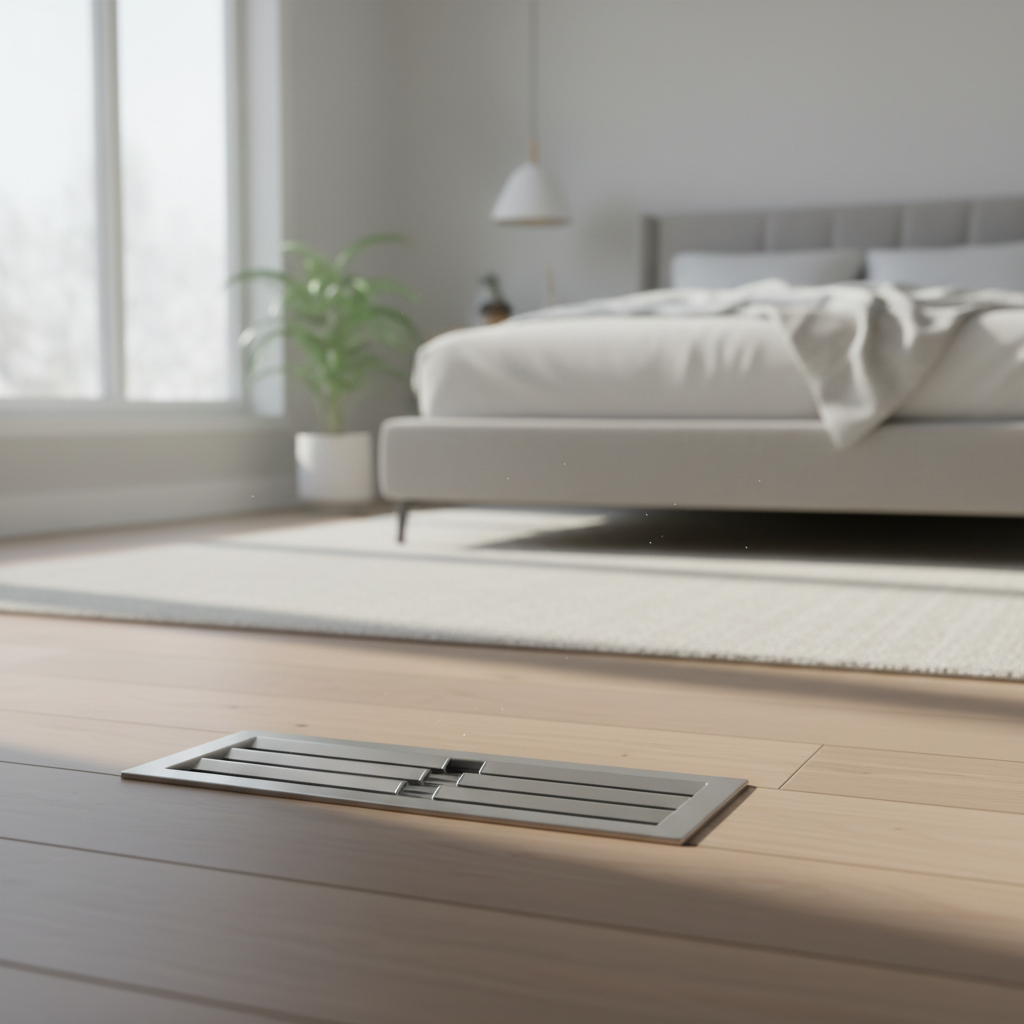
- Closing supply vents in unused rooms does not save money; it harms your HVAC system.
- To understand why closing vents is so detrimental, you need to understand a core principle of HVAC design: static pressure.
- The "fix" is to undo the damage and create a properly balanced airflow environment.
- People close vents for a handful of reasons, all of which are based on a misunderstanding of how forced-air systems work.
HVAC · High energy usage
| Project category | HVAC |
|---|---|
| Problem type | High energy usage |
| Trade required | HVAC |
| Urgency | Planned project |
| Safety risk | Low safety risk |
| DIY suitability | DIY for experienced homeowners |
| Cost category | High cost |
| Typical timeline | Assessment within weeks; replacement planned off-season |
| Contractor type | Licensed HVAC technician |
Repair option
Duct sealing, insulation, and a tune-up before touching the equipment.
Replacement option
High-efficiency replacement sized by a load calculation, not a rule of thumb.
Common causes
- Aging, low-efficiency equipment
- Leaking ducts losing conditioned air
- Insufficient attic insulation
- Oversized system short-cycling
Relevant tools:project cost estimatorrepair or replace
Published June 5, 2026Last updated August 17, 2026
Tools & materials you'll need
Affiliate links- AmazonNew Furnace Filter1 · Have one ready; a clogged filter is a major cause of pressure issues. Check size and MERV rating.
As an Amazon Associate FixlyGuide earns from qualifying purchases — at no extra cost to you. Prices and availability are accurate as of publication and subject to change.
Quick Answer
Closing supply vents in unused rooms does not save money; it harms your HVAC system. It dramatically increases static pressure within your ductwork, forcing the furnace's blower motor to work harder, draw more electricity, and wear out faster. This backpressure can also cause the furnace to overheat, trip safety limits, and even lead to expensive heat exchanger damage, while simultaneously forcing conditioned air out through duct leaks in your attic or crawlspace.
The Problem
Every homeowner has done it. You have a guest room, a home office, or a storage space that sits empty most of the winter. In a seemingly brilliant move to optimize heating and save a few dollars, you crouch down and slide the little lever on the supply register to close it off. The logic feels impeccable: why waste warm air on an empty room? You imagine your furnace breathing a sigh of relief, now tasked with heating a smaller area. You envision a lower utility bill.
Unfortunately, the reality is the precise opposite. Within weeks or months, you might notice your heating bills are creeping up, not down. You might hear a new humming or whining sound from your furnace closet. Some rooms may feel colder than before. Eventually, you might face a no-heat situation on a cold morning, followed by a technician delivering a five-hundred-dollar estimate for a new blower motor. That simple, "logical" act of closing a few vents created a cascade of problems that are invisible to the naked eye but devastating to your HVAC system and your wallet. This guide will explain the physics behind this common mistake and show you the right way to manage airflow in your home.
How It Works
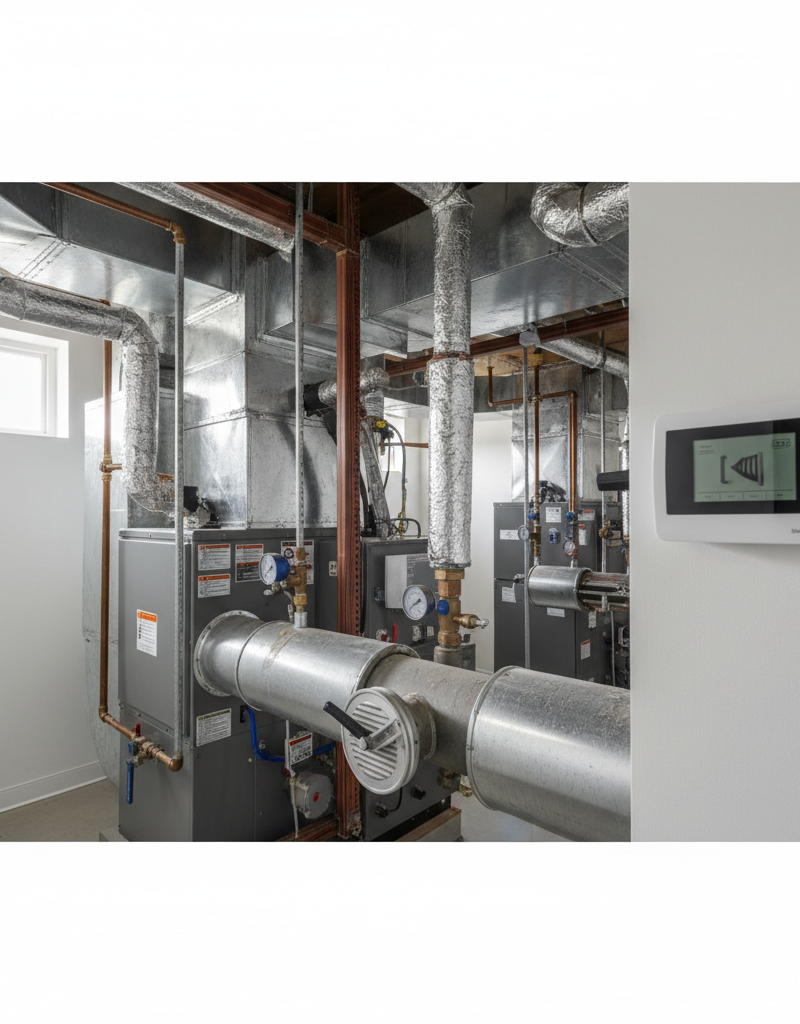
To understand why closing vents is so detrimental, you need to understand a core principle of HVAC design: static pressure. Think of your ductwork as a system of arteries and your furnace blower as the heart. The entire system—blower, ducts, vents—is designed and balanced by engineers to handle a specific volume of air, measured in Cubic Feet per Minute (CFM), at a specific static pressure, measured in inches of water column (IWC).
A typical residential furnace is designed to operate against a total static pressure of around 0.5 IWC. Your blower motor is selected and calibrated to push, for example, 1,200 CFM of air against this expected resistance. When you start closing off supply registers, you are effectively blocking arteries. The "heart" (your blower motor) doesn't know you've reduced the size of the house; it only knows it must continue trying to push that 1,200 CFM of air into the system.
As you close vents, the resistance—the static pressure—skyrockets. Instead of 0.5 IWC, the blower might be fighting against 0.8, 0.9, or even 1.0 IWC or more. This has two immediate, damaging effects:
-
Blower Motor Strain: For older, common PSC (Permanent Split Capacitor) motors, this increased pressure forces the motor to slow down while trying to work harder. This causes it to draw more amperage, generating excess heat within the motor windings. Over time, this heat breaks down the motor's insulation and bearings, leading to premature failure. For modern, more efficient ECM (Electronically Commutated Motor) or variable-speed motors, the motor's internal computer will sense the pressure increase and ramp up its own power to try and maintain the target CFM. While this maintains better airflow, it also dramatically increases electricity consumption, completely negating any perceived savings and still putting strain on the electronic components.
-
Heat Exchanger Overheating: The increased backpressure also reduces the total volume of air moving across the furnace's heat exchanger. The furnace is still generating the same amount of heat, but there's less air to carry it away. The heat exchanger temperature rises rapidly. This will cause the furnace's high-limit safety switch to trip, shutting the burners off prematurely. Your furnace will "short cycle," turning on and off frequently without ever completing a full heating cycle. This constant, rapid expansion and contraction of the heat exchanger's metal can cause stress fractures over time—a critical failure that often requires a full furnace replacement and can pose a carbon monoxide risk.
Finally, the high pressure inside your supply ducts acts like a leak-finder, forcing your expensive heated air out of every tiny crack, seam, and unsealed joint in ductwork located in unconditioned spaces like your attic, basement, or crawlspace. Studies by groups like the Texas A&M Energy Systems Laboratory have shown that closing vents can significantly increase this duct leakage, effectively heating the outdoors and driving your utility bills higher.
Step-by-Step Fix: Re-Balancing Your System
The "fix" is to undo the damage and create a properly balanced airflow environment. This process involves more than just re-opening vents; it’s about conducting a full system assessment.
SAFETY FIRST: CUT THE POWER
Before you begin any inspection of your furnace or ductwork, go to your home’s main electrical panel (breaker box) and shut off the circuit breaker labeled "Furnace," "HVAC," or "Air Handler." This prevents the system from unexpectedly turning on while you work.
-
Systematically Locate All Supply Vents — Go room by room and account for every single supply register (the vents blowing air out). Check behind furniture, under rugs, and in closets. Create a mental map or a quick sketch of your home’s layout and vent locations.
-
Open Every Single Vent Fully — Visit each supply register you located. Move the lever or wheel to the fully open position. Ensure the louvers inside the vent are parallel to the direction of airflow, not blocking it. Don’t forget the vents you may have closed years ago in the basement or storage rooms.
-
Locate and Open All Return Grilles — Just as important are the return air grilles (the larger grilles that suck air in). Ensure these are not blocked by furniture, boxes, or other obstructions. Your system needs to "breathe in" as much as it "breathes out."
-
Check and Replace Your Air Filter — With the system still off, locate the air filter compartment on your furnace or air handler. A severely clogged filter is a primary cause of high static pressure, compounding the problem of closed vents. If it’s dirty, replace it with a new, clean filter of the correct size. For a standard 1-inch filter, a MERV 8 rating is a good balance between airflow and filtration.
-
Visually Inspect Accessible Ductwork — If you have ducts in a basement or crawlspace, take a moment to look at the seams and joints. Do you see any obvious gaps, torn foil tape, or disconnected sections? This is where the high pressure from your closed vents was likely forcing air out. Make a note of any areas that look compromised.
-
Locate Your Duct Dampers (If Present) — On the main ducts coming off your furnace plenum, you may see small metal levers. These are balancing dampers, designed to fine-tune airflow to entire sections of your home. For this initial reset, ensure these dampers are fully open (the lever should be parallel to the duct run).
-
Restore Power and Start the System — Go back to your breaker box and turn the furnace circuit back on. Set your thermostat to "Heat" and raise the temperature to call for the system to start.
-
Listen and Feel at the Furnace — Stand near your furnace or air handler. You should notice an immediate difference. The blower will likely sound quieter and less strained, more like a smooth "whoosh" than a high-pitched whine. The volume of air moving is now greater, reducing the strain.
-
Verify Airflow at Each Vent — Walk to the vents that are furthest from the furnace. You should feel a noticeable, if gentle, flow of warm air. Before, these vents may have had very little airflow as the pressure looked for the easiest escape path closer to the furnace.
-
Perform Minor Balancing with Dampers (Optional) — After letting the system run for 15-20 minutes, if you still find one room is getting too much air and another not enough, you can use the duct dampers (NOT the registers in the room) to make slight adjustments. Never close a damper more than 25-30%. The goal is to slightly redirect, not block, the airflow. Small adjustments can make a big difference.
Common Causes
People close vents for a handful of reasons, all of which are based on a misunderstanding of how forced-air systems work.
- Attempting to Save Money: The most common reason. The flawed logic is that heating a smaller cubic footage will require less energy. As explained, it actually forces the system to work harder and less efficiently, increasing energy use.
- "Zone Heating" without a Zone System: Homeowners try to create makeshift "zones" by closing off a bedroom during the day and the living room at night. A forced-air system is not designed for this; it’s an all-or-nothing system unless it has been professionally equipped with a zoned-damper system.
- Temperature Imbalances: A south-facing room gets too hot in the winter sun, so the owner closes the vent. This starves the room of air circulation and can create other issues, while also contributing to system-wide static pressure problems. The correct solution is often a minor damper adjustment or even window treatments.
- Unused Rooms: Guest bedrooms, storage rooms, and formal dining rooms are prime targets for closed vents. The owner believes they are cleverly preventing waste, when in reality they are increasing duct leakage and straining their furnace.
- Noise Reduction: Sometimes a vent in a bedroom is too noisy. Closing it seems like an easy fix, but the noise is a symptom of excessive airflow velocity, itself a sign of a system design issue. Closing the vent just makes the underlying pressure problem worse.
Common Mistakes
When trying to manage airflow, homeowners often make these critical errors that compound the damage started by closing vents.
- Closing Too Many Vents: A general rule among HVAC professionals is to never, ever close more than 20% of the supply registers in your home. Closing even one can begin to negatively affect the system's static pressure.
- Shutting Doors to Unused Rooms: This is a double whammy. If you close the supply vent and the door to a room with no dedicated return grille, you create a pocket of stagnant, high pressure that prevents any air circulation and effectively isolates the room, potentially leading to moisture issues.
- Using "Smart Vents" on a Standard System: Smart vents, which open and close automatically, seem like a high-tech solution. But when added to a furnace with a standard single-speed (PSC) or even variable-speed (ECM) blower not designed for zoning, they create the exact same static pressure problems on a dynamic and unpredictable basis, potentially causing even more damage.
- Ignoring the Return Air Side: Many people obsess over the supply vents while completely ignoring the return grilles. Blocking a main return grille with a sofa or bookcase is just as bad, if not worse, than closing several supply vents. The system can't push out air it can't pull in.
- Using High-MERV "Allergy" Filters with Standard Blowers: A super-high-efficiency filter (MERV 13+) can be great for air quality, but it is also much more restrictive to airflow. Using one on a system not designed for it dramatically increases static pressure from the start, just like a closed vent. It's crucial to use a filter that balances filtration with your system's airflow capacity.
- Partial Vent Closure: Believing that closing a vent halfway is a good compromise. While less harmful than a full closure, it still increases friction and pressure, contributing to the overall system imbalance. It's better to leave the register fully open and make adjustments at the main duct dampers.
Cost & Time Breakdown
The "fix" of opening vents is free and takes less than an hour. However, the potential costs from the damage caused by chronically closed vents can be substantial. This table outlines the expenses for repairing the components most commonly affected.
| Task | DIY Cost | Pro Cost | Time to Repair |
|---|---|---|---|
| Blower Motor Replacement (PSC) | $150 - $300 (Part Only) | $450 - $800 | 2 - 4 hours |
| Blower Motor Replacement (ECM) | $400 - $800 (Part Only) | $900 - $2,000+ | 2 - 4 hours |
| High-Limit Switch Replacement | $15 - $40 (Part Only) | $150 - $300 | 1 hour |
| Cracked Heat Exchanger Repair | Not a DIY Job | $2,500 - $6,000+ (Often full furnace replacement) | 1 - 2 days |
| Professional Duct Sealing | $200 - $500 (Tape & Mastic) | $1,500 - $4,000+ (Whole home) | 2 - 3 days |
| Increased Monthly Utility Bill | N/A | $10 - $50+ per month | Ongoing |
Tips & Prevention
Instead of closing vents, use these professional-approved methods to manage comfort and efficiency.
- Professional Air Balancing: The single best solution. An HVAC technician will use tools like a flow hood and manometer to measure the airflow from every vent and adjust the hidden duct dampers to ensure every room gets the precise amount of conditioned air it was designed to receive. This solves issues of hot and cold spots permanently.
- Install a True Zoning System: If you genuinely want to control temperatures in different areas independently, a professional zoning system is the only safe way. It includes a sophisticated control board, multiple thermostats, and automated dampers that all communicate with a variable-speed furnace blower capable of adjusting its CFM output safely.
- Seal Your Ducts: The Department of Energy states that the typical home loses 20-30% of its conditioned air through duct leaks. Instead of trying to block vents, pay a professional (or DIY with mastic sealant and foil tape) to seal all the seams and joints in your ductwork. This ensures the air you paid to heat actually reaches its destination.
- Address the Building Envelope: Often, a room is too cold not because of airflow, but because of poor insulation, an old window, or air leaks around its baseboards. Use caulk, weatherstripping, and added insulation to solve the root problem of heat loss.
- Use Window Coverings: A huge amount of heat is lost through windows. In winter, open curtains on south-facing windows during the day to capture solar heat, and close them at night to insulate. Use heavy, insulated curtains in unused rooms.
When to Call a Professional
While opening your vents is a simple DIY task, you should call a qualified HVAC technician immediately if you notice any of the following symptoms, which could indicate damage has already been done:
- Loud Humming, Whining, or Screeching: These sounds often signal a failing blower motor bearing, strained by excessive static pressure.
- Burning Smell: A burning smell from your vents when the heat kicks on could be an overheating motor or other electrical component. Shut the system off at the breaker and call for service.
- Frequent On/Off Cycling: If your furnace runs for only a few minutes, shuts off, then starts again shortly after, its high-limit switch is likely tripping. This is a clear sign of an airflow and overheating problem that needs immediate attention.
- A Sudden, Sustained Spike in Your Utility Bill: If your bills jump 15-20% or more with no change in weather, your system is running inefficiently. The cause could be a struggling blower motor or significant duct leakage, both exacerbated by closed vents.
A technician can perform a static pressure test to definitively diagnose the health of your duct system and determine if your blower motor has been compromised. They can also perform the professional air balancing needed to make your home truly comfortable and efficient.
What should this project cost?
Enter your project details for a realistic cost range before you call anyone.
Service calls and common repairs run $150–$900; full system replacement typically $6,000–$12,000.
- Regional adjustment
- National average
- Labor share (typical)
- ~$1,935
- Quotes to collect
- 3 written estimates
Educational estimate based on national averages — not a binding quote. Always confirm with written local estimates.
Fixly Project Decision Box
- DIY difficulty
- Advanced
- Estimated time
- Homeowner checks 20–30 minutes
- Cost level
- Moderate
Main tools / materials
- Clean air filter
- Garden hose for condenser coils
- Shop vac for the condensate line
When to stop and call a pro
- Burning smell, smoke, or a tripping breaker
- Refrigerant lines iced over or hissing
- Any work inside the sealed refrigerant circuit (EPA-licensed only)
- Gas smell near a furnace — leave and call the utility
Need professional help?
Find an HVAC Pro Near YouGet the print-ready PDF of this guide
A clean, ad-free, printable version you can keep on your phone or pin to the workshop wall. Free with a FixlyGuide account.
- Print-optimized layout
- Tools, materials & every step included
- Saved to your account
Frequently asked questions
How many vents is it safe to close in a house?+
Ideally, zero. HVAC professionals recommend against closing any supply vents. Your system is designed as a whole, and closing even one register begins to increase static pressure. If you absolutely must, never close more than 20% of your home's total vents, and never close them completely—leave them at least partially open.
What if one room is always too hot or cold?+
This is a sign of an unbalanced system, not a reason to close the vent. The best solution is professional air balancing, where a technician adjusts hidden dampers in your ductwork. A simpler, but less precise, DIY approach is to find those dampers yourself and make small adjustments—never closing one more than about 30%—to redirect air from the hot room to the cold room.
Is it okay to close vents in the basement?+
No, this is one of the worst places to close vents. Because basements are often large, open spaces with multiple vents, closing them can significantly increase system-wide static pressure. Furthermore, a small amount of conditioned air helps control humidity and mustiness in a basement. If you want less heat there, have a technician adjust the main dampers leading to the basement trunk line.
Will smart vents solve this problem?+
No, not on their own. Adding smart vents to a standard, single-stage furnace just automates the problem of creating high static pressure. True zoning requires a complete system of smart vents, a control board, and a variable-speed furnace that can safely ramp its fan speed up and down to match the number of open vents.
Discussion
Loading comments…