- The Hidden Reason Your AC Isn't Cooling (And Why Most Homeowners Get It Wrong) — Is your central AC blowing warm air or struggling to cool your home? The culprit is often a silent but serious issue many homeowners overlo…
- The Hidden Reason Your GFCI Trips (It's Not Always a Faulty Outlet) — A continuously tripping GFCI outlet is a critical safety warning, often indicating moisture, a faulty appliance, or a wiring problem that r…
- The 9 Sneaky Filters Stealing Your Home's Efficiency (And How to Fix It) — Unseen or neglected filters throughout your home can secretly inflate utility bills, degrade air quality, and lead to expensive appliance b…
- The Hidden Reason Your AC Isn't Cooling (It's Not Just Freon) — A central AC system that isn't cooling your home can often be traced back to a surprising culprit: airflow obstruction, which mistakenly le…
- The Hidden Reason Your GFCI Trips (It’s Not Always a Bad Outlet) — A tripping GFCI outlet is a safety mechanism doing its job, often indicating a problem like moisture, a faulty appliance, or a wiring issue…
HVAC · Weak airflow
| Project category | HVAC |
|---|---|
| Problem type | Weak airflow |
| Trade required | HVAC |
| Urgency | Soon — within weeks |
| Safety risk | Low safety risk |
| DIY suitability | DIY friendly |
| Cost category | Low cost |
| Typical timeline | DIY filter check today; duct work 1–2 days |
| Contractor type | Licensed HVAC technician |
Repair option
Filter change, duct sealing, and balancing dampers.
Replacement option
Duct redesign or blower replacement when the system can never keep up.
Common causes
- Clogged filter — check this first, every time
- Undersized or crushed ductwork
- Leaking duct joints in the attic
- Failing blower motor
Relevant tools:diy difficultymaintenance calendar
Published August 3, 2026Last updated August 17, 2026
Tools & materials you'll need
Affiliate linksAs an Amazon Associate FixlyGuide earns from qualifying purchases — at no extra cost to you. Prices and availability are accurate as of publication and subject to change.
Quick Answer
Listen, I’ve seen more fans than I care to count, and a bladeless unit blowing weak air is usually a pretty straightforward fix. Most times, it’s just gunked-up air intakes or a choked filter. A good, thorough cleaning, maybe a quick reset, and you’ll likely have that thing pushing air like new again. Don’t go assuming it’s toast until you’ve given it some TLC.
The Problem
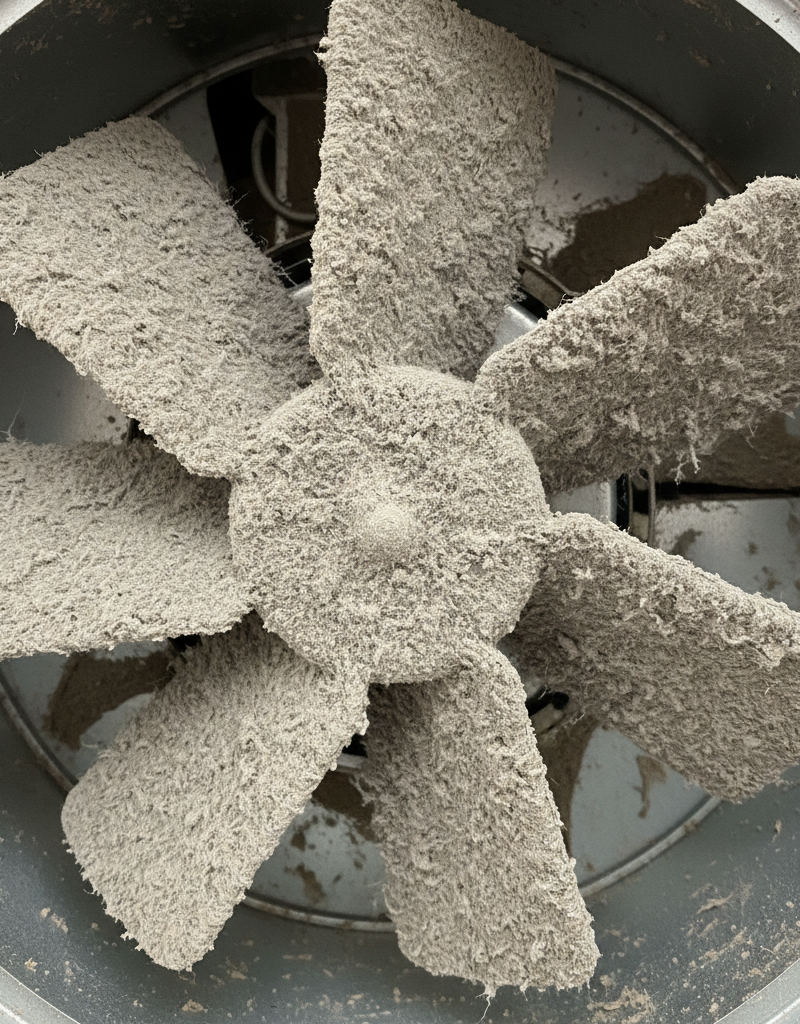
You shelled out good money for that sleek, bladeless fan, right? It’s supposed to quietly push a decent amount of air and make your room feel comfortable. But lately, it’s more like a gentle sigh than a breeze. You’re noticing less airflow, maybe it’s making a different noise, or it just doesn’t seem to be doing its job. That’s not just annoying; it means you’re not getting the comfort you paid for, and in the heat of summer, that’s a real problem. I had a guy in Peachtree Corners last year with a Dyson AM07 doing this exact thing—he thought it was dying, but turns out his dog’s hair had practically mummified the intake grill. Ten minutes with a brush and vacuum, and it was right back to work.
How It Works
Alright, so how do these bladeless fans actually work? It’s pretty clever, really. Instead of visible spinning blades, they hide a small, high-speed motor and an impeller in the base. That impeller is basically a tiny enclosed fan. It draws air in through a series of vents around the bottom of the unit—those are your air intakes. Then the air gets pushed up into the hollow loop, or “air amplifier,” at the top.
Inside that loop, there’s a narrow, precisely engineered gap. The air speeds up through that gap and shoots out as a jet. Here’s the cool part: that jet pulls in the surrounding air, a process called entrainment. It can boost the initial airflow by as much as 15 to 20 times. Think of it like a little airplane wing creating a low-pressure zone that drags more air along with it. So if those first intake vents get blocked, or the internal passages get caked up, the whole setup gets choked off and you end up with weak airflow. There’s no big blade to muscle through the dust. These things depend on clean, open air paths from the first intake all the way through the amplifier.
Step-by-Step Fix
1. Power Down Safely — Unplug it before you do anything else.
Seriously, I can’t stress this enough. Anytime you’re messing with an appliance, especially one with a motor and electronics, you’ve gotta kill the power. Pull the plug straight out of the wall. Don’t just hit the “off” button on the remote or the unit; that’s not enough. You want zero chance of it kicking on while your fingers are near moving parts or electrical connections. It takes all of 3 seconds and could save you a nasty surprise.
2. Check the Air Intakes — Clean the base vents thoroughly.
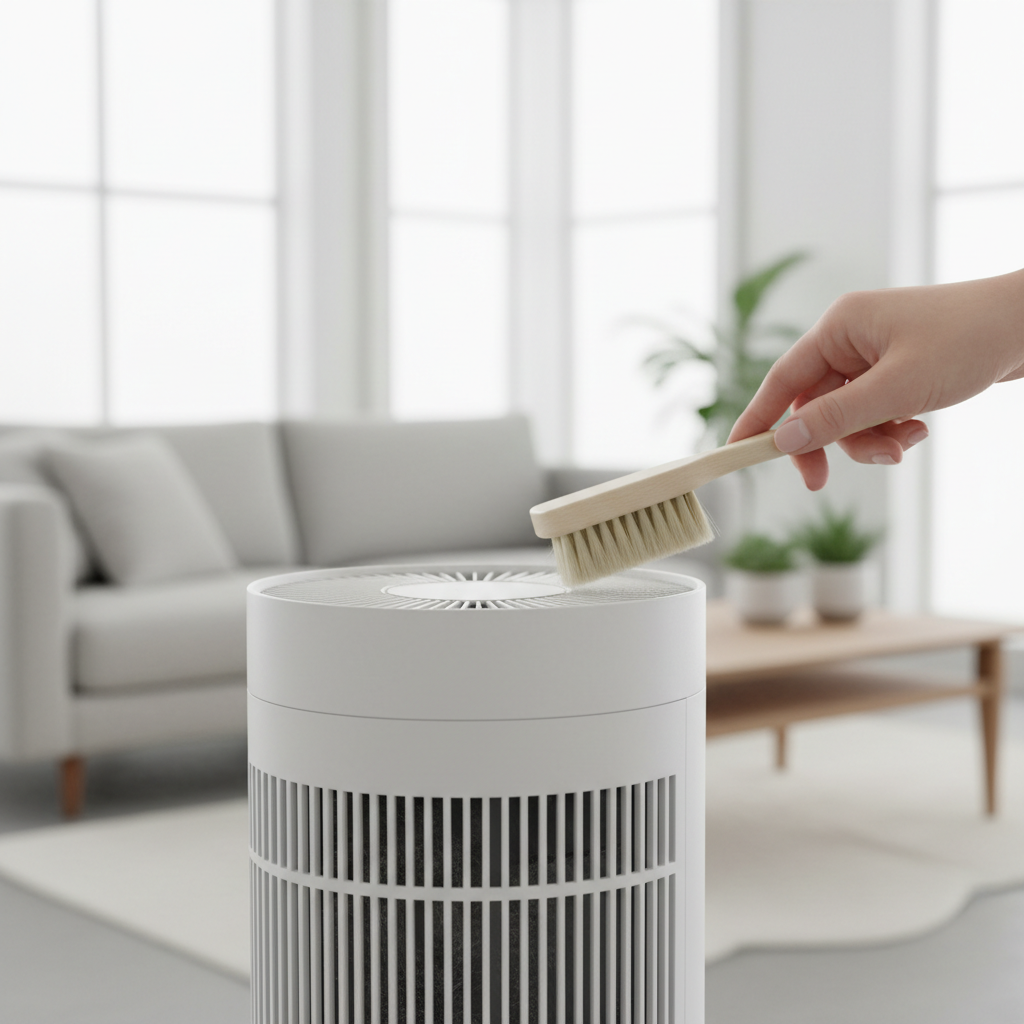
Most bladeless fans suck air in from around the base. These are usually narrow slots or a mesh grill. Over time, they get packed with dust, pet hair, and all sorts of crud. I’ve seen some so bad they look like they’re wearing a felt coat. Grab a soft-bristle brush, like a clean paintbrush or an old toothbrush, and gently brush away any visible debris. For tighter spots, a vacuum cleaner with a brush attachment works wonders. Get right into those crevices. Don’t forget to check all the way around the base — front, back, and sides. That’s usually the fastest fix.
3. Clean the Amplifier Loop — Wipe down the air outlet gap.
The top loop can collect dust just like the base, and sometimes that fine buildup is what’s robbing you of airflow. Grab a microfiber cloth and wipe the outer surfaces first. Then look closely at the narrow outlet gap. If you can reach it safely, use a dry cotton swab or a soft brush to clear the edge. No soaking, no spray-down drama. You’re not pressure-washing a driveway here. If the unit’s got a removable shroud or cover, crack it open only if the manufacturer says it’s fair game.
4. Check the Filter — Replace or wash it if your model has one.
Not every bladeless fan has a filter, but plenty do. If yours does, and it’s washable, rinse it gently under cool water and let it dry completely before reinstalling it. If it’s a replaceable filter, swap it out. A clogged filter can make a fan sound fine while choking airflow down to almost nothing. That thing’s working harder and giving you less. No dice.
5. Reset the Unit — Power cycle it to clear any errors.
Some fans get cranky after a power surge or a weird interruption. Unplug it, wait 5 to 10 minutes, then plug it back in and test it again. If your model has a reset button or a specific reset sequence, use that too. Sometimes that’s all it takes. Electronics can act fussy for no good reason.
6. Inspect for Obstructions — Look for internal blockages or damage.
If the airflow is still weak after cleaning, you may have a deeper issue. Listen for rattling, buzzing, or a motor that sounds strained. That can mean something’s lodged inside, or the motor’s on its way out. If you’re comfortable opening the unit according to the manual, look for loose screws, broken clips, or debris in the air channel. If you’re not, don’t force it. I pulled a floor fan in Frisco last month that had a tiny toy car jammed in the intake path—looked harmless from the outside, but it was killing the airflow dead.
When to Call a Pro
If you’ve cleaned it, reset it, checked the filter, and it’s still blowing weak, you may be dealing with a failing motor, a damaged control board, or a worn seal inside the amplifier. Those aren’t always DIY fixes. And if the fan is making grinding noises, heating up, or shutting off on its own, stop using it. That’s not something to shrug off. At that point, call a repair tech or start pricing a replacement. Sometimes fixing it costs more than the fan’s worth, and you’ve got to know when to call it a day.
Related Articles
Keep troubleshooting with these hand-picked guides from FixlyGuide:
- The Hidden Reason Your AC Isn't Cooling (And Why Most Homeowners Get It Wrong) — Is your central AC blowing warm air or struggling to cool your home? The culprit is often a silent but serious issue many homeowners overlo…
- The Hidden Reason Your GFCI Trips (It's Not Always a Faulty Outlet) — A continuously tripping GFCI outlet is a critical safety warning, often indicating moisture, a faulty appliance, or a wiring problem that r…
- The 9 Sneaky Filters Stealing Your Home's Efficiency (And How to Fix It) — Unseen or neglected filters throughout your home can secretly inflate utility bills, degrade air quality, and lead to expensive appliance b…
- The Hidden Reason Your AC Isn't Cooling (It's Not Just Freon) — A central AC system that isn't cooling your home can often be traced back to a surprising culprit: airflow obstruction, which mistakenly le…
- The Hidden Reason Your GFCI Trips (It’s Not Always a Bad Outlet) — A tripping GFCI outlet is a safety mechanism doing its job, often indicating a problem like moisture, a faulty appliance, or a wiring issue…
- The #1 Reason Your AC Blows Warm Air (And It's Not What You Think) — A dirty air filter is often the overlooked culprit behind an air conditioner blowing warm air, hindering its ability to cool your home effi…
Should you do this yourself?
Answer five quick questions before you start. Safety outranks savings every time.
Your experience with work like this
How high do you have to work?
Does the job involve any of these?
Will it need a permit?
Specialty tools
Free and instant. Educational guidance only — not a quote, inspection, or professional diagnosis.
What should this project cost?
Enter your project details for a realistic cost range before you call anyone.
Cost depends heavily on which system turns out to be the source.
- Regional adjustment
- National average
- Labor share (typical)
- ~$1,620
- Quotes to collect
- 3 written estimates
Educational estimate based on national averages — not a binding quote. Always confirm with written local estimates.
Before you start
Check the difficulty, permits, and safety risk — then decide whether to call a pro.
- Estimate this projectGet a cost range for your scope and ZIP before you call anyone.Open
- Get local estimatesSend one request and compare written estimates from vetted pros.Open
Free, no signup required. Estimates are educational guidance, not a quote or an inspection.
This article was independently written by FixlyGuide based on the source topic.
Frequently asked questions
Why is my bladeless fan not blowing strong?+
The most common reasons for weak airflow are clogged air intake vents on the fan's base, a dirty or clogged internal filter, or accumulated dust within the air amplification loop itself. Pet hair and household dust are the usual culprits that restrict air movement.
How do I clean the inside of my bladeless fan?+
Most bladeless fans aren't designed for full disassembly by a homeowner. Focus on cleaning the exterior air intake vents with a brush and vacuum, wiping down the air amplifier loop's slot, and if your model has a removable filter, cleaning or replacing that according to the manufacturer's instructions.
Can a dirty filter cause weak airflow in a bladeless fan?+
Absolutely. Just like an HVAC system, if your bladeless fan has an internal filter (many models do, especially those with air purification functions), a clogged filter will severely restrict the amount of air the motor can draw in, directly leading to weak or no airflow.
How often should I clean my bladeless fan?+
For optimal performance, I'd recommend a quick exterior cleaning of the air intakes and amplifier loop at least once a month, especially if you have pets or live in a dusty environment. If your model has a filter, check it every 3-6 months and clean or replace as needed.
Is it safe to use compressed air on a bladeless fan?+
Yes, compressed air can be very effective for blasting dust out of the intake vents or the amplifier slot. Just be sure to hold the can upright to avoid spraying propellant, and keep the nozzle a few inches away. Do this outdoors if possible to avoid blowing dust all over your room.
Why is my Dyson fan not blowing hard?+
Dyson fans, like other bladeless units, commonly suffer from reduced airflow due to clogged air inlets on the base, a dirty HEPA filter (if it's a purifier model), or dust accumulation in the amplifier loop. Regularly cleaning these areas will usually restore performance.
Can I wash the filter in my bladeless fan?+
It depends on the specific model and filter type. Some filters are washable, while others are designed for dry cleaning with a brush or vacuum, or are disposable and need to be replaced. Always check your owner's manual for precise instructions before attempting to wash any filter.
What if my fan is still blowing weak after cleaning?+
If a thorough cleaning doesn't help, the issue might be internal – a failing motor, a damaged impeller, or a faulty sensor. At this point, I'd suggest contacting the manufacturer's support or considering a professional repair, especially if the unit is still under warranty.
Discussion
Loading comments…