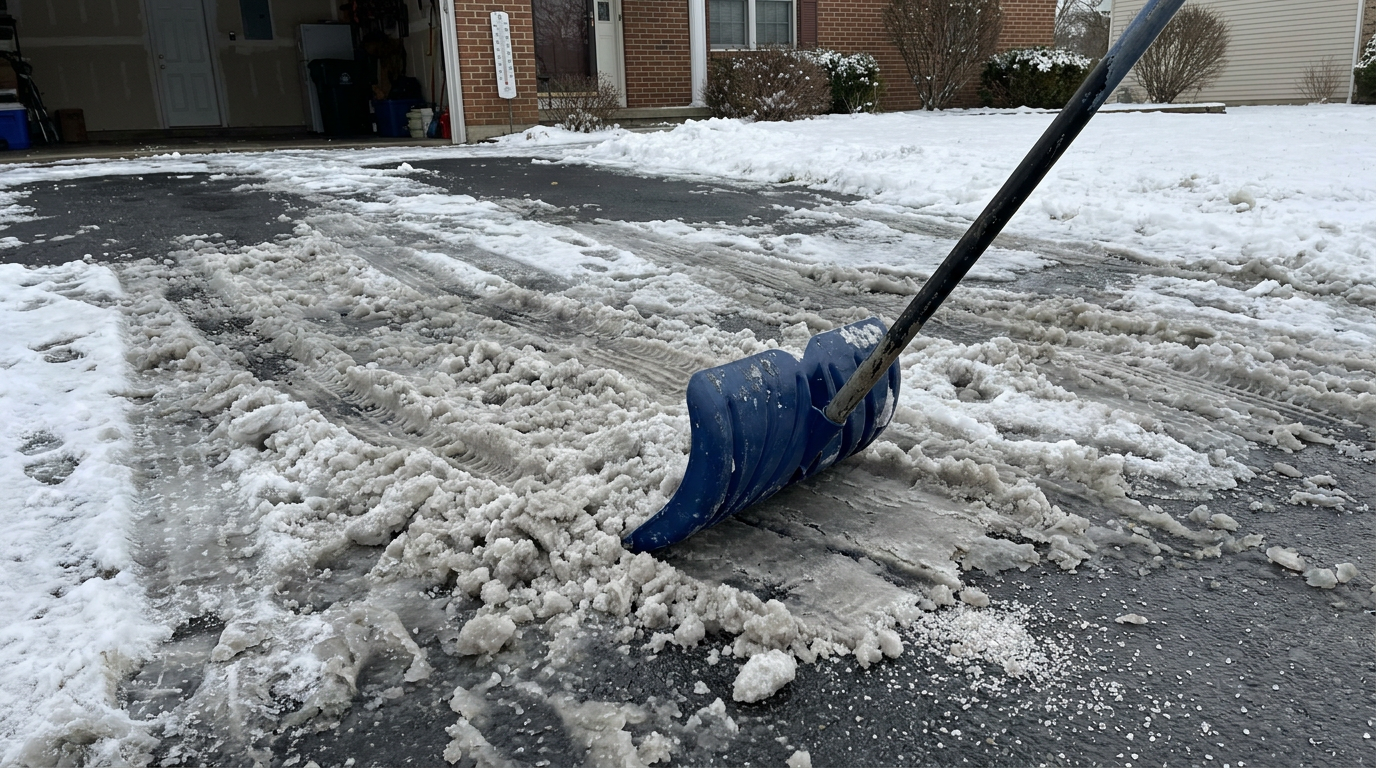
- Swap your lifting scoop for an angled pusher plow — Leave the deep-dish aluminum grain scoop in the garage and grab a wide, 24- to 30-inch curved pusher blade. Push this slush like you’re moving a road scrape, not lifting it off the ground.
- If you’ve got to lift at a curb, switch down to a small 12-inch garden transfer shovel.
- Keep the handle low and close to your pelvic bone so your quads do the work instead of your back.
Published November 2, 2026Last updated November 2, 2026
Tools & materials you'll need
Affiliate linksAs an Amazon Associate FixlyGuide earns from qualifying purchases — at no extra cost to you. Prices and availability are accurate as of publication and subject to change.
Quick Answer
Heart attack snow is that heavy, water-soaked junk that shows up when the air is hanging right around 32°F to 34°F. Standard fluffy powder might run 3 to 5 pounds per cubic foot, but this sloppy mess can jump to 20 to 30 pounds per cubic foot without breaking a sweat. And yeah, shoveling it is no joke. You’re doing hard isometric work in cold air, which makes your blood vessels tighten up and your heart rate and blood pressure spike fast. That kind of strain sends over 11,000 Americans to the emergency room with cardiac episodes and injuries every winter.
The Problem
Every winter storm looks innocent from inside the house. You grab the shovel, step out onto the driveway, and push the blade into what looks like a modest four-inch layer. Then your back grabs hold. The shovel won’t glide. Instead of powder blowing off the edge, you’re fighting gray, cement-like slush.
That’s not your average snowfall. Around here, folks call it "heart attack snow." The medical crowd uses the same term.
When you load up an 18-inch shovel blade with wet snow, you’re not lifting seven pounds of frozen fluff. You’re deadlifting 20 to 40 pounds every time you scoop. Do that 200 times across a two-car suburban driveway, and you’ve moved roughly 6,000 pounds—about the weight of a full-size pickup truck—using your lower back, shoulders, and heart. No wonder people get in trouble.
The danger gets worse because cold weather messes with your blood vessels. Breathe in frigid air and your peripheral vessels clamp down right away. That’s the body trying to protect your core. Problem is, that narrowing drives up systemic vascular resistance. Your heart has to push a lot harder just to keep blood moving through those tight arteries. If you head out after breakfast, grab a cold fiberglass handle, and start heaving wet slush without warming up, your cardiac oxygen demand jumps while your coronary arteries are already constricted. For anybody over age 45, or folks walking around with undiagnosed plaque, that’s the perfect setup for an acute myocardial infarction.
How It Works
To see why this stuff acts like ready-mix concrete, you’ve gotta look at moisture. A typical winter storm in sub-freezing air around 15°F to 20°F makes dry, low-density dendritic crystals. Those storms usually have a snow-to-liquid water equivalent (SWE) ratio of 20:1 or even 30:1. In plain English, twenty inches of snow melt down to one inch of water. Most of that snowpack is air—nearly 95%—so the weight stays around 3 to 6 pounds per cubic foot.
Heart attack snow shows up right on the edge of freezing. When surface temps hover between 30°F and 34°F, the flakes melt a little around the edges as they fall. Those damp edges fuse together into big clumps on the way down through the atmosphere. When they land on your driveway, they don’t stay fluffy. They pancake under their own weight, and the SWE ratio can drop to 8:1, 6:1, or a nasty 4:1.
At a 5:1 ratio, a single cubic foot of slush holds roughly 12 to 15 pounds of water. Let that sit on an asphalt pad for three hours while rain or sleet keeps coming, and you can hit max saturation: around 30 pounds per cubic foot. I pulled a water heater in Frisco last month that had exactly this kind of slop packed around the pad—same kind of heavy, soaked mess, and it was all I could do to keep footing. If you stick an ordinary 18-inch ergonomic snow shovel into a 6-inch layer and scoop forward 12 inches, that one load carries almost 0.75 cubic feet of compacted slush. You’re levering about 22.5 pounds at the end of a four-foot handle. That long lever arm multiplies the torque on your lower back while your systolic pressure can shoot past 180 mmHg in three minutes of steady work.
Step-by-Step Fix
Clear heavy, water-saturated snow without ending up in the hospital or trashing your snowblower’s drive belt. Work with the physics, not against it.
-
Conduct a baseline health and gear assessment — Check yourself first, then your gear. Make sure you’re dressed in breathable, non-restrictive layers before you touch a tool. If you’ve got hypertension, coronary disease, bad joints, or you live a mostly sedentary life, don’t shovel wet slush yourself; hire a contractor or rope in a younger neighbor.
- If you’re on heart meds like beta-blockers, know they can mask your normal exertion warning signs.
- Skip caffeine, big meals, and nicotine for at least an hour before you go out.
-
Coat your shovel blade with non-stick lubricant — Spray both sides of your plastic or aluminum shovel blade with a heavy coat of automotive silicone spray, fluid film, or cooking spray. Wet slush grabs onto untreated polypropylene and oxidized aluminum like glue, and every push gets heavier.
- Reapply every 15 minutes if you’re clearing straight through.
- Keep a clean shop rag handy so you can wipe off road salt before you spray.
-
Perform a three-minute dynamic mobility warmup — Loosen up your hamstrings, hips, thoracic spine, and shoulders inside at 68°F before you hit cold air. Do twenty bodyweight quarter-squats, arm crosses, and easy torso twists to get blood moving and raise your resting heart rate the right way.
- Skip static stretching; cold muscle fibers want blood flow, not a long yank.
- Drink four to eight ounces of room-temperature water before you step outside.
-
Swap your lifting scoop for an angled pusher plow — Leave the deep-dish aluminum grain scoop in the garage and grab a wide, 24- to 30-inch curved pusher blade. Push this slush like you’re moving a road scrape, not lifting it off the ground.
- If you’ve got to lift at a curb, switch down to a small 12-inch garden transfer shovel.
- Keep the handle low and close to your pelvic bone so your quads do the work instead of your back.
-
Carve the driveway down the center line — Start straight down the middle of the driveway and plow a clean two-foot-wide path from the garage door out to the street apron. That splits the job into two smaller halves and gives you an escape lane for later passes.
- Don’t shove snow from one side of a two-car pad all the way to the other; wet slush gets heavier every foot you push it.
- Keep a steady pace—no jogging, no lunging, and no leaning your whole body into a blade that’s already stalled.
-
Shave the accumulation in horizontal layers — Take only the top two inches off the pack if the storm dumped five or more inches of wet snow. Don’t try to drop the blade straight to the concrete on your first pass through six inches of soaked snow.
- Push the top layer off to the side first, then circle back and scrape the bottom crust down to the asphalt.
- It takes more steps, sure, but it cuts your peak cardiovascular load nearly in half.
-
Tune your snowblower for heavy wet discharge — Set your two-stage snowblower to the slowest ground drive gear and lock the engine throttle at maximum RPM (typically 3,600 RPM). Running the auger wide open while creeping forward at under one mile per hour keeps heavy slush from packing the intake housing.
- Spray the inside of the discharge chute with silicone before you start the engine.
- If you’re using a single-stage rubber-paddle machine, take half-width bites (10 to 12 inches) instead of charging the full auger width.
-
Tackle the street plow berm with extreme caution — Hit the frozen wall of slush the city plow leaves at the end of your driveway with a flat-edged garden spade and chop it into twelve-inch square blocks. City plows mash wet slush with road sand, ice, and salt, and that obstruction often weighs more than 45 pounds per cubic foot.
- Slide the spade under individual blocks and push them into the yard instead of lifting them over your waist.
- Don’t run your snowblower straight into a frozen berm from the road; that’ll shear pins or burn belts in a hurry.
-
Apply high-yield chemical ice melt immediately — Spread calcium chloride pellets or magnesium chloride across all cleared surfaces at roughly 2 to 4 ounces per square yard as soon as the concrete shows. Standard rock salt (sodium chloride) loses most of its bite once temps dip below 20°F, and you’ll wake up to black ice.
- Calcium chloride works down to -25°F and kicks out heat as it dissolves, which helps melt the leftover film fast.
- Don’t overdo it near turf edges or you’ll be dealing with spring root burn.
Common Causes
So why do you end up with heart attack snow instead of a nice light dusting? A few weather patterns and plain old physics team up against you:
- Surface air stalling near the freezing point: When temps hover between 31°F and 34°F, falling crystals melt a little, stick together, and land with a crazy-high water content.
- Warm air advection overhead: A warmer maritime air mass sliding over a shallow sub-freezing surface wedge—classic warm-front nonsense—pushes rain or wet flakes into an existing snowpack and turns powder into saturated slush.
- Procrastinating on storm cleanup: Letting six inches of ordinary snow sit on the driveway while temps climb from 22°F to 33°F means the base melts, soaks up ground heat, and collapses into a dense sponge.
- Municipal street plows: City plows scrape miles of slush off the road, crush it under a ten-ton steel blade, and dump it right across your apron like a concrete barricade.
Common Mistakes
- Treating saturated slush like light powder: Homeowners drag out a wide 20-inch ergonomic scoop, bury the blade to the backplate, and try to heave the load over a four-foot yard berm. That one lift can strain the abdominal wall or spike blood pressure past 200 mmHg. Push it; don’t throw it.
- Dressing in heavy, unvented down parkas: Overbundling traps heat fast. Once you start working, your core temp climbs, you sweat, and your heart has to work double-time to dump heat while your extremities are clamped down. Wear a breathable base layer, a fleece mid-layer, and a windproof zippered shell you can vent.
- Holding your breath through heavy pushes (Valsalva maneuver): People hit resistance against a stuck shovel blade and instinctively bear down and hold their breath. That shoots intrathoracic pressure up, blocks venous return to the heart, and can lead to fainting or a deadly arrhythmia. Breathe on every stroke.
- Rushing out immediately after waking up: Platelet stickiness and morning cortisol peak between 6:00 AM and 10:00 AM. Rolling out of bed, grabbing coffee, and attacking a frozen driveway right away puts you at your worst cardiovascular window. Wake up, hydrate, and give yourself an hour.
- Reaching into an engine-choked snowblower chute with your hand: Heavy wet snow plugs discharge chutes all the time. People shut the engine off, assume the machine’s safe, and jam a gloved hand into the chute. The impeller’s still loaded with torque from the jammed slush; once it frees up, it snaps forward like a mousetrap and can take fingers with it. Use the plastic clearing tool that came with the machine.
Cost & Time Breakdown
| Task | DIY Cost | Pro Cost | Time |
|---|---|---|---|
| Manual Shoveling & Plowing (Double Driveway) | $0 (existing tools) | $45–$120 per visit | 45–90 mins |
| Snowblower Clearing & De-icing | $5–$10 (fuel & salt) | $60–$150 per storm | 20–40 mins |
| Replacing Blown Snowblower Shear Pins | $6–$14 (pack of 4) | $75–$110 (shop service) | 15 mins |
| Emergency Driveway Chemical Melt Application | $18–$32 (50 lb bag CaCl₂) | $40–$75 per pass | 15 mins |
| Hiring Municipal Apron Berm Removal | $0 (if part of service) | $35–$60 standalone | 10–15 mins |
Tips & Prevention
- Shovel progressively throughout the storm: Don’t wait for twelve inches of wet snow to pile up overnight. Go out every time two to three inches fall. Moving two inches of slush three separate times takes a whole lot less heart and lung work than trying to muscle one six-inch slab.
- Tarp your parking areas before the flakes start falling: Lay heavy-duty 12x20-foot woven polyethylene tarps across your key driveway lanes before a wet freeze is forecast. After the storm, anchor the back of the tarp to your trailer hitch or pull it with a helper, and peel hundreds of pounds of slush right off the pavement without lifting a shovel.
- Switch to a tracked or commercial-grade two-stage blower: If you live where nor’easters or lake-effect systems like to show up, little single-stage machines with rubber paddles will bog down all day long. A two-stage blower with a serrated steel auger cuts through wet slush and throws it 30 feet clear of the property line.
- Monitor your smartwatch heart rate zones: Set a high-heart-rate alert on your fitness watch for 120 or 130 beats per minute before you head out. If that thing starts buzzing your wrist, stop, drop the handle, go inside, and rest for ten minutes.
- Pre-treat dry concrete with liquid brine: Apply liquid calcium chloride or magnesium chloride brine with a clean garden pump sprayer 12 hours before the precipitation starts. That makes a chemical barrier so the wet snow won’t bond straight to the rough micro-pores in your concrete.
When to Call a Professional
There’s no shame in hiring out winter maintenance, especially when the snow gets heavy and wet. If you’re over 45, have a desk job, deal with high blood pressure, elevated cholesterol, diabetes, or you’ve had a cardiac event before, don’t shovel heart attack snow. Full stop. Paying a plow contractor $75 to clear your driveway is about the cheapest life insurance you’ll ever buy.
And don’t shrug off the warning signs of acute cardiovascular distress. If you feel tightness, burning, or crushing pressure in the center of your chest—or the pain starts running into your jaw, neck, left shoulder, or down your arm—drop the shovel where you stand. Don’t walk inside and lie down on the couch to “wait it out.” Shortness of breath, sudden lightheadedness, cold clammy sweat, or weird nausea are medical emergencies. Call 911 immediately. Every minute you wait does permanent damage to heart muscle.
Frequently Asked Questions
Why is wet snow called "heart attack snow"?
It picked up that name because the dense moisture content cranks up the effort needed to move it. Lifting 20 to 30 pounds per shovel load makes your heart rate and blood pressure climb fast. Throw cold air into the mix and your arteries clamp down too, which is why susceptible folks can wind up with a heart attack or sudden cardiac arrest.
At what temperature does heart attack snow typically form?
It usually shows up right near freezing, around 31°F to 34°F. At those temps, snowflakes partly melt on the way down and fuse into big, damp flakes with a low air-to-water ratio. Once you get into the teens or single digits, storms usually produce much lighter powder.
How much can a single shovel full of wet snow weigh?
A standard 18-inch shovel loaded with dense, water-logged snow can weigh between 15 and 30 pounds. If you’re using a deep aluminum scoop or dealing with slush dumped by a municipal street plow, one load can top 40 pounds. Ten scoops like that and you’ve put about 300 pounds of strain through your spine and cardiovascular system.
Can using a snowblower still cause a heart attack?
Yes. Dragging a heavy, 200-pound two-stage snowblower through dense slush takes real upper-body wrestling, especially when you’re turning or pulling it backward. Cold air still constricts your blood vessels, and the sudden muscle effort from clearing jams or muscling the machine can spike blood pressure just as fast as hand shoveling.
What is the safest technique for moving heart attack snow?
Push it forward like a bulldozer with a wide, curved plow blade instead of scooping and lifting it off the ground. If you have to lift it to cross a boundary, use a narrow garden spade and take small half-shovel bites. Shave the snowpack down in layers instead of scraping all the way to concrete on the first pass.
Why does cold air make shoveling more dangerous for the heart?
Cold air makes your body conserve core heat by vasoconstriction, which narrows your peripheral blood vessels. That raises systemic vascular resistance, and your heart has to pump much harder to move blood. Mix that with sudden heavy exertion, and your heart’s oxygen demand can outrun the blood supply.
How do I keep heavy wet snow from clogging my snowblower chute?
Coat the inside of the chute, the impeller housing, and the auger blades with automotive silicone spray, fluid film, or heavy-duty cooking oil before you start the machine. Run the engine at wide-open throttle (maximum RPM) and keep the ground speed in the lowest gear. That lets the impeller spin fast enough to throw slush out before it packs into a plug.
What should I do if my snowblower discharge chute plugs with slush?
Never, under any circumstances, stick your hand or foot inside the discharge chute or auger housing—even with the engine off. Packed slush stores rotational torque in the impeller blade. When the clog lets go, the blade can spin free and seriously hurt fingers. Shut the engine down, pull the ignition key, and use the plastic clearing tool or a clean wooden broomstick to break the blockage loose.
Does rock salt work on heart attack snow?
Rock salt (sodium chloride) can melt thin layers of wet snow if surface temperatures stay above 20°F. But heart attack snow carries a huge amount of liquid water, so standard salt dilutes fast and can refreeze into black ice overnight. Calcium chloride or magnesium chloride pellets are the better call, since they melt ice down to -25°F and create their own chemical heat.
Related Articles
Keep troubleshooting with these hand-picked guides from FixlyGuide:
- OTR on a Truck? What It Means and 8 Ways to Protect Your Driveway — Spotting OTR on a truck means an 80,000-lb long-haul freight rig is near. Learn what it means for residential deliveries, driveway protecti…
- The Hidden Reason Your GFCI Trips (It’s Not Always a Bad Outlet) — A tripping GFCI outlet is a safety mechanism doing its job, often indicating a problem like moisture, a faulty appliance, or a wiring issue…
- 7 Inspection Red Flags That Secretly Signal a $20,000 Bill — Don't let your dream home become a money pit. Many buyers and even some inspectors overlook subtle home inspection red flags that lead to f…
- The Shocking Truth About GFCIs vs. AFCIs: Are You Really Protected? — GFCIs prevent electrocution from ground faults, while AFCIs stop fires from dangerous electrical arcs. Understanding their distinct roles i…
- The Big Rig Mystery: Why Those Wheel Spikes Aren't What You Think — Ever wondered about those intimidating spikes on big truck wheels? They're not for defense, but they do tell us something about basic vehic…
- Is Your Gutter Sagging After Every Storm? The Hidden Flaw Most Homeowners Miss — Discover the overlooked reason your gutters sag after every storm and learn the lasting fix that most homeowners miss.
What should this project cost?
Enter your project details for a realistic cost range before you call anyone.
Cost depends heavily on which system turns out to be the source.
- Regional adjustment
- National average
- Labor share (typical)
- ~$1,620
- Quotes to collect
- 3 written estimates
Educational estimate based on national averages — not a binding quote. Always confirm with written local estimates.
Get the print-ready PDF of this guide
A clean, ad-free, printable version you can keep on your phone or pin to the workshop wall. Free with a FixlyGuide account.
- Print-optimized layout
- Tools, materials & every step included
- Saved to your account
This article was independently written by FixlyGuide based on the source topic.
Frequently asked questions
Why is wet snow called "heart attack snow"?+
It earned this moniker because its dense moisture content dramatically spikes the physical exertion needed to move it. Lifting 20 to 30 pounds per shovel load causes a rapid increase in heart rate and blood pressure. Combined with cold air constricting your arteries, this intense effort frequently triggers sudden cardiac arrest or heart attacks in susceptible individuals.
At what temperature does heart attack snow typically form?+
It forms right around the freezing mark, typically between 31°F and 34°F. At these temperatures, snowflakes partially melt as they fall through the air, fusing into giant, damp flakes that land with a low air-to-water ratio. If temperatures drop into the teens or single digits, storms yield much lighter, fluffier powder.
How much can a single shovel full of wet snow weigh?+
A standard 18-inch shovel loaded with dense, water-logged snow can weigh between 15 and 30 pounds. If you are using a deep aluminum scoop or clearing slush thrown by a municipal street plow, an individual load can exceed 40 pounds. Shoveling just ten of these loads transfers roughly 300 pounds of strain to your spine and cardiovascular system.
Can using a snowblower still cause a heart attack?+
Yes. Maneuvering a heavy, 200-pound two-stage snowblower through dense slush requires significant upper-body wrestling, especially when turning or pulling the unit backward. Inhaling frigid air still constricts your blood vessels, and the sudden physical effort of clearing jams or muscling the machine can spike your blood pressure just as fast as manual shoveling.
What is the safest technique for moving heart attack snow?+
Push the snow forward like a bulldozer using a wide, curved plow blade rather than scooping and lifting it off the ground. If you must lift it to clear a boundary, use a narrow garden spade and take small, half-shovel bites. Shave the snow pack down in layers rather than scraping all the way to the concrete on your first pass.
Why does cold air make shoveling more dangerous for the heart?+
Cold air causes your body to conserve core heat through vasoconstriction, which narrows your peripheral blood vessels. This raises systemic vascular resistance, forcing your heart to pump much harder to circulate blood. When you combine this narrowed vascular network with intense, sudden physical exertion, your heart's oxygen demand outstrips its available blood supply.
How do I keep heavy wet snow from clogging my snowblower chute?+
Coat the inside of the chute, the impeller housing, and the auger blades with automotive silicone spray, fluid film, or heavy-duty cooking oil before starting the machine. Always run the engine at wide-open throttle (maximum RPM) while setting your ground travel speed to its lowest gear. This lets the impeller spin fast enough to fling slush out before it packs into an icy plug.
What should I do if my snowblower discharge chute plugs with slush?+
Never, under any circumstances, place your hand or foot inside the discharge chute or auger housing—even if the engine is shut off. Clotted slush traps rotational torque in the impeller blade. When the clog clears, the blade can spin freely and severely injure fingers. Always shut down the engine, remove the ignition key, and use the plastic clearing tool or a clean wooden broomstick to break up the blockage.
Does rock salt work on heart attack snow?+
Rock salt (sodium chloride) can melt thin layers of wet snow if surface temperatures remain above 20°F. However, because heart attack snow contains an enormous volume of liquid water, standard salt dilutes very quickly and can refreeze into smooth black ice as temperatures drop overnight. Use calcium chloride or magnesium chloride pellets instead, as they melt ice down to -25°F and generate their own chemical heat.
Discussion
Loading comments…