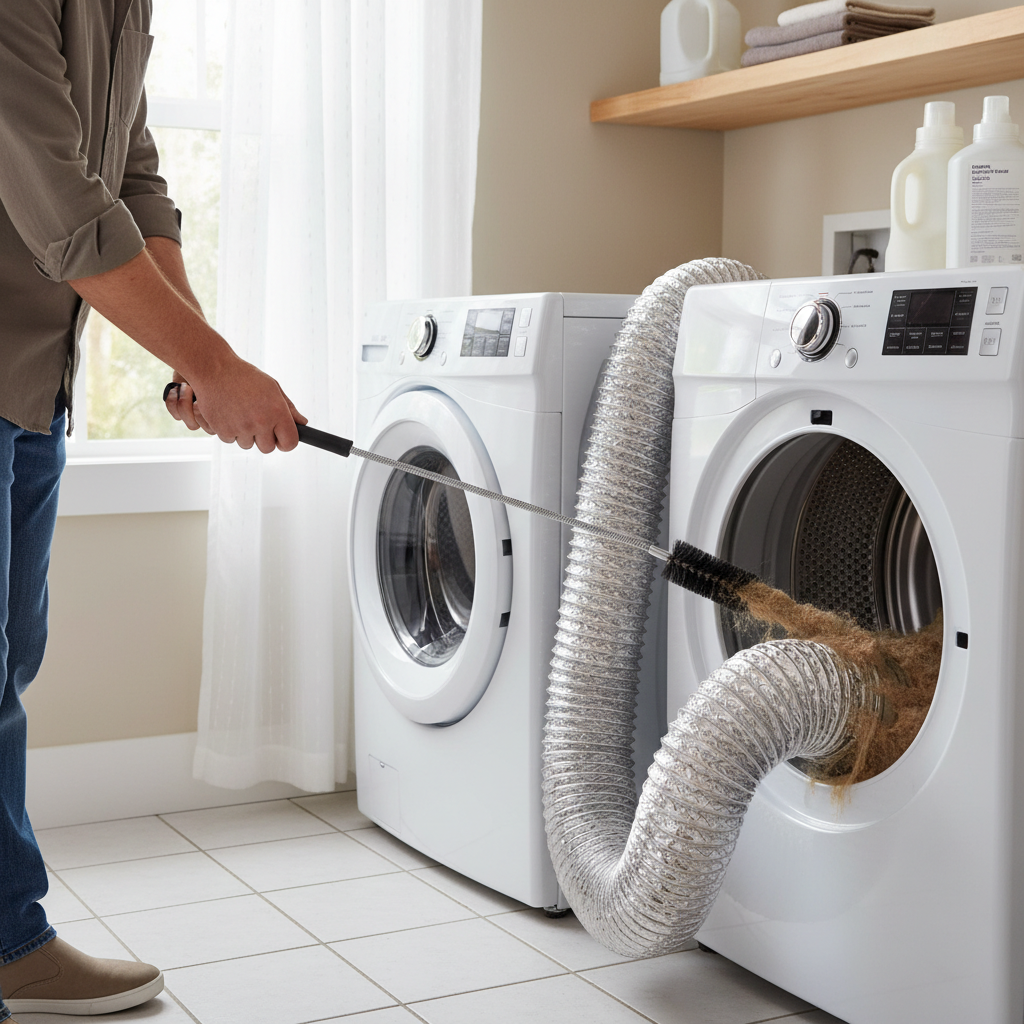
- Tools: Flat-head screwdriver or 5/16" nut driver.
- To clean: Detach it from the wall port and take it outside. Stretch it out and use a vacuum or a brush to clean the interior.
- To replace: Purchase a 4-inch diameter semi-rigid aluminum duct kit. This material is more durable, fire-resistant, and provides smoother airflow. Cut it to the shortest, straightest length possible between the dryer and the wall.
HVAC · High energy usage
| Project category | HVAC |
|---|---|
| Problem type | High energy usage |
| Trade required | HVAC |
| Urgency | Planned project |
| Safety risk | Low safety risk |
| DIY suitability | DIY for experienced homeowners |
| Cost category | High cost |
| Typical timeline | Assessment within weeks; replacement planned off-season |
| Contractor type | Licensed HVAC technician |
Repair option
Duct sealing, insulation, and a tune-up before touching the equipment.
Replacement option
High-efficiency replacement sized by a load calculation, not a rule of thumb.
Common causes
- Aging, low-efficiency equipment
- Leaking ducts losing conditioned air
- Insufficient attic insulation
- Oversized system short-cycling
Relevant tools:project cost estimatorrepair or replace
Published April 25, 2026Last updated August 17, 2026
Tools & materials you'll need
Affiliate linksAs an Amazon Associate FixlyGuide earns from qualifying purchases — at no extra cost to you. Prices and availability are accurate as of publication and subject to change.
How it works
A clothes dryer's primary function is to remove moisture from fabric using a combination of heat, tumbling, and airflow. While most users focus on the heat, the airflow component is the most critical for efficiency. Think of your dryer as a high-volume air pump. It draws cool, dry air from the surrounding room, pulls it across a heating element (either an electric coil or a gas burner), and forces this heated air into the tumbling drum. As the hot air circulates through the wet clothes, it causes the water within the fibers to evaporate, turning it into water vapor.
This now-hot, moisture-laden air must be exhausted for the process to continue. The air is pulled from the drum through a lint screen, which traps the largest fibers. It then enters a blower fan housing, which accelerates the air and pushes it into the dryer vent. This vent is a 4-inch diameter duct that carries the hot, wet air from the back of the appliance to the exterior of your home. If any part of this airflow path becomes restricted—by a clogged lint screen, a crushed transition hose, or, most commonly, an accumulation of lint in the main vent duct—the entire system fails. The moist air cannot escape, the drum remains saturated with humidity, and the clothes tumble in a warm, steamy environment instead of a dry, hot one, significantly increasing drying time.
Step-by-Step Fix
This process details a full cleaning of the dryer vent system, from the appliance to the exterior wall. For gas dryers, extreme caution is necessary; if you are uncomfortable with the gas line, stop after Step 1 and call a professional.
-
Disconnect Power and Gas. — Pull the dryer away from the wall enough to access the connections. For an electric dryer, unplug the heavy-duty cord from the wall outlet. For a gas dryer, unplug the standard 120V power cord AND shut off the gas supply. The gas shutoff is typically a small, single-handle valve on the gas pipe behind the dryer; turn the handle so it is perpendicular to the pipe.
-
Detach the Vent Duct. — The flexible vent duct is attached to a 4-inch port on the back of the dryer. It is typically held in place by a circular spring clamp or a metal hose clamp tightened with a screw. Use pliers to squeeze the tabs on a spring clamp or a screwdriver/nut driver to loosen a hose clamp. Gently pull the duct off the dryer's exhaust port.
-
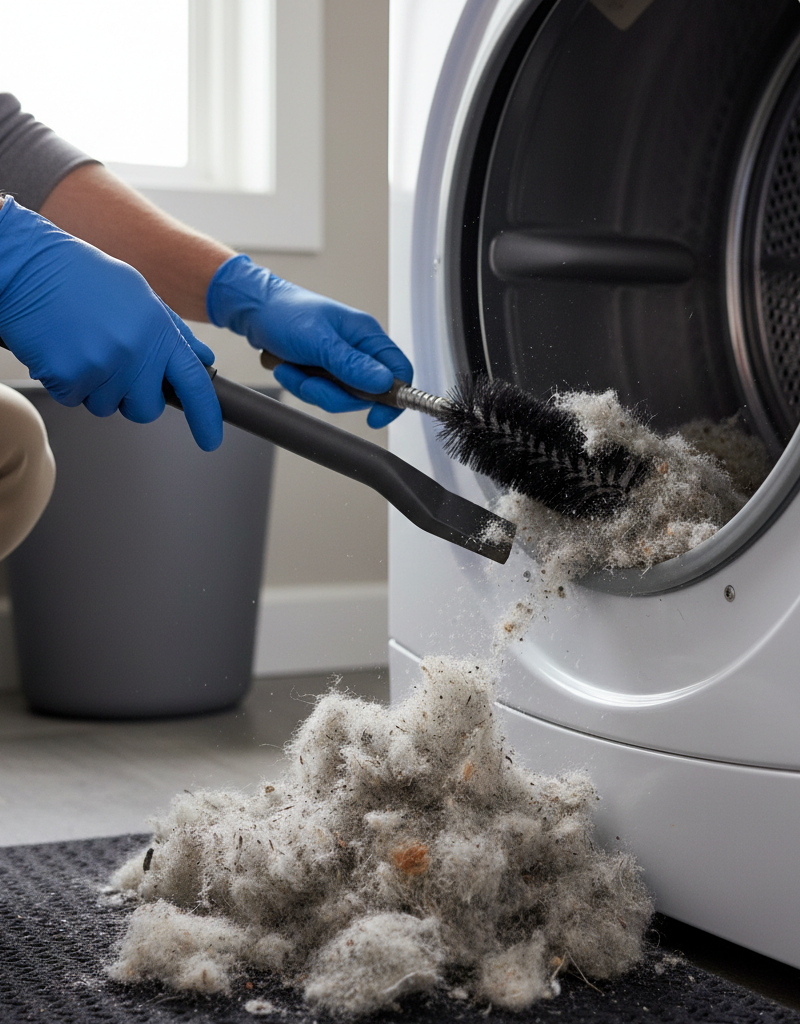
Clean the Dryer's Interior Port. — With the duct removed, look into the cavity leading from the lint trap housing to the rear exhaust port. Reach in carefully and pull out any large clumps of lint by hand. Use a vacuum cleaner with a long crevice tool attachment to thoroughly suck out all remaining debris from the exhaust port and the area around it.
-
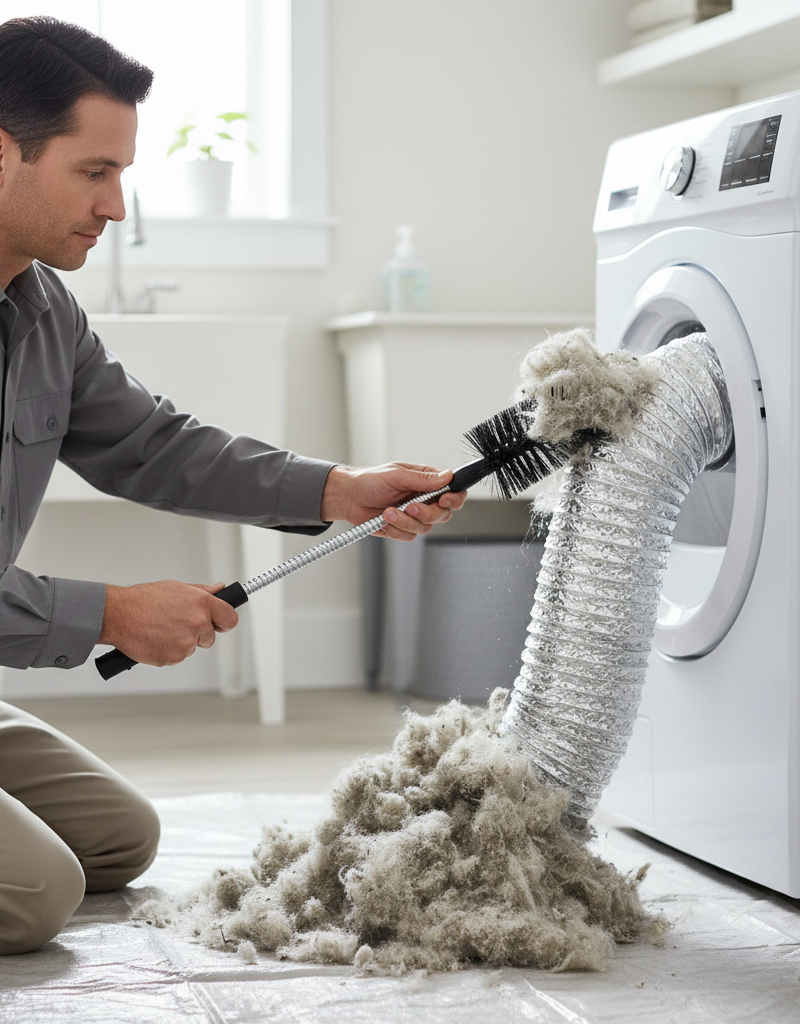
Clean or Replace the Transition Duct. — The short, flexible duct connecting the dryer to the wall is the transition duct. If it is a white vinyl or flimsy foil accordion-style duct, it is highly recommended to replace it. These materials are flammable and their ribbed design traps lint easily.
- Tools: Flat-head screwdriver or 5/16" nut driver.
- To clean: Detach it from the wall port and take it outside. Stretch it out and use a vacuum or a brush to clean the interior.
- To replace: Purchase a 4-inch diameter semi-rigid aluminum duct kit. This material is more durable, fire-resistant, and provides smoother airflow. Cut it to the shortest, straightest length possible between the dryer and the wall.
-
Locate and Inspect the Exterior Vent Hood. — Go outside and find where your dryer exhausts. This will be a 4-inch hood with louvers or a flap, typically on a side wall or, in some cases, the roof. Manually check if the flap or louvers open freely. Look for obstructions like caked-on lint, bird's nests, or overgrown foliage.
-
Purchase a Vent Cleaning Kit. — For cleaning the main duct inside the wall, you will need a specialized kit. These are widely available at home improvement stores and consist of multiple flexible rods that screw together and a lint brush head that attaches to the end. The other end of the rod assembly attaches to a power drill.
-
Set Up to Clean from the Inside. — Back inside, you can use a shop vacuum to help contain the mess. Position the nozzle of the shop vac at the opening of the wall duct to catch lint as it's dislodged. You can use duct tape to create a temporary seal around the vacuum hose for better suction.
-
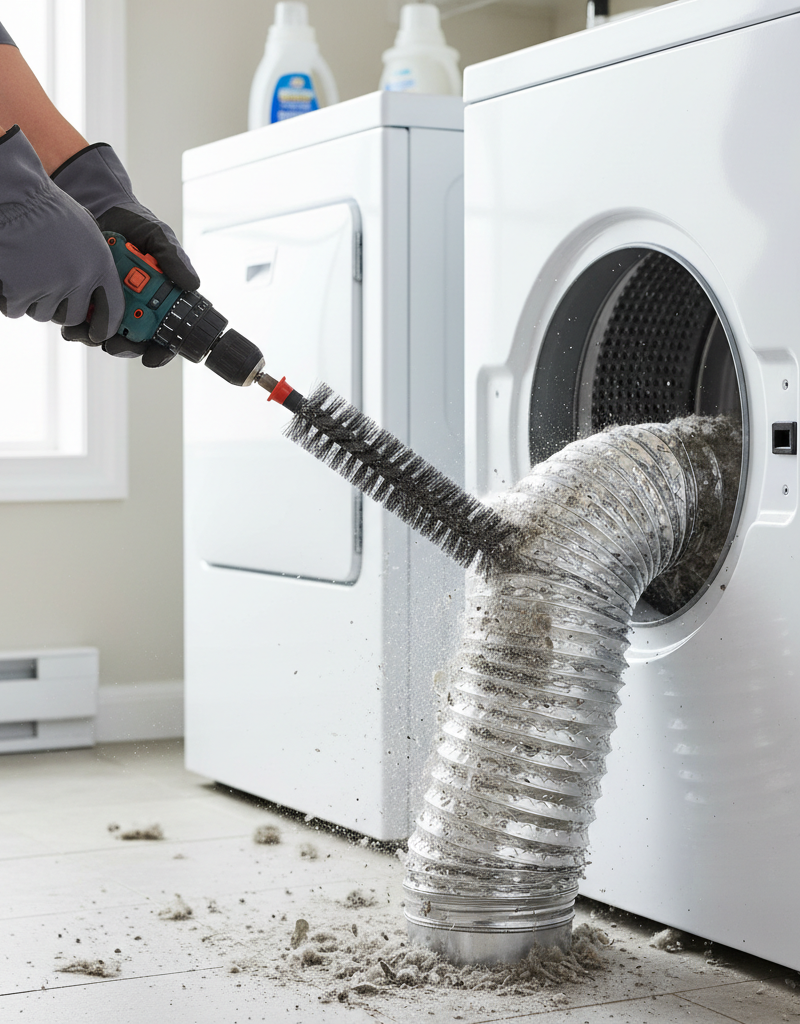
Assemble and Insert the Cleaning Rods. — Screw the brush head onto the first rod section. Insert the brush into the wall duct and push it in as far as it will go. Screw on the next rod section and continue pushing the assembly into the vent. Add sections as needed to reach the full length of the duct.
-
Run the Drill and Feed the Brush. — Attach your power drill to the end of the final rod section. CRITICAL: Set your drill to rotate in the CLOCKWISE direction only. Running it counter-clockwise will cause the rod sections to unscrew inside the vent, leaving the tool stuck. On a low to medium speed, slowly push the spinning brush through the ductwork. You will feel resistance as it encounters lint buildup. Work the brush back and forth in 1- to 2-foot sections until it moves freely, then advance further.
- Safety: Wear safety glasses and a dust mask.
- Tip: If possible, have a partner watch the exterior vent. They can confirm when the brush has reached the end and report the amount of lint being expelled.
-
Clean the Exterior Hood. — Once the spinning brush has reached the outside, go out and clear away the massive pile of dislodged lint. With the main buildup removed, use a handheld brush or your hands (with gloves) to thoroughly clean the inside of the hood and ensure the damper flap moves without any friction.
-
Reassemble and Test. — Go back inside. Remove the cleaning kit. Attach your cleaned or new transition duct to the wall port and the dryer's exhaust port, securing both ends tightly with the clamps. Carefully push the dryer back into its final position, ensuring you do not crush or sharply kink the flexible duct. Plug the dryer back in and turn the gas supply back on if applicable.
-
Perform a Final Purge and Check. — Run the dryer on an empty, no-heat "Air Fluff" cycle for 15-20 minutes. This will blow out any fine, loose lint remaining in the system. Go outside and feel the air coming from the vent. It should be a strong, steady stream. Finally, run a test load of wet towels to confirm that drying times have returned to normal (typically 45-60 minutes).
Common mistakes
- Using the wrong duct material. Homeowners often use flexible white vinyl or thin foil accordion-style ducts for the transition. These are a significant fire hazard and are prohibited by many building codes. Their ridged interiors trap lint, and they can be easily crushed, restricting airflow. Instead: Always use a UL 2158A listed semi-rigid or rigid metal duct for the transition between the dryer and the wall.
- Running the cleaning drill in reverse. The threaded connections on dryer vent cleaning rods are designed to tighten with clockwise rotation. If you run your drill counter-clockwise, the torque will unscrew the rods, leaving the brush and several rod sections stuck deep inside your wall vent. Instead: Always double-check that your drill is set to CLOCKWISE before you start cleaning.
- Neglecting the transition duct and interior cavity. Many people clean the main wall duct but forget the other two major clog points. The short, flexible transition duct and the cavity inside the dryer between the lint trap and the exhaust port are often packed with lint. Instead: Clean all three zones: the dryer's internal pathway, the transition duct, and the main vent in the wall.
- Creating long, sagging vent runs. When pushing the dryer back, it's easy to create a "U" shape in the flexible transition duct. This creates a low point where lint and moisture can collect, leading to a new blockage. Instead: Use the shortest possible length of semi-rigid ducting and try to create the straightest path possible from the dryer to the wall.
- Underestimating vent length and elbows. Manufacturer recommendations, such as the common 35-foot maximum, are for total equivalent length, not just straight pipe. Every 90-degree elbow is equivalent to adding 5 feet of straight pipe, and every 45-degree elbow adds 2.5 feet. Instead: Calculate your vent's equivalent length. If it exceeds manufacturer specs, a standard cleaning may not be enough, and a booster fan might be necessary.
Cost & time breakdown
| Task | DIY cost | Pro cost | Time |
|---|---|---|---|
| Basic Lint Screen Cleaning | $0 | N/A | < 1 minute (per load) |
| Full Dryer Vent & Duct Cleaning | $25 - $50 (cleaning kit) | $125 - $250 | 1 - 2 hours |
| Replace Vinyl Duct with Semi-Rigid Aluminum | $15 - $30 (duct kit) | $80 - $150 | 30 - 45 minutes |
| Professional Dryer Diagnostic | N/A | $90 - $175 (service call fee) | 1 hour |
| Install Dryer Vent Booster Fan | $150 - $250 (fan unit) | $400 - $700+ | 2 - 4 hours |
| Repair Faulty Dryer Component (e.g., element) | $50 - $150 (parts) | $200 - $400+ | 1 - 3 hours |
When to call a pro
While cleaning a dryer vent is a manageable DIY job for most, certain situations warrant a professional. If your vent terminates on the roof, the risk of working at height makes hiring an insured professional the safest choice. Similarly, if your vent run is exceptionally long (exceeding an equivalent length of 35 feet) or contains numerous tight bends, a professional's specialized equipment, such as high-pressure air systems and flexible cameras, will provide a more thorough cleaning than a consumer-grade brush kit.
Call a pro if you suspect the duct is disconnected or damaged within a wall or ceiling cavity. Signs include moisture stains on drywall, unusual humidity in the home, or a strong lint smell with no obvious source. These issues require cutting into walls for repair. Most importantly, if you have performed a complete and thorough cleaning of the entire vent path from the dryer's lint trap to the exterior hood, and your drying times are still slow, the problem is not airflow. At this point, the issue lies within the appliance itself—a failing heating element, faulty thermostats, a broken belt, or a weak motor—and requires diagnosis by a qualified appliance repair technician.
Prevention & maintenance
- Clean the lint screen after every load. This is the single most effective preventative measure. Do not let it build up. A full screen can increase energy consumption by up to 30%.
- Deep clean the lint screen every 2-3 months. Dryer sheets and fabric softeners leave an invisible waxy film on the mesh screen that impedes airflow even when it looks clean. Scrub the screen with a soft brush, hot water, and a small amount of dish soap. Rinse it, let it dry completely, and then reinstall it.
- Perform a full duct cleaning annually. Set a yearly reminder to clean the entire vent system, from the back of the dryer to the exterior hood. For large families with heavy laundry routines, perform this task every six months.
- Inspect the exterior vent hood quarterly. Check that the damper flap opens and closes freely. Clear away any leaves, snow, cobwebs, or debris that could obstruct the opening. This is also a good time to check for signs of pests, such as bird or rodent nests.
- Use the correct ducting. Ensure your flexible transition hose is made of semi-rigid or rigid metal, not flammable vinyl. Keep it as short and straight as possible to prevent sags and kinks where lint can accumulate.
- Don’t overload the dryer. Cramming too many clothes into the drum prevents proper air circulation, leading to inefficient drying and increased strain on the machine. Dry appropriately sized loads that can tumble freely.
Related Articles
Keep troubleshooting with these hand-picked guides from FixlyGuide:
- Why Your Dishwasher Leaves Dishes Wet (And How to Fix It) — If your dishwasher leaves dishes wet after a cycle, it's a common and frustrating problem often caused by issues with rinse aid, loading, o…
- The #1 Mistake Wrecking Your Dishwasher's Cleaning Power (It's Not Soap!) — Your dishwasher isn't cleaning dishes because of a common, overlooked issue with its spray arms, leading to poor water distribution.
- Is Your Refrigerator Buzzing Loudly in the Quiet of Night? — A loud buzzing from your fridge at night often points to the icemaker, a dirty fan, or a vibrating component, many of which are simple home…
- That Chalky Film on Your Dishes? It's Not Soap Scum — If your dishwasher is leaving a cloudy white film on your glassware and dishes, the culprit is likely hard water mineral deposits, not left…
- Refrigerator Not Cooling but Freezer Works: 6 DIY Fixes — When the freezer is fine but the fridge is warm, the cause is almost always airflow — not refrigerant. Here are the 6 fixes, ordered from f…
- The #1 Mistake Homeowners Make with a Slow Kitchen Drain (And the Simple Fix) — A slow kitchen sink drain is frustrating, but often an easy fix if you avoid common mistakes and know where to look first.
Should you do this yourself?
Answer five quick questions before you start. Safety outranks savings every time.
Your experience with work like this
How high do you have to work?
Does the job involve any of these?
Will it need a permit?
Specialty tools
Free and instant. Educational guidance only — not a quote, inspection, or professional diagnosis.
What should this project cost?
Enter your project details for a realistic cost range before you call anyone.
Cost depends heavily on which system turns out to be the source.
- Regional adjustment
- National average
- Labor share (typical)
- ~$1,620
- Quotes to collect
- 3 written estimates
Educational estimate based on national averages — not a binding quote. Always confirm with written local estimates.
Before you start
Check the difficulty, permits, and safety risk — then decide whether to call a pro.
- Estimate this projectGet a cost range for your scope and ZIP before you call anyone.Open
- Get local estimatesSend one request and compare written estimates from vetted pros.Open
Free, no signup required. Estimates are educational guidance, not a quote or an inspection.
Get the print-ready PDF of this guide
A clean, ad-free, printable version you can keep on your phone or pin to the workshop wall. Free with a FixlyGuide account.
- Print-optimized layout
- Tools, materials & every step included
- Saved to your account
Frequently asked questions
How often should I clean my dryer vent?+
You should clean your dryer vent system at least once a year, or more frequently if you do a lot of laundry, own pets, or notice your dryer taking longer to dry clothes.
Can a clogged dryer vent cause a fire?+
Yes, absolutely. Lint is highly flammable, and a clogged dryer vent traps hot air, creating a significant fire hazard. Regular cleaning is crucial for safety.
Discussion
Loading comments…