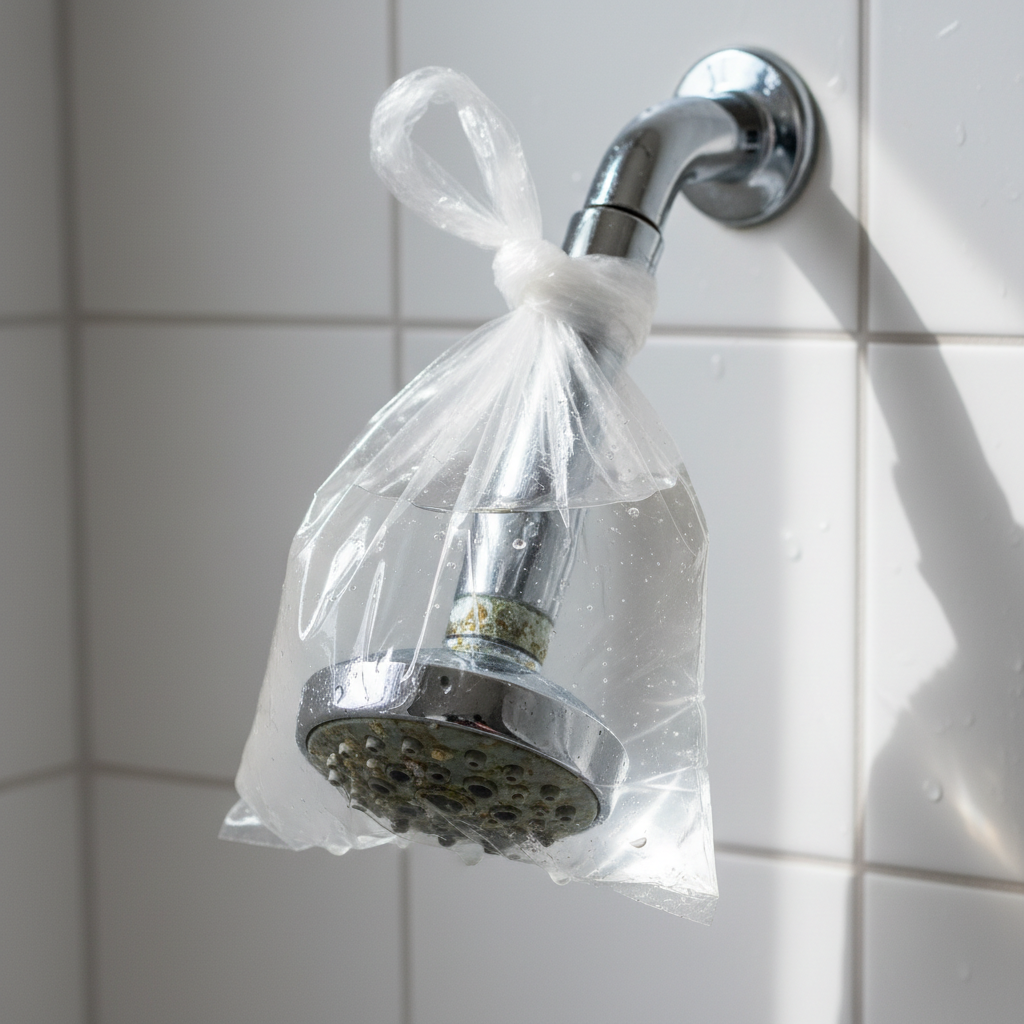
- Hard Water Minerals: The most common issue. Over time, dissolved calcium and magnesium precipitate out of the water and form a rock-hard scale that clogs small openings.
- Sediment and Sand: Often comes from the municipal water supply. It can be a chronic issue or a one-time event after water main work.
- Corrosion from Old Pipes: If you have an older home with galvanized steel pipes, they can corrode from the inside out, releasing small flakes of rust into your water stream.
Plumbing · Clog
| Project category | Plumbing |
|---|---|
| Problem type | Clog |
| Trade required | Plumbing |
| Urgency | Soon — within weeks |
| Safety risk | Low safety risk |
| DIY suitability | DIY friendly |
| Cost category | Low cost |
| Typical timeline | Same-day DIY attempt; pro visit within a day or two |
| Contractor type | Licensed plumber |
Repair option
Plunger, hand auger, or trap cleanout before chemicals.
Replacement option
Line replacement when clogs return in the same spot repeatedly.
Common causes
- Hair and soap buildup in the trap
- Grease cooling in the branch line
- Flushed wipes or foreign objects
Relevant tools:diy difficultydiy or hire a pro
Published June 8, 2026Last updated August 17, 2026
Tools & materials you'll need
Affiliate links- AmazonWhite vinegar1-2 cups
As an Amazon Associate FixlyGuide earns from qualifying purchases — at no extra cost to you. Prices and availability are accurate as of publication and subject to change.
Quick Answer
A sudden drop in shower pressure is almost always caused by sediment or mineral scale blocking one of two key points: the screen in your showerhead or the small inlet ports on your shower valve's cartridge. This debris can come from your municipal supply, your own pipes, or a failing water heater. The fix is to shut off the water, remove the showerhead to clean its screen, and if that doesn't work, pull out and clean the shower cartridge inside the wall. It's a targeted cleaning job that usually takes less than 30 minutes and requires only basic hand tools.
The Problem
It was fine yesterday. You step into the shower, turn the handle, and instead of a satisfying, full-pressure spray, you get a weak, trickling, apologetic stream of water. The pressure isn't just low; it has fallen off a cliff. The rest of the house seems fine—the bathroom sink still has great pressure, the toilet fills quickly. So what gives?
This is one of the most common and frustrating plumbing mysteries homeowners face. It’s not a slow, gradual decline over years, which usually points to systemic pipe aging. This is an abrupt failure. Your mind races to catastrophic scenarios: a crushed pipe in the wall? A major failure at the water main? Is this going to cost thousands of dollars?
For a single fixture, especially a shower that sees heavy use, the answer is almost always much simpler and cheaper. The problem is a clog, but it’s not a clog in the main drainpipe. It’s a clog on the supply side, at a point so small you've probably never seen it.
How It Works
To understand the fix, you need to visualize the water's journey. Pressurized water waits in your supply lines. When you turn the shower handle, you’re opening a valve. Specifically, you're moving a cartridge inside the main valve body in the wall. This cartridge has small holes, or ports, that align with the hot and cold inlets, allowing water to mix and flow forward.
From the valve body, the mixed water travels up a short pipe called the shower arm and exits through the showerhead. To create a pleasant spray pattern and meet federal water conservation standards (mandating flow rates of 2.5 gallons per minute or less), showerheads have a flow restrictor and a screen or aerator just inside the threaded connection. This screen catches sediment before it can clog the tiny nozzles on the showerhead face.
Here are the two choke points where a sudden blockage occurs:
-
The Showerhead Screen: This is your first line of defense. It’s a small mesh screen that sits right where the showerhead screws onto the shower arm. Its entire job is to catch debris. Over time, or after a specific event, it can become completely blocked.
-
The Cartridge Inlet Ports: This is the hidden culprit. The cartridge, a plastic or brass cylinder inside your main shower valve, has tiny hot and cold inlet ports. These can get clogged with the exact same sediment, minerals, or debris. If the showerhead screen is clean but your pressure is still low, the blockage is almost certainly here.
What is this debris? It can be sand or silt from the municipal water supply, rust flakes from older galvanized iron pipes in your home, hard water mineral scale (calcium and magnesium), or even plastic shavings from a deteriorating dip tube inside your water heater.
A recent water main repair down the street is a very common trigger. The high-flow flushing they do can dislodge decades of settled debris in the main, sending a concentrated dose right into your home's plumbing. The first fixture you use gets the brunt of it, and the shower is a prime candidate.
Step-by-Step Fix
This guide will walk you through cleaning both potential choke points. We'll start with the easiest one (the showerhead) and then move to the cartridge. Following this order can save you a lot of time.
SAFETY FIRST: You will be shutting off the water to your shower or your entire house. Inform anyone else at home about the temporary outage. Always wear safety glasses, as debris or water can drip down unexpectedly.
1. Safety Shutdown: Turn Off the Water There are two ways to do this. The best way is to use the integrated stops on the shower valve itself, if it has them. Remove the decorative trim plate (escutcheon) covering your valve. Look for two small slots on the left and right side of the valve body. You can use a flathead screwdriver to turn these 90 degrees (from parallel to the pipe to perpendicular) to shut off the water. If you don't have these, you must shut off the main water supply to your entire house. This valve is usually located in a basement, crawlspace, or utility closet near where the water line enters your home.
2. Gather Your Tools & Materials Having everything on hand makes this a quick job. You’ll need channel-lock pliers, a soft rag, a small brush (an old toothbrush is perfect), a bowl of white vinegar, a bucket, a flashlight, and potentially an Allen key set and screwdrivers for the handle.
3. Remove the Showerhead Wrap your soft rag around the connecting nut where the showerhead meets the shower arm. This is crucial to prevent your pliers from scratching the chrome or nickel finish. Grip the nut with the channel-lock pliers over the rag and turn it counter-clockwise (to the left). It should loosen with moderate force. Once it’s loose, you can usually unscrew it the rest of the way by hand.
4. Inspect and Clean the Showerhead Screen Look inside the threaded end of the showerhead you just removed. You’ll see a small screen, possibly with a rubber O-ring around it. Often, you will immediately see that it’s packed with white, sandy, or rust-colored gunk. Carefully pry this screen out with a small pick or the tip of a paperclip. Be gentle so you don't tear it. Submerge the screen in your bowl of white vinegar and let it sit for 5-10 minutes. Use your old toothbrush to gently scrub away all the debris. Hold it up to the light to ensure it’s completely clear. Now, look at the face of the showerhead; if any of the small spray holes are clogged, use a paperclip or safety pin to poke them clear.
5. The Critical Diagnostic Test This step is key. Before you put the showerhead back on, place a bucket over the end of the shower arm to catch water. Go back to your main valve or screwdriver stops and turn the water on for just a few seconds. Do you have a powerful, solid blast of water coming out of the arm? If yes, congratulations! The clogged screen was your only problem. Turn the water back off, reinstall the clean showerhead, and you’re done. If the flow from the arm is still weak, the clog is deeper in the system, and you must proceed to the cartridge.
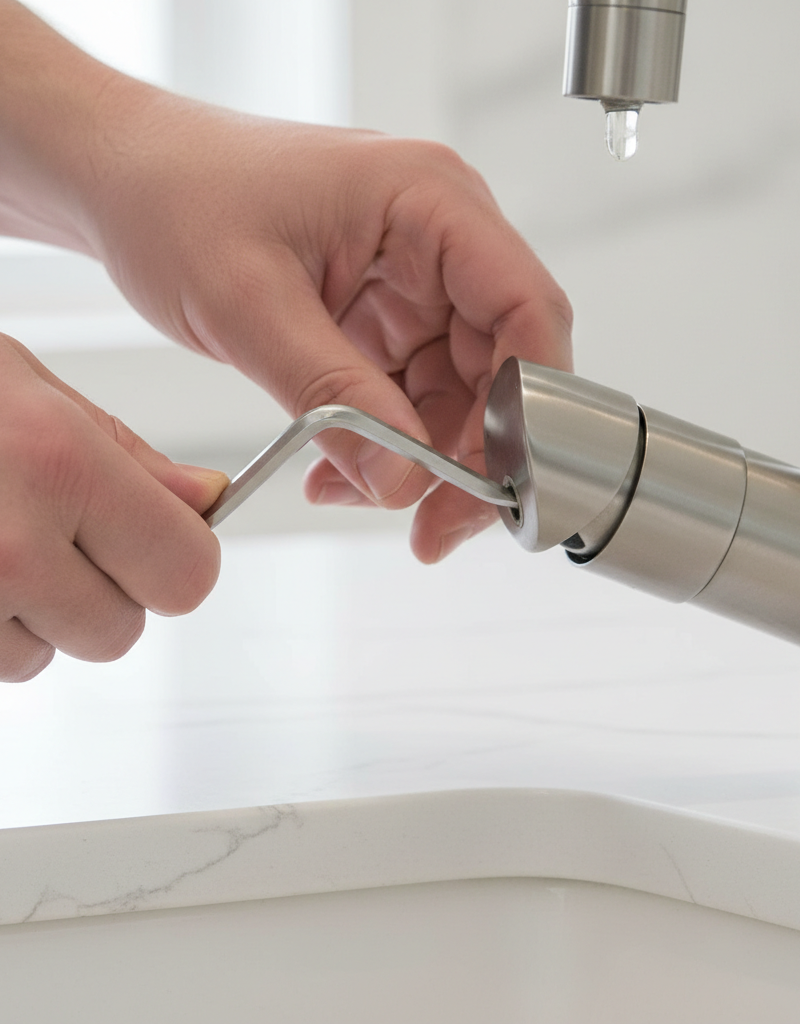
6. Remove the Shower Handle and Trim Ensure the water is shut off again. Now, you need to get to the cartridge. First, remove the handle. Most single-handle faucets have a tiny set screw hidden on the underside or front of the handle, often covered by a small decorative cap. You’ll likely need an Allen key (hex wrench) or a small Phillips head screwdriver to loosen this screw. You only need to loosen it a few turns; you don’t need to remove it completely. Once loose, the handle should pull straight off. Next, remove the screws holding the large decorative escutcheon plate to the wall. This will fully expose the valve body and the cartridge.
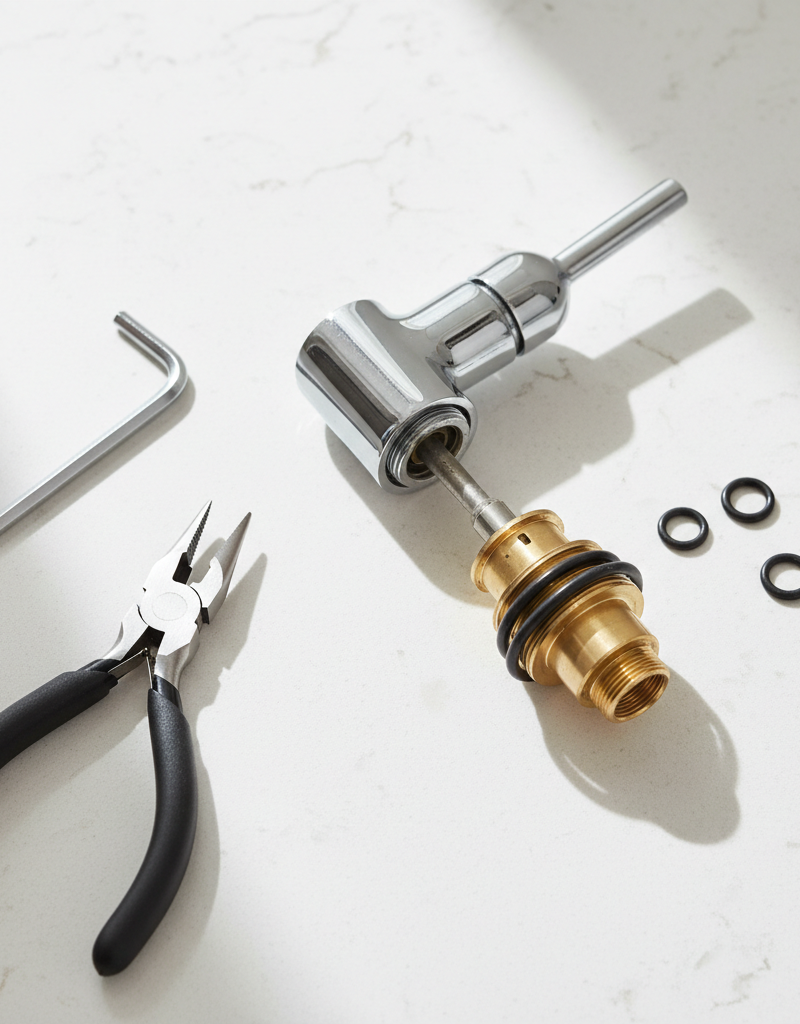
7. Expose and Remove the Cartridge Clip With the trim plate gone, you’ll see the top of the cartridge. It’s held in place by a small retaining clip. This is a U-shaped piece of metal that slides into slots on the top of the valve body, locking the cartridge in place. Use a flathead screwdriver or needlenose pliers to gently pry the clip straight up and out. Keep this clip somewhere safe!
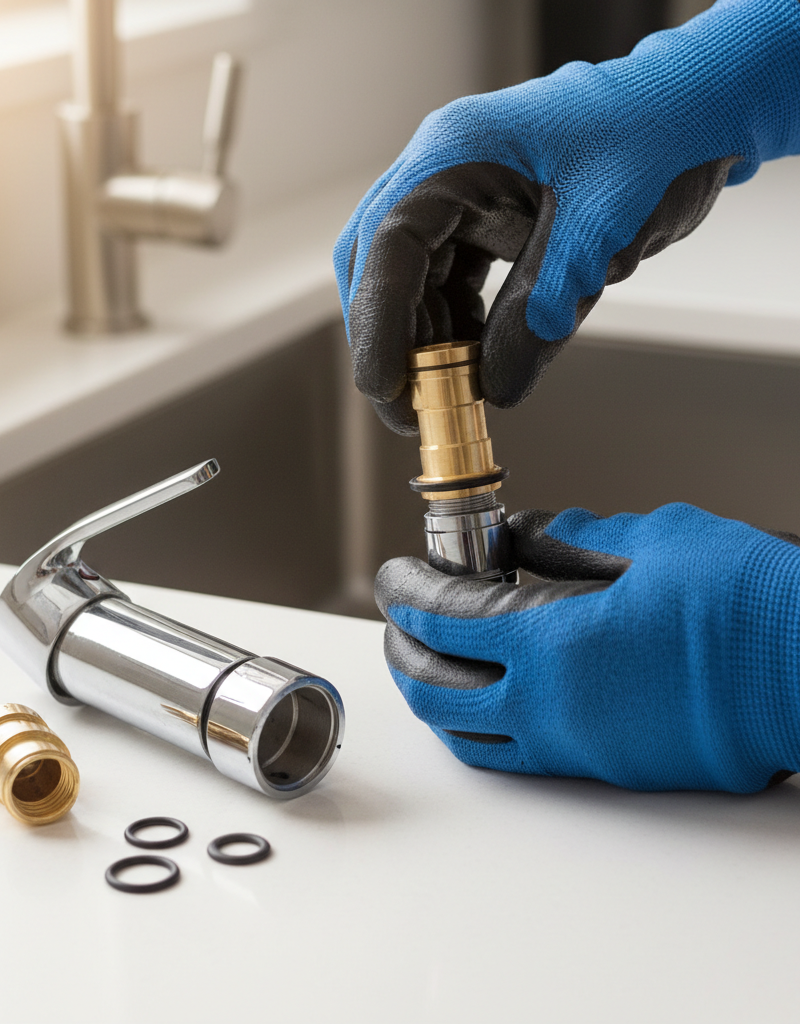
8. Pull and Clean the Cartridge This can be the trickiest part. Some cartridges have a plastic nut or cap you can turn with your pliers to loosen them before pulling. For many common brands like Moen, the cartridge should now pull straight out toward you. Grip the plastic stem of the cartridge firmly with your pliers (since this part will be hidden by the handle anyway, scratching it is not a concern) and wiggle it side to side while pulling firmly. If it’s stuck fast, you may need a dedicated cartridge puller tool. This tool is brand-specific (e.g., a "Moen cartridge puller") and costs about $15-$25. It threads onto the cartridge and gives you the mechanical advantage to pull it out without breaking it.
9. The Final Cleaning Once the cartridge is out, inspect it. You will see several small holes on its sides—these are the hot and cold water inlets. Almost certainly, you'll find them caked with the same sediment you found in the showerhead screen. Take your toothbrush and vinegar and scrub these ports until they are perfectly clean. Before reinstalling, take a rag and wipe around the inside of the brass valve body still in the wall to remove any loose sediment sitting there.
10. Reassembly and Victory Carefully slide the cartridge back into the valve body. Most cartridges have a specific orientation, often marked with an "H" or "TOP" indicator, so make sure it’s aligned correctly. Re-insert the retaining clip, pushing it down firmly until it seats. Re-install the escutcheon plate and the handle. Now, turn the water back on slowly at the main or screwdriver stops. Turn on the shower and check your work. You should have a powerful, satisfying spray once more. Check for any leaks around the handle and trim plate before calling the job complete.
Common Causes
- Hard Water Minerals: The most common issue. Over time, dissolved calcium and magnesium precipitate out of the water and form a rock-hard scale that clogs small openings.
- Sediment and Sand: Often comes from the municipal water supply. It can be a chronic issue or a one-time event after water main work.
- Corrosion from Old Pipes: If you have an older home with galvanized steel pipes, they can corrode from the inside out, releasing small flakes of rust into your water stream.
- Water Heater Failure: A failing water heater can be a surprising source of debris. The "dip tube," which sends cold water to the bottom of the tank, can disintegrate on older models, sending small plastic particles into all your hot water lines. If you only have low pressure on the hot side, this is a likely culprit.
Common Mistakes to Avoid
- Forgetting to Shut Off the Water: The most critical error. This will result in a full-force blast of water flooding your bathroom the moment you pull the cartridge.
- Scratching the Finish: Always use a rag or painter's tape between your pliers and any finished plumbing component (like the showerhead or trim plate).
- Using Too Much Force: Never try to brute-force a stuck cartridge. You risk snapping the plastic body, leaving the back half stuck deep inside the valve. This turns a simple repair into a major plumbing job. If it’s truly stuck, invest the $20 in a cartridge puller tool.
- Losing Small Parts: The set screw for the handle and the cartridge retaining clip are small and easy to lose. Place them in a magnetic tray or a small bowl as soon as you remove them.
- Incorrect Reassembly: Putting a cartridge in upside down or backward can result in reversed hot/cold controls or no flow at all.
Cost & Time Breakdown
| Item | DIY Cost | Professional Cost | DIY Time | Pro Time |
|---|---|---|---|---|
| Diagnosis & Tools | $0 - $30 (for a cartridge puller) | - | 5 Mins | 5 Mins |
| Showerhead Cleanout | $1 (for vinegar) | $125 - $200 (min service call) | 10 Mins | 15 Mins |
| Cartridge Cleanout | $1 (for vinegar) | (Included in service call) | 15 Mins | 20 Mins |
| Total | $0 - $30 | $150 - $250 | 15 - 45 Mins | 30 - 60 Mins |
Tips & Prevention
- Install a Whole-House Sediment Filter: If you consistently get sediment in your fixtures, a whole-house filter is the ultimate solution. It installs on your main water line and traps debris before it ever reaches your faucets.
- Periodic Cleaning: Every 6 months, take 5 minutes to unscrew your showerhead and check the screen. Proactive cleaning prevents sudden failures.
- Flush Outside First: If you know your city is doing water line work, turn on an outside hose bib for a few minutes once they are done. This will flush the worst of the debris out of your system before it has a chance to reach your more sensitive indoor fixtures.
When to Call a Professional
This is a very manageable DIY project, but there are times when calling a pro is the right move. The pro callout below highlights the key scenarios.
Should you do this yourself?
Answer five quick questions before you start. Safety outranks savings every time.
Your experience with work like this
How high do you have to work?
Does the job involve any of these?
Will it need a permit?
Specialty tools
Free and instant. Educational guidance only — not a quote, inspection, or professional diagnosis.
What should this project cost?
Enter your project details for a realistic cost range before you call anyone.
Common repairs run $150–$650; repipes and water-heater replacements reach $1,500–$4,500.
- Regional adjustment
- National average
- Labor share (typical)
- ~$754
- Quotes to collect
- 3 written estimates
Educational estimate based on national averages — not a binding quote. Always confirm with written local estimates.
Frequently asked questions
Can just one faucet in the house have low water pressure?+
Yes, absolutely. Low pressure in a single fixture, like a shower, is a classic sign of a localized clog in that fixture's aerator or cartridge. If the whole house has low pressure, the problem is more systemic, like a failing pressure-reducing valve (PRV) or a partially closed main shutoff.
What's the white, crusty gunk clogging my showerhead?+
That is almost certainly limescale, which is composed of calcium and magnesium carbonate deposits. It's the result of living in a hard water area. Soaking the parts in white vinegar effectively dissolves these mineral deposits.
Do I really need a special 'cartridge puller' tool?+
Maybe not. Many cartridges, especially if they aren't too old, can be removed by wiggling and pulling with pliers. However, if it feels seized and won't budge with moderate force, a cartridge puller is a non-negotiable, tool-of-last-resort that will prevent you from breaking the cartridge off inside the valve, which is a much bigger problem.
I cleaned everything, and the pressure is still low. Now what?+
If you've cleaned the showerhead and cartridge and confirmed good flow out of the shower arm, the blockage might be on the balancing spool within the valve, or potentially an issue with the pipes themselves. At this point, it's wise to call a professional plumber to investigate further, as it could involve more complex valve disassembly or pipe diagnostics.
Discussion
Loading comments…