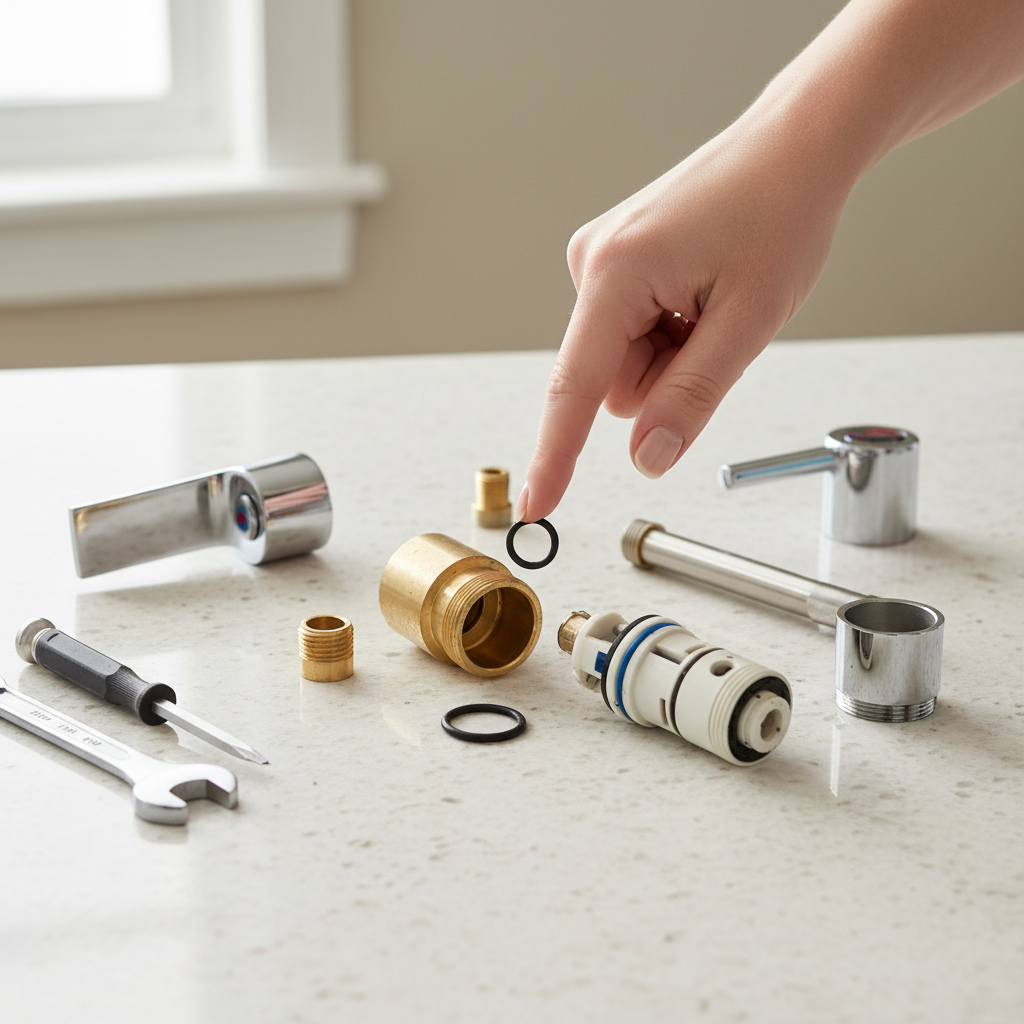
- Prep Your Workspace — Protect your sink and collect small parts.
- Place a towel or cloth over the sink drain to prevent small screws or parts from falling down it.
- GATHER YOUR TOOLS: Small flathead screwdriver, Phillips head screwdriver, adjustable wrench, utility knife (optional), new O-rings or replacement cartridge kit specific to your faucet model.
Plumbing · Leak
| Project category | Plumbing |
|---|---|
| Problem type | Leak |
| Trade required | Plumbing |
| Urgency | Emergency — act now |
| Safety risk | High safety risk |
| DIY suitability | DIY for experienced homeowners |
| Cost category | Low cost |
| Typical timeline | Shut water off now; repair usually same or next day |
| Contractor type | Licensed plumber |
Repair option
Isolate at the shutoff, replace the failed component, and dry the cavity fully.
Replacement option
Repipe the run or the branch when corrosion is widespread.
Common causes
- Failed supply line or shutoff valve
- Worn washers, cartridges, or P-trap connections
- Pinhole corrosion in older copper
Relevant tools:emergency checklistdiy or hire a pro
Published June 9, 2026Last updated August 17, 2026
Tools & materials you'll need
Affiliate linksAs an Amazon Associate FixlyGuide earns from qualifying purchases — at no extra cost to you. Prices and availability are accurate as of publication and subject to change.
Quick Answer
A leaky single-handle faucet is almost always caused by worn internal components, specifically the rubber O-rings or the ceramic/plastic cartridge. These parts degrade over time due to mineral buildup and general wear, leading to water escaping even when the faucet is in the off position. The good news is that replacing these components is a straightforward DIY task that typically costs less than $10 and requires only basic tools, taking about 30–60 minutes to complete. By following a few simple steps, usually involving turning off the water, disassembling the handle, and swapping out the old parts, you can easily stop that annoying drip.
The Problem
That constant 'drip, drip, drip' from your single-handle kitchen or bathroom faucet isn't just an annoyance; it's a silent drain on your water bill and a potential cause of water stains in your sink or on your fixtures. The problem manifests as water steadily or intermittently dripping from the spout, even when the handle is fully closed. This indicates that water is bypassing the internal sealing mechanisms designed to stop its flow. Over time, the rubber seals harden, crack, or become encrusted with mineral deposits, losing their ability to create a watertight barrier. Similarly, the internal ceramic or plastic cartridge, which controls the water flow and temperature, can wear down or crack, allowing water to escape. Ignoring a leaky faucet not only wastes water but can also lead to premature wear on other plumbing components due to consistently fluctuating pressure or increased demand on your water heater if it's a hot water drip.
How It Works
Single-handle faucets, whether they're ball, disc, or cartridge types, operate on the principle of mixing hot and cold water through a single control mechanism. When you lift or turn the handle, you’re manipulating an internal component that regulates the flow and temperature.
Cartridge Faucets: These are the most common type of single-handle faucets today. Inside, a cylindrical cartridge contains a series of holes or ports. As you move the handle, the cartridge rotates or slides, aligning these ports with corresponding inlets for hot and cold water. This controls the amount of water flowing from each, thus regulating both temperature and volume. Seals (O-rings or rubber washers) around the cartridge prevent water from leaking out. When these seals or the cartridge itself (often made of durable ceramic but still prone to wear) fail, water escapes, causing a drip.
Ball Faucets: Identified by their distinctive handle that typically rotates on a rounded cap, ball faucets use a rotating ball joint inside the faucet body. This ball has small slots and spring-loaded rubber seals that control water flow. Movement of the handle swivels the ball, aligning the slots with the hot and cold water inlets and the spout outlet. Over time, the rubber seals and springs lose their tension or become corroded, leading to leaks.
Ceramic Disc Faucets: These faucets are known for their durability and smooth operation. They contain two ceramic discs, one stationary and one movable. Both discs have precisely machined holes. As you move the handle, the top disc slides over the bottom disc, aligning the holes to control water flow and temperature. Leaks in these faucets are less common but can occur if the ceramic discs crack or if the inlet seals underneath the disc assembly fail due to sediment buildup.
Regardless of the type, the core idea is to physically block water flow when the handle is in the 'off' position. When internal components like O-rings, seals, springs, or the cartridge itself wear out, crack, or become obstructed by mineral deposits, they can no longer create this watertight seal, resulting in a persistent drip from the faucet spout.
Step-by-Step Fix
Safety First: Before beginning any plumbing repair, always turn off the water supply to the faucet. For most sinks, there will be two shut-off valves (one for hot, one for cold) underneath the sink basin. Turn them clockwise until they are completely closed. If there are no individual shut-off valves, you'll need to turn off the main water supply to your house. After turning off the water, open the leaky faucet to drain any remaining water from the lines and release pressure.
-
Prep Your Workspace — Protect your sink and collect small parts.
- Place a towel or cloth over the sink drain to prevent small screws or parts from falling down it.
- GATHER YOUR TOOLS: Small flathead screwdriver, Phillips head screwdriver, adjustable wrench, utility knife (optional), new O-rings or replacement cartridge kit specific to your faucet model.
-
Access the Handle Screw — Locate and remove the handle retaining screw.
- Most single-handle faucets have a decorative cap or plug on the front or top of the handle. Use a small flathead screwdriver or utility knife to gently pry this off.
- Beneath the cap, you'll find a Phillips head or Allen key screw. Use the appropriate screwdriver or Allen wrench to remove this screw. Keep it in a safe place.
-
Remove the Handle — Carefully lift the handle off the faucet body.
- Once the retaining screw is out, the handle should lift straight up. Sometimes it can be a bit stiff due to mineral buildup; gentle wiggling might be necessary.
- If the handle is stuck, avoid forcing it, as you could damage the faucet. Apply a little penetrating oil at the base and let it sit for 15-20 minutes.
-
Remove the Escutcheon Cap/Dome — Expose the internal components.
- Beneath the handle, there's often a decorative escutcheon cap or dome. This usually unscrews by hand or with an adjustable wrench (be gentle to avoid marring the finish).
- For ball-type faucets, you'll see a cap with several notches. You might need a specialized faucet repair tool (often included in ball faucet repair kits) to unscrew this.
-
Identify and Remove the Faulty Component — Determine if it's O-rings, springs, or the cartridge.
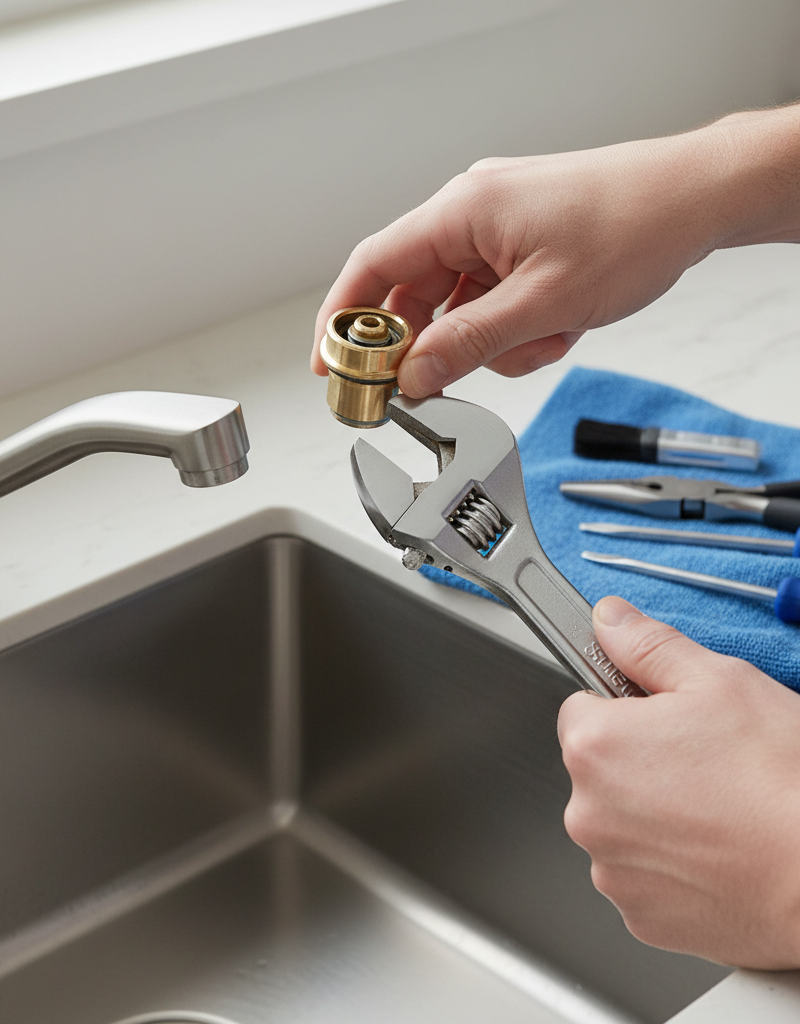
- Cartridge Faucets: After removing the top cap, you'll see a cylindrical cartridge held in place by a retaining nut or clip. Use an adjustable wrench to loosen the nut, or use pliers to remove the clip. Carefully pull the old cartridge straight out. Pay attention to its orientation; the new one must go in the same way.
- Ball Faucets: Once the cap is off, remove the metal ball and the spring-loaded rubber seals (frequently white or black with a tiny spring underneath). Use a small screwdriver or awl to pry out the old seals and springs.
- Ceramic Disc Faucets: After removing the handle and metal cap, you'll expose a disc cartridge assembly, often secured by screws. Remove the screws and lift out the assembly. Check the rubber seals or gaskets beneath the ceramic discs.
-
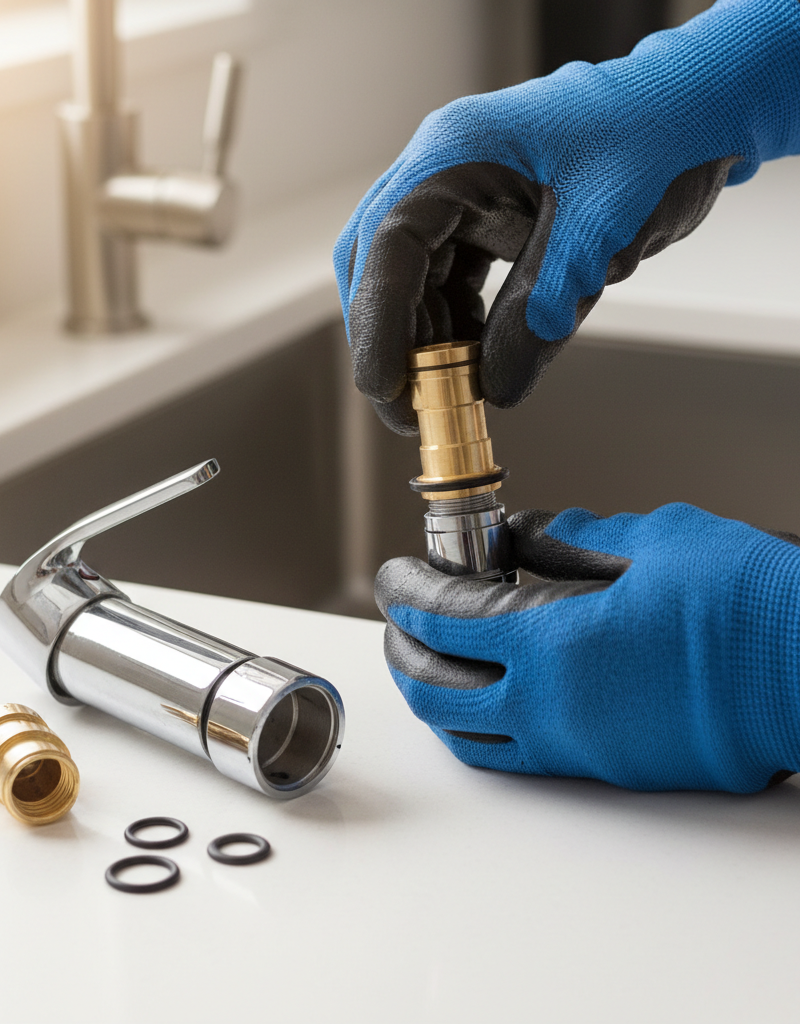
Replace Worn Parts — Install new O-rings, springs, or a new cartridge.
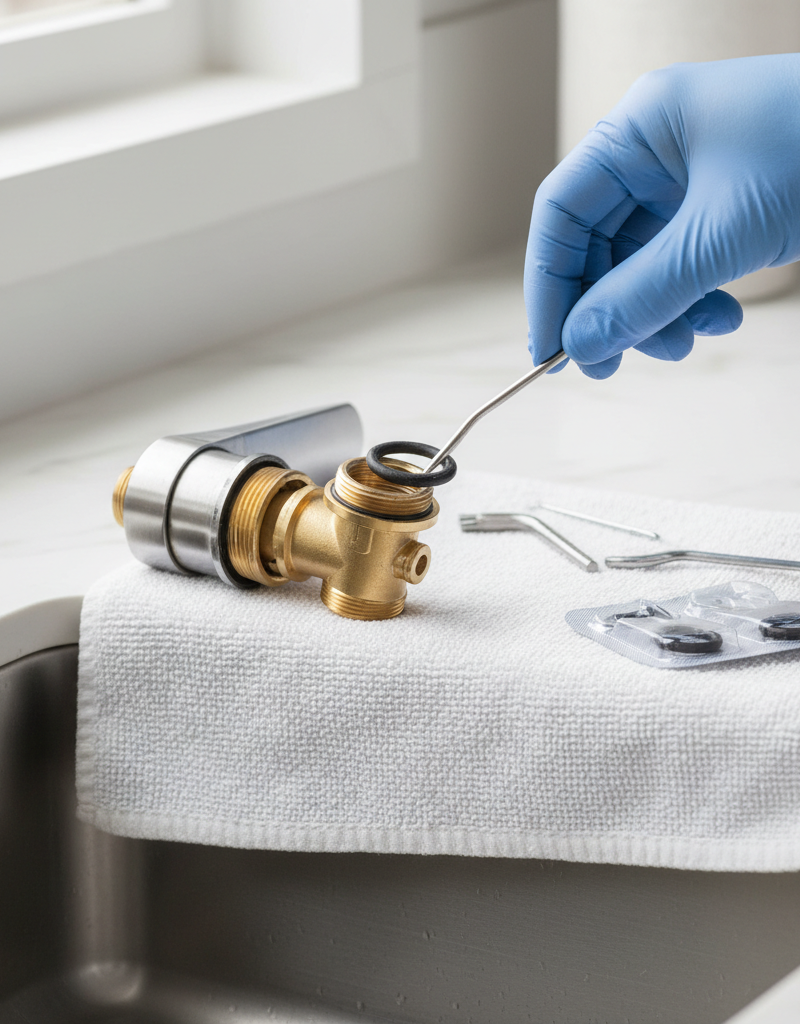
- For O-rings/Springs: If you identified worn O-rings on the faucet body or the base of a ball, carefully roll off the old ones and roll the new ones into place. For ball faucets, replace both the springs and the rubber seats them. Ensure they are seated correctly.
- For Cartridge: Make sure the new cartridge is an exact match for your old one. Ensure the notches or alignment pins on the new cartridge match the faucet body. Gently push it straight down until it's fully seated.
- Lightly lubricate new O-rings with plumber's grease to ensure smooth installation and a better seal. This is crucial for longevity.
-
Reassemble the Faucet — Reverse the disassembly process.
- Secure the retaining nut or clip for the cartridge, or reinsert the ball assembly parts.
- Screw the escutcheon cap/dome back on, tightening it gently.
- Place the handle back onto the stem, ensuring it's oriented correctly.
- Reinsert and tighten the handle retaining screw. Don't overtighten, as this could strip the threads or crack the handle.
- Snap the decorative cap/plug back into place.
-
Test the Faucet — Restore water and check for leaks.
- Slowly turn the hot and cold water supply valves back on underneath the sink. Do this gradually to avoid sudden pressure surges.
- Once the water is fully on, visually inspect the faucet for any immediate leaks around the base or handle.
- Operate the handle, moving it from hot to cold and turning it on and off several times. Listen and watch for drips. If it still drips, re-check your installation, ensuring all parts are correctly seated and tightened.
Common Causes
- Worn O-rings: These small rubber rings provide a watertight seal between moving parts in the faucet. Over time, they can dry out, crack, or become brittle, losing their elasticity and causing leaks. Hard water and high water pressure can accelerate this deterioration.
- Degraded Cartridge: The most common culprit in modern single-handle faucets. The internal components (often ceramic discs or plastic ports) within the cartridge wear down, crack, or accumulate mineral deposits, preventing a complete shut-off of water flow.
- Corroded Valve Seats (Ball Faucets): In ball-type faucets, the valve seats are spring-loaded rubber seals that press against the rotating ball. Limescale and sediment can build up on these seats, eroding them and allowing water to bypass the seal.
- Loose Packing Nuts: While less common in single-handle faucets compared to two-handle designs, some older models might have a packing nut around the stem that can loosen, leading to drips from around the handle base. Tightening it slightly can sometimes resolve the issue.
- Mineral Buildup: Hard water deposits (limescale) can accumulate on any internal component, obstructing the smooth operation of parts, preventing full closure of seals, or even eroding surfaces, leading to leaks.
- Physical Damage: Accidental impacts, overtightening during previous repairs, or extreme temperature fluctuations can cause cracks or deformities in plastic or ceramic components, compromising their sealing ability.
Common Mistakes
- Not Shutting Off Water Completely: Forgetting to turn off both hot and cold water supply valves can lead to unexpected water blasts and a messy situation. Always double-check.
- Overtightening Components: While it might seem logical to tighten screws and nuts as much as possible, overtightening can strip threads, crack plastic components, or deform rubber seals, leading to new leaks or future damage. Snug is enough.
- Forcing Stuck Parts: If a handle or cap is stuck due to mineral buildup, using excessive force can break the part or scratch the faucet's finish. Use penetrating oil and patience instead.
- Using the Wrong Replacement Parts: Faucet components are often model-specific. Attempting to force a generic O-ring or a cartridge that isn't designed for your specific faucet will likely result in continued leaks or even damage. Always bring the old part to the hardware store or check your faucet's model number.
- Not Cleaning Internal Components: Even if you're replacing a specific part, take the opportunity to gently clean mineral deposits from other accessible internal surfaces inside the faucet body. This helps prolong the life of new components.
- Losing Small Parts: The tiny screws, O-rings, and springs can easily roll away or fall down the drain. Always work over a covered drain and keep a small container nearby for removed components.
Cost & Time Breakdown
| Task | DIY Cost | Pro Cost | Time |
|---|---|---|---|
| Diagnosing Leak | $0 | Included | 5–10 min |
| Cartridge replacement | $8–$30 | Included | 30–60 min |
| O-ring/Seal replacement | $3–$15 | Included | 20–40 min |
| Tools & Supplies (if needed) | $15–$50 | Included | N/A |
| TOTAL | $3–$80 | $150–$350+ | 30–60 min |
Tips & Prevention
- Know Your Faucet Model: Keep your faucet's make and model number handy, or even better, its instruction manual. This makes finding the correct replacement parts much easier.
- Gentle Operation: Avoid forcing the faucet handle when turning it on or off. Overly aggressive handling can put undue stress on internal components and accelerate wear.
- Regular Cleaning: Periodically clean your faucet's spout (aerator) and wipe down the base to prevent mineral buildup on external surfaces, which can sometimes seep into the internal mechanisms.
- Water Softeners: If you live in an area with very hard water, consider installing a whole-house water softener. This significantly reduces mineral buildup in all your plumbing fixtures, extending their lifespan and preventing leaks.
- Don't Ignore Small Drips: Even a slow drip can waste hundreds of gallons of water per year and indicates a problem that will only worsen over time. Address drips promptly.
- Grease O-rings: When replacing O-rings, always apply a thin coat of plumber's silicone grease. This helps them seat properly, creates a better seal, and protects them from premature wear.
When to Call a Professional
While a dripping single-handle faucet is often a manageable DIY repair, there are specific situations where calling a licensed plumber is the wiser choice. If you've attempted the repair with the correct parts and the leak persists, it could indicate a more complex issue within the faucet body itself, which may require specialized tools or expertise for diagnosis and repair. If your faucet is an antique, an expensive designer model, or has proprietary parts that are difficult to source, a professional can ensure it's repaired without damage. Furthermore, if you encounter any issues with the main water shut-off valve, cannot locate the shut-off, or suspect a leak within the wall behind the faucet, immediately contact a plumber. Messing with potentially faulty main valves can lead to flooding, and hidden leaks require professional leak detection and repair to prevent structural damage. Similarly, if you're uncomfortable with disassembling the faucet or fear damaging it, a professional can complete the job efficiently and correctly, ensuring your warranty isn't voided by improper DIY attempts. Finally, persistent dripping after replacing the cartridge or O-rings might point to damage within the faucet body itself, which usually necessitates faucet replacement – a job a plumber can handle efficiently.
Related Articles
Keep troubleshooting with these hand-picked guides from FixlyGuide:
- The $5 Single-Handle Faucet Fix Most Homeowners Ignore (And Pros Charge $200 For) — A single-handle leaky faucet can often be fixed with a simple, inexpensive DIY repair, saving you hundreds on a plumber.
- The 1 Common Reason Your Single-Handle Faucet Leaks (And How to Fix It in 30 Minutes) — A persistent drip from your single-handle faucet often points to a worn-out cartridge, a simple fix any homeowner can tackle.
- The $5 Secret to Fixing Your Drip: Why Single-Handle Faucets Leak (and the O-Ring Trick) — A persistent drip from your single-handle faucet is often caused by worn-out O-rings or seals, a common issue with a simple, inexpensive DI…
- The 30-Minute Trick to Stop Your Single-Handle Faucet Drip (And What Plumbers Charge if You Don't) — A persistent drip from a single-handle faucet often signals a worn-out cartridge, a common issue homeowners can fix with basic tools in und…
- The $5 Secret to Silencing That Annoying Dripping Faucet (Single-Handle Fix) — Stop a dripping single-handle faucet with a simple and inexpensive DIY fix by replacing a worn-out o-ring or washer.
- The #1 Reason Your AC Freezes Solid (It's Not What You Think) — A frozen AC unit often points to poor airflow, which can be a simple fix if you know where to look.
Should you do this yourself?
Answer five quick questions before you start. Safety outranks savings every time.
Your experience with work like this
How high do you have to work?
Does the job involve any of these?
Will it need a permit?
Specialty tools
Free and instant. Educational guidance only — not a quote, inspection, or professional diagnosis.
What should this project cost?
Enter your project details for a realistic cost range before you call anyone.
Common repairs run $150–$650; repipes and water-heater replacements reach $1,500–$4,500.
- Regional adjustment
- National average
- Labor share (typical)
- ~$754
- Quotes to collect
- 3 written estimates
Educational estimate based on national averages — not a binding quote. Always confirm with written local estimates.
Fixly Project Decision Box
- DIY difficulty
- Moderate
- Estimated time
- 30 minutes – half a day
- Cost level
- Moderate
Main tools / materials
- Adjustable wrench
- Plunger or drain auger
- Bucket and towels
- Thread tape
When to stop and call a pro
- Water you cannot shut off at the fixture or main
- Sewage backing up into more than one fixture
- Water near electrical panels or outlets
- Gas water heater work beyond relighting a pilot
Need professional help?
Get a Licensed PlumberGet the print-ready PDF of this guide
A clean, ad-free, printable version you can keep on your phone or pin to the workshop wall. Free with a FixlyGuide account.
- Print-optimized layout
- Tools, materials & every step included
- Saved to your account
Frequently asked questions
How do you stop a single handle faucet from dripping?+
To stop a single-handle faucet from dripping, you'll typically need to replace the worn-out internal components, such as the rubber O-rings or the ceramic/plastic cartridge. After turning off the water supply, carefully disassemble the handle and spout, remove the old parts, and install new, matching replacements. Reassemble the faucet and check for leaks.
What causes a single handle faucet to drip?+
A single-handle faucet usually drips due to the degradation of its internal sealing components. This commonly includes worn, cracked, or hardened rubber O-rings, which provide the watertight seals, or a faulty, cracked, or mineral-encrusted cartridge that controls water flow and temperature. Mineral buildup from hard water can also contribute to these issues.
Can I replace just the O-rings on a single handle faucet?+
Yes, in many single-handle faucet designs, especially older ball-type faucets, you can often replace just the O-rings and possibly springs/seats to fix a leak. For cartridge-style faucets, while O-rings around the cartridge can be replaced, it's often more effective and recommended to replace the entire cartridge if it's the primary cause of the leak, as its internal components may also be worn.
How much does it cost to fix a leaky single handle faucet?+
The DIY cost to fix a leaky single-handle faucet is typically very low, ranging from $3 to $30 for replacement O-rings, springs, or a new cartridge. If you need to purchase basic tools, the cost might increase slightly. Professional repair, which includes labor and parts, usually costs between $150 and $350 or more, depending on your location and the complexity.
How do I know what type of cartridge my faucet uses?+
The best way to identify your faucet's cartridge type is to first turn off the water supply and remove the old cartridge. Take the old cartridge to a hardware store to find a matching replacement, or note down any brand names and model numbers on the faucet and cartridge itself. You can also consult your faucet's original manual or the manufacturer's website.
Discussion
Loading comments…