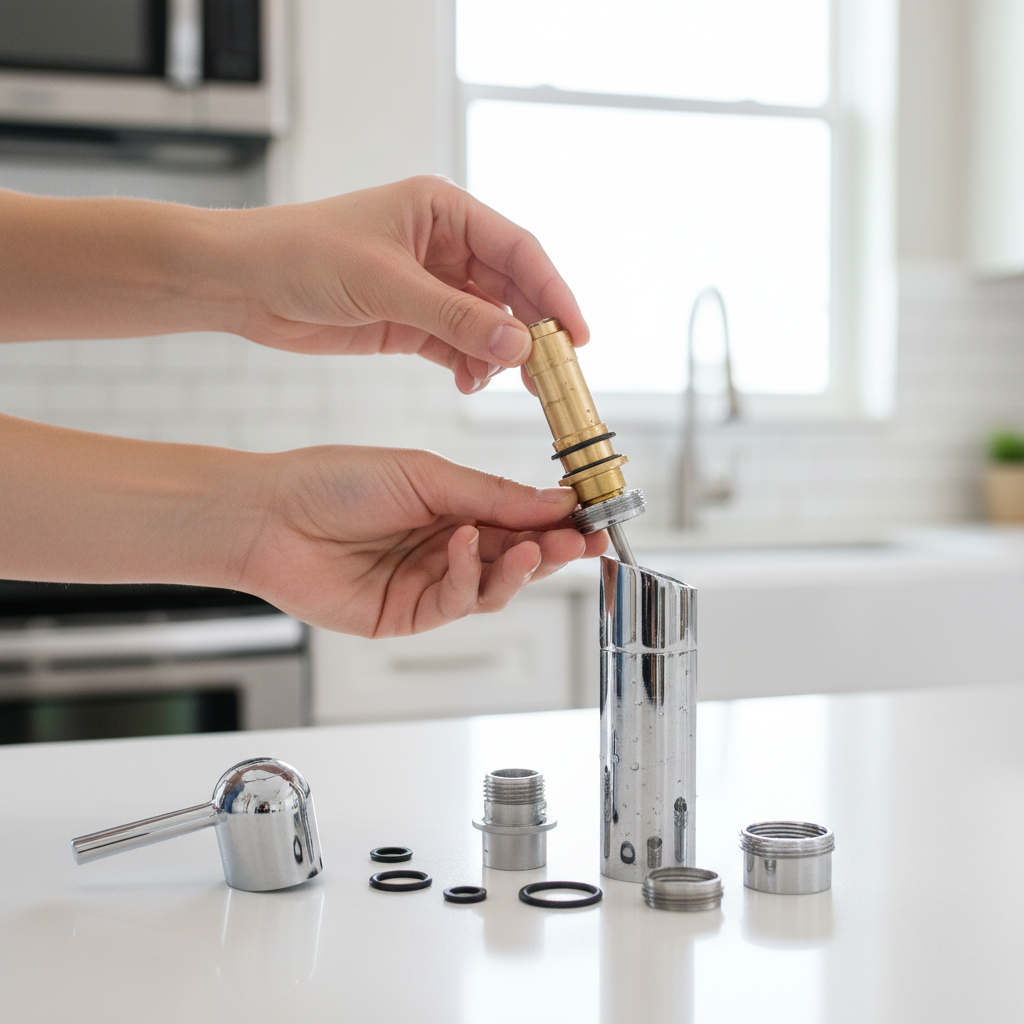
- The 1 Common Reason Your Single-Handle Faucet Leaks (And How to Fix It in 30 Minutes) — A persistent drip from your single-handle faucet often points to a worn-out cartridge, a simple fix any homeowner can tackle.
- The $5 Secret to Silencing That Annoying Dripping Faucet (Single-Handle Fix) — Stop a dripping single-handle faucet with a simple and inexpensive DIY fix by replacing a worn-out o-ring or washer.
- The 5-Minute Trick to Stop a Dripping Single-Handle Faucet (No Plumber Needed) — A persistent drip from your single-handle faucet is usually caused by a worn-out cartridge, a repair you can typically complete yourself in…
- The $5 Secret to Fixing Your Drip: Why Single-Handle Faucets Leak (and the O-Ring Trick) — A persistent drip from your single-handle faucet is often caused by worn-out O-rings or seals, a common issue with a simple, inexpensive DI…
- The 5-Minute Trick to Restore Your Kitchen Sink Sprayer's Lost Pressure — Restore your kitchen sink sprayer's low pressure with a quick, simple trick that often takes less than five minutes and requires no special…
Plumbing · Leak
| Project category | Plumbing |
|---|---|
| Problem type | Leak |
| Trade required | Plumbing |
| Urgency | Emergency — act now |
| Safety risk | High safety risk |
| DIY suitability | DIY for experienced homeowners |
| Cost category | Low cost |
| Typical timeline | Shut water off now; repair usually same or next day |
| Contractor type | Licensed plumber |
Repair option
Isolate at the shutoff, replace the failed component, and dry the cavity fully.
Replacement option
Repipe the run or the branch when corrosion is widespread.
Common causes
- Failed supply line or shutoff valve
- Worn washers, cartridges, or P-trap connections
- Pinhole corrosion in older copper
Relevant tools:emergency checklistdiy or hire a pro
Published May 28, 2026Last updated August 17, 2026
Tools & materials you'll need
Affiliate linksAs an Amazon Associate FixlyGuide earns from qualifying purchases — at no extra cost to you. Prices and availability are accurate as of publication and subject to change.
Quick Answer
A leaky single-handle faucet is often caused by a worn-out O-ring or a defective cartridge. You can usually fix this by shutting off the water supply, disassembling the faucet handle and spout, carefully removing and replacing the old O-rings or cartridge with new ones, and then reassembling everything. This repair typically takes under an hour and can save you from constant dripping and higher water bills.
The Problem
You hear that persistent drip, drip, drip. It's not just annoying; it's money down the drain, literally. A single-handle faucet that leaks, whether from the base, the spout, or even around the handle, signifies a breakdown in the internal sealing mechanism. Over time, components like rubber O-rings and the plastic or ceramic cartridge that control water flow and temperature can degrade. Mineral deposits from hard water can also accelerate this wear, leading to imperfect seals and escaping water. Ignoring a leaky faucet doesn't just waste water; it can stain your sink, rust your fixtures, and even contribute to mold growth if water seeps into cabinetry below.
How It Works
To understand how to fix a single-handle faucet, it helps to know how it operates. Unlike older two-handle faucets that use separate compression valves for hot and cold water, a single-handle faucet combines both controls into one central mechanism, typically a cartridge. When you lift the handle, you're opening a port to allow water flow. When you move it left or right, you're adjusting the mix of hot and cold water. This precise control is managed by a cartridge inside the faucet body.
The cartridge itself is a marvel of simplicity and engineering. Depending on the faucet type, it might be a disc cartridge (common in newer models, using two ceramic or plastic discs that slide against each other) or a ball cartridge (often found in older Delta faucets, using a rotating ball with spring-loaded seals). In a disc cartridge, tiny holes in the upper disc align with ports in the lower disc. Moving the handle rotates the upper disc, controlling the amount and temperature of water allowed through. Ball cartridges achieve similar results with a rotating ball. Surrounding these cartridges, and sometimes within the spout assembly itself, are rubber O-rings and seals. These create watertight barriers between moving parts and the stationary faucet body. When these O-rings crack, shrink, or become covered in mineral deposits, their ability to seal is compromised, leading to leaks. Similarly, if the internal components of the cartridge itself wear out, crack, or become fouled, it can no longer regulate water flow effectively, resulting in a persistent drip or a leak from the handle base.
Step-by-Step Fix
Before you begin, gather all your tools and materials. This will make the process smoother and prevent interruptions.
1. Shut Off the Water Supply – Locate and close the supply valves.
- Look underneath your sink for two shut-off valves, one for hot and one for cold water. Turn them clockwise until they are completely closed. If your sink doesn't have individual shut-off valves, you'll need to turn off the main water supply to your house. Open the faucet to drain any residual water and relieve pressure.
- Safety Note: Always ensure the water supply is completely off before disassembling any plumbing fixture.
2. Prepare Your Workspace – Protect your sink and collect dropped parts.
- Place a towel or cloth in the sink basin to prevent small parts from falling down the drain and to protect the sink's finish. Use tape to cover the drain opening if you're particularly worried about losing screws or small O-rings. Ensure you have good lighting.
3. Remove the Faucet Handle – Access the retaining screw.
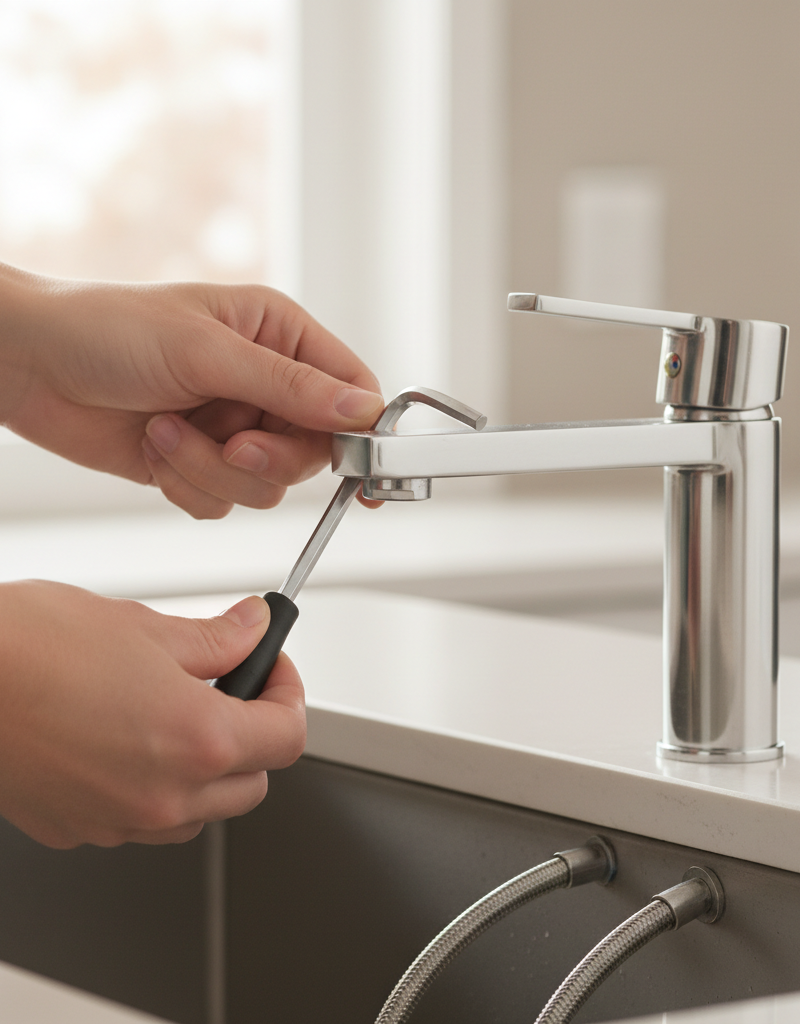
- Most single-handle faucets have a decorative cap or a small button covering a retaining screw. Use a flathead screwdriver or a thin knife blade to gently pry off this cap. The screw is usually a Phillips head or an Allen head. Use the appropriate screwdriver or Allen wrench to loosen and remove it. Once the screw is out, the handle should lift straight off. Some handles may require a slight wiggle or pull upwards. If it's stubborn, a little penetrating oil might help, but avoid excessive force.
4. Expose the Cartridge – Remove the decorative parts and retaining nut.
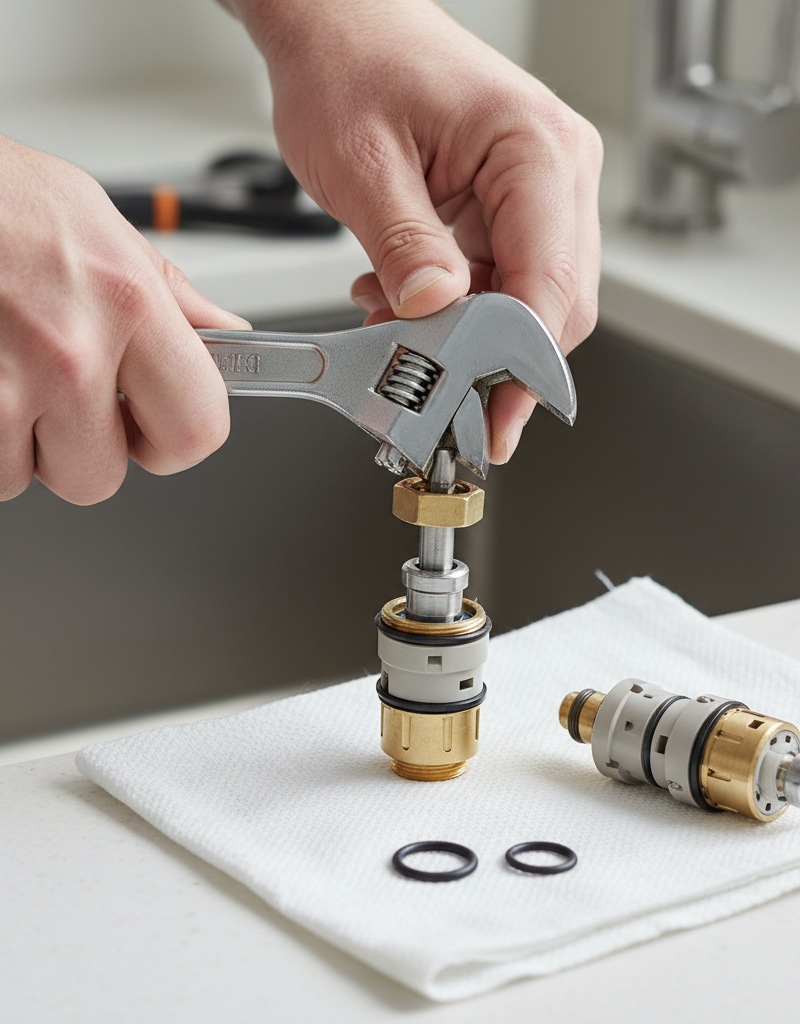
- Beneath the handle, you'll likely find a decorative cap and then a retaining nut or collar. Unscrew the cap by hand or with channel-lock pliers (use a cloth to protect the finish). You will then see the cartridge. Some cartridges are held in place by a retaining nut, while others have a metal clip or a plastic retaining ring. Use an adjustable wrench to carefully remove the retaining nut if present. For a retaining clip, use needle-nose pliers to pull it straight up. Take note of the cartridge's orientation as you remove it; some have specific alignment tabs.
5. Remove and Inspect the Cartridge & O-Rings – Identify the cause of the leak.
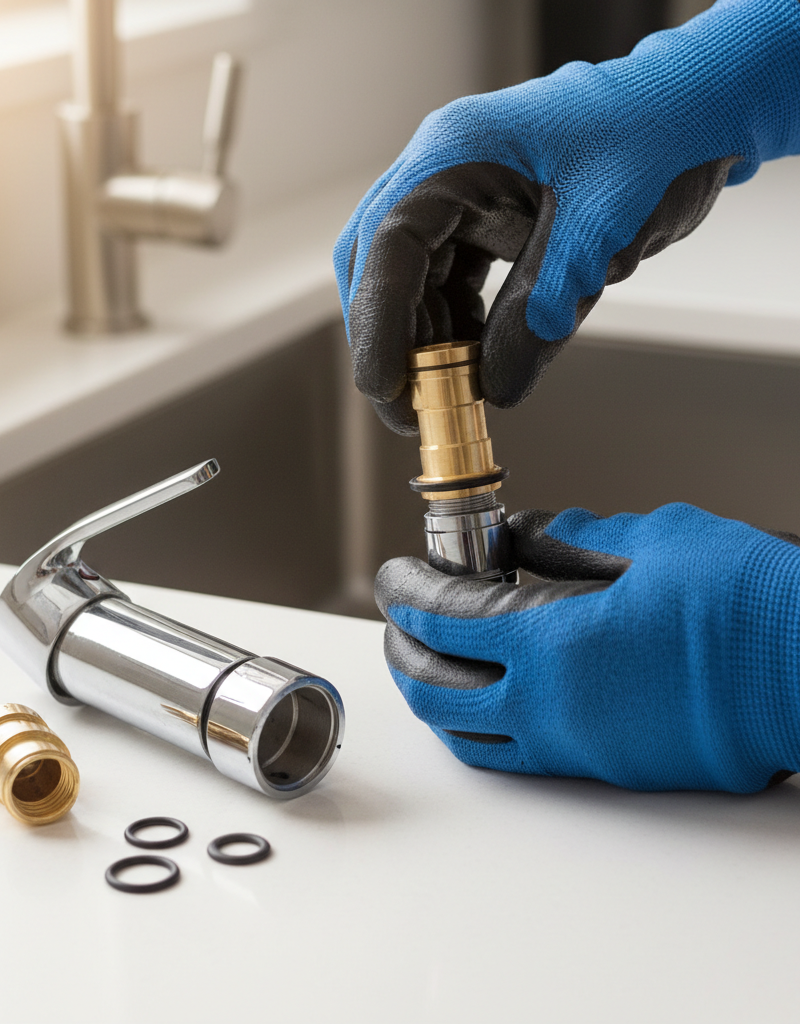
- Gently pull the cartridge straight up and out of the faucet body. If it's stuck, try rocking it slightly from side to side. Avoid twisting forcefully, as this can damage the faucet body. Inspect the cartridge for cracks, wear, or mineral buildup. If you see visible damage or excessive wear, it likely needs replacement. Look into the faucet body for the rubber O-rings that help seal the spout. If your leak is from the base of the spout, these O-rings are often the culprit. Use a small screwdriver or an O-ring pick to carefully remove them. Note their position and number. Inspect them for flat spots, cracks, or signs of deterioration.
6. Replace Worn Parts – Insert new O-rings and/or a new cartridge.
- If replacing O-rings: Clean the grooves where the O-rings sit thoroughly. Lightly coat the new O-rings with plumber's grease (silicone-based, safe for potable water) and carefully roll them into their grooves. Ensure they are seated correctly and not twisted. If replacing the cartridge: Before inserting the new cartridge, apply a thin coat of plumber's grease to its rubber seals. Carefully align the new cartridge with the mating holes/slots in the faucet body and push it firmly into place. Ensure it's fully seated and oriented correctly (usually a 'H' for hot and 'C' for cold marking or a specific tab alignment). If there was a metal clip, reinsert it securely.
7. Reassemble the Faucet – Reverse the disassembly steps.
- Replace the retaining nut or collar, tightening it snugly with your adjustable wrench but do not overtighten. Ensure the decorative cap is screwed back on securely. Realign the faucet handle and screw it back on with the retaining screw. Don't overtighten this screw either, as it can strip the threads or crack the handle.
8. Restore Water Supply and Test – Check for leaks.
- Slowly open the hot and cold water supply valves underneath the sink. Once fully open, turn on the faucet and let the water run for a minute or two, checking for any new leaks around the handle, spout base, or connections underneath. Operate the handle through its full range of motion (hot, cold, mixed, on, off) to ensure everything is functioning correctly and there are no drips. If you see a leak, shut off the water immediately and re-check the components, especially the O-rings and cartridge seating.
9. Clean Up and Inspect – Final check.
- Wipe down the faucet and sink area. Keep an eye on the faucet for the next few days to ensure the leak has been completely resolved. Check underneath the sink for any signs of moisture.
Common Causes
- Worn O-rings: The most frequent culprit, especially for leaks at the base of the spout. Rubber O-rings harden, crack, or lose their elasticity over time, breaking their watertight seal. Hot water and fluctuating temperatures accelerate this. Hard water with high mineral content can also deposit scale on O-rings, effectively eroding them.
- Damaged Cartridge: The internal mechanism within the cartridge (plastic or ceramic discs, springs, seals) wears out or develops cracks. This leads to water seeping past the damaged components, causing drips from the spout or leaks around the handle. Cartridge failure can be due to age, manufacturing defects, or debris in the water supply scraping against internal parts.
- Loose Connections: Over time, the nuts and bolts holding the faucet components together can loosen slightly due to vibrations and regular use. While less common for persistent drips directly from the spout, a loose retaining nut can lead to leaks around the handle base.
- Sediment and Mineral Buildup: Hard water leaves behind mineral deposits (limescale) on all internal faucet components. This buildup can interfere with the smooth operation of the cartridge, preventing a complete seal, and can also abrade O-rings and seals, leading to premature failure.
- Water Pressure Issues: Although less direct, excessively high water pressure can put added strain on faucet seals and cartridges, potentially exacerbating wear and contributing to leaks. Consistent pressure fluctuations can also degrade seals more quickly.
Common Mistakes
- Forgetting to Turn Off Water: The most common and potentially messy mistake. Always verify the water supply is completely off before starting. Failing to do so can result in a significant flood once you start disassembling the faucet.
- Overtightening Screws/Nuts: While you want a snug fit, overtightening can strip threads, crack plastic components, or damage the faucet finish. Hand-tighten until snug, then use a wrench for a quarter-turn more, being mindful of the material.
- Using the Wrong Replacement Parts: Faucet cartridges and O-rings are often specific to the faucet brand and model. Trying to force an ill-fitting part can cause further damage and won't solve the leak. Always take the old parts with you to the hardware store or check your faucet's make and model number before purchasing replacements.
- Skipping Plumber's Grease: Applying a thin coat of silicone-based plumber's grease to new O-rings and cartridge seals is crucial. It helps create a better seal, allows components to move smoothly, and extends their lifespan. Without it, new parts can bind or degrade faster.
- Not Protecting the Finish: Using pliers directly on chrome or decorative finishes will leave scratches. Always wrap a cloth or electrical tape around plier jaws when dealing with visible faucet components. This meticulousness preserves the appearance of your fixture.
- Ignoring Proper Cartridge Orientation: Many cartridges have specific alignment tabs or 'H' and 'C' (hot/cold) markings that must line up with slots in the faucet body. Inserting it incorrectly will prevent proper operation and could even damage the cartridge or faucet itself when tightening.
Cost & Time Breakdown
| Task | DIY Cost | Pro Cost | Time |
|---|---|---|---|
| Replacement O-rings | $3–$8 | Included | 2–5 min |
| Replacement Cartridge | $15–$50 | Included | 15–30 min |
| Plumber's Grease | $5–$10 | Included | 1 min |
| Disassembly & Reassembly | $0 | Included | 30–60 min |
| Total (DIY) | $23–$68 | $150–$300 | 45–90 min |
Tips & Prevention
- Regular Cleaning: Periodically clean the faucet exterior and aerator screen. While not directly preventing internal leaks, it helps you spot potential issues early and prevents mineral buildup on exposed parts. For hard water areas, consider gentle descaling of the aerator.
- Don't Overtighten: When operating the faucet, avoid forcing the handle into the fully off position with excessive pressure. This habit can prematurely wear out the internal cartridge seals. A gentle push should be sufficient to stop the flow.
- Check Water Pressure: If you frequently experience leaks across multiple fixtures, consider checking your home's water pressure. Pressure above 80 PSI can stress plumbing components. A pressure regulator can be installed at your main water line to protect your plumbing.
- Faucet Maintenance: If you notice the handle becoming stiff or harder to move, it could be a sign that the cartridge is degrading. Addressing this early can prevent a full-blown leak. Sometimes, simply applying plumber's grease can improve handle action.
- Know Your Faucet: Keep a record of your faucet's brand and model number. This information is invaluable when buying replacement parts, ensuring you get the correct cartridge or O-rings the first time.
- Filter Water: If you have exceptionally hard water or sediment issues, a whole-house water filter can reduce the amount of abrasive particles and mineral deposits reaching your faucets, extending their lifespan.
When to Call a Professional
While fixing a leaky single-handle faucet is often a manageable DIY task, there are clear indicators when it's time to call a licensed plumber. If you've attempted the repair, replaced the O-rings and cartridge, and the leak persists, there might be a more complex issue, such as a damaged faucet body or internal plumbing problem that requires specialized tools or expertise. Additionally, if the leak is substantial, causing significant water damage, or if you encounter unexpected complications like corroded pipes, stripped screws that prevent disassembly, or you're simply uncomfortable working with plumbing, it's always best to err on the side of caution. Attempting to force corroded parts or making incorrect repairs can escalate the problem, potentially leading to more extensive damage and higher repair costs. A professional plumber can quickly diagnose the underlying cause, access difficult areas, and ensure a durable, leak-free repair with the correct parts and techniques, saving you time, frustration, and potential water damage in the long run.
Related Articles
Keep troubleshooting with these hand-picked guides from FixlyGuide:
- The 1 Common Reason Your Single-Handle Faucet Leaks (And How to Fix It in 30 Minutes) — A persistent drip from your single-handle faucet often points to a worn-out cartridge, a simple fix any homeowner can tackle.
- The $5 Secret to Silencing That Annoying Dripping Faucet (Single-Handle Fix) — Stop a dripping single-handle faucet with a simple and inexpensive DIY fix by replacing a worn-out o-ring or washer.
- The 5-Minute Trick to Stop a Dripping Single-Handle Faucet (No Plumber Needed) — A persistent drip from your single-handle faucet is usually caused by a worn-out cartridge, a repair you can typically complete yourself in…
- The $5 Secret to Fixing Your Drip: Why Single-Handle Faucets Leak (and the O-Ring Trick) — A persistent drip from your single-handle faucet is often caused by worn-out O-rings or seals, a common issue with a simple, inexpensive DI…
- The 5-Minute Trick to Restore Your Kitchen Sink Sprayer's Lost Pressure — Restore your kitchen sink sprayer's low pressure with a quick, simple trick that often takes less than five minutes and requires no special…
- The #1 Reason Your Shower Goes Cold (It's Not Your Water Heater) — The true culprit behind a suddenly cold shower often isn't a failing water heater, but a simple, fixable issue with your shower valve.
Should you do this yourself?
Answer five quick questions before you start. Safety outranks savings every time.
Your experience with work like this
How high do you have to work?
Does the job involve any of these?
Will it need a permit?
Specialty tools
Free and instant. Educational guidance only — not a quote, inspection, or professional diagnosis.
What should this project cost?
Enter your project details for a realistic cost range before you call anyone.
Common repairs run $150–$650; repipes and water-heater replacements reach $1,500–$4,500.
- Regional adjustment
- National average
- Labor share (typical)
- ~$754
- Quotes to collect
- 3 written estimates
Educational estimate based on national averages — not a binding quote. Always confirm with written local estimates.
Fixly Project Decision Box
- DIY difficulty
- Moderate
- Estimated time
- 30 minutes – half a day
- Cost level
- Moderate
Main tools / materials
- Adjustable wrench
- Plunger or drain auger
- Bucket and towels
- Thread tape
When to stop and call a pro
- Water you cannot shut off at the fixture or main
- Sewage backing up into more than one fixture
- Water near electrical panels or outlets
- Gas water heater work beyond relighting a pilot
Need professional help?
Get a Licensed PlumberFrequently asked questions
How do I know if it's the O-ring or the cartridge causing the leak?+
If the leak is primarily from the base of the spout or around the point where the spout rotates, worn O-rings are often the cause. If the leak is a constant drip from the spout itself, or from around the handle base where it meets the faucet body and isn't the spout, the cartridge is usually the culprit. However, inspecting both during disassembly is always a good idea.
Can I use any plumber's grease?+
No, you should use silicone-based plumber's grease specifically labeled as safe for potable water systems. Petroleum-based greases can degrade rubber components over time and are not suitable for drinking water applications.
My faucet handle is stuck and won't come off. What should I do?+
If the set screw is removed and the handle still won't budge, it might be corroded or seized onto the cartridge stem. Try applying a penetrating oil (like WD-40) to the base of the handle where it meets the faucet body and let it sit for 15-30 minutes. Gentle wiggling and a light upward pull should help. Avoid excessive force, as it can break the handle or stem. If it's still stuck, you might need a handle puller tool or professional help.
How long do replacement cartridges typically last?+
The lifespan of a faucet cartridge varies significantly based on water quality, frequency of use, and cartridge material. Ceramic disc cartridges designed for hard water can last 10-20 years, while simpler plastic cartridges might only last 5-10 years. In areas with very hard water, even high-quality cartridges may need replacement more frequently due to mineral buildup.
Discussion
Loading comments…