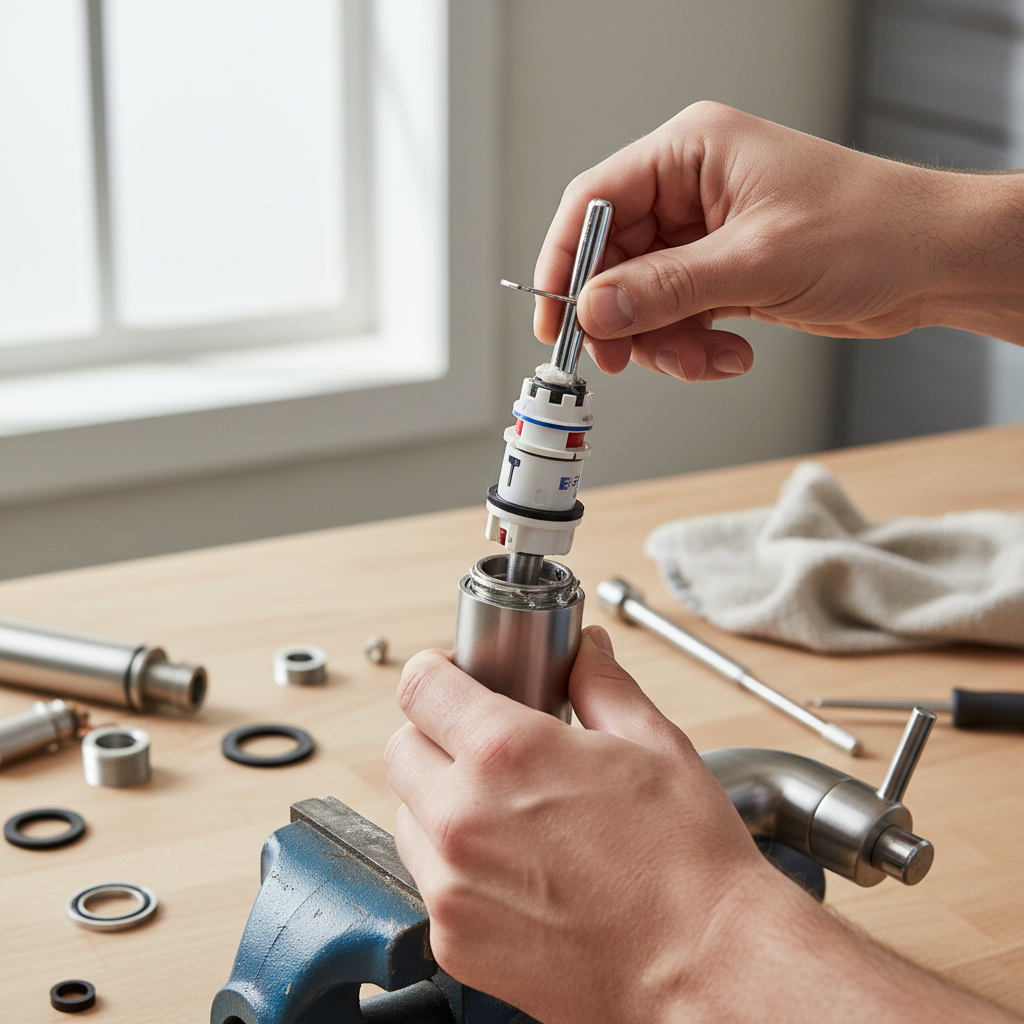
- Inspect and Diagnose: Look closely at the extracted parts, especially O-rings and rubber/silicone seals. Are they cracked, hardened, flattened, or covered in mineral deposits? These are the likely culprits for your leak.
- For cartridge faucets: Pull out the old cartridge. It may be stiff. Some cartridges require specific alignment during removal and reinstallation, so note its orientation. If it's particularly stubborn, a cartridge puller tool can assist.
- For ball faucets: Remove the internal components: the ball, the springs and rubber seats beneath it, and the cam and packing washer inside the cap. These are almost always replaced as a kit.
- For disc faucets: Lift out the ceramic disc assembly. Inspect the rubber seals underneath the lower disc. If the ceramic discs are scratched or chipped, the entire disc assembly will need replacement.
Plumbing · Leak
| Project category | Plumbing |
|---|---|
| Problem type | Leak |
| Trade required | Plumbing |
| Urgency | Emergency — act now |
| Safety risk | High safety risk |
| DIY suitability | DIY for experienced homeowners |
| Cost category | Low cost |
| Typical timeline | Shut water off now; repair usually same or next day |
| Contractor type | Licensed plumber |
Repair option
Isolate at the shutoff, replace the failed component, and dry the cavity fully.
Replacement option
Repipe the run or the branch when corrosion is widespread.
Common causes
- Failed supply line or shutoff valve
- Worn washers, cartridges, or P-trap connections
- Pinhole corrosion in older copper
Relevant tools:emergency checklistdiy or hire a pro
Published May 22, 2026Last updated August 17, 2026
Tools & materials you'll need
Affiliate linksAs an Amazon Associate FixlyGuide earns from qualifying purchases — at no extra cost to you. Prices and availability are accurate as of publication and subject to change.
Quick Answer
Most single-handle faucet leaks stem from degraded O-rings, seals, or the cartridge that controls water flow. A persistent drip can waste hundreds of gallons of water annually and drive up your utility bill. The quick fix usually involves turning off the water supply, carefully disassembling the faucet's handle and spout components, replacing the worn rubber O-rings, silicone seals, or the entire cartridge, and then reassembling the faucet. This common repair often costs under $10 for parts and can be completed in about 30 minutes, restoring your faucet to its drip-free state.
The Problem
You hear it, even when you try to ignore it: a steady 'drip... drip... drip' from your kitchen or bathroom faucet. This isn't just an annoyance; a faucet that drips five times a minute wastes over 200 gallons of water a year. If it drips faster, say ten times a minute, you're looking at over 400 gallons — enough to fill a small swimming pool. Over time, this constant dampness can also lead to mildew growth around the sink and even stain your porcelain. The typical culprits are internal rubber or silicone components that have hardened, cracked, or simply worn out from regular use and mineral deposits in the water.
How It Works
Single-handle faucets, whether they are ball, disc, or cartridge types, operate on the principle of controlling water flow and temperature through a single mixing mechanism. Understanding this mechanism is key to a successful repair.
Ball Faucets: These use a rotating metal or plastic ball with slots that align with hot and cold water inlets. Spring-loaded rubber seals (frequently called 'springs and seats') press against the ball, creating a watertight seal and directing water into the spout. Over time, these rubber seals wear down or accumulate mineral deposits, leading to leaks.
Disc Faucets: These modern faucets feature a pair of ceramic discs at their core. The lower, stationary disc has inlet holes for hot and cold water and an outlet hole for the mixed water. The upper, movable disc has a single port that rotates and slides across the lower disc, aligning with different combinations of hot and cold inlets to control temperature and flow. Leaks in disc faucets often occur when the rubber inlet seals below the lower ceramic disc degrade, or if the ceramic discs themselves become chipped or scratched due to sediment in the water.
Cartridge Faucets: These are perhaps the most common type. They use a cylindrical cartridge, often made of plastic or brass, which contains a series of ports and valves. When you move the handle, it rotates or moves the cartridge, which in turn controls the flow and mix of hot and cold water. Leaks almost always indicate a worn-out or damaged cartridge. The rubber O-rings on the cartridge itself, or the rubber seals within the faucet body that the cartridge seats into, are also frequent failure points.
Regardless of the specific type, the constant turning, twisting, and exposure to water pressure and varying temperatures eventually cause these internal components to wear out. Hard water, with its high mineral content, can accelerate this process by depositing scale that grinds down parts or prevents seals from creating a perfect barrier. When these seals or control mechanisms fail, water finds a path of least resistance, resulting in a persistent drip or a leak at the base of the spout.
Step-by-Step Fix
Safety First: Always turn off the water supply to the faucet before beginning any work. Look under the sink for two shut-off valves (one for hot, one for cold) and turn them clockwise until they are fully closed. Turn on the faucet to drain any residual water from the lines and confirm the water is off. Place a towel in the sink to catch any drips and protect the surface from scratches.
-
Remove the Handle Cap & Screw — Locate and gently pry off the decorative cap (usually a small plastic or metal piece) on the top or front of the handle. Many caps will have a small logo or be plain. Underneath, you'll find a single screw holding the handle in place. Use the appropriate screwdriver (Phillips or Allen wrench) to remove this screw completely. Keep track of the screw in a safe place.
- Tip: If the cap is stubborn, try a plastic putty knife or a thin, flat-head screwdriver, being careful not to scratch the finish.
- If it's stuck: Apply a few drops of penetrating oil to the screw head and let it sit for 15 minutes before trying again.
-
Lift Off the Faucet Handle — Once the screw is removed, the handle should lift straight up off the faucet body. If it's sticky or difficult, try wiggling it gently from side to side. Avoid forcing or twisting aggressively, which could damage the internal stem.
- If it's seized: Some handles get corroded onto the stem. A faucet handle puller tool (available at hardware stores for about $15-$25) can be invaluable here. Do NOT use pliers on the handle as you could dent or break it.
-
Expose the Inner Components — Depending on your faucet type, you'll now see a dome-shaped cap, a retaining nut, or a cartridge held by a clip. For ball faucets, you'll see a cap with several slots. For disc faucets, a wide, threaded retainer nut. For cartridge faucets, a retaining nut or a small metal clip/retainer pin.
- Note: Take a picture with your phone at this stage. It's helpful for reassembly.
-
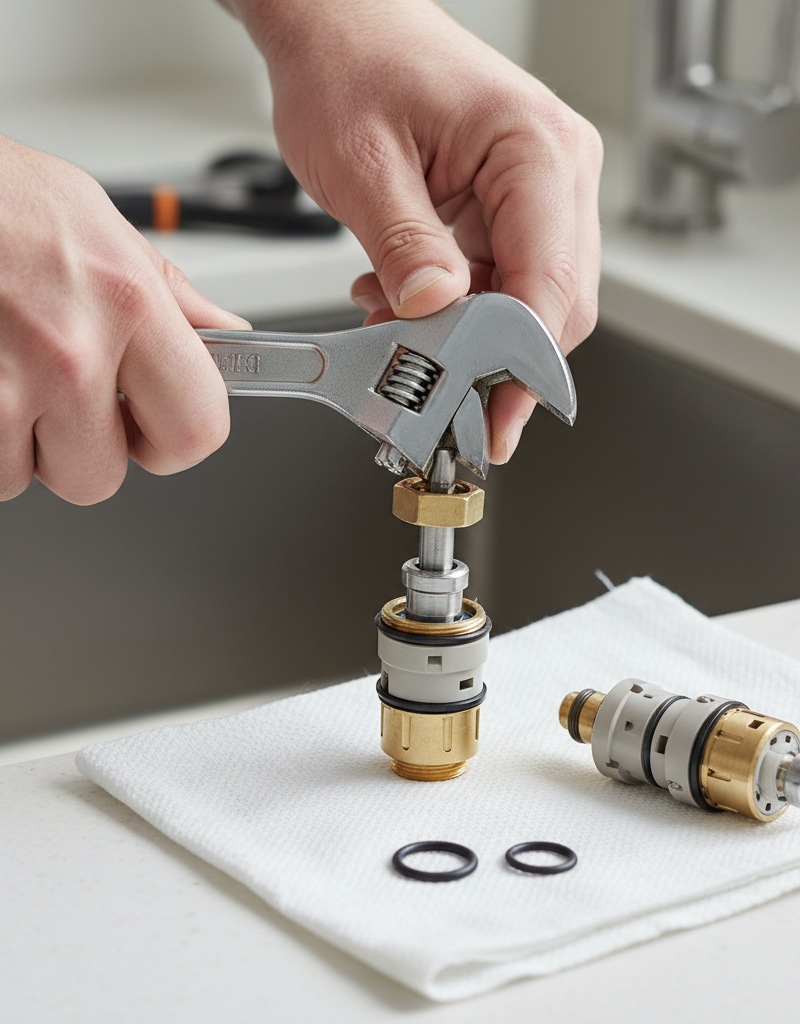
Remove the Retaining Mechanism — For ball faucets, use a special 'faucet repair tool' (often included in repair kits) to unscrew the slotted cap. For disc fawcets, use an adjustable wrench to carefully unscrew the large retaining nut. For cartridge faucets, remove the small retaining clip (often an 'E-clip' or a screw-in pin) with needle-nose pliers or a small flat-head screwdriver, then unscrew the retaining nut or collar.
- Caution: Don't lose the small retaining clips or screws. They are crucial for holding the cartridge or ball in place.
-
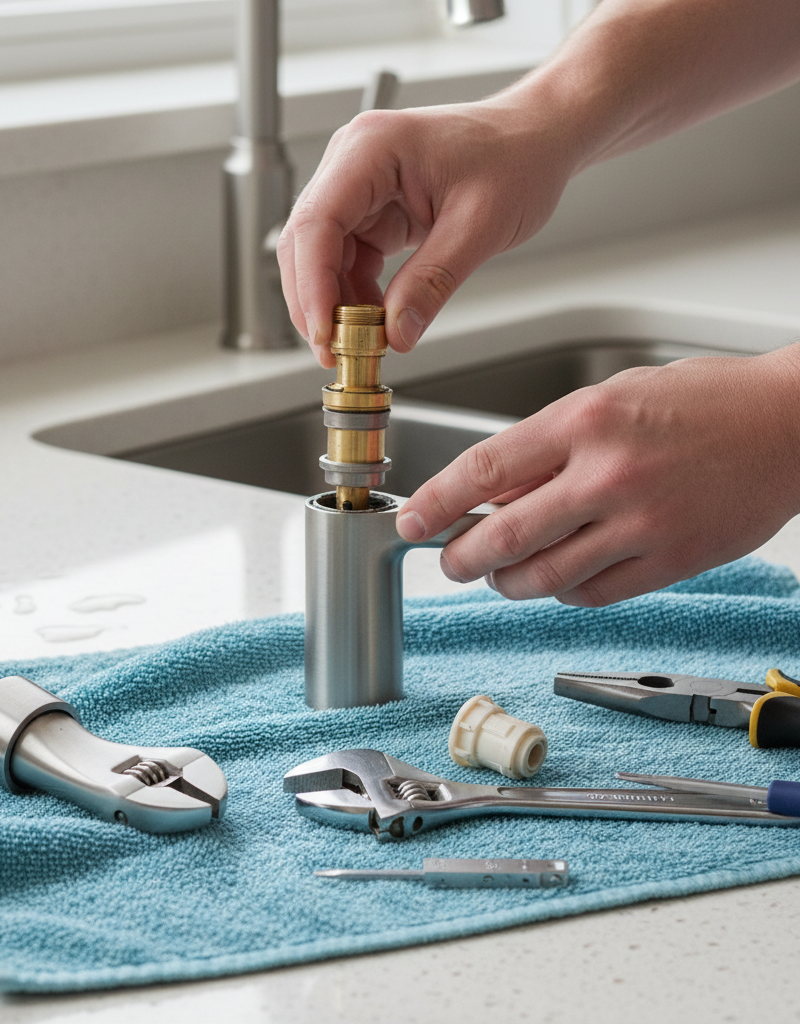
Extract the Worn Components — Gently pull out the cartridge, ball, or ceramic disc assembly. You might need to wiggle it or use pliers to get a good grip, being careful not to scratch the internal surfaces of the faucet. Pay attention to how it's oriented.
- Inspect and Diagnose: Look closely at the extracted parts, especially O-rings and rubber/silicone seals. Are they cracked, hardened, flattened, or covered in mineral deposits? These are the likely culprits for your leak.
- For cartridge faucets: Pull out the old cartridge. It may be stiff. Some cartridges require specific alignment during removal and reinstallation, so note its orientation. If it's particularly stubborn, a cartridge puller tool can assist.
- For ball faucets: Remove the internal components: the ball, the springs and rubber seats beneath it, and the cam and packing washer inside the cap. These are almost always replaced as a kit.
- For disc faucets: Lift out the ceramic disc assembly. Inspect the rubber seals underneath the lower disc. If the ceramic discs are scratched or chipped, the entire disc assembly will need replacement.
-
Clean the Faucet Body — Before installing new parts, use a small brush or old toothbrush to clean out any mineral deposits, rust, or debris from inside the faucet body and the spout. A vinegar solution can help dissolve stubborn deposits. Rinse thoroughly.
- Important: Ensure all surfaces where seals will sit are perfectly clean and smooth to guarantee a good seal with the new components.
-
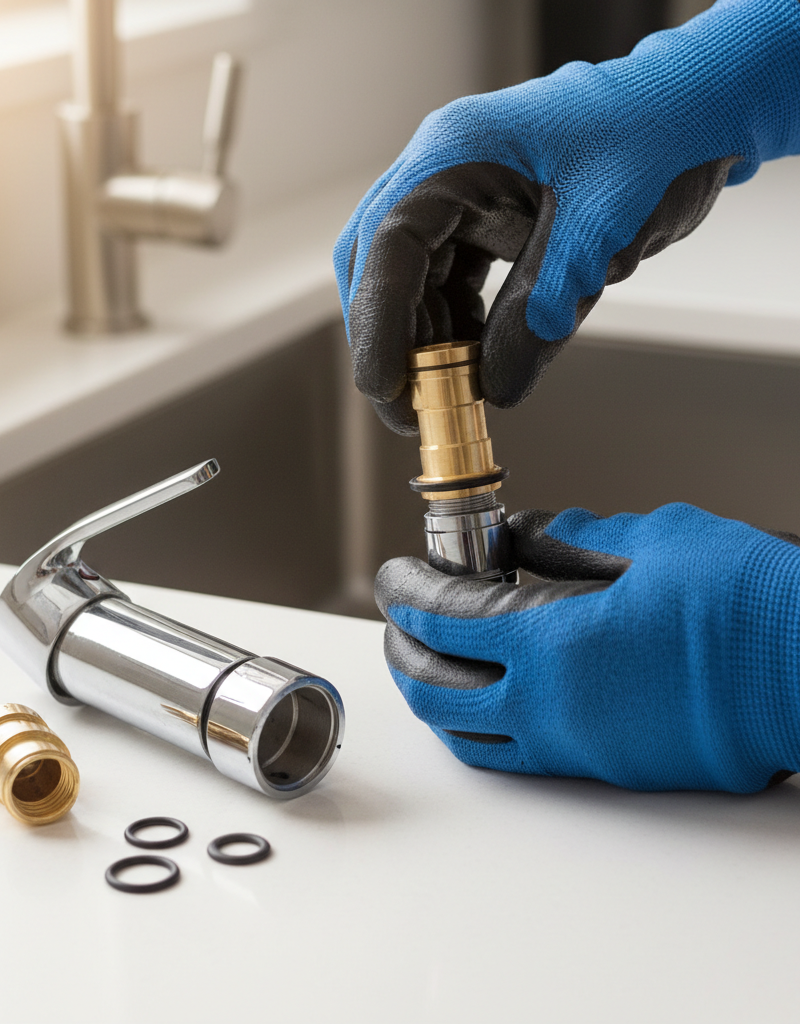
Install New Components — Carefully insert the new O-rings, seals, springs, ball, or cartridge. Ensure all components are correctly oriented and seated. Apply a small amount of plumber's silicone grease (NOT petroleum jelly) to new O-rings and seals. This helps them slide into place and creates a better seal.
- Matching parts: It's essential to use the correct replacement parts for your specific faucet make and model. Take the old parts to a hardware store to ensure you get an exact match. Universal repair kits exist but may not perfectly fit all faucets.
- Cartridge alignment: If replacing a cartridge, ensure any alignment nubs or marks on the cartridge match those in the faucet body.
-
Reassemble the Faucet — Work backward through the disassembly steps. Replace the retaining clip or nut, install the handle, and secure it with its screw. Don't overtighten the handle screw, as this can crack the handle or make future removal difficult.
-
Restore Water & Test — Slowly turn the hot and cold water supply valves back on under the sink. Turn them counter-clockwise until fully open. Check for leaks immediately. Operate the faucet, checking both hot and cold, and different flow rates. Wipe the area thoroughly and monitor for a few minutes.
- Residual drips: A few initial drips are normal as air is pushed out of the lines. If the leak persists after a minute or two, turn off the water again and re-check your work, paying close attention to seal placement and tightness.
Common Causes
- Worn-Out O-Rings and Seals: This is by far the most frequent culprit. Over time, the rubber or silicone O-rings and seals that create watertight barriers within the faucet dry out, harden, crack, or get compressed, losing their ability to seal effectively. Hot water can accelerate this degradation.
- Damaged Faucet Cartridge: In cartridge-style faucets (very common in single-handle designs), the entire cartridge acts as the flow and temperature control mechanism. If internal components of the cartridge break, crack, or its O-rings fail, the cartridge itself needs to be replaced.
- Mineral Buildup (Hard Water): Hard water contains dissolved minerals like calcium and magnesium. These minerals can accumulate on internal faucet parts, especially around seals and moving components. This buildup can abrade O-rings, prevent full closure of valves, or even scratch ceramic discs, leading to leaks.
- Loose Packing Nuts: While less common in modern single-handle designs, some older models or specific brands may have a packing nut around the stem of the handle. If this nut loosens, water can seep past it.
- Defective or Damaged Ball/Disc Assembly: In ball-type faucets, the plastic or metal ball can sometimes chip or become corroded. In ceramic disc faucets, the ceramic discs can become scratched or cracked, disrupting the precise sealing required for leak-free operation.
- Improper Installation: If a faucet was not installed correctly initially, or if a previous repair involved improperly seated or tightened components, it can lead to premature leaks.
Common Mistakes
- Forgetting to Turn Off Water Supply: This is a surprisingly common mistake that can lead to a significant mess, water damage, and even a slip hazard. Always ensure both hot and cold supply valves are fully closed before starting.
- Over-Tightening Components: While you want components to be snug, overtightening screws, nuts, or the handle itself can strip threads, crack plastic parts, or deform rubber seals, leading to new leaks or making future repairs more difficult. Tighten until snug, then just a quarter-turn more.
- Not Replacing All Worn Parts: Often, DIYers will only replace the most obvious damaged part. However, if one seal is worn, others in the same assembly are likely to follow soon. It's often best to replace all O-rings, seals, and springs as a kit for a complete, lasting repair.
- Using the Wrong Replacement Parts: Faucet components are not universally interchangeable. Using a generic O-ring or a cartridge not specifically designed for your faucet's make and model can result in an ill-fitting repair that leaks immediately or fails quickly. Always match the original parts or refer to your faucet's manufacturer specifications.
- Ignoring Internal Cleaning: Mineral buildup and debris inside the faucet body can quickly compromise new seals. Skipping the cleaning step can lead to a leak recurring shortly after the repair.
- Using the Wrong Lubricant: Petroleum jelly (Vaseline) is an excellent lubricant but it can degrade rubber O-rings over time, causing them to swell and fail. Always use a silicone-based plumber's grease, which is formulated to be compatible with rubber and plastic components in wet environments.
Cost & Time Breakdown
| Task | DIY Cost | Pro Cost | Time |
|---|---|---|---|
| Identifying Faucet Type | $0 | Part of service call | 5 min |
| Replacement O-rings/Seals | $3–$10 | Included | 30 min |
| Replacement Cartridge/Ball Kit | $15–$50 | Included | 30–60 min |
| Specialty Tools (optional) | $15–$25 | Included | 0 (initial buy) |
| Plumber Service Call | N/A | $150–$300+ | 1–2 hours |
Tips & Prevention
- Annual Inspection: At least once a year, take a moment to visually inspect your faucets. Look for any signs of corrosion, loose handles, or tiny drips. Addressing minor issues early can prevent major leaks.
- Gentle Usage: Avoid forcing faucet handles. If a handle feels stiff, it often indicates internal wear or mineral buildup. Forcing it can damage components further. A little silicone grease can sometimes loosen a stiff handle.
- Water Softeners: If you live in an area with hard water, consider installing a whole-house water softener. This significantly reduces mineral buildup in all your plumbing fixtures and appliances, extending their lifespan and preventing leaks.
- Know Your Faucet Make/Model: Keep a record of your faucet's brand and model number (often found in the original manual or on a label under the sink). This makes purchasing correct replacement parts much easier.
- Don't Over-Tighten: When wiping down your faucet or cleaning, avoid any action that might put undue pressure or torque on the handle assembly. Loosening or overtightening it can stress internal seals.
- Check Under the Sink: Periodically check the cabinet under your sink for any signs of moisture or drips. A small leak might go unnoticed until it causes significant damage. Early detection is key.
When to Call a Professional
While fixing a leaky single-handle faucet is a common DIY task, there are specific situations where calling a licensed plumbing professional is the smarter and safer choice. If you've attempted the repair (replacing O-rings, seals, or the cartridge) and the leak persists, it could indicate a more complex issue within the faucet body or the plumbing lines. A plumber can accurately diagnose if the leak is caused by a hairline crack in the faucet housing, an issue with the underlying sink connections, or even a problem with water pressure that's stressing the faucet components. Additionally, if the shut-off valves under the sink are seized, broken, or leak themselves when operated, a professional will be needed to address the water supply issue safely before any faucet repair can commence. Never force a stuck shut-off valve, as it could lead to a burst pipe. If you encounter any unexpected flooding, significant water pressure loss, or damage to your cabinetry, turn off the main water supply to your house immediately and contact a professional plumber. They have the specialized tools and expertise to handle complex repairs without causing further damage to your home’s plumbing system. For gas and high-voltage electrical, always call a pro.
Related Articles
Keep troubleshooting with these hand-picked guides from FixlyGuide:
- The 30-Minute Trick to Stop Your Single-Handle Faucet Drip (And What Plumbers Charge if You Don't) — A persistent drip from a single-handle faucet often signals a worn-out cartridge, a common issue homeowners can fix with basic tools in und…
- The $5 Single-Handle Faucet Fix Plumbers Don't Want You to Know — Stop that annoying drip! Most single-handle faucet leaks are caused by worn-out O-rings or seals, a repair homeowners can easily tackle in…
- The $5 Single-Handle Faucet Fix Most Homeowners Ignore (And Pros Charge $200 For) — A single-handle leaky faucet can often be fixed with a simple, inexpensive DIY repair, saving you hundreds on a plumber.
- The 5-Minute Trick to Stop a Dripping Single-Handle Faucet (No Plumber Needed) — A persistent drip from your single-handle faucet is usually caused by a worn-out cartridge, a repair you can typically complete yourself in…
- The $5 Secret to Fixing Your Drip: Why Single-Handle Faucets Leak (and the O-Ring Trick) — A persistent drip from your single-handle faucet is often caused by worn-out O-rings or seals, a common issue with a simple, inexpensive DI…
- The Secret Reason Your Thermostat Lies (And How to Fix It in Minutes) — Discover why your thermostat isn't hitting its set temperature and learn simple, actionable steps to diagnose and fix the most common culpr…
Should you do this yourself?
Answer five quick questions before you start. Safety outranks savings every time.
Your experience with work like this
How high do you have to work?
Does the job involve any of these?
Will it need a permit?
Specialty tools
Free and instant. Educational guidance only — not a quote, inspection, or professional diagnosis.
Questions to ask before you sign
Ask every contractor the same questions and the cheapest bid stops looking cheapest. Check them off as you go — your progress is saved on this device.
Free, no signup. Bring this to every walkthrough so you compare bids on the same terms.
What should this project cost?
Enter your project details for a realistic cost range before you call anyone.
Common repairs run $150–$650; repipes and water-heater replacements reach $1,500–$4,500.
- Regional adjustment
- National average
- Labor share (typical)
- ~$754
- Quotes to collect
- 3 written estimates
Educational estimate based on national averages — not a binding quote. Always confirm with written local estimates.
Fixly Project Decision Box
- DIY difficulty
- Moderate
- Estimated time
- 30 minutes – half a day
- Cost level
- Moderate
Main tools / materials
- Adjustable wrench
- Plunger or drain auger
- Bucket and towels
- Thread tape
When to stop and call a pro
- Water you cannot shut off at the fixture or main
- Sewage backing up into more than one fixture
- Water near electrical panels or outlets
- Gas water heater work beyond relighting a pilot
Need professional help?
Get a Licensed PlumberHandle this before it gets worse
First steps that limit damage, then a way to reach a qualified pro.
- Emergency repair checklistThe first steps that limit damage before a pro arrives.Open
- Get local estimatesSend one request and compare written estimates from vetted pros.Open
- Estimate this projectGet a cost range for your scope and ZIP before you call anyone.Open
Free, no signup required. Estimates are educational guidance, not a quote or an inspection.
Get the print-ready PDF of this guide
A clean, ad-free, printable version you can keep on your phone or pin to the workshop wall. Free with a FixlyGuide account.
- Print-optimized layout
- Tools, materials & every step included
- Saved to your account
Frequently asked questions
Why does my single-handle faucet keep leaking?+
Most single-handle faucet leaks are caused by worn-out rubber O-rings, silicone seals, or a damaged internal cartridge. These components degrade over time due to normal use and mineral deposits from hard water.
Can I replace the parts myself, or do I need a new faucet?+
In most cases, you can easily replace the internal components like O-rings, seals, or the cartridge yourself. These parts are inexpensive and readily available at hardware stores. A full faucet replacement is usually only necessary if the faucet body is cracked or severely corroded.
What tools do I need to fix a leaky single-handle faucet?+
You'll typically need a Phillips or flat-head screwdriver, an Allen wrench (sometimes), needle-nose pliers, and an adjustable wrench. A faucet repair kit might include specialty tools specific to your faucet type.
How much does it cost to fix a dripping faucet?+
A DIY repair for a dripping single-handle faucet usually costs between $3 and $50 for replacement parts (O-rings, seals, or a new cartridge). If you hire a professional plumber, the cost can range from $150 to $300 or more, depending on the complexity and your location.
How long does it take to fix a leaky faucet?+
For an experienced DIYer, fixing a leaky single-handle faucet can take as little as 20-30 minutes. For a novice, plan for 1 to 2 hours, especially if you need to identify parts or clean mineral buildup.
Discussion
Loading comments…