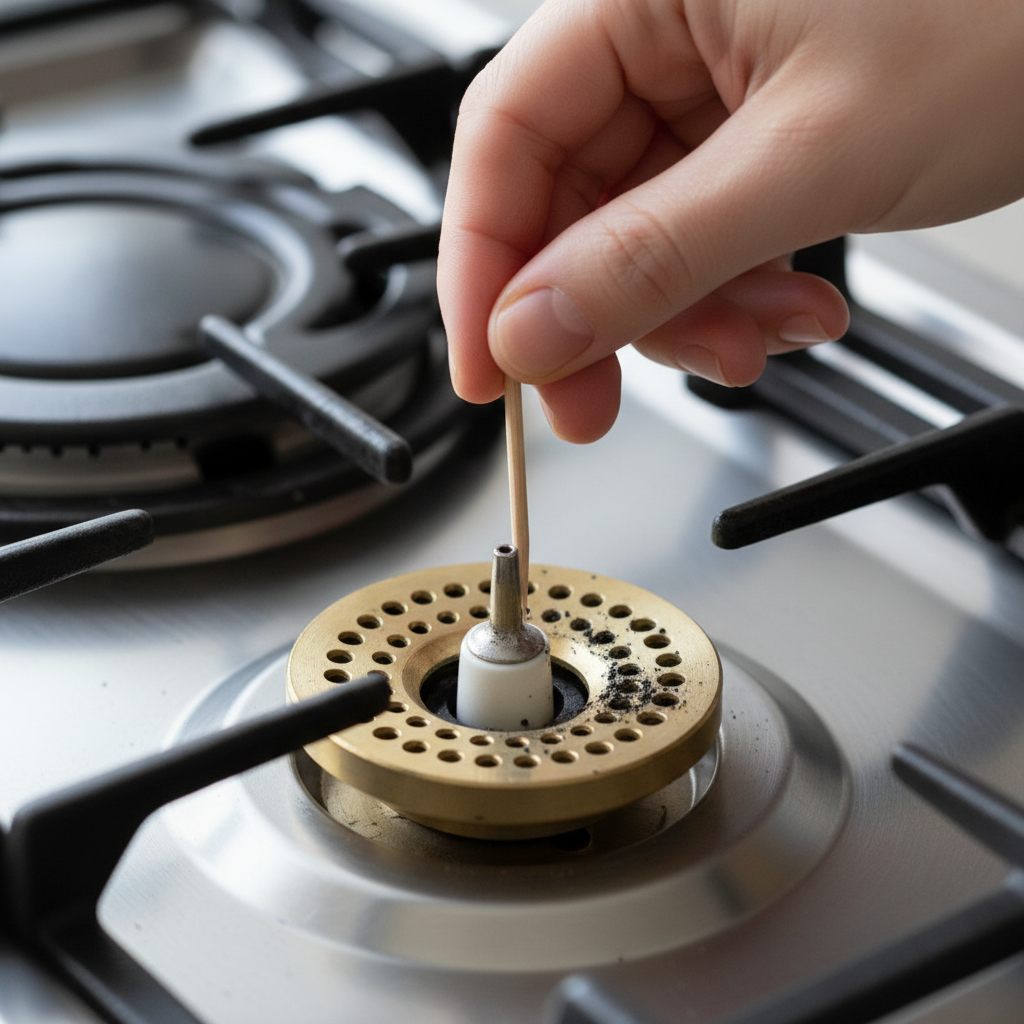
- Food Debris & Spills: The most frequent culprit. Bits of food, grease, or sticky spills can clog the gas ports or coat the igniter, preventing the spark. This is especially true after simmering or boiling liquids, which can easily overflow.
- Moisture: Water, cleaning solutions, or even high humidity can temporarily short out the igniter or prevent a strong spark. This often resolves itself once dried thoroughly.
- Misaligned Burner Cap: If the burner cap is not seated perfectly flat and centered on the burner base, it can affect gas distribution or obstruct the igniter's spark path.
- Worn or Damaged Igniter: Over time, igniters can wear down, crack, or become faulty, leading to a weak or absent spark. This usually requires replacement.
- Clogged Orifice: Less common for a single burner but possible, the small brass orifice beneath the burner can become clogged, restricting gas flow. This typically requires more involved disassembly.
Electrical · Panel or service upgrade
| Project category | Electrical |
|---|---|
| Problem type | Panel or service upgrade |
| Trade required | Electrical |
| Urgency | Planned project |
| Safety risk | High safety risk |
| DIY suitability | Licensed pro only |
| Cost category | High cost |
| Typical timeline | Permit plus utility scheduling, commonly 2–6 weeks |
| Contractor type | Licensed electrician |
Repair option
Add a subpanel when the main service is adequate.
Replacement option
Full service upgrade with utility coordination and permits.
Common causes
- Obsolete or recalled panel brands
- Service capacity too small for added loads
- No room for required AFCI/GFCI breakers
Relevant tools:project cost estimatorcompare quotes
Published June 10, 2026Last updated August 18, 2026
Tools & materials you'll need
Affiliate linksAs an Amazon Associate FixlyGuide earns from qualifying purchases — at no extra cost to you. Prices and availability are accurate as of publication and subject to change.
Quick Answer
Is your gas stove burner clicking away without igniting? More often than not, the culprit isn't a complex electrical issue or a faulty gas line, but a simple blockage. Food particles, grease, or even cleaning solution residue can easily clog the tiny igniter port or coat the igniter itself, preventing the necessary spark from connecting with the gas. A quick, targeted cleaning of the igniter and its surrounding area is usually all it takes to get your burner back in action.
The Problem
You're cooking dinner, and suddenly, one of your gas stove burners refuses to ignite. You hear the tell-tale clicking sound of the igniter, signaling that it's trying to spark, but no flame appears. Or perhaps there's no clicking at all. This common household frustration can interrupt meal preparation and lead to unnecessary worries about expensive repairs. While it might seem like a daunting problem, many non-lighting gas burner issues stem from easily identifiable and fixable causes, particularly those related to the igniter system or gas flow. Before you consider replacing parts or calling a professional, understanding the basic mechanics and systematically troubleshooting the problem can save you time and money.
How It Works
Understanding how a gas stove burner ignites provides crucial context for troubleshooting. When you turn a burner knob, two things typically happen: First, you open a valve that allows natural gas or propane to flow from the gas line, up through the burner tube, and out through the small holes (ports) around the burner head. Second, an electrical circuit is activated, sending power to a small ceramic igniter located near the burner. This igniter, often a small white or off-white post with a metal tip, generates a high-voltage spark. This spark jumps across a small air gap to the metal burner head, creating the necessary ignition point for the gas. The clicking sound you hear is the repeated sparking of the igniter. Once the gas ignites, the flame itself generates heat that is detected by a thermocouple or thermopile (on some models), signaling the system to stop sparking. If the igniter is dirty, wet, or misaligned, the spark may be too weak, misdirected, or entirely absent, preventing the gas from igniting. Similarly, if the gas ports on the burner head are blocked, gas won't reach the igniter, or won't be distributed evenly enough for a stable flame.
Step-by-Step Fix
Safety First — Always ensure your stove is unplugged or the circuit breaker for the stove is off before performing any cleaning or maintenance. Gas work is inherently dangerous; if at any point you smell gas without ignition or feel uncomfortable, turn off the gas supply and call a professional.
1. Disconnect Power and Gas — Crucial first step for safety.
Unplug your gas stove from the wall outlet. If it's hardwired, switch off the corresponding circuit breaker in your home's electrical panel. Additionally, locate the main gas shut-off valve for your range – it's usually a yellow handle or lever behind the stove – and turn it to the 'off' position (perpendicular to the gas line). This prevents accidental gas leaks during your inspection and cleaning.
2. Remove Burner Grates and Caps — Access the heart of the problem.
Once power and gas are off, carefully lift off all burner grates from the stovetop. Next, remove the burner caps, which are the round metal discs that sit on top of the burner base. These are usually just lifted off. Place them aside in an organized manner so you know which belongs to which burner if they vary in size.
3. Inspect for Blockages — Look for the obvious culprits.
Visually inspect the igniter (the small, often white, ceramic rod with a metal tip) and the gas ports around the burner head. Look for any visible food debris, spilled liquids (which can leave residue when dry), grease, or other obstructions. Sometimes, even crumbs or a stray piece of pasta can block the igniter port or a gas hole. Pay close attention to the small opening right next to the igniter, known as the igniter port – this is where the gas mixes with the spark.
- If you see spills or heavy residue: Proceed to cleaning.
- If igniter looks discolored or cracked: A cracked igniter needs professional replacement. Do not attempt to fix it yourself.
4. Clean the Igniter — The most common area of failure.
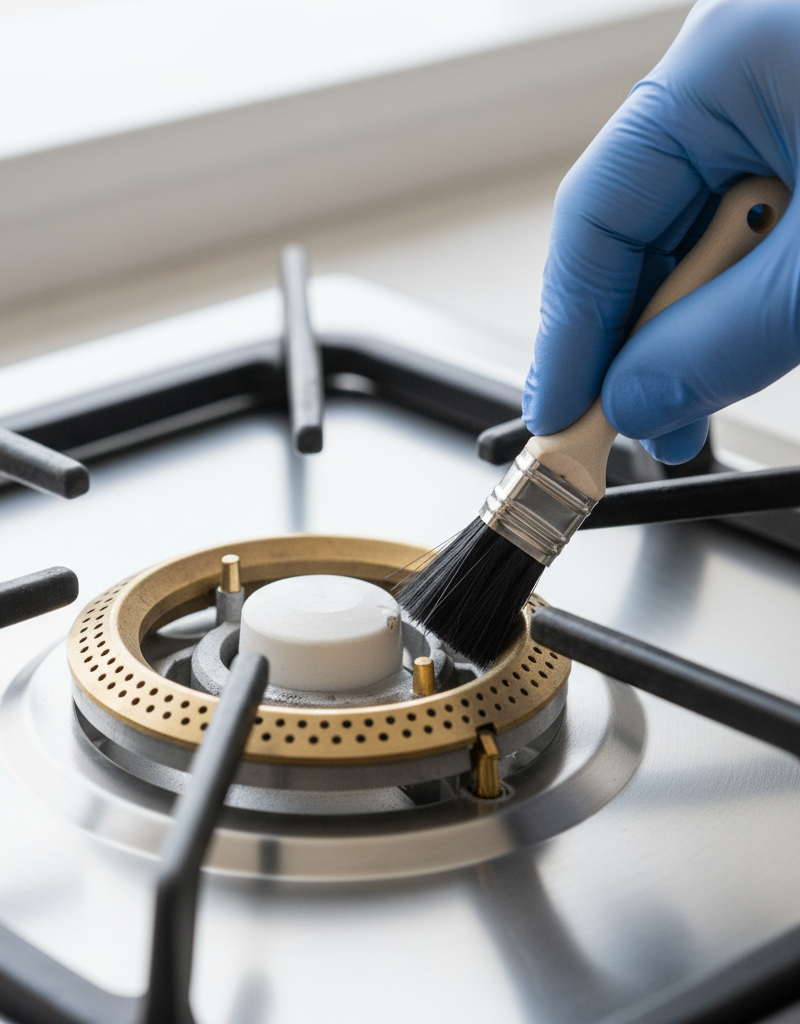
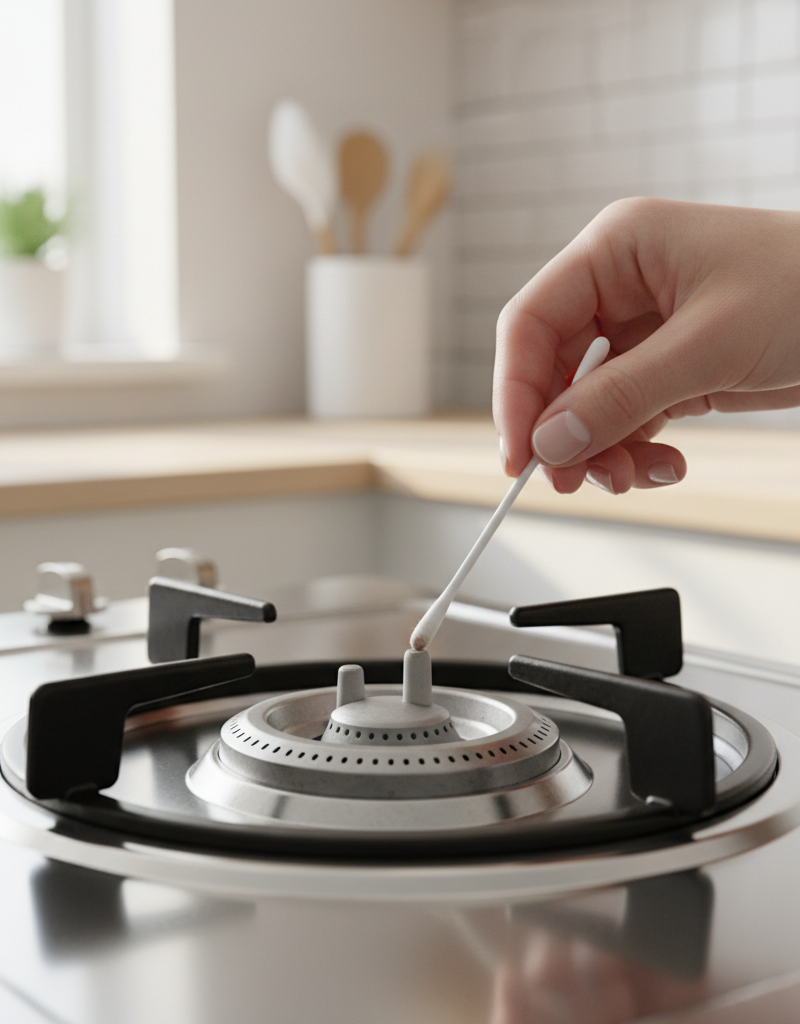
Use a soft-bristled toothbrush or a cotton swab dampened slightly with rubbing alcohol to gently scrub around the igniter tip. The goal is to remove any accumulated grease, food particles, or moisture that might be preventing a strong spark. Be careful not to bend or damage the igniter. If alcohol doesn't seem to cut through stubborn grime, a non-abrasive degreaser designed for kitchen use can be applied very sparingly to a cloth, then used to wipe the igniter. Ensure no liquid drips into the gas ports.
- Alternatively: For very stubborn, calcified residue, a fine-grit emery board or piece of sandpaper can be used gently to buff the metal tip of the igniter, but only if absolutely necessary and with extreme care not to damage the ceramic base.
5. Clear Burner Head Ports — Ensure even gas flow.
Take a thin, rigid tool like a sewing needle, a paper clip (unbent), or a toothpick and carefully insert it into each of the tiny gas ports around the burner head. Gently wiggle it to dislodge any stuck food particles or debris. Be thorough, but avoid widening the holes or scratching the metal aggressively. A can of compressed air can also be used to blow out any loose particles from the ports after manual clearing. Ensure all ports are clear to allow for even gas distribution.
6. Dry All Components Thoroughly — Moisture is the enemy of ignition.
After cleaning, it's crucial that all components, especially the igniter and burner head, are completely dry. Use a clean, dry cloth to wipe everything down. If you used any liquids, allow ample time for air drying – at least 15-30 minutes, or even longer if it was a significant spill. Moisture can short out the igniter or prevent the spark from forming effectively. You can also use a hairdryer on a cool setting to speed up the drying process, holding it a safe distance away.
7. Reassemble and Test — The moment of truth.
Once everything is spotless and bone dry, carefully place the burner caps back onto their respective burner bases, ensuring they are seated correctly and not wobbly. Then, replace the burner grates. Reconnect the stove's power by plugging it back in or flipping the circuit breaker. Turn your main gas shut-off valve behind the stove back to the 'on' position (parallel to the gas line). Go to the problematic burner and try to ignite it. It might take a few extra seconds of clicking for gas to reach the burner again after being shut off.
- If it still doesn't light: Recheck all connections, and ensure no moisture remains. If the igniter still clicks but doesn't light, consider the possibility of a weak spark, which could indicate a failing igniter or ignition module. If there's no clicking at all, check if a fuse has blown on the range (if applicable) or if the main power supply is truly engaged. Also, ensure the burner cap is seated perfectly flat – a slight misalignment can prevent ignition.
8. Check for Gas Flow (Without Ignition) — A delicate diagnostic step (use caution).
ONLY ATTEMPT THIS IF YOU ARE CONFIDENT THERE IS NO IGNITION AND THE IGNITER IS NOT SPARKING. With extreme caution, if the igniter is not clicking at all when you turn the knob, you can briefly turn the burner knob to the lowest flame setting for just 1-2 seconds and listen for a faint hiss of gas. If you hear gas, it confirms gas flow to the burner, pointing the issue more squarely at the igniter or ignition module. If you hear no hiss, the problem might be more upstream with the gas valve or a deeper blockage. IMMEDIATELY turn the knob off after listening to prevent gas accumulation. If you smell gas at any point without ignition, open windows, evacuate, and call your gas company immediately.
Common Causes
- Food Debris & Spills: The most frequent culprit. Bits of food, grease, or sticky spills can clog the gas ports or coat the igniter, preventing the spark. This is especially true after simmering or boiling liquids, which can easily overflow.
- Moisture: Water, cleaning solutions, or even high humidity can temporarily short out the igniter or prevent a strong spark. This often resolves itself once dried thoroughly.
- Misaligned Burner Cap: If the burner cap is not seated perfectly flat and centered on the burner base, it can affect gas distribution or obstruct the igniter's spark path.
- Worn or Damaged Igniter: Over time, igniters can wear down, crack, or become faulty, leading to a weak or absent spark. This usually requires replacement.
- Clogged Orifice: Less common for a single burner but possible, the small brass orifice beneath the burner can become clogged, restricting gas flow. This typically requires more involved disassembly.
- Ignition Module Failure: If multiple burners stop igniting simultaneously, the central ignition module that sends power to all igniters might be failing. This is a more complex electrical issue.
Common Mistakes
- Ignoring Safety Precautions: Failing to unplug the stove and shut off the gas before working is a dangerous oversight that can lead to electric shock or a gas leak.
- Using Abrasive Cleaners or Tools Carelessly: Scratching or damaging the igniter with overly aggressive scrubbing or harsh tools can render it useless. Similarly, widening gas ports can alter flame characteristics.
- Not Drying Thoroughly: Reassembling the stove while parts are still damp will simply lead to the same non-lighting problem, as moisture interferes with electrical sparking.
- Assuming a Major Problem First: Many homeowners jump to conclusions about expensive repairs or faulty parts without first checking for simple blockages or moisture, leading to unnecessary service calls.
- Overlooking the Burner Cap: The position of the burner cap is critical. A slightly off-kilter cap can easily prevent proper gas flow and ignition.
- Ignoring Other Burners: If only one burner is affected, the problem is most likely localized. If multiple or all burners suddenly stop igniting, the issue might be with the main power or the ignition module, shifting the troubleshooting focus.
Cost & Time Breakdown
| Task | DIY cost | Pro cost | Time |
|---|---|---|---|
| Diagnosing & Cleaning | $0–$5 | $75–$150 | 15–30 minutes |
| Replacing Single Igniter | $20–$40 | $120–$250 | 30–60 minutes |
| Replacing Burner Head (if damaged) | $30–$80 | $100–$200 | 30–60 minutes |
| Replacing Ignition Module | $80–$150 | $200–$400 | 1–2 hours |
| Gas Line/Orifice Clearing | $0 (DIY) | $150–$300 | 30–90 minutes |
Tips & Prevention
- Regular Cleaning: Make burner cleaning a routine part of your kitchen maintenance. Wipe down the burner areas and igniters regularly to prevent build-up. Aim for at least once a month, or more often if you cook frequently.
- Immediate Spill Cleanup: Address spills immediately after they occur (once the stove has cooled). This prevents liquids from drying and hardening over gas ports and igniters.
- Proper Burner Assembly: Always ensure burner caps and grates are correctly seated after cleaning or cooking. A slightly misaligned cap is a common cause of poor ignition.
- Use the Right Cleaning Tools: Stick to soft brushes, toothpicks, and cotton swabs for cleaning delicate igniters and small gas ports. Avoid harsh chemicals or metal scourers that can scratch or damage components.
- Check for Cracks: Periodically inspect igniters for visible cracks or damage. A damaged igniter will not spark efficiently and will need replacement.
- Burner Rotation: If you have multiple burners of the same size, sometimes rotating the caps or even the entire burner head (if removable) can help diagnose if the cap itself is the issue. However, always put back the correct size cap on the correct burner.
When to Call a Professional
While many igniter issues are DIY-friendly, certain situations warrant calling a licensed appliance technician or gas professional. If you've thoroughly cleaned all components and ensured they are dry, but the burner still won't light, it might indicate a deeper problem. Specifically, if you smell gas when attempting to ignite a burner and it doesn't light, immediately turn off the gas supply, ventilate the area, and call your gas company and a professional technician – this is a critical safety issue. Other signs to call a professional include if multiple burners fail simultaneously (suggesting an ignition module problem), if there's no clicking sound at all after verifying power, or if you suspect a blockage in the gas supply line beyond the burner itself. Complex electrical diagnostics or gas line repairs are best left to licensed experts to prevent serious safety hazards and ensure proper functioning of your appliance.
Related Articles
Keep troubleshooting with these hand-picked guides from FixlyGuide:
- The #1 Mistake Homeowners Make When a Gas Burner Won't Light (And the Easy Fix) — A gas stove burner that won't light is a common issue, often due to a clogged igniter or burner port, which homeowners frequently misdiagno…
- Why Your Outlet Died (Even If the Breaker's On) — Discover the hidden reasons an electrical outlet stops working, even when the circuit breaker appears to be on, and learn simple diagnostic…
- The #1 Mistake Homeowners Make When a Gas Burner Won't Light (And the Easy Fix) — Before you call a technician, discover the most common, overlooked reason your gas stove burner isn't lighting and how to fix it yourself i…
- Why is Your Light Switch Hot? (The Hidden Danger Most Homeowners Miss) — A hot light switch isn't just uncomfortable; it's a critical warning sign of electrical issues that should never be ignored due to fire ris…
- The 3 Hidden Reasons Your Gas Burner Won't Light (Beyond a Clogged Pilot) — Before you call a technician, learn the common culprits behind a gas stove burner that refuses to light, from simple clogs to ignition comp…
- The 5-Minute Trick to Restore Your Kitchen Sink Sprayer's Lost Pressure — Restore your kitchen sink sprayer's low pressure with a quick, simple trick that often takes less than five minutes and requires no special…
Should you do this yourself?
Answer five quick questions before you start. Safety outranks savings every time.
Your experience with work like this
How high do you have to work?
Does the job involve any of these?
Will it need a permit?
Specialty tools
Free and instant. Educational guidance only — not a quote, inspection, or professional diagnosis.
What should this project cost?
Enter your project details for a realistic cost range before you call anyone.
Outlet and switch work usually $150–$400; panel upgrades commonly $1,800–$4,200.
- Regional adjustment
- National average
- Labor share (typical)
- ~$709
- Quotes to collect
- 3 written estimates
Educational estimate based on national averages — not a binding quote. Always confirm with written local estimates.
Frequently asked questions
Why is my gas burner clicking but not lighting?+
The most common reason for a gas burner clicking but not lighting is a dirty or wet igniter. Food debris, grease, or cleaning solution residue can block the spark or gas flow. Thoroughly cleaning and drying the igniter and surrounding gas ports usually resolves this.
How do I clean a gas stove igniter?+
First, disconnect power and gas to your stove. Remove burner grates and caps. Use a soft-bristled toothbrush or a cotton swab dampened with rubbing alcohol to gently scrub the igniter tip and adjacent gas ports. Ensure everything is completely dry before reassembling and testing.
Can a wet igniter cause a gas burner not to light?+
Yes, absolutely. Moisture from spills or cleaning can temporarily short out the igniter, preventing it from producing a strong enough spark to ignite the gas. Allowing the igniter and burner area to dry completely will often fix the issue.
When should I call a professional for a gas burner that won't light?+
Call a professional if you smell gas without ignition, if multiple burners fail simultaneously, if there's no clicking sound at all after checking power, or if you suspect a deeper issue with the gas line or electrical components. Gas issues can be dangerous and are best left to licensed experts.
How do I know if my gas stove igniter is bad?+
If the igniter is visibly cracked, or if it clicks consistently but never produces a strong spark (even after thorough cleaning and drying), it might be faulty. If only one burner is affected and cleaning doesn't help, a failing igniter is a strong possibility.
Discussion
Loading comments…