- Why Does Only One Room Have Flickering Lights? The Real Culprit — Flickering lights in a single room often point to a localized electrical issue, frequently a loose connection in a light fixture or switch.
- Why Does Only One Room Have Flickering Lights? The Real Culprit — Flickering lights in a single room often point to loose connections, an overloaded circuit, or a failing light fixture, rather than a whole…
- Why Does Only One Room Have Flickering Lights? The Real Culprit — Flickering lights in a single room often point to a loose connection, a faulty bulb, or an overloaded circuit, rather than a whole-house el…
- Why Does Only One Room Have Flickering Lights? The Real Culprit — Flickering lights in a single room often point to a localized electrical issue, ranging from a loose bulb to a faulty switch or fixture, ra…
- Why Does Only One Room Have Flickering Lights? The Real Culprit — Flickering lights in a single room often point to a localized electrical issue, frequently a loose connection, rather than a whole-house pr…
Electrical · Outlet or lights not working
| Project category | Electrical |
|---|---|
| Problem type | Outlet or lights not working |
| Trade required | Electrical |
| Urgency | Soon — within weeks |
| Safety risk | Moderate safety risk |
| DIY suitability | DIY for experienced homeowners |
| Cost category | Low cost |
| Typical timeline | Often under an hour once the cause is found |
| Contractor type | Licensed electrician |
Repair option
Reset the upstream GFCI first, then replace the failed device.
Replacement option
Rewire the circuit when connections are failing in multiple boxes.
Common causes
- Tripped GFCI upstream on the same circuit
- Loose neutral in a daisy-chained run
- Failed switch or receptacle
Relevant tools:diy difficultydiy or hire a pro
Published July 30, 2026Last updated August 17, 2026
Tools & materials you'll need
Affiliate linksAs an Amazon Associate FixlyGuide earns from qualifying purchases — at no extra cost to you. Prices and availability are accurate as of publication and subject to change.
Quick Answer
Flickering lights in just one room almost always point to a loose electrical connection on that specific circuit, not some big house-wide problem. I’ve found it’s usually a small fix, often at the light fixture itself, a wall switch, or an outlet. Start with the bulb, then check the fixture wiring, and then move over to the switch or any outlets in that room. Simple order. Saves a lot of chasing your tail.
The Problem
You’re settled in, maybe reading a book or watching TV, and all of a sudden the lights in just one room start doing that little dim-and-brighten thing—sometimes they even blink out for a second. It’s not the whole house going dark, and it’s not the neighborhood having a fit; it’s just that room. I get calls for this all the time. Folks jump straight to the worst-case stuff: bad breaker, fried wiring in the walls, maybe even the utility company. Nine times out of ten, though, it’s something a lot simpler: a loose connection.
Think of it like a kink in a garden hose. If the connection isn’t solid, the electricity doesn’t move cleanly, and the lights pay for it. That shaky power can be annoying, sure, but it can also beat up bulbs early and, in rare cases, turn into a fire hazard if the loose spot starts making heat. I pulled a ceiling light in Frisco last month that had exactly this mess—one wire nut barely hanging on, and the homeowner thought the whole circuit was toast. It wasn’t. My job here is to help you track down where that loose connection’s hiding and tighten it up safely.
How It Works
To get why a light flickers, you’ve got to know the path electricity takes to get there. Power comes from the utility pole, through your electrical meter, and into your main service panel—that big metal box with all the breakers. From there, the circuits branch off, and each breaker protects one of them. A circuit might feed a whole room, or just a handful of outlets and lights. Your kitchen, for example, might have three or four circuits: one for the fridge, one for the counter outlets, one for the lights, and maybe another for the microwave.
Each light fixture or outlet in a room is part of that circuit, pulling power as needed. When a light flickers, it means the flow to that light isn’t steady. Inside the walls, wires run from the breaker panel to junction boxes, then to switches, and finally to the fixture or outlet. At every one of those connection points—where wires are twisted together with wire nuts, or clamped under terminal screws—something can loosen up over time. People walking upstairs, temperature swings, old brittle wire, all that can do it. The connection gets sloppy, resistance goes up, heat builds, and the current starts acting jumpy. That’s your flicker.
So no, it’s usually not too much power. It’s more often too little consistent power making it through. Once you understand that path, the hunt gets easier. You start at the bulb and work your way back, checking each spot where the circuit can fail. One weak link, and the whole thing acts up downstream. That’s electrical work in a nutshell.
Step-by-Step Fix
Ready to get those lights steady again? Here’s how I’d tackle it on a service call. And yeah, safety first—always kill the power at the breaker before you start messing with wires.
-
Check the Bulb — The simplest fix.
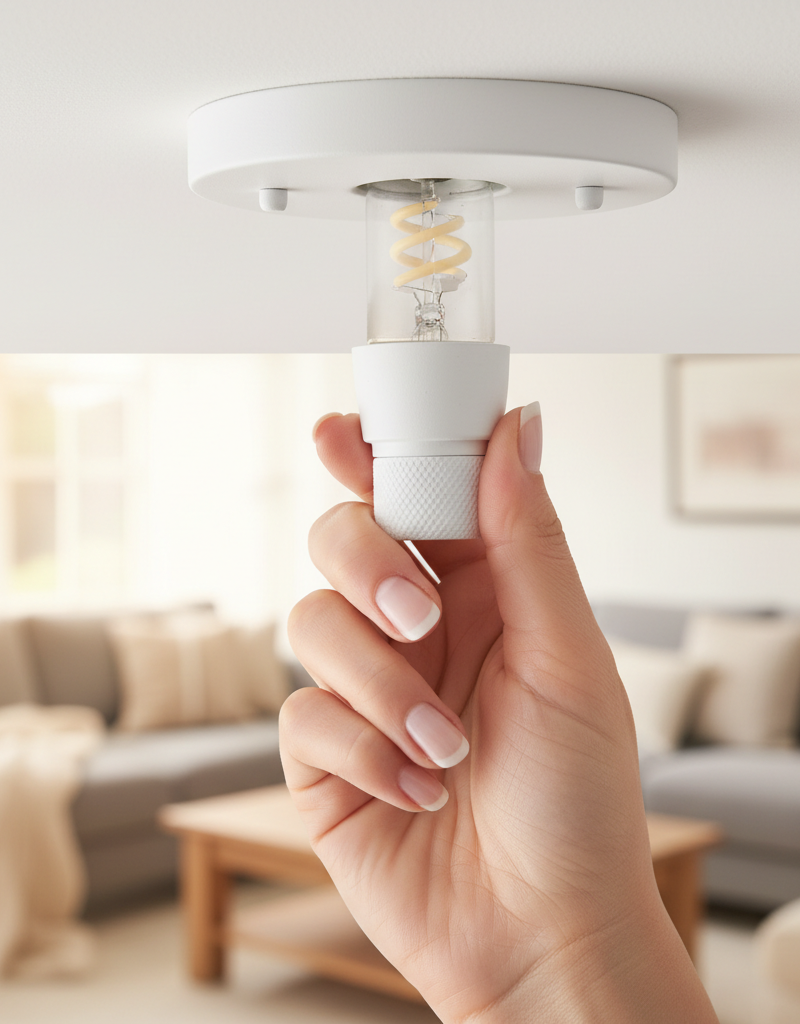
- Twist the bulb in its socket and make sure it’s seated all the way. Sometimes, that’s all it is. A new LED bulb might not play nice with an old dimmer switch, which can cause flicker, or a cheap LED might just be junk. I’ve seen brand new LEDs flicker right out of the box. Swap it with a known good bulb from another fixture and see what happens. If the flickering stops, you’ve found your culprit. Also take a look at the bulb base for bent tabs or scorch marks. Little stuff, big clue.
-
Examine the Light Fixture Wiring — Where connections often loosen.
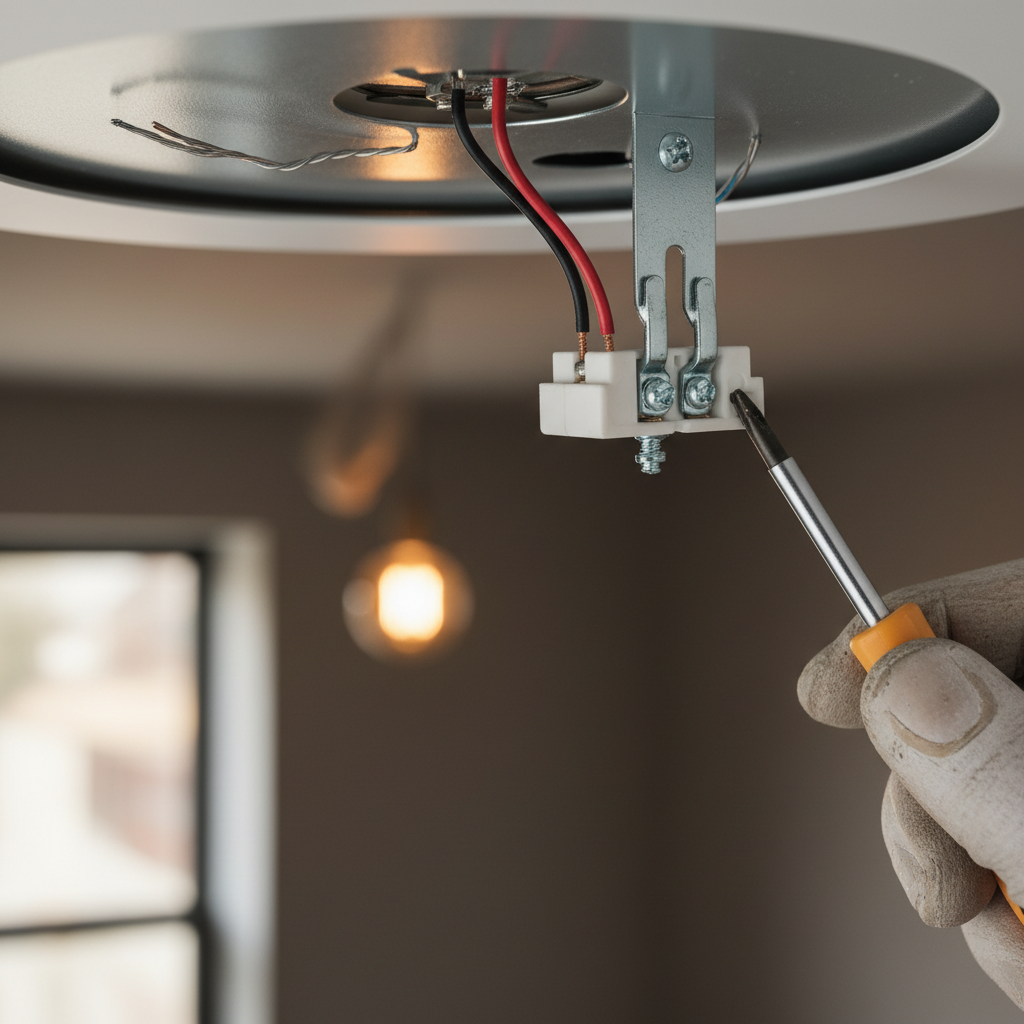
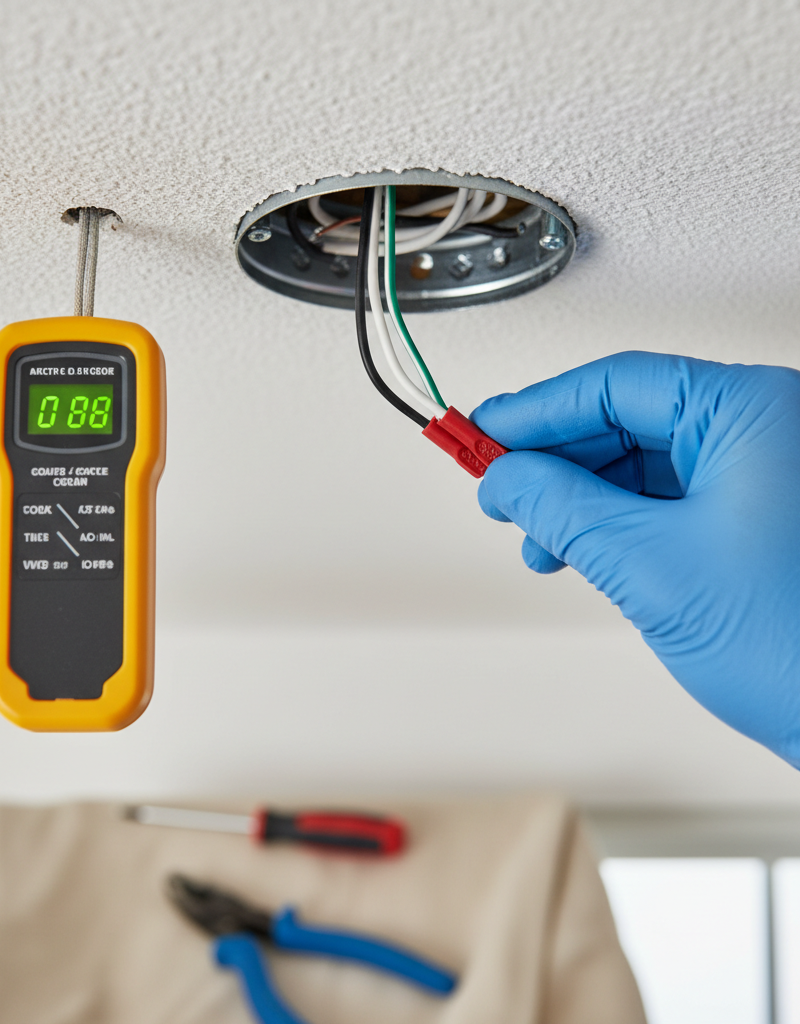
- TURN OFF THE POWER AT THE BREAKER FIRST. Don’t skip that. Seriously. Use a voltage tester to confirm the power’s dead before you touch anything. That’s the first step I take on every electrical job, no exceptions. Once you’re sure it’s off, unscrew the fixture canopy from the ceiling or wall and lower the fixture carefully so you can see the wire connections. You’ll usually find black to black, white to white, and a bare ground wire. Check the wire nuts—are they tight? Give each wire a gentle tug where it enters the nut. If one slides free easy, there’s your loose connection. Re-twist the wires together firmly, clockwise like you’re tightening a screw, make sure the bare copper is covered, and snug the wire nut back on. While you’re in there, look for scorch marks or melted plastic around the connections. If you find that, you’ve got a bigger problem and it’s time to call a pro. Don’t just slap it back together and call it a day.
-
Inspect the Light Switch — Another common failure point.
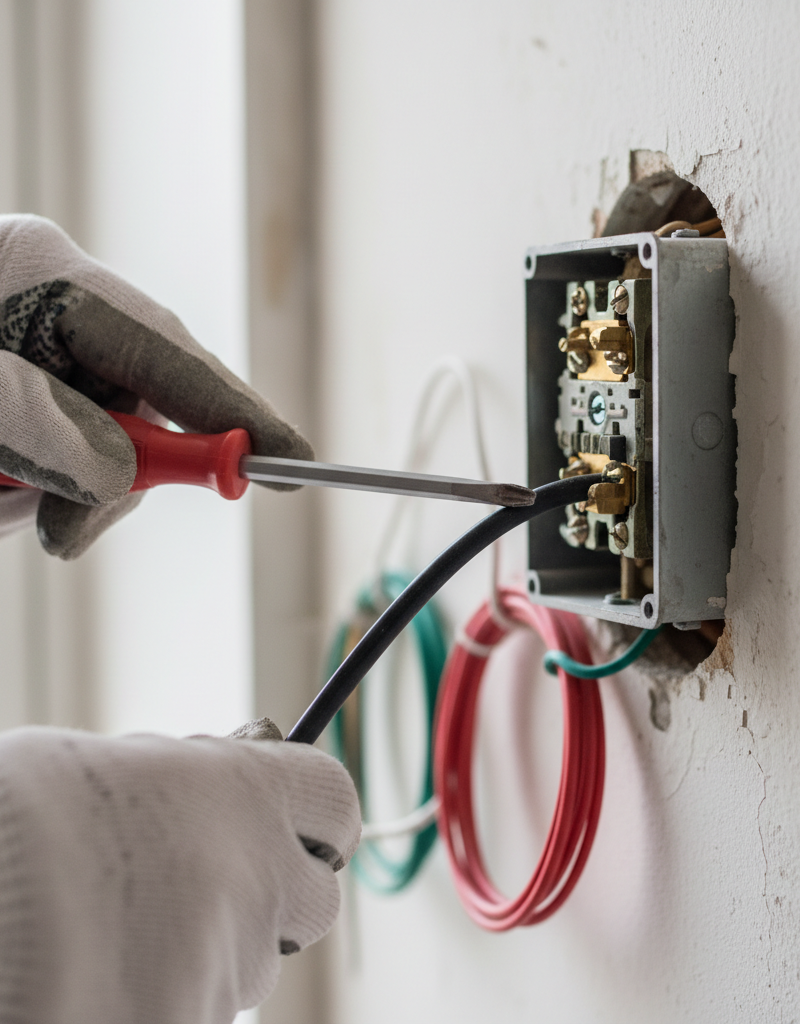
- POWER OFF AT THE BREAKER! Pull the switch plate off, then carefully unscrew the switch from the electrical box. Ease it out gently so you don’t bend or crack any wires. On the sides of the switch, you’ll see wires attached by screws or pushed into backstab holes. Backstabs are notorious for getting loose over time. Check each connection. If you see a wire on a screw terminal, make sure it’s wrapped tight and the screw’s snug. If it’s pushed into a backstab and you’ve got flicker, I’d usually move that wire to the screw terminal instead—backstabs are no picnic. Make sure the switch itself isn’t cracked, burned, or loose in the box. If it wiggles around like a bad tooth, that thing needs attention.
Related Articles
Keep troubleshooting with these hand-picked guides from FixlyGuide:
- Why Does Only One Room Have Flickering Lights? The Real Culprit — Flickering lights in a single room often point to a localized electrical issue, frequently a loose connection in a light fixture or switch.
- Why Does Only One Room Have Flickering Lights? The Real Culprit — Flickering lights in a single room often point to loose connections, an overloaded circuit, or a failing light fixture, rather than a whole…
- Why Does Only One Room Have Flickering Lights? The Real Culprit — Flickering lights in a single room often point to a loose connection, a faulty bulb, or an overloaded circuit, rather than a whole-house el…
- Why Does Only One Room Have Flickering Lights? The Real Culprit — Flickering lights in a single room often point to a localized electrical issue, ranging from a loose bulb to a faulty switch or fixture, ra…
- Why Does Only One Room Have Flickering Lights? The Real Culprit — Flickering lights in a single room often point to a localized electrical issue, frequently a loose connection, rather than a whole-house pr…
- Only One Room Is Hot? The Real Reason Your AC Won't Turn On — If your AC isn't turning on and only one room is hot, it likely points to a simple electrical or thermostat issue you can troubleshoot.
What should this project cost?
Enter your project details for a realistic cost range before you call anyone.
Outlet and switch work usually $150–$400; panel upgrades commonly $1,800–$4,200.
- Regional adjustment
- National average
- Labor share (typical)
- ~$709
- Quotes to collect
- 3 written estimates
Educational estimate based on national averages — not a binding quote. Always confirm with written local estimates.
Fixly Project Decision Box
- DIY difficulty
- Professional Recommended
- Estimated time
- Diagnosis 1–2 hours
- Cost level
- Moderate
Main tools / materials
- Non-contact voltage tester
- Outlet tester
- Flashlight
When to stop and call a pro
- Burning smell, scorch marks, or a warm outlet or switch plate
- A breaker that trips again right after being reset
- Any work inside the service panel
- Aluminum wiring or cloth-insulated wiring
Need professional help?
Talk to a Licensed ElectricianGet the print-ready PDF of this guide
A clean, ad-free, printable version you can keep on your phone or pin to the workshop wall. Free with a FixlyGuide account.
- Print-optimized layout
- Tools, materials & every step included
- Saved to your account
Frequently asked questions
Why are my lights flickering in only one room?+
Flickering lights in a single room typically indicate a loose electrical connection within that specific circuit. This could be at the light bulb, the fixture's wiring, the wall switch controlling the light, or even an outlet on the same circuit.
Can a bad light bulb cause flickering?+
Absolutely. A faulty or loose bulb is often the easiest and most common cause of flickering. Try tightening the bulb or swapping it with a known good one to rule this out first.
Is flickering light dangerous?+
While often just an annoyance, persistent flickering can indicate a loose connection that's generating heat. This can be a fire hazard over time. It's always best to investigate and resolve the cause promptly.
How do I check a light switch for a loose connection?+
First, turn off power at the breaker. Remove the switch plate and pull the switch out of the box. Gently tug on each wire connected to the switch terminals. If any are loose, tighten the screw terminals or re-insert push-in wires securely.
Can a breaker cause only one room's lights to flicker?+
It's less common for a breaker to cause only flickering, but not impossible. Sometimes a weak or aging breaker might intermittently trip or provide inconsistent power. If you've checked all other connections, a professional can test the breaker.
What if my flickering only happens when an appliance turns on?+
This suggests a voltage drop issue. An appliance, when it starts up, draws a surge of current. If the circuit isn't robust enough (too many devices, an undersized wire, or a poor connection), lights on that same circuit might dim or flicker. Consider moving the appliance to a dedicated circuit if possible or calling an electrician to assess the circuit load.
How can I tell if an outlet is causing the flickering?+
Plug a lamp into each outlet in the affected room. If the lamp flickers in a specific outlet, that outlet or its wiring is likely the problem. You can then turn off the power and inspect the outlet's connections.
When should I call a professional electrician for flickering lights?+
If you've checked all the common connection points (bulb, fixture, switch, outlets) and the flickering persists, or if you see signs of scorching, smell burning, or feel uncomfortable working with electrical wiring, it's time to call a licensed electrician. They have tools to safely diagnose deeper issues like faulty wiring in the walls or problems in your breaker panel.
Discussion
Loading comments…